Tourism New Zealand (TNZ) rolled out a Future Bid Champions programme this year, an upstream pipeline initiative designed to empower local mid-career academics in securing high-profile international conferences.
To counter recent university and scientific institute funding cuts that limited academic travel, TNZ has teamed up with regional convention bureaus to launch a targeted financial support initiative. By funding international travel for mid-career researchers, the programme bypasses strict association bidding eligibility rules – requiring attendance at prior global meetings – and fast-tracks another batch of local bid champions.
The pilot cohort in Wellington, consisting of four academics, has already delivered immediate returns by putting four active international bids on the table, TNZ’s global manager for business events, Penelope Ryan, told TTGmice on the sidelines of IMEX Frankfurt.
Following this success, Wellington is preparing a second round of funding grants, while Christchurch is preparing to deploy its first group. Although establishing the framework in Auckland has faced minor delays due to university-specific challenges, TNZ is actively working to get the largest city’s programme off the ground.
Ryan highlighted that the initiative creates a win-win scenario for tertiary institutions, as hosting an international conference significantly elevates an institution’s global academic ranking.
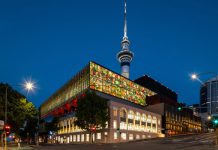
The new bid pipeline strategy aligns with the opening of New Zealand International Convention Centre (NZICC) in Auckland. “NZICC can hold conferences of up to 4,000 people, which is a step-change from what we’ve been able to cater to previously,” Ryan stated.
In comparison, Te Pae Christchurch Convention Centre can hold up to 3,000 delegates, while Tākina Wellington Convention & Exhibition Centre is ideal for smaller events of around 1,000 delegates.
When asked about the general sentiment on the ground in light of the current geopolitical climate, Ryan shared: “(Business events) is a very resilient industry, and we have learnt through Covid the value of face-to-face meetings. We continue to see delegates coming to New Zealand (for conferences and incentives), and while the numbers may be slightly smaller than the forecast, it is a very small amount at this point.”
This is because Australia remains New Zealand’s primary source market for business events, she stressed. Although in recent months, TNZ has been fielding a rising number of inquiries out of South-east Asia, which is opportune as the tourism board is looking at growing in the region.
“These incentive groups were originally eyeing Europe but are now opting for New Zealand due to its reputation for safety,” said Ryan.
Ryan relayed how during a TNZ buyer event in Malaysia, she received feedback saying that New Zealand is considered a really expensive destination, and that Europe was cheaper to take incentives to.
However, she countered: “Flights to get to New Zealand may be more expensive (from Malaysia), but once you’re on the ground, ground costs are actually not more expensive. It’s a perception we need to change that coming to New Zealand is not more expensive, and buyers should look at the total costs as opposed to the cost per person.”