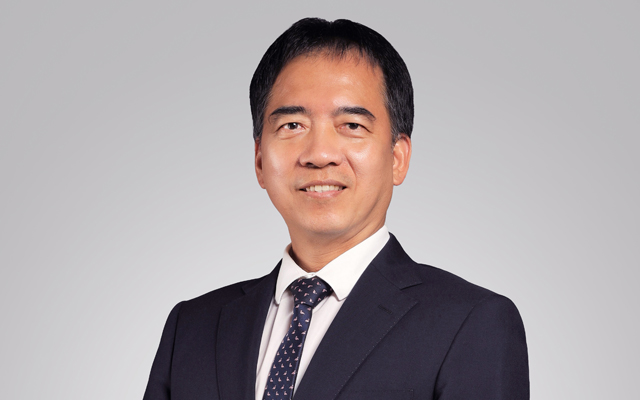
Business Events Sarawak (BESarawak) has appointed Hii Chang Kee as its new chairman of the Board of Directors, effective November 1, 2025.
Hii, currently the deputy Sarawak state secretary (operation) – overseeing public communication, service transformation, innovation, and the digitalisation of government services – steps into the role following the retirement of former chairman Abdul Karim Abang Openg, in August this year.
With over 30 years of experience in the public sector, Hii’s career is marked by a strong foothold in business events and tourism, having previously served as the permanent secretary of the Ministry for Tourism, Creative Industry and Performing Arts, and leading the formulation of the Sarawak Tourism Master Plan 2021–2035.
Recently, Hii chaired the Legacy Event Advocacy Policy Summit, which led to the Borneo Legacy Declaration, a landmark agreement endorsed by policymakers and influencers from Malaysia, Australia, the Philippines, and the UK.
Hii’s list of achievements includes serving on the Sarawak Tourism Board, Sarawak Arts Council, and Tourism Malaysia, where he contributed to projects like the Borneo Cultures Museum.
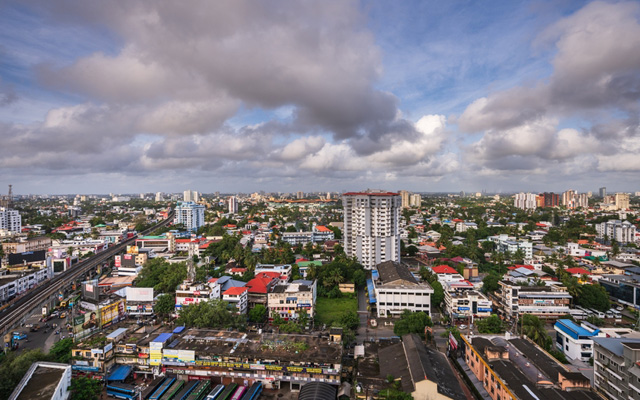
Kerala is working towards setting up a MICE Promotion Bureau in Kochi (pictured)
In a bid to strengthen India’s position as a global hub for business events, the Ministry of Tourism is urging state governments to establish city-centric MICE Promotion Bureaus.
The initiative is part of the union government’s larger strategy to grow inbound tourism by tapping into the lucrative business events segment.
Kerala is working towards setting up a MICE Promotion Bureau in Kochi (pictured)
On way MICE Promotion Bureaus would be helpful for cities, Suman Billa, additional secretary, ministry of tourism, said: “MICE is one of the low-hanging fruits to grow inbound tourism numbers. We need to create an ecosystem where stakeholders come together on one platform to promote destinations for business events. Such collaborative efforts will make our offerings more competitive.”
Under the proposed framework, states that set up city-specific MICE Promotion Bureaus. and commit funds to attract international conferences. will receive matching financial support from the government of India.
“If a state government identifies a conference they want to attract and pledges a certain amount, the Centre will match it dollar-to-dollar. Together, we can then pitch for these big conferences,” Billa explained.
Kerala has emerged as one of the early movers in this direction, where the state is working towards setting up a city-centric MICE Promotion Bureau in Kochi.
“We understand the importance of such bureaus and are hopeful that this will soon become a reality,” said Sikha Surendran, director, Kerala Tourism.
Billa believes a strong business events strategy will not only boost inbound numbers, but also help India overcome tourism seasonality.
“MICE will bring in high-spending tourists and position India as a 365-day destination. Countries like Germany have successfully leveraged MICE to generate demand even during off-seasons such as their winter months. India too, can benefit from this model,” Billa added.
Incentive travel trends among Indonesian corporates are shifting in response to economic pressures, with companies opting for more frequent, smaller-scale trips to closer destinations.
Several outbound travel companies in Indonesia that TTGmice spoke to noted that while the overall number of incentive trips was up, budgets have been significantly reduced, sometimes by up to 20 per cent. Group sizes have also shrunk.
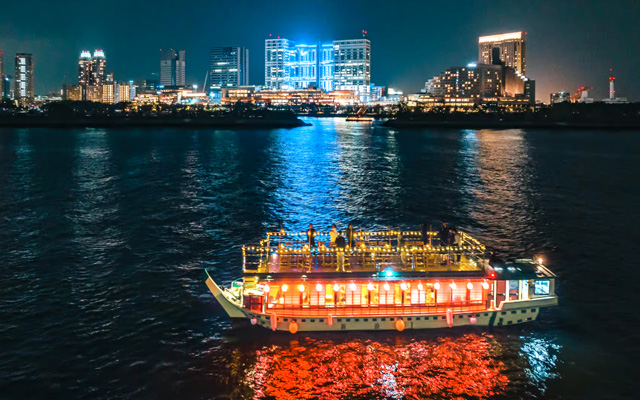
Yakatabune Dinner Cruise in Tokyo
Vidya Hermanto, CEO at Panorama JTB Tours Indonesia, said: “We are handling more groups this year than last, however, they are seeking shorter durations and destinations to fit tighter budgets.”
She noted a significant drop in demand for Europe, and virtually no interest in the US. In contrast, China is booming in popularity, and Japan remains a favourite.
Vidya said that companies were sending fewer achievers. For example, a company that sent 40 staff last year might only send 25 now.
Anton Thedy, managing director of TX Travel, shares a similar view, as well as a growing number of inquiries for 2026.
He shared: “When business slows down, companies often motivate their sales teams by lowering targets and increasing the number of incentive trips, but to more economical destinations.
“One of my clients who normally runs two large trips in a year has now increased their trips to six smaller ones to motivate their team.”
Anton is also seeing a lack of demand for the US and Europe, while Malaysia, Thailand, and in particular China were popular, budget-friendly choices.
“China has products that fit the low, mid, and top tier achievers,” he said.
Some luxury-focused trips are still happening, according to Richard Mulyanto, international events and incentive manager at Golden Rama Tours & Travel.
He sent several high-end groups to Europe and the UK, but observed that clients who had not met their targets either postponed their trips or redirected them to Asia and Australia.
Stephanus Sumarli, owner of Xpert Indonesia, also confirmed that short-term programmes were being postponed or rerouted.
“The main challenge for us now is securing new programmes as clients are in a ‘wait and see’ mode,” he said.
Despite the reduced budgets, travel companies are committed to maintaining a high standard of experience.
Even when a destination was switched from Europe to Asia, the service level, including the hotel category, remains consistent, stated Stephanus.
Meanwhile, Richard emphasised it was important to offer new and unique activities to keep trips memorable. For instance, Golden Rama has included special experiences in their itineraries, such as a Yakatabune Dinner Cruise in Tokyo and a spectacular show in Chongqing, to ensure the trips remain exceptional despite the budget constraints.
Niseko in western Hokkaido is expanding its tourism offerings to provide more experiences featuring nature, culture, adventure, gourmet and learning.
Led by DMO MICE Niseko, the initiative is designed to attract more micro incentive groups seeking unique programmes, particularly during the area’s Green Season (May to November).
Fam participants at Niseko Green Farm
Outdoor activities feature prominently, including sunrise climbs up Mount Yotei and rambles along the Kutchan Trail, which features a rare alpine plant zone designated a national natural monument.
In sports, padel was launched at Niseko Hanazono Resort this year, and the town has secured the UCI Gran Fondo World Series cycle championships in August 2026. Hosting the event is expected to enhance Niseko’s already extensive provision for cyclists, which includes bike rental, three top-tier bike parks,. and tours by bike or e-bike.
In addition, new products include the Mountain Lights and Fire Goddess Performance on select dates from July to October. The act synchronises the mukkuri (a plucked idiophone indigenous to the Ainu) and other music to fire dances, fireworks and the flaming Ainu sword dance.
There are also options combining F&B and nature, such as a picnic served in a gondola or on a canoe, or afternoon tea by luxury pastry brand Pierre Hermé Paris served in a boat on a lake. At Niseko Green Farm, groups can harvest organic vegetables and herbs to make and enjoy pizza fresh from the oven.
With MICE Niseko’s new guest speaker programme, it is also possible to hear from more than 20 local experts, each with insights relevant to a wide range of organisation, for 55,000 yen (US$361) per speaker.
Despite ongoing global economic uncertainty and rising costs in other regions, APAC's business travel sector is performing strongly
Asia-Pacific has cemented its position as the world’s most cost-effective region for business travel despite ongoing global economic uncertainty and rising costs, according to the latest FCM Consulting Insights Report.
The report finds that in 1H2025, the average hotel rate across Asia was just US$170 per night, with total trip costs averaging US$972 – well below the global average of US$1,600.
Despite ongoing global economic uncertainty and rising costs in other regions, APAC’s business travel sector is performing strongly
This cost advantage is fuelling robust demand for corporate travel, meetings, and events regionally.
“Asia’s pricing advantage is a key reason corporate travel is strong, even as global headwinds weigh on demand,” said Felicity Burke, FCM’s consulting director, APAC. “The region’s diversity means a one-size-fits-all tactic doesn’t work – flexibility and local adaptation are vital for maximising value.”
The report highlights that domestic air travel in the Asia-Pacific continues to operate at high capacity, with China and India leading the way. Passenger load factors are among the world’s highest (China: 84 per cent, India: 86 per cent), and international load factors across APAC are at 83 per cent.
While airlines have little incentive to discount fares, intense intra-regional competition is helping keep prices competitive for corporate buyers.
Asia’s diversity, however, presents both opportunities and challenges for travel managers. Markets like Japan and Singapore sustain higher per-trip spend due to premium pricing, while India and Indonesia remain highly cost-conscious.
“We recommend that travel policies be tailored to local realities, with market-specific hotel caps and differentiated allowances to ensure value and traveller satisfaction,” Burke said.
With Asia’s competitive pricing and high-quality venues, the report suggests that organisations consider shifting conferences, leadership meetings, and large team gatherings to Asia to maximise budgets and deliver unique experiences.
“As we move into 2026, our advice is to plan, use market-specific policy levers, be willing to adapt event and travel strategies, and stay agile to shifting demand and pricing trends,” Burke added.
“The companies that actively manage these levers will be the ones containing costs while still delivering great travel experiences for their people.”
Another trend gaining momentum is the rise of ‘bleisure’ travel, with more business travellers extending trips for leisure, particularly in South-east Asia.
This can be a win-win for companies, said Bertrand Saillet, FCM Travel’s managing director, Asia.
“By allowing travellers to benefit from negotiated corporate rates for their leisure component – provided the personal segment is cost-neutral for the organisation – companies can support work-life balance while maintaining control of programme costs,” he added.
The FCM Consulting Insights Report is based on corporate booking data from January to June 2025 from FCM Travel and Flight Centre Travel Group, with additional aviation data from Cirium.
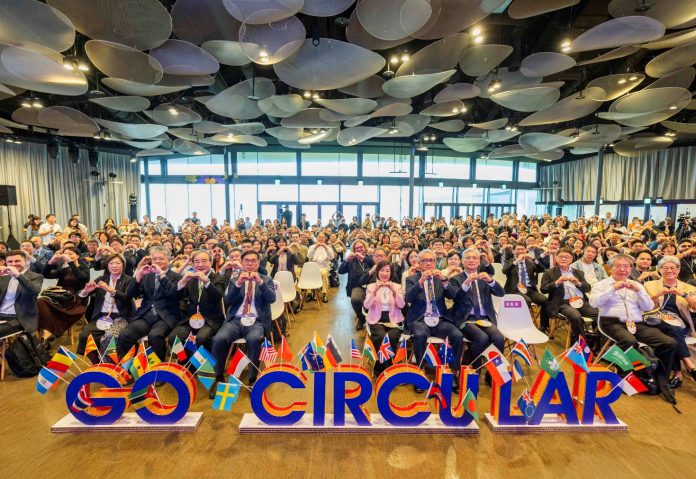
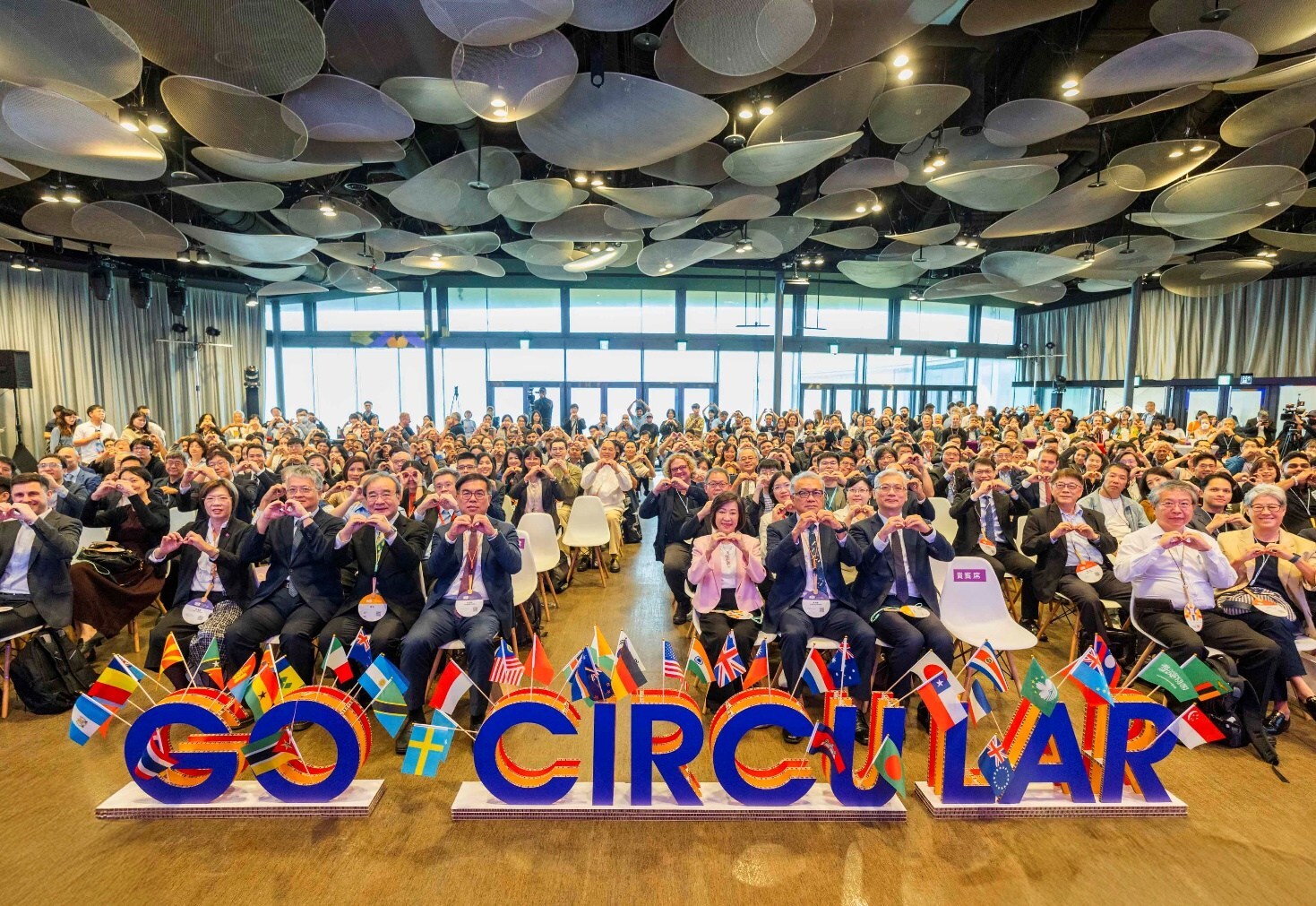
The Asia Pacific Circular Economy Roundtable & Hotspot 2025 (APCER & Hotspot 2025) successfully concluded in Taipei earlier this week.
Co-hosted by Taiwan’s key ministries and the Circular Taiwan Network, the four-day event brought together over 500 participants from 50 countries, including policymakers, industry leaders, and academics, to accelerate circular cooperation across the region.
Attendees at APCER & Hotspot 2025
Taiwan highlighted its robust circular economy sector, which generated over NT$500 billion (US$16.4 billion) in added value in 2024, representing two per cent of GDP. This sector leads the nation’s seven green-technology sectors in both value-added output and employment, growing annually by nearly 10 per cent.
The event’s main feature was the unveiling of the draft Taiwan Circular Economy Roadmap. This policy blueprint was immediately utilised in a co-creation format, allowing international and domestic attendees to provide feedback and collaboration ideas in real-time.
In his remarks, minister Peng Chi-ming reaffirmed Taiwan’s regional commitment: “This forum marks a new starting point – a platform for creating circular solutions together. The circular transition requires collective efforts from global partners, and Taiwan will continue to be a key partner in advancing regional circular cooperation.”
The summit concluded with a handover to Sydney, Australia, which will host the 2026 Asia Pacific Circular Economy Hotspot.
Motenas Japan focuses on journeys that allow guests to feel and connect deeply with the essence of Japan
Cresson Inc., led by CEO Takeshi Aoki, has launched a new premium travel service under its Motenas Japan brand, aimed at high-end international travellers and global corporations.
The new service, dubbed Experience-Designed Travel, moves beyond traditional sightseeing to offer a deeper, immersive encounter with Japan’s culture, spirit, and aesthetics. This launch capitalises on the country’s rapidly recovering inbound market, which welcomed approximately 36.9 million visitors in 2024.
Motenas Japan focuses on journeys that allow guests to feel and connect deeply with the essence of Japan
Bespoke programmes feature several key elements, starting with Tailored Cultural Experiences that incorporate genuine Japanese arts and philosophy, such as Ikebana, martial arts, and tea ceremony, all custom-designed for an unforgettable journey.
Guests also receive Seamless Concierge Support from a dedicated travel concierge, who handles every detail from airport arrival and luxury accommodations to transportation, interpreter services, and performer coordination.
Finally, experiences are enriched through Co-Creation with Local Communities, involving collaboration with local artisans, cultural masters, Shinto priests, and chefs to ensure unique, regional moments that provide deep, authentic engagement.
According to the company, it has gained global attention for its experiential incentive programmes, which utilise Japanese disciplines like Zen and martial arts to explore leadership philosophy and mindfulness. The company reports a growing number of global corporations using the service for executive retreats and team-building.
Looking ahead, Motenas Japan plans to expand its experiential programmes in regions where local culture and nature harmonise, including Kyoto, Tokyo, Kanazawa, and Hokkaido.
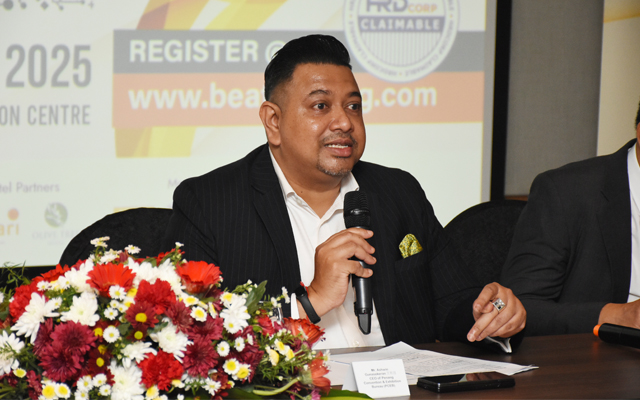
PCEB’s CEO Ashwin Gunasekeran at the press conference
The Penang Convention & Exhibition Bureau (PCEB) has announced the 9th edition of its flagship event, BE @ Penang 2025, which will take place on December 11 to 12 2025.
Under the theme Be The Wave, the conference aims to transform the business events and creative economy by challenging industry leaders and innovators to actively create the future of progress in Malaysia.
PCEB’s CEO Ashwin Gunasekeran at the press conference
PCEB is positioning the 2025 conference as a catalyst and benchmark for all events in 2026 and beyond. The goal is to inspire new ideas, foster crucial collaboration, and spark momentum that drives Penang toward greater innovation, creativity, and sustainable growth.
The main highlight of the event will be the keynote address by Hiroshi Tamura, known as the “father” of the modern Nissan GT-R and Nissan Z. Tamura’s session is expected to focus on visionary leadership, the courage to challenge the status quo, and the power of individual passion to transform an industry; a story that mirrors the conference’s forward-looking spirit.
In a continued commitment to developing future talent, BE @ Penang 2025 will also provide opportunities for students and young professionals to learn directly from leaders and build networks that will shape their careers.
Adding an engaging element, the pre-conference activity, Wave Makers: A Penang Discovery Adventure, will run on December 10 and 11, featuring team-based challenges and clue hunts to build camaraderie before the main event.
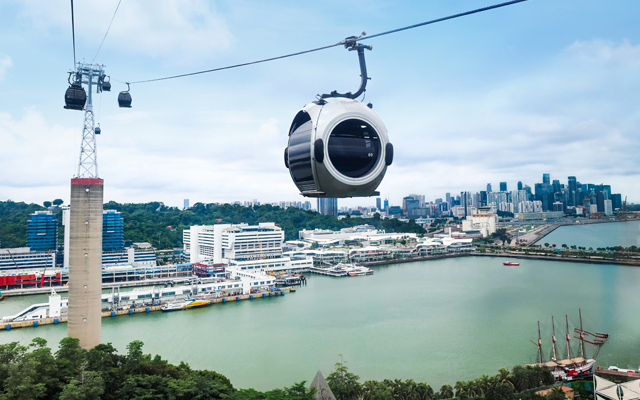
Mount Faber Leisure Group (MFLG) has added 13 new SkyOrb Cabins – the world’s first chrome-finished spherical cable car – to the Singapore Cable Car’s Mount Faber Line, bringing the fleet to 20 from mid-November 2025.
Each SkyOrb Cabin features illuminated rings, glass floors for panoramic views, and strategically-placed louvered windows to ensure optimal air ventilation and comfort. The expanded fleet now offers a full round-trip experience on the Mount Faber Line, which connects mainland Singapore to the resort island of Sentosa. This upgrade replaces the previous one-way ride and significantly increases the line’s capacity.
SkyOrb Cabin
“MICE agents told us that this product was not suitable for delegates beforehand, as the wait for one SkyOrb used to take around five minutes. It is now a three-minute wait, and guests can even bring their drink along on the ride (if planners opt to combine it with a networking session at The Mirabilis Bar),” Jennifer Wong, MFLG’s director commercial, told TTGmice.
Also available for corporate events are The Mirabilis Bar at Mount Faber Peak, along with the adjoining Dusk restaurant, both of which renovated in July 2024 and can hold 130 pax seated or 180 pax standing. Other meeting spaces include a ballroom good for 200 pax banquet-style, and Angsana Glasshouse for 70 pax seated.
When asked what markets MFLG was keen to attract, Wong pointed to Indian incentives, as well as the longhaul market.
She added: “I work closely with World Express (a Singapore-based DMC), who helped to promote us at the IMEX Vegas 2025. World Express is also targeting longhaul MICE markets, markets where we are traditionally not strong in, but is direction we want to move in.”
Wong further shared how this partnership has helped to create a corporate events package, where groups can arrange for a one-hour networking session with free-flow drinks at The Mirabilis Bar – or hands-on activities like a cocktail-making workshop – before delegates board a SkyOrb.
“Targeting the business events sector is also in line with Singapore Tourism Board’s plans to triple MICE receipts by 2040,” said Wong, who pointed out that MFLG also recently confirmed their attendance at IBTM World.
“Our focus was previously predominantly leisure, but I notice that the MICE market has shifted, and there is talk about experiences. We can offer them experiences, meeting spaces, as well as F&B. It also helps we, together with Sentosa, have a variety of offerings that complement each other,” Wong stated.
For example, as Sentosa is a popular destination for beach-themed events for inbound corporate groups, she outlined how planners can have the gala dinner at Mount Faber, take the SkyOrb over to Sentosa, and continue with a party on Siloso Beach.
In addition, Wong also shared how MFLG creates innovative experiences around its cable cars, ranging from dining in a Peranakan heritage cabin, a champagne and truffles experience, as well as a fried chicken and beer package in the sky. All the above experiences can also be arranged for corporate groups.
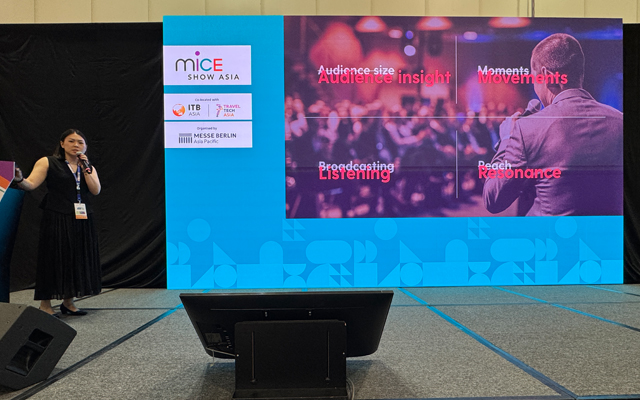
Khoo: the event industry is moving away from production value and large-scale spectacles and focusing on creating meaningful connections
For decades, the measure of a successful corporate event was its sheer scale – the biggest ballroom, the most attendees, and the most dazzling spectacles. However, this approach is losing its effectiveness, driven by shrinking attention spans and an overload of digital content.
In a presentation on The Rise of Micro-Events and Decentralised Formats at ITB Asia earlier last month, Qinxin Khoo, head of APAC for the UK-headquartered Live Group, indicated there has been a significant change in event attendees after the pandemic.
Khoo: the event industry is moving away from production value and large-scale spectacles and focusing on creating meaningful connections; photo by Rachel AJ Lee
As the world has become more digital and connected, attendees are increasingly seeking “something real at events”, signalling a demand for more authentic and meaningful experiences over large-scale spectacle, observed Khoo.
“They don’t want to be spoken to or sold at; they want to connect more meaningfully. People want to be part of the dialogue, feel the heartbeat of your brand or leadership team, and not just watch it on a screen,” she said.
She cited an example of how Live Group helped a client shift their strategy from hosting a single, massive product training event for sales partners worldwide, to identifying key markets in Asia, America, and the Middle East the client wanted to be in.
This shift required the training team to deliver content across multiple locations and timezones. However, the results were highly successful, and “partner engagement nearly doubled”, revealed Khoo. This increase was attributed to the ability to localise the content, using relevant case studies and tailoring the message, including language, to the specific audience in each room. This also led to more effective networking and feedback sessions.
“Ultimately, the smaller, multi-city format enabled the brand to tell its global story while maintaining a crucial local heart, achieving an impact that the former single, global event could not,” Khoo explained.
However, the industry needs to have a mindset shift, away from the fact that smaller events are viewed as a result of shrinking budgets, and instead, a deliberate design choice, she opined.
Khoo elaborated: “Large-scale events tend to cast a wider net, but the message gets diluted. Smaller formats, on the other hand, lets corporates curate exactly who is in the room. A lot of organisations are finding that smaller groups lead to bigger brand loyalty, because when people feel seen and heard, they won’t just attend your event, they will also advocate for you.”
She provided an example of yet another client, where the team developed a “chase the sun” concept, requiring the CEO to deliver the live webcast across multiple timezones, as opposed to a single, global webcast broadcast from one timezone.
“Although it was more tiring for the CEO, this format allowed him to localise the message to employees, and we saw employee satisfaction go up. The win here isn’t high attendance, but relevance.”
“Connection doesn’t scale through size. It scales through sincerity. And in 2025, relevance is the real currency,” Khoo concluded.
The newly-opened Ritz-Carlton, Bangkok anchors the One Bangkok development with cosmopolitan elegance. Featuring the city's largest ballroom and a spectacular new penthouse suite, it delivers exceptional hardware and deeply authentic, soulful service for business and leisure travellers alike
Behind the imposing, Brutalist concrete that defines Zurich’s Oerlikon district lies a surprising secret. While its exterior honours the neighbourhood’s industrial roots, stepping inside Mama Shelter reveals a vibrant, neon-soaked world that is a far cry from its rigid shell
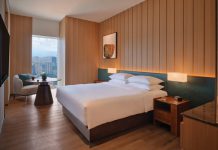
A polished urban retreat designed for business travellers, Hyatt Regency Kuala Lumpur at KL Midtown combines thoughtful design, seamless service, and exceptional facilities.