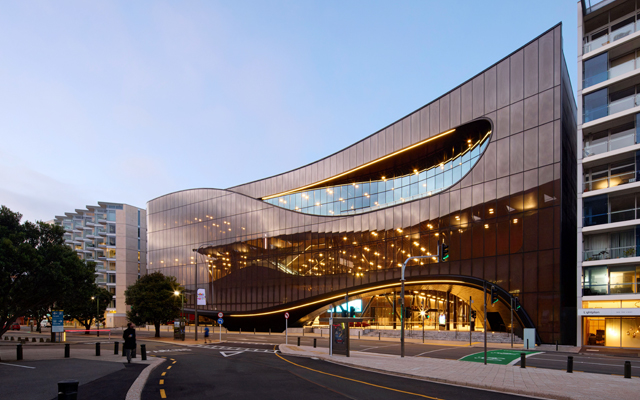
Tākina Wellington Convention & Exhibition Centre; photo by Jason Mann
Business Events Wellington, with support from Tourism New Zealand, has successfully won bids for three new international conferences focused on marine biology, network engineering, and music.
The three events, scheduled for 2026 and 2027, will attract delegates from across the globe in fields where Wellington boasts research excellence.
Tākina Wellington Convention & Exhibition Centre; photo by Jason Mann
“We maintain a strong focus on attracting conferences aligned to our intellectual capital,” said Business Events Wellington’s manager, Irette Ferreira. “Our close partnership with Victoria University of Wellington was the catalyst for securing these important conferences, maximising benefits to the city through international networking and global exposure.”
The International Symposium on the Ocean in a High-CO2 World will be hosted at the Tākina Wellington Convention & Exhibition Centre in 2026.
VUW senior lecturer in marine biology, Christopher Cornwall, noted that Wellington is the perfect location due to the Taputeranga Marine Reserve being on its doorstep. He emphasised the conference’s importance in addressing the effects of climate change, such as ocean acidification and warming, at a time when New Zealand is poised to tackle these issues.
In the same year, the International Conference on Advanced Information Networking and Applications 2026 will bring international networking scholars and researchers to the capital. Hosted by VUW professor of network engineering Dr. Winston Seah, the conference will serve as a key platform for sharing advanced research transforming modern life and work.
In 2027, the Conference of the International Association for the Study of Popular Music will capitalise on Wellington’s vibrant arts scene. Visiting scholars will engage with research from VUW and Massey University, and utilise resources like the Turnbull Archives.
Geoff Stahl, director of communication at VUW, said the event is an opportunity to showcase Aotearoa’s diverse musical cultures and celebrate the graduation of the first cohort of VUW’s new Bachelor of Popular Music degree.
Rooms
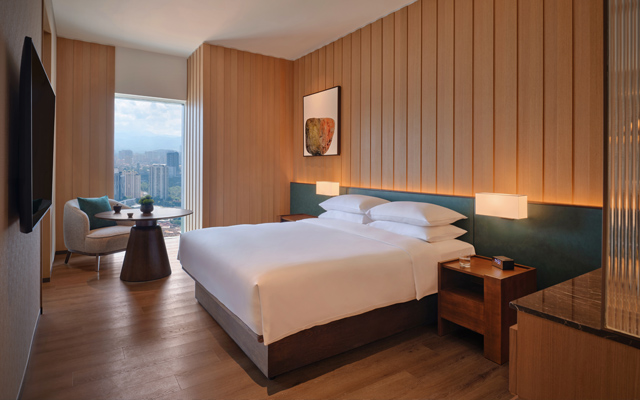
I was pleasantly surprised by how spacious my standard Club Floor room at Hyatt Regency Kuala Lumpur at KL Midtown, turned out to be. Spanning 42m2, it exceeded the average size of similar five-star rooms in the city – and it certainly felt that way the moment I stepped in. The layout was thoughtfully designed, creating a sense of openness and calm.
Beyond the plush king-sized bed, the room featured a comfortable sitting area with a three-seater sofa, an ergonomic chair, and a round table that doubled as a work desk. Despite these furnishings, there was still ample room to move about, giving it a relaxed, residential feel. I also appreciated the high-speed Wi-Fi and 65-inch LED television with Chromecast, which allowed me to stream my favourite workout videos before breakfast – a small but convenient touch.
The property offers 410 rooms, comprising 306 guestrooms and 104 one- and two-bedroom serviced residences. Its thoughtful design extends to separate entrances and dedicated drop-off areas for hotel and residence guests, ensuring privacy and a seamless arrival experience.
MICE facilities
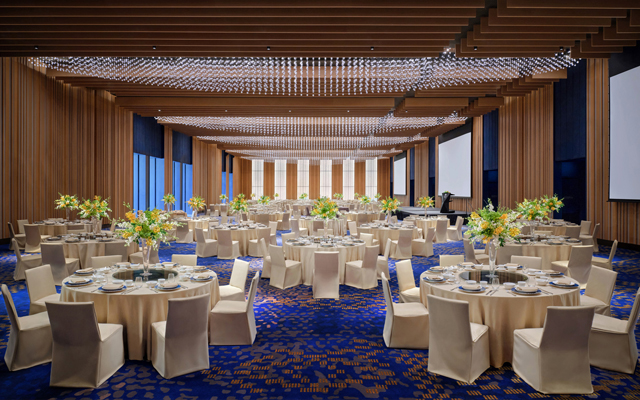
With 2,510m2 of meeting space across three floors, the hotel caters impressively to business events. The 1,011m2 pillarless grand ballroom on Level 2 accommodates up to 750 guests in banquet-style, supported by 15 other flexible venues equipped with advanced audiovisual technology and high-speed connectivity.
Natural light floods the foyers through floor-to-ceiling glass panels, offering uplifting views of the neighbouring Malaysia International Trade and Exhibition Centre and its landscaped surroundings.
On Level 4, the four Courtyard meeting rooms open onto a tranquil al fresco terrace inspired by Japanese garden design. This breezy space connects directly to Enso Izakaya & Bar, ideal for cocktails or post-meeting dinners — a thoughtful integration of business and leisure.
Other facilities
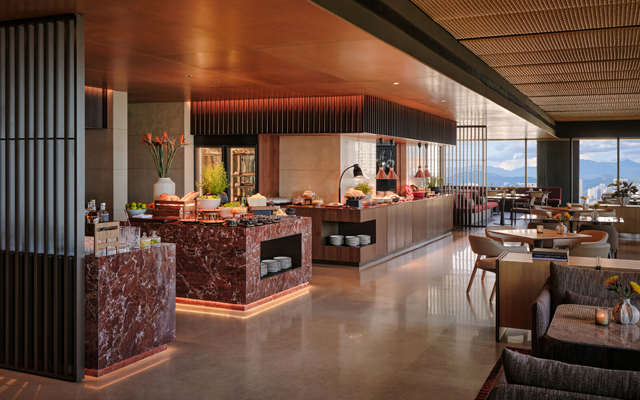
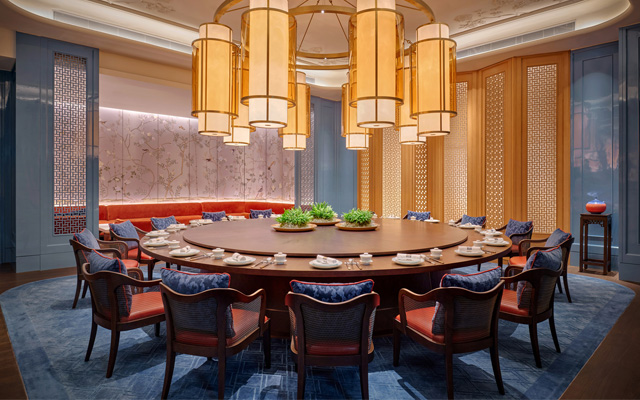
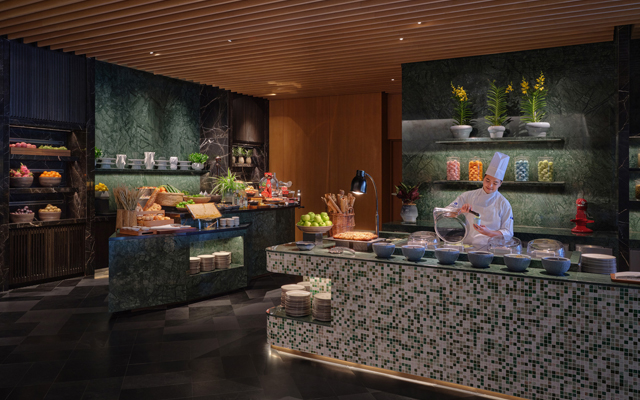
Dining was another highlight. Mornings began at Midtown Brasserie, the all-day dining restaurant, with a generous spread of local and Asian favourites. Dinner at China House was unforgettable, especially the wood-fired Peking Duck roasted using Malaysia’s rambutan wood — crisp, succulent, and perfectly paired with Pu’er fermented Chinese tea. The team’s deep knowledge of over 50 curated tea varieties from across China made the experience even more engaging.
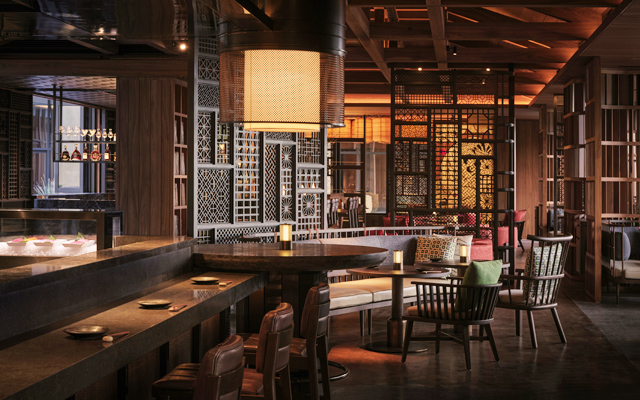
For a change of pace, Enso Izakaya & Bar offered authentic Japanese fare, from charcoal-grilled yakitori to comforting nabemono hot pots. As night fell, a resident DJ’s curated soundtrack transformed the venue into a lively social hub — the perfect close to an eventful day.
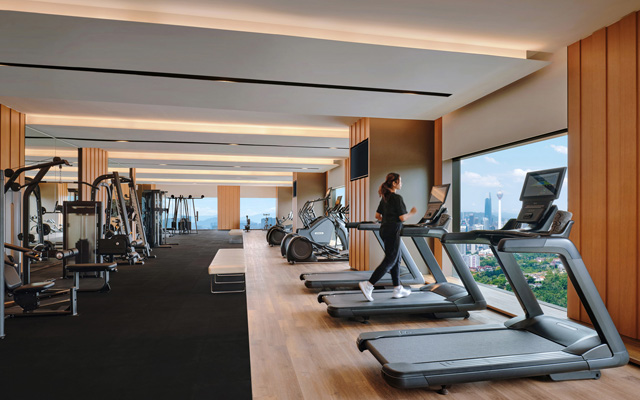
The fifth floor is entirely devoted to health and wellness, anchored by the Core Fitness Centre – one of the largest hotel gyms in Kuala Lumpur. Bright, airy, and well-equipped, it features state-of-the-art machines, a steam room, sauna, and a dedicated studio for group fitness classes. Guests enjoy 24-hour access via room key, while local residents can also join through paid memberships.
As a Club Floor guest, I also had the privilege of accessing the rooftop infinity pool on Level 32, typically reserved for serviced-residence guests. Floating in tranquil water with uninterrupted views of the city skyline, I could not help but feel it was the perfect reward after a productive day — a moment of stillness worth a million dollars.
Service
What truly elevated my stay was the impeccable service — warm, intuitive, and genuinely thoughtful. From the moment I arrived, every staff interaction felt natural and attentive, whether it was the housekeeping team anticipating my preferences or the restaurant staff offering tailored recommendations with a smile.
Verdict
This property delivers a rare kind of hospitality that makes you feel not just like a valued guest, but like you truly belong; it is the reason I left already planning my return.
Number of rooms
410 (306 guestrooms, 104 serviced residences)
Famous worldwide for its sticky rice, som tum (Thai papaya salad), moh lam folk music, muay thai, football, racing heritage, and colourful pah kao mah (Thai checkered cloth), Isan is also the birthplace of global icons such as Blackpink member Lisa Manobal, who hails from Buriram.
Today, its three business events cities – Khon Kaen, Udon Thani, and Nakhon Ratchasima (Korat) – are proving they have the infrastructure, cultural depth, and strategic vision to welcome the world.
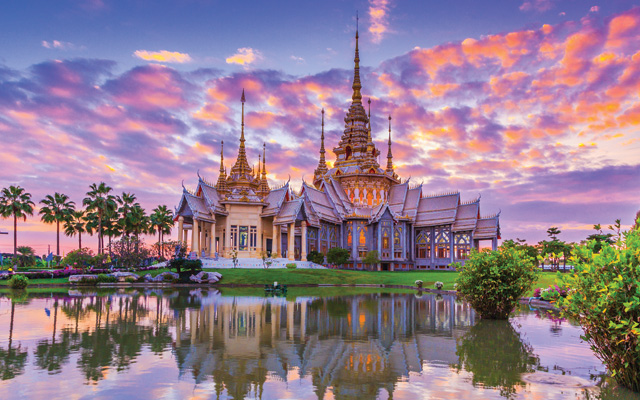
Sunset at Wat None Kum in Nakhon Ratchasima province
Earlier in June 2025, the Isan MICE Expo 2025, held at Thailand Creative Design Center Khon Kaen under the theme A New Chapter of Isan: Rooted Identity Ready for Global MICE, brought together industry stakeholders, chambers of commerce, embassies, and exhibition organisers.
Delegates toured facilities such as the Khon Kaen International Convention and Exhibition Center, and went on curated city experiences, including the new Muan Mue Lang café-hopping trail curated by TCEB’s Isan MICE Division.
For Punnaporn “Paula” Wongjunpen, founder of Paula & Co. DMC, Khon Kaen is a logical starting point for business events. The city offers affordable, flexible venues, vibrant nightlife until 02.00, and trusted hotel brands like Pullman and Avani.
“These brands are familiar and price friendly for Indian clients,” Paula said, adding that she has been actively reaching out to Indian planners via webinars and Zoom sessions. She even flies in chefs from Bangkok or Udon to cater Indian menus for groups.
What sets Isan apart, she added, is its unique cultural identity. For example, community-based tourism adds depth, with experiences including rot e-taen (a local tractor used in farms) rides through rice fields, textile-weaving workshops, and healthy local cuisine.
To showcase the destination, Paula curated a post-expo fam trip for expat Muslim buyers focused on wellness and medical tourism. Over three days, they explored Udon Thani and Sakon Nakhon via indigo-dyeing workshops, Halal dining, and wellness check-ups.
“Udon offers Bangkok-level medical standards at a lower cost,” she noted, pointing to the upcoming BDMS cancer centre as a medical and wellness asset.
While Isan lacks the beaches synonymous with Thailand, Paula does not perceive this as a drawback, likening it to Ubud – and its rice fields – in Bali, Indonesia. Cross-border proximity to Laos and Vietnam also creates potential for regional business events circuits.
The upcoming International Horticultural Expo 2026 in Udon Thani, set for a five-month run, is expected to be a transformative anchor event, which Paula opined will be a major draw.
Despite strong potential, Paula emphasises the need to prepare the local supply chain, as some cities still lack international-standard facilities.
For example, accommodation in Sakon Nakhon remains outdated, making it more suitable as an add-on to a main business events city. Local vendors in Udon Thani also require training to handle large-scale events, which is why Paula has been working with universities on capacity-building programmes, and connecting suppliers with Bangkok agencies for knowledge exchange.
It also helps that Isan’s business events appeal is supported by a packed cultural and sporting events calendar that aligns with Thailand Convention and Exhibition Bureau’s festivalisation strategy.
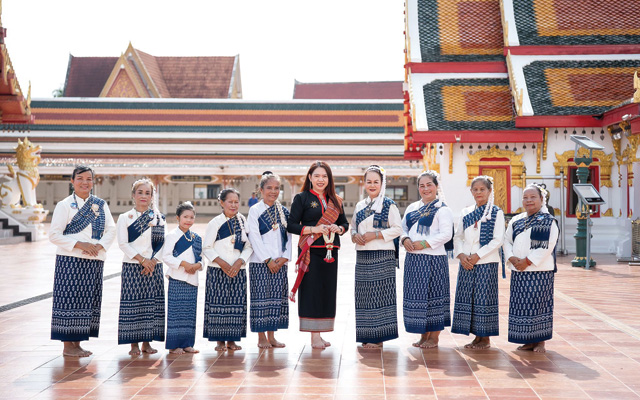
Paula poses with local performers at Wat Phra That Choeng Chum Worawihan in Sakon Nakhon showcasing the province’s indigo-dyed Isan kram textiles
Among the cultural highlights is the Phanom Rung Festival in Buriram every March, where visitors can witness a rare astronomical phenomenon as the sunrise aligns perfectly through the ancient Khmer sanctuary. In July, the Ubon Ratchathani Candle Festival takes centrestage, captivating audiences with its elaborate wax sculptures and grand processions celebrating Buddhist Lent.
October brings the Naga Fireball Festival in Nakhon Phanom, an event steeped in local legend and mystique. Rounding out the year, the Christmas Star Parade in Sakon Nakhon in December showcases the province’s Catholic heritage.
Sporting events strengthen the appeal further. Buriram hosts the Buriram Marathon and MotoGP Thailand each January or February at the Chang International Circuit, while the Spartan Race Khao Yai in July provides high-energy incentive options. Long-boat races between river provinces from August to September add another visually-rich element.
The opening of the Intercontinental Khao Yai – a 2022 Bill Bensley-designed property featuring upcycled train carriages – and Khao Yai Art Forest (launched February 2025) adds to Korat appeal as a business events destination.
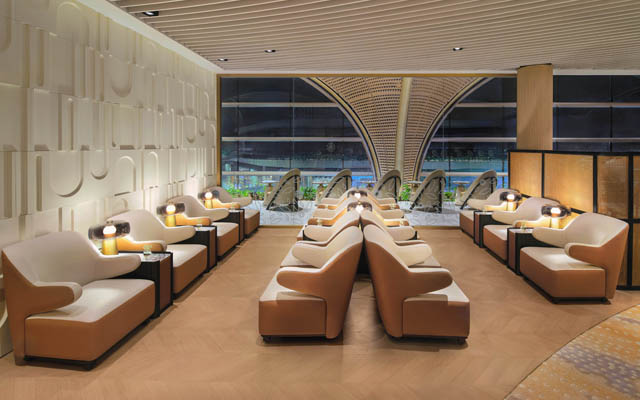
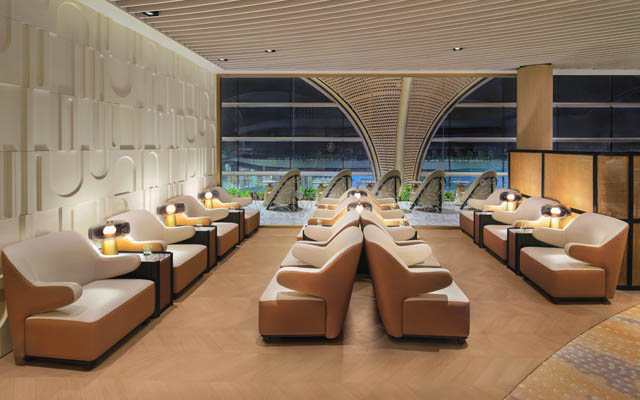
Plaza Premium Group (PPG) has opened Plaza Premium First and Plaza Premium Lounge at Techo International Airport in Phnom Penh, Cambodia. The launch strengthens the group’s presence in South-east Asia and aligns with Cambodia’s sustainable development goals.
The new airport has been designed to incorporate eco-friendly technologies and energy-efficient systems.
Plaza Premium First and Plaza Premium Lounge open in Phnom Penh, featuring local art, cuisine, and design inspired by Cambodian culture
Plaza Premium First, with capacity for 110 guests, marks the brand’s debut in Cambodia, following locations in Hong Kong, Kuala Lumpur, Macau, Vancouver, and Jakarta. The lounge features interiors inspired by Cambodian culture, including decorative motifs and artwork by artist and sustainability advocate Bill Bensley.
Facilities include two private VIP rooms and massage services, while the menu features local flavours such as the KTI Passion Mood Mocktail and Passion Paradise Cocktail made with Khmer ingredients.
Plaza Premium Lounge, with 120 seats, offers a calm setting that highlights Cambodian art and cuisine. Guests can sample dishes such as Beef Lok Lak and Fish Amok, alongside Pursat Orange Juice and Koh Kroubey’s Jasmine Tea. The lounge showcases works by artist Dina Chhan and welcomes guests with ambassadors dressed in the traditional Sampot.
The new lounges reflect PPG’s approach to airport hospitality by combining operational consistency with local culture and design.
“Cambodia’s Techo International Airport represents a critical hub in the region and offers exciting opportunities for PPG, given the airport’s expansion plan with two additional runways to be completed in phases, passenger capacity is expected to reach 45 million by 2050,” said Cavin Loh, regional general manager (Southeast Asia) of PPG.
Preferred Travel Group has appointed Christine Tan as area managing director for South-east Asia, effective October 29, 2025. Based in Singapore, she will oversee account management and business development across the region, supporting the growth and visibility of Preferred’s global portfolio of more than 600 independent luxury hotels and experiences.
Tan brings over 30 years of experience across the hospitality and technology sectors, with expertise in hotel distribution, sales strategy, and client relationship management. She most recently served as vice president of sales – APAC at Lighthouse, a SaaS platform supporting more than 75,000 hotels worldwide.
The inaugural Indonesia Business Event Mart (IBEM) will be held next year at the Jakarta International Convention Centre, from July 28 to 31, 2026.
The event will feature three days of business-focused activities such as B2B business meetings, exhibitions, networking and knowledge sessions, as well as destination and product presentations.
From left: TTG Asia Media’s Darren Ng; Ministry of Tourism Indonesia’s Vinsensius Jemadu; ENCPRO’s Christine Besinga; and Ambassador of the Republic of Indonesia to Singapore, Suryo Pratomo; photo by Lynette Tey
Darren Ng, managing director of TTG Asia Media, also told attendees at the IBEM launch event in Singapore yesterday that there is a high chance that next year’s SEABEF (Southeast Asia Business Events Forum) will also co-locate with IBEM, resulting in a four-day event.
Ng added that TTG Asia Media, co-organisers with ENCPRO, a Jakarta-based PCO, is targeting 200 booths – 70 per cent domestic, 30 per cent international – and approximately 220 invited buyers.
As to why Jakarta is the ideal location to launch IBEM, Ng said: “Jakarta has many companies and businesses, MICE-ready facilities, and the credibility as a destination to position IBEM 2026 as a leading international event. In fact, 60 per cent of MICE events to Indonesia are held in Jakarta, generating around US$1 billion annually in associated spending.”
The Indonesian government continues to invest in business events infrastructure, most notably with the recent development of the 150,000m2 Nusantara International Convention Exhibition, located in the Pantai Indah Kapuk 2 township, added Ministry of Tourism of the Republic of Indonesia, deputy for events development, Vinsensius Jemadu.
This proactive approach is aligned with the country’s rapidly growing business events sector, which is projected to reach around US$7,414 million by 2032 with a substantial Compound Annual Growth Rate (CAGR) of 13.8 per cent between 2024 and 2032.
The market’s momentum is demonstrated by high engagement across various segments. For example, Jakarta alone is expected to host 1,500 international events in 2025, complemented by the active participation of 100,000 SMEs nationwide, and over nine million domestic travellers annually attending business events.
Vinsensius further emphasised that Indonesia is ready to lead the next wave of business events growth in South-east Asia, as well as promote Jakarta as preferred location for international business events.
He added: “Our cooperation with TTG Asia Media (headquartered in Singapore) reflects our strong commitment in keeping Singapore as a strategic partner in tourism.”
As Indonesia is geographically close and remains Singapore’s second-largest source market, the strong business relationship will be mutually beneficial.
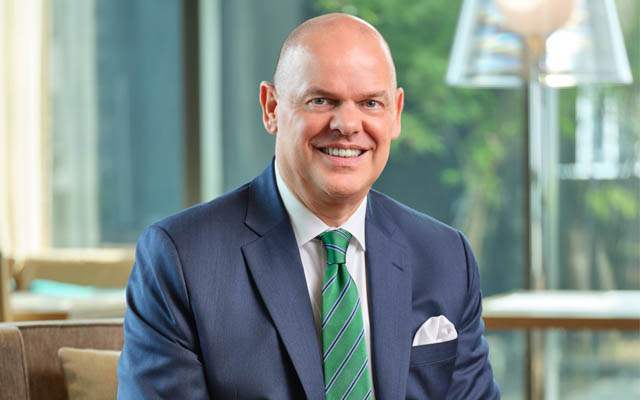
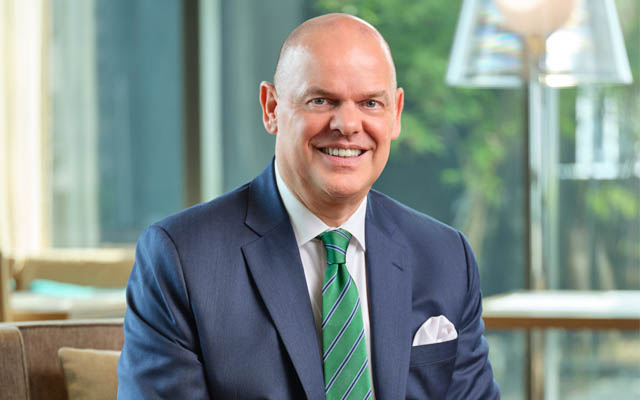
Carlton City Hotel Singapore has appointed Douglas Glen as general manager, marking his return to the property after previously leading the team through the pandemic period.
Glen brings over three decades of hospitality experience to his current role, and will oversee all operational and financial aspects of the 386-key business hotel, driving strategic growth while maintaining the property’s high standards of service and guest experience.
He previously held senior positions at The Regent Hotel Group in Hua Hin, The Royal Cliff Hotels Group in Pattaya, The Steigenberger Riverside Bangkok, The Landmark Bangkok, and The Landmark London.
Tourism New Zealand’s Business Events team has welcomed Esther Ng and Annie Tay as contract market support to grow incentive and association conference business from South-east Asia.
Both are team members of business events consultancy GainingEdge.
From left: GainingEdge’s Esther Ng; and Annie Tay
Ng, based in Singapore, will be driving incentive leads for New Zealand from South-east Asia. With close to 25 years of experience in the tourism, hospitality, and business events market, she will be drawing on her contacts across the region.
Tay, based in Kuala Lumpur, will help Tourism New Zealand build strong relationships with associations based in South-east Asia to develop conferencing leads. With more than 20 years of experience across the business events lifecycle, her background includes key roles at Malaysia Convention & Exhibition Bureau, and Kuala Lumpur Convention Centre.
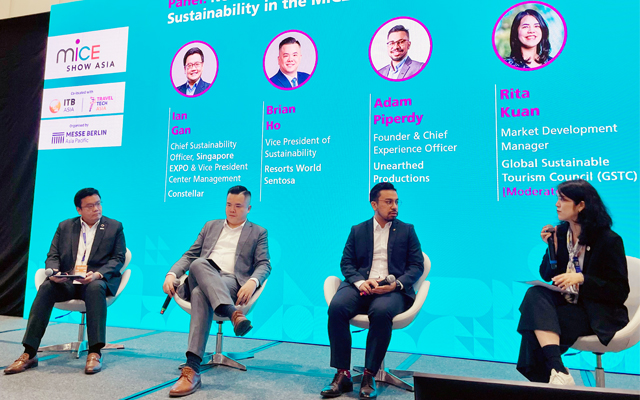
From left: Singapore Expo’s Ian Gan; RWS' Brian Ho; Unearthed Productions' Adam Piperdy; and GSTC’s Rita Kuan
Small actions can lead to big impacts was the key takeaway from the Next Horizons: Future-Proofing Sustainability in the MICE Industry session at ITB Asia last week.
Rita Kuan, market development manager of the Global Sustainable Tourism Council (GSTC), opened with an introduction to GSTC’s MICE Early Adopter Program, a two-year initiative launched in 2024 that involves awareness-raising and implementation of the MICE Standard, and sharing of best practices and solutions.
From left: Singapore Expo’s Ian Gan; RWS’ Brian Ho; Unearthed Productions’ Adam Piperdy; and GSTC’s Rita Kuan
The programme is designed to result in an increase in three main areas: sustainable practices, the number of GSTC-certified MICE businesses, and consumers’ choice of sustainable businesses.
Kuan then introduced the panelists whose organisations – Singapore Expo, Resorts World Sentosa, and Unearthed Productions – adopted the programme one year ago.
Ian Gan, chief sustainability officer, Singapore Expo, and vice president centre management, Constellar, said sustainability has been embraced as a business strategy.
Constellar is aiming for a 75 per cent reduction in Scope 1 and 2 emissions, and a 30 per cent improvement in energy use intensity from its 2019 baseline by 2025. It also targets a 10 per cent improvement in water efficiency by 2026. Furthermore, the company is scaling up initiatives, such as a nearly 1,400m2 urban rooftop farm that brings the farm-to-table concept to event catering.
Gan added that Constellar has “curated a journey roadmap” to encourage greater sustainability within the business events ecosystem. Steps include a sustainability health check so organisations can assess and improve their green practices.
Adam Piperdy, founder and CEO of Unearthed Productions, then called on the industry to make “smarter choices for better experiences, lower costs and real sustainability”, noting that brands can choose “to embed sustainability into every event” by using his company’s practical, action-based checklist.
Questions to ask include whether it is necessary to lay carpet at exhibitions; if it is possible to introduce QR-code agendas with real-time updates and what type of catering is best, he elaborated, adding that an opt-in or credit model for meals can cut costs and waste while providing attendees with greater “freedom of choice, dietary fit and more time to connect”.
“The future of events is about doing less, but making it count,” he said, adding that the industry can “double down on content, connections and conversations” for improved sustainability.
As the world’s first destination to be certified for both GSTC destination and hotel standards, and host of Singapore’s inaugural GSCT conference in 2024, Resorts World Sentosa (RWS) is focused on increasing sustainability to meet growing industry expectations.
RWS’s vice president of sustainability, Brian Ho, stated: “Focusing on sustainability is no longer optional, but rather a strategic necessity,” he said.
He introduced RWS’ 2030 Sustainability Master Plan, which targets carbon neutrality and positive social-economic impact by 2030. Key elements of the plan include greening 75 per cent of its buildings, halving operational waste-to-landfill, and fostering an environmentally- and socially-conscious workforce.
In closing, the speakers called on business events players to share best practices to boost sustainability adoption in the industry.
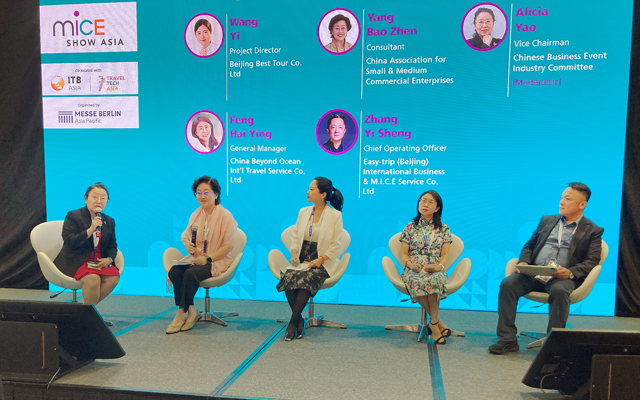
From left: Chinese Business Event Industry Committee’s Alicia Yao; China Association for Small and Medium Commercial Enterprises' Yang Bao Zhen, Beijing Best Tour’s Wang Yi; China Beyond Ocean International Travel Service’s Fen Hai Ying; and Easy-trip (Beijing) International Business and MICE Service’s Zhang Yi Sheng; photo by Caroline Boey
China’s outbound business events and association meetings industry now requires buyers to take on new roles like facilitating global client engagement, organising ESG-focused events, and acting as exhibition and conference organisers.
These developments were discussed during The Business of Experience: How MICE is Evolving Beyond Traditional Practices panel at last week’s ITB Asia.
From left: Chinese Business Event Industry Committee’s Alicia Yao; China Association for Small and Medium Commercial Enterprises’ Yang Bao Zhen, Beijing Best Tour’s Wang Yi; China Beyond Ocean International Travel Service’s Fen Hai Ying; and Easy-trip (Beijing) International Business and MICE Service’s Zhang Yi Sheng; photo by Caroline Boey
DMC and association meeting speakers said their clients were looking for specialised, immersive experiences, want to leverage global networking for business expansion, have local engagement, and participate in knowledge exchange.
Moderator Alicia Yao, vice chairman of the Chinese Business Event Industry Committee, stated that demand has moved beyond simple packaged tour “pure incentives” to international events that promote product branding, business development, trust-building, and creative design.
Yang Bao Zhen, consultant with China Association for Small and Medium Commercial Enterprises, said its 6,000 members want to attend high-level events that promote innovation and collaboration with international peers in fields such as technology and aviation for their businesses to expand overseas.
For corporate culture events, Wang Yi, project director at Beijing Best Tour, noted a demand for “thoughtful and smart guided tours” that build team spirit in a local context (like New Zealand’s Maori culture), complete with professional photography and live-streaming.
Wang also noted the appeal of hands-on activities, such as the panda keepers experience – where corporate groups clean cages and feed animals – and marine conservation efforts to raise money for charity.
Feng Hai Ying, general manager of China Beyond Ocean International Travel Service, identified education, training, media, and communication as bright spots amid current geopolitical uncertainty.
“The upgraded business model requires us to be more involved in our clients’ business and supply chain and to be their ‘external brain’ to manage different resources on a global stage to obtain a higher ROI.
“We have to be more involved in our clients’ ecosystem, understand their profit model and be able to allocate resources more accurately and efficiently,” Feng added.
Zhang Yi Sheng, chief operating officer of Easy-trip (Beijing) International Business and MICE Service said the challenge now is finding safe destinations that meet shrinking budgets.
The company’s role has expanded beyond simple incentive trips, shared Zhang, where they now must organise events incorporating conferences and exhibitions, work with a wider range of suppliers, upgrade their skills to design and sell these components, and connect with societies and universities.
Social media, Zhang noted, is also an indispensable tool for events it organisers to be different and stand out.
The newly-opened Ritz-Carlton, Bangkok anchors the One Bangkok development with cosmopolitan elegance. Featuring the city's largest ballroom and a spectacular new penthouse suite, it delivers exceptional hardware and deeply authentic, soulful service for business and leisure travellers alike
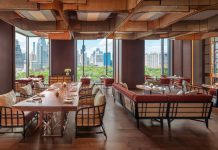
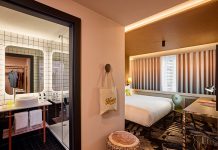
Behind the imposing, Brutalist concrete that defines Zurich’s Oerlikon district lies a surprising secret. While its exterior honours the neighbourhood’s industrial roots, stepping inside Mama Shelter reveals a vibrant, neon-soaked world that is a far cry from its rigid shell
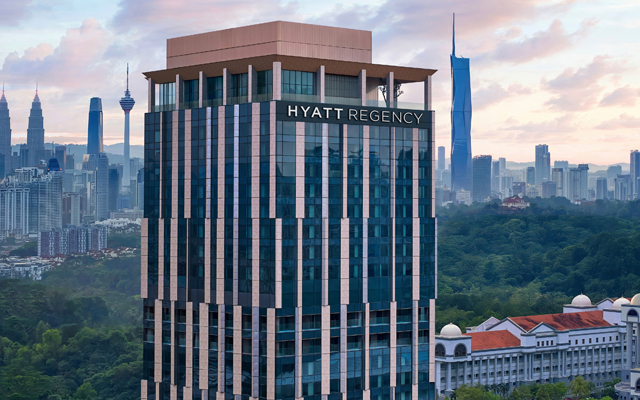
A polished urban retreat designed for business travellers, Hyatt Regency Kuala Lumpur at KL Midtown combines thoughtful design, seamless service, and exceptional facilities.




 Tan brings over 30 years of experience across the hospitality and technology sectors, with expertise in hotel distribution, sales strategy, and client relationship management. She most recently served as vice president of sales – APAC at Lighthouse, a SaaS platform supporting more than 75,000 hotels worldwide.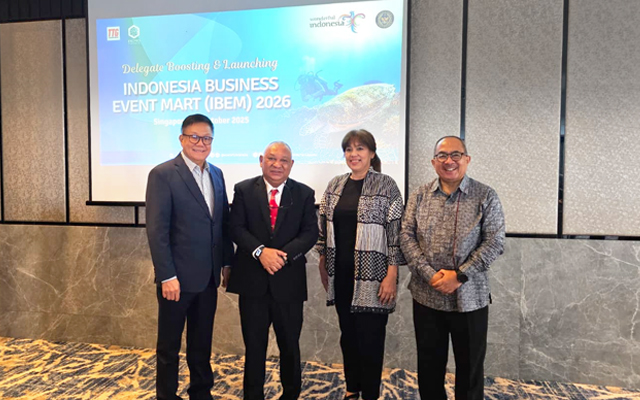
 He previously held senior positions at The Regent Hotel Group in Hua Hin, The Royal Cliff Hotels Group in Pattaya, The Steigenberger Riverside Bangkok, The Landmark Bangkok, and The Landmark London.