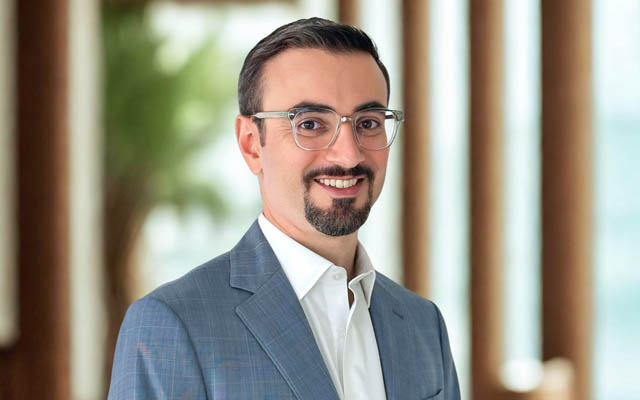
Ken Orr has been appointed general manager of Millennium Hotel Queenstown by Millennium & Copthorne Hotels New Zealand Limited.
With more than 20 years of experience at the company, Orr has held a range of managerial and operational roles across Auckland, Wellington, Christchurch and Queenstown.
He stepped down from his previous position as vice president of operations in June 2025 to relocate to the South Island.
American Express Global Business Travel (Amex GBT), has made two new strategic leadership appointments to drive growth in its SME division in Asia-Pacific (APAC).
Elizabeth Georgopoulos has been promoted to sales director for APAC, where she will lead the region’s Enterprise and Midmarket sales team, reporting into Jason Geall, executive vice president, global SME.
Chris Andony has been promoted to senior director, client management APAC SME. He will lead the APAC client management team, reporting into recently-appointed vice president & general manager, global client management SME Becky Power.
Andony brings extensive regional expertise from his previous role as director of mining and resources.
Both Georgopoulos and Andony will work closely with Amex GBT’s senior leaders in APAC, including Australia-based Nigel Rowe, vice president global business partnerships, and Sanghamitra Bose, vice president traveller care, in Singapore.
The St Regis Singapore has appointed Nick Heath as its new general manager. He will oversee the hotel’s ongoing transformation, drawing on his strategic leadership and international expertise.
He brings nearly 30 years of hospitality experience to the role, having most recently served as general manager at JW Marriott Hotel Singapore South Beach.
Heath began his career with Hyatt and has worked across Asia, the Middle East, and the US.
Air New Zealand has appointed Nikhil Ravishankar as its next CEO, effective from October 20, 2025.
He will replace Greg Foran, who is stepping down after nearly six years in the role.
Ravishankar is currently Air New Zealand’s chief digital officer and has been with the airline for almost five years. In that time, he has led improvements across the airline’s technology systems, loyalty programme, and customer experience.
Before joining Air New Zealand, Ravishankar held senior roles at Vector and Accenture.
Feria Kazemi has been named director of communications at The Peninsula Hotels.
She joined the company’s global headquarters in Hong Kong earlier this year after relocating from the UK. In her new role, she will lead global communications efforts, including earned media, content development and brand partnerships, while also serving as a representative of the nearly 100-year-old hospitality group.
Kazemi brings more than 12 years of international communications experience across the travel and technology sectors. She was most recently reputation and industry relations manager, EMEA, at Google in London.
Globally, around one-third of companies expect the space rented in their domestic market to increase in 2025 compared to 2024
UFI, The Global Association of the Exhibition Industry, has released the latest 35th edition of its flagship Global Exhibition Barometer report, which captures the current status and outlook of the exhibition industry worldwide.
The results indicate expected growth of activity in different markets for 2025, following a year 2024 where operating profits were stable for a majority of companies: on average globally, 34% of respondents anticipate an increase of more than 5% of the space rented in their country, and 36% expect this for their company. Most businesses expected to increase by more than 5% in Brazil, India, Malaysia, Mexico, Saudi Arabia and the UAE. But this does not apply to the three largest markets, where most respondents anticipate either stability (in US and Germany) or decrease (China).
Globally, around one-third of companies expect the space rented in their domestic market to increase in 2025 compared to 2024
In parallel, increases by more than 5% of other revenues channels are expected by 39% for services, and 26% for sponsoring opportunities.
“Global economic developments”, “Geopolitical challenges” and “State of the economy in the home market” are listed by businesses as the top issues for both short and mid-terms, preceding “Sustainability / Climate” (12% of global answers for mid-term), “Competition from within the exhibition industry” (12%), “Impact of digitalisation”, “Competition with other media” and “Internal management challenges” (all 8%) and “Regulatory / Stakeholders issues” (7%).
Still, development is underway at different levels: eight companies out of 10 plan new activities either in the classic range of exhibition industry activities, outside of the current product portfolios, or in both areas, more than six companies out of 10 declare using AI tools on a regular basis, and four companies out of 10 plan to recruit in the coming six months.
Rented space at country level Globally, 34% of respondents expect an increase in activity of more than 5% in their country, while 48% believe it will remain stable (+/-5%). This leaves only 12% expecting a decrease of more than 5%, and 6% are uncertain. However, detailed results highlight significant differences in most regions:
In North America, around six respondents out of 10 forecast an increase of more than 5% in Mexico, while the same proportion foresees a stable situation (+/- 5%) in the US.
In Central and South America, around seven respondents out of 10 forecast an increase of more than 5% in Brazil, while five out of 10 in Argentina and six out of 10 in Colombia foresee a stable situation.
In Asia/Pacific, the contrast is even wider. Out of the five markets detailed in the report, there are two where a majority of respondents foresee an increase of activity of more than 5%: India and Malaysia (for respectively seven and six companies out of 10); one with a stable status forecast (Australia, four participants out of 10) and two where the majority of respondents plan a decrease of more than 5%: China (55%) and Thailand (40%).
Revenues Global results indicate that most companies foresee:
An increase of more than 5% of their revenues in 2025 compared to 2024 for “Renting space” (36% of respondents) and “Selling services” (39%).
A stable evolution (of +/- 5%) for “Selling sponsoring opportunities” (32% of respondents, while 27% of respondents mention that this revenue stream is not relevant for their company).
54% of respondents do not consider “receiving subsidies” relevant to their company. When it is, most anticipate a stable evolution (+/- 5%) of this revenue stream.
Similarly to the previous question related to country revenue forecast, country results to this question indicate significant differences. Countries where most companies anticipate an increase of more than 5% of their 2025 revenues compared to 2024 are: Saudi Arabia (80%), the UAE (67%), India (62%), Mexico (61%), Argentina (58%) and Colombia (55%) for “Renting space”; Saudi Arabia (70%), the UAE (67%), India (62%), Malaysia (60%), Argentina (58%), Brazil (57%) and Colombia (54%) for “Selling services”.
The results by type of activity highlight different forecasts by revenue stream:
For “Renting space”, most organisers (49%) anticipate an increase of more than 5% while most venues or “venues and organisers” anticipate a stable trend (51% for both).
For “Selling services”, most service providers/suppliers (42%) anticipate an increase of more than 5% while most organisers, venues or “venues and organisers” anticipate a stable trend (42%, 44%, 38% respectively).
For “Selling sponsoring opportunities”, most organisers and “organisers and venues” anticipate a stable trend (respectively 39% and 48%), while this revenue channel is “not relevant” for most venues and service providers/suppliers (respectively 55% and 73% of respondents).
Operating profit For 2024, 40% of the companies report an annual increase of more than 10%, and 51% declare a stable result (between -10% and +10%). For 2025, 30% of the companies report an annual increase of more than 10%, and 53% report a stable profit.
Country results show significant differences, and the 5 top markets with the highest proportions of respondents reporting an increase in their operating profit by more than 10% are: Mexico (63%), Germany (61%), the UK (53%), the UAE and India (both 50%) for 2024; and India (64%), the UAE (58%), Brazil (43%), Colombia (42%), and Malaysia (40%) for 2025.
Results by type of activity do not show significant differences, and a majority of respondents from all segments anticipate stable profits (between -10% and +10%) for both 2024 and 2025: 50% of organisers, 48% of “venues & organisers”, 53% of venues and 53% of service providers/suppliers for 2024; 53% of organisers, 56% of “venues & organisers”, 63% of venues and 47% of service providers/suppliers for 2025.
Workforce development Globally, 40% of companies declare that they plan to increase their staff numbers, while another 56% declare that they will keep current staff numbers stable. The highest proportion of companies planning to add staff is identified in Saudi Arabia (80%), Malaysia (70%), Spain (62%), the UAE (58%), and India (57%).
At segment level, on average, organisers and service providers/suppliers are more likely to recruit than venues: 43% of both organisers and service providers/suppliers plan to add additional staff, while 54% of organisers and 48% of service providers/suppliers will keep current staff numbers stable; 17% of venues plan to add additional staff and 83% to keep current staff numbers stable.
Most important business issues For the short term:
The most pressing business issue remains “State of the economy in home market” (19% of answers globally, against 23% six months ago), and it is the main issue in all regions, except the Middle East and Africa, where it ranks second.
“Geopolitical challenges” (16% of answers, same as six months ago, and the top issue with 18% of answers for the Middle East and Africa) and “Global economic developments” (15%, same as six months ago) come in as the second and third most important issues globally.
“Internal management challenges” (13%), “Competition from within the exhibition industry” (10%), followed by “Impact of digitalisation”, “Regulatory / Stakeholders issues” (respectively 9% and 7%, both +2% compared to six months ago), “Competition with other media” and “Sustainability / Climate” (both 6%) follow.
Current strategic priorities In all regions, a large majority of companies intend to develop new activities, either in the classic range of exhibition industry activities (venue/organiser/services), outside of the current product portfolios, or in both areas: 78% in Europe, 79% for both Asia-Pacific and the Middle East & Africa, 83% in Central and South America, and 84% in North America.
The analysis by industry segment (organiser, venue and service provider/supplier) shows that:
Organisers are the ones who primarily plan to develop their activities in line with their current product portfolio (40% of their answers) or consider both developments, also including new activities outside their current product portfolio (22%).
Service providers are the ones who primarily plan to develop new activities outside their current product portfolio (36%).
In terms of geographic expansion, half of companies report an intention to develop operations in new countries and regions. Half of organisers (51%) report this, while it is higher for service providers/suppliers (62%) and lower for venues (19%).
At the country level, international development is on the agenda of a majority of companies in 10 of the 19 markets analysed: Germany (87%), Colombia (73%), South Africa (71%), the UAE (70%), Saudi Arabia (63%), France (56%), Italy (54%), the UK (53%), China (53%) and Mexico (51%).
Generative AI applications Globally, 63% of companies indicate that they currently use standard AI tools (such as ChatGPT, Google Gemini, or similar) in at least some of their business functions. In addition, 17% have AI-powered tools integrated into their existing systems, and 3% have already developed proprietary algorithms trained on internal data. In parallel, 17% of respondents declare having no or almost no use of AI at this stage.
The five countries with the highest proportion of respondents who reached either of the last two levels of advancement (implemented their own algorithms trained with company data or AI-powered tools integrated into their platforms) are Thailand (44%), the UK (39%), the UAE (38%), the USA (33%) and Saudi Arabia (30%).
At segment level, on average, organisers appear more advanced than service providers or venues: 12% of organisers, 21% of service providers/suppliers and 34% of venues declare a low or non-existent level of implementation; 24% of organisers, 19% of service providers/suppliers and 17% of venues declare already reaching either implementation of their own algorithms trained with company data or AI-powered tools integrated into their platforms.
In terms of their level of maturity, most companies are still researching or testing solutions in the 3 domains surveyed: 72% towards “improving company and process efficiency”; 68% towards “improving customer experience”; 54% towards “generating revenues using AI-powered products”.
The five countries with the highest rates of companies declaring either testing or implementing AI solutions are: Thailand (88%), Germany (74%), Malaysia (70%), Brazil (64%) and France (64%) for “improving company and process efficiency”; China (68%), Argentina (64%), Thailand (63%), the UAE (61%) and France (58%) for “improving customer experience”; Colombia (45%), the UAE (39%), Thailand (38%), China (37%) and France (36%) for “generating revenues using AI-powered products”.
At segment level, the proportion of companies declaring either testing or implementing AI solutions is: 61% for service providers/suppliers, 56% for organisers, and 30% for venues towards “improving company and process efficiency”; 58% for organisers, 37% for service providers/suppliers and 21% for venues towards “improving customer experience”; 28% for organisers, 19% for service providers/suppliers and 0% for venues towards “generating revenues using AI-powered products”.
The 35thGlobal Exhibition Barometer report, concluded in July 2025, provides insights from 386 companies across 58 countries and regions.
The next UFI Global Exhibition Barometer survey will be conducted in December 2025.
The Borneo Convention Centre Kuching (BCCK) – a key player in Sarawak’s Business Events industry since its opening 16 years ago – is currently undergoing an expansion, in response to increasing demand for larger and more flexible event spaces for business events.
BCCK’s chief operating officer, Rayner Simon, told TTGmice: “The expansion is a natural next step, ensuring we can continue supporting our partners, clients, and the state in hosting even larger and more ambitious events in the years ahead.”
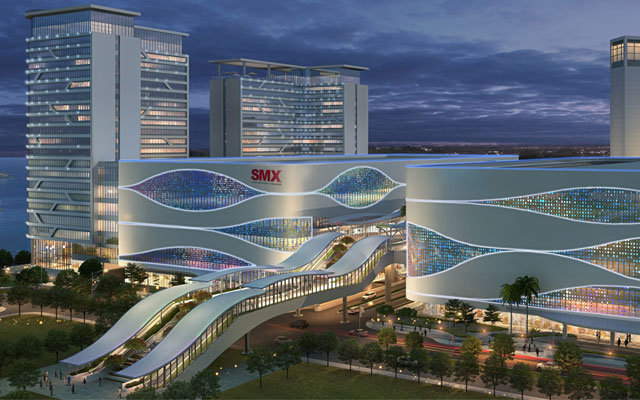
A rendering of BCCK2
Slated for completion in 2028, the new facility, known as BCCK2, will be located directly adjacent to the current venue. Both venues will be connected by a 70m-long sheltered, climate-controlled sky bridge, ensuring easy and comfortable access between facilities for all guests.
BCCK2 will have a 5,936m2 flexible main hall which can accommodate up to 9,500 people in theatre-seating or 340 exhibition booths, divisible into three halls; a multipurpose hall which can seat 1,000 people in banquet-style; 20 breakout rooms; a riverside concourse; and a five-level car park with 1,000 bays.
“In addition, the new BCCK2 will be rated ‘Bronze’ for GreenRE and ‘Certified’ under the Green Building Index, further emphasising our commitment to sustainable development,” said Simon.
Upon completion of BCCK2, the entire BCCK facility will have 34 breakout rooms, two large halls, and multiple multipurpose event spaces, 1,600 parking bays and EV charging stations.
Simon shared that the expansion also aligns closely with Sarawak’s Post Covid-19 Development Strategy 2030, which aims to position Sarawak as a leader in sectors such as green energy, digital transformation, healthcare, education, and more.
Lal Das: each APAC country is unique in its culture and contributions
Asia Pacific (APAC) is a critical growth driver for global business travel and GBTA’s latest forecast for 2025 shows spend is expected to reach US$632 billion, representing a six per cent year-on-year increase.
APAC countries also make up a third of the top 15 markets for spend – namely, China, Japan, South Korea, India and Australia – representing over US$563 billion; and China is and will continue to be a major engine of growth projected to reach US$$373 billion this year.
Lal Das: each APAC country is unique in its culture and contributions
GBTA’s newly-elected APAC regional director, Amarnath Lal Das – who is Accenture Solutions’ India travel and global crisis and compliance lead – told TTGmice that he will be working with all sector leaders and communities to shape initiatives that make travel more inclusive, resilient and future-ready.
“The region is one, but each country is unique in its culture and contributions,” Lal Das commented.
His priority will be “to work closely with my fellow board members and our advisory groups and staff across the region to ensure that we are understanding and delivering on the unique needs and interests of our members and partners”.
The aim is to engage members via the advisory boards to deliver solutions such as education programmes that provide them with the skills and knowledge they need to thrive.
“We’re also delivering in-person connection events, so that business travel professionals can meet and share ideas, insights and expertise,” he added.
He also named the priority of promoting the value and importance of business travel in the region, and will also help guide the continued growth of GBTA by introducing localised offerings and programmes.
There are around 500-plus GBTA members in the region and Lal Das sees membership increasing from every part of the region, most notably from Australia, China, India, Singapore and Japan.
Lal Das observed: “APAC is crucial, accounting for over 40 per cent of global business travel spend last year, according to GBTA research. But it is also a large and diverse region, with members across different countries having unique needs.”
Emirates has made key commercial team changes in Asia, aimed at reinforcing its market presence and supporting the development of UAE National talent.
Effective August 1, Jaber Mohamed, currently country manager Bangladesh, will take on the role of country manager Sri Lanka and the Maldives. Replacing him in Bangladesh is Talal Al Gergawi, currently country manager Zimbabwe.
From left: Jaber Mohamed and Talal Al Gergawi
The appointments are part of Emirates’ commercial outstation managers programme, which provides Emirati leaders with opportunities to broaden their expertise and deepen their understanding of local markets through on-the-ground experience.
This event featured a combination of discussions, exhibitions, and site visits
Held from July 17 to 20, 2025, the Global Coffee and Tea Association Forum 2025: Shaping the Future Together marked a major step in Chiang Rai’s business events development.
The forum, which took place at the Le Meridien Chiang Rai Resort, attracted 211 delegates, comprising 165 Thai and 46 international participants from 11 territories. Attendees engaged in knowledge exchange, networking, and business development, including direct visits to local plantations and processing facilities.
This event featured a combination of discussions, exhibitions, and site visits
The forum also included site visits to renowned tea and coffee plantations, such as Choui Fong Tea (Mae Chan), Wang Put Tan Tea (Doi Mae Salong), and Doi Chang Coffee (Mae Suai).
This forum, building on two prior international Tea and Coffee symposia, resulted from collaboration among the Tea and Coffee Institute of Mae Fah Luang University, Singha Park Chiang Rai Co., and the Thailand Convention and Exhibition Bureau (TCEB).
In addition, the Chiang Rai Brewtopia Green Season exhibition, held from July 18-20 at Mae Fah Luang Art and Cultural Park, featured approximately 40 coffee and tea entrepreneurs. This event offered international delegates direct access to unique blends from local producers.
Puripan Bunnag, acting president of TCEB, noted Chiang Rai’s proven capacity as a secondary city for major business events. “MICE is a powerful driver for the local economy. The forum reinforced the city’s ambition as a destination for quality tea and coffee and supported its goal of becoming a centre for national and international tea and coffee festival events.
“TCEB’s strategy involves promoting cities with unique strengths to boost their global MICE competitiveness. Chiang Rai, with its tea and coffee heritage, exemplifies this approach, strengthening its position on the global MICE map.”
Chiang Rai entered ICCA’s global city rankings in 2024. The city recently hosted the Spring Meeting of the International Association of Horticultural Producers in February 2025, and will host the PATA Destination Marketing Forum this November.
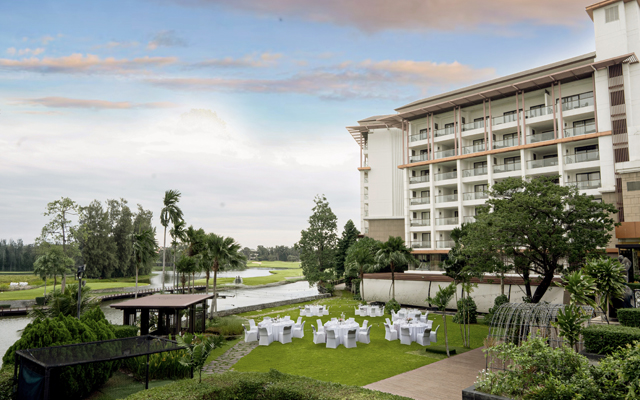
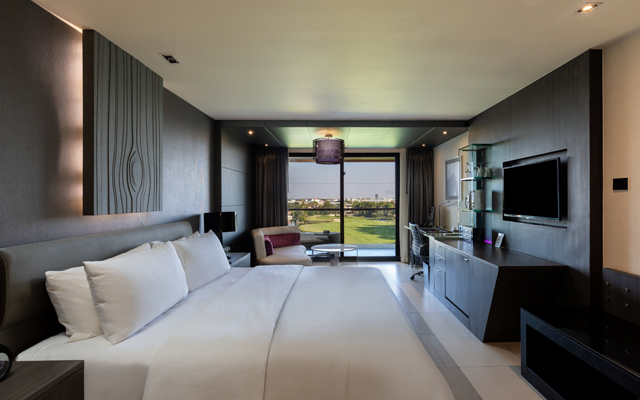
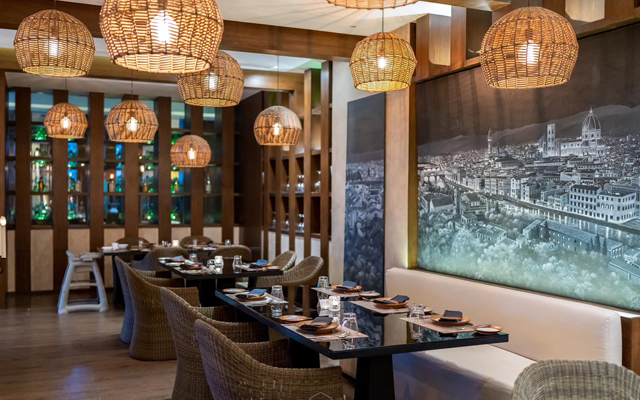
A polished urban retreat designed for business travellers, Hyatt Regency Kuala Lumpur at KL Midtown combines thoughtful design, seamless service, and exceptional facilities.
The five-star property excels in backing its expansive facilities with seamless service and personalised attention, setting the benchmark for luxury in Bangkok.