Asia/Singapore Saturday, 30th May 2026
Page 4

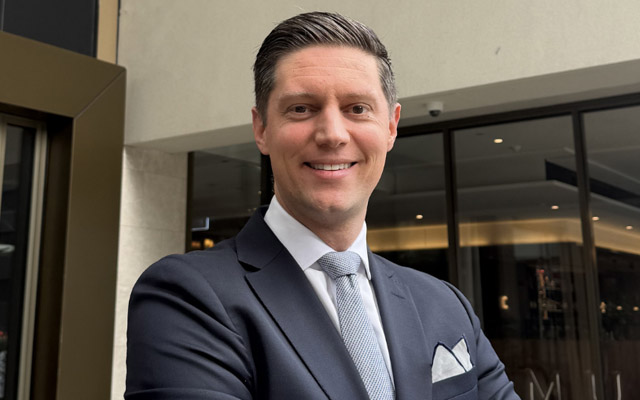
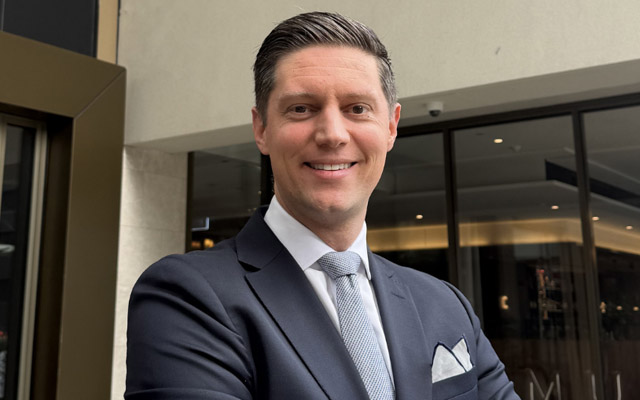
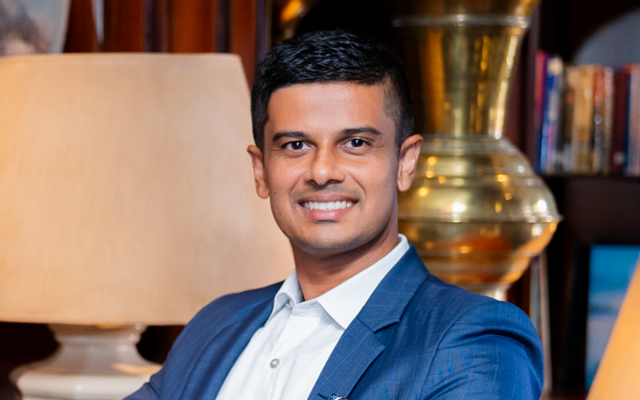
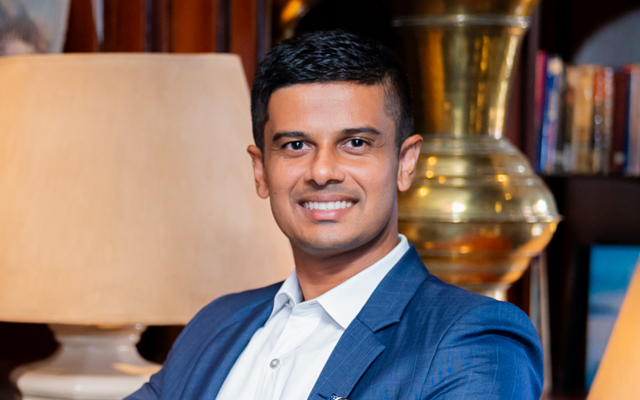
Oliver Schwartz leads as GM at Parmelia Hilton Perth

0

Parmelia Hilton Perth has appointed Oliver Schwartz as general manager, leading the property into its next phase.

He joins from DoubleTree by Hilton Melbourne Flinders Street, where he was hotel manager.

With 17 years of experience, he has held senior roles with Hilton in Beijing and across luxury hotels in London, spanning both operational and commercial leadership.

voco Amritsar appoints new leadership team

0

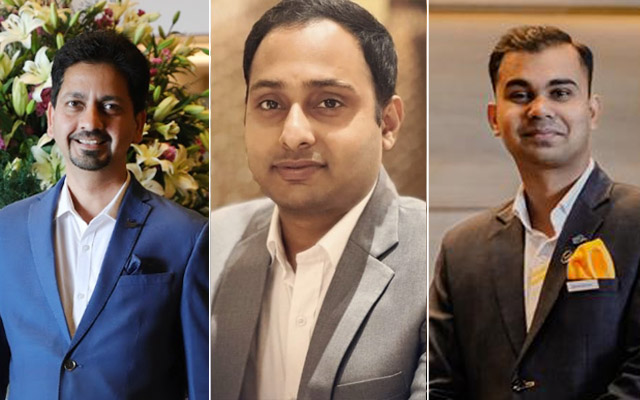
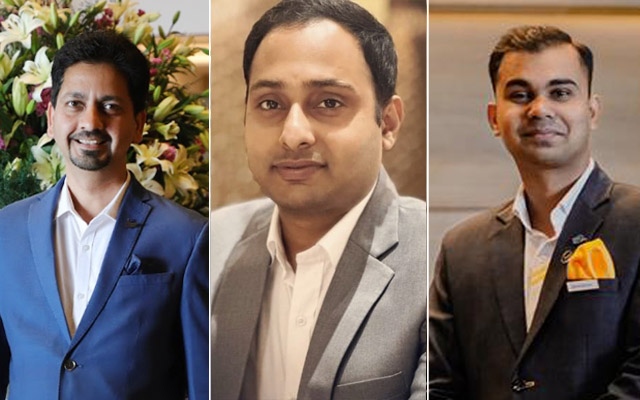
voco Amritsar has appointed Sunit Rana as director of sales and Roshan as director of finance and business support, leading its commercial and financial strategy.

Rana brings 19 years of experience across brands including IHG Hotels & Resorts, The Leela Palaces Hotels and Resorts, Radisson Hotel Group and Hyatt Hotels Corporation. Roshan joins from IHCL Goa and has previously worked with Hilton and Marriott International.

From left: Sunit Rana, Roshan and Shivendra Singh

The hotel has also appointed Shivendra Singh as director of human resources, overseeing people strategy and talent development.

Other leadership appointments include Saurabh Singh as executive housekeeper, Narendra Yadav as chief engineer, Radhika Chhetri as front office manager and Faizan Malik as security manager.

Passing the torch

0

What does this 10-year chairmanship mean to you?
It has been both an honour and a privilege to serve as the chairman of HKECIA for the past 10 years.

I am deeply grateful to the members who placed their faith in me and elected me to this position five times. I hope that, over the years, I have repaid their trust by working diligently to ensure that the business of supporting the exhibition and convention industry in Hong Kong has continued as smoothly as possible, weathering local and global challenges to the best of our ability.

This has been one of the professional highlights of my career. Despite the various challenges that have arisen, I must say that I have thoroughly enjoyed contributing to the conversation and discovering creative solutions to overcome these obstacles.

Looking back, how do you see the evolution of the exhibition industry in Hong Kong, and in what ways has HKECIA remained relevant to its members and the wider industry?
HKECIA serves as the most powerful unified voice for the convention and exhibition industry. During the pandemic, I was approached by several prominent players from related sectors representing live events, as they lacked a similar organisation with a direct line of communication to the government to address complex operational issues. This experience underscored for me the significance and strength of having an established Association that can advocate for our industry and ensure best practices are communicated to all stakeholders.

What key challenges are event organisers currently facing in Hong Kong, and how is HKECIA helping members tackle them?
One of the most interesting aspects of working for the Association is that the challenges we face are constantly evolving. During my tenure as chairman, we have encountered trade wars and tariffs, social unrest, a global pandemic, and numerous smaller disputes among industry stakeholders.

In some respects, the Association’s role is to act as a mediator in these disagreements; in others, it is to advocate to the government for increased support or legislative changes to ensure the smooth continuation of conventions and exhibitions. During the pandemic, several other executive committee members and I devoted significant time to working with the government to articulate the potentially devastating impact of closing venues, and the absence of in-person events for extended periods.

We successfully obtained unparalleled support and financial assistance as we began to reopen. We also navigated challenges such as ensuring that individuals could attend live events in a safe and manageable manner, safeguarding public health while allowing business interactions to continue.

Striking this balance was undoubtedly difficult, but through persistent dialogue, we were able to achieve the outcomes necessary for our survival. In particular, the venue subsidy schemes over the years have been instrumental in helping the industry re-establish itself.

Sustainability and digital transformation are major trends in the events sector. How is HKECIA addressing these issues to keep members competitive?
Sustainability and digital transformation are undeniably significant trends, and the HKECIA has taken a proactive approach to ensure we remain at the forefront of these developments.

A few years ago, we established a sustainability subcommittee as part of our executive committee. Over the past five years, I have witnessed substantial improvements in exhibition construction, leading to a much more sustainable industry. Waste has been reduced significantly, with both organisers and venues moving away from unsustainable practices.

We are currently in a phase where most organisers and venues have a solid understanding of how to enhance their sustainability. The focus is now shifting towards exhibitors, whom we need to guide on a journey to modify their habits rather than simply building booths the way they always have. This will take time, but we are progressing in the right direction.

Last year, we also launched a new subcommittee for technology and innovation. We are living through an incredibly fast-changing era marked by the rise of artificial intelligence. It is essential for our members to understand what best practice entails in this context. With this new subcommittee in place, we expect to see a significant increase in technology-driven content at our HKECIA annual conferences and seminars.

What lessons have you learned about guiding an industry association through both growth and crisis?
It is a challenging question, as I have learned a great deal while navigating the complex issues I mentioned.

One key theme all our members should remember is the importance of partnerships. Organisers, venues, contractors, and technology partners all rely on one another; none of us can thrive in isolation. Understanding this interdependence and finding ways to collaborate more effectively to solve problems is vital.

This gives me great encouragement, particularly during challenging times. All stakeholders in our industry strive to support one another, and in my experience, very few industries collaborate as effectively as the exhibition industry.

What do you see as the biggest opportunities for Hong Kong’s exhibition and convention industry in the next decade?
Hong Kong has repeatedly demonstrated its status as one of the most significant meeting places in the world.

The fundamental factors underpinning our success remain intact, with dedicated individuals in both the government and private sectors working to ensure this continues. I believe the outlook for the next decade and beyond is promising. While challenges will always arise, Hong Kong’s resilience and its ability to bring people together will ultimately ensure it continues to deliver excellence.

What’s next for you?
This is an election year for HKECIA, and I have already informed the ExCo that I will not be standing for re-election as chairman. I hope to work closely with my successors to ensure a smooth handover.

Having served more than three terms, and in the opinion of the ExCo having made extraordinary contributions to the Association’s mission, it has been confirmed that I will be appointed as honorary life president of HKECIA. From this position, I look forward to supporting the new chairman and the Association’s ongoing work.


SAP Concur, Amex GBT and SkyLink lead charge toward unified AI ecosystem

0
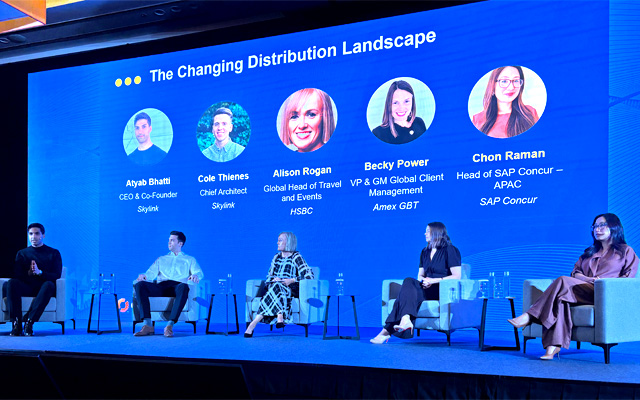
From left: Skylink’s Atyab Bhatti and Cole Thienes; HSBC’s Alison Rogan (moderator); AMEX GBT’s Becky Power; and SAP Concur’s Chon Raman

With established corporate travel vendors investing in AI and forming strategic alliances, joined by AI-native travel start-ups, a user-experience priority is finally becoming reality as the industry embarks on building a future-ready tech ecosystem.

Complete – by SAP Concur and Amex GBT – a next-gen, AI-powered platform, now combines travel booking, expense management, and servicing into a single, seamless experience; while SkyLink, an AI-native corporate travel platform, described as a pocket-sized travel agent and acquired by Amadeus in February 2026, is set to accelerate the deployment of AI-driven conversational technology in travel, transforming how enterprises plan, book, and manage travel.

From left: Skylink’s Atyab Bhatti and Cole Thienes; HSBC’s Alison Rogan (moderator); AMEX GBT’s Becky Power; and SAP Concur’s Chon Raman; photo by Caroline Boey

Panellists at The Changing Distribution Landscape – Building a Future-Ready Tech Stack at last week’s GBTA APAC conference, spoke enthusiastically about a better, more user-friendly experience and richer content.

Chon Raman, head of SAP Concur, APAC, assured buyers that “the next-gen travel and expense solution will reduce friction in booking travel, servicing, and visibility in the entire travel programme”.

Becky Power, vice president and general manager, client management, Amex GBT, said travellers on the road are looking for one app, and this will be rolled out in waves in Asia-Pacific.

Power added: “With agentic AI, the travel assistance for travel changes becomes a unified AI chat… and with the Amex GBT and SAP Concur strategic alliance, which deeply integrates Egencia with Concur Expense, the time it takes to search and book will fall below three minutes.”

Speaking on the power of SkyLink, Atyab Bhatti, CEO and co-founder, claims a booking time of just “99 seconds”.

Chief architect, Cole Thienes, described Asia-Pacific and countries such as Singapore, Malaysia, Indonesia and Vietnam as heavy AI adopters; and with nine out of 10 individuals using AI, SkyLink’s aim is to reduce “the surfaces” travellers interact with to create “a single plane of glass that is quick and easy to use”.

Bhatti continued: “SkyLink can absorb the complexity and is natural to the user.”

Moderator Alison Rogan, global head of travel and events, HSBC, and GBTA Board vice president, said buyers are looking for “an end-to-end solution, not silos”, and “want streamlined access to content and to be able to repurpose PAs to do other things”.

The session ended with eight, 90-second Venture Connect travel tech start-up pitches, where Travelin.Ai was the winner.

Associations urged to deliver stronger value to retain members

0

Associations must move beyond traditional networking roles and deliver stronger value propositions to attract, engage and retain members in an increasingly competitive landscape.

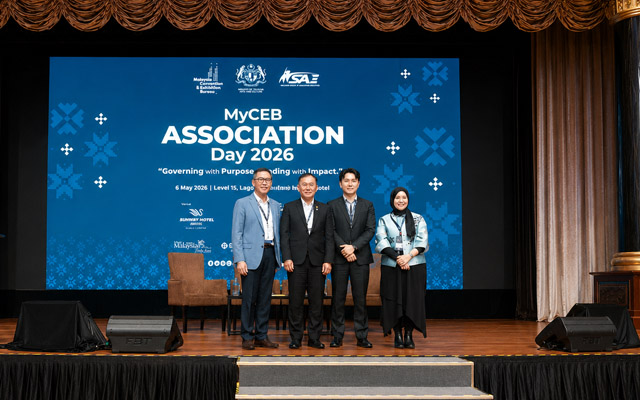
This was highlighted by speakers at the panel session entitled Membership matters: Turning Acquisition, engagement, and retention into growth at the recent Association Day 2026 conference organised by the Malaysia Convention & Exhibition Bureau.

From left: Malaysian Society of Association Executives’ Sunnny Chee (moderator); Selangor Freight Forwarders and Logistics association’s Alvin Chua; Malaysian Dental Association’s Chong Zhen Feng; and Malaysian Institute of Interior Designers’ Norshafina Ibrahim

One of the panellists, Alvin Chua, president of Selangor Freight Forwarders and Logistics association, shared how the association had evolved from a 12-member organisation in 1973 to close to 800 companies today.

He said the association’s growth was built on its ability to provide practical value to members through education, policy representation and industry advocacy.

Chua elaborated: “We provide strategic navigation. Members rely on the association to help them navigate changing customs regulations, environmental, social and governance mandates, and international logistics requirements. Companies join the association because they want a stronger voice in shaping industry policies.”

Another panellist, Chong Zhen Feng, president of the Malaysian Dental Association, acknowledged that retaining members remains a challenge for professional associations worldwide, even for long-established bodies.

He noted that younger professionals today expect tangible benefits and immediate value from associations.

To strengthen member engagement, the association has expanded its offerings beyond professional development programmes to include mediation support for patient disputes, partnerships with airlines and insurance companies, and preferential conference rates for members.

Chong added the association has shifted towards more personalised member engagement to improve renewals and retention.

“Instead of just sending emails, we ask our team to reach out personally through phone calls and messages. A lot of the time, it converts and they continue to remain members,” he said.

Meanwhile, Norshafina Ibrahim, president of the Malaysian Institute of Interior Designers, revealed that the institute has more than 4,000 members, the majority of whom are students, making the transition from student membership to professional membership particularly important.

To address this, the institute introduced a seed programme, which works closely with universities to absorb graduating students into the association while subsidising their admission and subscription fees during the early years of their careers.

“We understand that this is a very critical stage of their life. Financial pressures and changing priorities often discourage graduates from joining professional bodies,” she shared.

Sunny Chee, council member, Malaysian Society of Association Executives, observed that while membership numbers are often viewed as a measure of an association’s success, the real challenge lies in giving members “a reason to belong”.

He emphasised that recruitment, engagement and retention should not be viewed as separate functions, but as interconnected elements that contribute to the long-term growth of an association.

“When associations understand their purpose and deliver meaningful value, growth becomes a natural outcome,” he concluded.

Invisible policies, experience curators to reshape corporate travel: GBTA panellists

0
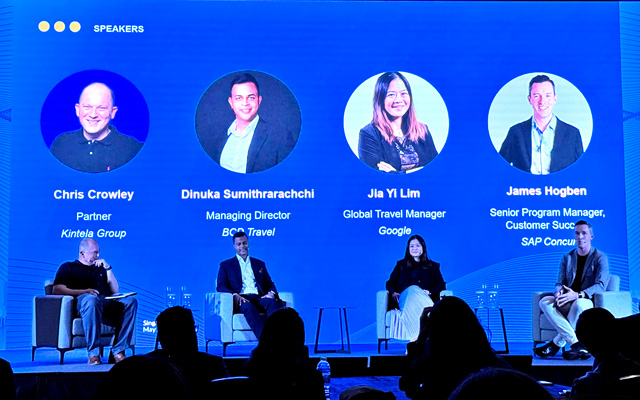
From left: Kintela Group’s Chris Crowley (moderator); BCD Travel’s Dinuka Sumithrarachchi; Google’s Lim Jia Yi; and SAP Concur’s James Hogben

As the workforce undergoes a generational handover, the architecture of corporate travel is being dismantled, and the role of the travel manager will evolve into an experience curator, say industry leaders on The Travel Manager 3.0: The Architecture of Future-Ready Programs and Outcomes panel at the GBTA APAC Conference in Singapore last week.

As agentic AI takes over the high-volume, repetitive tasks of booking changes and expense reconciliation, travel managers can reclaim the bandwidth to focus on the human element.

From left: Kintela Group’s Chris Crowley (moderator); BCD Travel’s Dinuka Sumithrarachchi; Google’s Lim Jia Yi; and SAP Concur’s James Hogben; photo by Rachel AJ Lee

James Hogben, senior programme manager at SAP Concur, indicated that the industry is moving toward “curated experiences”. He cited examples of travel managers using automated data to understand specific traveller personas – identifying, for instance, whether a traveller prioritises a high-quality coffee experience over a hotel gym. By focusing on these nuances, travel managers are no longer just delivering a service; they are designing journeys that drive better business outcomes and talent retention.

With Millennials and Gen Z expected to comprise 75 per cent of the global workforce by 2030, the days of asking employees to consult a dense policy document are also numbered, as these digital natives expect corporate tools to be as intuitive as the consumer apps they use daily.

As such, Lim Jia Yi, global travel manager at Google, argued that the most successful future programmes will feature an “invisible policy”. Rather than being a standalone document, regulations will be baked directly into the user interface.

“The options that surface are already tailored and required for the policy. By making compliance the default setting, travel managers can ensure a frictionless experience where the traveller stays in-programme because it is the easiest path, not because they are being policed,” Lim explained.

As booking channels become more fragmented across apps and chat, the point of control is also migrating. Historically, travel managers regulated programmes at the inventory level – limiting what a traveller could see – but control appears to be moving towards payment and treasury.

Panellists suggested that future regulation will happen through the expense and payment journey rather than the search methodology. By focusing on how money flows and using real-time data from automated expense systems, companies can offer travellers more choice and flexibility while maintaining a rigid, automated grip on the company’s budget and duty of care.

Dinuka Sumithrarachchi, managing director at BCD Travel, also talked about how the baseline of the industry has shifted. “The conversations that we have nowadays with our clients revolve a lot more around what kind of strategic value a travel programme can bring to the table,” he said, adding that success in 2030 will belong to those who can “strike that balance between technology and human capital”.

The overarching consensus from the panel is that the future travel manager will be defined by their ability to manage human capital rather than transactions.

“We get to define what it means to be a travel manager. Tasks we don’t like can be replaced by automation, leaving us to build stronger connections and relationships with our partners and our travellers,” stated Lim.

Cairns secures 6th World Ecoacoustics Congress for 2026

0
Wet Tropics Rainforest in Tropical North Queensland

Cairns will host the 6th World Ecoacoustics Congress from August 17 to 20, 2026, marking only the second time the event has been held in Australia.

Organised by the International Society of Ecoacoustics in partnership with James Cook University, the congress will convene global researchers and engineers at the Cairns Convention Centre to study the relationship between sound and environmental change.

Wet Tropics Rainforest in Tropical North Queensland

Paul Roe, dean, research, at James Cook University, said Cairns offered an exceptional setting for a global gathering focused on listening to the environment.

“Cairns is a natural fit for the World Ecoacoustics Congress because it gives delegates access to one of the most acoustically and ecologically diverse regions in the world. From rainforest soundscapes to reef environments, this is a place where ecoacoustics can help us better understand ecosystem health, biodiversity and the impacts of environmental change.”

The 2026 programme is also set to highlight the evolution of the field, including collaborative projects that integrate ecoacoustics with First Nations land and sea management.

Beyond the scientific sessions, the event is designed to immerse delegates in the local environment, with organisers encouraging visitors to extend their stays to explore Tropical North Queensland.

Business Events Cairns & Great Barrier Reef General Manager – Partnerships & Events Tara Bennett said: “The World Ecoacoustics Congress is exactly the kind of international meeting that aligns with Cairns’ strengths in science, sustainability and nature-based experiences…”

This 2026 edition follows Brisbane in 2018 and Madrid in 2024.

Bangkok Land transforms former hotel into an innovation hub for new ventures

0
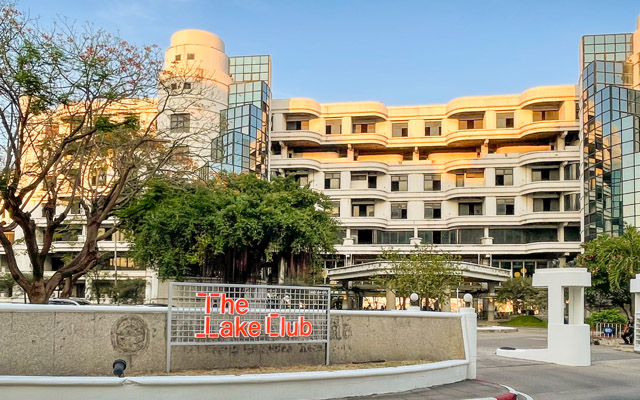
The Lake Club

Bangkok Land Co., the operator of IMPACT Muang Thong Thani, reimagines the former Eastin Lakeside Hotel as The Lake Club, a multidisciplinary hub designed to serve as a community destination and an experimental “business laboratory”.

Located along the Muang Thong Thani lakeside near the Pink Line monorail, the development shifts away from traditional hospitality toward a mixed-use model. The venue now integrates arts, culture, retail, and dining, alongside a dedicated space for classic and luxury car enthusiasts.

The Lake Club

Beyond its role as a social hub, The Lake Club functions as a testing ground for IMPACT’s future concepts. New ventures – such as the Culinova Lab menu testing site, The Collective creative showcase, and various niche coffee and craft beer outlets – allow the group to pilot and refine ideas in a real-world environment before scaling them across the broader IMPACT ecosystem.

The upper levels of the landmark building feature exhibition halls and art galleries, providing a platform for local creative expression. This transformation is part of a wider strategy to re-envision Muang Thong Thani as a transit-oriented smart city, blending commerce with lifestyle-driven urban spaces.

Future plans for the site include the introduction of vintage markets and pet-friendly programming, further establishing the lakeside precinct as a permanent fixture for both residents and international visitors.

Cinnamon Lakeside Colombo names hotel manager

0

Cinnamon Lakeside Colombo has appointed Ashan Peiris as hotel manager, strengthening its leadership team.

He joins from within Cinnamon Hotels & Resorts, where he most recently served as director of brand development. With experience across operations, brand strategy and resort management, he has held roles at Cinnamon Red Colombo, Cinnamon Grand Colombo and Cinnamon Bentota Beach.


1926 Heritage Hotel welcomes new GM

0

1926 Heritage Hotel has named Angelina Lazuardi as general manager, overseeing the property’s overall strategy, operations and performance.

She brings over 17 years of experience, most recently holding leadership roles with Kempinski, Marriott and The Parisian Macao, with a focus on operational and commercial performance.



Reviews

The Slate Phuket

Just 10 minutes from Phuket International Airport on the serene northern coast, this 178-key, Bill Bensley-designed resort offers delegates a quiet, tropical paradise steeped in Phuket’s tin-mining heritage

The Ritz-Carlton, Bangkok

The newly-opened Ritz-Carlton, Bangkok anchors the One Bangkok development with cosmopolitan elegance. Featuring the city's largest ballroom and a spectacular new penthouse suite, it delivers exceptional hardware and deeply authentic, soulful service for business and leisure travellers alike

Mama Shelter Zurich

Behind the imposing, Brutalist concrete that defines Zurich’s Oerlikon district lies a surprising secret. While its exterior honours the neighbourhood’s industrial roots, stepping inside Mama Shelter reveals a vibrant, neon-soaked world that is a far cry from its rigid shell