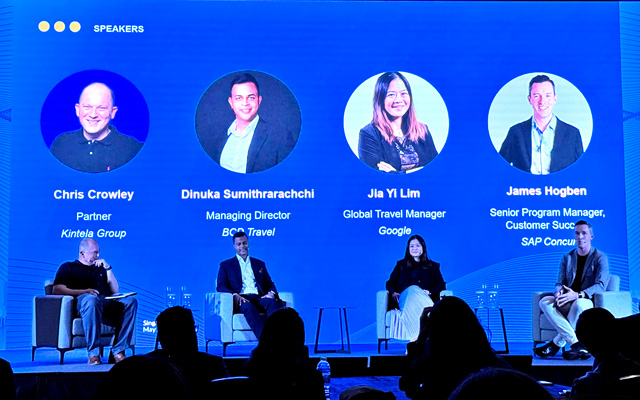
As the workforce undergoes a generational handover, the architecture of corporate travel is being dismantled, and the role of the travel manager will evolve into an experience curator, say industry leaders on The Travel Manager 3.0: The Architecture of Future-Ready Programs and Outcomes panel at the GBTA APAC Conference in Singapore last week.
As agentic AI takes over the high-volume, repetitive tasks of booking changes and expense reconciliation, travel managers can reclaim the bandwidth to focus on the human element.
James Hogben, senior programme manager at SAP Concur, indicated that the industry is moving toward “curated experiences”. He cited examples of travel managers using automated data to understand specific traveller personas – identifying, for instance, whether a traveller prioritises a high-quality coffee experience over a hotel gym. By focusing on these nuances, travel managers are no longer just delivering a service; they are designing journeys that drive better business outcomes and talent retention.
With Millennials and Gen Z expected to comprise 75 per cent of the global workforce by 2030, the days of asking employees to consult a dense policy document are also numbered, as these digital natives expect corporate tools to be as intuitive as the consumer apps they use daily.
As such, Lim Jia Yi, global travel manager at Google, argued that the most successful future programmes will feature an “invisible policy”. Rather than being a standalone document, regulations will be baked directly into the user interface.
“The options that surface are already tailored and required for the policy. By making compliance the default setting, travel managers can ensure a frictionless experience where the traveller stays in-programme because it is the easiest path, not because they are being policed,” Lim explained.
As booking channels become more fragmented across apps and chat, the point of control is also migrating. Historically, travel managers regulated programmes at the inventory level – limiting what a traveller could see – but control appears to be moving towards payment and treasury.
Panellists suggested that future regulation will happen through the expense and payment journey rather than the search methodology. By focusing on how money flows and using real-time data from automated expense systems, companies can offer travellers more choice and flexibility while maintaining a rigid, automated grip on the company’s budget and duty of care.
Dinuka Sumithrarachchi, managing director at BCD Travel, also talked about how the baseline of the industry has shifted. “The conversations that we have nowadays with our clients revolve a lot more around what kind of strategic value a travel programme can bring to the table,” he said, adding that success in 2030 will belong to those who can “strike that balance between technology and human capital”.
The overarching consensus from the panel is that the future travel manager will be defined by their ability to manage human capital rather than transactions.
“We get to define what it means to be a travel manager. Tasks we don’t like can be replaced by automation, leaving us to build stronger connections and relationships with our partners and our travellers,” stated Lim.