

The Datai Langkawi rolls out new nature experiences and upgraded facilities
The Datai Langkawi in Malaysia has developed a number of fresh nature experiences, relaunched its signature The Chef series, and launched two new room categories, as Malaysia’s borders reopen.
New for 2022, The Nature Centre at the Datai Langkawi invites guests to participate in reef protection activities at the centre’s new Coral Nursery, learn about the resort’s reforestation efforts at the Native Tree Nursery or discover how to harvest the unique Trigona itama honey from the resort’s stingless beehives with a new “Bee a Beekeeper” activity.

Meanwhile, the resort’s sustainable craft-making centre, The Lab – built from over 9,000 used wine, champagne, and liquor bottles – has also been extended with an open-air annexe to conduct upcycling workshops.
Outdoors, the resort’s inspirational Poet’s Trail has been relaunched with a series of poems by Max Wallis, Khalil Gibran and The Datai’s Resident Naturalist, Irshad Mobarak.
The Datai Langkawi also welcomes back The Chef Series, a signature chef residency dining experience that welcomes culinary stars to its kitchens throughout the year. Previously, guest chefs included luminaries as Michel Roux, Nils Henkel and Michel and Sebastien Bras.
The focus for this year is ‘Eclectic Malaysian’ Dining, spotlighting the country’s culinary talents. From April 22-23, 2022, chef Azli Ahmad from OpenHouse KLCC, will champion Malaysian flavours based on recipes handed down by mothers and grandmothers.
For their menus, the chefs focus on local ingredients, especially what they can hand-pick from the resort’s own permaculture garden where the resort team grows turmeric, chilli, lemongrass, pandan and many more ingredients essential to authentic Malaysian fare. Fresh fish and seafood are predominantly sourced from Langkawi’s fishermen and organic chicken is available from a local village farm.
Some of the chef residencies are accompanied by cooking demonstrations and cooking classes, where guests are able to enjoy a hands-on gastronomic experience creating and enjoying their own culinary creations, under the guidance of the chefs themselves.
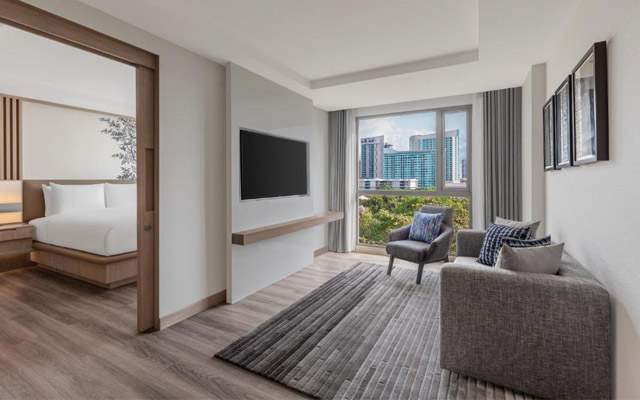
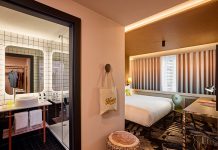
The Datai Langkawi has also introduced two new room categories: the Canopy Garden and the Rainforest Premium Villa. The five new Canopy Garden rooms are ideal for larger groups, offering direct access to an outdoor private patio and seating area, while the Rainforest Premium Villa offers enhanced privacy views of Anak Datai River and Sungai Datai.
Thailand scraps PCR tests to boost tourism
Thailand plans to scrap the mandatory on-arrival Covid-19 PCR test for foreign visitors starting from May, as the country steps up efforts to lure more tourists back.
The PCR tests will be replaced with the quicker ART tests at airports, Thailand’s deputy health minister Sathit Pitutecha said on Friday, after a meeting with the Covid-19 panel.

Vaccinated travellers will also no longer need to reserve a one-night hotel stay to secure visas, joining other countries such as the Philippines and Singapore in easing border restrictions.
The Test & Go scheme has been seen as a major deterrent for travellers, and the hospitality industry has long asked for the programme to be scrapped.
Thailand’s Covid task force will review the proposed visa relaxations again over the new few weeks.
Surge in business event enquiries for Queenstown
The Queenstown Convention Bureau (QCB) has reported a dramatic increase in business event enquiries, following the recent New Zealand government announcement welcoming Australian business events groups back into the country.
According to the bureau, Australian leads are up 366 per cent for 3Q2022, while hotels in Queenstown are reporting a great increase in queries.

Significant investment over the past two years in accommodation, facilities and services puts Queenstown in a good position to support the return of business events.
Accommodation capacity has increased by 38 per cent since June 2018, new activities such as Oxbow and iFly are now available, new restaurants and bars have opened, and airlines have confirmed they will increase flights between Australia and Queenstown.
Jana Kingston, business development manager – Australia and North America at QCB, shared that she met with over 60 buyers at the recently-concluded AIME in Melbourne, at which Queenstown’s new venues and activities were showcased, generating almost 20 leads.
“To say we are excited to welcome Australian business events and delegates back to Queenstown is an understatement. We have spent two years preparing for this day, we have used our downtime wisely and we are ready to show why Queenstown is still one of the world’s top business event destinations,” said Kingston.
Back in form

What is your outlook for Thailand’s MICE industry this year?
The year 2022 is the beginning of the comeback. I think Thailand is in a good position to win business. We have reopened our borders, and have clear health and safety procedures in place. However, while countries have announced border reopenings, conditions apply and facilitations vary, so different markets will have different timelines for returning to Thailand.
Regardless, we have confidence that business events will return substantially this year.
What are some of the challenges TICA and its members are facing right now, as a result of the pandemic?
The challenge of staying afloat is past, with the damage from the pandemic felt in varying degrees. In preparation for tourism comeback, our biggest challenge now is having to deal with resignations and rehiring of experienced staff who have left the industry.
This is the period where MICE positions are being filled, which means that business operators have to deal with understaffing issues. The silver lining is that this will help strengthen Thailand’s approach in providing efficient and professional services underpinned by our renowned Thai hospitality.
How is TICA working with its members to overcome these challenges to hasten recovery?
Our members are well aware of the challenges ahead, and to their credit, they have navigated these past few years as best as they could. With the help of TCEB (Thailand Convention & Exhibition Bureau), many local companies have sponsored key personnel to participate in various training and industry certification courses.
How will TICA work with TCEB to further position Thailand as a preferred international business events destination?
Throughout the pandemic, both TICA and TCEB have constantly been in contact with media and event planners – sharing market intelligence, maintaining communications, and organising the recently-concluded fam trip post-lockdown; it was the first fam trip post-lockdown.
The trip was meant to show how ready Thailand is to welcome and accommodate international events, and it also reveals how eager our source markets are keen to hold events in Thailand once again.
What opportunities do you see in the near term for TICA and the business travel industry at large?
TICA has gained more members during recent years, and at this point, I feel the business events industry is ready for a reboot and restart. With the easing of protocols, I anticipate the healthy materialisation of business in due time.
Corporate meetings will take the lead, followed by incentive travel, while international conventions and trade exhibitions will take a slightly longer time to return. I cannot stress how important business events are to help drive Thailand’s economy.
Many destinations in South-east Asia have opened, and it is increasingly competitive now. What is Thailand’s strategy for standing out and winning business?
I believe Thailand will be even more appealing as a business events destination, as we have been recognised for our successful efforts in managing the pandemic. This, buoyed by TCEB’s marketing and communications efforts, new MICE infrastructure, facilities and attractions, Thailand will continue to be a favoured destination for both decision-makers and future delegates.
Zoom sets its place as a critical piece of the future communications puzzle
Founded 11 years ago as a communications technology company in the US, Zoom is today a household name and a popular verb, thanks to people’s heavy reliance on the solution throughout the pandemic.
As communication needs changed amid travel and social disruptions, Zoom blazed an innovative trail over the past 18 months, dishing out Zoom Phone, Zoom Rooms, Zoom Apps, Zoom Events, and Zoom Contact Center.

“The world is moving into a hybrid space, and all these products that we have introduced are setting us up for that hybrid world,” said Ricky Kapur, head of APAC, Zoom, in an interview with TTGmice.
According to Kapur, these communications solutions are seeing strong adoption. Zoom Phone has acquired two million users in a period of 18 months, and is regarded as one of the fastest-growing cloud products in the market.
Zoom Apps, launched in July 2021, has more than 50 different applications that are integrated into Zoom “to make meetings more fun, to be more feedback oriented, to ‘gamify’ meetings, and to also run business workflows (more efficiently)”, he detailed.
Third-party apps available to users include Asana, which is designed to help teams organise, track, and manage their work; DocuSign, which allows users to manage electronic agreements; and HubSpot, which is designed for marketing, sales and customer service.
As an all-in-one event management solution, Zoom Events is being used to host internal events like town halls, all-hands meetings and new hire orientations.
Singapore’s National Day Rally 2021 leveraged Zoom Webinar to bring together 1,800 attendees online alongside in-person participants. Zoom also used Zoom Webinar for its own Zoomtopia 2021, the annual high-impact customer event. From familiar features like Q&A, polling and real-time chat to more sophisticated features like scheduling live and pre-recorded sessions, live interpretation and live transcription, Zoom was able to host a more inclusive experience for attendees around the world.
In an increasingly hybrid workplace, Kapur expects Zoom products to play an even more critical role in connecting people in multiple locations, and facilitating the agility that companies will need going forward.
When asked for his views on the constant debate on the possible demise of online communications and events as the world returns to international travel, Kapur said it was “a highly exaggerated thought process”.
He said many in-person events that have resumed recently in Singapore and other reopened destinations were conducted in a hybrid format that allowed subject matter experts to still be involved even when they were unable or unwilling to travel for the event.
“Event organisers were even creating little kiosks with Zoom Rooms, where participants can go in and meet a subject matter expert who may not be physically present in that event,” he said.
To emphasise his point about the continued and growing relevance of online communications, particularly for Zoom products, Kapur listed three major shifts in business operations.
The first shift is occurring in the employee workforce, where organisations are recognising the importance of providing flexible work arrangements to retain staff, which has got them “thinking very deeply about how they execute the return-to-work process, and how they can create inclusive, productive and collaborative work environment”.
“People have the choice to work in a manner that makes them most productive, most collaborative, and most inclusive. We’ve seen enough data and research out there. Ernst and Young’s study showed that in South-east Asia, nine out of 10 people want to work in a hybrid world. In our own survey with Qualtrics, where we polled people in Singapore, 84 per cent of them expect work to be virtual and hybrid,” he elaborated, adding that employees would move on if they were not given a productive environment to perform.
The second shift is around customer servicing, where companies are deliberating on the best manner to provide a rich and immersive experience. In the space of banking, for instance, banks are devising ways to provide efficient services that do not require customers to make a physical journey to a bank branch or have staff travel to a customer’s home, which hampers productivity.
Citing another example of such a shift in the retail sector, Kapur said companies are looking at ways to welcome purchases online, but with the option to beam customers into the store to speak with real service staff and see the product in a live video. Customers can then decide to buy it online, or visit the store in person.
“Companies that reimagine the customer experience with a video-first lens will win in this era,” he stated.
The third shift is around new digital platforms – an “exciting” observation that is strong in Asia-Pacific. “Companies are thinking of recreating things like education technology or virtual platforms for digital health. Many of them are embedding Zoom into their platform to connect better with the consumer,” he shared.
Advancements over the past two years have strengthened Zoom, giving it a larger physical presence here in Asia-Pacific. Kapur said the company now has people servicing their expanded customer base, and more partners on board to engage customers.
The company will continue to do more going forward, particularly in making Zoom more accessible to developers.
“We have opened our developer platform so that any company that wants to embed Zoom into their platform can do so very easily. As a result, we’re seeing new digital platforms being built for health tech, fintech, retail tech, and more,” said Kapur.
“People are building Zoom into their platform and reaching new communities. We are absolutely critical to the next phase of evolution, of communications in business, and that shows up in our numbers. We’ve had record-breaking two quarters in terms of revenue,” he added.
In 3Q2021, Zoom’s total revenue was US$1,051 million, up 35 per cent year-on-year, while the following quarter recorded US$1,071 million, up 21 per cent year over year.
It rounded up the fiscal year 2022, which ended January 31, 2022, with total revenue of more than US$4 billion, growing 55 per cent year-on-year along with increased profitability and operating cash flow growth.
Meliá Chiang Mai celebrates grand opening
Meliá Chiang Mai, the first five-star hotel to debut in Chiang Mai since the pandemic, has opened in northern Thailand.
Within the 22-storey tower and adjoining seven-floor podium building are 260 keys. Rooms sizes start from 30m2, up to suites at 113m2. All rooms feature mod-cons such as a flatscreen TV with a selection of international channels, tea- and coffee-making facilities.

For meetings, the property’s extensive conference facilities include a 358m2 Yi Peng Grand Ballroom and two function rooms on the second floor. The ballroom’s 173m2 pre-function area is connected to the outdoor swimming pool and Tien Pool Bar. As part of the ‘Power Meetings by Meliá’ programme, the Power Lounge features a pool table, drinks area and funky seating suited to down-time between meetings.
On the seventh floor, the 185m2 Khom multipurpose function room, opens to a 222m2 outdoor terrace with views of Chiang Mai, river and mountains.
F&B options include a rooftop bar on 22nd floor, all-day dining restaurant Laan Na Kitchen, Mai Restaurant and Bar serving northern Thai-style dishes with Mediterranean influences, Ruen Kaew Lounge wellness cafe, and a pool bar.
In addition to its indoor area seating 110 diners and patio area catering to 26 people, Laan Na Kitchen also features four private dining rooms for corporate groups.
Other recreational facilities include an executive lounge, the YHI Spa with seven treatment rooms, as well as a gym, swimming pool, and kids club.
Meliá Chiang Mai is located six kilometres from the Chiang Mai International Airport, near an array of tourist attractions including the Old Town, the city’s oldest temple Wat Chiang Man, and Ang Kaew Reservoir. Other attractions in the surrounding area include the elephant rescue centre Elephant Nature Park, the Mae Ya Waterfall, and UNESCO’s latest biosphere reserve Doi Chiang Dao.
TTG Conversations: Five Questions with Sharifah Alhabshi, BCD Travel
Corporate desire to return to business travel is intensifying, and three-quarters of BCD Travel clients have indicated that such activity helps them work more efficiently, shares Sharifah Alhabshi, director, program management – Asia with BCD Travel.
In this episode of TTG Conversations: Five Questions, Sharifah also discusses how booking processes and travel patterns have changed, factors that are slowing down corporate travel recovery, the impact of the Ukraine-Russia conflict on business trips, and what corporate travel managers, as well as TMCs, can do to reassure travellers who are still apprehensive about travelling again.
Alma Resorts appoints first sustainability officer
Vu Ngoc Linh – a hospitality veteran with a decade’s experience in F&B – has stepped into the position of sustainability officer at Alma Resort in Vietnam.
Vu has been tasked with tracking the property’s energy use, resource conservation, recycling, pollution reduction, waste elimination, transportation, education efforts and building design.

The role also involves creating sustainability programmes, budgets and schedules, evaluating the success of sustainability initiatives, and managing three staff committees focused on ‘green products’, ‘innovation and solutions’ and ‘people and partnerships’.
One of Vu’s new projects is the installation of 5,634 solar panels totalling 12,500m2 at Alma. With a capacity of 2,480 kilowatts peak, the solar power system will fuel between a quarter to almost half of Alma’s energy needs depending on occupancy.
Courtyard by Marriott Melbourne Flagstaff Gardens names new chief
Carolyn Smith is the general manager of Courtyard by Marriott Melbourne Flagstaff Gardens – the Courtyard brand’s first hotel to open in Melbourne.
Smith brings 20 years of hospitality and luxury hotel management experience, having worked at numerous properties like The Westin Melbourne, The Langham, London, and the Sheraton Melbourne.

Prior to this appointment, Smith was director of operations at Sheraton Grand Mirage Resort Port Douglas.
She is one of the company’s youngest female general managers in Australia, and oversaw all aspects of the new-build four-star property and 20-plus-strong opening team.


Waldorf Astoria Hotels & Resorts will plant its first Australian flag in Sydney early in 2025, following a signing last week for the Waldorf Astoria Sydney within the One Circular Quay mixed-use development.
Construction has commenced on the 28-floor, 220-key luxury hotel, which will enjoy a prime location in the city and offer guests unrivalled views of the iconic Harbour Bridge and Opera House.
Room inventory will comprise 179 guestrooms and 41 suites, while other facilities onsite include the Waldorf Astoria Spa on level one, two original restaurant concepts, a rooftop bar, and Peacock Alley, a signature central gathering place.
“As the first Waldorf Astoria property to debut in Australia, Waldorf Astoria Sydney signals Hilton’s commitment to expanding our luxury portfolio to the world’s most sought-after destinations,” said Nils-Arne Schroeder, vice president, luxury & lifestyle, Asia Pacific, Hilton.