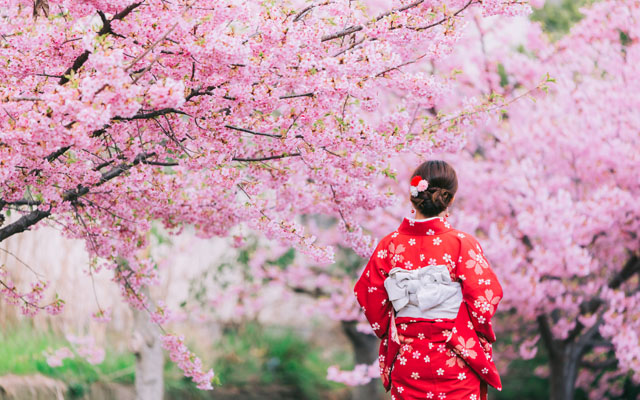
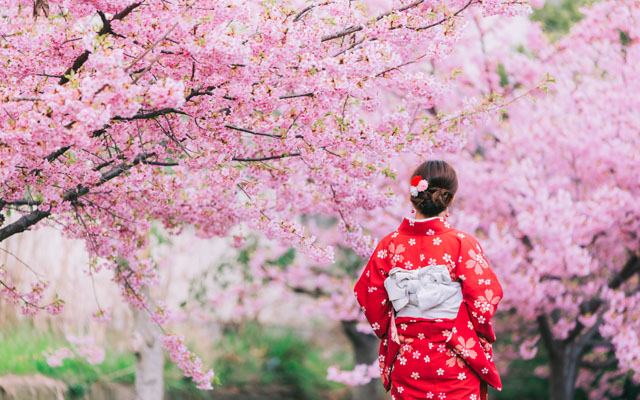
Following on from a trial reopening in May to permit small group tours from four countries, Japan is now set to allow entry of some package tour groups from 98 countries and territories, including the US and China, starting June 10.
No Covid tests or quarantine will be required upon entry for these tourists, regardless of vaccination status.
Japan to ease border restrictions further from June 10
The announcement came from prime minister Fumio Kishida on May 26. Details that followed stated that permitted tour groups must be sponsored by Japanese travel agencies and similar organisations responsible for the visitors, and tour guides will accompany the travellers throughout their stay. Activities will be carefully monitored.
According to news reports, Kishida acknowledged that “active exchanges between people are the foundation of the economy and society” in his speech at the Future of Asia conference in Tokyo.
Leading up to June 10, preparations will be made to allow international flights to land at New Chitose airport in Hokkaido and Naha airport in Okinawa.
Tourist numbers are likely to remain limited at first.
Japan had earlier announced intentions to double its cap on arrivals from overseas to 20,000 a day starting June.
At the same time, countries and regions will be divided into three categories – red, yellow and blue – depending on their assessed virus risk.
Travellers arriving from countries or regions on the blue list can bypass quarantine with proof of a negative pre-departure PCR test, according to the Foreign Ministry.
Travellers on the yellow list will have to show proof of vaccination with selected vaccines to skip quarantine.
Japanese travel and tourism stakeholders have called for the country to reopen to tourists fully or be left behind in global tourism.
Flight Centre Travel Group (FCTG) has appointed Bree Milkovic to the role of senior vice president, head of digital, for the company’s portfolio of corporate brands.
Reporting to chief marketing officer, Frits de Kok, Milkovic takes up her new role on June 1, 2022, and will be relocating to Toronto.
Milkovic will be responsible for developing and implementing digital strategy with a focus on creating omnichannel digital acquisition and retention programmes to deliver revenue and growth for the company’s FCM and Corporate Traveller businesses.
Born in Australia, she first joined Flight Centre as digital marketing manager Australia in 2019.
Prior to FCTG, Milkovic forged a decade-long career in omnichannel digital marketing strategy, digital platform management and customer experience across B2B, B2C, e-commerce, non-profit and government sectors.
ASM Global has activated succession plans for Brisbane Convention & Exhibition Centre (BCEC), the venue management company’s flagship venue.
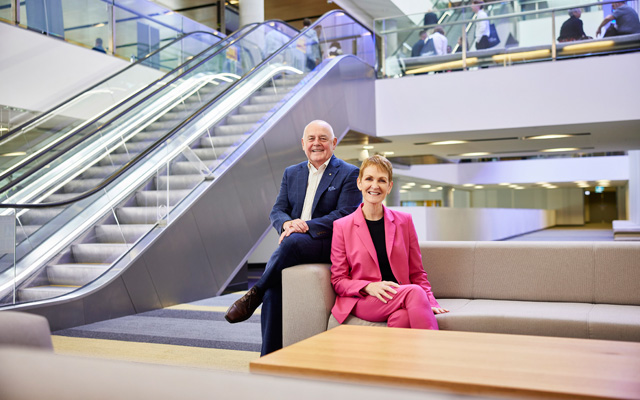
BCEC’s current general manager Bob O’Keeffe will combine his new position as CEO of BCEC with that of chief operating officer – venue operations for ASM Global (APAC), a newly-created role to meet the growing footprint of ASM Global APAC.
From left: Bob O’Keeffe and Kym Guesdon
O’Keeffe will spend most of his time on head office duties, while also retaining involvement in BCEC operations for the immediate future.
Meanwhile, Kym Guesdon, currently holding the dual role of ASM Global group director, HR, for the region as well as the BCEC HR director role, has been appointed as BCEC general manager.
Guesdon is one of four female general managers of ASM Global venues in the Asia Pacific and Middle East region, and is only the second person to hold that position in BCEC 26-year history.
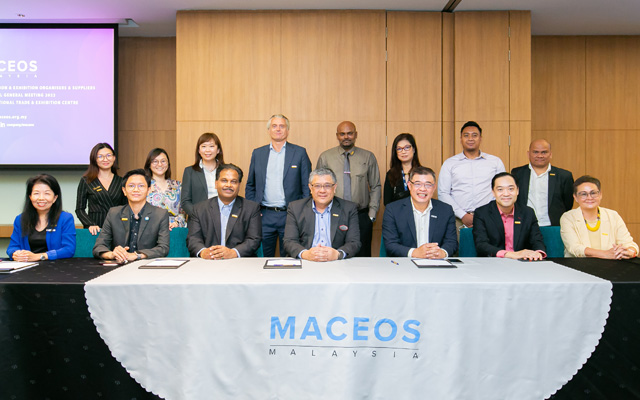
The Malaysian Association of Convention and Exhibition Organisers and Suppliers (MACEOS) recently unveiled the MACEOS Strategic Roadmap 2022-2030 during its Annual General Meeting (AGM) on May 24, 2022.
The MACEOS Strategic Roadmap 2022-2030 emphasises on innovation, development, education and advocacy, and shared the strategies, actions and key performance indicators for industry players to uphold and implement over the next nine years. It further identified the business events industry’s opportunities, challenges, and potential that would facilitate recovery, economic growth, and nation-building.
MACEOS Executive Committee 2022/2024
The Roadmap’s mission includes positioning MACEOS as an industry consultant; advocating the business events economy as a key contributor to the national economy; encouraging the industry’s continued growth; and being an education hub in South-east Asia.
Addressing members at the AGM held at the Malaysia International Trade and Exhibition Centre, MACEOS president, Francis Teo, said that the industry needed a new narrative and branding to strongly convey its key role as an economic enabler and nation builder.
“We can no longer identify ourselves merely as event organisers, venue operators, or logistics providers. Instead, we must be very clear about the role of business events in driving innovation, product development, knowledge transfer, network creation, accelerating industry impact and economic growth. These are the narratives we need to drive home again,” he said.
Teo also mentioned the importance of using data to strengthen the value of business events. “Utilising this data to make better events and content will deliver great value to clients and strengthen our position as an invaluable part of the economy.”
Being one of the worst-hit industries during the pandemic, Teo pointed out that the reopening of global borders was an opportunity for industry players to jump to action.
“It is my greatest hope that the MACEOS Strategic Roadmap 2022-2030 will chart a new chapter for business events industry stakeholders. Let it guide us to move forward with purpose and greater awareness of the power of business events,” he concluded.
In 2019, the business events industry attracted over 540,000 international business travellers to Malaysia, which contributed RM3.9 billion (US$890 million) in direct expenditure and RM9.2 billion in economic impact to the country.
Accor’s midscale Novotel brand has emerged in Melbourne with the opening of Novotel Melbourne Preston, following an extensive refurbishment and rebrand of an existing property.
Event organisers will find 16 function spaces within the property standing on Bell Street at Preston, all of which have been refreshed and renovated with new carpets, curtains, reupholstered chairs and an AV upgrade.
Rising seven levels, the hotel comprises 383 guestrooms, suites and fully self-contained studio apartments, some of which offer views of the Dandenong. All rooms also feature modern technology and facilities including a Smart TV, multiple USB hubs, workspace, in-room safe and minibar on demand.
Meanwhile, the ground floor of the hotel has been activated with the addition of two new reception spaces, a new grab and go Stampton & Co café, as well as an assortment of seating arrangements and furniture, offering guests a range of options from a quick set down, lounge area, co-working and informal meeting spaces, plus large meeting tables with integrated power.
The hotel is also home to a new onsite restaurant, The Stampton, which opened in April 2022, serving an all-day dining menu.
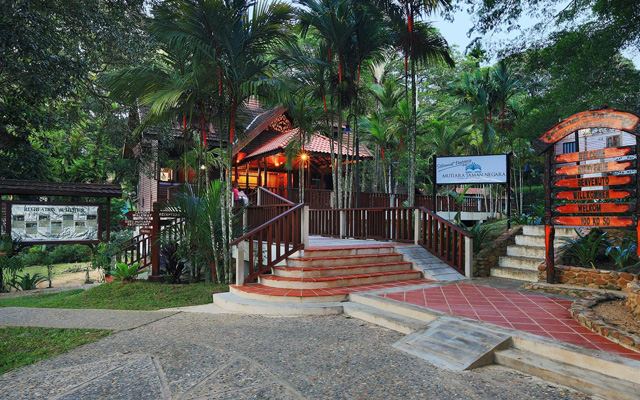
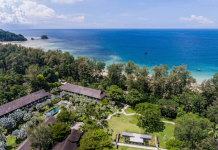
Mutiara Taman Negara Resort offers a nature-based setting for corporate groups
Corporate bookings and enquiries from Singapore are going strong, Malaysian hoteliers indicate, buoyed by the ease in travel regulations, as well as the strong Singapore dollar.
The Ritz-Carlton, Langkawi director of sales and marketing, Zulkifli Rahman, said: “We are getting a lot of enquiries from c-level corporate clients looking to hold meetings here. Group sizes are small, with around 10 to 15 people and meetings usually will be one full day or 1.5 days.”
Mutiara Taman Negara Resort offers a nature-based setting for corporate groups
The interest to hold meetings in Langkawi, he elaborated, was due to the good flight connectivity to Singapore – which some companies have established their headquarters – as well as the island’s duty-free status.
Another five-star hotel that reports seeing increased corporate business from Singapore is the G Hotel Kelawai in Penang.
The hotel’s director of sales and marketing, Christina Tan, said bookings for corporate meetings have been strong for May, and forward bookings for June and July are also looking healthy.
“Many of our corporate clients have offices and businesses in Penang, hence (it is convenient) to hold face-to-face meetings in our hotel.”
Tan has also noticed that groups from Singapore now have reduced length of stays, and their schedules are not as packed.
“Pre-pandemic, Singapore meeting groups tend to stay a week and have a packed schedule. Now their stays last three to four days, but they have more free time. We also see some spouses tagging along, but not as many as in the past,” she told TTGmice.
Meanwhile, Mutiara Taman Negara Resort located north-east of Kuala Lumpur, is also reporting strong interest from Singapore corporates for July and August, mainly for teambuilding events and incentives, said acting resort manager Kingston Khoo. He added that budgets for such groups have increased around 10 per cent as compared with 2019.
The resort he shares, is generally popular with companies who want to be closer to nature, and Mutiara Taman Negara Resort fits the bill as it is the only resort within the vast Taman Negara national park.
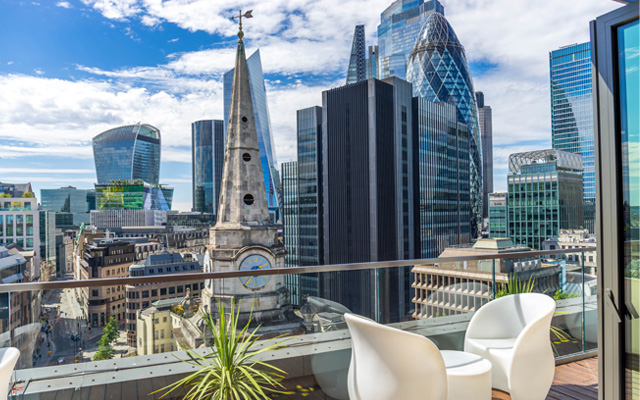
London is a city that global knowledge hubs with strong influence in international associations
Global convention industry consulting firm GainingEdge recently unveiled its second annual report on Leveraging Intellectual Capital of convention destinations, where London topped the destination rankings in terms of the strength of its international association leadership.
London – the city also ranked top in the same report last year – was followed by Paris, Tokyo, Beijing, and New York, indicating these cities are global knowledge hubs with strong influence in international associations.
London (its CBD pictured) is a global knowledge hub with strong influence in international associations
Milos Milovanovic, Head of GainingEdge Analysis and Research, said in a virtual media briefing on Monday: “These five cities are key global knowledge hubs which concentrate over 10 per cent of the total available intellectual capital, with 2,756 local leaders active.”
In addition, destinations that experienced the greatest increase in the influence of their local leaders on boards compared to the previous year were: Sydney with its leaders active in 46 additional boards compared with the previous year, followed by Kuala Lumpur and Singapore, both a tie with leaders active in 34 additional boards and Seoul, with leaders active in 28 more boards.
The report also noticed a very high level of correlation between GainingEdge’s intellectual capital rankings and the consulting firm’s International Convention Destination Competitive Index 2021 global rankings. The top 20 cities in terms of intellectual capital are all among the top 30 most competitive destinations in the said Competitiveness Index.
The research underpinning this report identified the relative strengths of 350 destinations in 2021 via the presence of their local intellectual leaders in the governing bodies of international associations that organise large conventions of 500 and more attendees, as well as smaller meetings of between 200 to 499 delegates.
Previously, the inaugural report only looked at large conventions with 500 and more attendees.
Milovanovic said: “This additional data will enable us to do Intellectual Capital Segmentation where we filter the available intellectual capital of each city by the size of the meetings, and also provide insights into the available intellectual capital in the industry sectors the destination is particularly interested in.
“This means that destinations with fewer resources can focus on priority segments and achieve improved results in business development and improve their ‘hubs of excellence’ branding.”
The report also found that among the top 50 cities, three European destinations – Prague, Dublin and Lisbon – led with the highest Harnessing Ratios, which is the correlation between a number of international association meetings hosted or booked over the last four years (2018-2021) and the number of local intellectual leaders on boards of international associations).
In Asia Pacific, Bangkok stood out as the Asia Pacific destination with the highest Harnessing Ratio, while North America had two Canadian cities with high ratios, Montreal and Vancouver.
GainingEdge developed the concept of Harnessing Ratio to help meetings destinations assess how effectively they are leveraging their intellectual capital of local leaders to bid for association meetings and bring business to their shores.
Jon Sivertson, GainingEdge’s CEO, said in a press release: “Cities need to explore who are their local leaders with a strong international reputation, and how to engage them.
“Our Harnessing Ratio provides a great starting point for assessing how to leverage intellectual capital and what action destinations should take to increase its use. By identifying sectors that the destination wants to support and promote, convention bureaus can choose to bid for meetings of associations that strongly contribute to the development of these sectors and take a lead in the strategic implementation of the city’s economic development.”
For example, Italy, ranked fifth in the country/territory Index. The Italian meetings industry recently created the Italian Knowledge Leaders programme. The programme highlights the country’s scientific achievements, and creates a formalised network of professionals elected to run international associations in their business areas and scientific fields.
Tobia Salvadori, director, Convention Bureau Italia, shared at the virtual press events: “We are using Italian knowledge leaders to attract more meetings and congresses to Italy.”
Sivertson concluded: “All meeting destinations aspire to increase their conversion or bid win rate. In order to achieve this, destinations should undertake ‘smart’ bid strategies. A very effective tool is to engage local leaders with a strong reputation to support their bids.”
GainingEdge’s Leveraging Intellectual Capital Report 2021 can be downloaded here.
After a two-year hiatus, Myanmar resumed the acceptance of tourist e-visa applications on May 20.
At this initial phase of reopening, Myanmar will maintain pandemic protocols including vaccine certification, PCR testing and local medical insurance through Myanmar Insurance.
Tourists e-visa applications are now open; Bagan Archaeological Zone pictured
Travellers must be fully vaccinated and present proof of a second Covid dose at least 14 days prior to arrival. They must also provide evidence of a negative PCR test result obtained no more than 72 hours prior to departure, and purchase a travel insurance policy with Covid 19 coverage.
An on-arrival ART is compulsory. With a negative result, travellers can continue with their travel. Positive cases must be isolated in a designated government hospital or hotel which is covered by the health insurance.
Proof of return ticket from Myanmar and hotel booking must be attached to the online visa application.
Bahrain International Exhibition and Convention Centre
Bahrain has her eyes firmly set on key Asian markets as part of her tourism recovery plans – and with the Middle East’s largest conference centre slated to open there, the kingdom is hoping to take a huge chunk of the business tourism pie.
In December 2021, Bahrain Tourism launched the second pillar of its tourism strategy to capture 19 new key markets throughout 2022. Traditionally, the destination has focused on Gulf Cooperation Council countries, Russia and India. However, it is expanding its reach to across Asia, Europe and other Middle Eastern markets.
Bahrain International Exhibition and Convention Centre
Maryam Toorani, marketing and promotions director at Bahrain Tourism, said: “These are ambitious goals but we feel Bahrain has the tourism potential to reach them. We selected the markets in terms of tourism traffic and existing direct flights with our national carrier.”
Across Asia, Bahrain Tourism is targeting China, Singapore, Thailand, the Philippines and Malaysia. Within 1Q2022, it signed agreements with 75 tour operators across the 19 markets and has already started awareness campaigns in each.
At this year’s Arabian Travel Market, Toorani told TTGmice: “We want to create a buzz in terms of awareness. It’s been a crazy time for tourism but we’re already seeing uplift in traffic compared to the two Covid years.”
This year will be spent working on digital campaigns and recruiting social media influencers and celebrities from each of the markets. The tourism board will also carry out marketing campaigns directly through travel companies in the key markets.
Meanwhile, the 4Q2022 opening of Bahrain International Exhibition and Convention Centre will form part of the kingdom’s push to become a leading global destination for large-scale conferences, exhibitions and events. The venue, said to be the Middle East’s largest conference centre, boasts 95,000m2 of exhibition space spread across 10 halls. There are also a 4,000-seat tiered auditorium, 95 meeting rooms, and a 250-seat restaurant.
Toorani said: “This is a really exciting product. We want to cement ourselves as a quality MICE destination, and key markets in Asia will play a major role in this.”
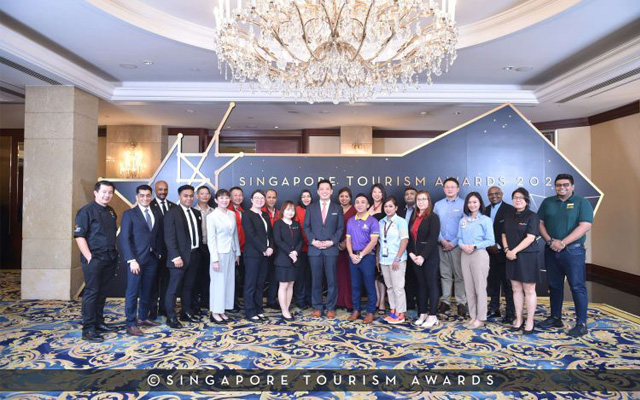
This year's awards celebrates the extraordinary resilience, innovation and dedication shown by our tourism stakeholders and businesses
A total of 17 business events organisations were recognised at the Singapore Tourism Awards 2022 yesterday for demonstrating resilience, innovation and service excellence amid the challenges of the Covid-19 pandemic.
Organised by the Singapore Tourism Board (STB), and held at the Shangri-La Hotel, the Singapore Tourism Awards presentation ceremony was graced by Alvin Tan, minister of state for trade and industry, and culture, community and youth.
This year’s awards celebrate the extraordinary resilience, innovation and dedication shown by Singapore’s tourism stakeholders and businesses
Capella Hotel Singapore, Singapore Expo, Resorts World Convention Centre, and Sands Expo and Convention Centre picked up the award for an Outstanding Event Venue Experience, while Constellar Exhibitions received the Outstanding Event Organiser accolade for Industrial Transformation Asia Pacific – a HANNOVER MESSE Event.
Five events held during the pandemic were also presented with the Outstanding Business Event award – Huawei Cloud Spark Founders Summit by Resorts World Sentosa; SMF X IBTM Wired by Reed Exhibitions and SACEOS; Let’s Connect by ENGIE South East Asia; PCMA Convening Leaders 2021 by the Professional Convention Management Association; and Singapore FinTech Festival 2021 by Constellar Exhibitions.
In the area of Outstanding Busines Innovations, Copthorne King’s Hotel Singapore; Sands Expo and Convention Centre; The Intan; and Zouk Singapore triumphed.
Lastly, for Outstanding Marketing Ideas, Explore the City by Capitaland
Mumcation by Fairmont Singapore, and The People’s Gallery by National Gallery Singapore were duly recognised.
STB chief executive Mr Keith Tan said: “The efforts of all the award finalists and recipients spur the entire tourism industry to greater achievements. Their spirit of resilience and creativity will become more important as we emerge from the pandemic to recapture demand and ensure Singapore remains a world-leading leisure and MICE destination.”
Just 10 minutes from Phuket International Airport on the serene northern coast, this 178-key, Bill Bensley-designed resort offers delegates a quiet, tropical paradise steeped in Phuket’s tin-mining heritage
The newly-opened Ritz-Carlton, Bangkok anchors the One Bangkok development with cosmopolitan elegance. Featuring the city's largest ballroom and a spectacular new penthouse suite, it delivers exceptional hardware and deeply authentic, soulful service for business and leisure travellers alike
Behind the imposing, Brutalist concrete that defines Zurich’s Oerlikon district lies a surprising secret. While its exterior honours the neighbourhood’s industrial roots, stepping inside Mama Shelter reveals a vibrant, neon-soaked world that is a far cry from its rigid shell











After a two-year hiatus, Myanmar resumed the acceptance of tourist e-visa applications on May 20.
At this initial phase of reopening, Myanmar will maintain pandemic protocols including vaccine certification, PCR testing and local medical insurance through Myanmar Insurance.
Travellers must be fully vaccinated and present proof of a second Covid dose at least 14 days prior to arrival. They must also provide evidence of a negative PCR test result obtained no more than 72 hours prior to departure, and purchase a travel insurance policy with Covid 19 coverage.
An on-arrival ART is compulsory. With a negative result, travellers can continue with their travel. Positive cases must be isolated in a designated government hospital or hotel which is covered by the health insurance.
Proof of return ticket from Myanmar and hotel booking must be attached to the online visa application.