


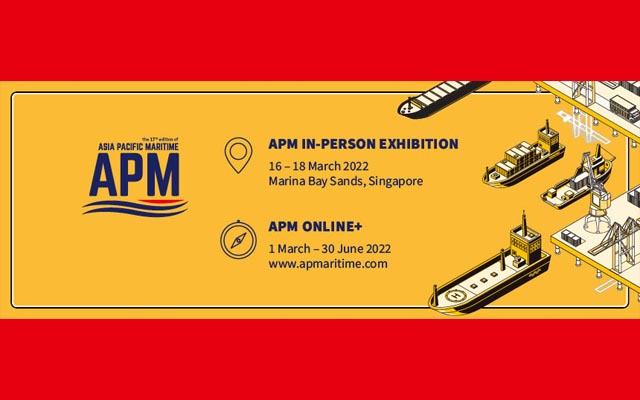
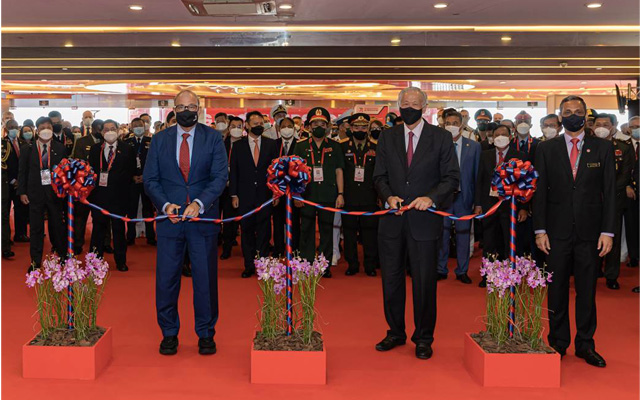
The biennial Asia Pacific Maritime (APM), South-east Asia’s maritime, workboat and offshore exhibition and conference will hold its 17th edition at Marina Bay Sands in Singapore from March 16-18, 2022.
The last in-person APM was held in 2018, and APM 2022 is one of the two Approved International Fair events confirmed to date for this year.
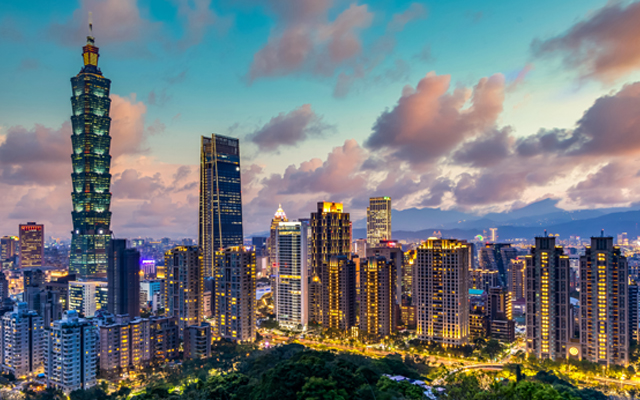
Supported by the Maritime Port Authority, and Singapore Exhibition & Convention Bureau, this year’s APM will feature six official pavilions – Germany, Netherlands, Singapore, South Korea, United Kingdom and Taiwan – and some 7,000 attendees are expected to attend the event in person.
Exhibiting companies this year include ZF, Weichai, Volvo, MTU, Garmin, Inmarsat, Kohler, KVH and Marlink, which will be using APM 2022 to showcase their latest innovations, products, and services.
The APM 2022 conference, which is complimentary for attendees but subject to onsite seat availability, will allow in-depth discussions on issues impacting the maritime landscape, enabling attendees to learn and network in person. It comprises three forums – Asia Container Shipping, Maritime Cyber Security and Maritime Technology and Sustainability, with 15 conference sessions in total.
Forty-five maritime executives will be physically present to share their expertise and views on some of the most important issues affecting the industry.
Speakers include Kenneth Lim, assistant chief executive (Industry), Maritime Port Authority; Thomas Cassuto, managing director of CMA CGM APAC; Claus Nehmzow, innovation advisor and ex-chief innovation officer at Eastern Pacific Shipping; Peter Schellenberger, vice president, supply chain, Thome Ship Management; Shahrin Osman, director, Maritime Decarbonisation and Autonomy Centre of Excellence; and Tan Cheng Peng, executive director, Singapore Maritime Institute.
Key maritime associations such as Intertanko, Methanol Institute, IBIA, IMarEST and the Global Centre for Maritime Decarbonisation will also join the conference sessions.
All APM 2022 attendees will be required to undergo daily onsite complimentary pre-event testing, and other prevailing safe management measures such as full vaccination statuses will also be implemented.
Exhibitors or trade visitors who are not able to travel to Singapore can participate in the online business matching programme to stay connected, with APM Online+ made available from March 1, 2022, to June 30, 2022.










The PATA Asia Pacific Visitor Forecasts 2022-2024 Full Report released on February 15 is predicting international visitor arrivals (IVAs) growth rates of 126 per cent to 84 per cent for mild, medium, and severe scenarios in 2022 versus 2021.
The increase in the absolute number of IVAs is predicted therefore to range from 72.5 million to 175.7 million under the severe and mild scenarios respectively, lifting the total volume of visitor arrivals to between 159 million and 315 million, under those same scenarios respectively.
While it is a positive and welcome development after two years of extremely difficult conditions, the international travel and tourism sector of the Asia-Pacific region still has much to repair and revitalise.
The forecasted increases in 2022 arrivals, for example, still only return them to 23-45 per cent of the level of foreign arrivals received in pre-pandemic 2019.
Moving forward to 2024, IVA growth over the next three years is projected to be positive, with the volume of IVAs in 2024 being equal to, or better than that of 2019, under two of the three scenarios.
PATA CEO Liz Ortiguera said: “Our latest forecast report numbers, based on data as of November 2021 reviewed in conjunction with our recent research advisory panel updates provided on January 24, 2021, provide the definitive outlook for Asia-Pacific visitor arrival forecasts. As noted by our panel, the effect of the Omicron variant is projected to have a small incremental impact for now, with the key earlier assumptions still driving the forecast.
“Equitable access and deployment of vaccines plus a practical risk-based approach to health and safety protocols in travel is foundational to not only the travel sector’s sustained recovery but to the overall global recovery from the pandemic.
“We share the World Health Organization’s (WHO’s) view that the pharmaceutical sector must address barriers to access and affordability for all destinations. Furthermore, as acknowledged by the WHO, travel bans will not prevent international spread. Instead, travel channels should remain open with clear, practical guidelines as recently shared by the Centers for Disease Control and Prevention (CDC) and WHO.”
Ortiguera also noted: “Various research studies and early travel patterns indicate a heightened consumer interest in a pivot to the right side of travel – longer journeys, more authentic experiences, and nature-based, wellness-oriented, and socially-conscious travel offerings are among the key trends for today’s travellers.
“Destinations can expedite their recovery by staying top-of-mind with consumers, communicating requirements with clarity and consistency, and offering a sustainable, healthy destination experience.”