La Vie Hotels & Resorts, an independent hotel operator in the Asia Pacific region, has appointed Craig Bond to the role of Managing Director.
Based out of the group’s head office in Sydney, Bond will lead the company as it heads into a period of exponential growth, and will build the group’s reputation as an independent hotel operator of choice in the region.
Bond is an award-winning hotelier with a large portfolio of successfully developed and branded hotels, resorts, spas and restaurant concepts throughout the Asia Pacific region under his belt.
He joins the team from ONYX Hospitality Group in Bangkok, Thailand, where he was most recently executive vice president – COO.
Previously, Bond served as vice president, operations at Oakwood Worldwide Singapore and has also held roles across Australia as area general manager Oceania with Pan Pacific Hotels Group in Sydney, and area general manager with Mirvac Hotels and Resorts in Melbourne.
Son Hoang Le has joined Alma Resort Cam Ranh in Vietnam as director of sales.
The Vietnamese holds more than 16 years of experience in sales, marketing, events and operations at some of Vietnam’s well-known hotels. His last role was the director of room sales at the Caravelle Saigon.
Before that, he was the director of sales and marketing at Diamond Bay Vung Tau Resort & Spa and the director of sales at Hotel Majestic Saigon.
Son embarked on his hospitality career in early 2005 as a bellman at the Caravelle Saigon, where he spent the next 10 years also working as a receptionist, night supervisor and banquet sales executive, learning about various facets of the hotel business.
He moved to the Hotel Nikko Saigon to become a corporate sales executive, before progressing to the Pullman Hanoi where he became a sales manager and then an acting senior sales manager.
Singapore’s Budget 2022 will continue to support businesses and workers impacted by the pandemic, as the country continues her recovery.
Some S$500 million (US$372 million) has been allocated to the new Jobs and Business Support Package.
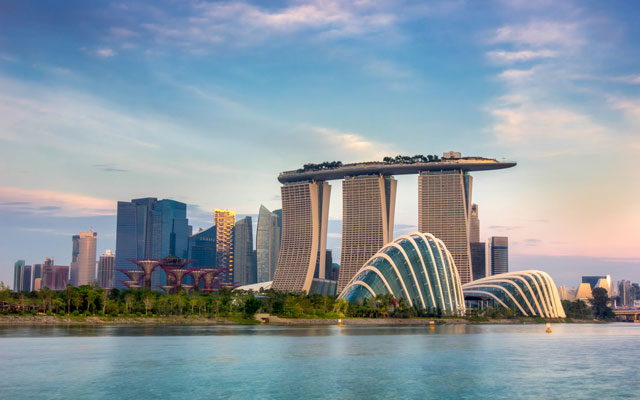
SMEs and venue operators will benefit from government grants; Singapore skyline pictured
In support of SMEs, the government has released a new Small Business Recovery Grant of S$1,000 per local employee (up to 10 employees) in sectors most affected by Covid-19. This covers purpose-built business events venue operators, as well as business events and tourism organisers.
For the latter, organisers impacted by the deferment/cancellation/loss of sales of at least one business event with at least 20 per cent foreign attendees originally scheduled in Singapore between February 1, 2020, and December 31, 2020, can apply for the grant. Companies that derive two-thirds of their revenue from business events with at least 20 per cent foreign attendees in 2018 and 2019 may also apply.
The Singapore government will also be investing in new capabilities such as digital functions, where one of the key initiatives is to upgrade broadband infrastructure, as well as in future technologies such as 6G to improve broadband speeds. This will contribute to new possibilities for augmented and virtual reality tools in the events space.
About S$600 million will be set aside to expand the range of available solutions under the Productive Solutions Grant, and push for greater innovation of productivity solutions by SMEs over the next four years.
A total of S$35 billion of green bonds will also be issued by 2030 to fund public green infrastructure projects. Traditional sectors like aviation and tourism will see a “greening” take place over the next decade or so.
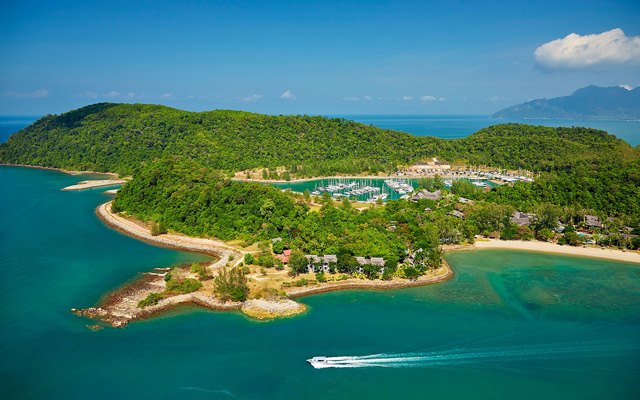
Rebak Island Resort & Marina, Langkawi, in Malaysia
Rebak Island Resort & Marina, Langkawi, in Malaysia has been leveraging digital marketing to create better brand awareness for the destination, as the property plans to draw more international business events to the private island once borders reopen.
Recently rebranded in December 2021 from the Vivanta Langkawi Rebak Island, the property sits on a private island in the Andaman Sea, located south-west of Langkawi’s main island.
Rebak Island Resort & Marina, Langkawi, in Malaysia believes it holds a MICE appeal
Surrounded by a 100-million-year-old rainforest, the 71-key resort currently offers buyouts of the entire island for private events.
Rebak Island Resort & Marina, Langkawi’s director – sales marketing, Andy Yow, shared with TTGmice that future plans include collaborating with inbound tour operators and tourism bodies to attract international business events.
He opined that domestic business events will start picking up from 2Q2022, but for now, most resort guests are from the leisure market.
The unique selling proposition of the resort, Yow stated, was its many outdoor spaces that would work for themed corporate events ranging from networking sessions over cocktails to gala dinners. He added that the “seclusion and privacy” the island afforded would be a boon for event planners, and organisers of incentive groups.
“Incentive groups will be intrigued with our unique activities, from guided nature trails to a Cook with Chef programme where participants can pick up (skills on how to prepare) local cuisine,” elaborated Yow.
For organisers with larger budgets, he also suggested “private yacht charters to explore uninhabited islands around Langkawi”, where a full-day outing would include a picnic on a deserted island and snorkelling activities.
MEA looks forward to welcoming mentees and mentors from across Australia
Meetings & Events Australia (MEA) has unveiled the 2022 MEA Mentor Program, which will connect event professionals across the country to share and enhance skills, expertise and career progression prospects.
Designed to assist the industry’s up and comers growth as event professionals, mentees will be matched with industry stalwart mentors who’ll provide counsel and learning opportunities over a three-month period.
MEA looks forward to welcoming mentees and mentors from across Australia
An online hosted platform will again be used this year to ensure a premium level of interaction, tracking and valuable resources is provided for participants. The programme is supported by Tourism Australi
Robin Mack, executive general manager, commercial & Business Events Australia at Tourism Australia, said: “Business Events Australia is proud to once again be the major partner of the MEA Mentor Program for 2022.
With Australia reopening its borders to quarantine-free travel from February 21, it is critical to continue to support the future development of our industry, to ensure Australia continues to deliver high calibre business events and remains a competitive business events destination internationally.”
Eligibility to participate as a mentee is restricted to MEA members (either Corporate or Individual). The programme will run from April 2022 to June 2022. Events sector professionals interested in being either a mentee or mentor should email an expression of interest to MEA via cwatson@mea.org.au before March 21, 2022.
COVID-19 testing continues to be an important measure to allow the resumption of safe travel within Asia Pacific and beyond
TruTrip and Collinson have inked a deal that will enable TruTrip’s corporate customers to seamlessly and securely book a range of pre-departure Covid-19 travel tests.
The partnership makes RT-PCR and Rapid Antigen tests even more accessible for business travellers using TruTrip services from Singapore, Malaysia, Indonesia, Hong Kong, South Korea and the UK.
Covid-19 testing continues to be an important measure to allow the resumption of safe travel
TruTrip customers can now book a Covid-19 travel test securely through Collinson’s website using a unique promotional code at their preferred in-city clinic from a given list of testing facilities. Upon completion of their test, customers will automatically receive notification of their PCR test results within 36 hours, and usually within an hour for Rapid Antigen tests; which if negative, can then be used for travel.
The announcement follows on from recent Collinson research, conducted in partnership with CAPA – Centre for Aviation, which revealed that over half of respondents (54 pre cent) expect robust COVID-19 testing protocols will remain key to reopening borders until the end of 2022 in Asia Pacific, with a further 26 per cent expecting this until the end of 2023. The research featured the opinions of a group of over 400 C-Suite and senior managerial level travel experts globally.
The metaverse is the next opportunity in events technology
The past two years have been a crazy ride for the business events industry, with event organisers having to revamp business models overnight, marketers having to pivot their event marketing strategies in a blink of an eye, and event attendees not being able to have the intimacy of face-to-face engagement.
With that though, the event industry has evolved and innovated. Where previously there were challenges around building enough online functionality and capabilities for sponsors, organisers and attendees to have the same experience and audience engagement as a physical event, technology has truly enabled the industry for the past two years.
The metaverse is the next big opportunity in events technology
So how will technology shape the events industry in 2022?
Hybrid events become the norm, virtual events as a tool for marketers to generate leads
Before Covid-19, events were mostly physical events, and in 2020, events shifted to fully-online events. In the year ahead, we will see that hybrid events, which refer to events that are held concurrently online and offline, will become the norm.
With the objective of events being to serve both attendees and partners, it’s important that both get an ROI even for hybrid events. In a recent survey of over 3,000 event organisers globally, Markeletic found that 86 per cent of B2B organisations see positive returns from hybrid events, seven months after the event date. WIth hybrid events providing both physical and online touchpoints for attendees and partners, there will also be greater attendee satisfaction for events (an 81 per cent contributor to satisfaction as voted on in the survey for Markeletic).
We will see events no longer limited by geographical boundaries, and businesses, attendees and of course event organisers will be able to gain increased value from hybrid events. From greater capabilities for lead generation and greater data on attendees, event organisers and sponsors will undoubtedly be able to not just populate sales pipelines but also understand areas that need to be optimised to improve attendee awareness, attraction and acquisition.
AR & VR take centerstage
The past few years have seen greater adoption and innovation around augmented reality (AR) and virtual reality (VR), but the real boost in this space came when Facebook announced their plans to go all-in on the metaverse. Make no mistake, these are not new technologies, but they have been given a new breath of life because of the metaverse.
We’ll also start to see more utilisation of AR and VR for events in 2022, providing more immersive experiences for attendees and more engagement opportunities for sponsors and partners.
The metaverse will permeate the events industry
By now, you would have at least an inkling of the concept of the metaverse. For one, it’s the future version of the Internet, but fundamentally, these are 3D and virtually integrated spaces through AR and VR as touched on above.
With touted to become a US$800 billion industry in 2024, this is something that should not be ignored. As of now, the likes of Epic Games and Roblox have already hosted concerts within their metaverses, while Unity is looking to provide live sports content and tools for the metaverse.
Several ways that businesses can dip into the metaverse include virtual stores, employee training material, customisation of products, and more. Other opportunities include interactive advertising opportunities for sponsors, gamification, visual-audio immersion and shopability.
Increased virtual networking opportunities at events
In the year ahead, we would already be hyper-familiar with online communication, with remote working becoming almost the norm for a majority of people. We will also see this applied to virtual events, at a much deeper level.
From joining discussion tables and online video networking to virtual networking lounges and even networking in the metaverse – the amount of innovative opportunities for event platforms has never been greater.
Event data analytics will get more intricate and at a deeper level
Data helps us keep pace with our customers’ wants, needs and intentions. In the year ahead, online event platforms will have even deeper capabilities to provide event organisers with robust analytics. We will also see more marketers start to implement trackable attribution to online and hybrid events, as this part of marketing attribution traditionally fell into a manual black hole.
From attendance to session watch times and audience engagement, event organisers will have even more data around which they can optimise and improve subsequent event flows, audience engagement, audience acquisition and more.
The rise of NFTs for events
Another highly-anticipated opportunity for the event tech industry is the use of NFTs in events. Think about it. Pop stars can create exclusive content and issue them as NFTs to attendees or put it up for an exclusive auction for the attendees. Art exhibitions in the form of hybrid events can implement NFTs for authentication or digital art. Ticketing can come in the form of NFTs for greater authentication. The opportunities are endless!
Businesses and marketers will also need to think of the best ways to implement NFTs across their products and offerings. Once that is done, the shift to implementing NFTs in online events will be a much smoother process.
Increased investments in event technology
With the above trends, we will definitely see more investments in event technology and peripheral technology. Today’s landscape for events is already highly-promising. From automated business matching and virtual gift bags to automatic captioning and live translations, the opportunities for a business to easily scale their events has never been greater.
However, it’s highly important for businesses to know the type of features and capabilities that they are looking for from an events platform and build a long-term strategy around running events. This will undoubtedly ensure a strong short-term and long-term return on investment.
Personalisation for event attendees
Today, personalisation happens every second. From Spotify recommendations to Netflix suggestions, you are being analysed and more relevant content is being delivered to you. How this personalisation applies to the events industry can come in the form of recommendations of sessions to watch or which booth to visit.With personalisation comes improved attendee experience, conversion rates and even lead generation.
As we head into the new year, one thing is for certain: events, as we knew back in 2019, will never be the same. With online merging with offline, opportunities will present themselves to businesses. As the pandemic persists, event professionals have to embrace hybrid and virtual ecosystems, champion diversity, prioritise health and safety, and create event experiences that keep attendees engaged and coming back for more.
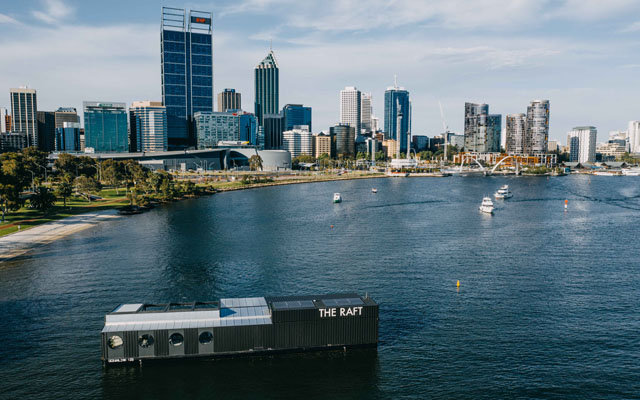
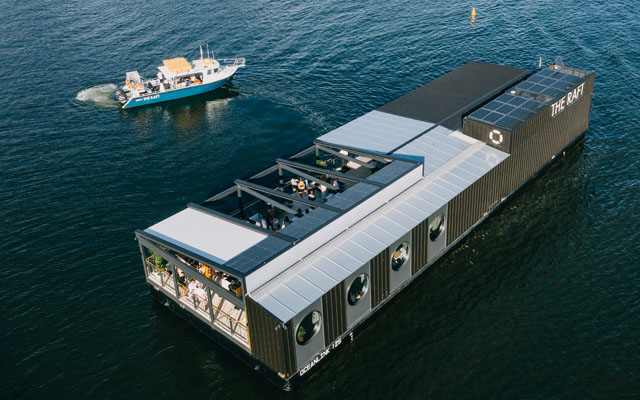
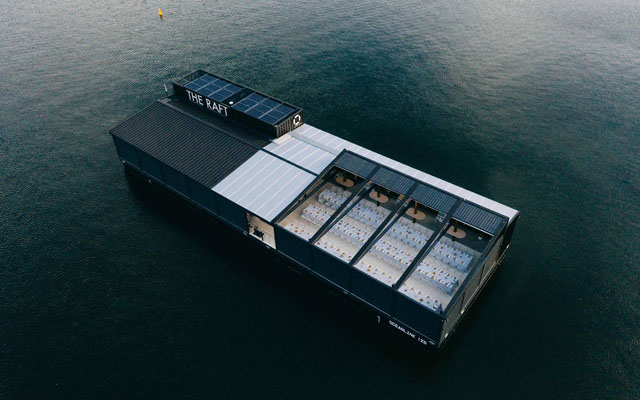
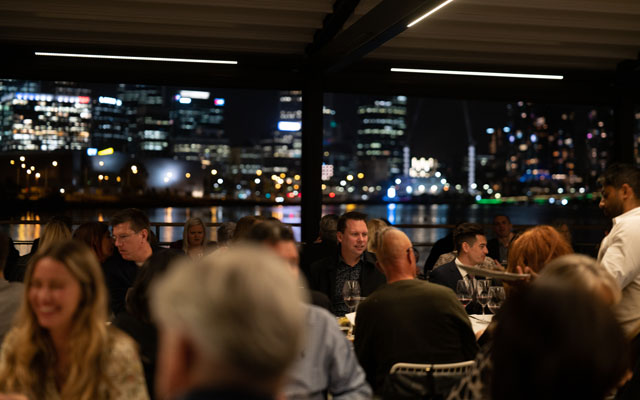
One of the latest event spaces to open in Perth is The Raft, an open-air boarding platform permanently moored on the Swan River.
To access The Raft, patrons have to arrive at Barrack St Jetty No.5 prior to boarding the tender vessel. The 40-person tender transports patrons to and from The Raft (a 15-minute return journey). The tender will disembark Barrack St Jetty No.5 every 15 minutes or on an as-need basis throughout the event.
The Raft
1 of 8
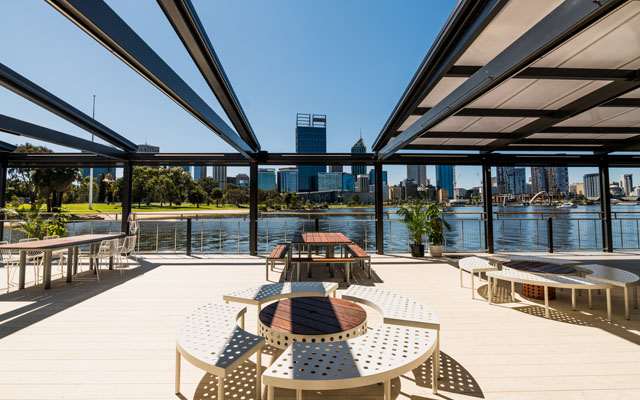
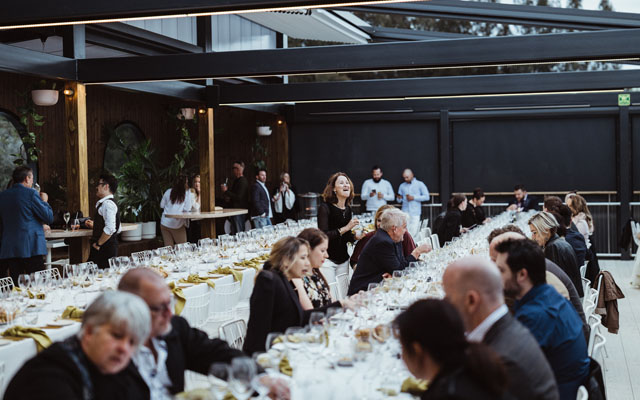
The 445m2 floating event space can cater for a maximum of 250 patrons standing or 150 seated. The event space can also accommodate mobility aids and wheelchairs, and is suitable for all weather conditions thanks to the retractable roof and blinds.
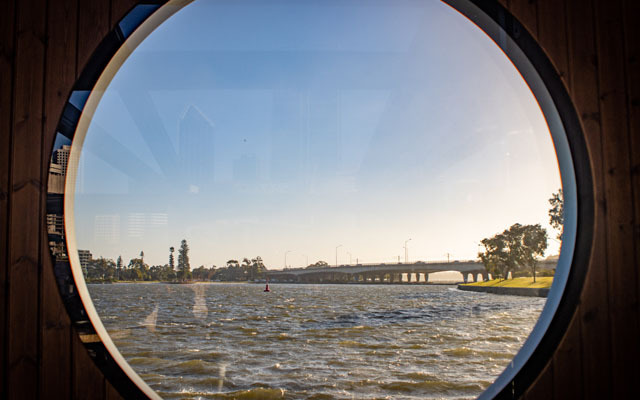
From the floating platform, guests will be able to take in vistas of Perth City, Elizabeth Quay and Kings Park.
The fully-licensed venue has no option to BYO beverages or food (except cakes), as head chef Oliver Buenviaje offers curated menus featuring fresh, local produce according to all tastes and budget sizes.
Drink options start at A$60 (US$43.40) per pax for three hours, and includes a selection of sparkling, reds, whites, softs and craft beers from across Australia. From January to October, the minimum spend is A$5,000.
Optional services include the hire of DJ equipment, party lights, festoon lighting, furniture and linen hire, as well as a set up and pack up fee.
The Raft’s prices start at A$2,500 for three hours rental from Mondays to Thursdays during the lower season of May to October.
Contact events@theraftperth.com.au for more information.
TTG Conversations: Five Questions with Liz Ortiguera, PATA
Vaccine inequity is an issue for all humanity and for global recovery, including that of the tourism industry, and the imbalance in a vaccinated global population leaves the world vulnerable to new variants, says Liz Ortiguera, CEO of PATA.
In this episode of TTG Conversations: Five Questions, Ortiguera explains why the travel and tourism industry needs to back the fight against vaccine inequity and how PATA is leading the effort, and offers examples of how industry players have contributed to vaccination efforts.
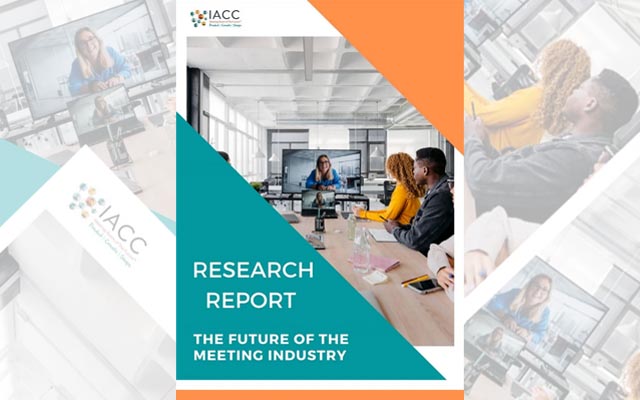
The value and outputs of meeting in-person mean face-to-face meetings remain crucial but the trend towards smaller hub-and-spoke format meetings with in-person regional groups connected virtually is here to stay, according to IACC’s (International Association of Conference Centers) Meeting Room of the Future Report 2022.
According to the report, 84% of executives surveyed stated that they see higher team productivity when their employees are meeting in-person, and 78% of respondents are planning on attending an equal number of in-person meetings or more when Covid-19 is nearing its end.
The report covers the trends and factors affecting future demand for the external meeting venues
However, the nature of in-person meetings has altered significantly, with caution related to travel driving more regional meetings, where they were once larger, possibly national or global meetings. Interviewees said that they were comfortable in staging multi-location meetings, where there are live hubs connected together using technology.
The pandemic has brought to the fore the value and importance of human interaction, with this ranking the highest of seven factors when considering attending an in-person meeting, above expanding your network, scheduling and cost of attending. Collaboration with colleagues is also highly ranked, where respondents cited teambuilding, training and problem-solving as the main reasons for bringing people together. On the flipside, status and update meetings are widely regarded as subjects that can be delivered entirely virtually.
The study pinpointed five factors that meeting bookers will be looking for in successful business events in the future: more collaboration between meeting participants; the high quality of technology; a valuable way of communication; and venues to recommend new innovative ideas. Moreover, clients are looking for venues that share the same values as their own corporations.
Mark Cooper, CEO of IACC commented: “While the pandemic has shown the ease of attending online meetings, it’s clear from our report that significant value is placed on face-to-face gatherings.
“However, the likelihood is that organisations will be more strategic about how and why they bring their teams together. It’s clear that venues need to be investing both in their onsite offer, as well as in ensuring they have the appropriate meeting technology to seamlessly connect companies requiring a hybrid meeting model.
“To deliver against the needs of meeting planners going forward, venues need to consider their ethical and environmental credentials to ensure that they are up to scrutiny and are clearly showcased to potential clients,” Cooper advised. Such issues are increasingly important decision-making factors for meeting bookers, particularly management of food waste and having a strong diversity programme in place.”
Health and wellness factors are also increasingly important, for example the ability for attendees to gather outside to walk and talk.
One respondent noted: “Having outdoor meeting possibilities can have many benefits on the work environment and the ambience between colleagues.”
IACC’s Meeting Room of the Future reveals the insights from meeting professionals, venues and industry experts from three different continents. Starting in April 2022, IACC will publish a quarterly barometer report, which will bring together insights from several experts and organisations to demonstrate what follows for the continued recovery of the smaller conference, meetings and training market globally.
Just 10 minutes from Phuket International Airport on the serene northern coast, this 178-key, Bill Bensley-designed resort offers delegates a quiet, tropical paradise steeped in Phuket’s tin-mining heritage
The newly-opened Ritz-Carlton, Bangkok anchors the One Bangkok development with cosmopolitan elegance. Featuring the city's largest ballroom and a spectacular new penthouse suite, it delivers exceptional hardware and deeply authentic, soulful service for business and leisure travellers alike
Behind the imposing, Brutalist concrete that defines Zurich’s Oerlikon district lies a surprising secret. While its exterior honours the neighbourhood’s industrial roots, stepping inside Mama Shelter reveals a vibrant, neon-soaked world that is a far cry from its rigid shell