The Singapore Airshow, a global aerospace and defence exhibition, will return to the Changi Exhibition Centre from February 3 to 8 2026.
The 2026 show expects more than 1,000 participating companies from over 50 countries and regions. Industry titans such as Airbus, Boeing, Lockheed Martin, and Rolls-Royce will return alongside next-generation defence firms like Helsing and Shield AI. Attendees will also see an expanded presence from the China and Italian Trade Agency Pavilions among a total of 13 country pavilions.
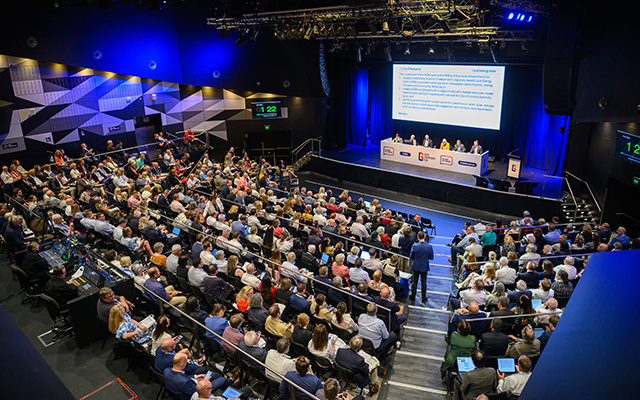
A previous edition of the Singapore Airshow
In a major expansion of scope, the event will introduce the Space Summit 2026 (February 2 to 3) at the Sands Expo and Convention Centre. Endorsed by Singapore’s Office for Space Technology & Industry, and the Economic Development Board, the summit focuses on the in-space economy – a sector projected to reach US$1.8 trillion by 2035.
Sustainability remains a core pillar, with Neste joining as the Sustainable Aviation Partner to lead discussions on sustainable aviation fuel (SAF) and decarbonisation. Innovation will be further championed through What’s Next, a startup showcase focusing on emerging and dual-use technologies; AeroForum, panel sessions covering AI, cybersecurity, and advanced air mobility; and AeroCampus, a dedicated platform to inspire the next generation of aerospace talent.
The event concludes with the Weekend@Airshow on February 7 to 8, featuring thrilling aerial performances and static aircraft displays.
The airshow will be preceded by the Changi Aviation Summit 2026, organised by the Ministry of Transport and the Civil Aviation Authority of Singapore, focusing on building resilient aviation ecosystems for the future.
Kuoni Tumlare partners with MICE Matters to expand Singapore footprint
Global destination management firm Kuoni Tumlare has signed a strategic partnership with local specialist MICE Matters to scale its operations in Singapore.
Effective December 2025, the collaboration pairs Kuoni Tumlare’s global distribution power with MICE Matters’ 20-year track record in the Singapore market.
Kuoni Tumlare partners with MICE Matters to expand Singapore footprint
By leveraging deep-rooted expertise and Singapore’s world-class infrastructure – including venues like Marina Bay Sands and Suntec Singapore – the partnership aims to deliver seamless logistics and creative corporate experiences that range from Sentosa-based teambuilding to heritage-focused incentives.
“This partnership is central to our post-Covid strategic plans,” said Melvyn Nonis, director at MICE Matters. “Together, we are positioned to deliver seamless, memorable events for an international clientele.”
Marco Russi, chief operating officer at Kuoni Tumlare, added that the partnership ensures clients receive “creative event concepts and flawless execution” by utilising MICE Matters’ deep-rooted local knowledge.
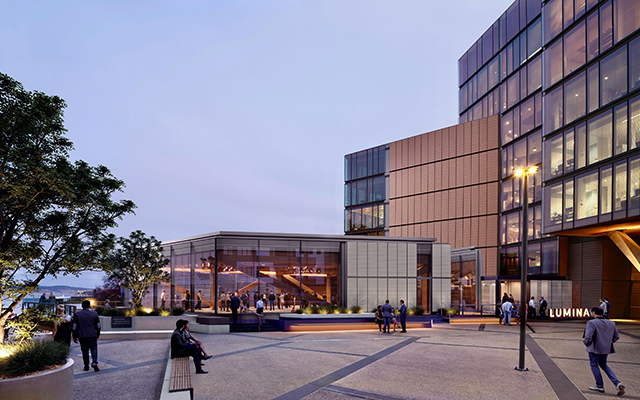
The Tasman, a Luxury Collection Hotel, has announced the development of Lumina, an architectural landmark set to redefine Tasmania’s hospitality landscape.
Located in Parliament Square overlooking Hobart’s historic waterfront, the venue is a column-free, clear-span architectural feat designed for unobstructed visibility. It will accommodate up to 220 guests for cocktail receptions or 200 for banquet-style dinners, transitioning seamlessly between corporate conferences, weddings, and gala events.
Artist’s impression of Lumina
The structure showcases local craftsmanship, utilising mass-engineered Tasmanian Plantation Oak and bespoke Tasmanian Oak joinery. The project supports 187 local jobs during construction and will create 31 permanent positions upon completion.
Business Events Tasmania’s CEO Marnie Craig welcomed the announcement.
“Business events are worth A$3.5 trillion (US$2.3 trillion) globally, and A$21 billion in Australia. Tasmania continues to grow its share, particularly in the lucrative corporate and incentive market, where incentive events command an average spend of A$1,347 per delegate, per day.
This announcement aligns with the state government’s recent A$1.2 million investment into Business Events Tasmania to boost the industry across the state as part of the 2030 Strong Plan for Tasmania’s Future.
The Tasman is now accepting enquiries for Lumina for events scheduled from July 2026 onwards.
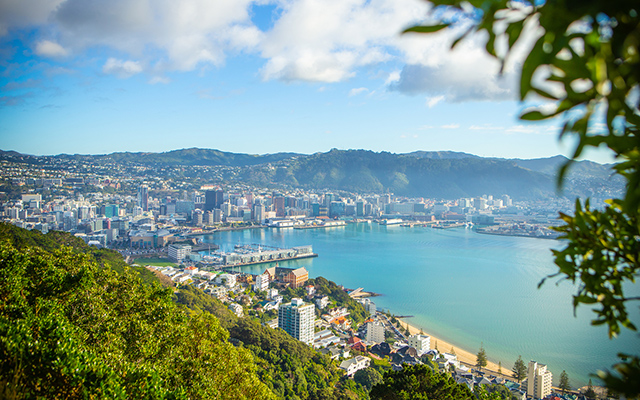
Mount Victoria Lookout towards Wellington city; photo by WellingtonNZ
Earlier this month, WellingtonNZ signed a multi-year partnership with Tech New Zealand to host three major technology conferences in the capital.
The agreement secures a trio of high-impact events for New Zealand’s capital over the coming years: the FinTechNZ Hui and Digital Trust Hui Taumata will both be hosted annually from 2026 to 2028, while the Aotearoa AI Summit will take place in 2026, 2028, and 2030.
Mount Victoria Lookout towards Wellington city; photo by WellingtonNZ
Business Events Wellington’s manager, Irette Ferreira, stated that the partnership is a strategic effort to accelerate the local tech sector by fostering connections, job creation, and global market growth.
“Business events play an integral part in driving knowledge sharing and collaboration in key sectors,” Ferreira said, noting that these events align with the city’s focus on creative, digital, science, and engineering fields.
The partnership is supported by local tech organisations, including WellingtonNZ subsidiary and innovation hub Creative HQ.
Colm Kearney, general manager startups & tech sector at Creative HQ, opined that the conferences will “lift capability and strengthen connections across Wellington’s tech ecosystem”, supporting both companies and employment in the region.
Tech New Zealand, an NGO representing 16 tech communities, already hosts its National Cybersecurity Summit (500 pax), and Digitising Govt Conference (200 pax), at the Tākina Wellington Convention & Exhibition Centre. This new agreement builds on that existing relationship, which has also anchored the annual Life Sciences Summit by BioTechNZ (400 pax) at Tākina since 2023.
Wharf Hotels has appointed Crystal Chan Busch as group director, global sales.
In her new role, Chan Busch will oversee global sales strategy and operations across the group’s key markets, including Asia-Pacific, the Americas and Europe.
She most recently served as multi-property executive director of sales at Sands Resorts Macao, where she led sales for three integrated resort brands encompassing nine hotels and more than 10,000 rooms.
The precinct operated at full activation for this event, positioning Western Sydney as am alternative to the Sydney CBD for large-scale corporate and government events
The Western Sydney Convention Centre (WSCC) and Panthers Precinct have successfully hosted the 2025 Local Government NSW (LGNSW) Annual Conference.
The three-day event attracted 1,000 delegates, including NSW premier Chris Minns and representatives from the state’s 128 councils. The summit activated 4,000m2 of event space across the entire precinct, utilising the Evan Theatre for plenary sessions and the WSCC for workshops and formal dining.
The precinct operated at full activation for this event
Over A$1 million was also generated for local accommodation, retail, and tourism.
Outside the conference programme, delegates explored the wider Panthers Precinct, enjoying meals at Marcel Bar & Bistro at the adjoining Pullman Sydney Penrith. They also explored the venue’s diverse offerings, from bars to dining and entertainment experiences, that reinforce the precinct’s appeal as both a business and leisure destination.
Penrith Mayor Todd Carney highlighted the city’s rapid growth, citing the upcoming Western Sydney International Airport and Metro rail line as catalysts for the region’s transformation into a primary business hub.
Siyam World Maldives has appointed Alee Siyam as director of operations and promoted Giselle Encinareal to executive assistant manager.
Siyam, who joined Sun Siyam Resorts in 2016, was previously executive assistant manager. He was part of Siyam World’s pre-opening team and has held several operational roles at the resort. As director of operations, he is responsible for overseeing the resort’s day-to-day operations and service delivery.
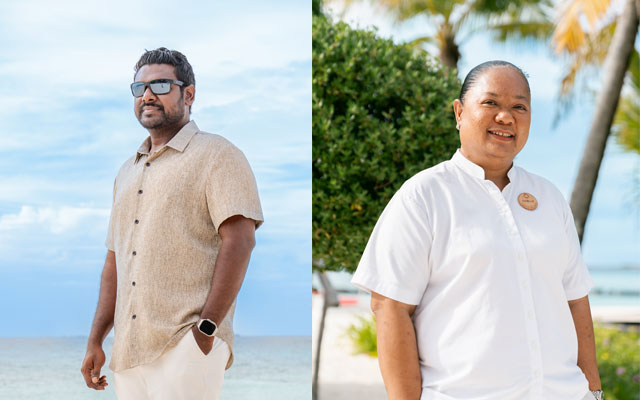
From left: Alee Siyam and Giselle Encinareal
Encinareal most recently served as director of talent and culture at Siyam World, a role she has held since rejoining Sun Siyam Resorts in 2022. With more than 20 years of experience across luxury resorts in the Maldives, she now oversees back-of-house functions including talent and culture, learning and development, and quality assurance.
The efforts focused on empathy and community support to wrap up a milestone year for the firm
To mark its 20th anniversary, Singapore-headquartered events agency MICE Matters has translated its core corporate value of “Kinder in Action” into a series of year-end charitable initiatives in Vietnam and Singapore.
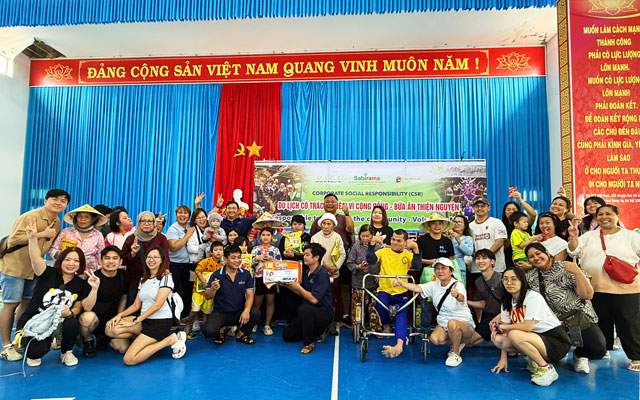
During a recent staff retreat in Danang, Vietnam, the entire team of 23 participated in a CSR programme titled Delicious for a Cause. The team spent a half-day preparing, cooking, and distributing 100 food packs to the Quang Nam Social Support Center, which provides housing and care for vulnerable groups, including the elderly, the disabled, and orphans. In addition to the meal service, team members made personal cash donations to help residents purchase daily essential items.
The efforts focused on empathy and community support to wrap up a milestone year for the firm
The spirit of giving continued back in Singapore at the company’s year-end “Hats Off” Christmas party. Joined by partner-suppliers, the team raised a total of S$9,268 (US$7,182) for its 2025 appointed charity, Make-A-Wish Singapore. A highlight of the fundraising was a live auction of two 15th-century European sail ship models, which contributed S$1,000 to the evening’s total.
The celebration featured a performance by Christmas carollers from the Church of St Mary of the Angels, further heightening the festive atmosphere.
“We are indeed proud of the team’s action and that we can make a difference in this manner while having fun,” said Michele Seet, director and co-founder of MICE Matters.
Co-founder and director Melvyn Nonis, added: “The Christmas party was the perfect event to wrap up what has been a great year for us.”
The landmark event aims to revolutionise injury care for rural and remote communities
Brisbane has been selected to host the Annual Meeting of the International Society for Computer Assisted Orthopaedic Surgery (CAOS 2028).
The conference, held at the Brisbane Convention & Exhibition Centre (BCEC), will focus on surgical innovation, telehealth, and remote patient management. With Australia’s vast geography and ageing population driving demand for orthopaedic care, the event aims to bridge the gap between metropolitan hospitals and the outback, reducing recovery times and travel costs for regional patients.
The landmark event aims to revolutionise injury care for rural and remote communities
The conference is projected to inject approximately A$1.8 million (US$1.2 million) into the local economy and generate over 1,600 visitor nights.
The four-day programme will feature live surgery showcases and explore surgical innovations relevant to athlete recovery ahead of the Brisbane 2032 Olympic and Paralympic Games.
The successful bid was led by Michael Schuetz, director of the Jamieson Trauma Institute and incoming CAOS president, with support from Tourism and Events Queensland (TEQ), and Brisbane Economic Development Agency. Schuetz noted that the event will build on Australia’s legacy of remote healthcare, famously pioneered by the Royal Flying Doctor Service.
Schuetz said: “Our goal is to extend orthopaedic technology beyond the operating theatre, enabling remote monitoring and improving equity in healthcare access.”
In the 2024/25 financial year alone, TEQ-supported bids have secured six major conferences for Brisbane, delivering an estimated A$16.3 million in economic value.
TCEB hosts a group interview with the press to announce remedial measures for Thailand’s flood-affected areas in the south; photo by TCEB
The Thailand Convention and Exhibition Bureau (TCEB) has activated emergency remedial measures to salvage the southern business events economy following disaster-level flooding in Hat Yai district in late November.
As Hat Yai is the commercial hub of Songkhla – an economic centre of the south, and also one of Thailand’s 10 designated MICE Cities since 2020 – the inundation has stalled the region’s high season.
TCEB hosts a group interview with the press to announce remedial measures for Thailand’s flood-affected areas in the south; photo by TCEB
During the height of the floods from November 21 to 27, local and international media reported thousands of foreign leisure and corporate visitors stranded in Hat Yai, with TCEB coordinating the evacuation of 15 Malaysian business events travellers attached to organised programmes.
At the end of November, TCEB activated emergency assistance measures, opening an internal donation account to support affected communities. TCEB’s Southern Office task force also conducted on-site business events industry impact assessments.
The bureau’s initial survey shows the deluge in late November forced the cancellation of one major domestic event with 1,200 participants and the postponement of three others involving 11,400 delegates.
“TCEB estimates the initial economic damage to the local meetings sector at between 120 and 150 million baht (US$3.8 to US$4.1 million),” noted TCEB president Supawan Teerarat.
“The figures reflect lost revenue across hotels, restaurants, transportation and related services, as well as disruptions to the MICE calendar and market confidence among national and international organisers,” she added.
With major roads in Hat Yai now reopened, TCEB has coordinated with convention centres, hotels, and venues to begin inspection and restoration of electrical systems, air-conditioning, and technical infrastructure.
Major venues including the 60th Anniversary of His Majesty the King’s Accession to the Throne International Convention Center, and The Signature Convention Center, did not sustain structural damage and are ready to operate once safety systems are fully verified.
Simultaneously, 15 flood-affected MICE hotels comprising 10,000m² of meeting space are undergoing rapid restoration.
Supawan told TTGmice the immediate priority is retaining confirmed business on the books for the fiscal year.
“Our strategy is to sustain momentum by urging organisers to postpone rather than cancel, ensuring the region’s economic engine keeps turning,” Supawan said.
Under the upcoming Southern MICE Ready campaign, to be deployed this month, TCEB is rolling out three core strategies titled “Ease Up, Empower, and Enhance”, to stimulate event activity and strengthen the regional business events ecosystem across 10 flood-affected provinces: Surat Thani, Krabi, Nakhon Si Thammarat, Trang, Phatthalung, Satun, Songkhla, Pattani, Yala and Narathiwat.
Postponed events are being encouraged to reschedule between November 2025 and September 2026. They will be supported by dedicated funding packages tailored for the southern region with easier application processes and reduced criteria for support.
Under the Ease Up strategy, TCEB aims to accelerate the resumption of business events activities by offering more flexible support conditions and operational facilitation for organisers hosting events during this phase.
To stimulate immediate demand, TCEB will also promote the decentralisation of business events from Bangkok and introduction of new events to the southern regions, organising familiarisation trips for target clients to stimulate local economies under the Empower strategy. In parallel, the bureau will also deploy proactive communication to restore market confidence in the readiness of southern destinations.
Meanwhile, the Enhance strategy will fund capacity building to ensure service quality and venue standards remain competitive despite the disruption.
Supawan noted: “As Songkhla is a designated MICE City, TCEB is committed to restoring its role as one of the major MICE hubs of the south through industry revitalisation, local business empowerment, and the development of a strong MICE ecosystem across Songkhla and other high-potential southern provinces.”
Just 10 minutes from Phuket International Airport on the serene northern coast, this 178-key, Bill Bensley-designed resort offers delegates a quiet, tropical paradise steeped in Phuket’s tin-mining heritage
The newly-opened Ritz-Carlton, Bangkok anchors the One Bangkok development with cosmopolitan elegance. Featuring the city's largest ballroom and a spectacular new penthouse suite, it delivers exceptional hardware and deeply authentic, soulful service for business and leisure travellers alike
Behind the imposing, Brutalist concrete that defines Zurich’s Oerlikon district lies a surprising secret. While its exterior honours the neighbourhood’s industrial roots, stepping inside Mama Shelter reveals a vibrant, neon-soaked world that is a far cry from its rigid shell





 She most recently served as multi-property executive director of sales at Sands Resorts Macao, where she led sales for three integrated resort brands encompassing nine hotels and more than 10,000 rooms.