
Asia/Singapore Sunday, 14th June 2026
Page 474

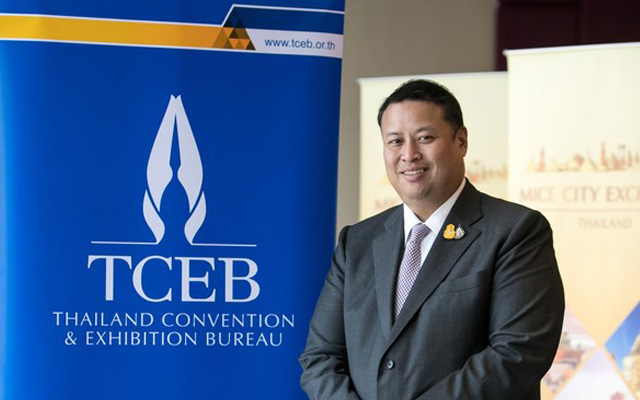
194 MICE venues in Thailand achieve TMVS certification

0
Chiruit: The expanded agreement aims to boost the employment opportunities for qualified MICE professionals, enhance and harmonise the quality of MICE education, and to grow the region's MICE workforce.

A total of 194 business events venues will be receiving the Thailand MICE Venue Standard (TMVS) this year, as the country continuously upgrades its industry to show its readiness to host events of international standard.

These certifications will be given out by the Thailand Convention and Exhibition Bureau (TCEB) next Thursday, via a virtual event entitled Thailand’s MICE Standard Day. Some 350 business events stakeholders are expected to join in.
Chiruit: TCEB continues to help strengthen the industry by assuring the global marketplace that Thailand is ready to host international standard events

Recipients will be divided into three categories – meeting rooms, exhibition halls, and special event venues. A total of 472 meeting rooms within 169 venues; 16 exhibitions halls within 10 venues; and 15 special event venues will receive the TMVS certification.

Currently, a total of 880 venues in Thailand have earned TMVS certifications across the three categories.

As part of Thailand’s MICE Standard Day, two workshops – Management of Food Waste and Excess Food in MICE Business, and MICE Venue Management for Muslim CLients – will also be organised for virtual attendees.

“TCEB is setting its sights on inspecting and assessing 155 MICE venues in Thailand in 2022. The bureau will also conduct a feasibility study of a new standard certification, as well as initiate a draft of the criteria for Muslim-friendly events to expand the scope of MICE venue standards,” shared TCEB president Chiruit Isarangkun Na Ayuthaya.

Additionally this year, 25 meeting rooms and three exhibition venues will be receiving the ASEAN MICE Venue Standard (AMVS). This is in addition to the 68 venues in Thailand that have already received AMVS, where Thailand is also the first country to have implemented this regional standard.
76% of business travellers say business travel helps them perform efficiently: BCD Travel

0
Business travel and in-person meetings are extremely important despite current reliance on screen-based interaction

While virtual meetings and remote work are here to stay, business travel and face-to-face meetings remain extremely important. Seventy-six per cent of survey respondents to a survey conducted by BCD Travel in July said business travel helps them perform their work efficiently.

According to a recent survey of 738 business travellers worldwide, in a post-pandemic travel environment, 60% prefer to return to pre-pandemic levels of business travel, while 26% prefer to travel less and 9% to travel more.

Business travel and in-person meetings are extremely important despite the current reliance on screen-based interaction

When it comes to corporate travel policies in a post-pandemic environment, survey respondents care most about being able to decide for themselves whether to travel (64%). In addition, they desire a more simplified trip approval process (58%) and the prioritising of direct flights (53%).

For remote versus face-to-face meetings, 74% rate in-person client meetings as the most important reason for business travel, followed by teambuilding, sales meetings and meetings with partners or suppliers.

The main travel concerns remain consistent with previous BCD traveller survey results. Travellers mainly worry about quarantine on arrival, followed by concerns over sudden lockdowns and rapidly changing travel regulations.

Respondents believe remote work and meetings are here to stay, but they are clearly lacking when it comes to relationship building.

They say the main weaknesses of virtual meetings are:

  • Lack of human contact (66%)
  • Limited interaction (58%)
  • Easy distraction (54%)
  • Unsuitability for some meeting types (51%)
  • “Zoom fatigue” and technology issues (49%)

“Meeting face-to-face not only remains a critical component to achieving company goals, (but) it’s also essential to satisfying businesses’ need for efficiency and human interaction,” said Mike Janssen, global chief operating officer and chief commercial officer at BCD Travel.“

With vaccinations growing by millions every day, a majority of the workforce is ready to go back on the road, notwithstanding recent spikes of the Covid-19 variant. In a post-pandemic environment, corporations need to continue giving guidance. In order to remain an attractive employer in this fast-developing environment, they should also consider empowering employees to make their own travel decisions.”

“While in some parts of the world the pandemic is slowly receding, other parts might continue to rely on virtual meetings,” said Scott Graf, global president at BCD Meetings & Events. “Event planners and managers need to up their game with a new skill set that allows them to compensate for the weaknesses of virtual meetings, such as the lack of interaction. Training or outsourced support can be the answer to keep employees focused and motivated in a continually challenging environment.”

Respondents also shared their views on the future of work. Currently, 57% are working remotely, compared to 24% before the pandemic.

When asked about the future workplace:

  • 71% prefer a mix of remote and office work
  • 20% favor full-time remote work
  • Only 6% give preference to full-time office work

When asked about bleisure:

  • 49% say they might extend a business trip for a few leisure days
  • 38% like to travel for work accompanied by a partner or friend
  • 33% like to extend their stay and continue remote working at the destination
  • 32% consider combining a business trip with a vacation of one to two weeks

Sri Lanka placed on lockdown as Covid-19 cases spike

0
Sri Lankan entered lockdown on Friday as Covid surge overwhelms the country’s healthcare system; Colombo Fort Railway Station pictured

Sri Lanka has imposed a 10-day lockdown allowing only essential services to operate as authorities battle to contain a wave of Delta variant cases.

During the lockdown, which kicked in at 22.00 on Friday (August 20) and will last until 04.00 on August 30, all public and private sector establishments are closed, with only essential and emergency services allowed to remain open.

Sri Lankan entered lockdown on Friday as Covid surge overwhelms the country’s healthcare system; Colombo Fort Railway Station pictured

Sri Lankan authorities have since last Monday imposed an indefinite nationwide night curfew from 22.00 to 04.00 daily, along with a ban on social gatherings, public events and seminars.

The latest lockdown follows appeals from the medical profession, trade unions, civil society groups and Buddhist religious dignitaries for tighter mobility restrictions in the face of worsening Covid-19 case numbers.

On Friday (August 20), Sri Lanka reported a record daily rise in Covid-19 cases for the third consecutive day, reporting 3,839 new cases, up from 3,435 a day on August 15; with 195 deaths. The new infections bring the total tally to 381,812 and 6,985 deaths.

Opposition parties and trade unions in the country have accused the government of under-reporting the number of Covid-19 cases.

Meanwhile, Sri Lanka Tourism (SLT) officials said only fully vaccinated Indians would be allowed entry into Sri Lanka, in effect since August 19. India is Sri Lanka’s biggest source market but the rising number of Covid-19 cases in India has led to this cautious approach.

In a statement, SLT said that Sri Lanka will continue welcoming international travellers during the lockdown with the majority of the tourist attractions remaining open. Since ​reopening to tourism in January this year up to July 31, the country has received a mere 19,337 arrivals, a sharp drop from last year.

In another circular, SLT said nationals of South American countries and South African countries – South Africa, Angola, Botswana, Lesotho, Mozambique, Namibia, Swaziland, Zambia and Zimbabwe – are not permitted to enter.

Fairfield by Marriott South Binh Duong celebrates Vietnam debut

0
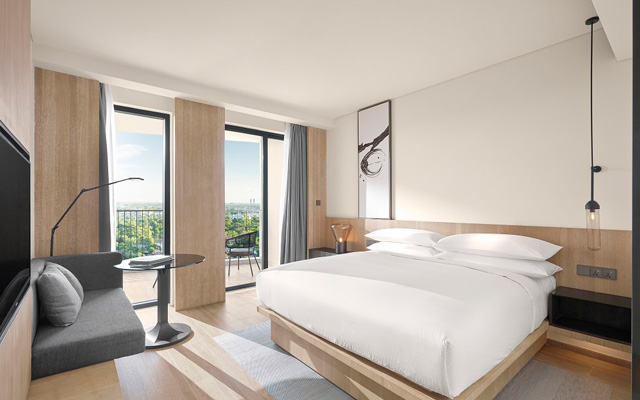
Premier King Room

The Fairfield by Marriott brand has made its debut in Vietnam with the opening of Fairfield by Marriott South Binh Duong in Thuan An City.

The 181-room hotel is located in one of the province’s largest business parks – the Vietnam-Singapore Industrial Park – that is home to some 70 international manufacturing companies, making it an apt base for local entrepreneurs and international business travellers.

Premier King Room

For meetings on-site, the hotel offers 120m2 of function space, while recreational amenities include an outdoor swimming pool and fitness centre. There is also The Market, a 24-hour convenience store in the hotel; as all-day dining Oryzaa and a pool bar.

The hotel is within a 45-minute drive from the country’s commercial capital, Ho Chi Minh City and 20-minute drive from the Tan Son Nhat International Airport.

MICE events in Singapore now able to host 1,000 attendees

0
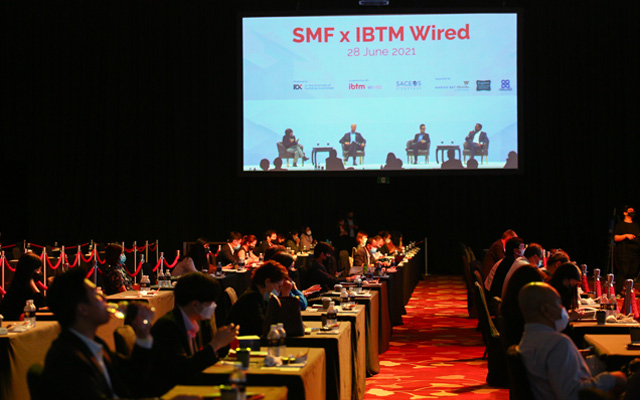
On-site attendees at the Singapore MICE Forum x IBTM Wired event held a few months ago

As more than 70 per cent of the population has received both vaccine doses, Singapore has eased Covid-19 rules for business events, in a step towards its endemic Covid-19 plan.

Previously, up to 500 people may attend MICE events if they have all been vaccinated. As of August 19, up to 1,000 attendees are now allowed if all have been vaccinated. If unvaccinated, this limit is reduced to 50. The unmasking for speakers may also resume.

On-site attendees at the Singapore MICE Forum x IBTM Wired event held a few months ago

Live performances have also been upped from 500 to 1,000 attendees if all are vaccinated. If unvaccinated, this limit remains at 50. The unmasking and singing/ playing of instruments that require expulsion of air for live performances may also resume.

Similarly for spectator and participatory sports events, limits have been upped from 500 to 1,000 if all are vaccinated. If unvaccinated, this limit remains at 50.

Regardless, all events are subject to updated safe management measures.

In addition, 50 per cent of employees who can work from home may return to the workplace. Workplace social gatherings will also be allowed, but is capped at five people.

Singapore-Hong Kong travel bubble bursts

0
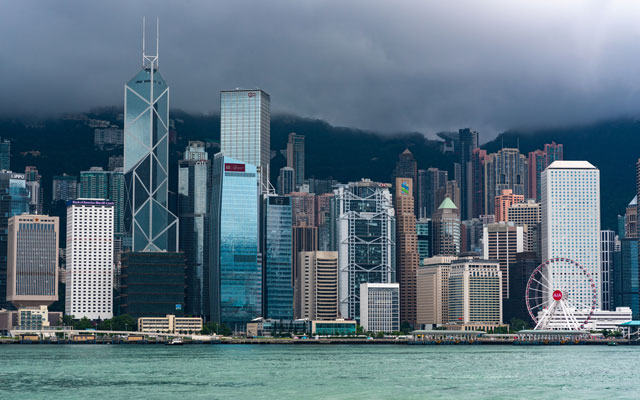
Singapore, Hong Kong has agreed not to pursue travel bubble due to differing Covid strategies

Singapore and Hong Kong have shelved plans to launch the twice-delayed travel bubble that would have allowed quarantine-free travel between the two cities.

The decision was reached following a discussion between Singapore’s transport minister S Iswaran and Hong Kong’s secretary for commerce and economic development Edward Yau, Singapore’s Ministry of Transport (MOT) said in a statement. Both sides agreed not to pursue further discussions on the air travel bubble (ATB) at this point, it added.

Singapore, Hong Kong has agreed not to pursue travel bubble due to differing Covid strategies

“In Singapore, a substantial proportion of our population is fully vaccinated. Hong Kong too is progressively vaccinating its population. Both sides are focused on keeping our populations safe and preventing the risk of imported cases,” MOT said.

“But our strategies differ, with Singapore now taking steps towards becoming a Covid-resilient nation. Against this backdrop, both parties agreed that it would not be possible to launch or sustain the ATB in its present form.”

Both Singapore and Hong Kong reaffirmed the importance of maintaining connectivity between the two cities, given that both are major aviation hubs.

Singapore announced last week that all travellers from Hong Kong and Macau will be able to enter the city-state without having to serve quarantine if they test negative for Covid-19 upon arrival.

However, Hong Kong has tightened its border control measures, with vaccinated travellers from Singapore now having to serve a 14-day quarantine, up from seven days.

MOT said that Singapore and Hong Kong will continue to explore new ways of strengthening connectivity and links with each other, and revive the air travel between the two cities.

TTG Conversations: Five Questions with Joe Ciliberto, EventsAIR

0

Expanding computing power and improving the speed of data transmissions will lead to further changes in online event capabilities, allowing event planners – especially those in Asia-Pacific, a region that has been among the earliest adopters of online and hybrid event formats since the pandemic started in 2020 – to deliver even better content and audience engagements, says Joe Ciliberto, global sales & marketing director with EventsAIR.

In this episode of TTG Conversations: Five Questions video series, Ciliberto discusses changes in hybrid event formats that events specialists should look out for, advancements that excite him most, how EventsAIR is responding to these changes with product development, and more.

Singapore further eases travel restrictions

0
Stakeholders call for Singapore government to also address the larger MICE ecosystem

Rising vaccination rates across Singapore has allowed the city-state to further relax border restrictions, with the latest being an immediate removal of quarantine for travellers from Hong Kong and Macau as well as the launch of all-purpose Vaccinated Travel Lanes (VTL) with Germany and Brunei from September 8.

Under the new VTL scheme, announced by the Singapore Covid-19 multi-ministry task force on August 19, fully vaccinated travellers departing from Germany or Brunei may enter Singapore without having to serve Stay-Home Notice, otherwise known as a compulsory quarantine. Instead, these travellers must take several Polymerase Chain Reaction (PCR) tests, including a pre-departure test within 48 hours of the departure flight, an on-arrival test at Changi Airport, and post-arrival tests at designated clinics in Singapore on their third and seventh day of travel.

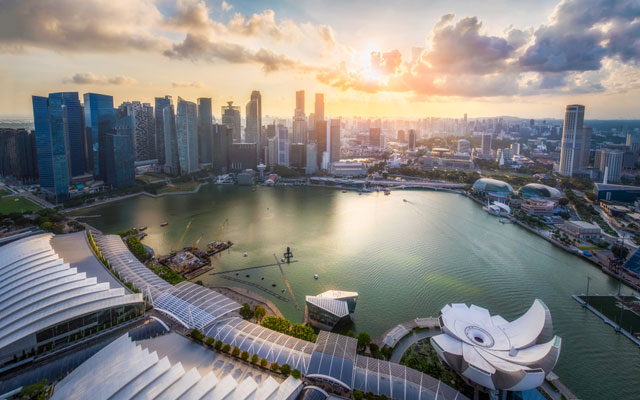
Singapore is easing border restrictions for fully vaccinated travellers

Travellers do not need to follow a controlled itinerary or have a sponsor, but they must have remained in Singapore or their country of departure – Germany or Brunei – in the last 21 consecutive days before they depart for Singapore.

They must also travel on direct and designated VTL flights from their country of departure to Singapore, which will serve only VTL travellers, said the Civil Aviation Authority of Singapore in a press release.

The designated flights from Germany will be operated by Singapore Airlines and Lufthansa, while the flights from Brunei will be run by Singapore Airlines and Royal Brunei Airlines.

According to a CNA report, there will be one daily VTL flight from Frankfurt or Munich, and three flights a week from Brunei.

Travel insurance with a minimum coverage of S$30,000 (US$22,007) for Covid-19-related medical treatment and hospitalisation costs must be purchased ahead of their trip to Singapore.

Travellers will also need to download and use the TraceTogether app in Singapore to enable contact tracing.

At the press conference, transport minister S Iswaran explained that Germany and Brunei were chosen to kick off the new scheme based on overall risk and operational assessment.

The VTL implementation would come with safeguards in place, and Singapore would draw lessons from the experience and enhance processes before any further expansion of the scheme.

Furthermore, fully vaccinated travellers to Singapore will, from August 20, be eligible for vaccination-differentiated safe management measures in Singapore. The Immigration and Checkpoints Authority will issue tamper-proof stickers to arrivals who have been fully inoculated with a vaccine under the WHO EUL – such as Pfizer-BioNTech/Comirnaty, Moderna, AstraZeneca, Johnson & Johnson, Sinopharm, Sinovac and Covishield vaccines.

Previously, only Singapore citizens, permanent residents and long-term pass holders with vaccination records in the National Immunisation Registry were eligible for vaccination-differentiated safe management measures. Current vaccination-differentiated safe management measures include allowing fully vaccinated individuals to dine at restaurants without having to undergo pre-event testing and to dine in groups of up to five fully vaccinated people.

Braydon Holland returns to NCL as senior sales director Asia

0

Norwegian Cruise Line (NCL) has appointed Braydon Holland as senior director sales for Asia.

Reporting to Ben Angell, vice president and managing director NCL APAC, Holland is responsible for driving the sales strategy throughout the Asia region (China, Hong Kong, Singapore, Japan, India, Taiwan, South Korea, Thailand, Philippines, Malaysia and Indonesia).

From Club Med to Contiki to Star Cruises to Genting Hong Kong, Holland brings more than 28 years industry experience to his new role – including 20 years in cruise and nine years based in Asia.

When he was sales & marketing director for Star Cruises and NCL, he helped to grow the brand to become an established business in Australia and New Zealand. He then took on the role of vice president sales at Genting Hong Kong, where he led the sales performance for the multi-brand cruise division – including Star Cruises, Norwegian Cruise Line, Dream Cruises and Crystal Cruises – across the Asia Pacific.

Singapore in talks with several countries to pilot business travel programmes

0
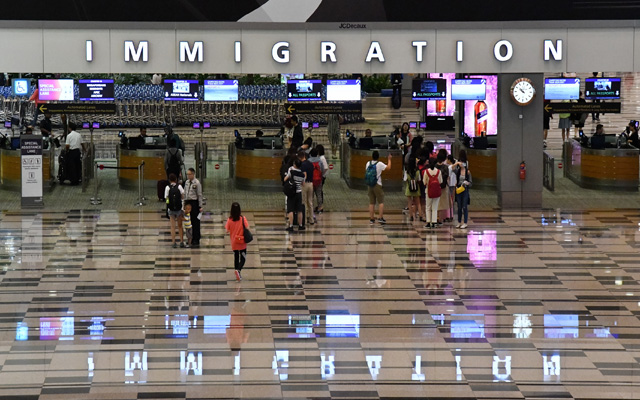
Singapore is taking a step-by-step approach to reopen borders; immigration at Changi Airport pictured

Singapore is in discussion with several countries – Germany, Australia, Canada and South Korea – to set up pilot programmes for vaccinated business travellers to enter Singapore, said trade and industry minister Gan Kim Yong to Bloomberg News.

The pilot will most likely focus on business travel, but Gan shared that the government is also looking at the possibility of leisure travel to countries with lower infection rates. Pilot trips could potentially have organised itineraries with visits to specific places, and be run with tour groups.

Singapore is taking a step-by-step approach to reopen borders; immigration at Changi Airport pictured

Singapore is currently on track to reach 80 per cent vaccination rates by early September, and currently, restrictions for vaccinated individuals such as dining in and returning to the office have been eased.

The government has also indicated that it is also looking into reopening its borders, but to do that, the community will need to first have reasonable safe management measures in place.

Reviews

The Slate Phuket

Just 10 minutes from Phuket International Airport on the serene northern coast, this 178-key, Bill Bensley-designed resort offers delegates a quiet, tropical paradise steeped in Phuket’s tin-mining heritage

The Ritz-Carlton, Bangkok

The newly-opened Ritz-Carlton, Bangkok anchors the One Bangkok development with cosmopolitan elegance. Featuring the city's largest ballroom and a spectacular new penthouse suite, it delivers exceptional hardware and deeply authentic, soulful service for business and leisure travellers alike

Mama Shelter Zurich

Behind the imposing, Brutalist concrete that defines Zurich’s Oerlikon district lies a surprising secret. While its exterior honours the neighbourhood’s industrial roots, stepping inside Mama Shelter reveals a vibrant, neon-soaked world that is a far cry from its rigid shell