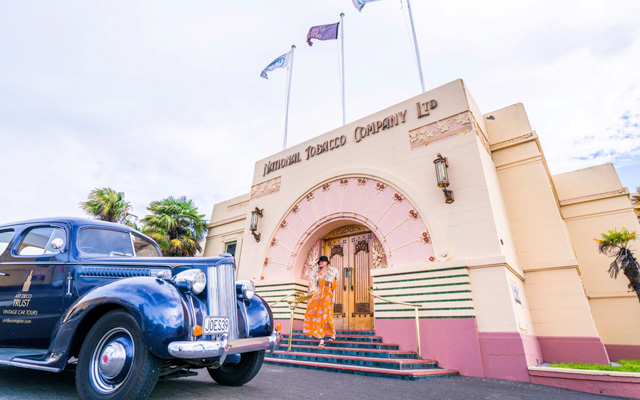
The conference will be held in Napier, a coastal city in North Island; Napier's Art Deco heritage pictured
New Zealand’s Business Events Industry Aotearoa (BEIA) Conference 2021
has been rescheduled to November 1-3, 2021, three weeks later than planned.
The theme of the event will be BEing Brave, Bold and Ready, and New Zealand’s minister of tourism Stuart Nash will open the conference on November 2.
The conference will be held in Napier, a coastal city in North Island; Napier’s Art Deco heritage pictured
International event strategist Oscar Cerezales, from MCI Group, will lead the discussion on scenario planning for the new normal. Other speakers will include clinical psychologist Jacqui Macguire, and technology and broadcasting guru Ian Taylor.
The Napier War Memorial Centre on the waterfront will be the main conference venue, with ToiToi – Hawke’s Bay Arts and Event Centre hosting the gala dinner on November 3. The Old Church Napier is set for the welcome function on November 1.
BEIA chief executive, Lisa Hopkins, said now more than ever, meeting face-to-face is important for the industry after a period of lockdown.
“Our members are telling us they are keen to go ahead, and we have been fortunate to work with our partners in Hawke’s Bay to secure the new dates. It is vital we continue to support the local region. They have invested so much time and effort into helping us host the conference and create an awesome programme.”
Delegates who have registered to date will have their registration automatically roll over to the new dates.
IT&CM Events and TTGmice have kicked off a month of positivity that focuses on peer appreciation and motivation to spread joy among business events professionals.
The campaign, titled MICECheerleader, hopes to encourage business events professionals to share kind words of gratitude and encouragement with their colleagues, industry partners, mentors or anyone who has made their days brighter and easier throughout this pandemic and travel and tourism crisis.
The MICECheerleader campaign will run from September 1 to 30, kicking off with TTG Asia Media staff posting their own messages of appreciation and encouragement on LinkedIn.
Cheryl Tan, head of TTG Events, said: “It has been such a roller-coaster year and a half since things turned topsy-turvy. Kind words are always welcomed but even more so now to keep our spirits up and ready for recovery.”
Business events professionals who would like to keep the motivational ball rolling can do so by posting an individual message of appreciation or acknowledgement for three (or more) professionals in their network, and tag them.
Recipients of the message are encouraged to return the gesture and do the same for three others in their networks.
Posts should carry the hashtag MICECheerleader as well as tag IT&CM Events and TTGmice.
1. A global business event destination surrounded by natural beauty
The modern coastal city of Cairns, Australia is the only place in the world with two World Heritage areas side by side making it the picture-perfect location for events designed to impress delegates. The Great Barrier Reef and the Wet Tropics Rainforest offer extraordinary offsite locations and experiences for any group size with the added benefit of a year-round warm climate.
2. Home to one of the most globally awarded Convention Centres in the world
The Cairns Convention Centre is an award-winning venue that is ideal for business events with 300 – 2,500 delegates. The Centre has just re-opened after a refurbishment, and the expansion underway that will add over 10,000sqm of meeting space, opening in 2022.
3. Unique off-site venues
Extraordinary experiences are a speciality in Cairns & Great Barrier Reef where skilled and imaginative event professionals deliver creative ways to impress delegates. Outdoor event locations are in abundance through the region – chose from a rainforest setting where fairy flautists and fire dancers create a magical atmosphere, or under the palm trees overlooking the coral sea, or experience North Queensland culture with an offsite event at a working cane farm.
4. Opportunity to integrate memorable event legacies
Adopt a turtle at the Cairns Turtle Rehabilitation Centre in honour of your conference and get your delegates involved with tracking its progress in the lead up to the event.
Align with Citizens of the Great Barrier Reef where many small actions make a big impact. Encourage delegates to “Hold the Straw”, “BYOB (Bring your own bottle/bag)” or “Sponsor a COTS (Crown-of-thorns starfish) Diver” to increase the conference impact score which can be tracked directly on your very own Citizens dashboard showing how your event makes a difference.
Scuba diving - Great Barrier Reef
5. Amazing activities for delegates pre and post touring
Tours depart daily for visits to the Great Barrier Reef, tropical rainforest, palm fringed tropical islands and the alluring outback, all offering outstanding opportunities for lasting memories. On the Great Barrier Reef, you can dive with turtles, swim with whales and spot Nemo amongst the corals. Get up close and personal with the local residents of one of the region’s wildlife parks by cuddling a koala or hand-feeding kangaroos.
Business Events Cairns & Great Barrier Reef supports meeting planners wishing to bring a business event to our breathtaking location. Visit our website or email businessevents@ttnq.org.au
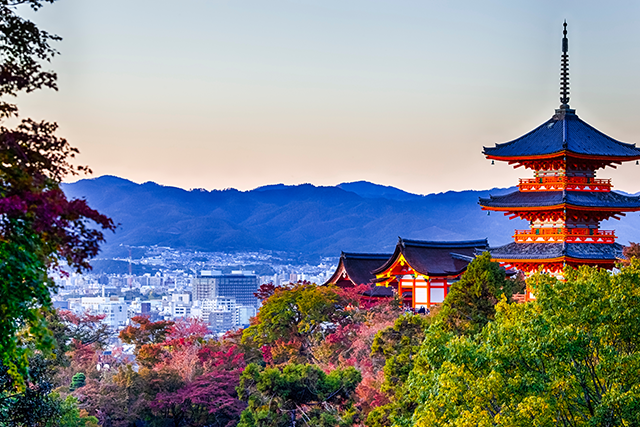
The Higashiyama district along the slopes of Kyoto’s eastern mountain range is one of the city’s best preserved historic districts, home to numerous World Heritage Sites and Important Cultural Properties. For visitors keen to experience exceptional Kyoto accommodation in this iconic area, there are several new hotels rich in history and comfort with excellent access to the sights.
The Hotel Seiryu Kyoto Kiyomizu
One such hotel is The Hotel Seiryu Kyoto Kiyomizu, which opened in March 2020 and was converted from a historic schoolhouse, retaining much of the building’s characteristics. It features 48 guestrooms, spacious gardens and rooftops, a restaurant that focuses on local ingredients (suitable for up to 44 pax), a guest lounge (maximum 30 pax), a fitness gym and three private baths. Guests can enjoy views of Yasaka Pagoda from the guest lounge or skip over to 1,200-year-old Kiyomizu-dera Temple which stands just an eight-minute walk away.
The Gate Hotel Kyoto Takesegawa by Hulic
The Gate Hotel Kyoto Takasegawa by Hulic also opened recently in July 2020. It is located by the Takase River and comprises the Main building, which has modern rooms in six distinct styles (The Gate, Classy, Scenic, Essential, Modest and Cinema) and the Schoolhouse building, which retains features from its former existence as an elementary school such as its high ceilings and spacious windows. The restaurant serves seasonal cuisine with views of verdant Higashiyama. The surroundings are steeped in history, with the Kyoto residences of many feudal domains formerly located here, and the historic alley of Pontocho is only a three-minute walk away.
REMARKABLE VENUES
Kyoto has 46 unique venues spread across the city, in six categories: World Heritage Sites; temples and shrines; museums and tourist attractions; historical buildings; restaurants and event spaces; and chartered trains. While all spectacular in their own way, here are some outstanding options for events with attendees new to Kyoto.
Nijo-jo Castle
Nijo-jo Castle was first built in 1603 by Tokugawa Ieyasu, the first shogun of the Edo shogunate, to protect the emperor in the Kyoto Imperial Palace and to serve as the shogun’s residence during his visits to Kyoto. It was registered as a World Heritage Site in 1994 and makes a grand venue for receptions. Guests can appreciate the castle’s original glory, including the magnificent Kara-mon Gate (a designated Important Cultural Property), which can accommodate up to 400 pax (theater style or buffet style) in the front courtyard. There is also exclusive access to areas normally closed to the public. Koun-tei Tea House is suitable for up to 30 pax (seated) while the scenic Japanese Seiryu-en Garden suits up to 300 pax (theater or buffet style).
Kyoto City KYOCERA Museum of Art
Kyoto City KYOCERA Museum of Art is the oldest public art museum building in Japan. Built in a “Crown Imperial Style” that blends Japanese and Western features, the building is considered a work of art and was refurbished in 2020. The open-air inner courtyard, which was previously closed to the public, has been reborn as an atrium-style space with a glass roof, making it a unique venue perfect for parties welcoming special guests and more.
Kyoto National Museum
Similarly, the Kyoto National Museum, which opened in 1897, can be used for stunning receptions in the Grand Lobby (200 buffet, 140 seated), Tea House Tan’an (10 seated) and the garden (300 buffet, 210 seated). The museum building is characterised by a fusion of ancient and modern, with the red brick Important Cultural Property Meiji Kotokan Hall standing alongside the 2014-built Heisei Chishikan Wing that incorporates Japanese motifs throughout.
Old Mitsui Family Shimogamo Villa
The Old Mitsui Family Shimogamo Villa is a beautifully preserved example of modern Japanese architecture. The three-story building is surrounded by greenery and blends in magnificently with the moss garden and pond. Guests can enjoy a Japanese lunch (up to 24 pax) and take a break in the gardens while sipping on matcha. The drawing room can accommodate 16 pax (classroom style) to 30 pax (theater style).
All capacities reflect use under non-pandemic conditions.
TOP SUPPORT
As an international centre of history and culture, Kyoto has launched a MICE Fund to preserve its rich heritage for future generations. It aims to also enhance the attractiveness of the city, improve lives, promote business events and tourism, and contribute to the Sustainable Development Goals.
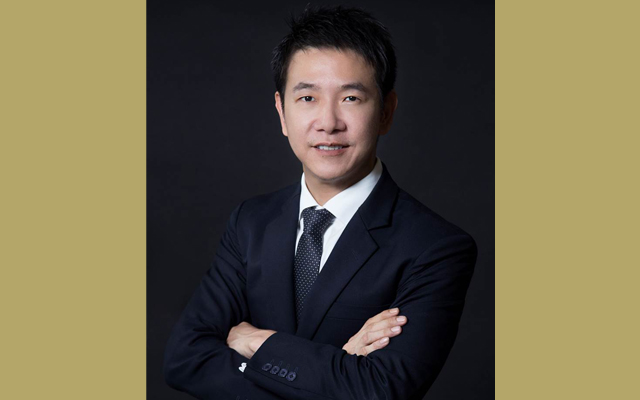
Yoshiaki Matsui
According to Yoshiaki Matsui, deputy director of the Bidding and Promotion Division/Event Support Division of the Department of Conventions and Tourism, the MICE Fund is the first of its kind in Japan to collect donations from participants of international conferences and corporate meetings, organisers, and companies. Contributions go towards making Kyoto’s tangible and intangible culture, nature, and lifestyle sustainable. Initiatives to receive support are chosen regularly by a committee to ensure local organisations, facilities and properties receive the support they need, including help recovering from the impact of the Covid-19 pandemic and natural disasters.
To find out how Kyoto can support your event dreams, visit meetkyoto.jp/en/
Meliá Hotels International has appointed Wuttipong Tanteraponchai as the cluster director of sales and marketing (DOSM) for both Meliá Koh Samui and Meliá Chiang Mai, the brand’s first two properties in Thailand.
The Thai most recently worked as DOSM at The Sukhothai Bangkok, leading a team of sales and marketing communication professionals to manage the hotel’s transition to a hybrid alternative state quarantine (ASQ) hotel in the wake of Covid-19.
Prior to that, he worked at The Okura Prestige Bangkok for more than seven years, firstly in the role of director of sales (DOS) for two years before being promoted to DOSM. He has also spent time as cluster DOS at Pan Pacific Hotels Group Singapore, DOS (corporate & MICE) at The Bangkok Marriott Resort & Spa, and DOS at The Westin Grande Sukhumvit, Bangkok.
Wuttipong embarked on his hospitality career in the early 1990s as a tour coordinator at The Royal Cliff Beach Resort. From there, he steadily rose up the ranks as a guest service agent at The Mansion Kempinski Bangkok and The Royal Orchid Sheraton & Towers before becoming the assistant front office manager at The Embassy Suite Windsor Palace.
He then progressed to senior sales management positions with The Novotel Bangkok on Siam Square, The Bangkok Marriott Resort & Spa, and The Oriental Bangkok.
Asia Pacific’s events industry is catching onto the trend of incorporating extended reality in online events, indicate panellists at the recent webinar entitled Reimagine Virtual Events Storytelling Through Extended Reality, hosted by the Professional Convention Management Association (PCMA).
Extended reality, also known as xR, is a technology that blends physical and virtual worlds together, where its usage has been increasing steadily in online events based in Europe and the US.
There is no limit to imagination and space when it comes to incorporating xR into all types of events
Eelynn Tan, Aux Media Group’s event producer, shared that the events industry had to react quickly and quickly pivot to digital events in the last 1.5 years, but after some time, realised that “clients and audiences wanted more than streaming from such events”.
That signalled the start of the incorporation of xR technology in events, which Tan revealed helped to transform Zoom meetings or online conferences “into something more unique and captivating for audiences”, and allowed for a more immersive experience.
“We are all jumping into extended reality. Korea, for example, has a huge market,” said Cesar Caceres, technical head APAC, at events software company Disguise.
He added that even though countries are reopening which means that more events could potentially return to face-to-face, Caceres believes xR is here to stay, and can also enliven hybrid or in-person events.
Nicholas Tan, Aux Media Group business development director, said: “Extended reality is behind the most spectacular events around the world, including the recent Tokyo Olympics closing ceremony, Dubai Expo 2020, musical concerts, celebrity events, and movies. Even the game world is becoming more realistic now.”
In relation to corporate events, Tan pointed out that a growing number of product launches, conferences and meetings, are already moving into the xR arena.
“It is no longer just a conference, but (organisers realise they can) do something different to wow both their audience and even their own employees. Marrying the two – the virtual and the physical world – is critical,” he said.
Panellists also shared that there is no limit to imagination and space. For instance, within a 6m x 6m cubic space, xR can create an out-of-this-world experience and include whimsical and fantasy setups, impactful visuals, elements of surprise like fireworks, showcase a company’s brand identity, or even bring in elements of augmented reality.
However, Darren Chuckry, founder and managing partner, HK Initiative, pointed out that content is very important in xR, so when it comes to creating online corporate events, it is necessary to work closely with the company regarding the objectives, profile, and branding guidelines. This is because all these aspects play a part in determining how the visuals will look like, and how the content will be presented in order to tell a story which engages the audience.
Another benefit of xR is that the virtual setup helps to save on event costs, as all behind-the-scenes work is included in the price, as opposed to an in-person convention or conference. Virtual setups can also be reused by the company for a series of events, thereby building on the economics of scale and reducing material wastage.
NATIONAL CONVENTION CENTRE CANBERRA AND OZHARVEST HELPING TO KEEP FOOD ON
THE TABLES OF THOSE IN NEED DURING LOCKDOWN
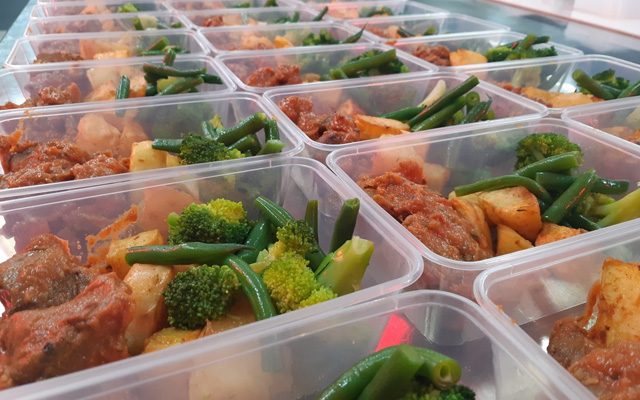
Although the National Convention Centre Canberra (NCCC) has closed its doors to the public as part of lockdown restrictions, the venue is keeping its kitchens open to help ensure Canberrans in need don’t go hungry.
This is done in partnership with OzHarvest Canberra, where every week, 500 individual meals are prepared by NCCC chefs on-site in the venue’s kitchen, which are then picked up by the OzHarvest van.
NCCC’s kitchens are working with OzHarvest to provide food for those in need
“During Covid restrictions, there’s a higher demand on our food, and there’s a reduction in the normal supply chain to the shopfronts and farmers that we normally rescue food from. So it puts us in a really tough situation. And when people are out of employment or are financially in tough positions, they rely on us for food,” said Belinda Barnier, Canberra city manager at OzHarvest.
OzHarvest is the country’s biggest food rescue organisation, diverting food that would otherwise go to waste to feed people in need. OzHarvest Canberra supplies food to 64 agencies and charities, which deliver meals to those who need them most. However, OzHarvest doesn’t have a kitchen nor workforce, which is where NCCC steps in.
NCCC executive chef Nikhil Jain said meal recipients can expect the same high quality of food that event guests enjoy. The chef-prepared, home-style meals are made with fresh produce, with a range of dishes including pasta, curries, stews and vegetables.
Aside from supporting this community initiative, Jain shared that the project is also beneficial for the kitchen team at a time when the kitchen would usually be closed.
“At the same time, it means that everyone in our kitchen team is getting around two shifts a week, which is great for everyone’s mental health.”
NCCC, part of IHG (InterContinental Hotels Group), has supported OzHarvest for 14 years in the areas of food sustainability, food insecurity and hospitality skills investment, and all excess food from event catering is donated to the organisation.
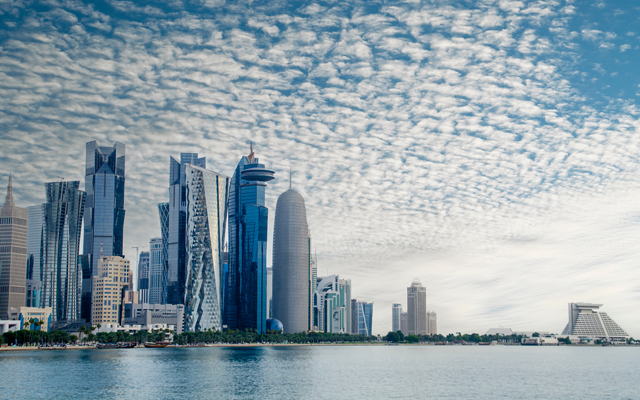
The Geneva International Motor Show (GIMS) and Qatar Tourism have entered into a partnership to develop and host the Qatar Geneva International Motor Show, which will debut in 2023.
The partners hinted that the event would be positioned as a new world-renowned motor show for the Middle East.
Hosting internationally renowned events is an important pillar of Qatar National Vision 2030
The collaboration is considered a natural fit, given that GIMS has been pioneering the automotive space since 1905 and has built a strong brand reputation in the sector, while Qatar stands out globally for its outstanding experience offer and infrastructural capabilities.
The first edition is planned for autumn, and will likely take place once every two years.
A full concept reveal is expected during GIMS 2022 next February.
Akbar Al Baker, Qatar Airways group chief executive and Qatar Tourism chairman said: “In line with the national strategy, Qatar National Vision 2030, we are expanding our tourism proposition to position Qatar as a world-leading destination and ensure guests enjoy the very best that the Gulf State has to offer.”
He added that hosting internationally renowned events is an important pillar of Qatar National Vision 2030.
Asian Wound Care Association will take its meeting this year to Malaysia’s Selangor, bringing together some 500 local and international delegates who will share knowledge and expertise on the best practices in wound care management.
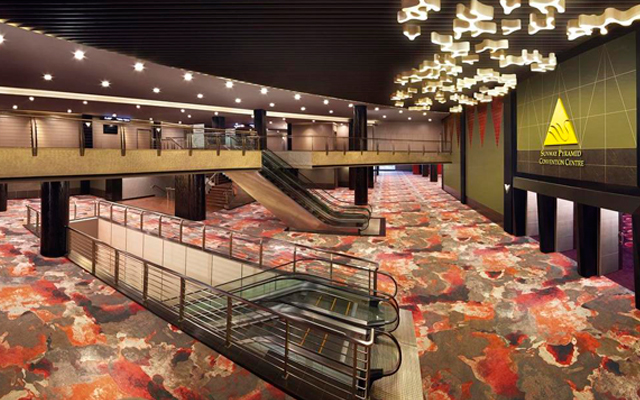
Asian Wound Care Association & 3rd Global Wound Conference 2021 is brought in by the Malaysian Society of Wound Care Professionals, and will be held from October 15 to 17 at Sunway Pyramid Convention Centre.
Sunway Pyramid Convention Centre will host Asian Wound Care Association & 3rd Global Wound Conference 2021
In a press statement, Malaysia Convention & Exhibition Bureau (MyCEB) said the conference was a significant bid win for Malaysia. The event is expected to establish an estimated RM5.26 million (US$1.26 million) in economic impact.
Abdul Khani Daud, MyCEB CEO said: “Having the opportunity to host an event that gathers reputable authorities in the field of wound care under one roof to further discuss the advancement towards wound care standards for patients and healthcare professional performance reflects Malaysia’s astounding ranking as Best Healthcare in the World Category of the 2019 International Living Annual Global Retirement Index.”
Founding president of Malaysian Society of Wound Care Professionals, Harikrishna K R Nair, commented: “When wound care becomes increasingly important, I believe hosting this conference in Malaysia will provide a great learning opportunity for the health care professionals in this region in interdisciplinary team approaches that deliver best practices for improved patient outcomes and disseminate educational and training toolkits created in practical, relevant and adaptable formats.”
He added that the society is aiming next to work with MyCEB to secure the future edition of World Wound Healing Congress, “which is the Olympic kind of event in our field”.
Plaza Premium Group, Qingdao International Airport Group and Capital Airport VIP Service Management Co. have jointly launched a first-to-market land-to-air premium airport experience at Qingdao Jiaodong International Airport.
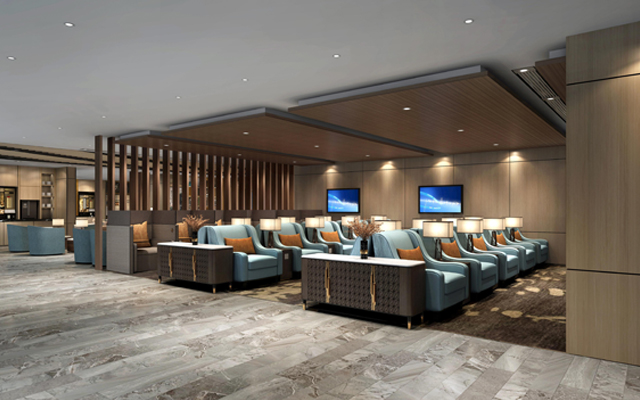
The unique land-to-air premium experience is offered in two areas: a three-storey VIP Building located at the Arrival area and three Plaza Premium Lounge outlets at the Departure area.
Spanning 6,500m2, the multi-complex VIP Building offers end-to-end airport hospitality services such as dining, lounging, meet-and-greet, personalised concierge and accommodation.
The ground level houses 11 VIP rooms that offer designated spaces for corporations to provide private and premium airport services to affluent travellers. Services include private check-in, concierge, dining, lounge, and a special fast track or curb-to-apron service for those departing at the Domestic terminal.
The second floor is occupied by Plaza Premium Lounge, which comprises three private dining areas, three tea rooms, an Aerobar, massage service, concierge, VIP meeting rooms, individual work stations and a souvenir shop.
On level three, Aerotel Qingdao caters to travellers in need of a comfortable and convenient stay. There are 54 guestrooms across three suite types, all outfitted with quality bedding, pillow options, soothing lighting, powerful showers, high-speed Wi-Fi and in-room IPTV.
Over at the Departure area, travellers can enjoy three pay-per-use Plaza Premium Lounges located on the airside third floor of Terminal 1, situated near the boarding gates, as well as on the East and West sides of the Central Landscape Area respectively.
All services are available for reservation on Plaza Premium Lounge official website and Aerotel official website or via partnered distribution channels and corporations.
Just 10 minutes from Phuket International Airport on the serene northern coast, this 178-key, Bill Bensley-designed resort offers delegates a quiet, tropical paradise steeped in Phuket’s tin-mining heritage
The newly-opened Ritz-Carlton, Bangkok anchors the One Bangkok development with cosmopolitan elegance. Featuring the city's largest ballroom and a spectacular new penthouse suite, it delivers exceptional hardware and deeply authentic, soulful service for business and leisure travellers alike
Behind the imposing, Brutalist concrete that defines Zurich’s Oerlikon district lies a surprising secret. While its exterior honours the neighbourhood’s industrial roots, stepping inside Mama Shelter reveals a vibrant, neon-soaked world that is a far cry from its rigid shell




 The MICECheerleader campaign will run from September 1 to 30, kicking off with TTG Asia Media staff posting their own messages of appreciation and encouragement on LinkedIn.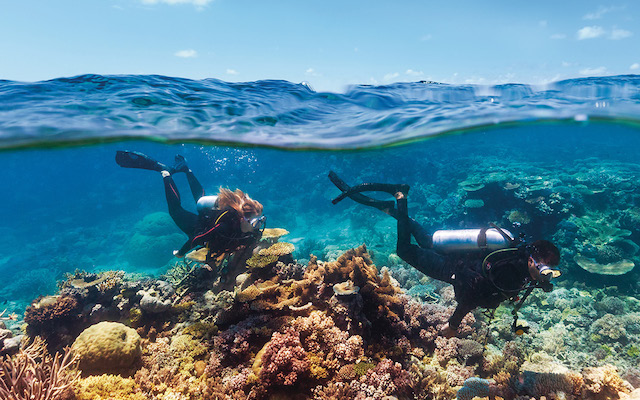





 Spanning 6,500m2, the multi-complex VIP Building offers end-to-end airport hospitality services such as dining, lounging, meet-and-greet, personalised concierge and accommodation.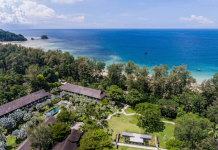




The Geneva International Motor Show (GIMS) and Qatar Tourism have entered into a partnership to develop and host the Qatar Geneva International Motor Show, which will debut in 2023.
The partners hinted that the event would be positioned as a new world-renowned motor show for the Middle East.
The collaboration is considered a natural fit, given that GIMS has been pioneering the automotive space since 1905 and has built a strong brand reputation in the sector, while Qatar stands out globally for its outstanding experience offer and infrastructural capabilities.
The first edition is planned for autumn, and will likely take place once every two years.
A full concept reveal is expected during GIMS 2022 next February.
Akbar Al Baker, Qatar Airways group chief executive and Qatar Tourism chairman said: “In line with the national strategy, Qatar National Vision 2030, we are expanding our tourism proposition to position Qatar as a world-leading destination and ensure guests enjoy the very best that the Gulf State has to offer.”
He added that hosting internationally renowned events is an important pillar of Qatar National Vision 2030.