


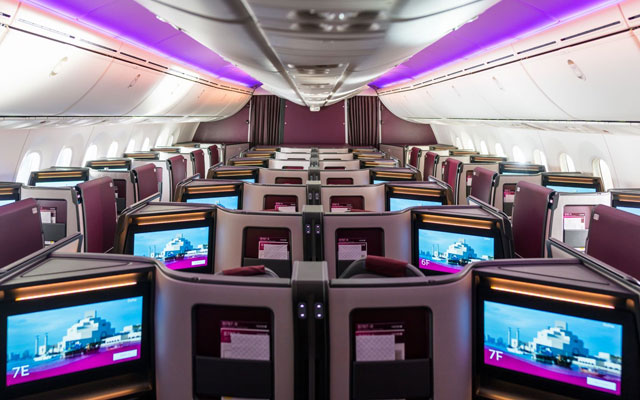
Qatar Airways unveils new business class suite on Boeing 787-9
TPB’s updates MICE subvention to cover local, hybrid, and virtual events

The Tourism Promotions Board Philippines (TPB) has adjusted and enhanced the nature of assistance to event planners and organisers by giving equal priority to domestic and international events and by including hybrid and virtual events.
Raquel Ruth A. Tria, acting head, TPB’s MICE department, shared: “We are calling it the Enhanced MICE Plus Programme because it provides equal priority to local MICE events. Prior to Covid-19, priorities were given to regional and international MICE events.
“Since Philippine’s borders are still closed for foreign tourists, it compels us to encourage domestic MICE planners to organise events so we can help tourism recover.”
Additional incentives offered by the Enhanced MICE Plus Programme include event technology solutions, a virtual event platform, venue rental support, and sponsorship of care kits or hygiene kits for delegates.
This is because “most of the events TPB is assisting with have shifted to either virtual or hybrid”, hence there is a need to “adjust the nature of assistance and entitles”, Tria shared with TTGmice.
TPB is also encouraging local business events players to pursue more events in the country at Asian and international levels, for example, associations.
“We would like to increase our reach to local associations, as we see that many are keen to resume their regular events. We acknowledge the contribution of professional associations; they are the lifeblood of the meetings industry.
“We hope to build and increase the confidence level of local associations so they can start organising events, following necessary health and safety protocols, to local destinations that are MICE-ready,” Tria said.
Support already offered by the Enhanced MICE Plus Programme includes airport reception, giveaways for delegates and tokens for VIPs and speakers; collateral materials like brochures, images, etc.; hosted meals and cocktails; half-day city tour; and technical assistance in coordinating with various private and government sectors.
Malaysia develops safe business events planner; speeds up inoculation for tourism frontliners

The Malaysia Convention & Exhibition Bureau (MyCEB) has engaged with key industry leaders in the business events industry to nurture collaboration and to move forward, in line with the nation’s Covid-19 recovery plan.
MyCEB’s CEO, Abdul Khani Daud, recently chaired a virtual meeting that was attended by industry stalwarts such as Irmohizam Ibrahim, chairman Asia Pacific, World Trade Centre Association; Vincent Lim, president, Asia Federation of Exhibition & Convention Association; Francis Teo, president, the Malaysian Association of Convention and Exhibition Organisers (MACEOS)and Suppliers; and Alan Pryor, president, Business Events Council Malaysia (BECM).

During the meeting, one initiative discussed was the creation of the MySafe Business Events Planner, jointly produced by MyCEB and BECM. The planner will provide detailed information on the advance planning and organising necessary for event organisers, both local and international, to ensure a seamless experience. It will also contain safety measures Malaysia has put in place to ensure events can be held safely and with confidence. The planner is expected to be ready by 4Q2021.
Next, industry leaders shared updates on their members’ involvement as vaccination centres under the national Covid-19 immunisation programme.
In collaboration with MACEOS, additional manpower will be called upon to assist the current staffing at convention centres that are running the vaccination programme. MyCEB staff and others from the business events industry will be deployed to assist venues such as World Trade Centre Kuala Lumpur, Malaysia International Trade and Exhibition Centre (MITEC), Kuala Lumpur Convention Centre, Setia City Convention Centre, Persada Johor, Borneo Convention Centre Kuching, Sabah International Convention Centre and Setia SPICE Convention Centre.
Abdul Khani also welcomed the statement made recently by the Minister of Tourism, Arts and Culture Malaysia, Nancy Shukri, which called for early vaccination of the tourism and business events frontliners.
“The business events industry will rally behind the Ministry of Tourism, Arts and Culture in its recovery plan and seek out key players in the business events industry to be given early immunisation.”
He added: “The business events industry is intertwined with the rest of the tourism industry, including airlines, venues, caterers and transportation providers. We need each other in order to recover.”
“Once our industry is vaccinated, we can hopefully reopen.”
Different charms for a cautious bunch

Dragon Trail’s Chinese Consumer Travel Sentiment Report found uncertainty for outbound leisure and business travel remains high, running counter to our expectations that vaccines would boost travel confidence. Why have Chinese respondents felt this way?
When the survey was taken in 1Q2021, global vaccination campaigns still had a long way to go, and the results of those campaigns were not as obvious as they are now.
China’s own vaccination drive has really only taken off from May 2021. Although vaccines are delivering positive results around the world, for Chinese travellers, it won’t be until travel restrictions and quarantine requirements are lifted that international travel becomes a real possibility once more.
A majority 51 per cent of respondents said they have become more cautious about travel since the pandemic. Will this mentality result in reduced leisure time during business trips?
I would not expect a reduction in ‘bleisure’ unless it is due to in-destination travel restrictions – for example, Chinese business travellers to Singapore in 2020 were required to stick to a pre-approved itinerary and refrain from taking public transportation.
Our survey respondents showed strong interest in visiting attractions such as landmarks and museums on their next outbound trip, indicating that they do not intend to significantly change how they travel due to health concerns.
China is regarded as a gold mine of a source market for many destination marketers. What would such deflated international travel confidence mean for marketers working to rebuild travel interest among Chinese travellers this year?
Strong engagement with overseas travel-related content on Chinese social media platforms, and with tourism boards livestreaming content from abroad suggests that Chinese travellers are still very interested in outbound travel, but simply cannot make plans to do so at this time. Continuing to inspire Chinese travellers and also keep them apprised of strong health protocols and positive news about successful pandemic control measures can help to guide their future travel decisions.
Let’s also talk about Chinese travellers’ preference for destinations that are deemed friendly to Chinese people. Is this something that corporate travel managers dealing with Chinese travellers as well as event organisers/owners targeting Chinese attendees should pay close attention to?
Our survey findings showed that friendliness to Chinese travellers was actually ranked as the most important factor impacting travel destination choice, so this is certainly an area that the travel industry should pay attention to. Destinations that are seen as friendly to China will also be seen as more stable for business relations. Travellers of any nationality want to feel safe and welcomed, so it’s important to be able to address and alleviate any concerns.
What would you recommend destination marketers do to rebuild Chinese travellers’ confidence?
Consumer marketing to maintain and build Chinese travellers’ interest and cultivate a welcoming image is one important side to this, but B2B relations with the Chinese travel industry shouldn’t be neglected. Travel agents can act as trustworthy sources of information, especially for travellers who may be more risk-averse and looking for reliable, professional advice. Our survey showed that for most global destinations, official advice from the government and travel agencies would impact the decision to travel again.
View the report here: shorturl.at/jlDKP
APAC firms fret over business competition and employee safety in months ahead: SAP Concur

A new study commissioned by SAP Concur about the business impact of Covid-19 and businesses’ resilience has revealed that slowing economic growth, employee safety, and well-being, and increased or new competition, are the top three challenges as companies in Asia Pacific embark on business recovery.
The survey, entitled Ready, Reset, Grow, polled 250 enterprise-level senior business, finance and IT executives across various industries in Australia, China, India, Japan, and Singapore. It uncovered how these executives are leveraging the experiences of the past year to reinvent the way they will operate and remain resilient in the next six months.
Executives concerned about fundamental business challenges
Given the uncertainty caused by the pandemic, it is no surprise that APAC executives are worrying about and focusing on the fundamentals of their businesses.
The pandemic has highlighted a need for increased investment in technology with executives reporting greater spending, as a result of Covid-19, across a range of technologies, especially remote work tools (59%) and cloud services/solutions (56%).
New remote working patterns are here to stay. Looking ahead to the business recovery phase of the pandemic, 78% of the APAC respondents expected their company to increase reliance on remote work in order to meet business goals.
Over the next six months, the top three technologies APAC executives see their firms harnessing are artificial intelligence (AI) and machine learning (ML) (52%), cloud computing (49%), and 5G (38%). They view these technologies, particularly AI/ML, as being capable of enabling their firms to make more informed business decisions and consequently, enhance growth and development within the organisation.
The respondents see substantial opportunities for technology to improve operations in the travel, expense and invoicing side of their businesses. About 86% agree that having good control over company spend is necessary for weathering economic uncertainty. They said the most important travel, expense, and invoicing capabilities needed for their company to negotiate the next six months are the abilities to identify cost-saving opportunities (73%), access to real-time data and analytics (72%), and accurately forecast and budget (72%).
Through these investments, APAC executives hope to boost business process efficiencies (37%), reduce operational costs (36%), and make smarter, data-based decisions (35%).
Employee health and wellbeing come to the fore
Given the omni-presence of the coronavirus today, it was also natural that employees’ health and wellbeing are uppermost on the minds of most employers, especially from the perspective of business travel.
Emerging expectations around personal and community health and safety will mean a new era of decisions, processes, and innovations across the travel industry. As travel resumes in a new way, employee safety will be of the essence.
Companies need to adapt and adopt, in part by harnessing technology that gives employees the ability to make safe travel choices while still keeping costs manageable for the company.
Travel management technology today enables companies to update travellers of hazardous situations, and locate and notify them in times of emergency, helping employers fulfill their duty of care to their workforce. With the integration of advanced analytics, both AI and ML are also well equipped to handle calamities impacting the company or the traveller − travel information can be pulled into reports from travel booking sites, emails, and corporate credit cards. On the finance side, such intelligent technologies give greater visibility and control of travel spend before it’s booked, and provide the data to strengthen negotiating positions with vendors.
For other findings, download the SAP Concur Ready, Reset, Grow report here.
ICCA teams up with Explori to enhance future events
The International Congress and Convention Association (ICCA) has established a research partnership with Explori, a full-service research agency, and platform for event experience insights.
With this partnership, ICCA will ensure that members and associations continue to benefit from exceptional educational content and world-class events. Through the partnership, ICCA will also be able to create insightful market intelligence reports.
Meanwhile, Explori’s platform allows global event organisers, agencies, and venues to capture high-quality attendee feedback from any market in multiple languages. Through this partnership, ICCA will be able to customise events and speakers with relevant and engaging educational content.
“Explori is committed to creating high-quality insights about what makes a great face-to-face experience for event attendees and sponsors around the world.
“Our partnership with ICCA will expand the scope of stakeholders participating in our research and allows us to speak directly to their highly engaged members about the challenges and opportunities we will face together as an industry. We look forward to adding as much value as we can to their programme of content and events,” added Sophie Holt, managing director, Explori.
Plaza Premium Group makes two new hires

Plaza Premium Group (PPG) has made two new hires – Sylvio Angelone as chief operating officer and Olivia Chang as chief information officer.
In his new position, Angelone is responsible for the group’s global network of operations, culinary and customer engagement as well, as overseeing the IT & digital innovatio,n and talent and culture for the company. The development and expansion of third-party airport lounge management will also fall under his scope.
Angelone brings over 30 years of experience to the role. Prior to joining PPG, the Australian spent nearly a decade with Starbucks Asia Pacific based in both Hong Kong and Korea.
Meanwhile, Chang now heads PPG’s global digital and technology team, and will play a key role in achieving the company’s global business transformation strategy to drive operational excellence and efficiency through technology. She will report to Angelone.
Chang joins PPG with over 30 years of experience in various chief information roles in Asia Pacific. She previously worked as a digital transformation and innovation leader with Coca Cola, held senior roles in various privately-owned corporations and NGOs in China and Geneva, and lectures for the University of California, Berkeley for their CIO Leadership Certificate Program.
Royal Caribbean hires director of sales for APAC

Royal Caribbean has appointed Kenneth Yeo as its regional director of sales for Asia Pacific, a brand-new role designed to drive growth in the region.
Yeo will lead the trade, corporate, and retail sales teams based in Singapore, supporting the Asia Pacific region. He will also work closely with the trade marketing, and operations divisions in tandem, to shape Royal Caribbean’s future milestones.
He brings a wealth of strategic business acumen and sales and marketing expertise with over 22 years of commercial experience in various sectors. In his most recent role, he worked for a global pharmaceutical company, starting as a sales manager for Asia Pacific and moving up the ranks to become the regional director of US, Canada, Puerto Rico.
Prior to that, Yeo spent his time in the Fast-Moving Consumer Goods (FMCG) industry, spearheading sales and managing local and regional market distribution for multiple brands.
CTMs face fresh challenges in negotiating global airfares

Negotiating with airlines is becoming even more challenging for buyers as they face price volatility and regional differences, with fares falling in Europe, flattening in North America and ballooning in Asia.
Elise Weber, co-founder/chief sales and marketing officer, Skytra, an Airbus subsidiary, said the key to working with airlines was to split the world into different markets and to conduct regional negotiations. She was a speaker at the recent June CAPA Live.

Weber added regional indices offered more predictable prices, with only a two per cent deviation.
A Singapore-based regional travel manager in the pharmaceutical industry told TTGmice its global air RFP bid was in, but “there was no mention on specific airfares”.
“As I see it, the airfares will not be cheap”, she continued, adding that US airlines like United and Delta were also not talking about ramping up schedules, but focused on duty of care and sustainability.
She commented: “ We cannot push the airlines even if tickets are 10 to 20 per cent more expensive. We just have to make do and work with what we have as there is no budget increase.”
Ericsson uses CWT and FCM trackers to monitor the situation and prices are being driven up by scarcity, according to Florence Robert, regional travel manager, Asia Pacific.
“There is not much we can do at this stage, but just to monitor and make decisions based on what we see,” she added.
Jane Sim, commodity manager ASEAN at Siemens, noted: “Buyers have very limited (buying) power, especially during this period to reduce airfares. But we managed to withhold fare increases for all our existing contracts even though there has been a drastic drop in air travel.”
Meanwhile, Benson Tang, executive director, Corporate Travel Community, in presenting the outlook of business travel by 2024, noted internal meetings could face a potential loss of 50 per cent followed by employee training and development by 40 per cent, supplier meetings by 30 per cent, service and support trips to customers by 25 per cent and events by 15 per cent. Other reasons take up the remaining 20 per cent.
CTMs urge policy revamp to help boost travel confidence among corporates
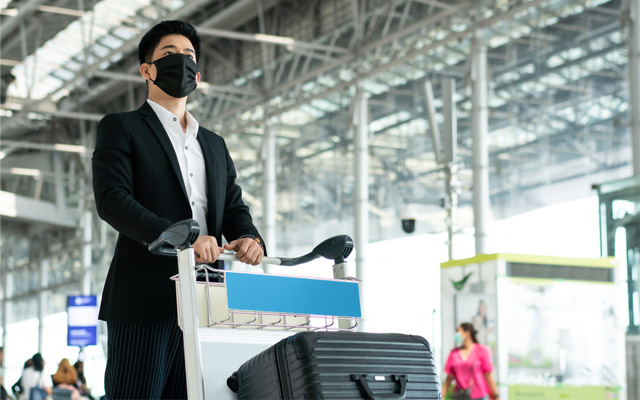
The pandemic has brought huge changes in travel patterns and business travel stakeholders are revamping measures so that corporate staff will be able to travel with peace of mind.
Speaking at the CTW round table discussion entitled Getting Back in the Air last week, Hamish Wang, associate director, Travel Meetings Card Operation and Fleet, MSD China said that internally, the company needs to review its policies to meet the new normal.
“We can see that travel behaviour and patterns have changed a lot. Travel booking periods have also become shorter because staff can only confirm their trip after a clear low-risk indication.
“Meeting sizes have shrunk, and lengths of stay have also been reduced, as employees themselves want to reduce their travel time. All these need adjustments on travel arrangements and policies,” Wang pointed out.
He also pointed out that companies need to regain travellers confidence by providing detailed information during the journey and at the destination, as travellers need to know what kind of changes they are expected to face at the airport, and how they can better prepare themselves.
It also involves the “drilling and simulations across departments in the company” to ensure staff are prepared for all situations. For instance, how the company is able to support and help local staff should a policy at the destination suddenly change while staff are already onboard the plane, or happen to test positive at the destination.
In the meantime, Echo Li, head of medical advisors, Greater China Assistance Service, International SOS, shared that advice her company has given to clients is to be prepared for all possibilities, such as being held up in their destination.
She also added that companies need to also pay attention to the psychological health of the staff.
“(Since the pandemic hit last year), we have noticed that a lot of corporate employees’ mental health and emotional states were greatly affected, which in turn has affected their normal work output. Their mental and emotional instability may also affect the moods of the employees around them,” she elaborated.
In the meantime, Haibin Wang, customer relations department manager, China Southern Airlines, related how the airline managed to achieve zero Covid-19 cases despite lending a helping hand during the pandemic.
In 2020, the airline carried 25,000 medical professionals, flew 19,000 flights, and 29,000 tonnes of medical supplies domestically, and retrieved 24,000 Chinese nationals who were stranded overseas.
Complementing the airline, MSD China’s Wang, said: “The airline sent out epidemic alerts and informed passengers what the local policies were, and what they needed to prepare for upon arrival at the airport. Staff were also on hand to provide guidance and help with making advance arrangements.”
Reviews

The Ritz-Carlton, Bangkok
The newly-opened Ritz-Carlton, Bangkok anchors the One Bangkok development with cosmopolitan elegance. Featuring the city's largest ballroom and a spectacular new penthouse suite, it delivers exceptional hardware and deeply authentic, soulful service for business and leisure travellers alike

Mama Shelter Zurich
Behind the imposing, Brutalist concrete that defines Zurich’s Oerlikon district lies a surprising secret. While its exterior honours the neighbourhood’s industrial roots, stepping inside Mama Shelter reveals a vibrant, neon-soaked world that is a far cry from its rigid shell

Hyatt Regency Kuala Lumpur at KL Midtown
A polished urban retreat designed for business travellers, Hyatt Regency Kuala Lumpur at KL Midtown combines thoughtful design, seamless service, and exceptional facilities.


The aircraft’s inaugural service from Doha to Milan took place on Friday (June 25), followed by routes to Athens, Barcelona, Dammam, Karachi, Kuala Lumpur and Madrid.
The Boeing 787-9 Dreamliner has a total passenger capacity of 311 seats – 30 business class suites and 281 seats in economy class.
Arranged in a herringbone pattern, in a 1-2-1 configuration, each business class suite has direct aisle access with sliding privacy doors. Other features include a 79-inch fully-flat bed and a dedicated phone holder, equipped with wireless charging technology that is compatible with both iOS and Android devices.
In economy class, each seat is equipped with a 13-inch Panasonic IFE touch screen in addition to a personal electronic device holder for both mobile and iPad devices.
Qatar Airways said in a statement that it has continued to fly its fleet of 30 787-8s throughout the Covid-19 pandemic due to its strong fuel efficiency and excellent reliability record. The airline added that its investment in the 787-9 once again underscores its commitment to sustainability and achieving net zero carbon emissions by 2050.