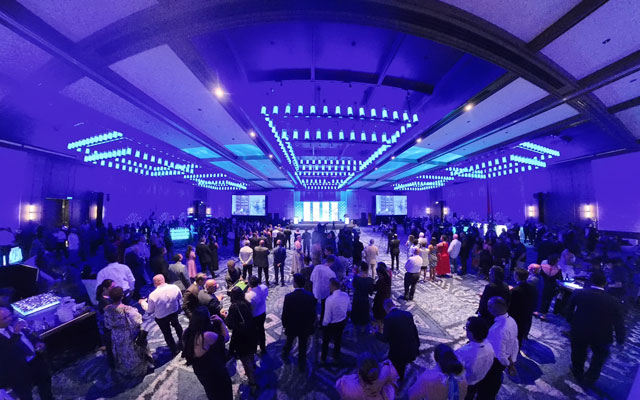
Tokyo will be home to another cutting-edge business events space from July 1, 2025, with the opening of Takanawa Gateway Convention Center.
A component of Takanawa Gateway City, a large-scale urban-development project, the centre is developed and operated by East Japan Railway Company, Congrès Inc. and JR East Building Co.. It is expected to cater to international conferences, conventions and exhibitions, as well as meetings, ceremonies, parties and social gatherings.
Linkpillar Hall
One of its spaces is the 1,640m2 Linkpillar Hall, which features a ceiling height of seven metres and three sections that can be subdivided, and can accommodate up to 2,000 pax. There are also seven mid-sized rooms ranging from 134m2 to 496m2 and four anterooms. The station plaza will serve as an additional event space, either for digital displays or outdoor events.
“Since the venue became available for viewing in March, the number of inquiries we have received has been increasing beyond initial expectations,” Shin Kondo, facility manager of Congrès Inc. told TTGmice. He added that many inquiries are about using the hall to accommodate large-scale events that include multiple programmes, such as seminars plus receptions, or lectures plus exhibitions.
“Even when divided into one-third sections, the hall can accommodate 450 to 600 people in theatre-style. This minimises the need for participants to move around during the event, which has been well-received by our potential customers,” he said.
To promote sustainable operations, the facility is LEED certified and will use biogas generation equipment to turn leftover food into power. The multipurpose facility is directly accessible from Takanawa Gateway Station and located near Haneda Airport.
Sample of how the Carbon Footprint Tracking Dashboard will look like
The Queen Sirikit National Convention Center (QSNCC) has become the first convention centre in Thailand to introduce a Real-Time Carbon Footprint Tracking Dashboard for business events.
This tool, set to debut at two major events in July – Asia Sustainable Energy Week 2025 and the International Engineering Expo 2025 – aims to establish a new benchmark for sustainable events and elevate Thailand’s business events industry to international standards.
Sample of how the Carbon Footprint Tracking Dashboard will look like
Developed by AltoTech Global Co., and supported by the Thailand Convention and Exhibition Bureau (TCEB) through its Winnovation programme, the dashboard is a digital platform that uses real-time data to calculate greenhouse gas emissions from various sources including energy consumption, food, packaging, and participant travel.
Sanchai Noombunnam, country general manager of Informa Markets Thailand, organiser of Asia Sustainable Energy Week 2025, pointed out that having access to the data will help the company “better understand and appreciate the value of sustainable event practices”, and “opens up structured pathways for reducing and offsetting emissions”.
Surapol Utintu, CEO of QSNCC, emphasised the venue’s dedication to environmental responsibility, where the centre began its green initiatives by adopting ISO 14064-1 and Carbon Footprint for Organization (CFO) standards to measure and report greenhouse gas emissions.
“Building on this foundation, we are now implementing event-specific carbon footprint assessments in a more systematic way. The launch of the Real-Time Carbon Footprint Tracking Dashboard marks a significant milestone in establishing a strong foundation for truly sustainable and environmentally-friendly events,” he added.
Looking ahead, QSNCC plans to include the Real-Time Carbon Footprint Tracking Dashboard as a special benefit in its Loyalty Program, allowing members to redeem points for access to the service.
Okura Nikko Hotel Management Co., a subsidiary of Hotel Okura Co., has appointed Hidechika Takasaka as president and representative director.
Takasaka joined the Hotel Okura Group in April 2024 as senior managing executive officer and chief officer of operation management at Okura Nikko Hotel Management. He was later appointed managing executive Officer at Hotel Okura in June 2024.
Prior to joining the Hotel Okura Group, he worked at Dai-ichi Life Insurance Co., from 1987, where he held several key positions, including manager of the credit department and general manager of both the International Business Department and the Loan Department.
TrvlWell’s launch represents an advancement in Priority Pass’ vision to evolve beyond traditional lounge access
Members of Priority Pass, part of The Collinson Group, can now access TrvlWell, a digital travel wellness companion.
Designed to enhance health and wellness while travelling, TrvlWell offers movement and mobility sessions, breath work and meditation, mindful walking tracks, and curated content to support wellness on the go. Digital wellness modules include Rest Easy, Stay Sharp, Fly Well and Feel Calm, addressing common travel challenges like jet lag, fatigue, travel anxiety and more.
TrvlWell’s launch represents an advancement in Priority Pass’ vision to evolve beyond traditional lounge access
Members can access TrvlWell in the Priority Pass app, through the “Balance body and mind” section on the homepage. More features and experiences will be added in time.
“Travel demand is experiencing robust growth in Asia Pacific, with passenger traffic expected to grow by 7.9 per cent this year – the highest rate globally. Coupled with the Asia Pacific wellness tourism market being expected to reach over US$200 billion by 2030 (from US$156 billion in 2025), it’s clear that travellers are keen to increasingly incorporate activities that enhance their wellbeing as part of their travels,” said Todd Handcock, global chief commercial officer and Asia Pacific Executive Chair, Collinson International.
PCMA has launched destinAItor, a next-generation, AI-powered platform designed to streamline destination and venue research for business events strategists.
Developed in partnership with dFakto, the tool promises to deliver data-driven insights, significantly cutting down the time and money traditionally spent on planning.
A screenshot from the destinAItor website
Previewed earlier this month at edUcon, destinAItor incorporates a unique destination marketing organization (DMO) validation process, where participating destinations and venues verify their profiles to ensure accuracy and up-to-date content. This curated data includes details such as sustainability initiatives, safety measures, economic sectors, citywide events, and infrastructure developments.
The platform leverages strategic data partnerships with Tempest and Simpleview, integrating meetings and events data to allow strategists to objectively compare multiple destinations with verified information. DestinAItor also features an RFP tool that analyses a planner’s request for proposal and suggests suitable matching destinations.
Participating destinations and venues will benefit from performance reports and analytics on search patterns and trending destinations, as the platform allows them to highlight their unique value propositions, attracting business that aligns with their strategic goals.
Thibaut De Vylder, CEO of dFakto, indicated that destinAItor offers destinations and venues an opportunity to “control their data and brand narrative, address poor lead generation, and overcome RFP spam, while gaining performance insights through analytics on search patterns”.
He added that more features will be added to the destinAItor platform on a continual basis.
Insights from the destinAItor platform are complimentary for business events strategists. Destinations and venues interested in being searchable must join a pilot programme to review AI-generated data and earn a “Verified Destination” badge on the platform.
The Iran-Israel-US conflict, which started on June 13 when Israel launched a surprise attack on Iranian soil, has disrupted air travel in the Middle East and forced airlines to reroute long-haul flights to safer airspaces.
Providing an overview of airlines’ reaction to the instability in the Middle East, Mayur Patel, head of Asia at OAG Aviation, said: “Major airlines including Lufthansa, British Airways, Emirates, and Singapore Airlines have had to cancel or reroute flights. Singapore Airlines, for instance, suspended its flights to Dubai from June 22 following an internal security assessment, with the suspension remaining in effect at the time of writing (on June 25).”
He added that there has been “a significant drop in flights operating via key Middle Eastern air hubs, particularly Doha, Dubai, Abu Dhabi, and Manama” since June 13.
“The temporary closure of airspace over Iran, Israel, Jordan, Iraq, Syria, and briefly across parts of the Gulf led to widespread flight cancellations, diversions, and delays. For instance, Hamad International Airport in Doha saw over 250 cancellations and more than 200 delays on June 24 alone.”
This has resulted in preferred air corridors and air hubs shifting to other regions. Turkey, Egypt, and Saudi Arabia air corridors are favoured while European hubs such as Frankfurt, Istanbul, and Amsterdam, as well as Asian major gateways are processing higher transit traffic.
Patel also told TTG Asia that overall flight bookings to the Middle East have likely declined since June 13, driven by widespread cancellations and rerouting in response to the Israel–Iran conflict.
“Evolving airspace restrictions and heightened security advisories have led both businesses and leisure travellers to scale back their travel plans, even though precise booking data is not yet available,” he stated.
Ongoing conflicts in both the Middle East and Russia, along with a fragile ceasefire between Israel and Iran, have deeper operational impact on airlines, beyond an upset flight schedule and inconvenienced travellers.
Subhas Menon, director general of the Association of Asia Pacific Airlines, told TTG Asia: “The frequent closures and diversions as well as cancellations in some cases cause costs to go up and affect schedule reliability, not to mention the reaccommodation costs and cost to crew scheduling. Additionally, capacity which is already constrained will be further affected while demand remains resilient.”
Similarly, Patel also warned of a cost impact – carriers forced to adopt longer flight paths to avoid restricted zones will incur higher fuel consumption, extended crew duty hours, and increased operating costs. These burdens come on top of complicated crew scheduling and stretched operational resilience.
“These adjustments have triggered widespread delays, particularly on long-haul routes connecting Europe, Asia, and Australasia,” he noted.
Patel said: “Managing these changes amid evolving NOTAM (Notice to Airmen) advisories and congested air traffic control has further strained airlines – especially those operating hub-and-spoke models that depend on tight schedules and quick turnarounds.”
With the US now drawn into the Israel-Iran conflict amid its abrasive stance on global trade, Subhas said travel to the US “has definitely seen a downturn” while “traffic and trade flows on other routes are holding firm”.
He expects June’s air traffic report to show some short term effects due to the frequent disruptions to capacity.
As of this morning, several Persian Gulf states, including Qatar and the UAE, have reopened their airspace and resumed flights. Further, Flightradar24’s update on X stated that Iran has partially reopened its airspace to permitted international flights to and from Tehran.
A spokesperson from Royal Jordanian Airline told TTG Asia that operations had resumed after the second day of the conflict, and that the airline is among the few that continue to operate flights to the Levant region and Jordan. The airline launched its first non-stop service between Mumbai and Amman on June 19.
When bleisure and hush trips are supported intentionally, it strengthens duty of care and allows for more comprehensive employee support
Rise of bleisure and hush trips blurs corporate duty of care
Companies are struggling to adapt to evolving traveller behaviours and compliance risks
Proactive solutions involve policy flexibility, transparency, and robust systems
When bleisure is intentionally supported, it strengthens duty of care and allows for more comprehensive employee support
The trend of bleisure continues to rise steadily, according to service providers, and Asian corporates are open to travellers mixing business with pleasure.
However, most are still “adapting to hush trips”, which refer to employees working remotely from a different city or country without disclosing or seeking approval.
Rebecca Malzacher, vice president, marketing H3S International, strategic projects, International SOS, said at the recent GBTA APAC Conference session Leisure & Hush Trips – Who Bears the Responsibility?, 64 per cent of participants believed hush trips were occurring within their organisations, yet only 73 per cent were familiar with the term.
“This disconnect highlights how quickly traveller behaviours are evolving and the urgency for organisations to ensure that their travel policies and support systems keep pace.
“As bleisure and hush trips become more common, the boundaries of responsibility are increasingly blurred, raising serious questions around an organisation’s duty of care, and its ability to support employees in unexpected situations.”
Industry grapples with new travel realities
A corporate travel manager in the pharmaceutical industry told TTGmice its leaders are watching the development, and he is now looking at what or what does not need to be put in place as “guardrails” if the organisation does not know where a traveller is and if he booked out of policy.
Another corporate travel manager in global retail product development, design, supply, manufacture and sales, while preferring to “say no entirely” to bleisure and hush trips, wants to explore extending travel insurance coverage from two days before and after to 10 days pre- and post-trip to address the “constant worry” and duty of care responsibilities.
Christine Connolley, BCD Travel, senior crisis programme manager, global crisis management, commented: “Globally, we’re seeing a steady rise in support for bleisure, particularly among companies that prioritise flexibility and give employees more control over how they manage time on the road.
“Tech is leading the charge, along with consulting, media, and professional services, industries where talent mobility and agile work models are already well established. These organisations view flexibility as a competitive advantage in today’s job market, a powerful tool for attracting and retaining talent, especially among younger employees.”
For traditional sectors like finance, legal, and manufacturing, Connolley pointed out they take “a more structured approach, often due to regulatory limitations and operational constraints”.
Although hush trips create compliance risks around tax, immigration and insurance, Connolley acknowledged flexible work has outpaced formal policy to support it.
“When the issue is addressed, it’s typically through HR or global mobility policies, not necessarily through a travel policy, as it touches broader compliance and oversight issues. Ideally, a cross-functional approach would include HR, legal, security and travel to help the company set expectations and manage the broader organisational risk,” she added.
Change in approach
BCD Travel has implemented a policy that allows employees to work remotely for up to 60 days per year from any of the 48 countries with an office location worldwide.
“It has helped us stay ahead of compliance while supporting flexibility and retention. More companies across APAC are beginning to take a closer look at how to manage these situations, building in flexibility where they can, but putting clearer structures in place to avoid compliance headaches.”
International SOS’ Malzacher observed a clear shift in corporate travel behaviour across the region, particularly among younger professionals who are more inclined to blend business with leisure, or take unapproved hush trips without informing their employers.
Travel patterns are also shifting. She continued: “With cost pressures and broader acceptance of remote work, companies are increasingly engaging in business travel to second-tier cities and non-traditional hubs, as operations become more decentralised. These destinations often carry less predictable risks, such as limited access to healthcare or variable infrastructure.”
As such, Malzacher advised companies to “foster a culture of transparency, where employees feel comfortable declaring leisure extensions without fear of penalty”. Building on this, organisations can then implement technology that maintains visibility and enables support throughout the entire trip, balancing employee privacy with duty of care responsibilities.
Malzacher concluded that success in today’s landscape hinges on investing in proactive education, effective systems, and a risk framework that supports employee autonomy while reinforcing corporate accountability.
Ryan: Asia is a growth market for New Zealand; photo by Adelaine Ng
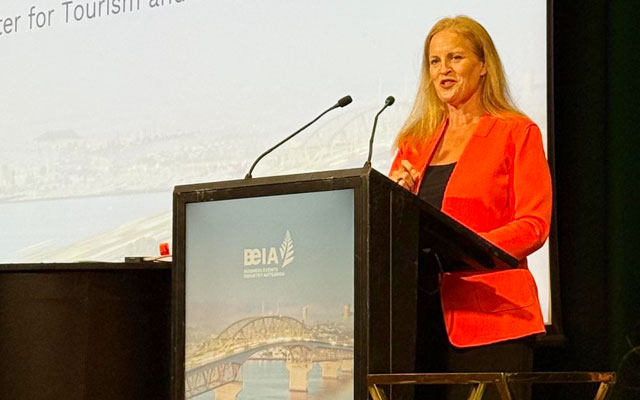
Tourism New Zealand (TNZ) is stepping up its play for the Asian business events market, as it enters a rebuilding phase with increased government support.
A NZ$35 million (US$21.1 million) Tourism Growth Roadmap, announced at Meetings 2025 in Auckland, includes a second NZ$3 million injection into the Conference Assistance Programme, NZ$6 million to support South-east Asia and India, and NZ$13.5 million for China, shared with Australia and the US.
Ryan: Asia is a growth market for New Zealand; photo by Adelaine Ng
The new investments aim to rebuild capacity and re-energise international marketing efforts following a NZ$60 million cut in tourism funding in 2023, introduced as the country recalibrated with shifting priorities post-pandemic.
TNZ said the boost will allow it to “do more, go bigger and faster with our international marketing efforts” in key visitor markets.
Penelope Ryan, global manager for business events at TNZ, told TTGmice that in terms of government budget contribution, the new Roadmap restores just over half of the previous budget cut.
“It’s a really interesting phase where I would say we are still building back from Covid, and there are several factors still impacting our arrivals, like our air capacity. What I do know is that the appeal for New Zealand is the highest it has ever been,” she said.
She also acknowledged the need to intentionally shift perceptions around New Zealand’s remoteness for business events.
“Asia is one of our growth opportunity markets, and it is really about how we can be present there to build awareness of New Zealand, and the fact that we are easier to get to than people might think,” she said.
While there are no plans to increase in-market staff, the new funding will be directed toward driving activity through more touchpoints and attending different events in building New Zealand’s presence among key Asian decision-makers.
This includes participation at PCMA Business of Events in Singapore, and Destination Week in Goyang, South Korea.
Incentive travel continues to be a strategic focus, with efforts to balance high-value, short-lead bookings alongside longer-term association conferences. “We are looking at how to incorporate an incentive strategy as part of our associations activity as well,” said Ryan.
India is firmly on the radar, with growing enquiries prompting a specific incentive focus and plans for future direct air connections in the pipeline.
As of May, conference arrivals for FY25 were tracking at 75.6 per cent of pre-pandemic levels. Conversion performance exceeded targets by three percentage points to reach 63 per cent.
Conference delegates remain the country’s highest-yielding visitors, spending an average of NZ$379 per day, compared to the NZ$314 average for holidaymakers and NZ$203 for business travelers. Nearly 30 per cent of conference visitors travelled with family.
Looking ahead to FY26, Tourism New Zealand will focus on attracting more corporate and incentive arrivals from North America, Australia, and Asian markets, which also have a shorter lead time than conferences to generate year-round spending.
Japanese venue operator One Bright Kobe has unveiled Glion Arena Kobe, a multipurpose indoor arena suitable for conferences, exhibitions, concerts and sporting events in the Kansai port city of Kobe.
Located in the revitalised waterfront area, Glion Arena Kobe can accommodate up to 10,000 people, with spaces featuring a high degree of adaptability for various event formats and a state-of-the-art AV system that includes one of Japan’s largest indoor high-definition LED screens.
An aerial view of Glion Arena Kobe
Describing the arena as “a major addition to the city’s MICE infrastructure”, Lance Ferguson, assistant manager at Kobe Convention Bureau, told TTGmice that the facility’s scale, modern amenities and flexible layout will enable the city “to attract a broader spectrum of business events, from product launches to innovation expos and high-profile corporate gatherings”.
Ferguson also anticipates potential in emerging event formats, noting that the arena “could become a highly attractive venue for international esports events”.
“The infrastructure is well-suited to large audiences and technology-driven productions, aligning well with Kobe’s growing appeal among younger, global audiences,” he explained.
Additionally, product launches and corporate events could host 2,000 to 5,000 pax, while stage events and esports tournaments could accommodate 5,000 to 7,000 pax.
Interest in using the venue for business events is expected to come from within Japan as well as Asia, Europe and North America. The South Korea, China and Taiwan markets are expected to perform particularly well following the launch of international flights connecting Kobe to these countries in April.
“By serving as a core facility for MICE, the Glion Arena aims to elevate Kobe’s recognition as a premier city for international conferences and exhibitions,” Ferguson opined.
The Tha Exhibition Association (TEA) has appointed Loy Joon How, general manager of IMPACT Exhibition Management Co. as its new president, effective June 2025.
Over the last two years, Loy served as vice president on TEA’s Executive Committee. He takes over from outgoing TEA president Panittha Buri from Bangkok International Trade and Exhibition Center.
Loy has over 40 years of professional experience in the exhibition industry, of which 18 years are in Thailand with IMPACT.
A polished urban retreat designed for business travellers, Hyatt Regency Kuala Lumpur at KL Midtown combines thoughtful design, seamless service, and exceptional facilities.
The five-star property excels in backing its expansive facilities with seamless service and personalised attention, setting the benchmark for luxury in Bangkok.