Soneva Group has appointed three senior executives to its leadership team, effective September 2025.
Joanna Flint joins as chief commercial officer, Chris Whitehouse as chief financial officer, and Abhishek Sharma has been promoted to chief operating officer.
From left: Chris Whitehouse, Joanna Flint and Abhishek Sharma
Flint brings over 20 years of experience in luxury hospitality and technology, with roles at Mandarin Oriental, Google, and Singapore Airlines. She will drive Soneva’s global commercial strategy, enhancing sales, digital capabilities, and customer experience across existing and new markets.
Whitehouse brings his expertise in financial strategy, risk, corporate financing, and asset management gained at The Dot Group, Candy & Candy, and CPC to his new role. He will strengthen Soneva’s financial foundations and support sustainable expansion.
With more than 25 years’ experience in luxury hospitality across the Maldives, India, Egypt, and Mauritius, Sharma will oversaw all three Soneva resorts.
The appointments coincide with the opening of Soneva’s global headquarters in Dubai, providing a strategic base to strengthen industry partnerships, attract talent, and connect with key feeder markets.
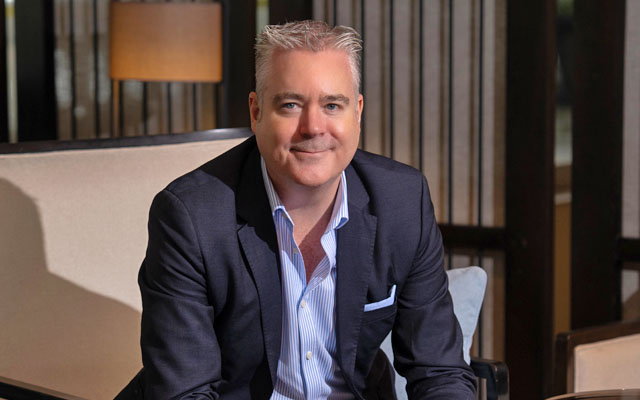
Anantara Riverside Bangkok Resort, operated by Minor Hotels, has appointed Michael Parker as general manager.
He brings over 20 years of leadership experience in luxury hospitality, with senior roles across the UK, China, Cambodia, and the Maldives. He joined Minor Hotels in 2023 as complex general manager, overseeing Anantara Dhigu Maldives Resort, Anantara Veli Maldives Resort, and Naladhu Private Island Maldives.
In his new role, Parker will focus on a renovation of Anantara Riverside Bangkok Resort’s food and beverage outlets and enhancements to the Anantara Wellness programme. His goal is to elevate culinary offerings and expand wellness experiences.
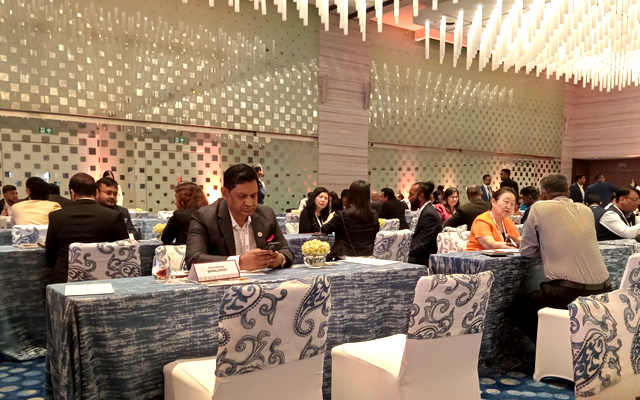
Sri Lanka is pulling out all the stops for its largest-ever MICE Expo 2025 to position the country as an attractive destination for business events.
Currently taking place from September 22 to 26, the event has more than 100 buyers from 30 countries are in attendance.
Sri Lanka MICE Expo 2025; photo by Feizal Samath
On Monday, Buddhika Hewawasam, chairman of state-run Sri Lanka Tourism Promotion Bureau, said that the bureau was moving away from generic tourism in favour of high-end tourism.
“We want tourism numbers to grow but at the same time we want them to spend more,” he said. He added that business events tourism could be a game-changer for Sri Lanka, as it offers a fresh alternative for business travellers who may be tired of more traditional destinations.
Sri Lanka hopes to increase business events travellers to 20 per cent of its total tourist arrivals, up from the current 10 to 12 per cent. This effort is part of the country’s goal to reach 2.6 million tourist arrivals this year.
Interviews with buyers at the Expo suggest a promising future for the sector, with many expressing interest in the country’s offerings.
Yuya Nagano from Kuoni Tumlare Japan told TTGmice there is significant interest from Japan. However, he pointed to the need for more flights between the two countries, as the national carrier, SriLankan Airlines, is often fully booked.
A Singapore buyer who declined to be named, said Sri Lanka is a new kid on the block for his clients, but the country “needs to conduct more promotions in Singapore to position itself as a MICE destination”.
Yana Liu, assistant director of the World Federation of Chinese Medicine Societies, indicated that organisation is now considering Sri Lanka as a potential destination for its meetings, which typically draw 50 to 100 participants.
Prachoom: TICA will bridge the private and public sectors
The Thailand Incentive and Convention Association (TICA) has appointed veteran hotelier and Dusit executive, Prachoom Tantiprasertsuk, as its new president for the 2025-2026 term.
With a forward-looking agenda for the industry, Prachoom is set to lead TICA in a strategic push to reinforce the country’s standing as a leading business events hub.
Prachoom: TICA will bridge the private and public sectors
In June, Prachoom unveiled seven strategic proposals that TICA will be submitting at its next major tourism industry meeting with the government.
The comprehensive roadmap addresses core challenges around infrastructure, sustainability, talent, digitalisation, policy reform, and brand protection, all aimed at positioning Thailand for long-term growth and competitiveness in the global business events market.
At the heart of the plan is a call for embracing sustainable and responsible tourism that considers the environment, local communities, and local culture.
“We already have local sustainability certifications, but they lack global recognition. If we can raise them to meet international benchmarks, it will significantly enhance our credibility with global MICE buyers,” Prachoom said.
Infrastructure remains another pressing issue, and TICA is pushing for targeted investment in transport, technology, and amenities to support secondary and burgeoning destinations.
“Infrastructure is vital, especially when hosting events outside Bangkok. We need adequate access, venues, and accommodation,” she added.
In a move to reflect the growing shift towards purpose-driven travel, TICA is urging for policies that better serve visitors attending conferences, study tours, and social impact programmes.
“MICE travellers aren’t typical tourists – they come with intent, whether for learning, business, or collaboration,” noted Prachoom.
Workforce development is another top priority, and TICA is seeking government support to upskill talent and meet the expectations of clients.
“We need skilled professionals who understand the distinct needs of business event travellers,” she stressed.
To boost competitiveness, TICA is also calling for stronger adoption of digital tools, such as platforms that connect suppliers and buyers.
“Technology can dramatically reduce costs and increase productivity across the value chain,” said Prachoom.
On the policy front, TICA highlights the need to modernise outdated regulations and streamline event approvals.
“Some rules no longer reflect today’s realities. Securing permits for large-scale events often involves too many agencies. A one-stop service would simplify this,” she elaborated.
Finally, the association is advocating for clearer anti-scam measures to protect travellers and preserve Thailand’s image.
“Fraud against tourists and MICE visitors hurts our reputation. We need robust enforcement and systems to address this,” she said.
All these proposals will be submitted later this year, and TICA will be working closely with public agencies to secure cross-sector support.
“Ultimately, these proposals will need to be discussed with relevant agencies because they cover many dimensions, not just tourism. TICA is ready to act as a bridge between the private and public sectors to drive these proposals forward,” Prachoom acknowledged.
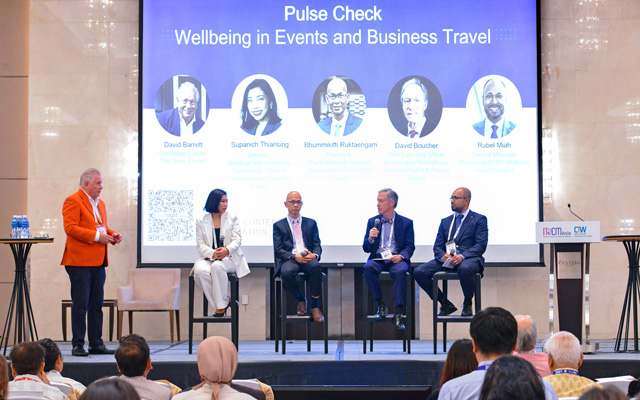
From left: David Barrett (moderator); TCEB’s Supanich Thiansing; The Sustainable Tourism Development Foundation Phuket’s Bhummikitti Ruktaengam; Bumrungrad International Hospital Phuket’s David Boucher; and Mövenpick BDMS Wellness Resort Bangkok’s Rubel Miah
Wellness is no longer a fringe trend in corporate travel and business events, but a mainstream expectation, according to speakers on the Wellbeing in Events and Business Travel panel on the first day of IT&CM Asia 2025.
Bhummikitti Ruktaengam, president, The Sustainable Tourism Development Foundation Phuket, shared: “Many of us already track our health with smartwatches or apps. That shows wellness is not just luxury or fashion – it’s part of our lifestyle.”
From left: David Barrett (moderator); TCEB’s Supanich Thiansing; The Sustainable Tourism Development Foundation Phuket’s Bhummikitti Ruktaengam; Bumrungrad International Hospital Phuket’s David Boucher; and Mövenpick BDMS Wellness Resort Bangkok’s Rubel Miah
He emphasised that well-being must also be tied to sustainability of the planet, citing plant-based diets as an example of choices that benefit both personal health and the planet.
Rubel Miah, general manager, Movenpick BDMS Wellness Resort Bangkok highlighted the rapid growth of the global wellness economy, valued at US$6.3 trillion in 2024 and projected to reach US$9 trillion by 2028. Thailand’s wellness economy represents US$40.5 billion, with 28 per cent growth from 2022 to 2023.
Miah further observed that millennials and Gen Z are driving demand for purpose-driven, health-focused travel, and that wellness has moved beyond being an added benefit to becoming a core requirement in business travel programmes.
Agreeing, Supanich Thiansing, director of meetings and incentives department at Thailand Convention and Exhibition Bureau (TCEB), stated that millennials and Gen Z business travellers are driving demand by seeking balance, mindfulness, and experiences that connect them with local culture and communities.
Supanich further highlighted how Thailand’s Meet Well campaign is focused on holistic integration.
“Wellness in business travel is not just about getting a spa treatment. It includes mindfulness sessions, CSR-driven teambuilding, and local community engagement that support both physical and psychological well-being,” she noted.
David Boucher, CEO, Bumrungrad International Hospital Phuket, further noted how the Covid-19 pandemic has “fundamentally changed” attitudes toward health and travel.
“People now expect restorative sleep, healthier menus, and even non-alcoholic options, as part of their business travel experience,” he elaborated.
Boucher added that technology such as smart watches with their health monitoring features are also influencing how business travellers manage their well-being while on the road. As such, for event organisers, the challenge is how to incorporate wellness meaningfully into business programmes.
Indonesia’s exhibition industry is adjusting to short-term disruptions from the recent rallies in Jakarta and several other cities in the country, which forced the postponement of several events.
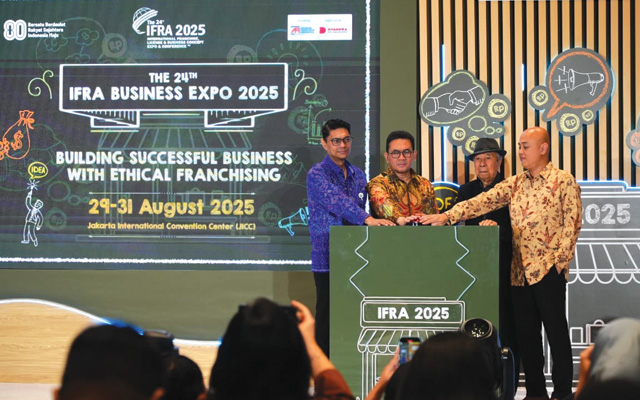
The International Franchise Licence & Business Concept Expo & Conference (IFRA) in Jakarta was shut on its opening day August 29 after police warned of escalating protests around the parliament compound in Senayan.
IFRA’s opening ceremony
According to IFRA organiser, Dyandra Promosindo, “the exhibition was closed earlier than planned, and IFRA was accessible online until September 30”.
According to the Indonesian Exhibition Companies Association (IECA), at least 10 exhibitions in Jakarta – such as the 2025 RX Huabo Asia Gift Fair Indonesia, and Indonesia International Pet Expo (IIPE) – have been rescheduled from late August and early September in October and November.
“In such circumstances, rescheduling helps organisers contain potential losses while honouring commitments to exhibitors,” said Hosea Andreas Runkat, chairman of IECA. He added that the financial impact is still being assessed while situation evolves.
On the decision to move IIPE from September 5 to 7 to October 31, Didit Siswodwiatmoko, CEO of Temali Indonesia, said: “It was not an easy decision, but by rescheduling, we are protecting everyone’s investment and making sure the event runs successfully.”
Overall, stakeholders remain confidence in the sector’s strong long-term outlook.
Didit added: “Exhibitions are built on trust, between organisers, exhibitors and visitors. That trust remains intact, and we are confident demand will continue to grow once the situation stabilises.”
Venues are also reinforcing security to maintain stakeholder confidence. For example, the Indonesia Convention Exhibition (ICE) BSD City is working closely with local authorities to enhance safety measures.
“Safety and security remain our top priorities, and stronger measures on the ground help reassure organisers and exhibitors,” said Siti Karmila, ICE’s director of sales and marketing.
“The industry has proven time and again that it can adapt and bounce back from challenges. Once stability returns, we expect a swift rebound,” said Andreas.
IT&CM Asia 2025’s opening keynotes converged on a powerful theme: tomorrow’s business events and travel industries must trade scale for substance, designing experiences that are both authentically local and globally resilient.
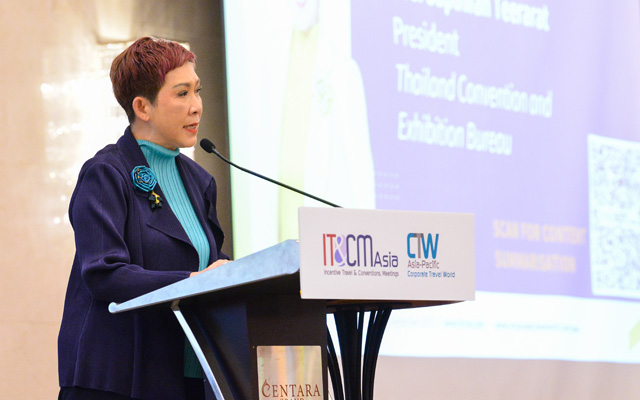
Supawan Teerarat, president of the Thailand Convention and Exhibition Bureau (TCEB), said: “Today’s travellers, especially the young generation, are not seeking perfection. They are seeking what is real, meaningful, and true.”
Supawan: travellers seek authenticity
She pressed the audience to think about impact beyond networking and content, urging them to recall moments when an event truly shifted their perspective.
“Imagine a technology conference in a creative city’s design studio – or, envision a business summit in a city of craft, with trust being built side-by-side through shared activity. When a city uses its authentic culture as an engine, events become powerful platforms for cultural preservation,” she said.
Her framework shifts ROI towards ROX (return on experience) and ROR (return on relationship).
“ROI keeps us accountable, ROX keeps us memorable, and ROR ensures we are sustainable. This is how events move from being transactional to being transformative,” she stated.
Meanwhile, Noor Ahmad Hamid, CEO of Pacific Asia Travel Association (PATA), delivered a data-driven outlook projecting 814 million international arrivals in Asia-Pacific by 2027.
He encouraged delegates to consider the broader value of tourist volume, noting that 814 million international visitors represent a significant source of job creation for everyone from SMEs and transport companies to Grab drivers and restaurants.
S&P projects that the Asia-Pacific region will be the main driver of global growth by 2030, added Noor.
“With 60 per cent of the world’s population and 70 per cent of its largest cities, our region is no longer just a cheap labour giver – it is emerging as the world’s centre for innovation, culture, and investment.
“To seize this leadership, we must be ready, and that means strong collaboration between governments, industry, and communities. That is how Asia-Pacific will prevail,” stated Noor.
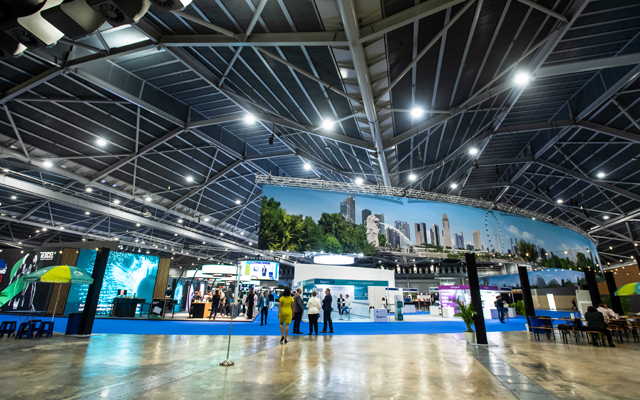
Constellar, the operator of Singapore Expo, has partnered with ESGpedia to implement carbon emissions tracking for all business events held at the venue.
The partnership will see Constellar use ESGpedia’s digital tools for carbon accounting and reporting. This will allow the company to effectively measure and report the full carbon footprint of events at Singapore Expo, including emissions from attendee travel, accommodation, and venue operations.
Singapore Expo
Singapore’s business events industry is mandated to track waste and carbon emissions under the MICE Sustainability Roadmap, aiming for net-zero emissions by 2050. This partnership with ESGpedia is a key step for Constellar in aligning with these national targets and improving its operational efficiency for future events.
A significant part of the initiative is providing sustainability support to Constellar’s suppliers, many of which are SMEs. Suppliers can use ESGpedia’s platform to learn about carbon accounting and reporting, helping them build their own green capabilities.
Chua Wee Phong, Constellar’s Group CEO, stated that the collaboration “enables organisers to calculate carbon footprints and engage suppliers digitally, fostering a united approach toward shared sustainability goals. This initiative also supports the Singapore Tourism Board’s vision of positioning Singapore as the World’s Best MICE City”.
Oneworld Alliance and its member airlines, in partnership with Breakthrough Energy Ventures (BEV), have launched a new investment fund to address the high cost and limited supply of sustainable aviation fuels (SAF).
Cornerstone investors Alaska Airlines and American Airlines will lead the fund, which aims to accelerate the development of scalable, lower-emission aviation fuels.
The oneworld BEV Fund will invest in next-generation SAF technologies, support alternative fuel markets, develop a resilient supply chain, drive technology innovation, and create economic value for investors and regions. BEV, founded by Bill Gates, will manage the fund, providing technical expertise and experience supporting early-stage climate technology companies. The initiative is also supported by oneworld members International Airlines Group (IAG), Cathay Pacific, Japan Airlines, and non-alliance investor Singapore Airlines.
oneworld and BEV establish global fund to scale next-generation SAF and cut emissions
The aviation industry, which contributes around US$4.1 trillion to the global economy and supports 86.5 million jobs, accounts for two to three per cent of global carbon dioxide emissions. SAF can reduce lifecycle emissions of jet fuel by up to 80 per cent, but production has yet to scale to meet demand at competitive prices. oneworld and its partners aim to support technologies that expand supply while limiting other environmental impacts.
Eric Toone, chief technology officer at Breakthrough Energy and managing partner at BEV, shared that SAF is crucial for reducing aviation emissions and that the oneworld BEV Fund aims to scale technologies that lower costs, cut emissions, and work with existing infrastructure.
Leaders from IAG, Cathay Pacific, Japan Airlines, and Singapore Airlines highlighted that advancing SAF requires collaboration across the industry, investment in technology, and supportive policies to build a scalable and cost-effective SAF infrastructure that reduces carbon emissions.
Robert Isom, CEO of American Airlines and chairman of oneworld, said: “By investing in the SAF technologies of the future, American and our oneworld partners are making a business decision to accelerate the development of novel technologies with the potential to reach larger scale at lower prices than current technologies can achieve. We believe reducing the emissions from our operation meets the demands of our customers, will make our business more competitive, and will enable us to continue to deliver the enormous economic benefits of commercial aviation for generations to come.”
Nat Pieper, CEO of oneworld, added: “Investing in SAF with Breakthrough Energy Ventures is part of oneworld’s strategy to create a future of aviation that solves problems at scale and serves the needs of the greater aviation community. Our member airlines are united in their long-term mission to address carbon emissions and invest in technologies that can improve speed to market of innovative fuels across the globe.”
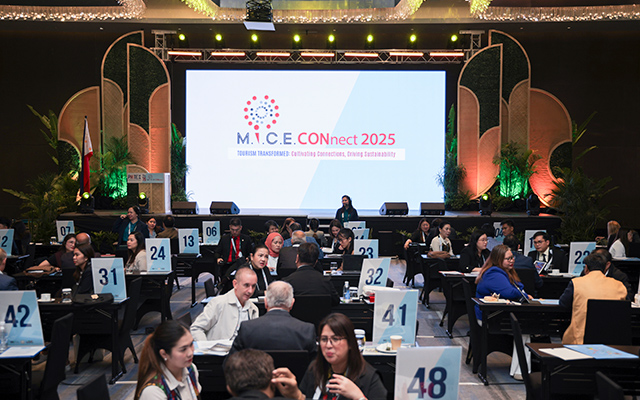
The Philippine Travel Exchange (PHITEX) and MICECONnect 2025 successfully concluded on September 10, 2025, at Conrad Manila, generating over PHP 1 billion (US$17.2 million) in confirmed sales leads, significantly surpassing the PHP 596.2 million target.
Organised by the Tourism Promotions Board (TPB) Philippines, the event – held under the unified theme Tourism Transformed: Cultivating Connections, Driving Sustainability – gathered 147 Philippine sellers and 114 foreign buyers from key international markets and business events sectors.
PHITEX and MICECONnect 2025
Delegates participated in three days of B2B sessions, resulting in over 3,000 meetings. Top inbound tourism markets represented included the Japan, South Korea, Australia, China, Germany, and the UK, among others.
The programme also included post-event familiarisation tours from September 11 to 15. PHITEX delegates explored destinations like Cagayan de Oro, Puerto Princesa, and Boracay, while MICECONnect delegates traveled to Cebu-Bohol, Davao, and Clark.
“PHITEX and MICECONnect 2025 showcased the best of the Philippines to a global audience while forging connections that translate into real opportunities for our local stakeholders,” said TPB chief operating officer Maria Margarita Montemayor Nograles. “This event reaffirms our commitment to collaboration, sustainability, and inclusivity, ensuring that tourism growth uplifts communities across the nation.”
The newly-opened Ritz-Carlton, Bangkok anchors the One Bangkok development with cosmopolitan elegance. Featuring the city's largest ballroom and a spectacular new penthouse suite, it delivers exceptional hardware and deeply authentic, soulful service for business and leisure travellers alike
Behind the imposing, Brutalist concrete that defines Zurich’s Oerlikon district lies a surprising secret. While its exterior honours the neighbourhood’s industrial roots, stepping inside Mama Shelter reveals a vibrant, neon-soaked world that is a far cry from its rigid shell
A polished urban retreat designed for business travellers, Hyatt Regency Kuala Lumpur at KL Midtown combines thoughtful design, seamless service, and exceptional facilities.





 In his new role, Parker will focus on a renovation of Anantara Riverside Bangkok Resort’s food and beverage outlets and enhancements to the Anantara Wellness programme. His goal is to elevate culinary offerings and expand wellness experiences.