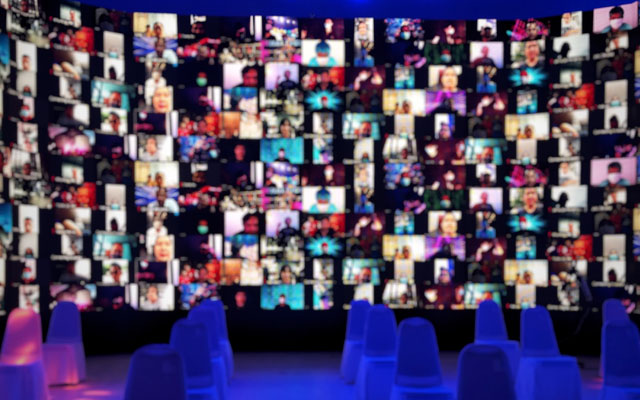
Convention centres with a permanent broadcasting facility were a rare find pre-Covid-19, but they are today an expanding breed.
In the face of cross-border travel and crowd restrictions, online/in-person hybrid events have become an ideal solution for organisations looking to maintain their communications, be it for knowledge exchange, customer engagement or business networking.
While the business events community continues to debate the longevity of online event elements and depth of application once face-to-face interactions are no longer restricted, convention centres across Asia-Pacific have lost no time in transitioning their infrastructure towards digitalised events.
The International Convention Centre (ICC) Sydney in Australia was among the first in the region to lead that charge, having launched its virtual event offerings in March 2020 when the pandemic was still in its early passage through the world. These offerings continued to evolve, and today the venue boasts ICC Sydney Connect, which promises end-to-end virtual and hybrid event solutions.
Not far behind was Marina Bay Sands (MBS), Singapore, which opened the doors to its hybrid event broadcast studio at Sands Expo and Convention Centre in August 2020. The studio offers broadcast-quality live-streaming capabilities and hologram functionalities, and has space for a live studio audience. Clients can weave Virtual Reality, Augmented Reality and Extended Reality features into their events with the help of the venue’s technical team.
Along the way, more venues have stepped in with hybrid event capabilities.
Most recently in May, Kuala Lumpur Convention Centre in Malaysia unveiled an interactive virtual tour capability, enabling clients to review the venue from the comfort of their seat, anywhere in the world. This joins its suite of online and hybrid event solutions that were launched in January 2021.
Its general manager, Alan Pryor, said: “Realising our dream of virtualisation has put us in the forefront of digital transformation of the business events industry, not only in Malaysia but regionally and globally.”
Earlier in the year, Pryor expressed expectations that hybrid and virtual events will continue to gain traction through 2021 and “remain a primary choice”, due to uncertainties in regional and international travel. He added that event organisers were now prioritising venues with hybrid events capabilities and that can offer expertise and guidance on event execution.
Indeed, Manish Chandak, president and CEO of Ungerboeck Software International, had predicted back in October 2020 that convention centres’ technology know-how would facilitate high levels of collaboration with event organisers, and demonstrate their ability to move from large-scale physical gatherings to smaller scale online or hybrid events at short notice. Ultimately, such capabilities would feed customers’ confidence to move forward with events plans even amid uncertainties.

“Audience engagement is one of the most persistent challenges associated with running virtual productions in 2021. For example, one challenge in audience engagement is virtual burnout. Thus, it is critical for event organisers to reduce downtime as much as possible while livestreaming to ensure everything runs synchronously.”
– Gan Ta Loong, managing director, South-east Asia and vice president, immersive experience, Barco APAC
Technology push
Audiovisual and broadcasting technology and solutions that were once applied mostly in television production have spilt rapidly into business events, noted systems specialists.
“Although video switching and production systems are more commonly associated with broadcast television, we have seen many convention centres augment their facilities. We have seen them adopt video conferencing solutions and television-style studios with live streaming functions,” noted Fintan McKiernan, CEO of Ideal Systems, Asia’s leading systems integrator for broadcast, cloud and professional audiovisual equipment.
While live event professionals and operators have been using image and screen management systems with full screen presentation switchers to produce high quality visual experiences pre-pandemic, event organisers in general are now provided with more virtual options, such as virtual studios, observed Gan Ta Loong, managing director, South-east Asia and vice president, immersive experience, with Barco APAC, a specialist in visualisation and collaboration technologies.
As event attendees gain greater exposure to online and hybrid events, they will come to expect even higher content and production quality. This puts pressure on event producers to deliver a more impressive event than the last, and on event venues to keep upgrading their audiovisual tools and event solutions to stay competitive.
In fact, the explosive adoption of audiovisual technologies and solutions in the business events space throughout the pandemic has driven Barco and Ideal to come together to expand their business in Asia-Pacific.
Established in mid-April, the partnership enables Barco to extend its reach and coverage of broadcasting markets in the region with Ideal’s broadcast and collaboration offerings, while complementing Ideal’s solutions with Barco’s advanced visualisation technologies.
Both companies are working closely to develop innovative solutions with IP video technologies to craft new designs that will increase the functionality and usability of their solutions.
“Additionally, the Barco-Ideal partnership aims to address the massive uptick in the need for innovative corporate audiovisual solutions in hybrid workspaces and meeting rooms, while providing a more compelling customer experience,” shared Gan.
When asked what modern venues should provide at the very least to support high-quality online and hybrid events, McKiernan said reliable laser projection and visual display screens are important to enable a supreme mobile viewing experience, while Gan believes that a holistic screen management system to capture various sources and content inputs without downtime should be a basic offering.
Gan said: “Audience engagement is one of the most persistent challenges associated with running virtual productions in 2021. For example, one challenge in audience engagement is virtual burnout. Thus, it is critical for event organisers to reduce downtime as much as possible while livestreaming to ensure everything runs synchronously. Screen management devices also have the ability to serve as backup solutions for inputs, reducing the odds of black screens or empty backgrounds with automatic failover functions. Screen management devices should ensure close to zero disruptions, scalable and have flexibility capabilities to adapt to all event configurations, even virtual ones.”

“A venue that pushes the boundaries with ideas and makes sure you get the most for your budget as a client is the one you want to work with.”
– Rod Vowell, director of operations, Huddle Agency, Australia
Going forward, McKiernan said convention centres, as well as business event producers, should keep an eye out for Network Device Interface (NDI) systems, which he described as a “hot technology in the pro-audiovisual video infrastructure space”.
“NDI systems are easier to manage and require less specialised resources to set up and manage. NDI native switchers enable easier management and switching of Zoom and Teams calls in live events, such as keying them into mosaics on a large LED on stage video walls to support interaction between remote participants and the on-stage moderator and panellists,” he explained.
Meanwhile, Gan recommended the Barco Infinipix NP100 for event organisers to get the most out of their LED content, as well as the cloud-based Barco Projector Management Suite for enhanced projection management, allowing users to diagnose and solve issues at a reduced cost, and ultimately reduce downtime during an event.
True partnership
However, convention centres cannot rely solely on a technological shift to prove their relevance in a digitised events world. According to industry leaders, venues must understand their role in bringing people together and to become true partners with event owners and organisers.
Ong Wee Min, vice president of conventions and exhibitions, MBS, explained that the search for new ways to transact business and knowledge through events have forced a change in the role of venues.
While venues were a “real estate solution” in the past, they must now provide a “platform for clients to drive their content to an audience much wider than before and in a bold and exhilarating way like never before”.
“The interactions we had with our clients (pre-pandemic) were passive. They tell us what they need, and we recommend this ballroom and that menu. In the current world, that has changed,” said Ong, adding that venues ought to establish a proactive and collaborative partnership with clients.
In preparing for Geo Connect Asia 2021, Singapore’s first large-scale hybrid tradeshow for the year, Montgomery Asia’s managing director, Chris McCuin, discovered new meaning to the term ‘partners’.
“In the past, people in our industry used to say, oh, we are all partners. That statement was really about having some form of relationship. Now, if it wasn’t truly a partnership, the event wouldn’t work,” remarked McCuin.
“We have seen (convention centres) adopt video conferencing solutions and television-style studios with live streaming functions.”
– Fintan McKiernan, CEO, Ideal Systems, Singapore
A true partnership for him was demonstrated through the way MBS’s audiovisual and technical experts stepped in to guide his team on online event requirements, as well as the assistance rendered by the venue’s events specialists in writing the tradeshow’s Safe Management Measures (SMM) plans.
“Without (the audiovisual and tech team), we would still have delivered the event but the journey would not have been as smooth. Similarly, we couldn’t have been able to get through the long list of SMMs without the MBS team. We would have gone in blind. Event organisers need the venue to write their SMM plan with them,” he said.
The need for a true partnership with the venue operator is echoed by several other event owners and organisers.
Cheryl Tan, head of TTG Events at TTG Asia Media, explained that the “mammoth undertaking” that is the production of a “true hybrid event” requires venue partners today to provide “the necessary equipment and tools, staff know-how and networks, and a compelling inclusive package that would ease a lot of the guessing and ambiguity concerns organisers would have”.
She said: “Just managing the in-person aspect (pre-pandemic) was no mean feat that kept organisers, suppliers and partners running into long days and late nights in the lead-up to the event. Now throw in a concurrent virtual component that offers its own unique set of programming, logistical and technology challenges, and it is easy to see why true hybrid events can be exceptionally daunting. Venues that have managed to use last year’s down time to re-navigate their infrastructure, know-how and networks to support this would have a competitive edge.”
Venues that are able to offer a plug-and-play approach to enable the delivery of a hybrid event will get priority attention, Tan added.
Daruntham Termkietpaisarn, CEO and founder of Bambirtue Marketing Consultant in Thailand, which has been producing a slew of online and hybrid events since the pandemic hit, has new expectations of venue vendors.
She said venues should function as an enabler of such events, such as by providing suitable planning tools, high-speed Internet that supports broadcasting, access to necessary production equipment via a convenient in-house rental option, and pricing that reflects current needs.
For Rod Vowell, director of operations at Huddle Agency, Australia, the venue’s ability to function as a partner is now a top requirement. Coming in second is the venue’s ability to provide flexible backend capabilities to deliver an online or hybrid event.
Vowell added that “a great venue must also look to achieve the same end goals we’re targeting”.
“As an event producer, with so many virtual events being organised at the moment, it’s really important to be working with a venue that is forward thinking. The virtual events space is so competitive that providing the same experience as everyone else is just not good enough,” remarked Vowell. – Additional reporting by Adelaine Ng and Suchat Sritama.



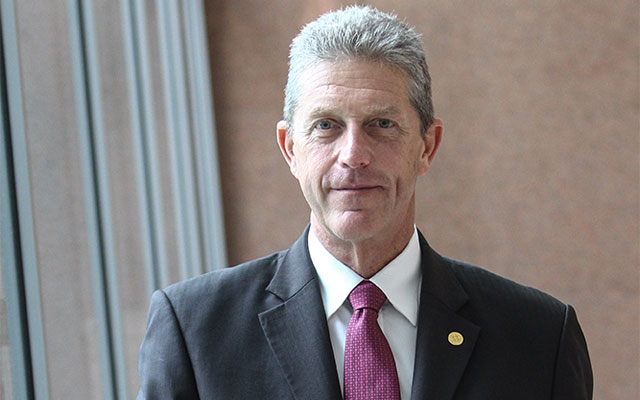
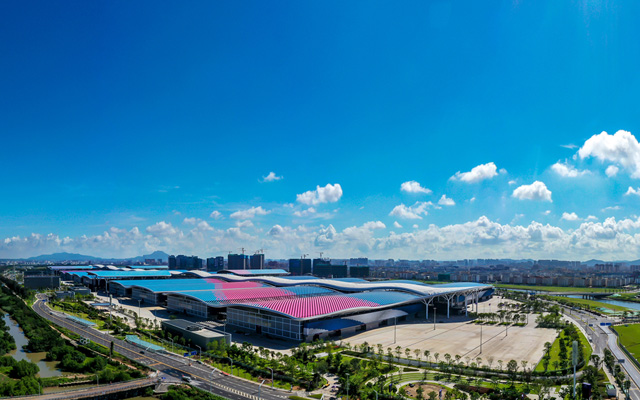
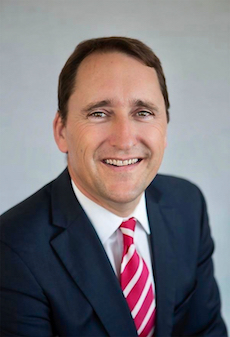 Simon Lomas is the chief operating officer at Shenzhen World. Before his move to China in 2019, he was the general manager convention centre & theatre at Jakarta International Expo for two years. Other previous industry posts include deputy general manager at Kuala Lumpur COnvention Centre, and director of operations at Sydney Convention and Exhibition Centre.