Double-bill trade event, IT&CM Asia and CTW APAC, will return this year from September 28-30 in a virtual format amid ongoing travel restrictions.
Delegates to the three-day event will be able to enjoy 24-hour access to the exhibition on the improved OnAIR virtual event platform, making it easier for those outside of Asia-Pacific to attend.
Organiser TTG Asia Media has also created flexible business meeting arrangements that allow for mutually requested scheduled slots and walk-ins; weaved in destination and corporate brand presentations and mini-roadshows; alongside insights into buyers’ procurement motivations; and daily themed knowledge sessions.
Sponsorship packages are available for sellers, while qualified buyers get to access all content for free.
cautiously optimistic that the industry is in the early stages of a post-COVID recovery
Some of the world’s top brains in engineering, science and mathematics are slated to meet in Brisbane for the Asia Pacific Congress on Computational Mechanics (APCOM) come 2025.
Taking place at the Brisbane Convention & Exhibition Centre (BCEC), the Australian city trumped amid strong competition from Hong Kong and South Korea.
Brisbane (pictured) is cautiously optimistic that the industry is in the early stages of a post-Covid recovery
The team at BCEC collaborated with the Queensland University of Technology (QUT), and was supported by Tourism & Events Queensland and Brisbane Economic Development Agency (Brisbane EDA) to secure the event for Brisbane.
Congress chair, YuanTong Gu, head of school, mechanical, medical & process engineering at QUT, added that Brisbane’s worldwide reputation as a leader in science and technology was a key factor in the city’s selection to host the event.
BCEC and Brisbane have secured 17 international meetings in the past 12 months across health, science, technology, agriculture, mining and social welfare, which are expected to deliver 20,000 delegates to Brisbane with an estimated A$52.5 million (US$41.3 million) in direct expenditure for the Queensland economy.
BCEC general manager, Bob O’Keeffe, said the recent bid win activity was encouraging and an expression of guarded confidence about Australia from the international market.
‘‘On the home front, we are also witnessing an upswing in general enquiries and bookings. We are cautiously optimistic that the industry is in the early stages of a post-Covid recovery…” he said.
The virtual tour is the latest innovative addition to the Centre’s new and improved website
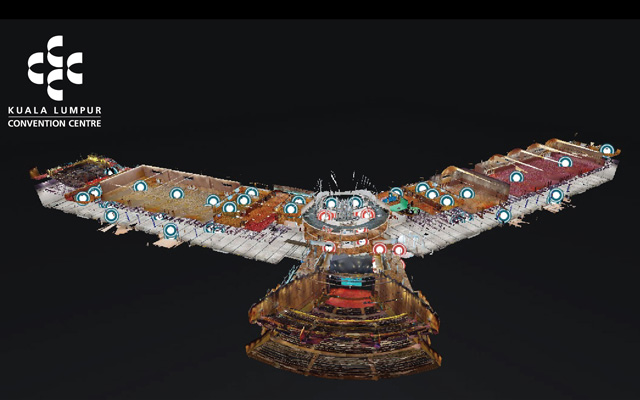
The Kuala Lumpur Convention Centre (the Centre) has unveiled an interactive virtual tour, the latest engagement tool available on the venue’s website.
The interactive virtual tour offers an overview of the Centre with the option to self-explore, or take a guided tour deep-dive into each function space via 360-view. The virtual tour will be further enhanced with visual references to various room set-ups.
The virtual tour is the latest innovative addition to the Centre’s new and improved website
Video conferencing features for live interaction between the organiser and the Centre is also available, which would help expedite the event planning and communication process.
This means that meeting and event organisers planning for conferences beyond 2021, as well as visitors, can now visit the Centre, with just a few clicks, from wherever they may be located.
Previously, the Centre added a digital concierge named Skye, a Chatbot tasked to welcome and help users navigate within the website and respond to queries.
The Centre’s general manager, Alan Pryor, said: “This is a huge leap for us at the Centre as we continue to transform the way we conduct our business. With this interactive virtual tour, we are able to bring our customer engagement to another level, meeting the demands of the current marketplace, especially in this Covid-19 times. Realising our dream of virtualisation has put us in the forefront of digital transformation of the business events industry, not only in Malaysia but regionally and globally.”
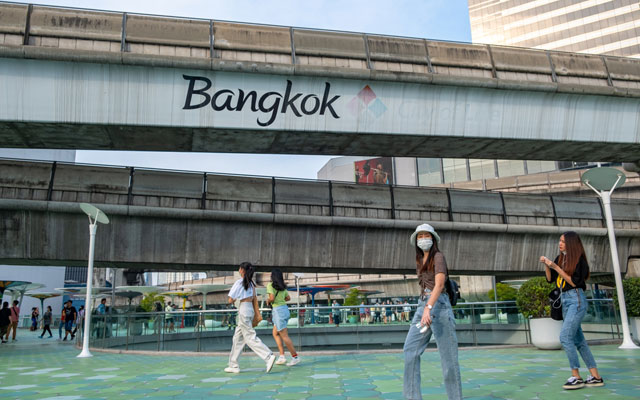
Bangkok mulls plan to allow vaccinated travellers to be exempted from quarantine from October 1
Thailand is considering scrapping its mandatory quarantine for vaccinated visitors to its capital Bangkok and other top tourist destinations from October, as it looks to rebuild its coronavirus-battered tourism industry.
Among the 10 provinces planned to welcome vaccinated tourists from October 1 are Pattaya, Phang Nga, Koh Samui, Krabi, and Bangkok, deputy government spokeswoman Traisulee Traisoranakul said on Friday (May 7), according to a Channel NewsAsia report.
Bangkok mulls plan to allow vaccinated travellers to be exempted from quarantine from October 1
The report also quoted Traisulee as saying in a statement that the new plan is expected to attract 3.5 million tourists this year, and generate 298 billion baht (US$9.5 billion) in revenue. However, she added, at least 70 per cent of residents in each of the 10 provinces must first be vaccinated for the plan to proceed.
Under current regulations, all foreign visitors to Thailand are required to undergo a 14-day quarantine in government-approved facilities.
In 2020, Penang recorded a total of 156 events with 19,283 participants and 48,963 room nights, despite the halt on international travel and limitations for business events.
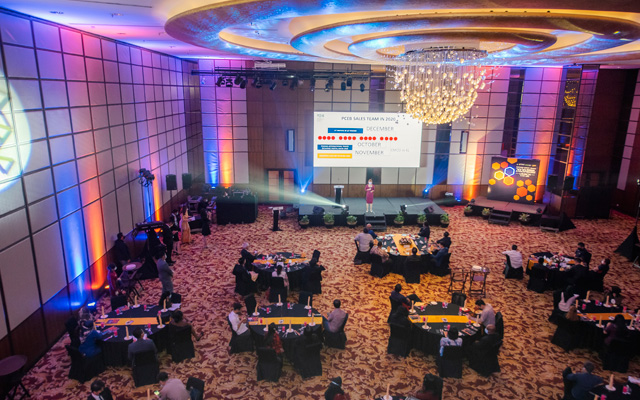
This announcement was made by the Penang Convention & Exhibition Bureau (PCEB) during a ‘buka puasa’ or iftar at The Wembley hotel last week. The iftar was also PCEB’s first official event of the year.
PCEB’s CEO Ashwin Gunasekeran, chief minister of Penang Chow Kon Yeow, Penang State Exco for Tourism and Creative Economy’s Yeoh Soon Hin, chairman of Malaysian Association of Hotels Penang Chapter Raj Kumar were among those present.
The launch also included a short video thanking the industry. The video compiled by PCEB showcased activities and initiatives conducted by the Penang State Government and Business Events Penang stakeholders throughout 2020.
“We have to keep in mind that the business events industry is built on the principle of collaboration and now more than ever, we have to cleverly harness its power, exhausting every potential avenue so that we can find opportunities for business together,” said Ashwin Gunasekeran, CEO of PCEB.
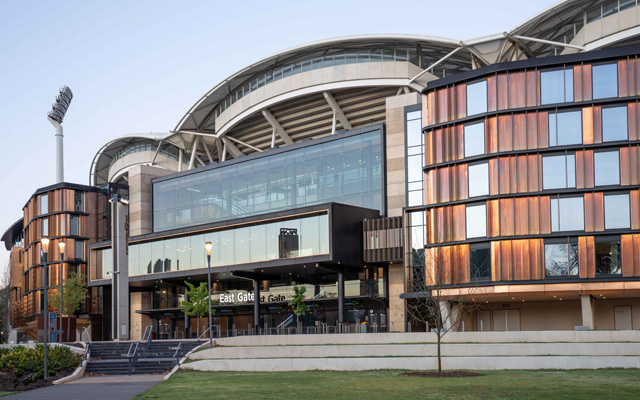
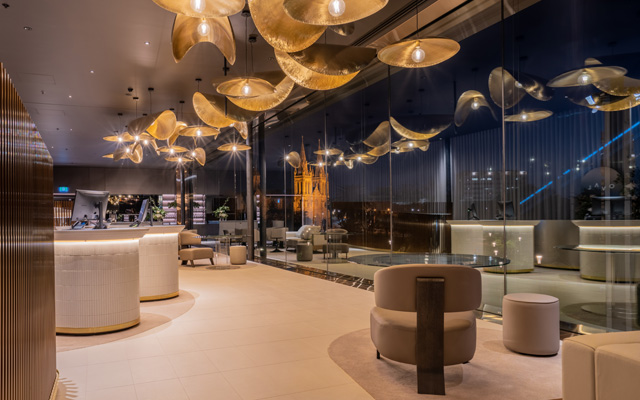
Oval Hotel, Adelaide is Australia’s first stadium hotel and one of only a handful of hotels in the world aligned to a sporting stadium.
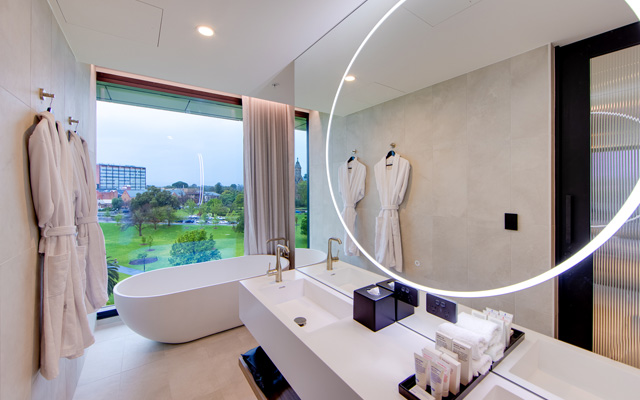
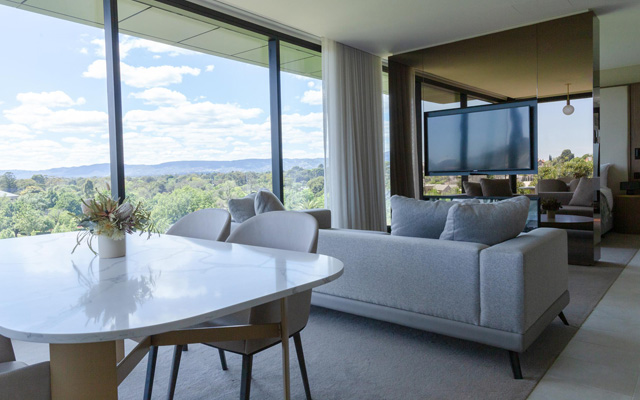
The luxury boutique hotel offers 138 rooms, spanning two wings that integrate seamlessly with the existing stadium. Wrapping around the eastern facade of Adelaide Oval, each room overlooks the surrounding parklands and is designed to bring these picturesque views into the rooms.
Oval Hotel, Adelaide
1 of 6
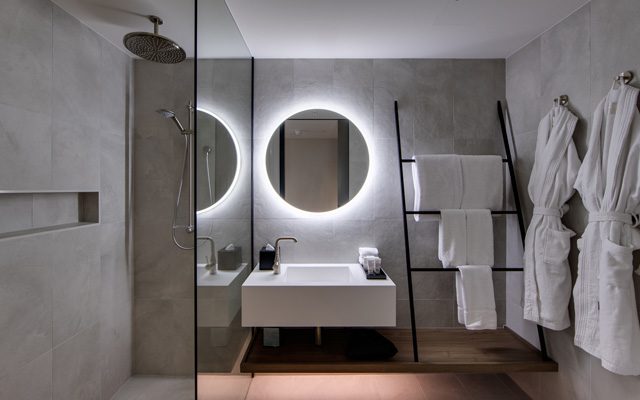
Surprising touches like a Tiffany-inspired minibar and automatic curtains upon room entry hint of a pleasantly unordinary stay.
The hotel is independently designed by South Australian firm Cox Architecture, which also led the Adelaide Oval stadium redevelopment and designed the hotel as a natural extension. The interiors are by Carr, featuring natural textures and enveloping furnishings for a feel of understated luxury.
On the ground floor, the Bespoke Wine Bar & Kitchen features a 2,000 bottle wine wall that stocks wine from across Australia, as well as international selections.
Connected to the hotel is the Adelaide Oval, South Australia’s 50,000 seat home for major cultural and sporting events, as well as the state’s main meetings and events offering. This includes 24 dedicated function spaces for anywhere between 10 and 2,000 delegates, with a variety of options from unique outdoor terraces to intimate meeting rooms overlooking the hallowed turf.
ICCA’s regional director for Asia-Pacific, Noor Ahmad Hamid, will leave his role on June 4, 2021, after having spent 12 years serving the association, supporting its members across the region’s meetings industry, and lifting the profile of the meetings profession.
Noor Ahmad Hamid has been the face of ICCA in the Asia-Pacific region for the last 12 years
In a letter to ICCA members on May 7, ICCA CEO Senthil Gopinath said a new regional director will be recruited. In the meantime, he will step in to lead the region with the support of existing ICCA regional staff – research and market analytics manager Kavitha Pragalathan; membership development manager Margaret Lu; and membership development executive Nusheena Mohd Shahimi.
Noor will be starting a new chapter in his career in the public sector.
unparalleled choice by having the best solutions for each managed travel segment that we serve
American Express Global Business Travel (GBT) has entered a binding deal to acquire Egencia, Expedia Group’s corporate travel arm.
As part of the transaction, Expedia Group would become a shareholder in, and enter a long-term strategic commercial agreement with, AMEX GBT.
Both entities aim to provide the best solutions for each managed travel segment they serve
Together, GBT and Egencia would offer comprehensive technology and customer solutions across every segment of business travel. Teaming Egencia with GBT’s Supply MarketPlace – a source for content and experiences for business travellers – would give customers more choice and suppliers more access to business travelers.
Meanwhile, with both the Egencia platform and GBT’s Neo Technology Group, the business would be positioned to build the best solutions for the future of business travel.
Paul Abbott, AMEX GBT’s CEO, said that: “Egencia would be strengthened by GBT’s complementary technology, enterprise capabilities and cutting-edge content.”
He added that this deal would “create new opportunities for both multinational and small and medium-sized enterprise (SME) clients, suppliers” and teams within both organisations.
Meanwhile, president of Expedia Business Services, Ariane Gori, said: “Expedia Group strongly believes in the robust return of travel, including in the corporate space. We’re excited about our potential ownership in GBT and our long-term arrangement to power Egencia and GBT, as we do for thousands of other travel companies.”
The proposed deal is subject to consultation by Expedia Group and Egencia with their applicable employee representatives, as well as customary closing conditions including regulatory approvals.
The Exhibition and Event Association of Australasia (EEAA) has called upon the Commonwealth Government to extend the money available under the Business Events Grants Program to the industry immediately.
Claudia Sagripanti, EEAA’s chief executive said the association’s members need the AUSTRADE Business Events Grants Program to urgently reopen for new applications.
Sagripanti: many businesses need the funds to help them survive
“In September 2020, AUSTRADE opened applications for exhibitors and potential exhibitors, with A$50 million (US$38.6 million) available for assistance. The EEAA is aware of many exhibitors across a range of exhibition types and locations applying for and being approved and welcomed the speed with which AUSTRADE acted to process applications,” she said.
The fund was closed temporarily at the end of March. While the closure was announced as temporary, it isn’t clear whether there are funds leftover from the original A$50 million to assist the industry.
“If there is money left after currently approved applications, EEAA calls for applications to urgently reopen to distribute any remaining money.
The events sector was one of the first to be impacted by the Federal Government’s changes to mass gathering rules in response to the COVID-19 pandemic and is one of the last to be reactivated. Many businesses, which are privately owned SMEs, lost over 90 per cent of their income, and have had no alternative ways of generating revenue due to these restrictions,” said Sagripanti.
Research conducted by the Business Events Council of Australia (BECA) shows the catastrophic impact of the pandemic and related closures on events: 96 per cent of events in 2021 were either cancelled or postponed.
Follow up research by BECA in late October 2020, showed the pandemic’s effects continued, with 62 per cent of event owners and planners cancelling or postponing events in 1Q2021. For the period January – June 2021, 57 per cent said they had cancelled or postponed events.
Sagripanti said: “Through BECA we worked with organisations across the sector to get the fairest possible structure for distribution of the fund, and one which would have had the biggest impact supporting employment across our sector.
“Exhibitions and events have restarted, but at a much lower level than pre-Covid. Giving the industry modest government assistance is the confidence boost needed to exhibit and get employment back to normal,” concluded Sagripanti.
Just 10 minutes from Phuket International Airport on the serene northern coast, this 178-key, Bill Bensley-designed resort offers delegates a quiet, tropical paradise steeped in Phuket’s tin-mining heritage
The newly-opened Ritz-Carlton, Bangkok anchors the One Bangkok development with cosmopolitan elegance. Featuring the city's largest ballroom and a spectacular new penthouse suite, it delivers exceptional hardware and deeply authentic, soulful service for business and leisure travellers alike
Behind the imposing, Brutalist concrete that defines Zurich’s Oerlikon district lies a surprising secret. While its exterior honours the neighbourhood’s industrial roots, stepping inside Mama Shelter reveals a vibrant, neon-soaked world that is a far cry from its rigid shell