Asia/Singapore Saturday, 11th April 2026
Page 516

The future of MICE: How can businesses adapt?

0
Technology has been an important enabler in the adoption of flexible working arrangements

Regional and global business travel for meetings and events was severely limited as a side effect of Covid-19.

Countries such as Singapore are piloting business travel passes, enabling selected senior executives of organisations to travel to a range of countries, thus allowing regular activities to resume. While virtual meetings and events became the substitute for in-person interactions, polls have concluded that professionals find live events to be more effective and intend to return to this format to some degree when the virus is no longer a significant threat.

Technology has enabled flexible working arrangements, and such virtual components are likely to be retained for future events

The pivot to virtual events in the MICE industry has presented planners with the opportunity to incorporate new digital experiences into events and conferences to make these gatherings more meaningful and effective.

These new digital technologies range from integrated event management solutions to augmented reality events. As in-person events resume in the next year, many will retain the virtual components adopted during the pandemic to enhance and improve the overall experience. This approach will also ensure that wider audiences can be reached as business travel slowly returns to pre-Covid levels.

As a result of the current travel restrictions, the majority of former business flyers in Singapore are continuing to conduct business meetings from home.

Technology has been an important enabler in the adoption of flexible working arrangements by empowering unprecedented collaboration in the workplace and revolutionising the way that colleagues and clients communicate and share data.

A Barco ClickShare survey revealed that 78 per cent of employees strongly supported tech-enabled meetings that allowed the participation of remote joiners. The pandemic has shown how efficient cross-collaboration between colleagues, regardless of geographical location, can ensure the sustainable spread of globalisation and international business practices.

Organisations have adopted hybrid models of conducting meetings globally and have reaped the productivity benefits of video conferencing tools. It should continue to do so due to the uncertainty of the spread of Covid-19 which will affect when travel bubbles between various countries will be established as well as when travel bans will be lifted.

Organisations which saw their revenues hit by lockdowns realised that travel budgets could be cut less painfully than headcount. In addition, as more companies unveil “nett zero” pledges to reduce their emissions, another factor has entered the equation: reining in business class flights is a fast way of shrinking corporate carbon footprints.

Meanwhile, the nature of remote employees will lead to more frequent physical meetings in the future. Those who are offsite by default are going to want human connection at some point which will increase the desire to travel for the purpose of team bonding and other social activities.

In conclusion, recovery for the MICE industry will not be immediate but instead will be in phases.

As countries pilot business travel pass and large scale MICE events in the next few months, businesses must ensure that they are prepared for the future of workplace that is emerging by adapting to the changes technology is bringing and start thinking about the essentiality of business travel on their business operations and competitiveness as a business.


As the managing director of Barco South-east Asia, Gan Ta Loong is responsible for revenue and operational management at Barco South-east Asia and Taiwan. While overseeing the business and operations focusing on the healthcare, enterprise and entertainment segments for Barco in the region, Gan is also the vice president for ProAV, events, virtual reality and simulation segments for Barco across Asia Pacific.

TMCs get leaner, smarter

0
TMCs

Global TMCs look set to emerge from the Covid-19 pandemic in a better shape, as they move towards closer client partnerships, new pricing models that benefit all parties, and continued innovations.

Jo Sully, vice president and regional general manager, Asia Pacific, American Express Global Business Travel, observed that “a true partnership approach” by TMCs and clients is now key.

TMCs are still working hard during this period to assure clients of their stability

“Objectives must align, risk must be shared and both must be adaptable to change,” she said.

And with service needs changing, new pricing models have to be trialled.

Matthew Stewart, managing director, BCD Travel, Singapore noted a growing demand for information on health and safety measures by governments, airlines, at airports, etc – services that are not remunerated by the old model.

“Navigating the new future of business travel and the anticipated requirements from organisations and travellers, we need to come up with new ways that compensate us for the costs of that service,” Stewart said.

CWT has been testing new pricing models for various RFPs and Akshay Kapoor, head of APAC sales, reports the response so far “has been extremely positive”.

According to Kapoor, CWT has been piloting a number of trials with select customers for some months, focusing on new pricing structures, including fixed and variable pricing, “to tap the opportunity for a win-win model for the customer and provider and to form the basis for future pricing strategies”.

What is also trending, according to Tristan Smith, vice president of commercial, SMEs, Egencia, is “a shift in the focus of travel programmes away from cost control and return on investment towards risk management and employee experience”.

Smith commented that the travel manager is emerging from the pandemic with more responsibility for risk management and employee wellbeing, in partnership with executive leaders.

“Together they are being asked to reshape systems, policies and technology to reflect the organisation’s shifting priorities,” she pointed out.

Meanwhile, Bertrand Saillet, managing director, Asia, FCM Travel Solutions, has observed an increase in “outsourced travel resources” enquiries – from the end of 2H20202 – with travel being switched on, albeit slowly and primarily domestic, with lower resources”.

The outlook for 2021, Saillet said, is “the ongoing need for outsourcing travel due to the shifts and changes in the travel industry and the leaner/smaller corporate procurement teams which are not resourced or equipped to navigate some of the newer changes we are seeing”.

To ensure client confidence, FCM has “continued to invest in critical activity, including product research and development, given that many of our customers have continued to travel and many other companies have engaged with us to re-assess their programmes or options”.

“We have also continued to invest in implementation and in account management to really understand how our customer’s needs hierarchies have changed due to the pandemic,” he told TTGmice.

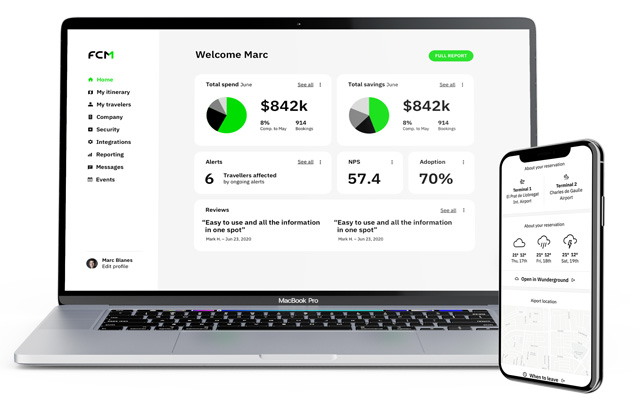
In July, it launched Traveller Hub, an interactive Covid-19 travel resource. In October, Flight Centre’s Innovation Community launched the AI Reporting Tool to help travellers visualise information and turn it into actionable insights.

Likewise, BCD’s Stewart said the TMC – which had reinvested 35 per cent to 40 per cent annually into the company over the last five years – would continue to do so despite the sharp drop in earnings, especially in innovative solutions.

Incentives here to stay, but design will change

0
MICE is still important tools for many companies, and it’ll still grow. But group sizes will be smaller, duration may be longer, and styles of travel will be different.

Motivation is extremely important in today’s challenging business landscape, and incentive trips remain one of the best ways to do this, opined industry leaders during the Customer Deep Dive: Incentive Travel and Events panel, part of the Convening Asia Pacific: The Global Recovery Forum held earlier this month.

However, with travel restrictions abound and most borders remain closed, executing incentive programmes becomes especially difficult.

Incentives are still an important tool for many companies, but group sizes will be smaller and styles of travel will be different.

This is why, designing an incentive trip with an “overseas feel” is crucial, stressed Bert Li, associate director of event production, Amway China.

Max Boontawee Jantasuwan, founding CEO of Bangkok-based Events Travel Asia Group, agreed: “We have to look at domestic destinations now, and try to enhance the experiences of the delegates to keep them motivated as we can’t travel overseas.”

For example, when Amway China’s winners had to give up their Japan cruise in 2021 for a programme in China, Li and his team moved the programme to the popular southern Chinese resort destination, Hainan. Other modifications include accommodating the top achievers together in one or two hotels at the most, and providing tours and activities instead of leaving participants to a free-and-easy arrangement.

Li said that moving the programme to a local destination like Hainan was a safe option in the current pandemic climate, adding that tour sizes must also be reduced to 500 or smaller, compared to upwards of 3,000 pax pre-pandemic.

To maintain a motivational aspect of the local programme, Amway China offered to upgrade some of the packages from a standard room to one on a higher floor or with more amenities.

Another way to provide an “overseas” experience domestically, is to get an international DMC or agency to help. For example, a gala dinner can be done with food trucks, to evoke a Melbournian vibe.

Li also intends to work more closely with larger DMCs with international experience during this period, as opposed to boutique planners. Such DMCs will be better placed to cope with sudden destination changes, and will have more permanent staff at their disposal, which helps to reduce transient staff costs.

Post-lockdown, Li’s destination choice will be determined by safety and security, infection rates, quarantine procedures and medical resources to cope with outbreaks.

Singapore charges on with safe event prototype, rapid antigen testing

0
SG

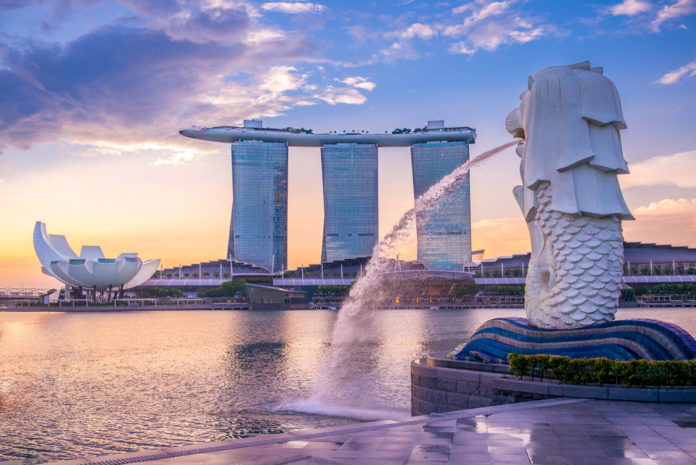
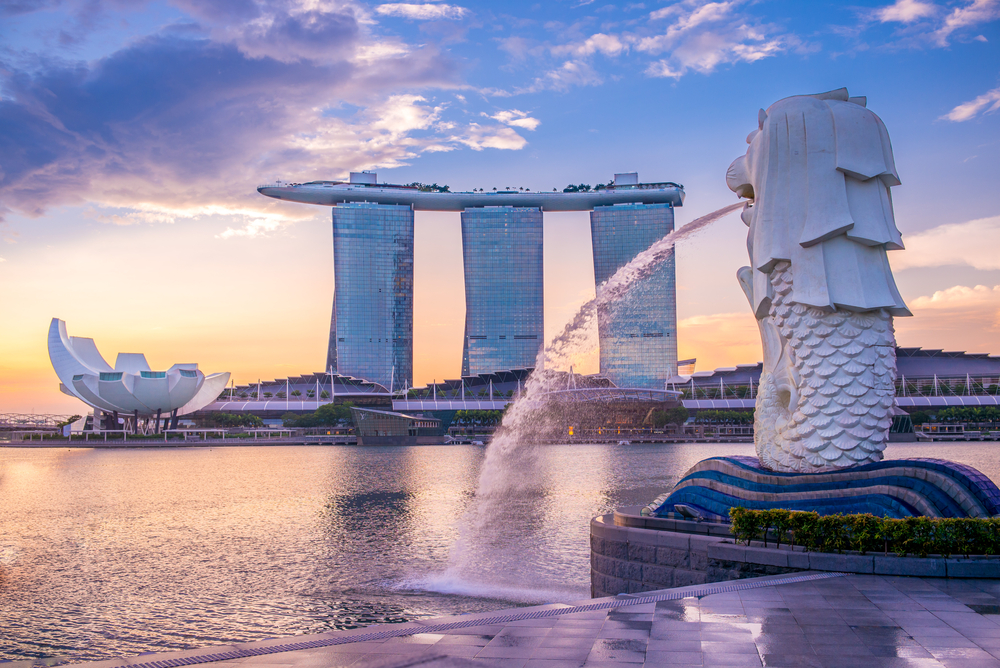
Singapore is pressing forward with a prototype for hybrid events that can accommodate up to 250 pax in person, including overseas visitors, made possible with safe itineraries, rapid antigen testing and a strict cohort system.

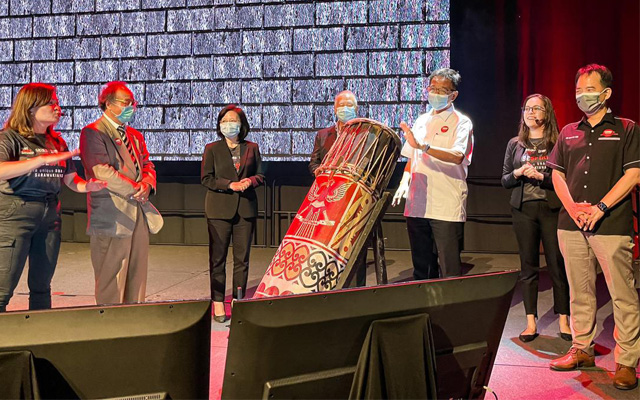
The prototype was launched today with TravelRevive, a joint event organised by Singapore Tourism Board (STB) and ITB Asia from November 25-26. It will see close to 1,000 delegates on-site across both days, including 65 foreign delegates from 14 countries.

Without a large domestic base, Singapore is pushing ahead to welcome MICE visitors back, while safeguarding its population

On top of the polymerase chain reaction (PCR) test that international attendees had to undergo upon arrival, they also took in a new rapid antigen test before the event that delivered Covid-19 diagnoses in half an hour.

Speaking at the event, Chan Chun Sing, Singapore’s minister of trade and industry, said: “We are not waiting for a vaccine to arrive, nor are we waiting for the Covid-19 pandemic to blow over. Instead, we are establishing foundations now to get started on a journey to reinvent and rebuild (the MICE) industry.”

Features that have been spun into this new hybrid event format include a blend of physical conferences and virtual broadcasts, an online meeting diary for delegates, as well as exclusive experiences such as a private museum tour and a private tepee dinner in Night Safari.

The movement towards digitalisation of MICE events and the reinvention of leisure experiences were “already present prior to Covid-19”, remarked Chan. He observed that businesses had begun to revaluate the need to travel for routine meetings, and travellers were starting to consider more environmentally friendly travel experiences.

“The outbreak of Covid-19 has driven (another) need: health security and physical comfort. Whoever can ensure visitors’ health security in a faster and better way will gain a competitive advantage. Singapore recognises this, and has every intention to lead in this area,” he described.

Chan also stressed that Singapore is adopting a “risk management approach instead of a risk elimination approach”, as it is “unable to tap on a large local population or domestic sector”.

Going forward, various industry stakeholders will roll out a series of products to reinforce safety measures for the leisure travel and MICE industries. For instance, Changi Airport Group is developing a safe travel concierge, which provides visitors with a checklist of requirements before entering Singapore and helps business delegates remain in their event cohort.

Other protocols are in the works, such as a combination of PCR testing on arrival and periodic antigen tests, usage of TraceTogether for contact tracing, with more to be detailed in the Events Industry Resilience Roadmap by SACEOS, STB and Enterprise Singapore.

Chan said: “We hope that such protocols will be accepted and adopted by more countries. This will allow all of us to have a shared protocol (that can) reduce the need for a long-term quarantine period that is really disrupting business travel.”

GBTA completes acquisition of ACTE

0
GBTA Finalizes ACTE Acquisition, Fills Two Open Board Seats

Global Business Travel Association (GBTA), the world’s largest business travel association, has completed its acquisition of the Association of Corporate Travel Executives’ (ACTE) key assets.

As part of the integration effort, two former ACTE Board members will join the GBTA Global Board of directors effective immediately.

GBTA finalises ACTE Acquisition, fills two board seats

Alison Taylor, chief customer officer of American Airlines, will serve the remainder of the vacant ALC vice presidency. Steve Sitto, senior manager, Global Travel and Events for Tesla, will serve the remainder of the vacant direct member at-large term. Both terms will be completed at the time of the GBTA Convention in July 2021.

In addition, a committee led by GBTA chairman Christle Johnson, and former ACTE executive director and current DigitTravel Consulting Senior vice president Greeley Koch, will work together with GBTA staff and industry volunteers to identify the best value a combined GBTA and ACTE can deliver to its members.

“We are beyond thrilled to bring GBTA and ACTE together, creating one home for the thousands of business travel professionals who will collectively bring back business travel bigger and better than ever,” said Bhart Sarin, president of GBTA.

We look forward to combining the best attributes of both associations with our Ready. Safe. Travel campaign as we continue to advocate for business travel’s path to recovery,” said Dave Hilfman, interim executive director of GBTA.

Thirty-two years after its founding, ACTE ceased operations and filed for Chapter 7 bankruptcy earlier in July 2020, citing both the Covid-19 pandemic and cancellation of the August 2019 ACTE Global Summit in Macau – due to the Hong Kong protests – as reasons.

ICC Sydney given green light to hold events for up to 1,500

0
ICC Sydney is now approved to host 1,500 delegates at conferences and corporate events. Photo credit: ICC Sydney

The International Convention Centre Sydney (ICC Sydney) has received an exemption to hold corporate events and conferences for up to 1,500 people, following approval from the New South Wales (NSW) Department of Health.

Corporate events, including conferences, meetings, AGMs, awards and banquets, will be subject to one person per four square metres and allocated to groups no larger than 300 people in separate areas within ICC Sydney.

ICC Sydney is now approved to host 1,500 delegates at conferences and corporate events. Photo credit: ICC Sydney

In addition, the Aware Super Theatre is now permitted to hold seated events of up to 2,400 patrons.

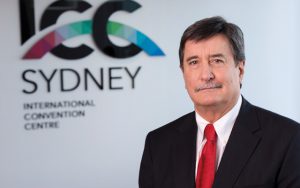
ICC Sydney CEO, Geoff Donaghy, said the increased capacity limit for corporate events is a vital next step in recovering from the coronavirus crisis for ICC Sydney and the business events sector.

“Our industry has been hard hit since March. This exemption will significantly improve ICC Sydney’s ability to attract corporate events, which is essential for the wider recovery of Australia’s business events sector – worth over A$36 billion (US$26.4 billion) annually to our economy”.

Following the exemption, preparations are now underway to welcome back larger conferences. The first of these events to be staged at ICC Sydney will be the 43rd COSPAR Scientific Assembly, in a hybrid format. In conjunction with a Space STEM Park, the Assembly will attract up to 1,500 local participants. A virtual platform will stream to an audience that is anticipated to exceed 3,000 attendees.

This comes as the border between Victoria and NSW has reopened, allowing greater movement of people between the two states for domestic event attendance.

ICC Sydney has made operational changes including limiting the 1,500 people in groups of 300; separate entrances and exits for each group of 300; check-in and contact tracing information collection; regular cleaning of high-traffic and high-touch areas with hospital-grade disinfectant; hand sanitiser stations; and providing Covid-19 safety training for all operational, frontline and contract staff, as well as on-site COVID-19 Safe Hygiene Marshals.

All events held at ICC Sydney will continue to be delivered in line with the venue’s EventSafe Operating Guide which integrates parent group ASM Global’s Venue Shield programme, while meeting NSW Government regulations.

Novotel Hanoi Thai Ha opens in Vietnam’s capital

0

Accor has opened Novotel Hanoi Thai Ha, the group’s seventh property in the Vietnamese capital.

Located in the Dong Da District, the property offers 338 studios, apartments and suites within, for both short- and long-stay corporate travellers. Guests staying in the Executive Apartments and Suites can enjoy light canapés, snacks and drinks at the Premier Lounge located on the hotel’s 26th floor.

For meetings, events and conferences, Novotel Hanoi Thai Ha boasts 11 meeting rooms that can host up to 480 guests. All function rooms are equipped with Wi-Fi access, built-in LCD projectors and multiple, large scale drop-down screens, lighting, sound system and state-of-the-art multimedia equipment.

Dining outlets include an all-day restaurant Food Exchange, the Gourmet Bar which offers sandwiches, salads and light snacks, poolside bar Aqua, and the Rooftop Bar with its selection of cocktails, mocktails and wines.

After a long day’s work, corporate guests can unwind at the recreational facilities such as the fitness centre, outdoor heated swimming pools, sauna and Jacuzzi.

IATA to get a new leader

0

The International Air Transport Association (IATA) has announced that its director general and CEO, Alexandre de Juniac, will step down from his role effective March 31, 2021.

In line to take over De Juniac’s role is Willie Walsh, former CEO of International Airlines Group. He was recommended by the IATA Board of Governors at the 76th IATA Annual General Meeting (AGM) to become IATA’s eighth director-general from April 1, 2021.

De Juniac commented: “I did not come to this decision lightly. It has been the privilege of a lifetime to serve the global air transport – what I call the business of freedom – as the head of IATA. Over the last years IATA has strategically increased its relevance as the voice of the global airline industry. This has been evident in the COVID-19 crisis. IATA has set the course to restore air connectivity amid the pandemic with systematic pre-departure testing. We are well into preparations to fulfil critical vaccine distribution needs.

“In parallel, we have restructured IATA to survive the crisis and be ready to support the industry recovery. We have a motivated team that is determined to get the job done. The building blocks for an industry recovery are in place, and now is the right time to hand over IATA’s leadership for the long process of recovery.”

De Juniac joined IATA in September 2016 from Air France-KLM, where he was chairman and CEO.

As well as proposing Walsh as the next IATA director general, resolutions will also be presented to the 76th IATA AGM thanking de Juniac for his service to IATA.

MEA announces board of directors

0

Meetings & Events Australia (MEA) held its Annual General Meeting on November 24, 2020, where the nine directors of the Board were announced, with executive positions subsequently appointed by the Board.

MEA’s board of directors and executive roles are as follows:

  • Nigel Collin – chairperson
  • Suzana Bishop, Fed Square – deputy chair
  • Beverley Williamson, Melbourne Convention Bureau – secretary
  • Michael Firman, Harry the Hirer – treasurer
  • Paul Davison, Sydney Masonic Centre – director
  • Belinda Doery, Solterbeck – director
  • Kirsty Forbes, Accor Hotels – director
  • Jessica Glass, University of Queensland- director
  • Paula Nolan, Commonwealth Bank of Australia – director

At the AGM, the Board acknowledged the contribution of directors Kate Smith and Alana Hay who completed their term on the Board; and Robyn Johnson for her tenure as CEO and welcomed their continued support as valued members of MEA.

Newly-elected chair of the Board, Nigel Collin commented: “The new Board is committed to continuing to focus on the needs of our members through these challenging times as we build and strengthen our Association and industry into the future.”

The Board will continue to meet regularly including a strategic planning day scheduled for January 2021, where the new Board will undertake a review of the membership value proposition, identify new business opportunities and seek to strengthen its educational offering.

Claude Blanc takes over IBTM Events portfolio

0

Shane Hannam will be stepping down from his position as portfolio director of IBTM Events after three years. As a result, the IBTM Events portfolio will now be managed by Claude Blanc.

In this new role, Blanc will ensure that the current IBTM strategy will continue with its customer-focused approach for exhibitors, hosted buyers and partners. Blanc will manage the new portfolio as part of his current role as portfolio director for World Travel Market.

Blanc has spent over 25 years in the travel industry, with extensive experience in both the leisure and business events sectors.

Reviews

The Ritz-Carlton, Bangkok

The newly-opened Ritz-Carlton, Bangkok anchors the One Bangkok development with cosmopolitan elegance. Featuring the city's largest ballroom and a spectacular new penthouse suite, it delivers exceptional hardware and deeply authentic, soulful service for business and leisure travellers alike

Mama Shelter Zurich

Behind the imposing, Brutalist concrete that defines Zurich’s Oerlikon district lies a surprising secret. While its exterior honours the neighbourhood’s industrial roots, stepping inside Mama Shelter reveals a vibrant, neon-soaked world that is a far cry from its rigid shell

Hyatt Regency Kuala Lumpur at KL Midtown

A polished urban retreat designed for business travellers, Hyatt Regency Kuala Lumpur at KL Midtown combines thoughtful design, seamless service, and exceptional facilities.