Uniplan has promoted Gordon Wang to managing director of the Uniplan Beijing office.
He last held the role of general manager.
In his new position, Wang will drive Uniplan’s business and develop the company’s customer-centric approach.
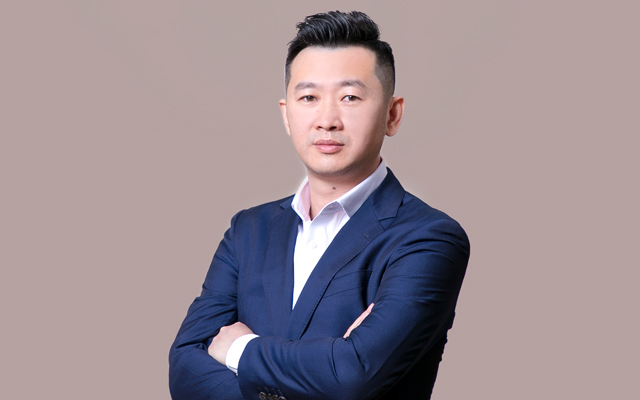
Uniplan has promoted Gordon Wang to managing director of the Uniplan Beijing office.
He last held the role of general manager.
In his new position, Wang will drive Uniplan’s business and develop the company’s customer-centric approach.
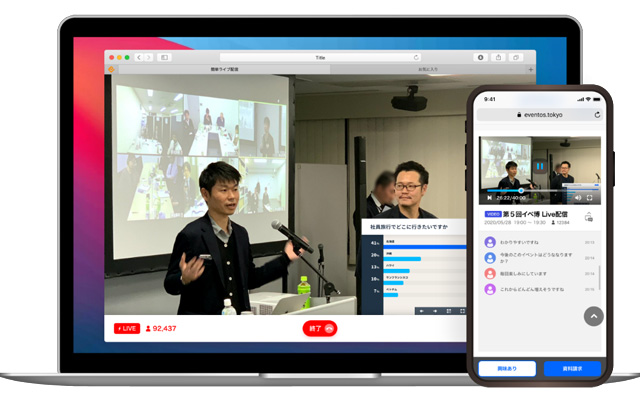
Eventos, Bravesoft’s event platform for customised event operations in Japan, is now able to provide livestreaming services, a new feature added to the platform through technology provided by Tencent Cloud.
Dubbed Easy Live, the new function now allows Eventos users to perform live broadcasting online without the use of external tools. This capability is supported by Tencent Cloud’s Live Video Broadcasting (LVB) and Tencent Real-Time Communication (TRTC) solutions.
It can support presentations, panel discussion, competition and live shows, and runs on ultra-low latency. Hosts can broadcast the event, which viewers can then subscribe to, watch, comment, and playback. Other features include a beauty filter, audio processing, instant broadcasting on a splash screen, live screencap broadcasting, and video definition changing.
Prior to this addition, Eventos users were already able to use this event platform to manage events including ticketing functions, business matching chats, and data analysis, among others.
Kiyota Koichiro, board member & general director of eventech unit, Bravesoft, said: “The pandemic has shaken up the event management industry, where livestreaming and online events have become the new norm. Addressing the demand growth in livestreaming services, Eventos has now given its users the ability to easily host live events online, as well as foster business communication within this event platform through the support of Tencent Cloud.
“Our collaboration with Tencent Cloud enabled us to install a function that helps prevent broadcasting challenges and hurdles and also highlight the value of Eventos for our users. We look forward to further strengthening our collaboration in the future.”

While corporate cards offer refund protection for cut tickets cancelled in 2020 due to the Covid-19 pandemic, follow-up “tracing and tracking” is throwing up challenges, according to some regional buyers managing large multi-market, multi-airline programmes.
In recent GBTA online discussion updates, US corporate travel managers (CTMs) raised the issue of unused air tickets being booked for leisure travel by employees who have left the company.
Benson Tang, executive director, corporate travel, Informa Markets, who is based in Hong Kong, said there is no possibility for the scenario at his company.
Tang explained: “Our company issues a corporate credit card and all charges are put on it. And a manager’s card will be used for non-managerial staff without one.
“If a refund is needed, the credit will go back to the corporate credit card. For LCCs, we have a corporate account and bulk purchase travel coupons, so unused tickets go back into our corporate account. So no issue.”
The CTM of a global European retail giant with T&E management handled out of Shanghai, told TTGmice he is trying to close any gaps.
He said: “We use Airplus International in most countries. In China, however, we are still using invoicing due to complex cross-charging needs. Since June last year, we have been working with the TMC in each country to refund all unused tickets.
“We have also heavily restricted new bookings, ensured new bookings are flexible for change, but, there will still be gaps in the follow-up even if the overall sums involved are not significant.
“We have also worked with the TMC to implement pre-trip approval for LCC bookings in December 2020 to close off this gap.”
But some Singapore-based regional CTMs have expressed concern.
One CTM in the pharmaceutical sector pointed out that corporate credit cards have different liabilities – corporate versus personal – and if the latter, she quipped that some employees can leave the company with three years worth of mileage points to use.
She continued: “While there was ‘no travel’ in 2020, we still paid out millions in our air programme and are still looking at a chunk of money to be refunded.
“On a company basis, we do not know who has an open ticket and neither does the TMC know if a ticket in the system has been used or when it was used. That’s because the TMC booking and airline reservations systems can’t talk to one another as GDS, mid- and back-end systems are different in each country.
Studying the TMC reports is like looking for a needle in a haystack, she observed. “We have asked if our TMC can upgrade its system to help track air tickets because our employees don’t know how many bookings they have but are not used and have to be sent for a refund.”
The situation, she said, is further complicated by different airlines adopting different refund policies, some suddenly changing their policies from cash to credit, even asking corporates to make a new booking.
“We never used to have to track unused tickets but because of Covid-19 it is now ‘visible’,” she noted, adding some suppliers took a long time for the refunds.
Sharing similar concerns, a CTM in the energy sector, said he is seeking some US$208,000 in refunds, mostly cash but some vouchers, and noted about US$80,000 is still outstanding.
The company, which has nearly 20 regional and international airlines in its programme, has had to wait around six months for refunds so far.
He commented: “Our TMC is providing a refund report free of charge, and we are willing to pay a US$50 transaction fee for each refund request.
“I totally understand the main intention of the airlines is to stay afloat, but they must also do something to work with each other when capacity is limited, when service is reduced and some airfares have increased substantially.
“My suggestion is for airlines, regardless of their alliance membership, to consider allowing interlining to help corporate travellers and to cut waste. Airlines need to start talking to each other,” he urged.
Shirley Yuen, regional director – global and strategic sales, Asia Oceania sales office, Japan Airlines, commented: “Corporates usually book via a corporate fare. However in cases where corporate fares are not used, then tracking for corporate spending may be difficult.
“Only IATA published fares allow the use of all IATA airlines, but they are usually the highest. Airlines may also file a carrier fare that allows the use of specific carriers in a joint business or in the same alliance. For example, American Airlines is our Pacific joint business partner.”
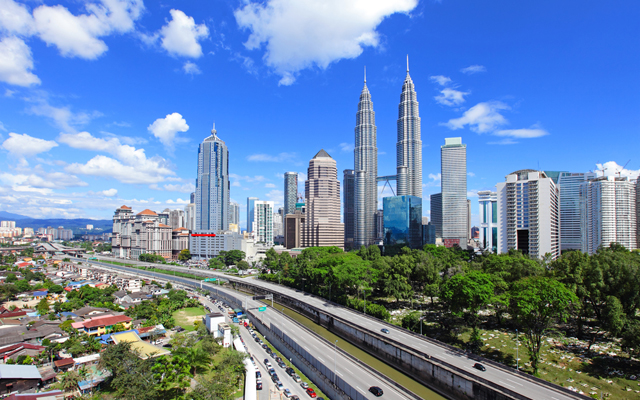
Malaysia and Indonesia have agreed in principle to implement a reciprocal green lane scheme to facilitate bilateral travel, pending approval by health authorities in both countries.
Malaysia’s tourism, arts and culture minister, Nancy Shukri, said in a press statement that the travel bubble initiative is part of the ministry’s recovery plans formulated last July to revitalise the country’s tourism sector.
She added that the ministry has also held discussions with the Health Ministry, Home Affairs Ministry and Foreign Affairs Ministry to explore opportunities in creating travel bubbles with neighbouring countries such as Brunei, Singapore, Thailand, Japan, South Korea, Australia and New Zealand.
“Its implementation, however, is subject to bilateral discussions and considerations based on the aspects of health, immigration, data tracking, and ongoing monitoring by relevant agencies in both countries,” she said.
The Malaysian Association of Convention and Exhibition Organisers and Suppliers (MACEOS) president, Francis Teo, welcomed the news but opined that strict adherence to SOPs and proper implementation is needed to guard against imported cases.
Teo also suggested airport and immigration authorities could look into providing permanent special lanes and counters dedicated to travellers to facilitate their movement upon arrival.
“We look forward to seeing the opening of borders between Malaysia and Indonesia, and anticipate that this would facilitate the movement of business travellers between the two countries. The success of this Reciprocal Green Lane would help support and speed up the opening of the business events industry in Malaysia.”

A new series of karate-related offerings for business groups is now available in Japan’s southern island chain of Okinawa, the birthplace of karate.
Launched by the Okinawa Convention Visitors Bureau under its latest web platform, “Enjoy Karate Tourism in Okinawa,” the programme features karate trials for beginners (120 minutes), as well as workshops for more experienced karate practitioners. The gi, or karate uniform, can be rented onsite.
On completion of the programme, participants typically receive a certification of completion and a group photo with their karate master.
Meanwhile, corporate groups seeking experiences rather than lessons can try Ryukyu traditional tile smashing and Zen seated meditation (45-minute or 60-minute programme) at the famous Shuri Kannondo Temple in Naha.
A six-hour-long tour (US$290) to explore the island’s karate roots via visits to monuments, shrines, museums, dojos and shops is ideal for a corporate excursion, while the 30-minute karate demonstration performed by local masters is suitable (USD$ 390) as pre-event entertainment.
Most programmes are held at Okinawa Karate Kaikan in Tomigusuku, about 15 minutes’ drive from Naha International Airport. This facility, which was opened in 2017 to preserve and develop the heritage of Okinawa karate, also has rooms for small group meetings. Its main gymnasium can be transformed into a conference space.

SAP Concur has named finance and travel industry veteran Laura Houldsworth as senior vice president & general manager for Asia Pacific Japan (APJ) and Greater China.
She succeeds Andy Watson, who is leaving his position to take up a new role within SAP.
Houldsworth was until now the managing director for SAP Concur Southeast Asia. She also has held various senior sales positions within SAP Concur Southeast Asia previously.
In her new position, Houldsworth is responsible for driving the growth of the SAP Concur business in the APJ and Greater China region.
Prior to SAP Concur, Houldsworth held sales roles at BCD Travel and ABN Amro Private Banking.

Travel bubbles, green lanes and airline initiatives around travel safety can inspire travel interest, but actual movement requires a combination of institutional framework to facilitate travel and perceived high rewards of travel among consumers.
In this new episode of TTG Conversations: Five questions video series, Jameson Wong, APAC director at ForwardKeys, discusses how progress in Covid-19 management is impacting consumers’ flight appetite and how the marketplace has responded to travel bubbles and green lanes. He also explains how data can help travel and tourism industry navigate this crisis with greater visibility.
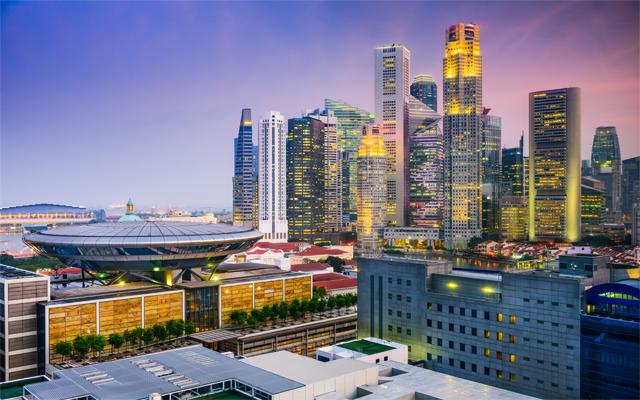
The World Economic Forum (WEF) has postponed its Special Annual Meeting in Singapore from May to August 2021, as the world continues to struggle with Covid-19 containment.
In a statement released on February 3, WEF said: “Although the WEF and Government of Singapore remain confident of the measures in place to ensure a safe and effective meeting, and local transmission of Covid-19 in Singapore remains at negligible levels, the change to the meeting’s timing reflects the international challenges in containing the pandemic.”
It expressed challenges in planning for and delivering an in-person event against a backdrop of continued global travel restrictions and differing quarantine requirements.
Earlier in January, WEF had announced a postponement of the high-profile meeting of political, business and academic leaders from May 13-16 to May 25-28.

Brought to you by Singapore Tourism Board (STB)
Singapore’s continued agility in adapting to contingencies and commitment to reimagining business events with innovation and technology came to the fore with its successful hosting of PCMA Convening Leaders 2021.
The conference was held for the first time outside North America in its 64-year history at Sands Expo and Convention Centre’s hybrid event broadcast studio. This remains the largest physical turnout of close to 300 delegates since MICE pilot events commenced last October.

Singapore’s position as a key MICE hub and its pivot towards a safe resumption of business events were key reasons why the city state was selected as the host city for the conference.
Sherrif Karamat, President and CEO, PCMA, emphasised how Singapore was a natural choice; as the country has stayed ahead of the omnichannel events game by birthing innovative solutions such as the Sands Expo and Convention Centre hybrid event broadcast studio to ensure better engagements with a global audience.
With the association’s background in delivering digital experiences, Karamat believes such technologically advanced studios with mixed reality capabilities are necessary moving forward because they offer flexible participation and will support the new format of meetings for a long time to come.
“Singapore has capitalised on its stellar track record in staging prominent world-class events in helping us amass and work with speakers from a regional and global level that will garner international attention and attendance.
The protocols and safety protections that Singapore has implemented – not just to contain the virus – are industry and world-leading. This has enabled PCMA and its members to meet in a very safe environment in Singapore,” noted Karamat.

Attending the hybrid conference as a panellist, Prof Chan Heng Chee, Ambassador-at-large and Chair, Lee Kuan Yew Centre of Innovative Cities, also noted how virtual experiences can facilitate international trade activities, as businesses progress toward a new normal at the age of travel restrictions.
“Digitalisation brings people together, it moves beyond boundaries, and it even moves beyond the state.
Using technology to compensate for that inability to travel, I’ve noticed a lot of (hybrid) events can bring in the rock stars of that particular field, when it is normally very hard to get so many to travel to one place,” said Prof Chan.
Echoing a similar sentiment, Dr Edward Koh, Executive Director, Conventions, Meetings & Incentive Travel, STB, noted that the advent of hybrid events aid in better catering to a larger global audience, while satisfying the consumers’ desire for physical events.
In the face of a changed meetings landscape, Dr Koh added how event organisers have aligned and familiarised themselves with the latest operational regulations, as well as augmented technology (such as touchless solutions and digital implementations) to complement work processes, which “augurs well for the future”.

Singapore’s progress towards the resumption of economic activities comes with clear measures that prioritise public health and safety.
As part of the Event Industry Resilience Roadmap (IRR) which serves to establish a national standard for the implementation of STB’s Safe Business Events (SBE) framework, strict safety management measures were put in place by the organisers, venues and suppliers to ensure utmost safety without compromising too much on the event experience.
At PCMA Convening Leaders 2021, SMMs include pre-event communication, pre-event Antigen Rapid Tests, issuance of TraceTogether tokens to foreign delegates for contact tracing, and a strict cohorting system to minimise inter-mingling between delegates.
Chan said: “I never for a moment thought it was unsafe to come to an event in person, where you would have about 300 people, because of the trust I have as a Singaporean in our competent government and agencies. I was asked to take an Antigen Rapid Test, and it was reassuring to know that every participant in person was taking it.”
Delegate Sophie Mokthari, head of travel, Riot Games Singapore, said the thorough pre-event communications, Antigen Rapid Tests, social distancing and event care packs all made her feel safe about physically attending the conference.
“With so much thought being put into a single event, I hope that the industry can build on this model (for recovery). I look forward to going back to having (in-person) conferences and events on a regular basis,” Mokthari added.
As Singapore looks to redefining business events in a post-pandemic world, Koh concluded: “Our ability to assure delegates, event organisers, and others on what we can do for them in terms of safety, creative experiences and innovative platforms are offerings that have attracted them our way. This will be illustrative of what we can do for other events going forward.”


Brought to you by Thailand Convention and Exhibition Bureau (TCEB)
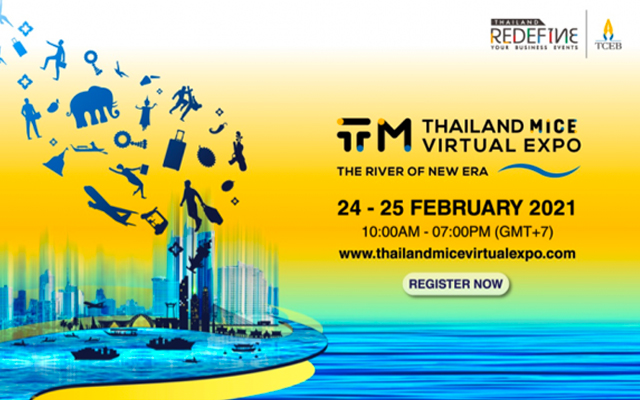
TCEB brings forth the inaugural Thailand MICE Virtual Expo on February 24 to 25, 2021, matching 30 local exhibitors with international MICE industry buyers.
With a pulse on delivering business events for the new norm, the event aims to showcase Thailand’s readiness in progressing towards face-to-face meetings; as well as redefining business events when international travel resumes.
Webinars and panel discussions are lined up to provide delegates with insights into a variety of industries – including – business events, and digital technology; food for the future; circular economy; health and wellness; logistics and hospitality.
The online workshops will showcase extraordinary experiences revolving the Thai culture. Bon appetite with world-renowned Thai foods and desserts, work up a sweat with Thai boxing, rejuvenate with traditional massages, freshen minds with Chiang Mai’s floral art, and exercise one’s imagination with Thai puppetry. To sweeten the experience, there will be great prizes up for grabs.
Seize this opportunity to learn the new face of Thailand as a business events destination. For more information and registration, visit www.thailandmicevirtualexpo.com.