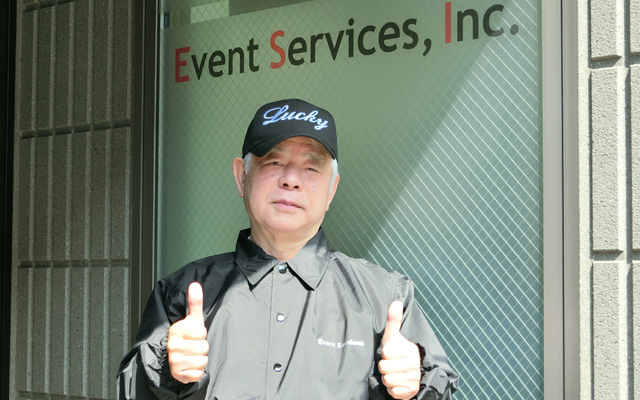
When did you first start doing business events? I started my career as a travel agent, handling both inbound and outbound. I then became the vice president of the incentive travel department – where I worked for many years – before I became interested in producing corporate events worldwide. I left the company and founded Event Services, my own company, in 1981.
Lucky Morimoto
How has Japan’s business industry changed from when you started out? The word ‘incentive’ was not widely known at that time. Over the years, I have produced a lot of incentive events worldwide for our clients. Japan’s business event industry has grown tremendously, although, almost all the business events for 2020 have been either cancelled or postponed. Hopefully, the situation will improve soon.
What do you love/dislike about your job? Confucius said: “One who knows is no match for one who likes. One who likes is no match for one who enjoys.” I believe that people who genuinely like what they do for living always perform better in their jobs. In my case, I completely enjoy doing events and have no dislikes, believe it or not!
Could you share a memorable milestone in your career? I remember my first two incentive events that I organised in Canada for AFLAC Japan (a life insurance company). I did two events for them – a Canada- themed award dinner in Banff and another Canada-themed gala dinner in Vancouver. I long remember them because these were the first two events I produced overseas, and they went very very well. AFLAC also became our loyal client for more than 20 years.
What do your family and friends think of your job? They say I am made to be an event planner as they know I am always looking for something interesting, something that makes people happy, something that makes the venue shine, and something that motivates people.
Tell us something most people don’t know about you. I am a 5th dan (grade) aikido black belt holder. I am a scuba diver, too. I have been scuba diving for almost 40 years at such nice diving point as Bahamas, Hawaii, Vietnam, Indonesia, Thailand, Micronesia, Okinawa. Being able to stay underwater for nearly an hour is a very unique experience! I also did hang gliding before, and I am now interested to fly a helicopter. I may go to a flying school.
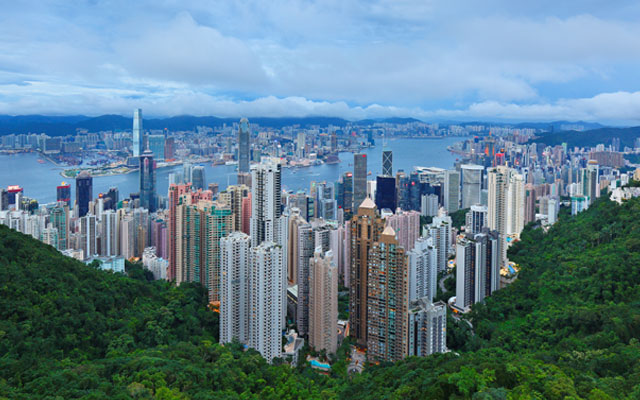
The launch of the Singapore-Hong Kong Air Travel Bubble will be deferred for two weeks due to the spike in Covid-19 cases in Hong Kong, said Singapore’s transport minister Ong Ye Kung this afternoon.
The travel bubble will be deferred for two weeks
In a Facebook post published an hour ago, Ong explained that although the Civil Aviation Authority of Singapore had announced this morning the commencement of the travel bubble as planned on Sunday, further discussions between him and Hong Kong secretary Edward Yau determined that it would be prudent to defer the launch of the arrangement.
“We will review within two weeks on the new launch date and update again,” said Ong in his post.
“I can fully understand the disappointment and frustration of travellers who have planned their trips. But we think it is better to defer from a public health standpoint. The airlines will be contacting the travellers individually.
“This is a sober reminder that the Covid-19 virus is still with us, and even as we fight to regain our normal lives, the journey will be full of ups and downs. But we will press on and look forward to when we can safely launch the ATB,” he said.
In response to the update, Singapore Airlines has issued a statement, saying that it “supports the decision by the Singapore and Hong Kong authorities to defer the launch of the Air Travel Bubble”.
The airline spokesperson said: “The health and safety of our customers remain our top priority. Affected customers are being contacted by Singapore Airlines. Customers who no longer wish to travel due to the deferment of the ATB can request for a full refund of the unutilised portion of their ticket, and have the cancellation fees waived.”
Authorities in Singapore and Hong Kong are deliberating on the status of their unrestricted travel bubble, which is due to commence tomorrow, as a fresh wave of Covid-19 infections hits Hong Kong.
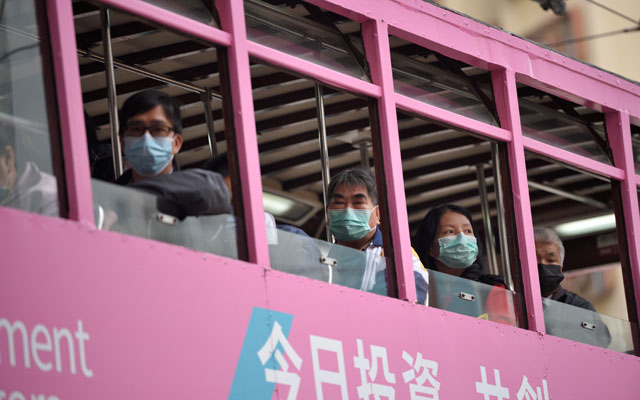
On November 20, Hong Kong reported 26 new Covid-19 cases, which led Hong Kong’s secretary for Food and Health professor Sophia Chan to describe the situation as “severe”. In-person lower primary classes have since been suspended, and the Hong Kong government has urged residents to cease unnecessary gatherings.
Hong Kong health authorities have responded to the latest spike in Covid-19 cases with school closures and limits on unnecessary gatherings
According to Singapore media reports, the Civil Aviation Authority of Singapore is likely to make a decision soon on the status of the inaugural Singapore-Hong Kong Air Travel Bubble, an unique agreement that allows the exchange of residents from both cities without the need for quarantines and restricted itineraries.
In an earlier video message to the public, Singapore’s transport minister Ong Ye Kung had described the Singapore-Hong Kong Air Travel Bubble as “very precious and not to be taken lightly”.
The sustainability of the travel bubble is subject to Covid-19 conditions; the arrangement will be suspended should the seven-day moving average for unlinked coronavirus infections exceeds five in either city.
Changes in tourism and business events, as a result of the pandemic, have highlighted a crucial need for industry organisations to maintain investments in talent development, so as to enable staff to adjust processes the right way forward.
Speaking at the keynote panel of IT&CM Asia and CTW Asia Pacific on November 16, Carina Bauer, CEO of IMEX Group, said “the pandemic has shown some skills gap in our industry” and pointed to capabilities in design thinking, user experience and engineering as being valuable in the MICE industry of the future.
Speakers on the keynote panel of IT&CM Asia and CTW Asia Pacific addressed how the sector can continue to attract new blood even throughout this pandemic
She emphasised that courses should be carefully selected, and encouraged industry peers to consider online options which are abundant today and affordably priced.
Choe Peng Sum, CEO of Pan Pacific Hotels Group, chimed in that reskilling and retooling decisions must be strategic and lead to improved efficiencies.
He added that training today must also aim to improve leadership. He explained that with good leadership, an environment of trust can be established in the workplace, which will improve inter-department communications and speed up work processes.
“In hard times like these, we shouldn’t have to go to work and feel like we have to constantly look over our shoulders (when getting our job done),” he remarked.
The Philippine Tourism Promotions Board (TPB) has set an example for the industry in terms of talent investment, said Arnold T Gonzales, acting deputy chief operating officer for marketing and promotions. The organisation has continued with staff promotions and hiring despite the tourism and MICE crisis, and has maintained weekly online learning programmes for staff, as well as tourism professionals.
TPB’s talent investments are joined by high-level support, in the form of US$2 million in government funding for training and subsidies for tour guides affected by the tourism freeze. Both TPB and the Department of Tourism have also conducted job fairs to aid displaced tourism workers.
When asked if graduate engagement programmes, such as the IMEX-MPI-MCI Future Leaders Forum, would see challenges attracting new blood into a hospitality career today and in the immediate future, Bauer said: “I don’t see a tougher job to convince students to join us in the mid- to long-term. Our industry is robust and business will come back when the pandemic ends.”
The Forum, which has been inspiring hospitality, event and tourism students since 2003, will continue to be relevant even as the pandemic decimates hospitality business, opined Bauer.
“FLF and other initiatives around developing students will continue to show the breadth of our industry, from hotel management to event services and marketing, and the many career opportunities available to them,” she said.
Bauer added that this is instead the ideal opportunity to demonstrate industry stakeholders’ continued confidence in the business, while emphasising the efforts being made today to transform the industry for improved efficiency and resilience.
Meanwhile, fellow panellist, Kaye Chon, dean of School of Hotel and Tourism Management, The Hong Kong Polytechnic University, said the tougher hiring landscape may cause new hospitality graduates in the immediate future to turn to other industries that hold these students in high regard for their interpersonal skills.
To remain an appealing employer, Chon said the industry must improve hiring conditions and groom indigenous and female leadership to give Asian students hopes of fulfilling career advancement.
Government intervention to reopen borders and establish Covid-19 tests in place of compulsory quarantines, as well as travel stakeholders’ efforts to rebuild travellers’ confidence are needed to restart corporate and incentive travel, according to speakers on the Readying for the Road panel during November 17’s CTW Asia Pacific virtual conference.
Benson Tang, executive director of Corporate Travel Community, said: “We now have (good Covid tests) with fast results that do not require travellers to wait (several) days, only two hours will do. So why do governments still need to quarantine people for two weeks? This will kill all businesses.”
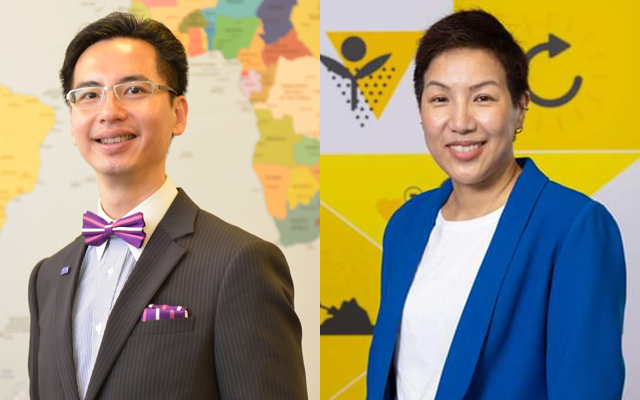
From left: Benson Tang; and Jeannie Techasiriwan
He added that “governments play a very vital role” in facilitating travel and tourism recovery, and many travel associations have been lobbying the government for more appropriate actions to reopen borders.
Tang emphasised that a backlog of essential corporate travel activities is building up, and demand to get back on the road remains strong.
Agreeing, fellow panellist Jeannie Techasiriwan, special events assistant director of Amway (Thailand), said the pandemic has failed to kill travel desire. Citing an example, Jeannie said she has “a happy problem” where an incentive trip for top achievers to Alaska in 2021 has attracted far more takers than pre-pandemic times.
“In the past, some participants, especially those who travel frequently, would rather take a cash alternative. But after 10 months of no travel activities, people want to (go on a trip to Alaska),” she said.
However, with travel logistics still a challenge today, particularly for large groups, Jeannie said Amway had to postpone the Alaska trip for 2,200 participants to 2022.
For now, Tang and Jeannie are hoping that the unique Singapore-Hong Kong Air Travel Bubble (ATB), which kicks off November 22, would make an exemplary case study for other governments.
The ATB is open to all travellers and does away with quarantines by relying on pre-departure and post-arrival Covid-19 tests.
And as companies begin planning their return to corporate travel, which includes transient trips and overseas MICE trips, Tang emphasised the need for travel management companies and corporate travel managers to become information centres to allay travellers’ fears.
He noted that travel and tourism suppliers have done their part to establish health and safety protocols and new procedures to minimise contact for their customers, and are dependent on travel management companies and corporate travel managers to convey these assurances to their travellers.
Jeannie added that Amway would, more than ever, rely heavily on their travel agent network to provide real-time and accurate destination updates to help with future event planning and travel decisions.
There are several types of virtual events in the market
Correctly classifying an online event is crucial in allocating the best resources to design it, said speakers on the Virtual Congresses: What Works And What Does Not panel during IT&CM Asia & CTW 2020 virtual conference on Tuesday.
Nicole Walker, CEO of Australia-based PCO Arinex, suggested that planners first help clients differentiate between the types of online events.
There are several types of virtual events in the market
“We have clients confusing a standard webinar with hybrid and satellite (or hub and spoke) events,” she noted. Offerings on the platforms in the market also differ, so it is important that planners pick the correct one.
Digital event planners also need to avoid a one-speaker show or back-to-back sessions, with Walker warning that “Zoom fatigue” is a critical obstacle.
She suggested having polls and gamification to keep the audience engaged, inject alternating content such as videos, and reduce presentations from an hour to 45 minutes.
Professionally-delivered and high-quality content from expert speakers remain top of the checklist regardless of the event format. Martin Boyle, CEO of the International Association of Professional Congress Organisers, said: “Delegates are willing to pay (for a registration fee) if the content is high-value. Don’t assume content has to be free.”
In utilising hybrid and satellite event formats, Jason Yeh, CEO of Taiwan-based GIS Group, warned that different strategies and additional resources are required.
Yeh, who was instrumental in the delivery of the recently concluded 59th ICCA Congress in Kaohsiung, which utilised a hub-and-spoke format, said planners would need a team staffed by people with IT experience in the backend as well as a camera crew familiar with TV programming to “make (content) more attractive for online viewers”.
In creating spoke events to support the main hub, Yeh said PCOs might even have to act as content producers to develop localised programmes.
Providing further technical advice, Walker said planners would have to take into consideration the unique lighting requirements for virtual telecasts, as well as other details such as screen backgrounds.
Incentives of the future are predicted to sport more luxury experiences alongside wellness programmes
While incentive travel professionals from Asia-Pacific suffered more than their global counterparts, the sector has shown resilience and is on track to recover rapidly over the next few years.
This is according to the preliminary results of the 2020 edition of Incentive Travel Industry Index (ITII), shared Pádraic Giligan, chief marketing officer at Society for Incentive Travel Excellence (SITE), during the virtual IT&CM Asia & CTW 2020 session entitled Our Roadmap for Recovery: What incentive travel professionals can learn from ITII.
Incentives of the future are predicted to sport more luxury experiences alongside wellness programmes
Other findings revealed that while although the Asia-Pacific region saw 10 per cent of incentive businesses closing down due to the pandemic, the entrepreneurial spirit in Asia was strong, with many looking at new revenue streams.
Asia is also expected to have a rapid recovery from 2021 to 2023, due to “the resilience and the ability of professionals to get back on their feet and start again”, opined Giligan.
What should be of concern to Asian suppliers, DMCs and DMOs intending to attract the longhaul European and North American markets, is that Asia is no longer in the top 10 destination choices for this year.
Analysing the results, Giligan shared: “Due to Covid-19, there was a greater focus on staying closer to home, as well as a focus on going to places that are perceived to be safe. There was also a move away from urban destinations, from crowds to places where there are lots of spaces.”
As such, he pointed out that Asian CVBs and suppliers have their work cut out for them in terms of providing reassurances and information on safety protocols in place at the destination.
Overall, Giligan said that the impact of Covid-19 on the global incentive travel industry was temporary.
And while the sector is currently “focused on cost-cutting”, on the flipside it is also focused on “developing new skills, new revenue streams and achieving a better work-life balance”.
“When we think of the pandemic, we usually think of the negative impacts, but there are a lot of underlying positive things happening, and that is a good thing.”
On how incentive travel will look like in the future, the survey revealed that luxury experiences took top spot, followed by cultural experiences, CSR programmes and wellness. This is because the focus will be on the intrinsic joy of travel. And while corporate objectives will be present, it will be presented in a different way.
He elaborated: “Companies now, in designing travel experiences for the future want their qualifiers to have incredible experiences and to travel with no strings attached. But (they also want them) to travel with a purpose, which is why CSR comes in third, while wellness programmes are to reward them for all the hard work.”
The complete 2020 ITII will be released in early December. There were 2,882 responses from 91 destinations from around the world.
ITII is a joint annual research effort from SITE, the Incentive Research Foundation and Financial & Insurance Conference Professionals in association with Oxford Economics.
Engagement with customers and colleagues is fundamental for businesses to grow
According to the 2021 Global Meetings and Events Forecast from American Express Meetings & Events, a division of American Express Global Business Travel (GBT), hybrid meetings are the first step in the return of in-person meetings, and Asia Pacific professionals are embracing new platforms and technology to enhance meetings experiences and networking opportunities.
Despite a steep learning curve, meeting planners have learned to implement new safety and security protocols and accelerated the use of existing technologies across virtual, hybrid and in-person formats. Web conference platforms have revealed both their benefits and limitations, as planners seek out engagement strategies to combat virtual meeting fatigue.
Regular engagement – now through virtual means – is fundamental for businesses to grow
But everything comes at a cost: survey respondents indicated that 35% of virtual and hybrid events would require the services of a full-service agency. With the recovery of travel volumes expected to vary by geography in 2021, hybrid meetings will be a stepping stone towards meeting in-person.
Looking ahead to 2021, planners must reconcile pent-up demand for in-person events with tightening and shifting budgets. As airfares and hotel rates still somewhat in flux, there is still hesitancy around advance booking. To combat this uncertainty, suppliers are shifting to more lenient cancellation or change policies, often at no cost.
Across the globe, planners expect small and simple meetings, taking place closer to home at local or regional destinations to return faster than other meeting types at 21% globally, followed by internal meetings at 18%.
For Asia Pacific respondents, positive sentiment around the remainder of 2020 exists nearly half, or 47%, expect to resume operating at least some in-person meetings and events before the end of 2020, while 16% of respondents say they have already resumed in-person meetings. Overall, 60% of Asia Pacific respondents indicated that they have in-person events booked or contracted for 2020.
Respondents in China and Hong Kong expect to see increases across the board of every type of meeting. Four in 10 meetings and events planners in Asia Pacific, or 43%, expect to see an increase in client/customer advisory board meetings, and nearly half, or 49%, anticipate that there will be an increase in internal team meetings in 2021.
American Express Meetings & Events client meeting data from the Meetings Insight platform was also used to identify the top five meeting destinations in APAC:
1. Tokyo, Japan
2. Singapore
3. Sydney, Australia
4. Shanghai, China
5. Kuala Lumpur, Malaysia
The 2021 Forecast is based on a survey of more than 560 meetings and events professionals and interviews with 16 industry experts. The survey and interviews took place in August and September of 2020. Respondents represent corporations, associations, buyers, and suppliers on five continents and in 37 countries.
To download the full report and access more content about the 2021 Global Meetings and Events Forecast, click here.
New Zealand’s business events sector has a new name for its peak body, Business Events Industry Aotearoa (BEIA), reflecting its distinct role within tourism and events.
Formerly Conventions and Incentives New Zealand (CINZ), Business Events Industry Aotearoa represents 460 members across New Zealand who work within the meetings, incentives, conferences and conventions, and exhibitions sector.
The new brand was announced on November 18 at the association’s Annual General Meeting and will go live on December 1 to coincide with New Zealand’s only business events industry exhibition for 2020, BE Reconnected in Auckland.
BEIA chief executive, Lisa Hopkins, said in a press release the new name gives its members the mandate to own the industry.
“We are using a globally-acknowledged term, and there is no ambiguity about who we represent and what we do.”
The new branding also maintains the body’s connection to Aotearoa New Zealand, with the palette reflecting the colours of our ocean, alps and native birds,
She stressed the sector will continue to be a “proactive and energetic partner with government in the vital work needed for New Zealand’s economic and social recovery”.
focus now on recovery, operations and changes to the organisation, then use technology deliver new services and improve the way of doing things, you’ll set the foundations for success beyond Covid.
How will your travel business emerge from Covid-19 ready to meet the opportunities of the next normal, the challenges that come your way and thrive? TMCs who ramp up their game now will be more ready when travel is back in business than those who do not.
There are four key areas to focus on as we navigate our way through this period: revenue, organisation, operations and technology.
Focus now on recovery, operations and changes to the organisation, then use technology to deliver new services and improve the way of doing things, will ensure success beyond Covid-19
As the crisis subsides, TMCs will need to rethink their operating model, revenue profile, position themselves for the long term and to get ahead of the competition.
According to McKinsey survey, businesses from a variety of industries said that their new remote sales models were as much or more effective than traditional channels. Agents should move now before the recovery fully starts, launch targeted campaigns to win back loyal customers; focus on health and safety; adjust pricing, reskill the sales force to support remote selling; and use technology to streamline and automate processes that free up sales representatives to sell.
Agents should understand clients’ priorities and what businesses value most, post-Covid-19, then develop services based on those insights. Health and safety will be a key driver and influence when and where businesses travel to. Connected trips with up-to-date personalised information will play a big part in the recovery.
TMCs are already installing the latest permission-based applications such as Travel Radar that enable them to configure and manage client’s policies and ensure that the travel consultant can access the correct information and booking capability. These new applications close the entire loop of sufficient information and immediate decision making and will drive the next duty of care level for TMCs when the “return to travel” policies and processes are in place.
Businesses will also be adopting new processes, rules and changes to travel procedures. Travel companies will need to act fast and changes to processes implemented quickly to give them the edge. Businesses will be ready to get back to travelling and you may need to respond quickly to recover that client base before the competition. Develop an operating model that’s agile and urgent.
Rebuild operations TMCs are prioritising their tech needs. Agents are looking to improve the services they supply and how they manage their budgets.
Businesses will want to track staff expenses more efficiently. The Aberdeen Group, which analysed data on buyer behaviour, found that up to 70 per cent of companies want to find new ways to manage their travel-related corporate expenses.
These operational changes are crucial but should be sustainable. Agents will need to protect against a wide range of potential shocks and act quickly, including increased use of external suppliers and partners.
Creating a new level of business resilience is expensive but there is a wave of new digital and analytics tools which significantly reduce the cost of flexibility.
Concur Compleat automates and manages everyday processes – searching low fares, securing seats, and ticketing – to streamline work processes. Unlocked Data launched a Covid forecaster looking at spending and risk to predict future spend and Travel Operations has solutions to support travel agents in their daily tasks. Tools like these increase productivity and create flexibility.
Many TMCs were already digitising their operations before Covid. Accelerating these efforts now will likely see significant benefits in productivity, flexibility and quality of service.
There is an increased demand to manage the commercials, suppliers, back-office, while corporates are able to configure the travel policies, approvals, and reporting. TMCs are looking for new systems that provide New Distribution Capability with direct airline connects and hotel consolidators and aggregators.
These platforms enable bookings outside of many global distribution system processes and related fees and compress months of effort into weeks or days. Looking beyond Covid, TMCs can build their next-normal operations around a revamped approach to spending. These new technology-enabled methodologies are accelerating cost transparency.
The new way of working, with more automation and technology, has been coming for a long time. This pandemic has just sped up the pace.
The new culture of doing things As we come through the crisis, TMCs will have to address growth and scalability. This will depend mostly on the ability to embed data and analytics in decision making, learning to support clients and a culture that fosters value with other partners. What matters is a deep understanding of the customer.
There has been a transformation in the way we interact with each other, make purchases and do business. These changes have accelerated the adoption of digital technologies across every sector.
Technology plays a critical role in the recovery of the travel industry and new deals being struck and partnerships happening.
Earlier this year, Flight Centre Travel Group acquired tech company WhereTo for its AI platform that recommends hotels, flights and transportation to employees. Sabre integrated Mindsay technology enabling automated customer service for TMCs and airlines. At Element, we partnered with tech company Zenmer to supply an end-to-end platform for TMCs and their clients.
Businesses will need to set an ambitious digital agenda – but one that they can deliver quickly. In the post-pandemic world, business as usual will not be enough because too many things have changed.
Gavin Smith is the director of Element, a travel technology company that helps TMCs gain access to cutting-edge travel technology. A former manager at SAP Concur, Smith has vast experience across various functions within TMCs. He has worked with TMCs of all sizes supporting their goals to deliver technology and payments to their clients.
The newly-opened Ritz-Carlton, Bangkok anchors the One Bangkok development with cosmopolitan elegance. Featuring the city's largest ballroom and a spectacular new penthouse suite, it delivers exceptional hardware and deeply authentic, soulful service for business and leisure travellers alike
Behind the imposing, Brutalist concrete that defines Zurich’s Oerlikon district lies a surprising secret. While its exterior honours the neighbourhood’s industrial roots, stepping inside Mama Shelter reveals a vibrant, neon-soaked world that is a far cry from its rigid shell
A polished urban retreat designed for business travellers, Hyatt Regency Kuala Lumpur at KL Midtown combines thoughtful design, seamless service, and exceptional facilities.