Asia/Singapore Saturday, 20th December 2025
Page 526

Thai DMCs join forces to implement hygiene initiative

0

The DMC community in Thailand has come together to formulate and implement a set of standards entitled Thailand Hygiene Plus Initiative (THPI), to get the message out that the country is safe to visit.

The standards cover six areas: offices, staff, ground teams, meals, vehicles and transportation, sports equipment and facilities. The standards include, but are not limited to, those to be certified by the Amazing Thailand Safety and Health Administration (SHA).

Thailand DMCs have come together to create a standard SOP ahead of tourism restarting

A checklist of operational requirements has been developed and an agreement for implementation reached by all DMCs who have signed up for THPI.

Members include Abercrombie & Kent Thailand, Asia Exotica, Asian Trails, Black Rice Travel – A Member of LUXPERIA Collective, Destination Asia (Thailand), EXO Travel Thailand, Go Vacation Thailand, Khiri Travel Thailand, Panorama Destination Thailand, Remote Lands, Smiling Albino, Tour East, and Travel Exclusive Asia Thailand.

Khiri Travel’s CEO Herman Hoven said that this initiative gives international tour operators “tangible proof and meaningful assurances that we are taking extensive and proactive hygiene measures” to restore confidence while travelling in Thailand.

Daniel Fraser, founder and director of Smiling Albino, said: “When Covid hit the industry, our collective focus was on the swift and safe return of travel. The implementation of a united standard for future travel, formed through the collaboration of our peers, was natural.”

He added: “Collectively changing for the better, to create a safe and healthy travel experience for each DMC’s travellers shows that we are in this together and stronger as one.”

IHG scales up further in Greater China

0
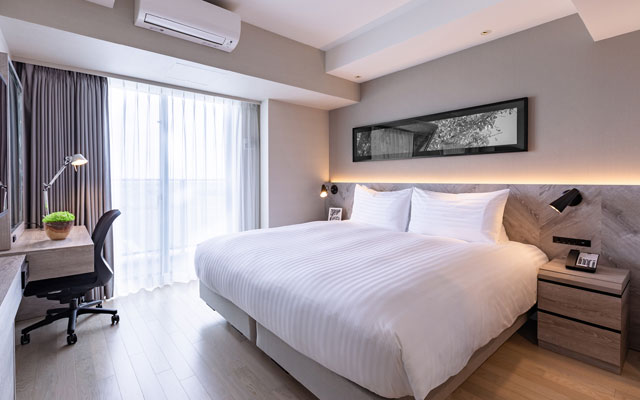
One of the hotel rooms at Even Hotels Nanjing Yangtze River pictured

Despite the challenges posed by Covid-19, InterContinental Hotels Group (IHG) is pushing ahead with its plans to launch new brands, properties and experiences in Greater China.

While recognising that it would take some time for the industry to recover from the impact of the pandemic, Jolyon Bulley, CEO-Greater China, IHG, said he was optimistic about the long-term development of tourism in the Greater China region and growth of China’s economy.

One of the hotel rooms at Even Hotels Nanjing Yangtze River pictured

As such, the region will remain one of the markets where IHG expands the quickest, shared Bulley.

Earlier in May, IHG debuted the Crowne Plaza Shenzhen World Exhibition & Convention Center (WECC). This marks the second hotel it opened in China after the mid-2019 reinvention of the Crowne Plaza brand, the first being Crowne Plaza Wuzhen in Zhejiang.

Featuring a modernised and innovative design concept that sets it apart from the older generation of properties under the brand, the hotel incorporates Crowne Plaza’s signature public space design concept Plaza Workspace to provide office spaces tailored to fit the needs of the modern corporate traveller.

Not only are business guests offered the convenience of ordering small bites by scanning a QR code and helping themselves to free-flow beverages, they can tap on free Wi-Fi and the abundance of power sockets and wireless recharging stations to stay connected.

Besides harnessing public spaces to provide convenient working environments for the business traveller, IHG recognises that the pandemic has led to increased consciousness of the importance of health and well-being among consumers. This has manifested itself, among other ways, in a desire to keep up with healthy lifestyle habits while on the road.

This makes the group’s plans to build more hotels in China under its wellness and lifestyle-focused brand, Even Hotels, a timely move.

Currently, the group has one hotel open under the brand in China – Even Hotels Nanjing Yangtze River – and is set to open Even Hotels Chongli come 4Q2020. The second Even Hotels in the country will sit within one of the competition zones for the 2022 Winter Olympics at Zhangjiakou.

Serving corporate travellers looking to care for their mental and physical well-being during business trips as well as wellness-focused leisure travellers, Even Hotels emphasises nutritious meals, exercising at one’s leisure, and adequate sleep, in order to allow travellers to be in optimum condition and be most effective on their travels.

Besides Even Hotels Chongli, 11 other Even Hotels are currently under construction in tourist spots such as Clear Water Bay, Hainan. Moving forward, IHG plans to expand its Even Hotels brand into first- and second-tier cities, including Shanghai, Tianjin, Chengdu, Chongqing, Changsha and Xi’an.

Another milestone for IHG this year was the launch of the first Regent hotel worldwide, after the group acquired the Regent Hotels and Resorts brand in mid-2018 and relaunched the brand in October 2018.

Located within the Lujiazui Financial District, the Regent Shanghai Pudong opened its doors in May. Over the next few years, the group intends to launch more Regent hotels in Hong Kong and Chengdu.

Other properties the group is set to launch this year in Greater China include Intercontinental Chongqing Raffles City, Holiday Inn Express Urumqi Station, Hualuxe Xi’an Tanghua, Holiday Inn Hangzhou Chaoshan, Holiday Inn Resort Maoshan Hot-Spring, Holiday Inn Dalian Hot Spring, and Holiday Inn Express Hangzhou Westlake East.

Bulley: Covid-19 crisis means that hotels in the mid-scale and upper mid-scale range will benefit due to the shift towards domestic travel

Bulley attributed the ability of the group to expand swiftly to its operational model, where it partners owners through management contracts and franchising. The model offers owners cost-effectiveness, the chance to tap on its established distribution network and strategy, as well as high rates of return.

Another way that IHG demonstrated its commitment towards supporting hotel owners was the launch of the Voco brand about two years ago. Under the brand, the group assists owners of independent hotels or hotels under local brands in reinventing and their properties. The group intends to bring the brand to China – specifically to Wuhan – come 2021.

With the crisis, more owners of independent hotels are considering whether to tap on the expertise and network of reputable international chains who can transform their individual properties efficiently and quickly, shared Bulley.

This could mean more owners are likely to take on Voco’s proposition of hotel reinvention in order to tap on the IHG’s expertise in operations, revenue management and technology, as well as the benefits of the group’s distribution network and loyalty programme IHG Rewards Club. While providing these benefits, Voco will seek to retain the individual flavour of the hotel.

According to Bulley, the crisis also means that hotels between the mid-scale and upper mid-scale range are set to benefit from both the shift towards domestic travel, and government initiatives to spur economic growth through consumption and enlarging the middle class.

It is therefore pertinent that tourism suppliers work towards meeting travel demands of Chinese travellers with higher disposable income. Luxury hotels in China can also leverage on this opportunity to offer personalised experiences, noted Bulley. – Translated by Angela Teo; this article was first published in TTG BTmice China.

1000meetings sets up in Singapore, eyes expansion into SE Asia

0
Lay:

Shanghai-headquartered events sourcing platform 1000meetings has set up shop in Singapore to expand in South-east Asia, helmed by Sam Lay, the company’s partner and executive director.

He shared: “1000meetings is definitely going to move further out from Singapore and the next possibilities in South-east Asia that are interesting for us include Indonesia and Vietnam.”

Lay: aims to develop solutions that can benefit the corporate travel community

Julien Delerue, the founder of 1000meetings, set up the company 13 years ago, and has been planning to expand beyond China for a number of years. He was looking at Hong Kong and Singapore, key areas with a high concentration of corporate head offices.

Lay, who was based in Shanghai between 2015 and 2018 to head BCD Meetings and Events in China, worked with Delerue on a number of projects before returning to Singapore to join CWT Meetings and Events as senior director, Asia-Pacific.

Leveraging on what the brand has achieved in China working with hotel, venue, agency and corporate partners, Lay said his role was to enhance the brand and its capabilities across the region and work with his team – which will be introduced by the end of July – to assess trends and conduct macro analysis to create corporate planning strategies for suppliers, corporates and agency partners.

He said: “We will definitely build on our strength in China. Julien will concentrate on business development, and together, we want to create solutions that will benefit the community.”

Lay who is a Certified Meeting Professional and is involved in PCMA’s Train the Trainer Programme, added: “The events industry post-Covid-19 will be more resilient and innovative, and technology is going to play a big part. 1000meetings wants to make sure the solutions we provide are customised, user-friendly and aligned to industry trends.”

Neuroscience principles should guide digital event design: MCI

0
XX

Organisers that have moved their physical events to a digital platform are finding themselves faced with new challenges that can impact the quality of attendee engagement, observed MCI Group’s global learning & development director, Avinash Chandarana.

Speaking at the third edition of TTG Asia Media’s TTG Conversations webinar on July 8, Chandarana said that events making a digital shift cannot apply a “cut, copy and paste” approach to its structure and content.

The third edition of TTG Conversations touched on the whole new ball game of moving events online

While he agreed that online and offline events may share some “common denominators in meeting design”, digital events have to contend with their own set of challenges in maintaining quality engagement with the audience.

“Why is it that so many online conferences, meetings and seminars crash and burn? There are several reasons. First of all, there is low energy (among the audience). In the online space, audience click to join on a screen. There are no stimuli from the venue or people around them, or from the smells and sights of a physical environment,” he explained.

“Technical issues are also a big challenge, and by default, digital is not easy. The structure of the digital event, the content, and how presenters are adept in delivering content online makes a difference too.

“Distractions are another thing, which could come from other speakers who were not muted, from the participants multi-tasking (while sitting through a digital session), or from children and pets around the house,” he added.

Chandarana said that while one’s attention span at a physical event typically dropped off after 10 minutes, the same would be far shorter in an online space – at just three or four minutes, in his opinion.

As such, he suggested three things that planners should do, based on neuroscience principles, to improve online experiences for their attendees.

First, he recommended “slicing and dicing” content into “smaller pieces to make absorption more manageable and easier to integrate into long-term memory”.

“The magic number for breaking down information is three. When you look at market communications, messages are broken down in threes – Reduce, Reuse, Recyle; and Nike’s Just Do it,” he explained.

Applying the three-part rule to online content, Chandarana suggested that a digital session could comprise an introduction, blended interaction, and finally a Q&A session – and no more than 25 minutes altogether.

Secondly, he recommended splitting content up over several days and to run each online session in short durations to improve content retrieval and recall over time.

“In neuroscience, we know that humans forget very quickly. To get around this, spread content retrieval and recall over time. Who’s to say you’ve got to do eight hours of content in a day?” he said, adding that several short sessions across many afternoons may be more beneficial to the audience.

“Ninety per cent of digital events that are happening right now are webinars,” he remarked, and said that content could also be delivered in the form of fireside chats, masterclasses, collaborative sessions, reflection sessions, lightning talks and virtual cocktails.

Chandarana also recommended appealing to attendees’ emotions through their content.

“Emotion trumps rational thinking. The way we choose our partner, who we vote for, and what we buy are driven by emotion, before we rationalise it (with facts). Can we create a positive emotional rush in the online world? Yes, we can, through multi-sensory experiences.

“There are many ways of doing that. One of that is to make story-telling part of your content, and the other is to use powerful visuals. Believe it or not, you can also create a sense of smell in the digital world. We can deliver food to attendees, or have them smell things around the house to invoke certain emotions.”

A recording of TTG Conversations: Preparing for the post-Covid-19 world can be viewed here.

Five things to consider when consolidating your travel programme

0
X

In the first segment of this two-part series, we covered what consolidation means in the context of managed business travel. I also outlined some key benefits of taking a consolidated approach, which is why it’s widely considered a best practice for corporate travel programmes.

Still, I like to think of consolidation as a journey rather than a destination. It requires planning and preparation, as well as some fine-tuning along the way.

A consolidated travel programme will provide a better travel experience for employees while improving efficiencies

As you start to lay the groundwork for consolidating your programme, here are some important factors to consider:

1. Balance standardisation and localisation
An important part of consolidating a travel programme is to standardise processes and policies across different geographies, as it makes the programme more efficient. But while having a globally consistent approach has many advantages, ignoring market-specific nuances can be a big mistake.

For example, having an integrated visa offering may not be a priority for employees in Singapore, but it would be a key priority for local employees in India as they require visas for most of their international travel. Similarly, having a standard tax reclaim process will not work across offices due to different regulations.

Striking the right balance between standardisation and localisation is key, especially in a region as varied as Asia-Pacific.

2. Understand cultural differences
Related to the previous point, you also need to factor in cultural differences – both organisational culture, as well as the diversity in markets.

Corporate culture – which impacts employees’ expectations and behaviour – can vary widely between companies, and so an approach that works for one organisation may not work for another. For example, trying to enforce stringent pre-trip approval processes in an organisation where employees are generally given a lot of autonomy and freedom to take decisions probably won’t be well received.

Similarly, practices that are successful in one country may not translate well somewhere else. In some countries, travellers are very comfortable using self-servicing tools, while in others there is a greater expectation for high-touch service.

These cultural differences will impact how much of a change you can make and how quickly you can implement it. Take inspiration from previous large-scale projects that involved a global effort in your organisation, such as the transition to enterprise resource planning (ERP) software or expense partner changes. Be patient and work on charting out the stages of transition depending on each location’s ability and speed to adapt, while being sensitive to the cultural and local norms along the way.

3. Get organisational buy-in
Travel is inherently emotional and personal, so having support across the organisation is vital to the programme’s success. It’s not just buy-in from the C-suite that is important, but also from other stakeholders like finance, risk management, legal and compliance, HR, administrative assistants and/or travel arrangers, and of course the travellers themselves. Equally important is having an efficient mechanism to collect and act on feedback.

As countries continue to grapple with controlling the spread of the virus, in many ways the travel experience will probably be less seamless than it was before the pandemic – at least until a vaccine becomes widely available or a treatment is developed. This makes it more important than ever for companies to focus on the wellbeing of their travelling employees and find opportunities to simplify the travel experience where possible.

4. Review your technological capabilities
In some countries, online booking tools may not be common, and the types of services provided typically comprise traditional booking methods with high-touch service. Different countries may also have their own preferred global distribution systems, and are subject to differing airline rules, regulatory limitations and fare filing mechanisms. Employee preferences also play a big role – in China for example, employees prefer using mobile devices to complete their tasks while those in Japan prefer using their desktops.

Gain an understanding of where the levels of technology are in each of your markets. Find out how many systems or programmes are being used to ensure the smooth operations of each market, and then work out the process of aligning these technologies across all your locations, so you can improve the overall workflow and easily retrieve information from a central system. Most importantly, remember to ensure that robust data protection measures are put in place to keep all your information secure.

5. Visualise and align on what success looks like
Having a clear and aligned view of success will help you prioritise the non-negotiables and keep you focused. Develop a clear timeline and have a list of short- and long-term KPIs to keep you on track.

Discuss with your major stakeholders and develop a list of requirements when consolidating your travel programmes, such as duty of care, employee wellbeing, cost savings, policy compliance and sustainability.

There’s no doubt that consolidating a travel programme can be a complex endeavour, and perhaps the biggest mistake I’ve seen companies make is to underestimate the preparation that’s required. If you do your research, gain deep insights into your organisation, and work with an experienced partner who can help you draw up a roadmap and guide you on how to implement these changes, you will set yourself up for success – and the results will be worth it. You will create a better travel experience for your employees while simultaneously improving efficiencies and saving money.


Akshay is responsible for driving CWT’s growth strategy, and has played an instrumental role in creating a winning sales culture in the region.

Prior to his current role, he led the APAC CWT Solutions Group, the company’s consultancy division, where the team delivered significant value in areas including supplier negotiations, travel policy and compliance, traveller engagement, and data insights. Akshay also frequently represents CWT at various industry and non-industry forums.

Getout.Travel launches corporate OTA platform

0

Travel product platform company Getout.Travel has unveiled a tech solution for corporates of all sizes to help manage, consolidate, and simplify the business travel process.

“Business Travel is highly fragmented and unorganised. This is why we wanted to build a solution that will service both travellers and their companies in real-time before, during and after their journey,” explained Sanjeev Lajpat Malhotra, CEO of Getout.Travel.

The platform – which was worked on by the Getout.Travel team for three years – boasts an automated travel policy compliance based on dynamic and self-configurable rules; automated GST compliant invoicing at the time of booking for compliance and input tax credit in real-time; simplified and automated accounts bookkeeping; and multiple payment options.

These features aim to help eliminate and reduce process overheads of expensive management and reconciliation.

In addition, Getout.Travel built an online hotel contracting module to register and onboard hotels in real-time, all around the world, to make the process easier as well as shorten the go-live period.

Currently, the company has integrated its system with major players in the industry such as Amadeus, Hotelbeds, Staah, Mystifly, BookoHotel, GoGlobal, and AxisRooms, with more in the pipeline.

Soneva Fushi offers resort buyout for incentives

0
Villa 37

Soneva Fushi, a luxury beach resort in Maldives’ Baa Atoll, has released details for an Island Buyout Offer.

Prices start from US$100,000++ per night, and is inclusive of accommodation in any of the one- to nine-bedroom villas for as many people as an event planner desires. However, prices does not include any meals, experiences or transfers.

Guests will be able to watch films at the outdoor Cinema Paradiso, saunter into any restaurant at any given time of the day for a bite, head to the spa for a soothing scrub, cycle on trails through the island jungle, snorkel with manta rays, or just laze by the beach with a cocktail in hand.

Due to the Covid-19 outbreak, travel restrictions do apply for guests arriving in the Maldives and transiting through certain countries. It’s best to check Maldives Immigration requirements for the latest travel advice.

Soneva has implemented a robust prevention and management action plan to safeguard the health of both guests and staff during this time. Its prevention and protection plan includes a comprehensive sanitisation programme across the resorts and enhanced sanitisation protocols, emergency quarantine and containment procedures, screening and a detailed awareness programme for staff.

Soneva also has a flexible cancellation policy during this time.

Lau Wai Meng is IPIM’s new chief

0

Lau Wai Meng has been placed at the helm of the Macao Trade and Investment Promotion Institute (IPIM) as president, taking over from Irene Va Kaun Lau.

He is also the secretary-general of the Committee for the Development of Conventions and Exhibitions.

Before moving into the dual role, Lau was the deputy director of the Economic Bureau from 2016 to May 2020. Other posts he has held include president of the Assessment Committee for SME Aid Scheme, president of the Assessment Committee for Young Entrepreneurs Aid Scheme.

Thailand venues roll out supportive pricing to expedite MICE recovery

0

Thailand’s convention centres are striving to meet tight-budgeted planners in the middle as the country begins her business events recovery.

The meetings industry was allowed to resume on June 15.

Loy Joon How, general manager at the IMPACT Exhibition and Convention Centre, said his team was taking a “give and take approach” with clients.

“In all our discussions, a give and take approach is key to helping us establish good customer relations and be as supportive as we can in this early stage of recovery,” said Loy.

Loy: give-and-take approach with clients

“As a venue provider that organises our entire business operations around customers’ needs, we do understand the concerns of our customers regarding increased costs due to precautionary measures… As such, we are flexible…in working closely with our customers to see how we can best manage and package these costs effectively.”

The Bangkok International Trade & Exhibition Centre and Chiang Mai International Convention and Exhibition Centre stated they are also taking a similar approach, pricing for social distancing needs on a case-by-case basis.

Others have released special venue packages. The Royal Cliff Hotel Group, which includes the Pattaya Exhibition and Convention Hall, is offering a Stay 6 Pay 5 deal, and a new Protection-C package which accommodates new safety protocols.

Meanwhile in the capital, Centara Grand & Bangkok Convention Centre at CentralWorld has offered to match room prices with free credit for F&B or spa offerings with its Stronger Together deal.

Bhakchuda: created new spaces to deal with capacity issues

Bhakchuda Phonjarit, assistant general manager at The Berkeley Hotel Pratunam, told TTGmice that meeting package prices have not gone up “to compensate for lost capacity in the new normal”.

“(Instead), we have launched special meeting packages for our new meeting rooms, to capture the lower budget market with competitive prices and to attract a wider range of clients.”

Anticipating that the “new normal” would spell severely compromised capacity, the Berkeley Hotel Pratunam has transformed its free spaces into additional meeting space during the lockdown.

“We built new meeting rooms to increase our capacity and be ready before the government announced the Phase 3 relief measures which allowed meetings and events (to resume),” shared Bhakchuda.

The move is also intended to support the Thai domestic business events market’s more limited budgets while inbound travel is temporarily dampened.

ACTE files for bankruptcy amid Covid-19

0
ACTE Connect ACTE Connect is the first one-stop resource of the industry's intellectual capital, research, and best practices and is a free and open resource to all

The Association of Corporate Travel Executives (ACTE) has filed for Chapter 7 liquidation, putting the final nail in the coffin following its end-March announcement that all global and one-third of its US staff were laid off.

The ACTE Status Update announcement on its website, dated July 7, 2020, indicates that it has ceased all operations.

ACTEConnect, when it was first launched, aimed to be a one-stop resource of the industry’s intellectual capital, research, and best practices

The update stated: “The dual impacts of the cancellation of the Asia conference due to the security situation in Hong Kong, and Covid-19 pandemic cancellations have been blows that ACTE, as a small, non-profit association has not been able to withstand.

“For our members and sponsors, we want to say how deeply disappointed we are that we have not been able to continue our operations. When we opened ACTEConnect for the whole industry, we were inspired to see the resiliency of our community and the determination to rebuild. We regret we have not been able to find a lifeline to allow ACTE to continue to play a role in your recovery.”

Several Asian corporate travel managers interviewed, who’ve had past dealings with ACTE, voiced their disappointment.

Former ACTE regional chair Peter Koh, said: “I have been a member since 2001 and I have grown together with the association. I have fond memories of ACTE providing the platform for me to learn and connect with good people from the travel industry. ACTE’s events always offered good content and were relevant to the corporate travel industry.”

A corporate travel buyer in retail commented: “This is sad news indeed. With the current turmoil at GBTA (Global Business Travel Association; whose CEO is on administrative leave for alleged misconduct), I was hopeful ACTE would step in and fill the gap. They have had a much stronger presence in Asia compared to GBTA.”

Florence Robert, regional travel manager Asia Pacific, Ericsson, whose ACTE membership lapsed last year, said she was waiting for developments at GBTA to unfold before deciding if the company would renew its membership.

A buyer in the pharmaceuticals industry observed: “The business model of such associations will be stressed. They need to balance member subscriptions versus sponsorships, paid content, etc; it is very tricky especially in these times.”

The level of association activity to conduct outreach and address an audience to generate new members is highly complex, he added.

Correction: In the original posting, we made a mistake by stating that ACTE has filed for Chapter 11.

Reviews

Hyatt Regency Kuala Lumpur at KL Midtown

A polished urban retreat designed for business travellers, Hyatt Regency Kuala Lumpur at KL Midtown combines thoughtful design, seamless service, and exceptional facilities.

A versatile powerhouse

Arena @ Expo, a multipurpose concert hall at the Singapore Expo is a flexible space for high octane concerts and lifestyle events.

Amari Bangkok

The five-star property excels in backing its expansive facilities with seamless service and personalised attention, setting the benchmark for luxury in Bangkok.