

Asia/Singapore Tuesday, 7th April 2026
Page 53

Thailand targets annual growth from Malaysian corporate events

0
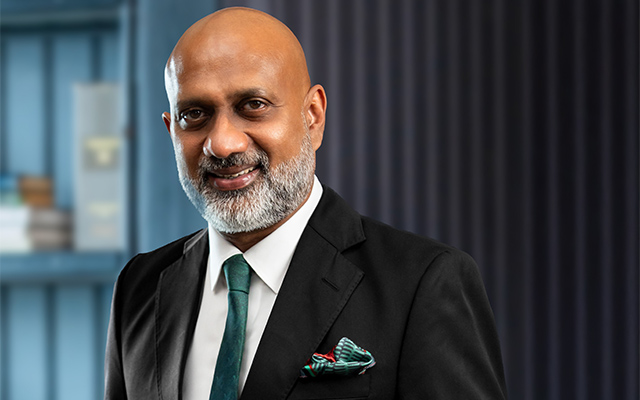
Puripan: positioning Thailand as a destination where business events travellers can maximise return on investment and return on experience

The Thailand Convention and Exhibition Bureau (TCEB) is stepping up efforts to attract more Malaysian corporate groups, with a target of five per cent annual growth over the next three to five years.

In Kuala Lumpur on September 3, during the Thailand MICE Roadshow in Malaysia 2025, TCEB’s senior vice president, Puripan Bunnag, shared this goal with TTGmice.
Puripan: positioning Thailand as a destination where business events travellers can maximise return on investment and return on experience

Puripan elaborated: “We are positioning Thailand as a destination where MICE travellers can maximise return on investment and return on experience. This is possible due to our constant development of new products and services, not only in Bangkok but also in other MICE cities and potential MICE cities across the country.”

Bangkok, Phuket and Chiang Mai remain the most popular choices for Malaysian groups, but TCEB is also promoting secondary destinations such as Hat Yai, Songkhla, Krabi, Hua Hin, Khao Yai and Ayutthaya.

Puripan revealed that TCEB has been working closely with these destinations to help them develop and craft localised experiences. For instance, Hat Yai and Songkhla are being promoted as a complementary pair, combining modern amenities with cultural and historical richness.

The bureau is also targeting high-value sectors in Malaysia, including banking, insurance, pharmaceuticals, automotive, electronics and multi-level marketing companies.

Based on information from TCEB, Malaysian companies are now choosing a wider variety of destinations in Thailand for their corporate events. While popular spots like Bangkok, Pattaya, and Hat Yai were the main choices five years ago, their preferences have since expanded to include cities such as Krabi, Hua Hin, Khao Yai, Phuket, and Chiang Mai.

“Our enriched product choices and dual-city programmes deliver a genuine return on investment and experience, with meaningful rewards that go beyond expectations,” Puripan stated.

Malaysia is currently Thailand’s third-largest source of overseas business events travellers after China and India. Within South-east Asia, Malaysia ranks as Thailand’s top source market, ahead of Singapore and Vietnam. From October 2024 to June 2025, Malaysia contributed 125,189 business events delegates to Thailand, or 14.4 per cent of total international business event arrivals to the Kingdom.

Golden Palm Tree Malaysia strengthens management team

0

Golden Palm Tree Malaysia has made three new appointments to its management team, covering operations, sales and marketing, and communications.

Azmil Kessler is the new resort manager, overseeing daily operations. He was previously executive assistant manager at Thistle Port Dickson.

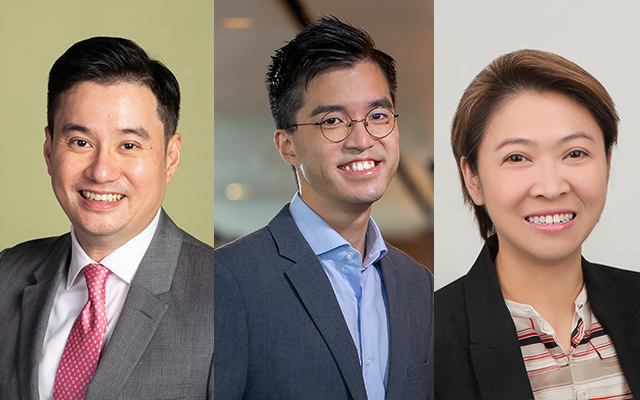
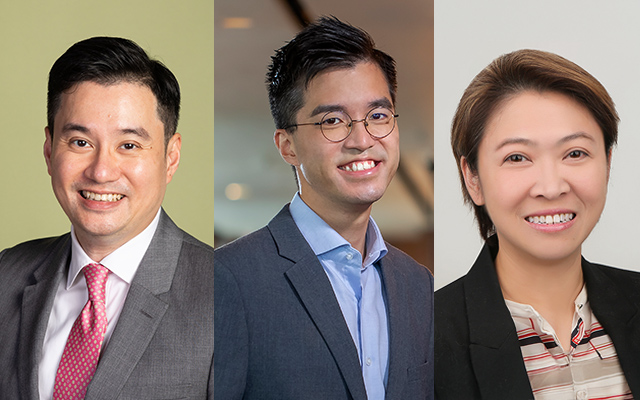
From left: Azmil Kessler, Amigo Law and Kattie Hoo

Amigo Law is the director of sales and marketing, responsible for sales strategies and market development. He was most recently director of sales at Lexis Hotels and Resorts.

Kattie Hoo now leads the marketing and communications division, handling branding and communications. She was previously with Dorsett Hospitality International.

Marriott International welcomes new SVP for South Asia

0

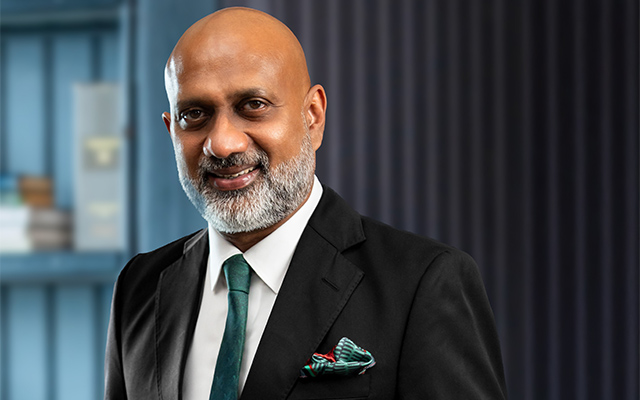
Marriott International has promoted Kiran Andicot to senior vice president, South Asia. In his new role, he will oversee operations and development across the region, align growth with operating performance, strengthen owner partnerships, accelerate conversions and openings, and build the leadership bench.

Kiran joined Marriott in 2006 and has since played a key role in driving growth across India, Sri Lanka, Bhutan, Nepal, and Bangladesh, signing more than 220 hotels. He previously worked in real estate and hospitality consultancy with EY and HVS, and in hotel operations with IHCL and the Oberoi Group.

Amex GBT finalises CWT acquisition

0
AMEX GBT welcomes CWT customers

American Express Global Business Travel (Amex GBT) has completed its acquisition of CWT, combining two major players in the business events sector.

The deal, which was first announced in March 2024 and valued at approximately US$540 million, is expected to create significant value for shareholders, with Amex GBT targeting approximately US$155 million in run-rate identified synergies within three years.

AMEX GBT welcomes CWT customers

The acquisition will allow Amex GBT to invest more in its technology and services, offering CWT’s customers access to an expanded suite of tools and resources.

This includes proprietary travel and expense software like Neo and Egencia, as well as the Select platform, which integrates with leading technology partners. CWT customers will also benefit from Amex GBT’s comprehensive professional services, including consulting, sustainability solutions, and its extensive marketplace of competitive travel content.

Amex GBT, which is operated by Global Business Travel Group, said it will provide updated financial guidance for the full year on its next earnings call in November.

New Delhi to host Routes Asia 2027

0
The event will bring global airline decision-makers to India, highlighting infrastructure investment and expanding air connectivity

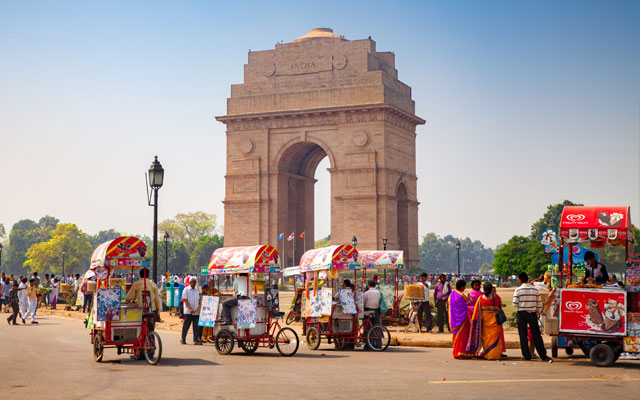
New Delhi will host the 23rd edition of Routes Asia, the only air service development event dedicated to advancing aviation across the Asia-Pacific region.

The Airports Authority of India will host the 2027 gathering, with the official announcement made on September 2.

The event will bring global airline decision-makers to India, highlighting infrastructure investment and expanding air connectivity

Driven by record-breaking aircraft orders and major infrastructure investment, India’s aviation market is expanding rapidly. Rising demand from a growing middle class is reshaping both domestic and international travel, altering market dynamics. Supported by strategic investment, progressive policies and a robust regulatory framework, India is on track to become one of the world’s largest aviation markets.

Currently served by more than 60 international and domestic carriers, India has established itself as a major aviation hub in South Asia. A World Travel and Tourism Council study found the country welcomed 20 million international visitors in 2024 – 2.3 million more than in 2019 – reaffirming its position as a leading global tourism destination.

India has seen the number of operational airports double over the past decade, growing from 74 in 2014 to more than 160, with plans to build 350 airports by 2047, including 34 mega airports.

Routes director Steven Small said: “As one of the fastest-growing aviation markets, India presents an exciting opportunity for the route development community. This growth will further accelerate, as a result of Routes Asia, with independent analysis showing that previous host airports in record network growth outpacing comparable airports by around 6.9 per cent within three years.”

Vipin Kumar, chairman of the Airports Authority of India, added: “As we welcome the world to Routes Asia 2027 in India, we embark on a journey to unlock the limitless potential of our skies. Let’s forge new pathways, strengthen partnerships and ignite the passion of our youth to shape the future of civil aviation.

“Together, we will accelerate air connectivity, drive economic growth and showcase the wonders of Incredible India.”

ICCA moves forward together

0

ICCA has been very active this year, building on the power of collaboration to benefit members and the wider meetings industry. Looking at all the partnerships and initiatives launched this year, which would you say are most exciting for ICCA members, and why?
This year has truly demonstrated ICCA’s belief in the power of collaboration. For me, two initiatives stand out.

First, our partnership with the Strategic Alliance for the National Convention Bureaux of Europe, where we are jointly conducting a landmark survey on destination marketing and the future of learning. This work will provide data-driven insights that help shape strategy across our industry.

Second, our expansion of the Incredible Impacts Programme continues to inspire our global community, highlighting associations that deliver real legacy and societal change through events.

We also partnered with the World Trade Centers Association to collaborate on promoting sustainable and innovative practices, creating joint business development and networking opportunities, and developing shared educational resources.

Additionally, we’ve renewed our collaboration with the American Society of Association Executives, reaffirming our commitment to collaborate and strengthen engagement within the international association meetings sector.

These projects and partnerships showcase exactly why ICCA exists: to create value for our members and to amplify the global role of business events.

ICCA Congress 2025 theme is very forward-looking. How do you hope the programme will enrich the minds of your members in attendance?
The Congress in Porto, Portugal, is designed not just to inform, but to engage, challenge, and inspire. The Sharing Hubs 2.0 format gives members a platform to co-create solutions around five key tracks: sustainability, leadership, business models, technology, and creativity.

By using a combination of insight, open dialogue, and innovation, our goal is that every delegate leaves Porto with actionable ideas, tools, exciting new partnerships, and a renewed sense of purpose for the role business events can play in shaping society’s future.

The year so far has seen some deepening of VUCA conditions. What positivities should ICCA members focus on as they move forward into 2026?
Volatility, uncertainty, complexity, and ambiguity will, of course, continue to be part of our reality as a global leader within the international business meetings and events space.

However, I think that even in this environment, we can find great opportunities. Business events remain uniquely powerful for creating trust, collaboration, and shared solutions.

Our members should focus on the positives: the growing demand for authentic human connection, the industry’s growing recognition as a real power player in economic and societal value, and the momentum around sustainability and innovation. These are big forces working in our favour.

How will ICCA continue to support members who are looking to make the most of business opportunities even as macro challenges remain?
ICCA will continue to support our members with the tools, knowledge, and platforms that help them succeed. This commitment includes expanding access to business intelligence through our database as well as the development of new lead generation tools, introducing new programmes focused on AI, strengthening our education programmes like ICCASkills, and creating more impactful networking opportunities through regional events, summits, and the global ICCA Congress.

Most importantly, ICCA will continue to act as the leading advocate for our industry, helping members navigate uncertainty, take on challenges, and realise the long-term value of business events to governments, partners, and society at large.

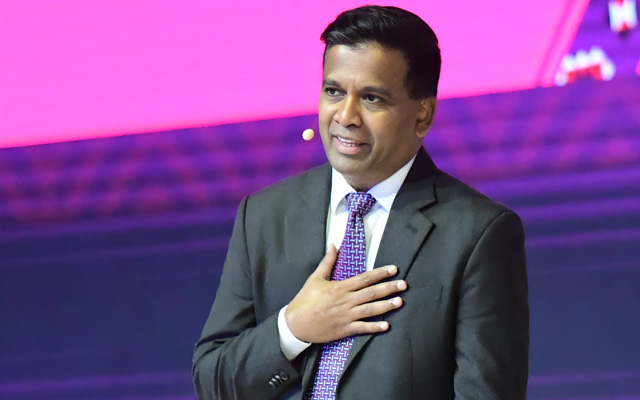
5 Questions with Amitava Lahiri

0

Cathay unveils new leadership team for South-east Asia and Oceania

0

Cathay Pacific has made key leadership appointments across South-east Asia and Oceania as part of a regional restructuring aimed at enhancing collaboration, efficiency, and growth.

Frosti Lau has been appointed regional general manager, South-east Asia & Oceania. He brings 25 years of experience across commercial, cargo, and operations in Hong Kong, China, South Africa, and Oceania.

From left: Frosti Lau, Jonathan Ng and Lynn See

Jonathan Ng has been named regional head of customer travel and lifestyle. He joined Cathay in 2011 and has held roles across China and the Middle East and was seconded to HK Express as general manager, corporate planning, supporting the airline’s acquisition transition.

Lynn See, who joined Cathay in 2021, has been appointed regional head of people, overseeing talent development, organisational design, and inclusive employee experiences across the region; while Steve Cheung becomes regional head of finance, bringing 12 years of experience in finance operations and regional leadership, managing financial planning, budgeting, and commercial initiatives.

Area and country leadership appointments include Kelly Tsang as area head for Cambodia, Thailand, and Vietnam, Nicolas Masse as area head for Singapore and Malaysia, while Tony Sham and Vishnu Rajendran continue as country heads of Indonesia and the Philippines.

Other appointments comprise Ashish Kapur as regional head of cargo, Adam Nelson as regional head of engineering, and Dominic Vallado as regional head of airports.

Mental health, cyber risks top concerns for business travellers: GBTA

0
Companies need to address the "hidden health crisis" of business travel by focusing on mental well-being, cyber security, and inclusive travel policies

Members of the GBTA’s APAC Risk Committee are calling for greater focus on traveller mental health, describing it as a “hidden health crisis”.

This message was a key takeaway from a recent webinar, Travel Risk Management 101 Part 2: Health and Security Travel Risks.

Companies need to address the “hidden health crisis” of business travel by focusing on mental well-being, cyber security, and inclusive travel policies

The panel addressed the importance of prioritising a traveller’s mental well-being alongside their physical health, as well provided insights into cyber security, gender marker discrepancies, and other practical tips for mitigating travel risks.

PK Jayaprakash, global service delivery manager at Direct Travel, noted that longhaul travel and constant availability due to time zone changes can leave travellers with no downtime. This lack of rest, he said, can lead to mistakes. He also highlighted the added challenges of loneliness and homesickness.

As such, Jayaprakash suggested that companies can start by making small, meaningful changes, such as offering time off before and after a work trip. He described this time for a traveller to “decompress” as a “cheap and reliable” solution.

Safak Celik, strategic account manager, travel, Asia-Pacific, at Conferma, noted that since joining the company recently, he has observed the integration of mental health first aid into corporate culture for the first time.

Barry Lin, regional security manager for ASEAN and Pakistan at Google, stated that “open conversation” is essential. He explained that a mental disability may not be apparent, and a workaround might be needed for sales trips or team meetings to accommodate the employee.

Meanwhile, cyber risk and keeping data safe whether travelling on business or leisure is often overlooked.

“Public surfing is unsecured and monitored. My law enforcement colleagues say credit card details can be tracked and skimmed.

“Public charging points are also very easy to tamper with and may have malware. It’s always better to use a power bank or plug directly into a wall socket and apply privacy filters to protect personal data,” Lin elaborated.

Jayaprakash urged travellers to be cautious about all aspects of cyber risk, especially with the potential for harm from AI. He recommended that travellers have access to a secure link and know who to contact for assistance before their trip.

Mamatha Basavaraj, category manager travel, global procurement with Konecranes, said companies should not hand over a plane ticket to a first-time business traveller until they have been trained, tested, and have passed a travel safety course.

Meanwhile, Celik noted that some travellers fail to stay informed about events like civil unrest or bad weather, while Lin pointed out that one of the biggest challenges for travellers is “deciphering fake news”.

Cultural differences also make a situation like city-wide flooding normal to a local, but may put a foreigner at risk.

When it comes to diversity, equity, and inclusion, the discussion centred on the need for flexibility, particularly in addressing gender marker discrepancies. The panel suggested that companies should incorporate exceptions, and even create an internal team to anticipate and address potential issues.

The panel also stressed that corporations must be sensitive when sending LGBTQ+ staff on assignments, especially to the Middle East. Companies, they noted, must provide support to ensure passports, visas, and other documentation are in alignment to prevent complications.

Bahrain hosts inaugural ICCA Middle East Summit

0
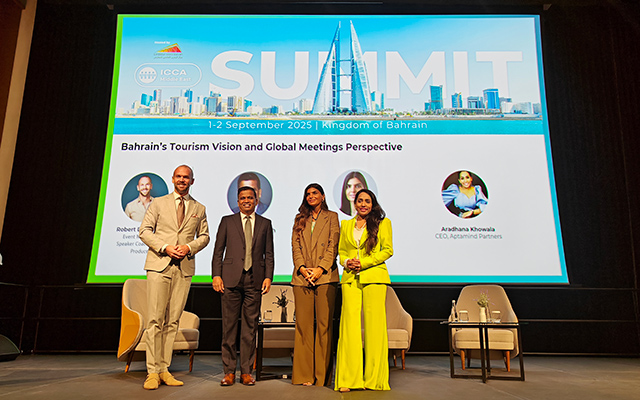
PHOTO: From left: Robert Daverschot (moderator); ICCA’s Senthil Gopinath; BTEA’s Sara Ahmed Buhiji; and Aptamind Partners’ Aradhana Khowala were on the panel titled Bahrain’s Tourism Vision and Global Meetings Perspective; photo by Rohit Kaul

Bahrain welcomed over 100 delegates to the first-ever ICCA Middle East Summit, held from September 1 to 2 at Exhibition World Bahrain (EWB).

The summit addressed themes such as positioning Bahrain as a leading business events destination, harnessing AI for destination marketing, and driving tourism growth through innovation, inclusivity and sustainability.

From left: Robert Daverschot (moderator); ICCA’s Senthil Gopinath; BTEA’s Sara Ahmed Buhiji; and Aptamind Partners’ Aradhana Khowala were on the panel titled Bahrain’s Tourism Vision and Global Meetings Perspective; photo by Rohit Kaul

Delegates also took part in a site inspection of EWB to experience first-hand the venue’s state-of-the-art facilities for international business events.

Sara Ahmed Buhiji, CEO of the Bahrain Tourism and Exhibitions Authority (BTEA) and chairperson of EWB said that hosting the ICCA Middle East Summit is a key part of Bahrain’s strategy to become a major business events hub.

She said that while Bahrain has always been known for its hospitality, those qualities are now being leveraged to make business tourism a cornerstone of national growth.

“Through our tourism strategy 2022-2026, we are positioning MICE and business events at the heart of how we can share Bahrain’s story with the world. Hosting this summit is not just showcasing a venue, it is about showcasing Bahrain as a destination which is small in size but bold in vision,” she added.

Meanwhile, Karina Lance, vice president of Dubai Business Events, shared about the Emirate’s journey to becoming the first autism-certified destination in the Middle East and the only one in the Eastern Hemisphere.

“Inclusivity is really in the DNA of Dubai. We want to develop our destination and double our economy while also empowering women, SMEs and youth,” said Lance.

Speaking on the region’s growing influence, Khalid Al Zadjali, chair of the ICCA Middle East Chapter, said: “The Middle East’s share of global convention business has risen from one to two per cent. The numbers may still be small but the impact is significant in terms of knowledge exchange and economic contribution.

“With 50 ICCA members in the Middle East, we aim to expand this further.”

Reviews

The Ritz-Carlton, Bangkok

The newly-opened Ritz-Carlton, Bangkok anchors the One Bangkok development with cosmopolitan elegance. Featuring the city's largest ballroom and a spectacular new penthouse suite, it delivers exceptional hardware and deeply authentic, soulful service for business and leisure travellers alike

Mama Shelter Zurich

Behind the imposing, Brutalist concrete that defines Zurich’s Oerlikon district lies a surprising secret. While its exterior honours the neighbourhood’s industrial roots, stepping inside Mama Shelter reveals a vibrant, neon-soaked world that is a far cry from its rigid shell

Hyatt Regency Kuala Lumpur at KL Midtown

A polished urban retreat designed for business travellers, Hyatt Regency Kuala Lumpur at KL Midtown combines thoughtful design, seamless service, and exceptional facilities.