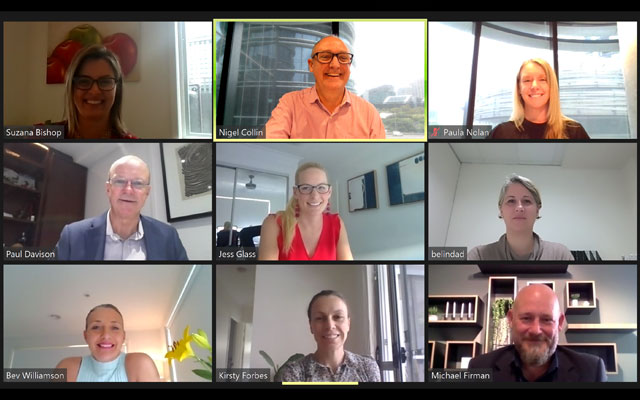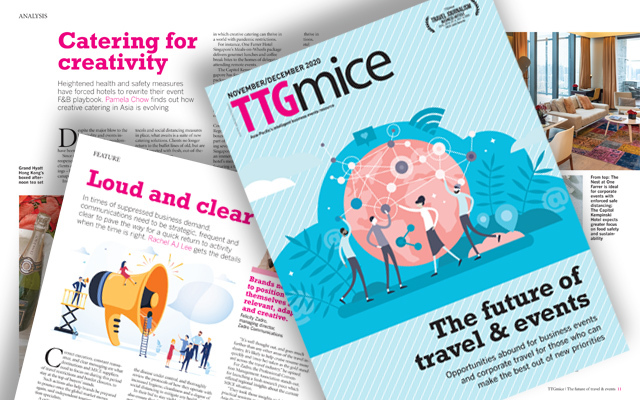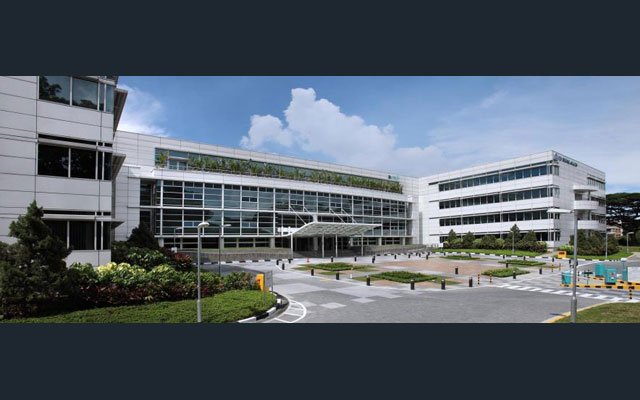


The public’s growing expectation for health and safety protection promised by the travel community could lead to suppliers going overboard and becoming too sterile, warns Fransiska Handoko, government & organisation relations with the Bali Hotels Association.
In this new episode of TTG Conversations: Five questions video series, Fransiska speaks about the fine balance between safety and hospitality, challenges of implementing health and safety protocol by smaller, resource-restricted hotels, and long-term compliance controls.
MICE journalists will be brought to Seoul through this virtual fam programme
Seoul Tourism Organization (STO) will host its first virtual media familiarisation programme for the journalists specialising in business events on September 17 and 18, coinciding the activity with the UIA Associations Round Table Asia-Pacific, also to be held online for the associations community.
The virtual fam will comprise five ‘venues’, each representing the varied charms of Seoul – a conference hall where journalists can access educational sessions; a virtual Seoul promotional booth; a lounge area for network opportunities; workshop; and a virtual theatre to watch business events-related city showcases.
MICE journalists will be brought to Seoul through this virtual fam programme
Jihyun Kim, director of Seoul Convention Bureau (SCB), a division of STO, told TTGmice in an interview that the virtual fam marks the start of the bureau’s online destination marketing efforts amid the ongoing travel, tourism and business events crisis.
“Although (face-to-face) business events are facing difficulties from many angles, as a convention bureau we need to think of various ways to keep stimulating and supporting the industry. We believe there are many opportunities for future business events, whether they are done online or onsite,” said Kim, adding that the desire for business gatherings remains and organisers will eventually find a way to meet despite the obstacles.
As such, SCB wants to prepare its stakeholders and local industry for the resumption of business events.
Building the UIA Associations Round Table Asia-Pacific into the virtual fam allows Seoul to demonstrate her ability to maintain the presence of such conferences during these unusual times, explained Kim.
Similarly, the other aspects of the programme will reflect an online translation of actual physical activities in the city.
Kim regards the Seoul promotional booth and virtual theatre as “differentiators” from other virtual business events platforms. The virtual theatre will feature 360° virtual reality (VR) videos displaying famous landmarks, unique venues and teambuilding activities from a first-person point-of-view to allow participants “to feel like they’re on a real tour,” shared Kim, adding that the complete programme would provide as comprehensive a support as a personal “MICE destination marketing agent” could.
SCB staff will supplement the online exposure with their presence, providing answers and information on the city and PLUS SEOUL support scheme to enquiring journalists.
Kim said there are precious business opportunities from taking the virtual route. One of them is the rare access to protected venues that are usually closed to the public, such as the 600-year-old Changdeokgung palace, via a VR site inspection. Other advantages include the ability to demonstrate Seoul’s advance information and communications technology, and the convenience of conducting certain engagement activities, such as a stamp tour and MICE membership card-making activity.
Aventri's solution aims to simplify pivot to virtual and hybrid events
Event management software (EMS) company Aventri today has launched the Aventri Virtual Event Platform, enabling event and marketing professionals to now manage virtual and hybrid events, in addition to in-person events, on a single platform.
Aventri’s solution aims to simplify pivot to virtual and hybrid events
The Aventri Virtual Event Platform is fully integrated within the Aventri Event Management Solution. It offers the latest engagement and monetisation features, as well as the following first-to-market capabilities:
Agility: With one solution, organisers can switch at a moment’s notice from in-person to virtual or hybrid events.
Ease of use: Event and marketing professionals can get their virtual events up and running quickly with a streamlined process to run and manage their virtual events on their own at scale after initial training.
Scalability: Event organisers can save time and effort using the same platform for their entire portfolio of events, from small internal meetings to complex gatherings reaching more than 5,000 attendees worldwide.
Multiple formats: The solution supports single session, multi-track and multi-day programmes. Planners can choose from small interactive breakouts to large-scale, live-streamed sessions reaching thousands of attendees, all with one tool. The ability to share pre-recorded and on-demand content helps tailor sessions to satisfy different audiences.
Consistency: The technology makes it easy to deliver a seamless, branded experience. Attendees move smoothly from the website and registration pages to the virtual event lobby and interactive sessions.
Industry-leading security: The fully browser-based solution eliminates the need to download additional software to join sessions. Planners can use the company’s proprietary streaming technology or connect to a third-party virtual supplier for their virtual and hybrid needs. Aventri’s in-region data centres further enhance data privacy.
Real-time insights: Metrics on attendance levels, engagement scores and overall event success are standard in the Aventri Virtual Event Platform. This allows planners to demonstrate the ROI of their virtual events to stakeholders easily by combining virtual metrics with additional registration, marketing and website insights gathered from the Aventri core product.
The Aventri Virtual Event Platform has been in beta since early June. During this time, Aventri has worked with select clients to deliver digital internal and external events of all types, sizes and levels of complexity.
Beta customers have reported strong results. For example, one financial services firm doubled the number of registrants at its annual July meeting compared to the firm’s previous in-person conference. This year’s multi-day, multi-track virtual event achieved an 80 per cent registrant-to-attendee conversion rate. It also drew attendees from 76 countries for a 20 per cent gain in geographic reach.
Jim Sharpe, CEO at Aventri, said in a statement: “Our seamless solution is designed with ease of use-in-mind, as we’ve seen how enterprises struggle to launch their first virtual events. Our professional services team is working closely with clients to ensure they have the knowledge and tools to navigate this new world and become self-sufficient. Our goal is to educate the market and maximise success with virtual, and later hybrid, events.”
One of the meeting rooms within the dual-branded property
Marriott has opened a dual-branded hotel, the JW Marriott Hotel Yinchuan and Courtyard by Marriott Yinchuan in north-west China.
Located in the cultural centre of Yinchuan, the 513-key hotel stands adjacent to Yinchuan International Convention and Exhibition Center, Ningxia Museum and Ningxia Grand Theater.
One of the meeting foyers available within the dual-branded property
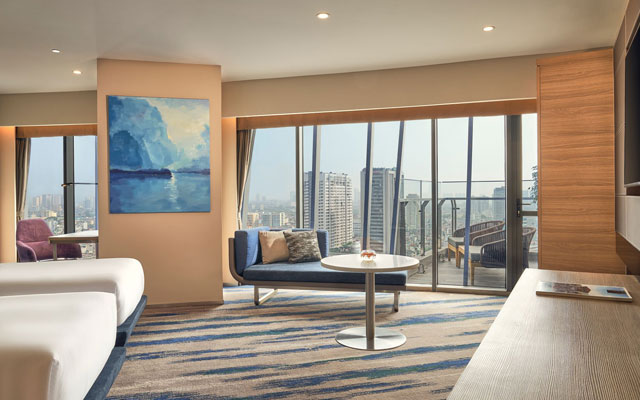
JW Marriott Hotel Yinchuan offers 247 guestrooms and 32 suites featuring floor-to-ceiling windows with views of Yinchuan skyline. The largest event space here is the 1,400m2 JW Grand Ballroom equipped with a 90m2 LED screen that can accommodate 1,300 guests. More intimate events can choose to use the 500m2 JW Ballroom, or one of the 10 multifunction rooms.
Other amenities include signature Cantonese restaurant Ning Xin Ge, all-day diner JW Kitchen, an executive lounge, lobby bar, indoor swimming pool, and 24-hour fitness centre. Business travellers with their families in tow may avail the brand programme, Family by JW which provides experiences for children such as cooking classes.
Meanwhile, the Courtyard by Marriott Yinchuan features 234 rooms, a lobby lounge, and an all-day dining restaurant.
Japan and Singapore will commence a green lane for essential business and official travel for residents from both countries on September 18, making it the first such arrangement for the North Asian country.
A Business Track between Japan and Singapore will facilitate cross-border travel and business exchanges; Tokyo Tower pictured
In a joint statement, the foreign affairs ministries of both countries said that the Business Track arrangement will allow the safe resumption of cross-border travel and business exchanges with the necessary public health safeguards in place.
These safeguards include pre-departure and post-arrival testing as well as the need to adhere to a controlled itinerary for the first 14 days in the receiving country.
Operational details including the requirements, health protocols and application process will be published on the website of the Japan Ministry of Foreign Affairs website and Singapore’s SafeTravel website on September 18.
To date, Singapore has four other reciprocal green lanes for business and essential travel with the governments of Malaysia, China (selected cities), Brunei and South Korea.
Delegates meeting in Auckland, New Zealand (Credit: ATEED)
New Zealand’s business events industry has welcomed the Government’s drive to support domestic tourism through events with NZ$50 million (US$33.3 million).
The injection will go to nine major regional groups across the country via the Regional Events Fund.
Delegates meeting in Auckland, New Zealand. Photo credit: ATEED
The Regional Events Fund comes as a welcome addition to the government’s recently announced Domestic Events Fund, in which 20 of the 200 events receiving support were conferences and business events. The mechanics of how the fund will be distributed is still being worked through with further announcements to come.
Conventions & Incentives New Zealand (CINZ) Chief Executive, Lisa Hopkins welcomed the support.
She said: “This longer-term investment in events will support the rebuilding of the visitor economy and provide valuable assistance for the people who work within it.
“The fund will be a major boost for existing events, as well as the chance to develop new ones, building capability across the country. It gives the industry some funding opportunity across the next two to four years and will be especially helpful for 2021 and beyond.”
“CINZ will be encouraging the regional tourism organisations to ensure business events have a fair share of the fund and offer support to the New Zealand Convention Bureaux as they work through the process,” Hopkins added.
Singapore Airlines (SIA) Group will cut around 4,300 positions across its three airlines – SIA, SilkAir and Scoot – as coronavirus continues to batter the global aviation industry.
SIA Group is in a vulnerable position as it does not have a domestic market to rely on for initial recovery
However, the potential number of job cuts may be reduced to about 2,400 in Singapore and across overseas stations, due to a number of measures that the airline has taken since March, including a recruitment freeze, natural attrition, and a voluntary release scheme for cabin crew.
“This decision was taken in light of the long road to recovery for the global airline industry due to the debilitating impact of the Covid-19 pandemic, and the urgent need for the group’s airlines to adapt to an uncertain future,” it said.
The group reiterated that it expects to operate at less than 50 per cent of its capacity at the end of the financial year as compared to pre-Covid levels. Industry groups have also forecast that passenger traffic will not return to previous levels until around 2024, it added.
“Relative to most major airlines in the world, the SIA Group is in an even more vulnerable position as it does not have a domestic market that will be the first to see a recovery. In order to remain viable in this uncertain landscape, the group’s airlines will operate a smaller fleet for a reduced network compared to their pre-Covid operations in the coming years,” it said.
SIA said that it is working with Singapore-based unions to finalise the arrangements for those affected, and will try to minimise their stress and anxiety.
In a memo to staff, SIA CEO Goh Choon Phong said that no one could have predicted the pandemic’s devastating impact on the global aviation industry at its onset early this year.
“Having to let go of our valuable and dedicated people is the hardest and most agonising decision that I have had to make in my 30 years with SIA,” he wrote.
“For our impacted colleagues, please know that this is not a reflection of your individual strengths and capabilities. It is the result of an unprecedented travel paralysis brought about by a global pandemic.
“Please also be assured that we will conduct the process in a fair and respectful manner, and do our best to ensure that you receive all the necessary support during this very trying time.”
Perth (pictured), which has a Western Australian fund, has welcomed the Federal government's stimulus
Australian prime minister Scott Morrison has confirmed that the Federal Government will be injecting a A$50 million (US$36 million) stimulus into the business events industry.
Under the Australian Business Events Grants Program, approved business events, including meetings, conventions, incentives and exhibitions, will be able to apply for upfront grants to cover up to 50 per cent of their costs (between A$10,000 and A$250,000).
Perth (pictured), which has a Western Australian fund, has welcomed the added Federal government’s stimulus
Funding will support exhibiting at events in 2021 and will remain open until all funds are allocated or until June 30, 2021, whichever is sooner.
The Business Events Council of Australia (BECA) will work with Government on the design and implementation of the Australian Business Events Grants Program.
The funding is part of the Government’s A$1 billion Covid-19 Relief and Recovery Fund which supports sectors severely impacted by the pandemic.
In a statement, Exhibition & Event Association of Australasia (EEAA) said that the industry is now in a “much stronger position to commence rebuilding business confidence and injecting much-needed cash flow through the supply chain”.
EEAA indicated it is also consulting with BECA and Australian Chamber of Commerce and Industry for clear guidelines on state and territory border reopenings, to provide predictability and transparency in the way borders are being managed so businesses can forward plan and book their next business event.
Over in Perth, Business Events Perth chief executive Gareth Martin welcomed the funding announcement, saying it would help “reignite the sector and help restart the holding of business events across the country”, as the sector has been one of the hardest hit by the pandemic.
Martin added the Federal funding complemented the Western Australian Government’s funding initiative for the industry announced in August, which made up to A$30,000 per event available to support organisations to host local business events in Western Australia.
“Business events are a key economic driver to our economy, supporting thousands of jobs across a range of local businesses. The restart of business events will not only be critical to the recovery of the visitor economy, it will also be important to Australia’s broader economic recovery. Business events are a front door for investment and trade and are a forum to collaborate and exchange knowledge and showcase Australia’s research and professional expertise and capacity.”
Meliá Hotels International has named Christian Lueke as the cluster director of sales and marketing (DOSM) for its first two properties in Thailand.
In his new role, Lueke will oversee sales and marketing at Meliá Koh Samui, which opened in January this year; as well as Meliá Chiang Mai, slated to open early next year in the kingdom’s mountainous north.
A hospitality veteran with three decades of industry experience across Europe, Asia and Africa, the German has worked in Thailand for 14 years, most recently as Minor Hotels & Resorts’ regional director of sales for Southeast Asia.
Before that, he was the Bangkok-based cluster DOSM for Hyatt Hotels, overseeing Park Hyatt Siem Reap, Park Hyatt Maldives Hadahaa and Hyatt Regency Phuket.
His previous roles also include stints as the DOSM for Destination Properties; the cluster DOSM at Courtyard By Marriott responsible for resorts in Surin, Patong, Kamala and Hua Hin; as well as the group DOSM for the Onyx Hospitality Group, formerly Amari Hotels and Resorts.
From left: Michael Faulkner; Mark Passmore; and Olivier Dumonceaux
Three members from Swire Hotels’ senior management team will be progressing into new roles.
Michael Faulkner, general manager of The Middle House since its opening in 2018, will be transitioning into head of sales & distribution at the Central Support Office based in Hong Kong this September.
From left: Michael Faulkner; Mark Passmore; and Olivier Dumonceaux
His new role will focus on developing a comprehensive distribution strategy for both The House Collective and EAST. Prior to his role at The Middle House, Faulkner was director of sales & marketing at The Opposite House and general manager at EAST Beijing.
Taking over from Faulkner as general manager of The Middle House is Mark Passmore, who was previously the general manager of The Opposite House in Beijing. He will now be responsible for leading The Middle House through the next phase of its evolution.
Passmore started his work with Swire Hotels in 2007 in Hong Kong before moving to become the general manager of The Temple House in 2013, where he oversaw the pre-opening and opening of the property. He was instrumental in steering The Opposite House through its renovation and repositioning.
As The Opposite House prepares for a relaunch, Olivier Dumonceaux will continue as hotel manager and assume responsibility of the property, overseeing all aspects of the House.
Dumonceaux joined Swire Hotels in 2016 as the director of restaurants & bars at The Temple House, where he led the pre-opening and opening of the property. In 2018, he relocated to Beijing to take over as hotel manager of The Opposite House, overseeing the renovation and opening of three new restaurants and bars as well as the multifunctional event space Commune.
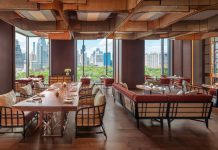
The newly-opened Ritz-Carlton, Bangkok anchors the One Bangkok development with cosmopolitan elegance. Featuring the city's largest ballroom and a spectacular new penthouse suite, it delivers exceptional hardware and deeply authentic, soulful service for business and leisure travellers alike
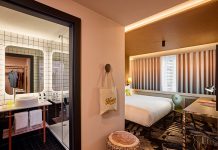
Behind the imposing, Brutalist concrete that defines Zurich’s Oerlikon district lies a surprising secret. While its exterior honours the neighbourhood’s industrial roots, stepping inside Mama Shelter reveals a vibrant, neon-soaked world that is a far cry from its rigid shell
A polished urban retreat designed for business travellers, Hyatt Regency Kuala Lumpur at KL Midtown combines thoughtful design, seamless service, and exceptional facilities.
Japan and Singapore will commence a green lane for essential business and official travel for residents from both countries on September 18, making it the first such arrangement for the North Asian country.
In a joint statement, the foreign affairs ministries of both countries said that the Business Track arrangement will allow the safe resumption of cross-border travel and business exchanges with the necessary public health safeguards in place.
These safeguards include pre-departure and post-arrival testing as well as the need to adhere to a controlled itinerary for the first 14 days in the receiving country.
Operational details including the requirements, health protocols and application process will be published on the website of the Japan Ministry of Foreign Affairs website and Singapore’s SafeTravel website on September 18.
To date, Singapore has four other reciprocal green lanes for business and essential travel with the governments of Malaysia, China (selected cities), Brunei and South Korea.