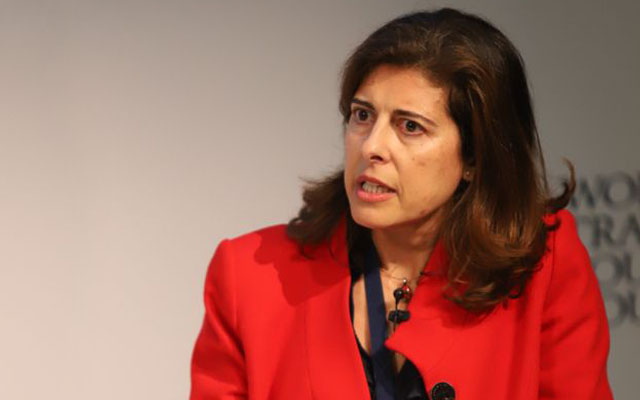
Spain Tourism Board has appointed Monica Sanchez to head its office in Singapore as the new director in charge of South-east Asia, Australia, and New Zealand.
Taking the reins in this time of pandemic, Sanchez shares that her focus at the moment is to maintain Spain’s positioning as one of the most popular tourist destinations worldwide, in addition to highlighting the measures taken by the Spanish tourism sector to adapt to the new normal.
She also aims to support and work closely with operators, agents and airlines within the market – all of whom play a key role in the gradual recovery of the tourism industry from the Covid-19 crisis.
With more than 25 years of experience in tourism, branding, market research and public management, Sanchez has held various leadership and cabinet level positions within the tourism board of Spain – both in America as well as in the Ministry of Industry, Trade and Tourism’s headquarters in Madrid.
She has also served as chief of staff for successive directors general of the Spanish government’s official tourism organisation, Turespaña, as well as for the secretary general for tourism.
The wellbeing-focused Grand Wuji Hotel in Nanjing, the capital of Jiangsu Province, marks the fourth property in China for The Unbound Collection by Hyatt.
Previously known as The Yovoy Hotel, Grand Wuji Hotel spans an area of 31,000m2, with a total construction area of 81,000m2.
Jing Zen Suite
Accessed via a private entrance, nearly 3,000m2 of meeting venues are available to host a variety of conferences, special events and weddings. The 1,200m2 Five Season Banquet Hall can accommodate up to 1,200 people, while six multifunctional conference rooms provide elegant spaces for small and medium-sized meetings and banquets.
Unique health amenities for conference attendees include customised seasonal menus and activities such as Tai Chi, yoga and meditation. As well, an inner courtyard leading out to an expansive lawn would be suitable for hosting cocktail parties.
There are 272 guestrooms, including 56 suites, on offer. Most rooms feature a ‘health corner’ with a Chinese-style daybed for tea and peaceful meditation. Each suite is also equipped with a smart mirror that automatically synchronises with a scale to offer guests personalised health data.
Four restaurants are on offer here: LVQI Lobby Bar, serving Chinese-style high tea and brewed tonics; Jia Shu, a vegan restaurant; Five Tastes, an all-day restaurant; as well as Jade Court, featuring Cantonese cuisine and classic Huaiyang dishes, with six private dining rooms.
At the 24/7 fitness centre, guests can benefit from a health assessment and join in workouts in the 200m2 Energy Room or indoor heated swimming pool. Guests are also encouraged to explore a deep sense of mindfulness and balance through cultural activities, such as traditional Chinese tea ceremonies in the Zen Tea Room.
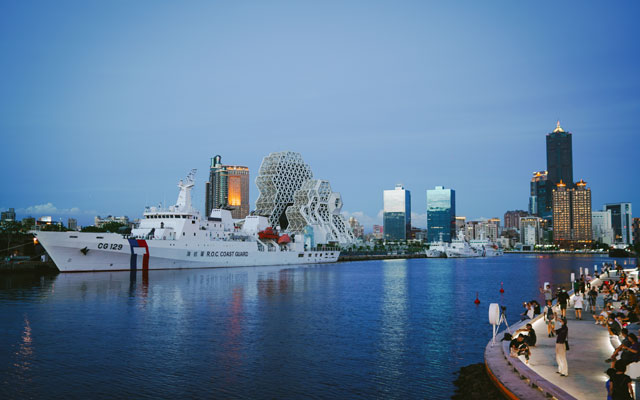
With the members of International Congress and Convention Association (ICCA) convening this year remotely in their home base through an online/offline hybrid congress, the hosts have devised ways that will enable the beauty of host city Kaohsiung to be conveyed through screens and facilitate online human connection.
Jason Yeh, ICCA Board Member and CEO of GIS Group in Taiwan, told TTGassociations that “greater effort” was needed to put together the 59th ICCA Congress, which will be conducted across a six-week-long Global Hybrid Congress Experience at seven regional hubs in the lead up to the main event in Taiwan’s Kaohsiung city.
Kaohsiung’s sights will be conveyed through online social programmes
Prior to the pandemic, the 2020 congress was slated to be held in Kaohsiung.
“With this new format of meeting, we needed unique ways to engage our members and participants,” Yeh said.
One of the highlights, according to Yeh, is a special performance on November 1, a day before the official opening of the Congress.
“We will also pay a visit to GIS Kaohsiung Asia’s New Bay Area Convention Center where we will mix a temple fair concept with heavy metal music. The whole activity will be presented like a TV programme; it will be very exciting,” shared Yeh.
To ensure members attending the main event remotely are able to feel connected with their peers, a “global connection” activity will be conducted on the opening day.
“We will get every participant online to come together to create a song, by contributing a few key words or a melody, which we will then combine to produce what could be a Kaohsiung anthem. It functions as an online teambuilding, and I cannot wait to see how it turns out,” added Yeh.
With barely two weeks to the main event, the 59th ICCA Congress has so far attracted more than 700 registrations for both the regional and main events, with even more expected to stream in before the show opens.
According to an ICCA spokesperson, the most popular sessions during the six-week lead-up were the virtual congress launch; the Global economic trends to master recovery session with IFC Global Macro’s Jean Pierre Lacombe; and the Introducing the Kaohsiung Protocol session led by Talley Management Group’s Gregg Talley and MMGY NextFactor’s Paul Ouimet. All three sessions were conducted on September 22.
As businesses restart their planning for tourism in the new normal, the recovery process presents a prime opportunity to embed sustainability and responsible practices into the supply chain for good. It is also a crucial moment as consumers will have an increasingly heightened awareness of socio-environmental issues and solutions in the year to come.
In this new episode of TTG Conversations: Five Questions, we speak to Eric Ricaurte, founder & CEO of Greenview, a boutique consulting firm that advises organisations and companies in the tourism and hospitality sector. Here, Ricaurte shares his thoughts on how businesses can truly integrate sustainability standards in the new normal.
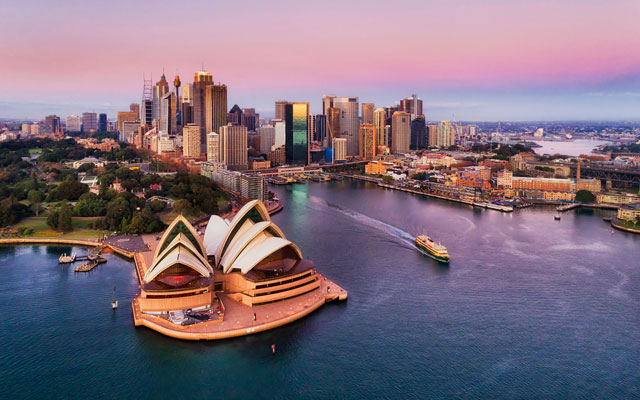
Tourism Australia doubles down on efforts to get domestic travellers to explore their own backyard
Australian tourism is gaining significant momentum for recovery, surviving two of its biggest challenges this year by resisting the tendency to “go dark” in the early months of the pandemic.
The double blow of being hit by Covid 19 impacts almost immediately after bushfires ravaged many popular tourist destinations presented the country with deep challenges. But a responsive plan has resulted in, among other things, robust network growth in travel consultants for the industry worth A$126 billion (US$89.1 billion).
Tourism Australia doubles down on efforts to get domestic travellers to explore their own backyard
Campaigns like Live From Aus in May, a live-streamed programme of virtual travel experiences to inspire the next Australian holiday, generated about 34 million online views in some 40 countries.
Tourism Australia (TA) also almost tripled the number of travel agents who went through their Aussie Specialist Program training to 80,000 agents in the last financial year, compared to 30,000 in a normal year.
“Obviously, in the panic phase, we did pause everything when the consumer sentiment wasn’t there,” TA’s executive general manager commercial, Robin Mack, told attendees at Australia’s luxury business exchange event Luxperience.
“But as you get into that restricted movement, and people were locked down as some still are in that dreaming phase, (people) can really absorb the content and we wanted to make sure we stayed as relevant as possible”.
With borders likely to remain closed to international visitors till late 2021, TA’s post-bushfire campaign appealing to locals to Holiday Here This Year has been evolving to meet current conditions, as some interstate borders remain closed or limited.
“(The campaign) is almost a call to arms and a behaviour change,” said Mack. “Already, over A$80 billion is spent domestically by Australians (including) 85 million room nights or overnight stays. But our big opportunity for that domestic market is getting the 9.6 million that go overseas to holiday in Australia.”
With restrictions beginning to ease, TA launched a new A$7 million campaign this week, headlined by Australian celebrity couple Hamish Blake and Zoe Foster-Blake, aimed at driving that domestic market to book not just hotels but experiences.
In the meantime, expecting that a trans-Tasman Covid-safe travel zone will soon be in place, Australia and New Zealand are also targeting each others’ markets and preparing for the luxury sector to be the first to fly.
“From a premium travel viewpoint, I think the luxury sector in New Zealand is underestimated from an Australian visitor perspective, so we’re looking forward to sharing and growing that segment,” said Tourism New Zealand general manager for Australia, Andrew Waddel.
“Ultimately, we believe that across the two markets, there are circa 10 million trips that won’t happen overseas or internationally and we think getting New Zealanders and Australians to travel locally as well as across the Tasman is not only a great way of connecting as people but also (encouraging) that regeneration in travel,” he continued.
Luxperience today concludes four days of meetings and educational talks as a fully virtual event for the first time with 640 delegates, an increase from past physical events which on average saw 600 buyers, media and exhibitors participating.
The event will focus on providing education, actionable takeaways, and best practices for live, hybrid, and virtual events as meeting planners develop and adjust their future event strategies
Global DMC Partners (GDP), a global network of DMCs and creative event experts, will be holding its seventh annual conference online on November 9 and 10.
On the first day, Global DMC Partners president & CEO Catherine Chaulet will kick off by sharing insights from the company’s most recent Meetings & Events Pulse Survey and the implications of the findings for MICE planners.
The event will focus on providing education, actionable takeaways, and best practices for live, hybrid, and virtual events
The agenda will also include general sessions with a panel composed of industry leaders discussing the continued impact of the global pandemic on this trillion-dollar industry along with strategies and ideas that MICE planners should consider moving forward as the industry continues to adapt and evolve. Peer-to-peer breakout discussions will provide a more intimate setting for meeting professionals to reconnect with one another and share best practices in today’s Covid-19 world.
Attendees will additionally hear from motivational keynote speaker Lucy Bloom.
Unique to this year’s Connection will be the all-new virtual destination experiences presented by GDP’s DMC partners. These online activities will bring a taste of the respective destinations into participants’ homes and showcase how DMCs are successfully pivoting for virtual and hybrid events.
Highlights of these virtual offerings include an art tour, yoga, an illusionist, samba and salsa dancing lessons, pierogi making, an undercover, at-home spy experience and much more.
This event is by invitation only. Qualified meeting professionals may email info@globadmcpartners.com or reach out to their dedicated Global DMC Partners Sales Advisor.
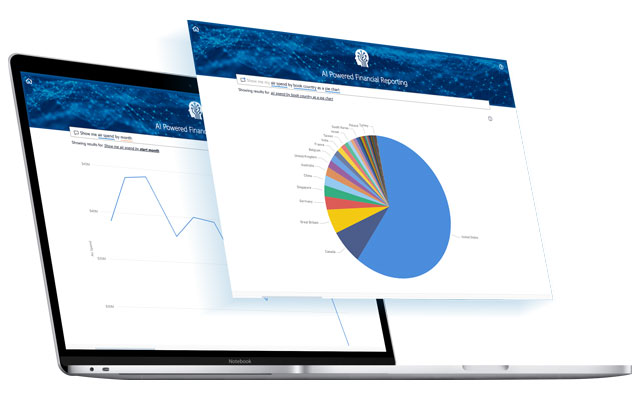
FCM Travel Solutions has launched its new AI Reporting Tool, billed as the first of its kind in business travel.
FCM’s new AI Tool can build reports with more than 15 chart options; build reports with custom calculations; and interpret alternate terms when a user is making a request. For instance, they can ask “What is my CPM?” or “What is my Cost Per Mile” and get the same answer.
A screenshot from the new AI Reporting Tool
The new AI Tool can also turn data into actionable insights, offer suggestions that allow users to bring up key metrics quickly, and offer hints as users are typing questions and will also provide the optimum visualisation based on the question asked.
While AI technology isn’t new to the industry, it has never been used for this level of detailed reporting and analytics. Often travel data does not get used to its full potential because analysing it is too laborious.
With FCM’s new AI Reporting Tool, clients can easily search, sort and visualise their data to identify savings opportunities, establish informed sourcing strategies, or quickly find statistics needed to respond to a critical incident.
FCM’s global managing director Marcus Eklund said the technology will enable FCM’s customers to take their data reporting to the next level.
“Our new AI technology will give our clients easy access to their travel costs, patterns and requirements. This is going to save them time and energy, which are important as businesses start to travel again after their Covid-19 hiatus,” said Marcus.
The new tool is available to all FCM MNC customers around the globe. It is currently rolled out with a three-month free trial offer as part of FCM’s October pledge campaign.
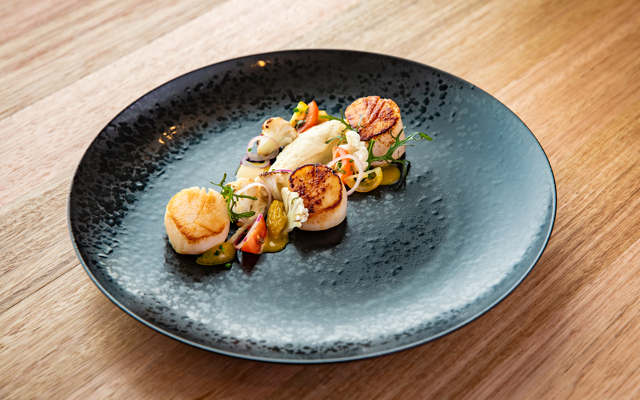
BCEC Food - Seared scallops, cauliflower, capers, golden raisins, Indian spices, tomato, finger lime salsa.jpg
Brisbane Convention & Exhibition Centre (BCEC) has launched its new menu, where the fresh flavours of Queensland produce are the main stars.
Curated by executive chef, David Pugh, the menu has been curated to accommodate current changes to food service regulations while upholding the Centre’s reputation for culinary excellence.
BCEC new menu – Seared scallops, cauliflower, capers, golden raisins, Indian spices, tomato, finger lime salsa
From fresh prawns, ethically caught from the pristine waters of Queensland’s Sunshine Coast, to prized Wagyu from the Darling Downs, Pugh and his team have been busy harnessing new and artisan produce to offer guests. Even the pepper is local quips Pugh, who says more than 85 per cent of the produce is sourced locally.
Pugh was at the helm when BCEC was judged Australia’s best for Banqueting & Catering at the Meetings & Events Australia National Awards earlier this year.
The launch of the menu coincided with the appointment of BCEC as an #eatqld partner. In making the announcement, Queensland’s minister for agriculture and fisheries, Mark Furner, said this move would help spread the word about the safe and nutritious produce from Queensland’s vibrant and robust agriculture sector.
BCEC general manager, Bob O’Keeffe AM, said the Centre was proud to partner with the #eatqld campaign.
“The Centre’s new menu is driven by ethical, seasonal and regional values. We are committed to showcasing Queensland produce, giving assurance to visitors to the Centre of a uniquely authentic taste of local cuisine.”
A major contributor to the economic fabric of Queensland, responsible for more than 70 per cent of delegate days to Brisbane each year, in 2018/19 Brisbane Convention & Exhibition Centre invested A$6.3 million (US$4.5 million) in direct local F&B spend in Queensland.
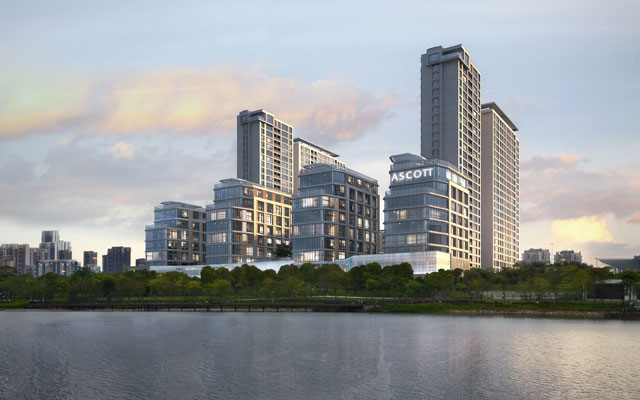
Ascott Huaishu Road Ningbo is among 12 new properties the hotel group has signed in China over the last three months
CapitaLand’s wholly-owned lodging business unit, The Ascott Limited (Ascott), has secured more than 2,100 units across 12 properties in China over the last three months, bringing the number of new units to more than 5,600 across 26 properties in what marks a “record high” for the group.
Tan Tze Shang, Ascott’s managing director for China and head of business development for China, said that the 12 new properties secured in China will see Ascott making inroads into three new Chinese cities – Baotou, Ningbo and Yantai – while strengthening its presence in Changchun, Guangzhou, Hangzhou, Shanghai, Shenzhen, Suzhou and Xi’an.
Ascott Huaishu Road Ningbo is among 12 new properties the hotel group has signed in China over the last three months
These properties are slated to open between December 2020 and 2026, and will bring the group’s total number of units in China to about 30,000 in more than 150 properties.
This represents a 60 per cent year-on-year growth in units in China.
Signalling “strong recovery” in China on the operations front, Ascott’s apartment revenue in September 2020 reached close to 95 per cent of that in the same month last year. As well, Ascott has been maintaining a steady stream of openings, on the back of growing demand for extended-stay properties. In 2020, Ascott opened 17 properties with over 2,400 units, with about half of these units in China.
Ascott said that its base of long-stay corporate guests coupled with the strong domestic leisure travel market have enabled the group’s serviced residences in China to achieve “robust” occupancy rates.
In September 2020, close to 75 per cent of its guests in China were domestic travellers. During the same period, Ascott’s properties in tier one cities such as Beijing, Guangzhou, Shanghai and Shenzhen achieved an average occupancy rate of over 86 per cent. In Chongqing, despite facing the pandemic and the worst floods in decades, Ascott Raffles City Chongqing achieved a high occupancy rate of 80 per cent in August 2020, maintaining that momentum in the following month.
Kevin Goh, CapitaLand’s CEO for lodging and Ascott’s CEO, said: “The Covid-19 pandemic has brought the resilience and flexibility of Ascott’s business model to the fore. In 2020, we have signed more than 9,300 units in 48 properties worldwide, while expanding in China at a record rate. We are also planting new flags in markets such as Austria and Indonesia, offering our guests a wider network of Ascott properties.
“At the peak of the Covid-19 situation, many of Ascott’s properties worldwide remained open to provide a safe haven for our long-stay corporate guests, maintaining a robust average occupancy rate. With China being the first major economy to resume growth after the pandemic and the easing of domestic travel restrictions in the country, we are seeing strong recovery at our properties in China.”
Globally, Ascott has sealed new contracts for more than 3,700 units across 22 properties, with 60 per cent from China, while the rest are in various countries including Austria and Indonesia.
Just 10 minutes from Phuket International Airport on the serene northern coast, this 178-key, Bill Bensley-designed resort offers delegates a quiet, tropical paradise steeped in Phuket’s tin-mining heritage
The newly-opened Ritz-Carlton, Bangkok anchors the One Bangkok development with cosmopolitan elegance. Featuring the city's largest ballroom and a spectacular new penthouse suite, it delivers exceptional hardware and deeply authentic, soulful service for business and leisure travellers alike
Behind the imposing, Brutalist concrete that defines Zurich’s Oerlikon district lies a surprising secret. While its exterior honours the neighbourhood’s industrial roots, stepping inside Mama Shelter reveals a vibrant, neon-soaked world that is a far cry from its rigid shell