Asia/Singapore Friday, 10th April 2026
Page 549

Singapore MICE recovery needs wide-ranging support: industry players

0
MICE stakeholders in Singapore

To make Singapore’s Covid-19 private-public sector Industry Resilience Roadmap (IRR) recovery more robust and sustainable, key players say the focus must be on end-to-end digitalisation and establishing an approval body, big government funding and banking support to see small- and medium-size enterprises (SME) through “this challenge of a generation”.

Commenting on how Covid-19 had increased demand for digital event products, industry veteran, event technology champion and founder of miceNeurol, Kenny Goh, said such products are different and require new design and re-engineering to meet the demands of the approval authorities, attendees, presenters and sponsors.
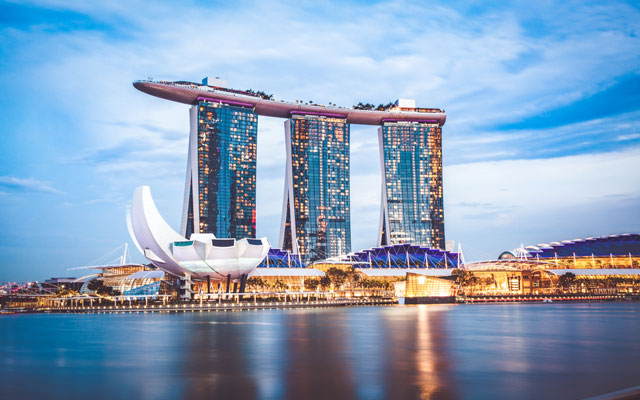
MICE stakeholders in Singapore indicate the industry needs a lot more support to tide through this period; Singapore’s Marina Bay Sands pictured

Goh believed physical, virtual and hybrid events can all take place, but must be created digitally from start to finish and with digital accreditation of attendees being the key.

“From a business perspective, this reset is hellish for incumbents but heaven sent for those who have been championing digital-driven MICE,” he commented, adding that the monthly cost to hire one or two digital architects and engineers was around S$8,000 (US$5,757).

Goh also saw the need for an approval body to support organisers by giving in-principle approval for unique product concepts that meet the spirit of the law but not the letter of the law.

Having the approval body connected to authorities like the Ministry of Trade and Industry and the Ministry of Health was important, Goh opined, as it would allow innovative organisers the ability to develop and deliver events in the new normal that may require a lot of tweaks.

Meanwhile, Edward Liu, group managing director, Conference and Exhibition Management Services, said “government help is crucial” for industry recovery and new investment is needed.

He proposed a S$100 million events industry fund to bankroll key and sustainable events that will in turn help SMEs and PMETs (professionals, managers, executives and technicians) in the events ecosystem affected by Covid-19.

Liu continued: “More help should also be given to SMEs to apply for bridging loans at zero or low interest rate as Singapore banks have done well over the years. Banks here are now charging three per cent and it is not low enough. Switzerland’s rate is 0.5 per cent and it should be no more than one per cent.”
Frequent travellers ready to fly: Collinson Priority Pass survey

0
Frequent travellers will lead the way in the recovery of the aviation industry

The coronavirus pandemic has brought global travel to a halt, but nearly three in four frequent flyers (71%) are ready to return to travel either immediately or within the next three to six months, according to a new survey from Collinson’s Priority Pass.

The global survey also reveals that unpredictable factors such as quarantines and border controls represent travellers’ top concern about returning to air travel – 74% identify this as a worry, and accordingly, half of travellers are willing to pay for a Covid-19 test to help ease travel restrictions.

Frequent travellers will lead the way in the recovery of the aviation industry

Andy Besant, director of travel experiences at Collinson, said: “The fact that most frequent travellers are prepared to return to air travel within the next half-year or even sooner is astounding. It means that if governments, airports and the travel industry can collectively take the right steps, we may see a near-normalisation of air travel far sooner than many predictions that set out recovery taking as long as until 2023.”

This is the biggest brand-executed survey about global air traveller sentiment in the Covid-19 era. Over 22,000 frequent flyer members of the Priority Pass programme were surveyed about recent changes to their air travel behaviours and expectations, and what measures would restore their confidence and get them back to the skies.

The Priority Pass member data further reveals that the airport lounge is seen as a high-value service to those ready to fly.

Almost seven in 10 travellers are willing to pay for access to an airport lounge where social distancing is maintained and the majority of travellers (57%) plan to use their airport lounge access more than they did before the coronavirus outbreak. When asked about overall concerns for the journey, a full 74% have no concerns about the airport lounge. Looking at the retail side, 16% of frequent flyers plan to increase their pre-order of shopping and food services.

In terms of the overall airport experience, travellers want and expect a contactless journey.

Eighty per cent of travellers would like to see contactless payment options across the journey the next time they travel, and 58% want access to real-time heatwave maps of the airport to avoid crowded areas. Around one in three travellers also cited an interest in “click & collect” services for shopping and food, travel apps with better functionality and airport information, and the use of digital queuing amongst airport retailers to limit in-store numbers.

Andy added: “The perception of the airport lounge is changing in the Covid-19 era. Frequent flyers now see the lounge as not only a place for refreshments and amenities, but also a necessary part of the journey where they can feel safe and at-ease. Our survey results leave no doubt that frequent flyers want to make more use of lounge access.

“Contactless experiences are likewise key to boosting traveller confidence, hence our recent initiatives to spearhead the contactless airport journey via new airport lounge standards and safer, touch-free experiences in the airport lounge.”

Todd Handcock, president Asia Pacific at Collinson, said: “Collinson’s global findings match up with the trends we’re seeing in Asia-Pacific, where the survey found that two in three frequent flyers (66%) are ready to return to travel within the next six months… Robust, standardised testing procedures and high levels of trust between nations are key to recovery, with the survey also showing that nearly half of APAC travellers (44%) are willing to pay for a Covid-19 test at the airport in order to ease restrictions.”

He added: “Another key finding for Asia Pacific is the fact that 52% of travellers expect to use their lounge access more than before the pandemic and 68% would be willing to pay for access to a lounge where guest numbers are controlled and social distancing is maintained. In addition, of all markets surveyed, APAC travellers are the most confident in the safety of the lounge with 78% citing no concerns around the airport lounge.”

59th ICCA Congress takes on hybridised format

0
Gopinath concludes: “We believe in the power of meeting face-to-face but know this isn’t always possible. Still, we want to make sure our global community can take part and make their voice heard from wherever they are.”

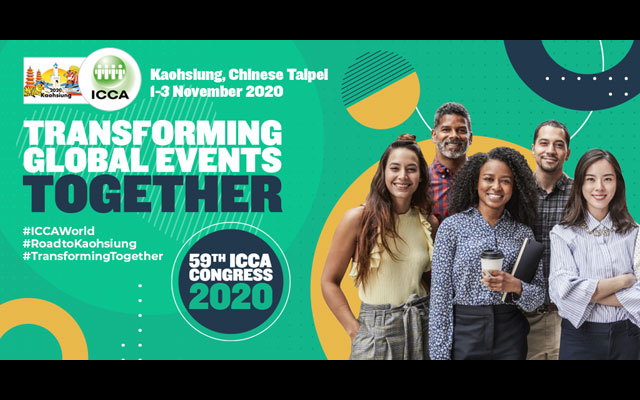
Registration is now open for the 59th ICCA Congress in Kaohsiung, which will take on a hybridised format from November 1-3, 2020.

Themed Transforming Global Events Together, the congress aims to bring the ICCA global community together to create the Kaohsiung Protocol, a framework that identifies major trends and key strategies that will enable the international meetings industry to thrive, now and into the future.

ICCA wants to ensure the global community can take part and make their voice heard, hence it’s offering three different ways to join this congress

As part of the Congress, all participants can be involved in a six-week online pre-Congress Road to Kaohsiung programme, identifying major trends, key strategies, new ideas, formats and technologies for the future of global events.

ICCA has collaborated with Maritz Global Events on the format of this year’s congress, where delegates can choose to attend the events held live in Kaohsiung, a gathering at regional hubs, or virtually.

In lieu of such uncertain times, ICCA is also offering a flexible and adaptable approach to registration and the accompanying fees. This means delegates can sign up now but change their registration type later.

Singapore Coffee Association to hold inaugural virtual coffee auction

0
Coffee auction

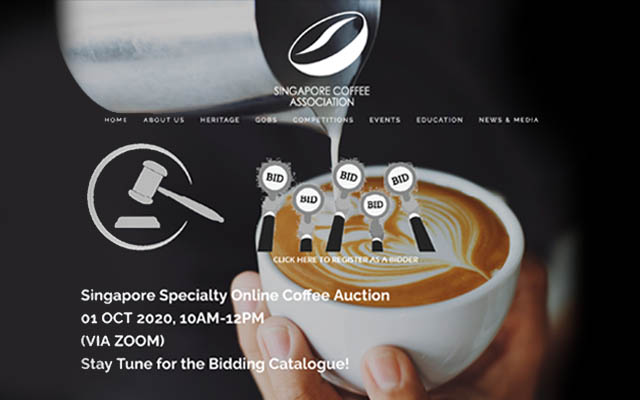
Singapore Coffee Association (SCA), in partnership with Food&HotelAsia (FHA), will be staging the first virtual edition of Singapore (Micro-Lot) Specialty Coffee Auction on October 1, 2020, in conjunction with International Coffee Day.

The micro-lot coffee auction will serve as a platform to allow global speciality green bean producers to make strategic ventures into Asia’s growing coffee market. Coffee producing countries from South-east Asia, South America and Africa are expected to take part to showcase their beans in Asia.

The first virtual coffee auction will be able to reach a larger audience of potential buyers

Up to 300 bidders are expected to attend, and the auction will showcase some 40 lots of speciality coffee up for bids.

Supported by Enterprise Singapore (ESG), it is the first time the Singapore (Micro-Lot) Specialty Coffee Auction will be held in a digital format. And through its partnership with FHA, the online auction will be able to reach more potential international bidders.

Sophia Ng, director, trade, Enterprise Singapore said: “For our Singapore companies, the auction presents an opportunity to connect and expand their network with international and regional buyers in the coffee trading industry. International and regional coffee traders can also leverage the auction to increase trade and better access the region.”

Ritz-Carlton opens luxury wellness-focused resort in Nikko

0

The Ritz-Carlton Hotel’s latest hotel to join its luxury Asia Pacific portfolio is located in Japan’s Nikko National Park, set amid a UNESCO World Heritage Site.

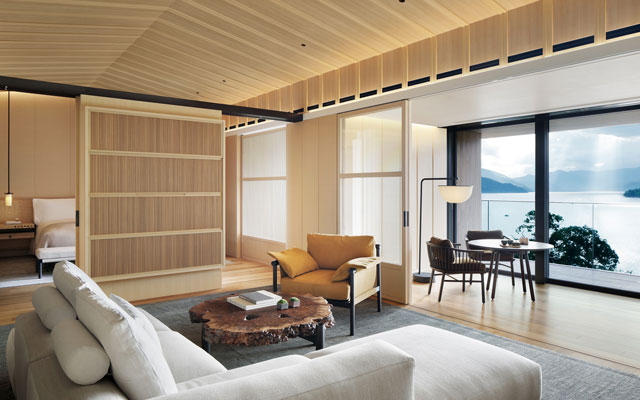
The hotel’s 94 guestrooms and suites all feature a private balcony that flows seamlessly with an engawa lounge area, while facilities on-site include four F&B venues – The Japanese Restaurant, Lakehouse, The Bar, and The Lobby Lounge.

Guestroom Lakeview Suite

Treat incentive winners to a session at the Spa at The Ritz-Carlton, Nikko, in one of the four treatment rooms. This is the first Ritz-Carlton property to feature authentic Japanese hotsprings, and there are indoor and open-air baths to choose from, where waters have been drawn from the nearby Yumoto Onsen.

As wellness will be order of the day due to the pandemic, guests will be interested to know that a nightly meditation is available. Every day at dusk, the lobby area will be transformed into a place of spiritual respite, offering a moment to reset and appreciate the day that has passed. Upon departure, guests will receive a sacred omamori (Japanese amulet), their own keepsake memento and a wish for safe travel.

There is also a wide selection of outdoor pursuits to choose from for incentive groups, ranging from cycling through protected wetlands to meditating under waterfalls.

Indoor activities meanwhile, include learning the Japanese skill of furoshiki wrapping, witnessing a mystical temple fire ceremony or enjoying the sounds of drums and Japanese flute music at a sacred ritual ceremonial dance.

Stakeholders welcome Malaysia’s latest MICE campaign with open arms

0
Minister of Tourism, Arts and Culture Nancy Shukri

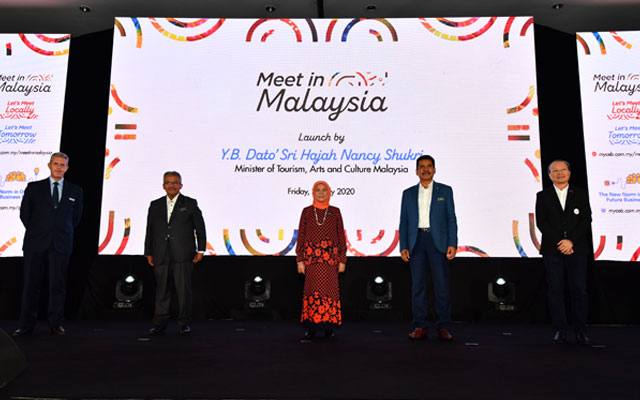
Malaysia Convention & Exhibition Bureau (MyCEB) has recently unveiled a Meet in Malaysia campaign, to help propel the country’s MICE industry forward.

The campaign comprises two components – Let’s Meet Locally, which focuses on domestic business meetings; and Let’s Meet Tomorrow for groups with a least 10 per cent international participants.

From left: Business Events Council Malaysia’s Alan Pryor; Ministry of Tourism, Arts and Culture Malaysia’s Noor Zari Hamat; Minister of Tourism, Arts and Culture Malaysia, Nancy Shukri; MyCEB’s Abdul Khani Daud; and Malaysian Association of Convention and Exhibition Organisers and Suppliers’ Vincent Lim at the launch event

Under the Let’s Meet Locally campaign, support will come in the form of a complimentary full-day city tour with an English-speaking guide, for a minimum group size of 30. The group must also stay a minimum of two nights at a participating campaign partner’s hotel.

For larger groups of at least 60 participants who stay for at least two nights at a partner hotel, dinner sponsorship support will be thrown in. For 150 participants and above, organisers can request for sponsorship of a full-day meeting package at a campaign partner’s hotel.

Meanwhile, under the Let’s Meet Tomorrow campaign, MyCEB will provide support for a full-day meeting package, for groups that hold a corporate or association meeting at a participating partner venue for two days or more. Other conditions also state that the event must have a minimum of 120 delegates, of which at least 10 per cent are international participants.

The Meet in Malaysia campaign runs until end December 2021. Currently, 56 hotels and nine venues are participating.

This campaign has been well-received by local stakeholders.

“I especially think the Let’s Meet Locally programme is a very practical solution for short-term sustenance of business event players as it is these crucial eight to 12 months that we will need to pull due to the border being closed to international business events delegates,” Mona Abdul Manap, founder and CEO at Place Borneo, said.

“I appreciate that the eligibility criteria is low, which makes it easy for organisers of business events to be eligible for support. Our focus now is to sustain and keep afloat as best as we can. Once we have weathered the storm, then we can focus on charting our direction, build capacity and progress forward. For now, we need to survive!”

Alan Pryor, general manager, Kuala Lumpur Convention Centre, said the campaign was “timely”, as the stimulation of the local market is “essential to the sustainability of the business events supply chain.

“The range of packages to support all types of business events is comprehensive. The campaign is exactly the additional ingredient we needed to support and boost business confidence,” he added.

Vincent Lim, president of Malaysian Association of Convention and Exhibition Suppliers, noted: “The Meet In Malaysia campaign is very timely in light of the Covid-19 pandemic which has affected the business events industry. The subvention support will also give encouragement to organisers of homegrown national, regional and international business events to hold their events in Malaysia.”

Finding fresh focus

0

CEMS organises a number of events in Singapore. How did you react when the DORSCON (Disease Outbreak Response System) alert level was raised from yellow to orange in early-February?
With the onset of Covid-19, the entire industry was put on hold and no physical exhibitions took place after DORSCON orange. We decided to move all our exhibitions to 4Q2020, taking a chance that the situation would stabilise by then and mass exhibitions would be allowed.

We decided to launch a new Christmas Edition of the 15-year old Singapore International Jewelry Expo (SIJE), which usually takes place in July. It would not be easy for exhibitors to come and it would not be easy to attract buyers. I hope they will come in December. The government cannot lock down the economy until next year although business has to reopen with all the necessary precautions, safe distancing measures, common sense, etc not to jeopardise anyone.

In partnership with the Singapore Manufacturing Federation (SMF), we are curating a new event to help members conduct business transactions as they need to clear stock and more importantly generate cash flow.

So SIJE Christmas Edition and the SMF Buyers Market will be co-located and take place at Marina Bay Sand’s Sands Expo and Convention Centre from December 11-13, 2020. I would be elated if each exhibition can feature 100-plus exhibitors occupying 4,000m2 of Hall C.

How did CEMS make of use event technology during this period?
We launched our first virtual tradeshow – Future Tea and Coffee Summit and Expo from June 24-26, 2020 with a small group of 26 predominantly Indonesian suppliers listed on the online platform. There were 3,111 ‘visitation’ logins connecting with the exhibitors, and about 100 qualified attendees took part in webinars featuring prominent F&B, café, coffee and tea players.

Our partner Tea Pasar and its associate could offer product ‘profile printing’ like fingerprinting of tea leaves and ingredients to provide product analysis certify the grade and enhance transparency. This is a totally new unique selling point.

We are planning a second virtual edition between November 11-13, 2020, and hope to double the number of exhibitors to between 40 and 50.

Overall, how has Covid-19 impacted the way you do business?
Covid-19 has pushed us to think out of the box and we have been talking to IoT (Internet of Things) partners to curate virtual tradeshows alongside physical ones. The success of the first Future Tea and Coffee Summit and Expo has given me the confidence to make it a bigger event and if the second edition is successful, we may consider a hybrid setting.

It is important for us to work closely with industry partners and to help industry associations and their members who need help to compete. We need to support one another and I have reached out to a couple of associations to explore synergies and collaboration on key and sustainable events that bring not only win-win opportunities, but multiple-wins to help SMEs and PMETs (professionals, managers, executives and technicians) in the events ecosystem affected by Covid-19.

Could you share what is the status of overseas CEMS events for this year?
The 18th edition of Glasstech Asia 2020 is scheduled to take place in Bangkok from November 17-19, 2020.

We are now watching the Thai situation closely where the government has opened up much more compared to Singapore. We think the situation in Bangkok will be much better in November but the issue is aviation, where the event is targeting some 200 exhibitors from 15 to 20 countries and up to 5,000 trade show business registrations. This event (which rotates around South-east Asia) has been running for the past 30 years in partnership with the Singapore Glass Association.

Next up is the 8th Chengdu International Tourism Expo, scheduled to take place from November 26 to 28.

Looking ahead to 2021, what is CEMS up to?
Our first cluster next year is Architecture and Building Services 2021, where we have curated and are launching a new event Design Asia, a congress of about 300 Asia-Pacific delegates and a board meeting.

The cluster comprises six shows looking at areas such as facility management, lighting, safety and security, fire and disaster and workplace safety and is taking place from March 30 to April 1 at Marina Bay Sand’s Sands Expo and Convention Centre.

BCD Travel unveils solution to inform on Covid-19-era travel

0
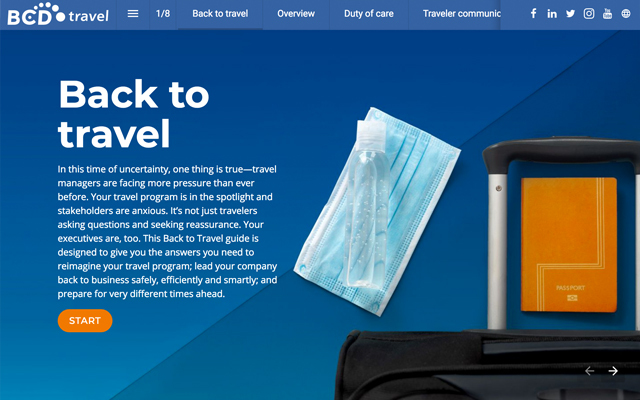
Back to travel Strategic advice, checklists and solutions for travel managers to prepare for the return of travel

BCD Travel has introduced the Informed Traveler, a global initiative aimed at helping travellers, travel managers and agents make smarter business decisions amid a landscape of constantly changing rules, laws and procedures.

With the Informed Traveler, users gain access to real-time information such as destination risk alerts, airline and hotel policies, ground transportation protocols and travel restrictions.

Back to travel offers advice, checklists and solutions to prepare for the return of travel

“The sheer volume of Covid information available to consumers is astonishing,” said John Snyder, president and CEO at BCD. “Our content engine pulls information from more than 800 sources, curates and distributes it across all traveller touchpoints including agent point-of-sale, the TripSource mobile app, and the responsive Covid-19 Information Hub on TripSource.com.”

Informed Traveler is being rolled out in phases. The first phase, available now, includes agent access to destination content and travel requirements, a Covid-19 Information Hub accessible from TripSource.com, itinerary communications and mobile notifications.

The second phase (launching in August), will allow travellers to enter their itinerary details to generate more personalised search results on the latest Covid-19 related information.

The Informed Traveler is based on extensive traveller research and customer interviews that illustrated a change in the way travellers plan for a trip.

“Pre-Covid programmes focused primarily on two phases of the trip cycle: the booking process and the actual journey,” noted Heather Wright, vice president product marketing at BCD.

“Now we have new areas of focus that are just as, if not more, important. The first is the decision phase, where a traveller looks at trip variables such as risk, cost and route and makes a conscious decision whether to book the trip. The second is the preparation phase, where travellers monitor trip details – which could change between booking and the journey – researches guidelines and requirements and gathers travel tips.”

Earlier in June, BCD Travel launched a Back to Travel digital guide, a resource for travel managers to rethink their programme’s return to active travel. It covers four areas – duty of care, traveller communications, spend management, and travel policy – where each section highlights trends, practical advice, checklists and solutions.

Pullman makes its debut in Yueyang

0
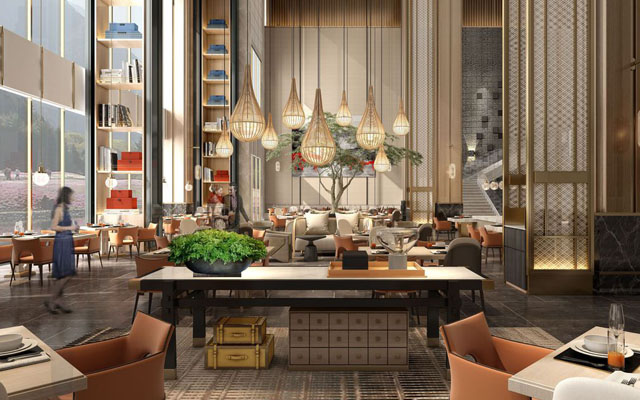
Lobby Lounge

Accor has opened the Pullman Yueyang in China’s Hunan province, where the property is the city’s first international upscale branded hotel.

Located by Dongting Lake, the property offers a combined total of 2,800m2 of meeting and event spaces. The largest event space is the 861m2 pillarfree ballroom, which comes deck out with an inbuilt LED screen. An additional 15 meeting rooms, and an outdoor lawn adjacent to the swimming pool, make up the balance of the conference areas.

There are a total of 213 guestrooms and suites within, with the majority featuring balconies and views of the lake. F&B options include the Lakeside All Day Dining restaurant – with five private rooms for intimate luncheons – as well as the Lobby Lounge.

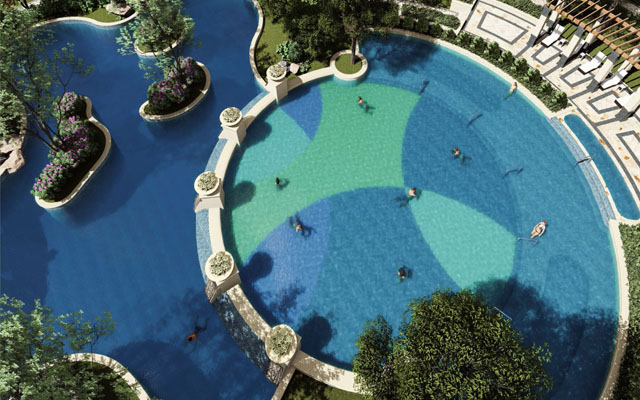
Rounding out the hotel’s common spaces are the wellness facilities – a gym, sauna, and 2,000m2 outdoor swimming pool paradise complex that includes a children’s pool and heated indoor pool.

The hotel is eight kilometres away from the CBD, 30 minutes’ drive from Yueyang East Railway Station, and 35 minutes’ drive from Yueyang Sanhe Airport.

Think outside the box

0
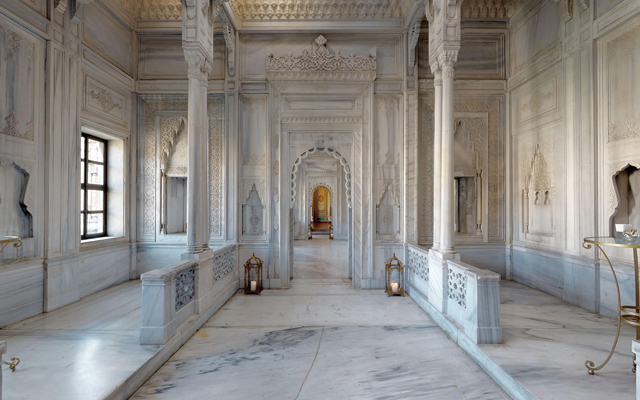
Ciragan Palace Kempinski Istanbul’s grand Turkish bath is a unique event venue

Depending on how one sees it, hotel spaces can be regarded as uninspiring function areas bounded by four walls, or stand as a blank canvas on which event planners can paint their masterpieces on.

As experiential and festivalisation event formats gain traction, hotels with function rooms cannot afford to fall into the first category. They have to find ways to be more creative in transforming their spaces while working closely with event planners.

Ciragan Palace Kempinski Istanbul’s grand Turkish bath is a unique event venue

Liow Qixin, senior account manager, experiential events, Pacific World Singapore, said clients were avoiding conventional venues and reaching for creative options instead – and some would bluntly state that they were not looking for a hotel space.

As such, Liow opined that it is important for hotels to work closely with event planners to dispel the myth that hotel spaces are boring.

Slowly disappearing are run-of-the-mill indoor sessions, complete with tables and chairs. Instead, indoor spaces are now sporting beanbags and wooden pallets to encourage informal networking. Gardens are being transformed into carnival grounds with live cooking stations and a DJ corner.

“We’ve definitely seen an increase in clients wishing to create their own festival atmosphere when planning events,” shared Michelle Sargent, director, CWT Meetings & Events, Australia & New Zealand.

Citing examples, Sargent said exhibition have been conducted on a golf course, and pop-up food stalls or massage stands have been included in conferences and conventions.

For hotels to deliver on such out-of-the-box ideas, Amanda Elder, chief commercial officer, Kempinski Hotels, said it was important that hotel representatives be “extremely familiar with all of their property’s event options and spaces” and be ready to offer creative suggestions that can optimise the use of available spaces.

She related an example from the Ciragan Palace Kempinski Istanbul. The historic building regularly holds conferences for 1,500 guests. To push the envelope, staff came up with the idea of transforming the hotel’s Turkish Bath into an event space for cocktail parties, coffee breaks and dinners.

“With its towering ceiling, engraved wall decorations, ornaments, and columns of pure marble, this one-of-a-kind venue…is hard to beat,” shared Elder.

Ramesh Daryanani, vice president, global sales, Asia-Pacific (excluding Greater China), Marriott International, said “making serendipitous connections…is among the greatest benefits of attending large-scale professional events like conferences”.

Therefore, he stressed the significance of setting an intimate and relaxing conference atmosphere.

When the St Regis brand first entered Shanghai, the team at The St Regis Shanghai Jingan set out to transform the hotel’s spaces into something creative but fit for glamorous occasions. Starting out with a mood board, the team put together modern design inspirations, and went on to completely transform the hotel’s champagne bar.

Featuring an elegant green and marble interior, complemented by soft, pink and velvety chairs, the design brought home a fairytale setting for the hotel’s grand opening.

Both hoteliers and event planners have a part to play to bear impressive event ideas to fruition, opined Elder. She said the hotel team would provide event planners with valuable support in the planning phase and in ensuring attention to aesthetic details.

Due to the pandemic, however, events that have people mingling in close quarters are on hold, and a different kind of creativity is now required.

Milton Rivera, vice president, global business development, global client group & APAC region for meetings and events, American Express Global Business Travel, stressed the need for hotels to beef up their technology capabilities, as virtual events will probably hold sway for the time being.

He elaborated: “Virtual/hybrid events are built on new and exciting technologies that are creating the next level engagement for all attendees. We are in the early demand phase and are finding great benefit bringing speakers and moderators together in a hotel venue, and broadcasting to broader audience groups or hybrid hubs.”

Rivera emphasised that much of the energy at live events come from the speakers and the audience. “Creating two-way interaction (online) is challenging, and that is where the venue and technology providers really need to work hard to come up with creative approaches,” he added.

Reviews

The Ritz-Carlton, Bangkok

The newly-opened Ritz-Carlton, Bangkok anchors the One Bangkok development with cosmopolitan elegance. Featuring the city's largest ballroom and a spectacular new penthouse suite, it delivers exceptional hardware and deeply authentic, soulful service for business and leisure travellers alike

Mama Shelter Zurich

Behind the imposing, Brutalist concrete that defines Zurich’s Oerlikon district lies a surprising secret. While its exterior honours the neighbourhood’s industrial roots, stepping inside Mama Shelter reveals a vibrant, neon-soaked world that is a far cry from its rigid shell

Hyatt Regency Kuala Lumpur at KL Midtown

A polished urban retreat designed for business travellers, Hyatt Regency Kuala Lumpur at KL Midtown combines thoughtful design, seamless service, and exceptional facilities.