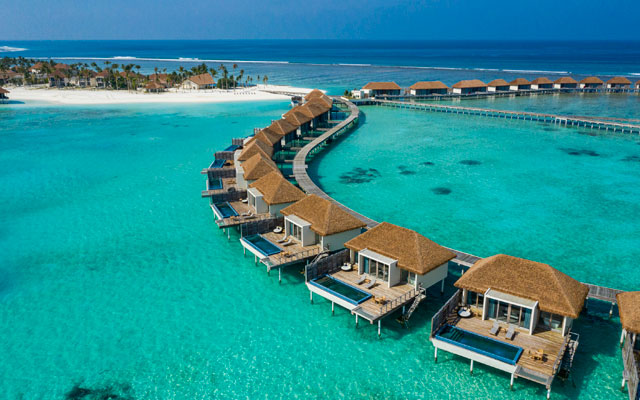
The Radisson Blu Resort Maldives, a private island retreat in the Alifu Dhaalu Atoll, is Radisson Hotel Group’s first property in the Maldives.
There are 128 beachfront and overwater villas ranging from 215m2 to 790m2, perfect for top winners in the company. All villas feature private pools, and come in one-, two- or three-bedroom configurations.
Facilities on the island include a water sports centre, an overwater spa and yoga pavilion, fitness centre, sports court, and a kids’ club and games room for winners who are travelling with families. There is also an event hall, should a quick meeting be required.
Restaurants and bars include all-day dining restaurant Raha; the Mediterranean and seafood grill Alifaan; Eats & Beats, the poolside bar; Crusoe’s, an adults-only area; Kabuki and its Nikkei cuisine; as well as Mahurab, an overwater wine and cigar bar.
The resort can be accessed via a direct 30-minute seaplane or a 20-minute domestic flight from Malé to Maamigili Airport followed by a 15-minute speedboat ride.
As the organiser of one of Singapore’s first two physical events in the Covid-19 world, Chab Events has been thrust to the fore of the hybrid event movement. Co-founder Alexis Lhoyer shares that while hybrid events are an unavoidable mainstay, the reality is that it entails a number of new challenges – including the requirement for panellists and speakers to be in masks.
In this new episode of TTG Conversations: Five Questions, Lhoyer reveals how organisers can negotiate the new “abnormal” and ensure their events remain engaging and profitable.
There are ongoing efforts by the Thailand Convention and Exhibition Bureau (TCEB) to turn Phitsanulok province in Thailand’s northern central into a MICE city, and using business events as a way to stimulate economic growth and better the region’s wealth distribution.
The aim of turning it into a MICE city is, among others, to assist the population in the lower northern region to escape the middle-income trap by increasing revenue generated from business events travellers and value-added services. This move will also increase investment activities and distribution of wealth across Thailand’s lower northern provinces, shared Chuta Tarachai, senior manager at TCEB.
Walking through a rice field in Noen Maprang, Phitsanulok province, could be a post-event activitiy
The four strategies under the Phitsanulok MICE City Plan (2018 to 2021) involve promoting the city and marketing it as a value destination for business events; uplifting local business events activities to an international level; enhancing skills and competencies of local business event suppliers to support industry development; and upgrading infrastructure to support business event activities.
For instance, several ongoing developments include a new conference venue at Naresuan University, alongside a new Bangkok-Phitsanulok double-track rail transport.
To better the region’s connectivity, the government is looking into the feasibility of upgrading Phitsanulok Airport into an international airport, as well as land links with Indochina and other South-east Asian countries.
The government is also angling Phitsanulok to transform itself into a health and wellness destination, which would appeal to health-conscious groups that could consider such activities post-event.
Half of APEC’s (Asia Pacific excluding China) meeting planners surveyed by Marriott Bonvoy, Marriott International’s travel programme, are planning to continue with offline events as businesses adapt to the new normal.
However, there is a high percentage of planners who are concerned about government regulations (45%), and safety and hygiene standards of a venue (30%), alongside other SOPs and measures planners now have to consider.
Virtual meetings are the way forward now, but planners seem to be keen on face-to-face events resuming when possible
The survey also found that 70% of respondents prefer domestic destinations. Moreover, 36% of the respondents are planning to host more hybrid events – this means combining physical and livestreaming elements to maximise reach, across geographical restrictions.
The survey reached more than 500 respondents including event and meeting planners, administrative support staff and those in management roles across multiple industries in APEC.
To address some of these concerns, Marriott International is introducing new content via a digital platform for meetings and events, available on MarriottBonvoyEvents.com. Meeting planners will have access to a series of new materials including an informational video, customer stories and resources that provide additional context and information for designing events in the current environment.
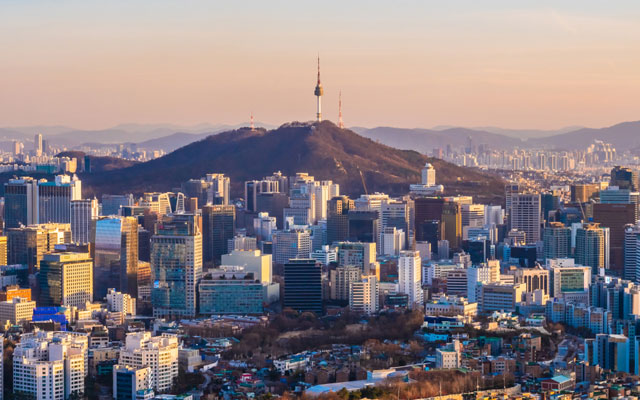
Seoul will be hosting the Council and Committee Meeting of International Actuarial Association (IAA) 2021, the first time the IAA meeting will be held in South Korea.
The IAA conference will bring 400 actuary experts from all over the globe from October 10-15 next year. The twice-yearly meeting is where the board and committee members discuss and decide on pending issues in the field of actuary, and share them via forums and seminars.
Seoul set to welcome its first IAA conference next year
Seoul Tourism Organization (STO) and the Institute of Actuaries of Korea have been working together to host the IAA 2021 meeting in Seoul. Letter of intent proposals, sponsoring site inspections are some of the efforts that helped turn the vote in Seoul’s favour.
The size of the insurance industry in South Korea is one of the biggest in the world (seventh in terms of insurance premium), however, the actuary field of South Korea is not as well-known. Given this, the upcoming IAA meeting in Seoul will be an opportunity to raise the global reputation of South Korea in the insurance industry.
Kim Eun Mi, STO’s director of MICE marketing team, said that he is pleased with the win in the middle of the pandemic, as this also sends a hopeful message to the local MICE industry during a time of many cancellations or postponements.
According to the International Meetings Statistics Report released by Union of International Associations last September, Seoul hosted 609 international conferences in total last year, ranking third in a survey of global cities where most international conferences have been held. This is a 39 per cent increase from the previous year.
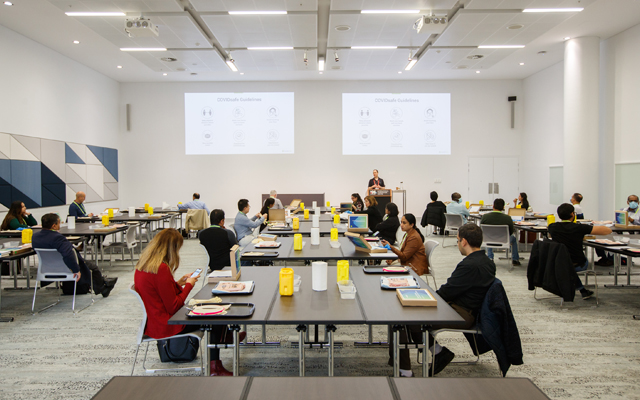
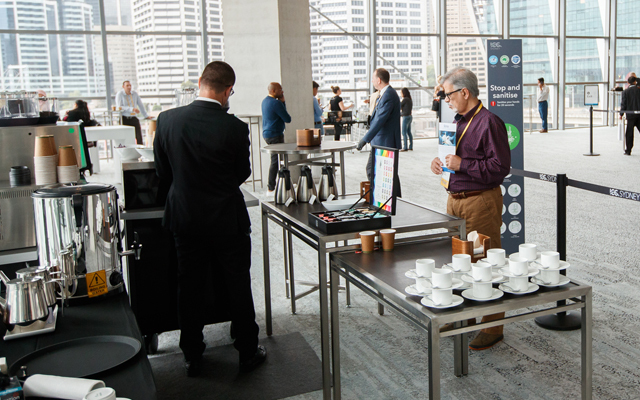
The International Convention Centre Sydney (ICC Sydney) staged its first entirely in-person conference on September 19-20 since Covid-19 restrictions came into effect in March this year.
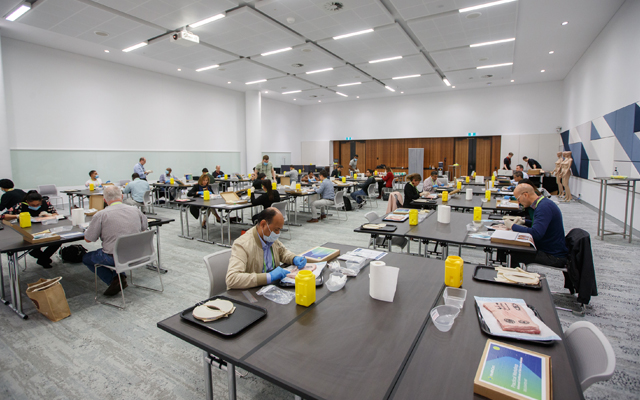
Delivered for medical education provider, HealthCert Education, the venue hosted more than 125 doctors and health professionals who were there to Education certificate courses and workshops.
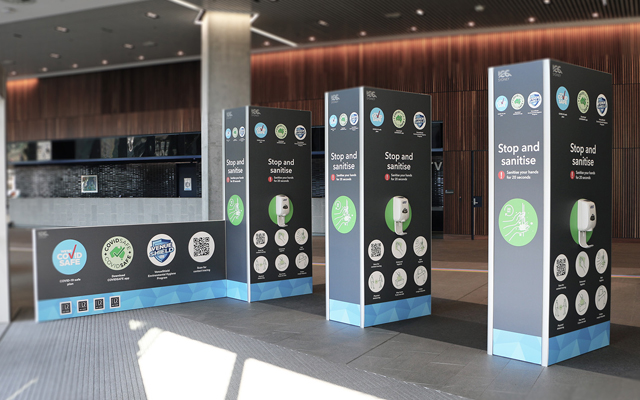
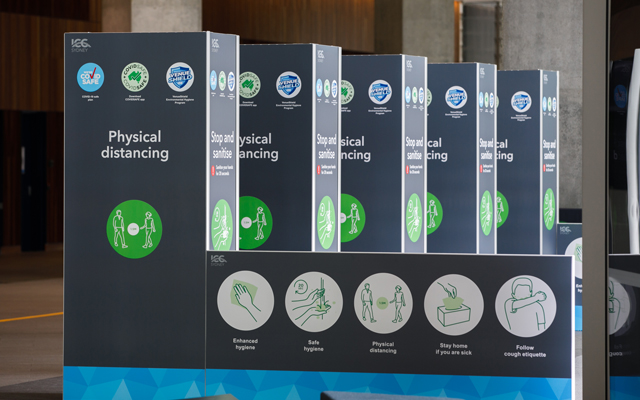
EventSafe framework in action at the ICC Sydney
1 of 5
The conference was delivered in line with ICC Sydney’s industry-leading EventSafe Operating Framework while meeting the current NSW Government 150 person limit per event.
ICC Sydney CEO, Geoff Donaghy, said the event marks an important milestone on the business events industry’s road to recovery following the impact of COVID-19.
“The ICC Sydney team have worked tirelessly to develop a rigorous framework to allow us to begin confidently running in-person events… Through ICC Sydney’s EventSafe protocols, we can continue to bring people together and provide clients with the opportunity to meet with peace of mind that the utmost safety measures are in place.”
ICC Sydney activated various components of its ‘EventSafe’ operating protocols. This included a streamlined event arrival process, extensive hygiene measures including hand sanitiser stations, contactless solutions for payment, regular cleaning of common touchpoints and use of acrylic screens. Additionally, each meeting room was set up to accommodate physical distancing of one person per four square metres and allow for seating to be set 1.5 metres apart.
Founder and CEO of HealthCert Education, Paul Elmslie said delegates were impressed with the safety provisions and quality of the event delivery for the highly practical workshops.
“We couldn’t be more pleased with our experience with ICC Sydney for the HealthCert Education certificate courses and we look forward to collaborating on the upcoming events in our calendar.”
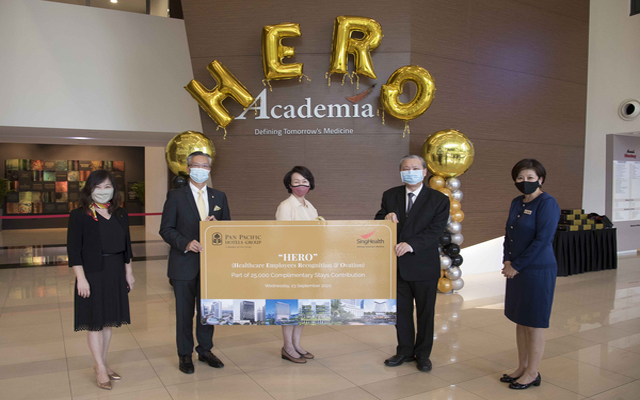
From left: PPHG’s Cinn Tan, Choe Peng Sum and Wee Wei Ling; alongside SingHealth’s Fong Kok Yong and Audrey Lau at the voucher presentation ceremony with SingHealth at Academia
Pan Pacific Hotels Group (PPHG) officially presented 25,000 complimentary stay vouchers to a trio of national healthcare groups on Thursday in honour of Singapore’s healthcare heroes’ dedication to the nation during the Covid-19 pandemic.
As a tribute to their sacrifices in combating the virus, healthcare workers are invited to enjoy a respite with their loved ones at any of the group’s six hotels in Singapore from December 1, 2020 to March 31, 2021.
From left: PPHG’s Cinn Tan, Choe Peng Sum and Wee Wei Ling; alongside SingHealth’s Fong Kok Yong and Audrey Lau at the voucher presentation ceremony with SingHealth at Academia
PPHG CEO Choe Peng Sum presented these complimentary stays vouchers to representatives from SingHealth, National Healthcare Group (NHG) and National University Health System (NUHS) at three separate ceremonial events.
Participating properties include Parkroyal Collection Marina Bay, Parkroyal Collection Pickering, Parkroyal on Beach Road, Parkroyal on Kitchener Road, Pan Pacific Singapore and Pan Pacific Serviced Suites Beach Road.
Each stay comes with a la carte buffet breakfasts, no additional charge for children under 12 years of age and discounted rates for dining at all hotel-operated restaurants and spa services at St. Gregory.
Beyond their stay, healthcare workers will also be given preferential room rates and a complimentary fast-track to the next elite tier in the Pan Pacific Discovery loyalty programme, to enjoy more privileges during future stays and dining at the group’s 50 properties across 29 cities.
Called HERO (Healthcare Employees Recognition & Ovation), the initiative also pays tribute to all healthcare workers in Singapore, who will be given preferential rates when they stay at any of the group’s hotels or serviced suites in Singapore, along with 50 per cent savings for dining and 30 per cent on spa treatments during their stay from December 1, 2020 to March 31, 2021. Healthcare workers can also enjoy 30 per cent savings when they dine at any of the group-operated 20 restaurants and bars in Singapore.
InterContinental Hotels Group (IHG) has opened the InterContinental Residences Jakarta Pondok Indah, the first residences from its luxury brand, InterContinental Hotels & Resorts in the country.
The 193-apartment InterContinental Residences Jakarta Pondok Indah is connected to the five-star InterContinental Jakarta Pondok Indah hotel. This gives residents access to the hotel’s range of facilities such as a 24-hour fitness centre, steam room, sauna and outdoor swimming pool.
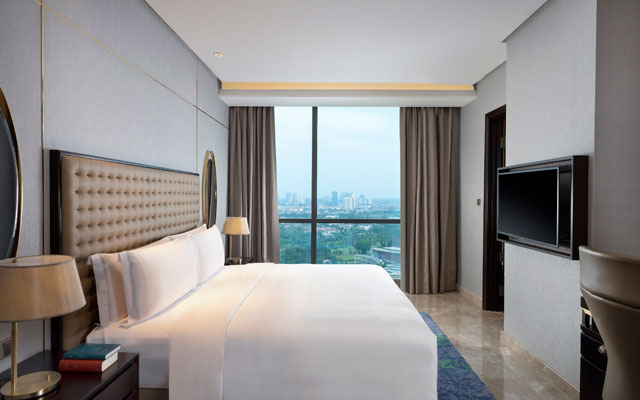
One-bedroom apartment
Residences come fully-furnished with kitchen and a separate dining area, and would be ideal for long-term business guests working in Indonesia’s capital.
The residences is located within minutes of healthcare facilities, international schools, Pondok Indah’s large array of shopping malls with upmarket boutiques and over 200 dining options, and golf course.
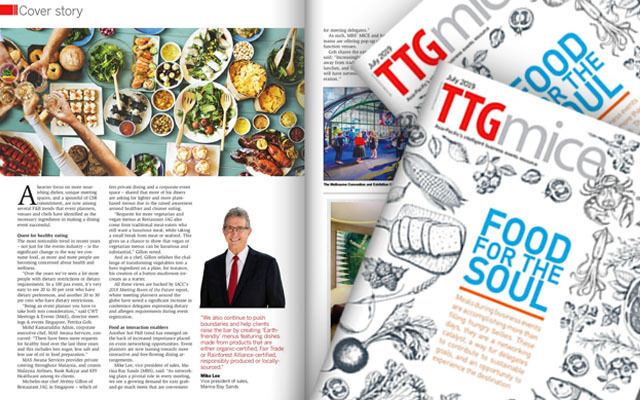
A TTGmice feature on the role event dining functions play in facilitating networking, achieving sustainability goals and delivering unique destination experiences has scored this year’s PATA Gold Award for Business Article.
The feature, titled Food For The Soul, was produced by TTG Asia Media’s editorial staff, Rachel AJ Lee, Adelaine Ng and S Puvaneswary. It was published in the July 2019 issue of the monthly magazine.
TTGmice July 2019’s Food for the Soul feature won the PATA Gold Award 2020 for Business Article
This is TTG Asia Media’s seventh PATA Gold Award for Business Article in over the past decade. TTGmice has scored in this category in 2009, 2011, 2013, 2014 and 2018 previously; TTG Asia Luxury was recognised in this category in 2016.
This year’s PATA Gold Awards ceremony was conducted online in the afternoon of September 24, as part of Virtual PATA Travel Mart. A total of 23 organisations and individuals were recognised this year.
PATA presented 20 Gold Awards to such organisations as Banyan Tree Hotels & Resorts; Department of Tourism, Government of Karnataka; Designated Areas for Sustainable Development Administration; Kazakh Tourism National Company JSC; Macao Government Tourism Office; Mekong River Tourism; Outrigger Hospitality Group; Sampan Travel; SriLankan Airlines; Taylor’s University; and Tourism Authority of Thailand.
Kerala Tourism, India received the PATA Gold Award 2020 Grand Title Winner in Marketing for Education and Training for its Human by Nature Print Campaign.
The Grand Title Winner in Sustainability was presented to YAANA Ventures, Thailand, for the Anurak Community Lodge.
The Grand Title Winner in Human Capital Development was bestowed to MGM China, Macao, China for its Unleashing Greatness – MGM’s Human Capital Development Initiative.
Commenting on the virtual initiative, PATA CEO Mario Hardy said: “This was the first year that we announced the winners live and it was an absolute pleasure to celebrate their accomplishments during the Online PATA Gold Awards Presentation.”
“The achievements of this year’s winners will hopefully inspire and encourage our industry to create new responsible and sustainable initiatives as we look towards recovery from the Covid-19 pandemic,” he added.
The Macao Government Tourist Office remains the event’s partner and sponsor, as it has done for the last 25 years.
Maria Helena de Senna Fernandes, MGTO director, said: “As we look forward to restarting tourism in the ‘new normal’, more than ever we will have to come up with solutions ‘outside the box’ to ensure that tourism is not only safe, but also seamless and appealing. Macao is honoured for its long-standing support to PATA in this inspiring initiative, on our way to transform the city into a world centre of tourism and leisure.”
Just 10 minutes from Phuket International Airport on the serene northern coast, this 178-key, Bill Bensley-designed resort offers delegates a quiet, tropical paradise steeped in Phuket’s tin-mining heritage
The newly-opened Ritz-Carlton, Bangkok anchors the One Bangkok development with cosmopolitan elegance. Featuring the city's largest ballroom and a spectacular new penthouse suite, it delivers exceptional hardware and deeply authentic, soulful service for business and leisure travellers alike
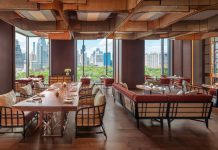
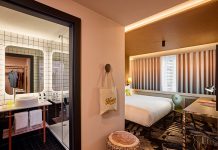
Behind the imposing, Brutalist concrete that defines Zurich’s Oerlikon district lies a surprising secret. While its exterior honours the neighbourhood’s industrial roots, stepping inside Mama Shelter reveals a vibrant, neon-soaked world that is a far cry from its rigid shell