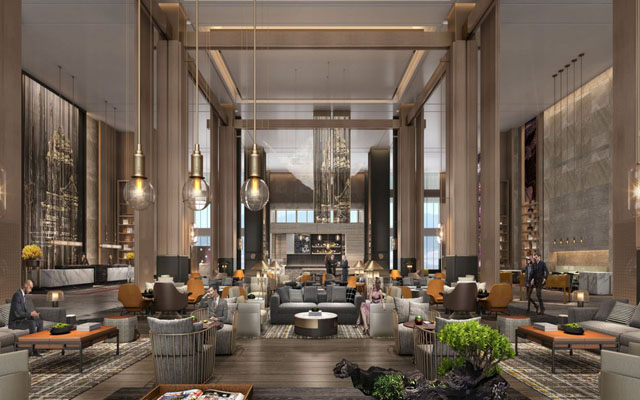
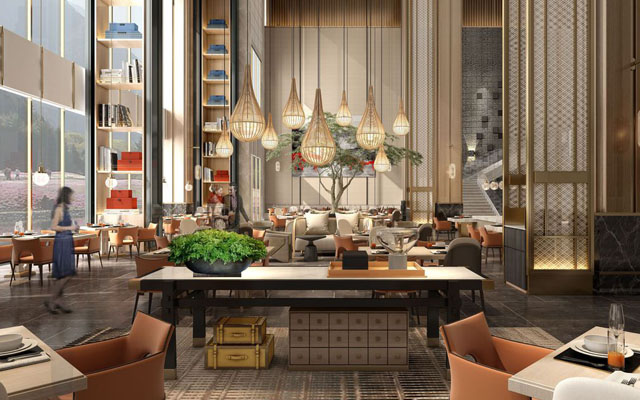
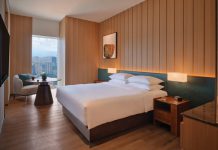
Accor has opened the Pullman Yueyang in China’s Hunan province, where the property is the city’s first international upscale branded hotel.
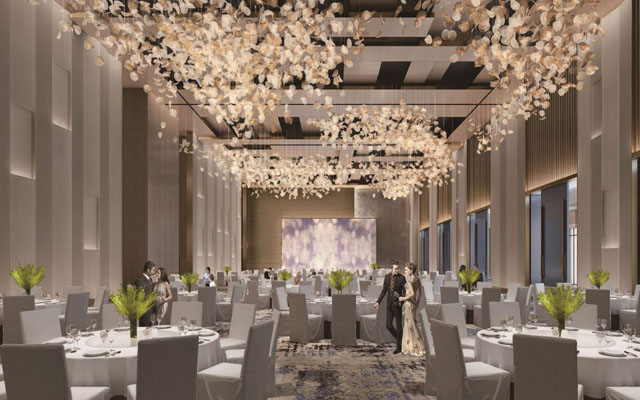
Located by Dongting Lake, the property offers a combined total of 2,800m2 of meeting and event spaces. The largest event space is the 861m2 pillarfree ballroom, which comes deck out with an inbuilt LED screen. An additional 15 meeting rooms, and an outdoor lawn adjacent to the swimming pool, make up the balance of the conference areas.
Pullman Yueyang
1 of 5
Lobby Lounge
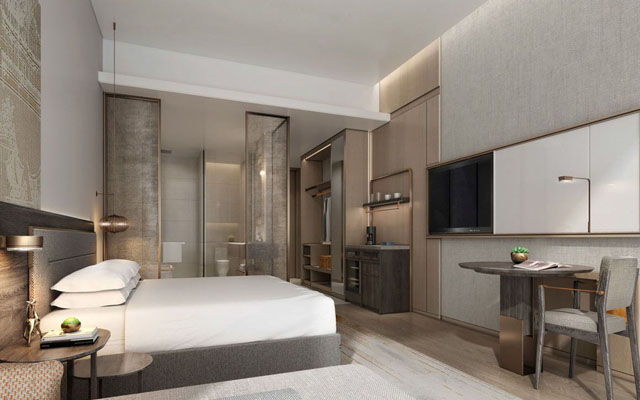
Room
Grand Ballroom
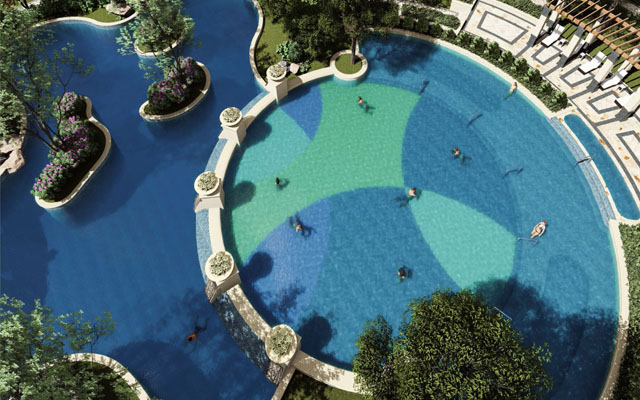
Outdoor Swimming Pool
Lakeside
There are a total of 213 guestrooms and suites within, with the majority featuring balconies and views of the lake. F&B options include the Lakeside All Day Dining restaurant – with five private rooms for intimate luncheons – as well as the Lobby Lounge.
Rounding out the hotel’s common spaces are the wellness facilities – a gym, sauna, and 2,000m2 outdoor swimming pool paradise complex that includes a children’s pool and heated indoor pool.
The hotel is eight kilometres away from the CBD, 30 minutes’ drive from Yueyang East Railway Station, and 35 minutes’ drive from Yueyang Sanhe Airport.
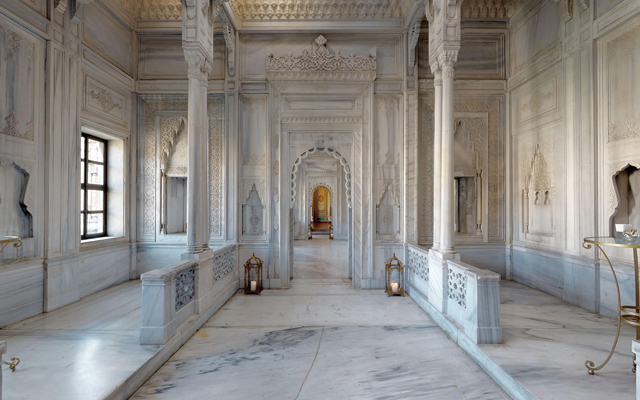
Ciragan Palace Kempinski Istanbul’s grand Turkish bath is a unique event venue
Depending on how one sees it, hotel spaces can be regarded as uninspiring function areas bounded by four walls, or stand as a blank canvas on which event planners can paint their masterpieces on.
As experiential and festivalisation event formats gain traction, hotels with function rooms cannot afford to fall into the first category. They have to find ways to be more creative in transforming their spaces while working closely with event planners.
Ciragan Palace Kempinski Istanbul’s grand Turkish bath is a unique event venue
Liow Qixin, senior account manager, experiential events, Pacific World Singapore, said clients were avoiding conventional venues and reaching for creative options instead – and some would bluntly state that they were not looking for a hotel space.
As such, Liow opined that it is important for hotels to work closely with event planners to dispel the myth that hotel spaces are boring.
Slowly disappearing are run-of-the-mill indoor sessions, complete with tables and chairs. Instead, indoor spaces are now sporting beanbags and wooden pallets to encourage informal networking. Gardens are being transformed into carnival grounds with live cooking stations and a DJ corner.
“We’ve definitely seen an increase in clients wishing to create their own festival atmosphere when planning events,” shared Michelle Sargent, director, CWT Meetings & Events, Australia & New Zealand.
Citing examples, Sargent said exhibition have been conducted on a golf course, and pop-up food stalls or massage stands have been included in conferences and conventions.
For hotels to deliver on such out-of-the-box ideas, Amanda Elder, chief commercial officer, Kempinski Hotels, said it was important that hotel representatives be “extremely familiar with all of their property’s event options and spaces” and be ready to offer creative suggestions that can optimise the use of available spaces.
She related an example from the Ciragan Palace Kempinski Istanbul. The historic building regularly holds conferences for 1,500 guests. To push the envelope, staff came up with the idea of transforming the hotel’s Turkish Bath into an event space for cocktail parties, coffee breaks and dinners.
“With its towering ceiling, engraved wall decorations, ornaments, and columns of pure marble, this one-of-a-kind venue…is hard to beat,” shared Elder.
Ramesh Daryanani, vice president, global sales, Asia-Pacific (excluding Greater China), Marriott International, said “making serendipitous connections…is among the greatest benefits of attending large-scale professional events like conferences”.
Therefore, he stressed the significance of setting an intimate and relaxing conference atmosphere.
When the St Regis brand first entered Shanghai, the team at The St Regis Shanghai Jingan set out to transform the hotel’s spaces into something creative but fit for glamorous occasions. Starting out with a mood board, the team put together modern design inspirations, and went on to completely transform the hotel’s champagne bar.
Featuring an elegant green and marble interior, complemented by soft, pink and velvety chairs, the design brought home a fairytale setting for the hotel’s grand opening.
Both hoteliers and event planners have a part to play to bear impressive event ideas to fruition, opined Elder. She said the hotel team would provide event planners with valuable support in the planning phase and in ensuring attention to aesthetic details.
Due to the pandemic, however, events that have people mingling in close quarters are on hold, and a different kind of creativity is now required.
Milton Rivera, vice president, global business development, global client group & APAC region for meetings and events, American Express Global Business Travel, stressed the need for hotels to beef up their technology capabilities, as virtual events will probably hold sway for the time being.
He elaborated: “Virtual/hybrid events are built on new and exciting technologies that are creating the next level engagement for all attendees. We are in the early demand phase and are finding great benefit bringing speakers and moderators together in a hotel venue, and broadcasting to broader audience groups or hybrid hubs.”
Rivera emphasised that much of the energy at live events come from the speakers and the audience. “Creating two-way interaction (online) is challenging, and that is where the venue and technology providers really need to work hard to come up with creative approaches,” he added.
MITEC incentivises partners that use biodegradable materials
Business events are, without a doubt, a major economic driver but it is also a significant generator of waste through excess food and unwanted marketing collateral and souvenirs.
The good news is, recognition of this weakness is growing and many business events venues in Asia-Pacific are doing their best to minimise waste and more, by striving for better sustainability credentials.
MITEC incentivises partners that use biodegradable materials
Embrace different aspects
Several large event venues in the region have the basics down pat. Think solar panels and maximising natural sunlight; making the switch to energy-saving LED lights; eliminating single-use plastics and using biodegradable disposable cutlery if they must; separating waste and recycling; and working with suppliers in the vicinity to reduce its carbon footprint.
For Malaysia International Trade & Exhibition Centre (MITEC), sustainability efforts started right at conceptualisation.
CEO Gunther Beissel, said MITEC was built with “strict intentions to ensure that the development preserves the surrounding environment”.
Melbourne & Olympic Parks is gunning for a LEED Gold Certification for its soon-to-come Centrepiece at Melbourne Park
That commitment remains, and MITEC makes it a point to reuse as much as possible items left behind at events. Citing examples, Beissel said a backdrop curtain from a gala dinner could be reused as furniture storage covers or curtains for changing rooms, while remnants of timber and pipes from exhibitions would be be taken in for future events.
Looking to sow the seeds of sustainable operations, MITEC incentivises exhibition organisers and partners with certain discounts if they used biodegradable products, and encourages all stakeholders to obtain ISO standards to help develop better regulation.
So serious is the Melbourne Convention and Exhibition Centre (MCEC) about sustainability that it recently appointed a leader for the task: Samantha Ferrier.
Said Leighton Wood, the venue’s chief operating officer: “Sam’s brief is simple – to seek out best practice in green, eco-friendly options and make it easier and more cost-effective for customers to incorporate eco-friendly practices into their events.”
Within the same city limits, Melbourne & Olympic Parks is focusing on the future with Centrepiece at Melbourne Park, opening late-2021. The venue is aiming for LEED Gold Certification, meaning it will be recognised as a green building that practices the highest standards of sustainability.
Lara Burnes, general manager of premier events & experiences at Melbourne & Olympic Parks, elaborated: “The venue has a sophisticated water harvesting system, which will reduce the amount of potable water it will use over a year, by reusing harvested water captured in the precinct’s 4.5 megalitre underground stormwater retention tank.”
Melbourne & Olympic Parks has also partnered with local company Memobottle to offer reusable water bottles as corporate gifts.
Burnes encourages corporates to rethink gifts, saying: “Rather than handing out something that will likely end up in the bin, exhibitors could plant a tree in the name of someone or pay for travel offsets – sharing a gift with their guests that gives back in the long term.”
Marina Bay Sands (MBS) Singapore has chosen to source seafood in a responsible manner.
Kevin Teng, MBS’ executive director of sustainability, said the property has stopped serving species on WWF Red List since 2017, and is on track towards its goal of responsibly sourcing 50 per cent of its seafood by this year.
“To help our clients reduce food miles, we also purchase ingredients which are produced close to Singapore wherever possible. Locally-grown sustainable kale, edible flowers and micro cress are some examples. In 2019, we procured 18,000kg of locally farmed, responsible barramundi, which was also served at our MICE venue,” Teng shared.
The twin complex of Fairmont Singapore and Swissôtel The Stamford, which includes the Raffles City Convention Centre, has introduced the “world’s first Aquaponics farm in an urban hotel setting”, said general manager, Marcus Hanna.
“This project lowers water usage and power consumption for us, and makes real contributions to future global food security. It also greatly reduces the carbon footprint of food as the hotels now produce and supply more of what we need to use, and rely less on external purchases and transportation,” he told TTGmice.
Finding the motivation
Understanding the need to mitigate the amount of waste a large event could potentially generate has made stakeholders mindful of the need to develop new ways to do business even more sustainably and ease the strain on the local environment.
When asked what drives them towards their green goals, Beissel shared that MITEC launched a “#myWorld Programme that supports the development and implementation of minimum standards for sustainable events and exhibitions, allowing the venue to work towards reducing its environmental impact and drive sustainability.
Juliet Alabaster, general manager of business & major events at Brisbane Marketing, notes that “sustainability has become a key factor in the decision-making process of conference and incentive organisers”.
From the bid stage through to planning and event delivery, Brisbane Marketing works with stakeholders to demonstrate its sustainability credentials. Moreover, the Brisbane City Council recognises sustainability as critical to its long-term plan through the Brisbane. Clean, Green, Sustainable 2017-2031 vision.
Being accountable is also a big motivator. MBS’s global corporate sustainability strategy, Sands ECO360, guides the way the property runs its business.
As Fairmont Singapore and Swissôtel The Stamford is part of Accor, the property is required to monitor and provide regular updates on their environmental impact towards the group’s Planet 21 sustainable development programme.
Dream team
Stakeholders say that the best way to better their own sustainable operations is through collaborating and sharing best practices with each other, as a cleaner and greener world would benefit all.
“Nothing good happens in sustainability unless all of the players in the value chain collaborate. All stakeholders need to be educated, coordinated and motivated,” noted Wood.
In order to promote sustainability across the industry, a leadership body is required.
The Exhibition & Event Association of Australasia (EEAA) in Australia, for instance, has created a Sustainability Working Group, comprising representatives from a number of event organisers, venues and suppliers across industry, working together to agree on sustainability practices and targets.
In Penang, Malaysia, Setia SPICE is taking the lead to host more international green conferences in collaboration with the Malaysia Convention & Exhibition Bureau and Penang Convention & Exhibition Bureau.
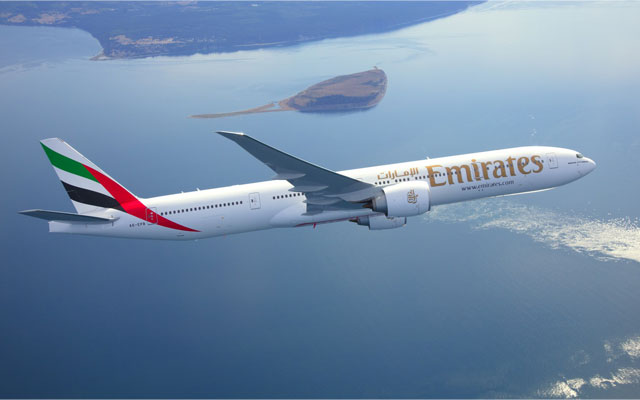
Emirates is the first airline to offer global Covid-19 insurance
Emirates has become the first airline to offer its customers’ free cover for Covid-19-related costs, in a bid to boost travel confidence.
Customers flying with the Middle East airline from now until October 31, 2020, can claim medical expenses of up to €150,000 (US$174,000) and quarantine costs of €100 per day for 14 days, should they be diagnosed with Covid-19 during their travel, while away from home.
Emirates is the first airline to offer global Covid-19 insurance coverage
Sheikh Ahmed bin Saeed Al Maktoum, Emirates group chairman and CEO, said: “We know people are yearning to fly as borders around the world gradually reopen, but they are seeking flexibility and assurances should something unforeseen happen during their travel.”
Applicable across all fare classes and destinations, this cover will be valid for 31 days from when an Emirates’ passenger flies the first sector of their journey.
Customers do not need to register or fill in any forms before they travel, and they are not obligated to utilise this cover provided by Emirates.
Any impacted customer who has been diagnosed with Covid-19 during their travel simply has to contact a dedicated hotline to avail of assistance and cover.
Japan has postponed its plan to further relax event attendance limits amid the rapid uptick of Covid-19 infections across the country, delivering another blow to the battered hospitality and business events industry.
The government had initially scheduled to lift its current 5,000 pax cap on events on August 1, giving organisers leeway to fill their venues “up to about half capacity”.
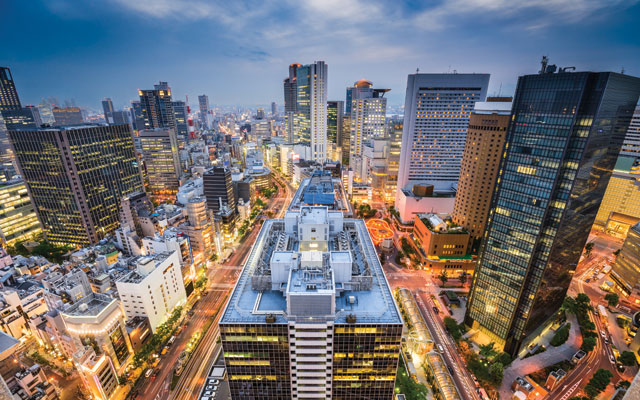
Covid-19 cases are rising again in Japan, forcing the government to halt plans on restoring MICE activities; Osaka pictured
Economy minister Yasutoshi Nishimura made the announcement at a press conference in Tokyo on July 22, pointing to the recent record spikes in Covid-19 cases in the capital and other major urban areas, including Osaka, Aichi and Fukuoka.
On the same day, Japan reported a new single-day record of 795 new Covid-19 cases, exceeding the previous high set in April. Osaka Prefecture confirmed 121 cases, while Aichi and Fukuoka prefectures recorded 64 and 61 cases respectively.
The current limit on event capacity will stay in place until the end of August, according to Nishimura. It is the last restriction in the government’s progressive plan to restore normalcy to Japan’s damaged events industry.
On July 10, Japan eased capacity restrictions for outdoor sporting, concert and other events to a maximum of 5,000 pax from the previous 1,000, provided the number of attendees is within 50 per cent of the venue’s maximum capacity.
Organisers of indoor events, meanwhile, must keep capacity to 50 per cent or below the usual level.
The steps are in line with the government’s request that people avoid the three C’s of closed spaces, crowded places and close-contact settings to help curb the spread of Covid-19.
Venues have been quick to realign to the July 10 guidance, providing event organisers with revised capacity information for indoor and outdoor spaces, as well as information on new health and safety measures for events.
Among those to roll out new event manifestos is Andaz Tokyo, a central venue popular for business meetings and weddings.
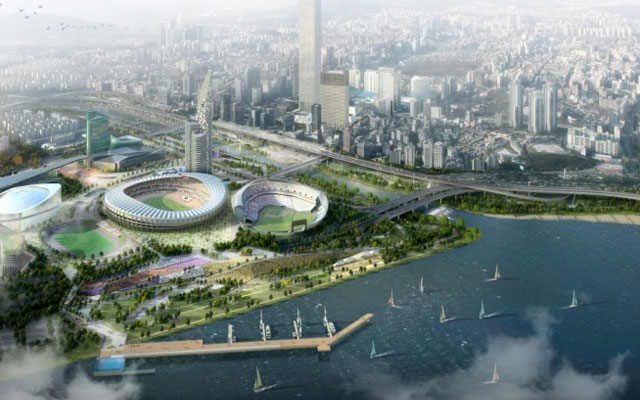
An aerial rendering of how the future Jamil MICE Cluster is expected to look like
The new convention and exhibition facility planned for years for Seoul’s Jamsil district area has finally been given the go-ahead, and bids for operating right will soon open in October.
Currrently, two consortiums led by the Korea International Trade Association and Hana Financial Investment are the two most probable contenders. However, public offerings will begin in October this year, where multiple bidders are expected to join the race.
An aerial rendering of how the future Jamil MICE Cluster is expected to look like
The consortium led by the Korea International Trade Association is a group of 17 institutions and companies including Daewoo Engineering & Construction, Korea Development Bank and Parnas Hotel. Its plan is to create a complex that combines both sports and business events, taking into consideration that Jamsil was where the 1988 Olympics was held.
The consortium led by Hana Financial Investment, on the other hand, is solely made up of private companies in the finance, sports and IT sector that are keen to create a global platform that enables online-to-offline businesses.
The Seoul Metropolitan Government has indicated it will select the winning bidder in March 2021.
Once the winner is selected, the consortium will have the operating rights of the Jamsil MICE complex for 50 years from the expected completion date in 2025.
However, ownership will be held by the Seoul Metropolitan Government.
“The Jamsil Sports-MICE Private Investment Project is a key project to continually strengthen Seoul’s competitiveness. We will thoroughly implement anti-speculation measures by cooperating with the Ministry of Land, Infrastructure and Transport and other related agencies,” said Kim Sun-soon, head of the Seoul government’s regional development division.
When completed, the Jamsil MICE complex will cover an area of 334,605m2, three times the size of COEX. It will comprise of exhibition space, sports facilities, and a new luxury hotel with 900 keys for visiting delegates. Together with the existing Coex venue, both facilities will form a “MICE Cluster” in south-eastern Seoul.
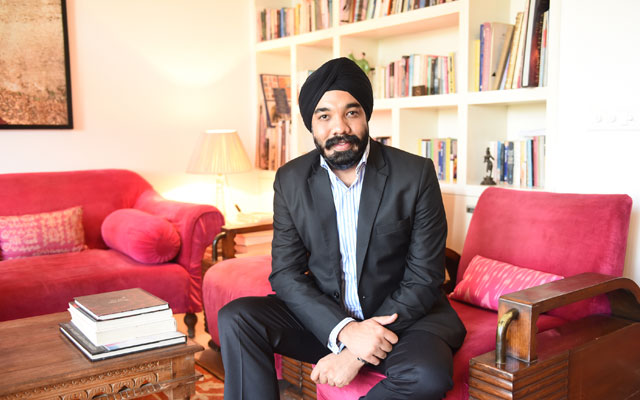
Airbnb has appointed Amanpreet Bajaj as general manager for India, South-east Asia, Hong Kong and Taiwan, taking over from Mike Orgill who returns to his former role as Airbnb’s regional policy director for Asia-Pacific.
In his expanded role, Bajaj will be responsible for driving Airbnb’s strategy and long-term growth in Asia-Pacific. He was previously the company’s country manager for India.
Amanpreet Bajaj
Bajaj will continue to report to Kum Hong Siew, Airbnb’s regional director for Asia-Pacific and COO of Airbnb China.
Before joining Airbnb, he co-founded Letsbuy.com in 2010, which was acquired by Flipkart.com in 2012.
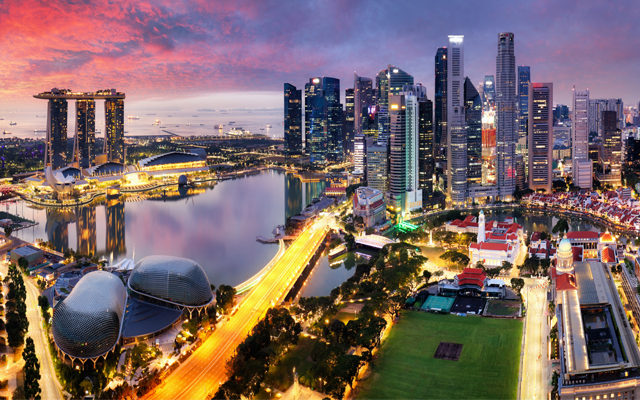
Singapore city panoranora at sunrise with Marina bay
The Singapore Tourism Board (STB) has developed a risk management framework to prepare for the safe resumption of B2B events in the coming months, which may see the gradual return of business events of up to 50 attendees.
STB will trial this framework with two pilot events – the 2020 IEEE International Conference on Computational Electromagnetics on August 24-26, and the Asia Pacific MedTech Virtual Forum 2020 on September 24 – before gradually reaching out to other events and event organisers.
STB has greenlighted two hybrid events as it works towards resumption of business events
The two events were selected as their organisers have actively engaged STB and venues to examine the required safety management measures. They will be conducted in hybrid form, with each event hosting a maximum of 50 onsite attendees, in addition to approximately 1,000 attendees joining in for the streamed sessions.
Held in South-east Asia for the first time, the 2020 IEEE International Conference on Computational Electromagnetics was initially planned for March 2020.
Shen Zhongxiang, the event’s general co-chair, said: “We chose to continue with our conference in Singapore because of the country’s strong track record in delivering quality business events. We have complete trust that the Singapore authorities and our venue partner have stringent measures to help us deliver a safe event for our participants.”
Meanwhile, the Asia Pacific MedTech Virtual Forum 2020, organised by the Asia Pacific Medical Technology Association, will see its delegates participating in virtual networking and online discussions, which may be complemented by physical panel and networking sessions.
If these two events proceed smoothly, STB will consider allowing other B2B events to resume gradually, provided they can implement general and specific safety management measures as required.
These measures must meet the following outcomes: implement pre- and post-event infection control measures; ensure at least one-metre spacing between individuals at all times and/or an operating capacity of 10m2 per attendee for event spaces more than 930m2; ensure a safe and clean environment for both attendees and staff in compliance with the requirements set by Singapore government agencies and SG Clean measures; as well as prepare for any emergencies relating to Covid-19.
From August 2020, STB will work with the industry to trial more B2B events with the framework and event-specific safe management measures, in order to refine the framework before general resumption is allowed.
STB and Enterprise Singapore are also collaborating with the Singapore Association of Convention and Exhibition Organisers and Suppliers to formulate an Industry Resilience Roadmap.
The roadmap will focus on three objectives: establishing best-in-class standards for new event safety measures; creating agile business models with a focus on digital capabilities; and developing pathways for professional development in the post-Covid-19 world.
After 47 years, Hong Kong-based travel management company Jardine Travel will cease operations on August 31, 2020.
A spokesperson for Jardine Travel told TTG Asia that despite its best efforts, the company faced “significant challenges in maintaining a competitive edge alongside multi-location travel agencies”.
Slethaug is confident that the transfer will be a compelling one for Jardine’s clients
Since July 1, 2020, Jardine’s operations has been taken over by Connexus Travel (formerly Swire Travel). Jardine has assured clients, business partners and employees that they are working towards a “smooth transition” which is expected to be completed by August 31.
Connexus Travel’s CEO Gloria Slethaug said that her company is “delighted” to take up Jardine’s travel management business, and promised that it will be a “compelling proposition” for clients. This move also demonstrates Connexus’ confidence in the market as a travel management company committed to “long-term development”.
Slethaug added that technology and digitisation have transformed the travel industry into a highly specialised business sector in recent years.
An industry veteran, who declined to be named, opined that if Jardine Travel had changed its business model earlier, it might have survived.
He elaborated: “When (Jardine Travel’s) general manager retired two years ago, her successor brought on board staff with a background in airlines, GDS, and corporate travel. However, the company remained traditional, and did not expand its distribution platform, or diversified its business for the last 15 years.”
He pointed out that Jardine could have survived if the company had upgraded their IT capabilities, enhanced tools for B2C and B2B partnerships, as well as upskill employees.
There has been an increase in business travel requests from China and India
Outbound agents from Asia’s two most populous countries, China and India, have noticed rumblings in the business travel sector, with demand set to grow next year.
Alicia Yao, managing director, IME Consulting based in China, said her clients from direct selling companies, healthcare and pharmaceutical companies have expressed interest in travelling for overseas business events next year.
There has been an increase in business travel requests from China and India for next year
This sentiment is buoyed by the Chinese government’s ongoing efforts in developing a Covid-19 vaccine. Expected to be ready next year, Yao said the vaccine is driving confidence in the market that travelling abroad for meetings and incentives is finally possible.
Yao was speaking at a recent hour-long webinar, Asia Pacific Business Events Comeback, jointly organised by Business Events Sarawak and Conference People.
Fellow speaker, Nitin Sachdeva, CEO of India-based Venture Marketing, said his corporate clients were also showing interest in overseas trips, shorthaul and overland journeys being favoured.
Group sizes will depend on the capacity of airlines operating out of India, although Sachdeva believes clients will start small and gradually increase participation alongside improved flight frequencies.
He also predicts that planners will lean towards destinations that have contained the outbreak well, and have health, hygiene and safety protocols in place.
“Flexibility in bookings is also very important in instilling confidence in the absence of a vaccine,” he opined.
Event risks have pushed more clients to approach CVBs directly for RFPs – as opposed to DMCs – due to a desire for more reliable commitment from the destination and its bureau towards the event, according to Yao. Doing so would spare the client from problems should a DMC fold, she ventured.
As such, CVBs now have to collate information from DMCs and send out a proposal on their behalf, she explained.
Sachdeva added that “overseas convention bureaus will play a big role in building trust and confidence in their destinations”.
Also present at the webinar was Abdul Khani Daud, CEO, Malaysia Convention & Convention Bureau, who shared that there is a now a greater need for CVBs in South-east Asia to collaborate.
Nichapa Yoswee, senior vice president, strategic marketing and business development, Thailand Convention & Exhibition Bureau, agreed that collaboration was the way forward, and that “a positive mindset” was needed to create “a different experience” when welcoming business groups in the future.
The newly-opened Ritz-Carlton, Bangkok anchors the One Bangkok development with cosmopolitan elegance. Featuring the city's largest ballroom and a spectacular new penthouse suite, it delivers exceptional hardware and deeply authentic, soulful service for business and leisure travellers alike
Behind the imposing, Brutalist concrete that defines Zurich’s Oerlikon district lies a surprising secret. While its exterior honours the neighbourhood’s industrial roots, stepping inside Mama Shelter reveals a vibrant, neon-soaked world that is a far cry from its rigid shell
A polished urban retreat designed for business travellers, Hyatt Regency Kuala Lumpur at KL Midtown combines thoughtful design, seamless service, and exceptional facilities.