Asia/Singapore Wednesday, 17th December 2025
Page 554

Building in a local angle

0

The modern traveller’s penchant for authentic local experiences has conveyed into the business events scene, leading teambuilding operators and event specialists to see a growing demand for team-bonding ideas that provide participants with a taste of the destination.

David Fotheringham, director of Singapore-based Asia Ability, said the opportunity to experience the destination during corporate playtime was especially necessary since event schedules today are too “packed with critical business elements”.

He said: “Delegates can leave thinking, ‘where was this event again?”

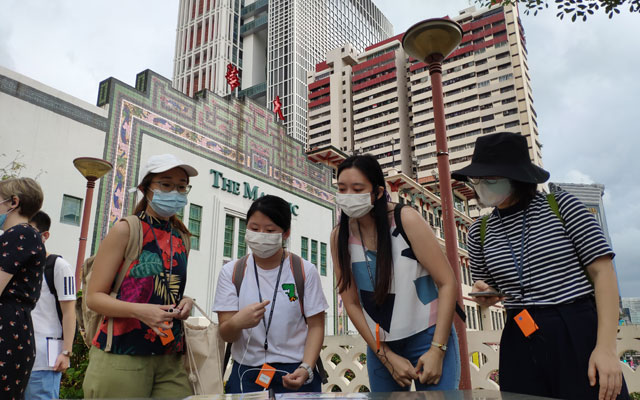
With this in mind, Asia Ability has curated a collection of localised teambuilding activities, such as the indoor Dragon Squad, in which corporate teams build their own Chinese dragons and choreograph a dragon dance; as well as Go Team Singapore Heritage, a GPS-tagged treasure hunt through the cultural enclaves of Chinatown, Kampong Glam and Little India.

Cindy Lie, executive director, Indonesia-based Infinity Holiday, has observed the same growing preference for destination-focused teambuilding sessions.

She recently organised a meeting/incentive trip to Bangkok for an Indonesian insurance company, which featured a teambuilding activity that was built around the concept of living like a local. Delegates got to visited a local market to buy ingredients to make som tam (green papaya salad); travelled by public transport such as the BTS; and learnt muay Thai from a professional.

Karen Livermore, director of sales and events with ID Events Australia, typically builds teambuilding activities around iconic Australian locations. In Sydney, treasure hunts on boats, sailing regattas and other water activities with competitive teams and an educational component are conducted around the famed harbour.

Kristie Turner, director of operations and sales at Uniq Concepts Australia, noted that cultural activities are also high on clients’ priority list.“When people think of Australia, they generally think of a few things: Sydney Harbour (Bridge and Opera House), the Great Barrier Reef, and Uluru (Ayers Rock).  We try, where possible, to always include these in our teambuilding programmes as an immersive experience, with an element of indigenous culture,” said Turner.

Ora-uan Maharpol, MICE manager of ICS Travel Group, observed that such teambuilding programmes are trending in line with the growing popularity of transformational travel, where people seek opportunities to “stretch, learn and grow, as well as get to know the culture, lifestyle and people of the country they are visiting”.

And Vietnam is well placed in South-east Asia to cater to this desire. Its varied landscapes and rich heritage allow planners to create unique and immersive teambuilding activities.

Ora-uan said: “There are so many local cultures, plus the scenery and terrain alters dramatically throughout the country.”

ICS recently led a corporate group to a locally-run speciality coffee farm in Dalat, where part of the teambuilding activity was to learn the entire process of Vietnamese coffee production, including how to be a barista.

Hoa Binh Group’s deputy director general Jackie Han, said Vietnam’s diversity makes it an increasingly popular destination for cultural teambuilding for organisations across South-east Asia.

He remarked: “The diversity means we can easily tailor itineraries to meet demands.”

In creativity we trust
To enable the creation of a truly local teambuilding experience, corporate clients have become more willing to leave the planning process in the hands of destination specialists.

Ora-uan told TTGmice that she gets full control of the programming right from the start.

“Even clients that start by having very specific requirements usually change their itineraries quite dramatically once they realise the full scope of what we can offer,” she said.

Should a client have their own itineraries in mind, Asia DMC’s Cambodia country manager Vanthirith Prak said his team would consult closely with clients on the feasibility and operational procedures.

“It often takes a little talking to explain, but that’s normal. It is often during such explanations that the clients’ eyes grow wider -– and with that an expansion of time and budget,” added Peter Weibel, regional director of MICE for Tour East.

However, Livermore and Turner emphasised that clients will not compromise teambuilding objectives just to make room for creativity. It is common for the more flexible of clients to propose several broad requirements for event agencies to work with, such as specifying a must-do activity with indigenous children.

Coming together for good
Beyond connecting with the destination, teambuilding participants are expecting a more fulfilling experience that can only be obtained through meaningful projects that benefit the local community.

Asia DMC’s Prak said enquiries for teambuilding activities with opportunities to support communities are up. He shared that an IT company recently took time off to build a stilted house for an impoverished family in Siem Reap.

“Teambuilding is not always the main goal, as we have seen several corporates that include team bonding as part of their Corporate Social Responsibility campaigns,” Prak added.

ID Events Australia’s Livermore agreed, sharing that she has noticed how companies are moving “towards philanthropic activities where people have the ability to say they’ve given back to the community”.

Such activities can include building bikes for a children’s charity, or creating indigenous paintings using bottle caps, with the artwork being present to a charity or indigenous group after.

Companies are also taking into consideration current affairs when choosing their teambuilding and CSR programmes.

Turner said: “We’ve had an increase in requests to include projects that involve benefit for those impacted by the recent bushfires (in Australia).”

Wellness-focused teambuilding programmes are expected to trend in the near future

Into the future
So what’s next on the horizon for teambuilding programmes?

Specialists are putting their dollar on nature-based and wellness-focused activities, such as meditation sessions in temples and agricultural farming programmes.

Requests for teambuilding ideas utilising technology, such as gamification, are emerging, said Prak.

Some Japanese companies have started to organise e-sports – gaming competitions – to encourage interaction among their millennial staff.

Japanese telecommunications giant NTT West hosted an interactive e-soccer gaming tournament for its employees and their family members. Some 60,000 staff across western Japan, from Shizuoka to Okinawa, participated in it.

Taking the same route, Hitachi Systems established an e-sports club to promote staff interaction and unity.

On the other hand, Asia Ability’s Fotheringham told TTGmice that is an opportunity for teambuilding trends to shift back to traditional problem-solving games, albeit with a fresh spin.

Asia Ability is playing up trading games for corporate groups, where participants are split into teams that represent trading partners in 18th-century Singapore, namely the British, Dutch, Portuguese, Chinese, Indians and Malays. These ‘traders’ must strike deals to make a profit from goods such as sandalwood and mother of pearl, under the watch of a designated ‘Sir Stamford Raffles’ – the British statesman who founded modern Singapore.

Adelaine Ng, Marrissa Carruthers, Pamela Chow and Rachel AJ Lee contributed to this article

As small event firms fight for survival, retrenchment is last on their mind

0
Smaller event companies throughout the region have been hit hard by Covid-19, where stakeholders have had to deal with close-to-zero revenue in recent months, numerous indefinite postponements and cancellations. As such, they have had to deploy cost-cutting measures, such as chasing clients to settle outstanding bills, thinking of various other revenue streams, all with the aim of keeping as many people employed as possible in such unprecedented times.

Widespread cancellation and indefinite postponement of business events across Asia-Pacific has hit boutique event companies the hardest with many resorting to clawing in outstanding payments and implementing tough cost-cutting measures to maintain cash flow and to retain as many of their staff as possible.

In Indonesia, 70 per cent of members with Indonesia Event Industry Council (IVENDO) and the Indonesia Professional Organizer Society (IPOS) are small companies, shared Harry Nugraha, secretary general of IVENDO and founder of IPOS.

Smaller events companies have been hit hard by Covid-19; heads think of ways to keep as many employed as possible

According to a member study by IVENDO and IPOS with 112 respondents from 17 provinces in the country, 97 per cent have had their 2020 events postponed while another 85 per cent have had their events cancelled ever since the Indonesian government established a social distancing policy on March 2. The number of postponed or cancelled events ranged from one to 15, where estimated losses stood at between 898 billion rupiah (US$56 million) and 2.7 trillion rupiah.

In Singapore, where the government has ordered the suspension of all events with 250 or more participants in attendance at any one time, boutique event agency owners are feeling the heat.

Vincent Tan, founder and managing director of Singapore-based Citrus Events & Communications which has 12 employees, said: “Things are really bad. We’re seeing a total shutdown of our business and we’re now trying to reduce the bleeding. In the meantime, our staff is taking two weeks of no-pay leave per month, but we’re not sure how long this can be sustained.”

The situation is worse in the Philippines, as a nation-wide quarantine is now underway. Orly Ballesteros, business events organiser with Manila-based Ex-Link Events, has had “zero income” and his staff are on compulsory leave.

Despite being on survival mode, many agency owners are prioritising their staff welfare, choosing to hold off retrenchment for as long as their resources last.

IVENDO’s survey revealed a resilience among its members, with the majority (77 per cent) of respondents expressing a determination to keep the business going. To carry them through the tough times, respondents have reduced work hours (30 per cent), chosen to work from home (27 per cent), cut salary (seven per cent). Only five per cent have resorted to retrenchment.

Andrew Koh, managing director of Singapore-based Events Architects, has chosen to stagger his cost-cutting plans in phases.

Koh: prepared for unforeseen circumstances as best they could so pay cuts a last resort

He shared: “The current phase involves several non-salary related cost-cutting measures to further stretch our cash reserves. We will also be sending some of our employees on training courses to upskill themselves within the next few weeks.”

However, if the situation fails to improve, pay cuts will be introduced but “only as a last resort”, he said.

Jason Chew, business event producer at Event Horizon Management in Kuching, Malaysia, told TTGmice that he has reassured staff of no immediate pay cuts. However, he conceded that there was a limit to this measure, saying that resources would only stretch for six months and no more.

To conserve resources, Chew has sent his 20 employees to work from home, which has helped to shave utility bills down. He is also chasing down overdue payments from clients to help boost cash flow.

Yusno: assures staff that no one will get laid off

His compatriot, Yusno Yunos, CEO and founder of Evenesis – Y Us Malaysia, hopes to cover monthly operating costs until business begins to return to normal. Most of Evenesis – Y Us’ conferences have been postponed to 4Q2020 and 2021.

Meanwhile, Ballesteros is reaching for help in higher places, by speaking with the various government agencies such as PACEOS (Philippine Association of Convention/ Exhibition Organizers and Suppliers) and the Tourism Congress of the Philippines for providing financial aid to help cushion the impact of the pandemic.

IVENDO has done the same, appealing to the Indonesian government for tax and credit holidays for the events industry.

While agency owners cannot predict when the pandemic will come under control, they have chosen to focus on what they can control – and that is to find alternative business.

Event Horizon Management and Evenesis – Y Us, for instance, are looking to court companies keen on taking their events online.

IPOS is working towards an online forum that allows hotels in Indonesia to present and promote their properties to corporate buyers, meeting planners and event organisers in anticipation of a business rebound.

Thinking out of the box, Irene Maliwanag, owner of Philippine-based im-ACTIVE Tours, Events, MICE Management & services, has turned to non-event jobs for income. She has taken up the role of an English as Second Language (ESL) teacher, with classes conducted online. – Additional reporting from Pamela Chow, S Puvaneswary, Mimi Hudoyo, and Rosa Ocampo

Malaysia’s trade push back against new stimulus package

0
Malaysia trade urges government to review new stimulus package; Malacca City skyline pictured

The chiefs of Malaysian Association of Tour and Travel Agents (MATTA), Malaysian Association of Hotels (MAH) and Malaysian Association of Convention and Exhibition Organisers and Suppliers (MACEOS) have expressed their disappointment in Malaysia’s economic stimulus package which was announced on Friday.

The RM250 billion (US$57 billion) package is aimed at bolstering its economy and providing relief to individuals and businesses, which are grappling with the impact of the Covid-19 pandemic. It comes in addition to the RM20 billion fiscal stimulus package rolled out last month.

Malaysia trade urges government to review new stimulus package; Malacca City skyline pictured

Highlights of the new package for businesses include providing employers a RM600 monthly wage subsidy for three months to help them retain staff who earn below RM4,000 monthly; giving employers payment options in contributions to the Employees’ Provident Fund (EPF), such as restructuring of contribution schedules or staggering outstanding payments; exemption from the mandatory Human Resources Development levy for six months; and a three-month deferment of income tax instalment payments for all SMEs, beginning April 1, 2020.

Businesses and households will also enjoy free Internet from April 1 until the Movement Control Order ends, and electricity discounts of between 15 and 50 per cent for six months for those with usage below 600 kWh.

Mustapa Mohamed, the minister in the Prime Minister’s Department (Economy), said the stimulus package is “among largest in world”.

However, the travel trade has begged to differ.

MATTA president, Tan Kok Liang, issued a statement that expressed the disappointment in the stimulus package felt by his members. MATTA members said the stop-gap measures failed to address the key issue of job retention in the tourism industry, especially for SMEs

“What will happen after the handouts are fully given out by May when employees find themselves out of a job because the businesses they used to work for have been forced to close?” he asked.

Malaysia’s tourism sector, which employs 3.5 million people and contributes 15.2 per cent to the nation’s GDP, has seen revenues fall by a staggering 90 per cent in March and is looking at a near total-loss in business for the months of April, May and June, according to a MATTA press release.

Tan added that the stimulus does not address the fundamental needs of businesses and will eventually lead to companies having to lay off employees in order to stay in business – a move that will have a “long-lasting ripple effect on many other industries”.

“At this point in time, both employers and employees are willing to compromise to keep people employed but the government is making it somewhat difficult for everyone. For instance, the EPF contributions are only deferred and even then, subject to approval. Even the RM600 staff retention subsidy has questionable eligibility criteria.

“From the way it looks, employees can look forward to some small relief in April and partly in May, but after that, with the prospect of retrenchment looming, they are essentially on their own,” Tan said.

Similarly, MACEOS president, Vincent Lim, has urged the government to review the stimulus package, such that it would benefit players in the events industry in the long run.

“Currently, all business owners are cash-strapped as there are overheads to be covered during this uncertain period. As of March 15, the business events industry has accumulated a total loss of no less than RM1.5 billion. A total of 53 business events have been cancelled, while another 57 events have been postponed indefinitely,” he said in a statement.

With the pandemic, it is expected companies will face difficulties or even wind up soon. At the moment, members of MACEOS are already bracing for the fallout to extend beyond 2020.

Lim added: “As the Stimulus Package 1.0 did not address much of the concerns raised by the private industries, in particular, the business events sector, MACEOS expected that a follow-up package would have mitigated some of the major needs expressed officially to the government through the association.

“The priority should be on assisting businesses, particularly SMEs, in order to sustain the country’s economy. When businesses, especially SMEs, have to wind up tomorrow, many will be forced to retrench their employees.”

Malaysian Association of Hotels (MAH) president, Kamaruddin Baharin, said that the wage subsidies given to employees fall below industry expectations.

“The hotel industry, in particular, had earlier proposed a minimum of RM1,000 per employee, or a minimum equivalent of 50 per cent of the employee’s monthly pay, for a period of six months. This is in response to a much lower occupancy rate projected for the coming months, looking at the situation worldwide,” he said.

“We are looking at an average occupancy for Malaysia of nothing more than 25 per cent in June, and that is if the Movement Control Order ends on April 14 and the spread of Covid-19 (is brought) under control. Recovery is not expected until the third quarter, with the industry putting hopes in the year-end holidays to ease (impact of) accumulated losses for the year,” he detailed.

Kamaruddin added that MAH’s call for banks to waive interests on top of the moratorium, and to reduce employers’ contribution, were not included. Instead, employers are encouraged to consult the EPF on restructuring, rescheduling or postponement of contributions from April 15.

“We all need to work with what is given now, and we will continue to engage and update the government on the situation on the ground, and whether the initiatives are helping (tourism businesses) or if hotels are still forced to close given such unprecedented economic pressures,” he said.

Since February, 2,041 employees in the hospitality industry have been laid off, while 9,773 have gone on unpaid leave and another 5,054 forced to take pay cuts, according to MAH statistics. This number is based on a sampling size of 56,299 employees and is set to grow over the next few months.

Malaysia Budget Hotel Association deputy president Sri Ganesh Michiel has called on the government to introduce a separate stimulus specially catered to the tourism sector.

Brisbane convention centre may be transformed into temporary hospital

0
Queensland planning for temporary emergency hospitals for Covid-19 victims; Royal ICC pictured

The Royal International Convention Centre (Royal ICC) in the Brisbane Showgrounds could be converted into a makeshift hospital to treat minor Covid-19 cases and free up hospital beds amid the pandemic, according to an official statement by Annastacia Palaszczuk, premier and minister for trade, Queensland, as released by Queensland Health on March 29.

Located 1.5km from the city centre, the Royal ICC comprises three flexible exhibition or conference halls spanning a total of 3,213m2 on the second level, as well as 1,280m2 of foyer space. There are also plans to activate the entire Brisbane Showgrounds, which were used as a treatment centre in the 1918 Spanish Flu pandemic.

Queensland planning for temporary emergency hospitals for Covid-19 victims, Royal ICC (pictured) one of such locations

The Showgrounds have been playing host each year to the Royal National Agricultural and Industrial Association of Queensland’s Royal Queensland Show – billed as the largest annual show in the state drawing 400,000 people.

Other facilities that Queensland Health is considering to be transformed into temporary hospitals in the case that the state needs to free up beds include hotels near Queensland’s major hospitals and even mining camps.

“I hope it doesn’t come to this but the coronavirus pandemic is upon us now and our hospitals and medical staff could be under enormous strain over the coming months,” Palaszczuk said in an official media statement.

Palaszczuk is hopeful, however, that the curve could be flattened should locals take the necessary precautionary measures and such conversions may be rendered unnecessary.

Queensland Health’s official announcement came three days after Australian newspaper The Age reported that the Melbourne Convention and Exhibition Centre (MCEC) could be converted into a temporary intensive care hospital and morgue, according to sources from the Victorian government and within the industry.

When asked about the credibility of the reports, MCEC was not able to provide confirmation, but told TTGmice that it “stands ready to support the community through this challenging time, in whatever way necessary”.

The MCEC closed its doors on March 16, 00.00, in light of tighter restrictions put in place by Victorian authorities, and is set to remain closed till April 13.

Peter King, CEO, MCEC said it has offered “immediate financial relief for casual and permanent employees affected by the closure” and is working with event organisers to find “alternative arrangements”.

Malaysian convention centres dangle virtual meeting options

0
Malaysia International Trade and Exhibition Centre exterior

Two major convention centres in Kuala Lumpur have taken steps to innovate and promote online events as the business events industry takes a beating due to Malaysia’s lockdown.

Malaysia International Trade & Exhibition Centre (MITEC) has launched a Events Beyond Boundaries package that promotes virtual meetings, conferences and product launches through live streaming.

Malaysia International Trade and Exhibition Centre explorers another avenue stream

CEO, Gunther Beissel, said the new revenue stream is “safe and secure”, and allows viewers to participate virtually while adhering to the law.

Meanwhile, earlier this month, Kuala Lumpur Convention Centre hosted the Ottawa Conference on the Assessment of Competence in Medicine and the Healthcare Professions (Ottawa Conference) 2020. By this time, international participants could not travel to Malaysia due to border shutdowns, travel restrictions, and suspension of flights, but they could still participate in the conference virtually.

The organiser made last-minute changes to the event format, utilising the venue’s information technology and audiovisual infrastructure, to allow participants and speakers to engage in the conference remotely.

Angeline van den Broecke, director of global business development and marketing with Kuala Lumpur Convention Centre, shared: “Investment in technology and commitment to remain agile has been particularly advantageous in current times, amid the Covid-19 outbreak where we see a growing demand for virtual audience participation and remote access to content, event programmes and digital communication tools.”

Adapting to the times

0

How did you arrive at the decision to go through with the tech event despite event cancellations across the globe?
Ten days before the start of QODE Brisbane on March 13, it became apparent that large public gatherings (in Australia) would be prohibited. That evening, we had dinner with three of our global speakers who had already arrived in Brisbane, and the idea of going virtual was hatched.

On Saturday morning, we all met to start planning, and I called my contacts to see who we could work with on a global platform and who could build a virtual expo for us.

Previously, we’d built smaller virtual expos during my time at CeBIT (regarded as one of the world’s most foremost computer expo), but this needed to be quick and very interactive for business. By the end of Saturday, we had our plan and team in place.

How did you gauge the festival could go completely online?
Being a programmer, founder and event owner in technology, we knew the technology was out there – but it was about pulling the right team of experts together in a short time. We had eight days to go live.

Innovation usually comes when it’s pushed hard and fast – when all minds are working 24/7, that’s when you get a breakthrough! We contacted all of our speakers and exhibitors – around 85 per cent jumped on board even though it was a first for everyone. That’s the great thing about innovation – you have to pivot and shift to survive and those who do will survive and those who don’t, won’t. It was a very challenging week, but it was very rewarding.

What do you think this holds in store for future festivals?
As our global speaker Roey Tzezana said, we will be spending increasingly more time in the virtual world and less in the real world. I believe we will have both, but for the next 18 months or more, it will only be online. That is clear.

It’s a really tough year for the industry. How long do you think it’ll take to recover?
From the information and data we have received, it will be more than 18 months and I would think we will have (created) a new industry during this time. We have to, as we must go on and keep communication open – that’s more important than ever before. We have to adapt and innovate, which we at QODE did and will continue to do.

For us, we are moving forward and exploring other forms of communication and ways to connect. I think you have to move forward – in my experience, not doing so leads to negativity. We need to focus on the positives and work on what can be done, not what can’t be.

What are some of the takeaways from QODE Brisbane Virtual and what does it mean for the global MICE industry?
We have a big industry here. One of the most gratifying parts of running QODE Brisbane Virtual was the number of people from the industry who personally thanked me for pushing through, showing we still had an industry and there was hope and opportunity to continue.

The event industry employs many people – security, riggers, cleaners, AV technicians, ushers, food handlers, chefs, front of house, back of house, stand builders, lighting technicians, etc. Millions of people rely on this vibrant industry and we need a positive way forward and QODE Brisbane, in our small way, showed we can all pivot and shift to a new way for events.

There were about 45 of us whom all worked together in the eight days (of setup) – programmers, organisers, camera crews, lighting technicians, AV engineers, sound engineers, global platforms, creative directors, artists, stage builders, and directors – to make this all happen. It wasn’t one person, it was a global team of committed innovators wanting to make innovation happen in our new world and industry.

Keep positive and let’s all work together, as it will be through community and togetherness that we will get through this.

Remote workers drive demand for Skye Suites in Australia

0
SKYE Suites Sydney see a spike in bookings as many start working from home

Skye Suites serviced apartment hotels in Sydney and Parramatta have seen a spike in bookings the past week coming from remote workers needed a quiet place to work, as well as people waiting for flights and borders to reopen.

This was a result of the hotel group’s move into the long-stay market in response to the changing needs of travellers. It has seen a seven per cent lift in forward bookings for April.

SKYE Suites Sydney see a spike in bookings as many remote workers seek a conducive work environments

Crown Group COO Pierre Abrahamse said in a press statement: “This rapidly changing travel landscape has had a dramatic effect on hotel bookings at our two hotels, in Sydney and Parramatta.

“Since we went out with our messaging and new pricing earlier this week for a long-stay offering, we’ve seen a noticeable spike in bookings from people looking for a quiet space to work from…or while they work remotely.

“We’ve had one company CEO book in for three months so he can work somewhere quiet during the day, away from the distractions of his family, and a doctor book for a month while he is stationed in Sydney temporarily.”

Meanwhile, Crown Group will keep to plans to open a third Skye Suites this mid-year in Sydney. Located above Green Square train station, Skye Suites Green Square will have 90 luxurious apartments in a precinct designed by globally renowned Koichi Takada Architects.

Ernesto Osuna helms Meliá Koh Samui as GM

0

Meliá Hotels International (MHI) has appointed Ernesto Osuna as general manager of Meliá Koh Samui, the brand’s first international property, in Thailand.

Having been with MHI for seven years, Osuna’s previous roles in the company include cluster general manager for two Meliá properties in Zhengzhou, China – Gran Melia Zhengzhou and INNSIDE Zhengzhou. The Spaniard also oversaw the 2015 opening of Meliá Danang in Vietnam, and was also general manager of Meliá Buenavista in Cuba.

The industry veteran began his career at the Ritz Hotel in Madrid in 1997 as a room service operator, waiter, and then, restaurant supervisor. He then swiftly rose through the ranks and assumed hotel manager and general manager positions at numerous five-star resorts, such as Starwood Hotels & Resorts, Westin Hotels & Resorts and The Excellence Collection.

Lay-offs ordered in tourism and meetings industry associations

0

Some global and regional industry associations have become victims of the Covid-19 pandemic, with lay-offs and suspension of operations being ordered.

The Association of Corporate Travel Executives (ACTE) has suspended operations through May 2020.

Cerezales: associations without the right cash positions and good reserves are at risk

An email to ACTE executive director, Leigh Bochicchio, to verify if the association is laying off its global staff, received the following automatic reply: “As a result of the global impact of the Covid-19 pandemic, ACTE has suspended operations through May 2020.”

Meanwhile, a source said two positions at regional association, Meetings & Events Australia have been impacted, that of the national events manager and the partnerships manager.

At press time due to the time difference, TTGmice could not verify if the Global Business Travel Association (GBTA) had to let go of about one-third of its staff.

Commenting on the unfolding situation, Oscar Cerezales, global executive vice president, MCI told TTGmice that associations he knows of are not laying staff off.

Cerezales continued: “But obviously it will depend on how much time passes until the recovery, and (lay-offs) may start at some point.

“A lot of associations and all industries will go through it eventually, especially those without the right cash positions, good reserves, etc.”

Among associations TTGmice contacted, Noor Ahmad Hamid, regional director Asia Pacific, International Congress and Convention Association, said staff all over the world were continuing to work from home.

“We have systems in place and we are able to serve our members, provide training and also organised a global webinar this week,” said Noor.

It is also business as usual for the Corporate Travel Community, according to Benson Tang, executive director.

Tang commented: “We are under Informa Group and we have the financial strength to pass through this turmoil.

“We will continue to contribute and unite the global corporate travel industry together. On June 17, 2020, our Shanghai Education Gathering in Waldorf Astoria will go ahead as planned.”

OUE to rebrand Mandarin Orchard into largest Hilton hotel in APAC

0
XX

Property group OUE and OUE Commercial REIT (OUE C-Reit) will spend S$90 million (US$62 million) to rebrand Mandarin Orchard Singapore to Hilton Singapore Orchard, following an agreement with Conrad International Management Services (Singapore), said OUE in a press release.

The revamped property will be Hilton’s flagship hotel in Singapore, and its largest in Asia-Pacific.

OUE to rebrand Mandarin Orchard Singapore as Hilton’s flagship

The hotel’s rebranding will see the addition of new meeting facilities and F&B offerings to cater to the growing demand for regional and global corporate events.

The planned refurbishment will be conducted in phases and will commence in 2Q2020 to capitalise on the current challenges facing the hospitality industry due to Covid-19. It is scheduled for completion by end-2021.

Until then, Mandarin Orchard Singapore will continue to operate under the management of Meritus Hotels & Resorts, the hotel management company under the hospitality division of OUE.

Upon its relaunch in 2022, the hotel will feature 1,080 rooms, five F&B venues including an all-day dining restaurant, as well as meeting and function spaces spanning a total of 3,765m2, including three ballrooms.

Tan Shu Lin, CEO of OUE C-Reit’s manager, said that the current challenges faced by the Singapore hospitality sector due to the global coronavirus pandemic “present a timely opportunity for us to carry out the extensive renovations, with the rebranded hotel expected to be ready in time to take advantage of the sector’s anticipated recovery”.

Mandarin Orchard Singapore is part of OUE C-Reit’s portfolio, under OUE Hospitality Sub-Trust. OUE is the master lessee of the property.

Reviews

Hyatt Regency Kuala Lumpur at KL Midtown

A polished urban retreat designed for business travellers, Hyatt Regency Kuala Lumpur at KL Midtown combines thoughtful design, seamless service, and exceptional facilities.

A versatile powerhouse

Arena @ Expo, a multipurpose concert hall at the Singapore Expo is a flexible space for high octane concerts and lifestyle events.

Amari Bangkok

The five-star property excels in backing its expansive facilities with seamless service and personalised attention, setting the benchmark for luxury in Bangkok.