Asia/Singapore Wednesday, 17th December 2025
Page 555

OUE to rebrand Mandarin Orchard into largest Hilton hotel in APAC

0
XX

Property group OUE and OUE Commercial REIT (OUE C-Reit) will spend S$90 million (US$62 million) to rebrand Mandarin Orchard Singapore to Hilton Singapore Orchard, following an agreement with Conrad International Management Services (Singapore), said OUE in a press release.

The revamped property will be Hilton’s flagship hotel in Singapore, and its largest in Asia-Pacific.

OUE to rebrand Mandarin Orchard Singapore as Hilton’s flagship

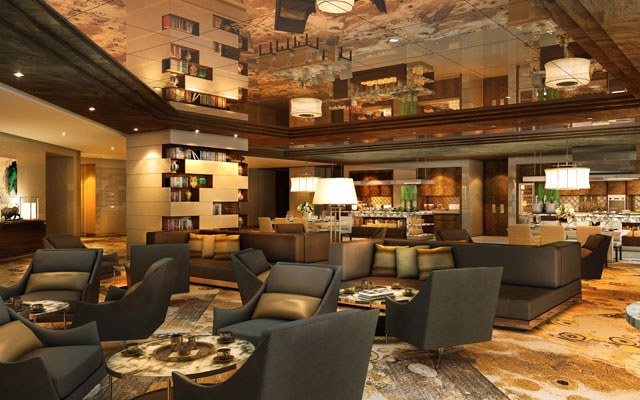
The hotel’s rebranding will see the addition of new meeting facilities and F&B offerings to cater to the growing demand for regional and global corporate events.

The planned refurbishment will be conducted in phases and will commence in 2Q2020 to capitalise on the current challenges facing the hospitality industry due to Covid-19. It is scheduled for completion by end-2021.

Until then, Mandarin Orchard Singapore will continue to operate under the management of Meritus Hotels & Resorts, the hotel management company under the hospitality division of OUE.

Upon its relaunch in 2022, the hotel will feature 1,080 rooms, five F&B venues including an all-day dining restaurant, as well as meeting and function spaces spanning a total of 3,765m2, including three ballrooms.

Tan Shu Lin, CEO of OUE C-Reit’s manager, said that the current challenges faced by the Singapore hospitality sector due to the global coronavirus pandemic “present a timely opportunity for us to carry out the extensive renovations, with the rebranded hotel expected to be ready in time to take advantage of the sector’s anticipated recovery”.

Mandarin Orchard Singapore is part of OUE C-Reit’s portfolio, under OUE Hospitality Sub-Trust. OUE is the master lessee of the property.

Malaysian hoteliers brace for further fallout from lockdown extension

0
Malaysia extends national lockdown by two weeks

Malaysia has extended its existing 14-day nationwide movement control order (MCO) from March 31 to April 14, as the number of coronavirus infections have yet to be reduced.

The two-week extension, which was announced by Malaysia’s prime minister Muhyiddin Yassin yesterday (March 25), may be a bitter pill to swallow for the travel trade but a necessary measure to stem the spread of Covid-19.

Malaysia extends national lockdown by two weeks

As of March 25, 22.00, the number of Covid-19 cases in Malaysia rose by 172 to hit 1,796, with a death toll of 20.

KL Tan, president of the Malaysian Association of Tour and Travel Agents (MATTA), opined that the MCO’s extension will not have much further impact on the travel and tourism industry, which is already severely battered.

He shared: “There is little business for tourism players, particularly those in inbound, as tourists from traditional markets may not be able to travel as their countries are under lockdown or airlines have cancelled flights.

“Our main focus should be on battling the outbreak. It is better to get rid of the coronavirus totally than lifting the MCO prematurely and reintroducing the virus.”

Commenting on the impact of the MCO’s extension, Malaysian Association of Hotels (MAH) CEO, Yap Lip Seng, shared: “Our estimates, based on historical data, showed at least a RM560 million (US$127.3 million) loss in (hotel) business just for the first 14 days of MCO (from March 18 to 31).

“An extension (of the MCO) for another 14 days would mean over RM1 billion in losses for the industry. According to our survey, the MCO – on top of losses caused by the outbreak of Covid-19 in general – are forcing employers to impose pay cuts and asking staff to take unpaid leave, and some are even laying off employees.

“As of now, approximately nine per cent of employees in the hotel industry are taking a pay cut, while 17 per cent have been put on unpaid leave, and four per cent laid off.”

Frangipani Langkawi Resort & Spa will be offering full refunds to guests who have booked their stays from April 1 to 14.

To further cut costs, managing director Anthony Wong said senior staff may be asked to take two days off every week during the MCO period.

Meanwhile, MAH has proposed a series of financial initiatives to the government, which entails looking beyond moratorium of loans as it does nothing to lessen the burden on businesses and individuals, and they may even end up with higher debts due to accumulated and extended interests.

Yap stressed: “We need the government to instruct banks to waive interests temporarily to help sustain businesses.”

Among the proposed initiatives are for an additional economic stimulus package which includes increasing electricity discounts from 15 per cent to 30 per cent from April 1 to September 30; a minimum reduction of five per cent of employers’ contribution to the Employment Provident Fund up to December 2020; as well as a RM800 monthly subsidy for employees with a monthly wage of RM4,000 or less up to December 2020.

A new and comprehensive economic stimulus package, which has been described as a “people-caring” one, will be tabled tomorrow.

Thailand plans stricter measures to fight Covid-19 spread

0

Thailand prime minister Prayut Chan-o-cha has invoked the Emergency Decree across the kingdom, which comes into effect today, March 26 until April 30, 2020.

The Emergency Decree will allow the prime minister to launch appropriate measures to prevent and mitigate the spread of the virus which has resulted in a total of 934 as of March 25, including four fatalities.

The Emergency Decree will allow the prime minister to launch new measures to fight the pandemic

The new measures, would would be aimed at limiting people’s movements, will join previously announced ones such as temporary closure of venues, and cancellation of events and festivals.

To help travellers as well as travel and tourism industry players keep pace with the fluid situation on the ground, the Tourism Authority of Thailand is publishing updates at the TAT Newsroom.

Travellers can also check for updates with the Thailand Department of Disease Control.

Al-Amiry takes dual role with Kempinski

0

Matthias Al-Amiry has taken on a dual role with the Kempinski Hotels group – managing director of The Capitol Kempinski Hotel Singapore, and regional vice president South-east Asia for the Kempinski Hotels group.

Aside from managing The Capitol Kempinski Hotel Singapore, he also oversees Kempinski’s properties in Bangkok, Jakarta and Bali as well as the future Hotel & Residences in Kuala Lumpur. Al-Amiry is also responsible for future projects in the area.

The German, who recently held the position of managing director in Kempinski’s flagship property, Adlon Kempinski Berlin, brings more than 30 years of hotelier experience to Singapore.

In 2001, Al-Amiry was appointed the director of F&B and regional F&B director Europe at the Raffles Hotel Vier Jahreszeiten, Hamburg. He then joined The Peninsula Manila, Philippines, in 2003 as executive assistant manager in charge of F&B, before being promoted to resident manager in 2007.

In 2009, Matthias became the general manager of Al Faisaliah, a Rosewood Hotel Riyadh, Saudi Arabia. He then changed geographies once more in 2011, by taking on the role of general manager at the Raffles Beijing Hotel, People’s Republic of China. In 2014, he joined the MGM China development team, Macau as vice president hotel operations MGM China, Cotai.

Philippine hotels, resorts pitch in to back Covid-19 battle

0

Although the Philippines’ tourism sector is one of the hardest hit by the Covid-19 pandemic, it is also one of the fastest in responding to the needs of the community.

At least eight budget hotels in metro Manila have offered their facilities for free to house medical frontliners from various hospitals.

Personal protective equipment, N95 masks, test kits and alcohol are among the necessities donated by Philippine hotels and resorts to the country’s healthcare community

The number is likely to shoot up as the Congress and Senate have given the Philippines’ president the power to direct the operations of any privately-owned hospitals, medical and health facilities, as well as hotels and other similar establishments to temporarily house healthcare workers, serve as quarantine centres, and medical relief and aid distribution locations, with appropriate compensation.

The drastic need for more spaces ensued as some major metro Manila hospitals find themselves packed to the rafters and unable to receive more Covid-19 patients, which surged to 522 yesterday.

Since Luzon is on lockdown until April 12, all hotels and restaurants have been closed, domestic airlines have ceased operations, mass transport is suspended, and inbound and outbound travel banned.

The state-owned Philippine Amusement and Gaming Corporation announced that the metro’s four integrated resorts have donated 210 million pesos (US$4.1 million) to boost the government’s efforts in cushioning the economic impact of the Covid-19 pandemic.

Coming from Solaire Resort and Casino is 60 million pesos worth of personal protective equipment (PPEs) and N95 masks for medical frontliners in various hospitals dealing with Covid-19 cases.

Meanwhile, Okada Manila has shelled out 50 million pesos for testing kits, PPEs, validator/testing machines, masks and alcohol for the Philippine General Hospital.

On the other hand, City of Dreams Manila donated 675,000 kilos of rice, 500,000 bottles of water, 500,000 cans of sardines, 250,000 cans of tuna, 500,000 cup noodles, with a total worth of 50 million pesos to relief centres, affected families and healthcare providers.

In addition, Resorts World Manila released 50 million pesos for the procurement of PPEs and infrared thermometers, as well as other essential items for public hospitals and grocery packs to community beneficiaries.

City of Dreams Manila and Okada Manila have also lent their shuttle buses to help transport health workers in and around Paranaque City.

Public venues, activities in SG face stiffer restrictions

0
Singapore enforces stricter measures; F&B venues in Clarke Quay pictured

All Singapore organised guided tours, as well as entertainment venues such as bars, cinemas and theatres, will be shuttered from March 26, 23.59, to April 30, announced the government’s multi-ministry coronavirus taskforce yesterday (March 24).

It has also announced the suspension of all events and mass gatherings regardless of size. This includes shows within all attractions, group tours in museums, trade fairs and exhibitions. Social gatherings have also been limited to a maximum of ten persons.

Singapore enforces stricter measures; F&B venues in Clarke Quay pictured

Other venues where contact is transient, like shopping malls, museums, attractions and restaurants, will remain open, but operators are required to ensure there is no more than one person per 16m2 of usable space.

Furthermore, Singapore residents returning from the UK and the US from Wednesday (March 25), 23.59, will serve out their 14-day stay-home notices at dedicated hotels, instead of at home.

Any citizen who breaches the notice would be liable for a fine of less than S$10,000, or a jail term of less than six months, or both.

Additionally, Singapore residents or long-term pass holders who leave Singapore from March 27 will be charged unsubsidised rates should they be hospitalised in public hospitals for Covid-19 treatment.

The measures come as Singapore reported 49 new Covid-19 cases, including 32 imported cases, on Tuesday. This brings the country’s total to 558 cases.

Announcing the measures, national development minister Lawrence Wong described them as pre-emptive, but necessary at a time of high risk.

He said: “The threat of a widespread virus outbreak is very real because the imported cases are continuing to rise due to the large number of returning Singaporeans, and despite our best efforts to isolate these cases to ring-fence any new clusters that pop up, the risk of local transmission will rise as we have more imported cases. So we have to take seriously the measures to protect ourselves, our family members and the people around us.”

He added that the measures may be extended past April 30 “if the situation does not improve”.

Singapore’s deputy prime minister Heng Swee Keat said through a Facebook post that on Thursday (March 26), he will present “a further set of measures aimed at preserving jobs and livelihoods, helping viable companies stay afloat, and supporting (Singapore’s) households”.

“More support will be given to the most severely impacted sectors,” he assured.

India orders 21-day lockdown

0
View over Old Delhi from minaret of Jama Masjid mosque

Indian prime minister Narendra Modi has ordered a 21-day nationwide lockdown which started immediately on March 25 at the stroke of midnight.

The decision will require the suspension of all road, rail and air services, as the country makes a bigger effort to contain the spread of Covid-19.

View over Old Delhi from the minaret of Jama Masjid mosque

In a special televised address on Tuesday night, the prime minister said that even those nations with the best medical facilities could not contain the virus and that the social distancing is the only option to mitigate it.

Modi acknowledged that the lockdown would mean a hefty economic loss for the country but insisted that it was his priority to “save the life of each and every Indian”.

“Hence, It is my plea to you to continue staying wherever you are right now in the country,” he said.

According to the Associated Chambers of Commerce and Industry of India, the country has lost about 1.5 million foreign tourist arrivals for the months of March and April.

“Jobs and businesses are at stake. We, the inbound tour operators, are in serious trouble,” Arun Anand, managing director of Midtown Travels, told TTG Asia.

“We need to pay salaries to our staff despite having no business. Office rental and government taxes are making our lives more difficult,” he said.

With growing numbers of global infections, Arun is bracing for zero foreign arrivals to India for another seven to eight months.

Seoul Convention Bureau enhances subventions for post-Covid-19 recovery

0
Seoul (pictured) is ready to welcome MICE visitors back once the dust settles

Seoul Convention Bureau (SCB) has rolled out a new PLUS SEOUL programme to further help the business events industry in Seoul recover once the Covid-19 situation blows over.

For one, SCB has lowered the minimum number of international participants required to apply for the programme from 500 to 200, in order to support more corporate events. As for postponed conferences that will still be held in 2020, they will also be offered 10 per cent more in pre-approved financial support.

Seoul (pictured) is ready to welcome MICE visitors back once the dust settles

Meanwhile, corporate meetings and incentives have had their minimum number lowered from 50 to 20, with one extra benefit to be added on top of the benefits already selected by the company.

Customised programmes will continue to be a core part of the PLUS SEOUL programme, but there will also be fresh set of added options such as Seoul Customized Welcome Drinks, On-Spot Photo-booth, Food Trucks, AI Robot Rental and Event App Development services. The programme also extends its welcome to companions of business events participants with one-day tours and meal cards.

SCB is also reinforcing its partnership with other cities in South Korea, although the signing of MoUs are currently on pause due to the outbreak. Four more destination partnerships were slated to be added this year, in addition to Gwangju.

As long as a group has more than 20 international participants, whether they are in Seoul for a conference, meeting, incentive or exhibition, they are eligible to apply for this programme. Requirements include a one-night stay in Seoul.

On the stakeholder end, in early February SCB set up a Seoul MICE Support Center – with professional consultations in various fields – to aid the private sector and associations face up to the Covid-19 challenge.

Brisbane successfully delivers first-ever virtual expo

0

Earlier this week, organisers of QODE Brisbane, a Brisbane technology conference, partnered with YouTube to stream its conference live, as well as allow its attendees to visit exhibitor booths with the help of virtual reality, instead of cancelling the festival.

Speakers from the US and Israel were among those who took part virtually, while some local speakers included Nine CEO Hugh Marks and Queensland chief scientist professor Paul Bertsch. The event was streamed free of charge, with those who originally purchased a ticket to attend the event in person, refunded.

TAFE Queensland’s Robert Petherbridge giving a presentation

Aside from watching speakers on a YouTube channel, the event also teamed up with a Brisbane Virtual Reality company, Visitor Vision, to offer a new way for people to view the conference exhibits.

“One of the key reasons people attend conferences is to visit the exhibitor booths to gain further insight into the products and information available, and for those exhibiting, it’s a really important way to access that market,” chief QODE officer Jackie Taranto said. She added that visitors could even “jump on a call to chat with the exhibitor as they would face-to face”, aside from being able to virtually walk through exhibitor booths.

As a result of the programme being online, an exhibitor can also access information about who has visited the booth, the company they’re from and their interest level, which is often more information than they might be able to gain about a potential customer in a traditional setting.

Brisbane Lord Mayor Adrian Schrinner said it was fitting that a technology-based solution would see QODE Brisbane proceed.

“These extraordinary circumstances call for innovative solutions and what better way to ensure this important global event goes ahead than by embracing the latest technology,” Schrinner said.

Coil

0

Concept
With its historic, well-preserved streets where geisha once walked and artisans continue their crafts today, Kanazawa, in Ishikawa Prefecture, is well known as Little Kyoto. But it is also developing a solid reputation as a centre for contemporary art and culture, since being registered in UNESCO’s Creative Cities Network.

Coil is a wonderful example of the city’s successful blending of tradition and modernity. It sells itself as a place for visitors “seeking genuine sights, tastes and senses of Japanese tradition with a modern touch,” and it doesn’t disappoint.

The standard set of Hosomaki sushi. Photo: Kathryn Wortley

Food
The core concept is high-quality Hosomaki sushi and side dishes that customers choose, learn about, and enjoy assembling meals their way.

Before entering the restaurant, I knew our dinner would be a unique experience. The space was like a gallery – spacious and open, with pieces of contemporary art dotted about. Even the Japanese tea bar, set up so customers could enjoy a do-it-yourself tea ceremony, was a work of art, with rows of beautiful traditional cups, hot water pots and wooden serving ladles. The creativity continued in the presentation of the soup bar, with monaka (wafer) soup varieties lined up with colourful labels.

There is a choice of Western-style tables and chairs or low tables on tatami matting. The standard set of Hosomaki sushi (thin rolls of rice and topping wrapped in nori seaweed) comes in three sizes: five, six or eight toppings. All options come with sushi rice spread out on nori and layered in a beautiful wooden box, assorted condiments, tempura, egg custard and gelato.

The eight toppings comprise salted firefly squid and squid ink, pickled sweet shrimp, Okinawan spinach seasoned with soy sauce, Noto-beef sukiyaki, pickled yellowtail, fugu fish egg and cream cheese, duck with truffle, and fermented turnip.

As Hosomaki is traditionally eaten with fillings such as tuna, cucumber or umeboshi (pickled plum), the sushi offered by Coil is a luxurious treat, even for Japanese customers.

A staff member explained how to place the toppings on the rice and use the makisu mat to roll it up before showing how to make the tea and soup. A sake tasting set is also available.

Tatami seating area. Photo: Kathryn Wortley

MICE application
Coil combines a fun culinary activity and a delicious dinner, so it’s great for groups short on time. It is also convenient to access, standing a kilometre from both Kanazawa Station and the Kanazawa Castle Park complex which houses Kenroku-en Garden. Up to 50 pax can be accommodated if all seating areas are used.

The eight-topping set is JPY 5,000 (US$47) plus tax. To cater for dietary needs, there is a vegan set, a low carb set with cauliflower rice, and an a la carte option, whereby customers choose from more than 40 kinds of fish, seafood, meat and vegetables.

Service
The staff were friendly and eager to help. They were also knowledgeable in recommending sake to accompany the dishes. The standard of food was excellent and presented beautifully, and we even received a little souvenir to take home.

Contact
Tel: (81) 76 256 5076
Address: www.coil-japan.jp

Reviews

Hyatt Regency Kuala Lumpur at KL Midtown

A polished urban retreat designed for business travellers, Hyatt Regency Kuala Lumpur at KL Midtown combines thoughtful design, seamless service, and exceptional facilities.

A versatile powerhouse

Arena @ Expo, a multipurpose concert hall at the Singapore Expo is a flexible space for high octane concerts and lifestyle events.

Amari Bangkok

The five-star property excels in backing its expansive facilities with seamless service and personalised attention, setting the benchmark for luxury in Bangkok.