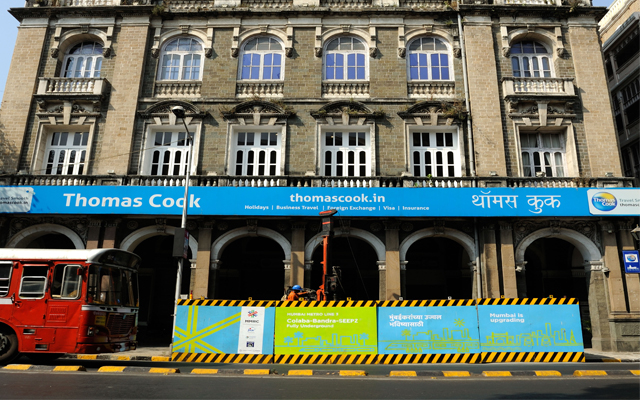
Thomas Cook India has signed an agreement with dnata Travel to take over the latter’s corporate travel business portfolio and serve its existing clients as the travel management company closes its operations in India.
As per the agreement, there will be no transfer of assets, liabilities or manpower from dnata Travel to Thomas Cook India, with the latter only acting as an alternative service provider.
Thomas Cook India will now serve dnata Travel’s existing clients as the latter exits the corporate travel business in India
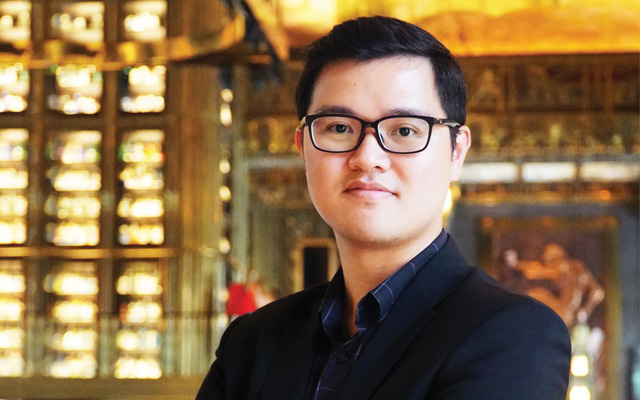
Speaking to TTGmice, Thomas Cook India CEO & executive director, Mahesh Iyer, said: “dnata Travel wanted a stable partner who can act as a ‘safe house’ for their corporate clients with whom they have a long-term relationship… So, effectively it is going to be a migration of all the existing contracts of dnata Travel to Thomas Cook India. There was no financial commitment from either party for this transaction.”
The transition is expected to be completed in the next few weeks. The agreement was concluded after an extensive process of evaluation by dnata Travel.
dnata Travel regional vice president, Rashid Al Awadhi, said: “Whilst we are disappointed to be exiting the corporate market in India, it has always been our intention to provide our valued customers with an alternative option. We are delighted that we can now offer customers the option of a seamless transition to Thomas Cook.”
Iyer declined to divulge the size of dnata’s existing corporate client base, but said that he expects a slow recovery of corporate travel business in India, beginning with domestic markets.
He added: “The fact that we are already dealing with a lot of corporates and have the required infrastructure support puts us in good stead to serve dnata’s clients. We have started to see early green shots in corporate travel and expect to witness some recovery from the international side too beginning 4Q2020. I also expect more consolidation happening in the corporate travel business in India.”
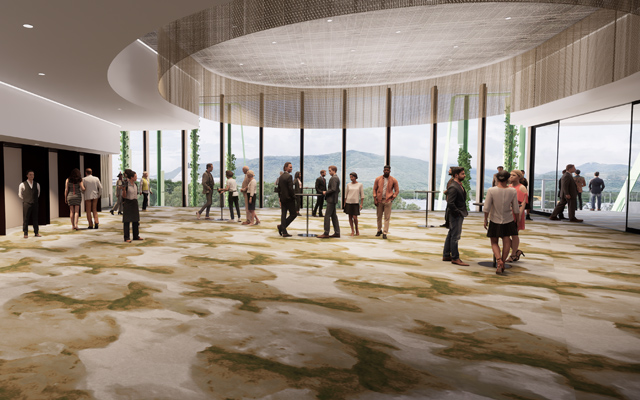
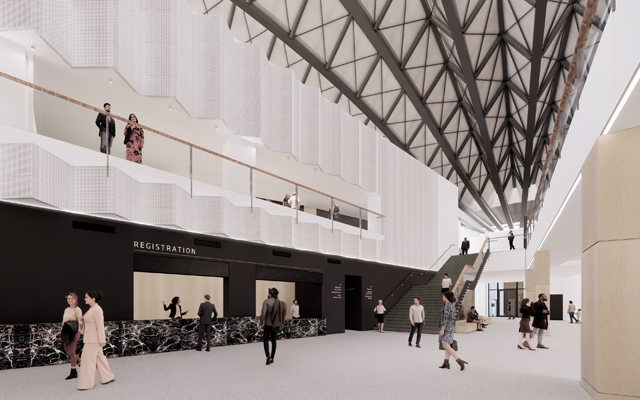
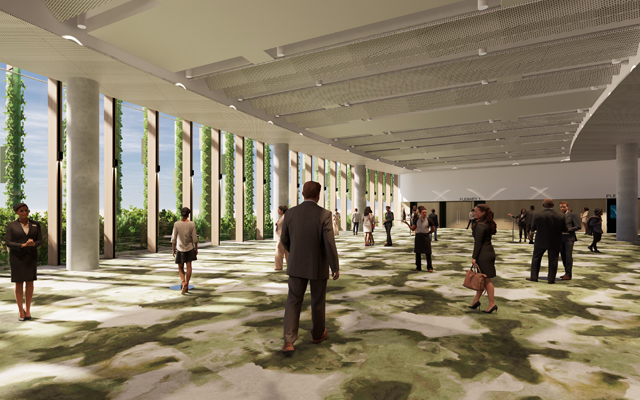
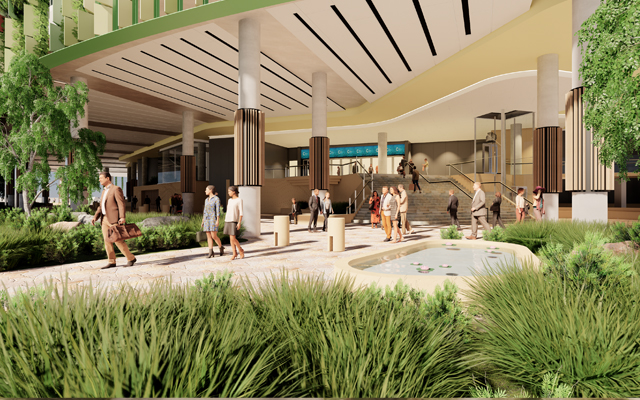
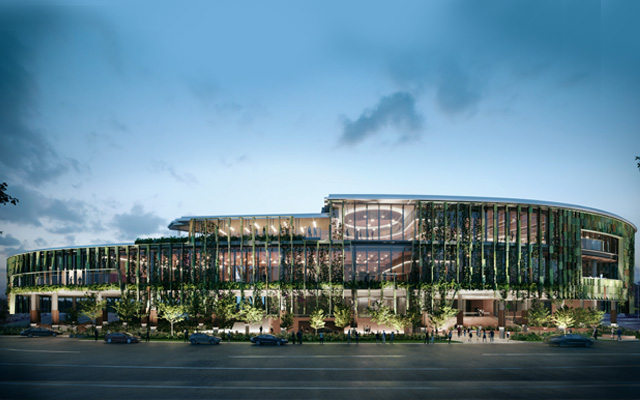
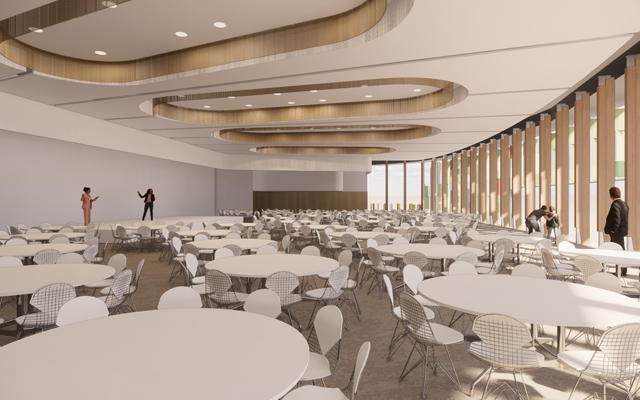
Cairns Convention Centre has embarked on a A$176 million (US$127 million) refurbishment and expansion project, which will add an extra 10,000m2 of meeting and exhibition space upon completion.
The project will be delivered in two stages. The first stage is a refurbishment of the existing Centre, including the Auditorium, Arena and existing meeting rooms. This is slated for completion in February 2021, with events beginning in March 2021.
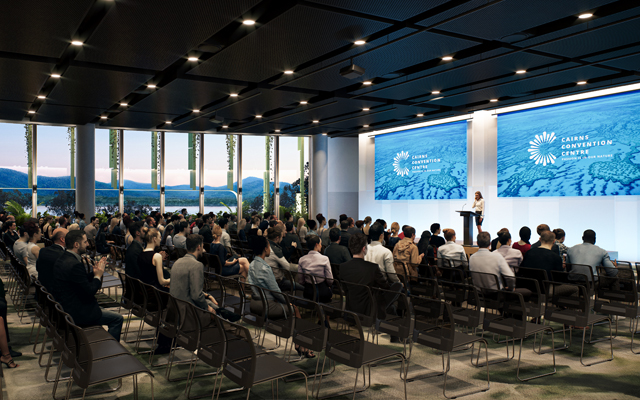
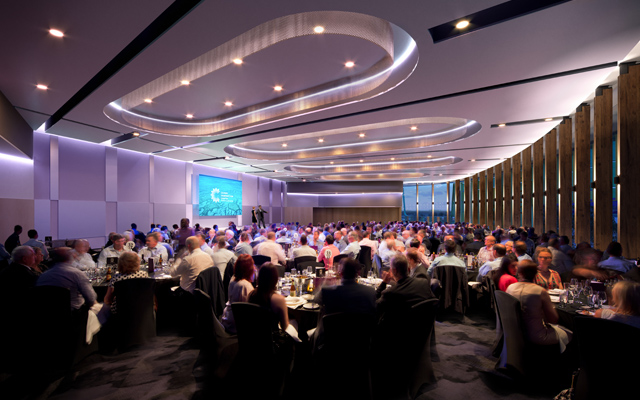
Renderings of Cairns Convention Centre
1 of 10
Next, the expansion will only be completed in 2022. Features of the expanded area will include a flat floor plenary that can hold 410 theatre-style for seminars, and an exhibition space that can hold 30 booths. Also on this level will be three new meeting rooms that can hold around 120 delegates each, and when combined, can host 370 in theatre-style.
In addition, pre-function space The Trinity Room – complete with an outdoor terrace – will be ideal for gala dinners and cocktail parties. It can host up to 500 people.
Cairns Convention Centre will also be launching a new tagline “Passion is in our Nature” and new logo that incorporates the Great Barrier Reef and Wet Tropics Rainforest.
The venue’s general manager, Janet Hamilton, said “With our enviable location near two World Heritage sites of the Wet Tropics Rainforest and the Great Barrier Reef, we wanted to highlight these amazing World Heritage-listed sites in our new Cairns Convention Centre logo.”
The new brand campaign will roll out across the next 18 months across a variety of platforms, highlighting the best of the region.
Tourism Minister Kate Jones said the Cairns Convention Centre expansion was one of the largest tourism infrastructure projects in Queensland.
“Tourism infrastructure will be crucial to our economic recovery. Once complete the expanded centre will bring around 20,000 extra visitors to the region and inject up to A$50 million into the local economy annually.”
Despite widespread digital transformation, many firms, including large ones, still run manual
finance and administrative processes
A new SAP Concur-commissioned study revealed that the potential economic loss across Asia-Pacific due to inefficient finance and administrative processes could amount to US$21.5 billion.
The survey, entitled Finance in the New World of Work, also identifies the gaps in organisations’ expense management, business travel, and remote work processes.
Despite widespread digital transformation, many firms still run manual finance and administrative processes
Asia Insight, which conducted the survey, used International Labour Organization statistics on output per worker and the number of information workers, and the study’s results, to calculate and derive that saving just 10% of the time spent on filing and approving claims would translate to US$21.5 billion of potential GDP revenue gain for Asia-Pacific each year, assuming all the lost hours are diverted to productive work. Mid- to large-sized organisations could save tens or hundreds of thousands of dollars over the same period.
As much as 38% of respondents submit expenses manually by filling out a form and enclosing physical receipts. Such a manual process is tedious, error-prone, and incongruous with the digital lifestyles employees are leading today.
“With the unprecedented number of people working from home in 2020, this is really a watershed year for companies to manage employee productivity. While remote workers are well supported digitally in many areas, crucial yet often overlooked finance and administrative processes remain painfully manual,” said Andy Watson, senior vice president and general manager, Asia Pacific Japan and Greater China, SAP Concur.
“This takes up significant time that could otherwise be used for productive, customer value-added work. The situation is costly to businesses and creates more challenges in the current economic climate.”
Employees spent an average of 4.5 hours per month filing expense claims – about half a typical workday. Managers had it worse – they spent 6.1 hours reviewing and approving expense claims, in addition to the 4.5 hours they spent submitting their own claims. This added up to 10.6 hours a month.
“Tweaking the process for something as seemingly trivial as expense claims can have a large multiplier effect on business and economic costs,” said Adrian Tan, managing director, Asia Insight. “During this period when many firms are trying to do more with less, finance and administrative processes are definitely areas they should not forget to scrutinise for savings.”
Finance transformation is lagging in Asia-Pacific
Beyond the tedium (49% of respondents say they are less than satisfied with their organisation’s expense claims process) and inefficiency costs, the study also found that current expense management systems’ support for modern payment methods is inadequate.
Close to a third (29%) of respondents said they want their expense management software to integrate with external apps to enable added functionality like reimbursement of payments made through super apps (umbrella apps containing other apps).
There is also clear potential for mobile wallets to be better supported as a payment mode for business purchases, as mobile wallets are much more favoured for personal purchases than company purchases.
Room for improvement in business travel
The preference for all things mobile and digital includes business travel, too.
Corporate travel systems that enable staff to book flights and accommodations digitally and via mobile, perhaps even on their usual personal travel booking platforms and apps, help keep them happy.
Travellers also want mobile-based features like real-time alerts of danger spots and the ability to make itinerary changes on-the-fly via mobile, as well as seamless travel management with a high degree of personalisation.
Unfortunately for many organisations now, business travel management is piecemeal and disjointed, leaving 41% of employees less than satisfied with the time and effort incurred.
Opportunity for organisations to embrace remote work for better business outcomes
Remote work will be the default mode of work for many organisations in the foreseeable future.
While 60% of the respondents said they feel more productive working from home, 34% of employees cited the loss of productivity during official work hours due to distractions as their top challenge. Therefore, companies are now at a point where they can adapt their operations to make remote work a boon to them or do nothing and let it become a hindrance.
Survey respondents want their employers to enable easy remote claims and travel management, improve collaboration, and provide better IT equipment and services.
Recommendations for transforming finance operations
Almost two-thirds (65%) of employees felt a very strong or somewhat strong link between their overall finance and administrative experience and their overall satisfaction of working for their firm. This suggests that if businesses want to retain their talent, they need to improve their finance and administrative processes.
The SAP Concur brand commissioned the Finance in the New World of Work Study 2020, which was conducted by Asia Insight in May 2020.
The study was conducted across Asia-Pacific with 2,012 respondents who are finance and expense users from organisations with more than 250 employees. Markets featured in the study are Australia, China, Hong Kong, Indonesia, India, Malaysia, New Zealand, Philippines, Singapore, South Korea, Taiwan, and Thailand. Respondents work in the financial services & insurance, retail, manufacturing, public sector/government, healthcare, education, technology, professional services and automotive industries.
About 71% of respondents have expense approval responsibilities, of which 18% are senior management, 41% are middle management, 24% are managers and 9% are officers/executives. Some 82% of respondents are business travellers, with 60% travelling for work one to five times a year.
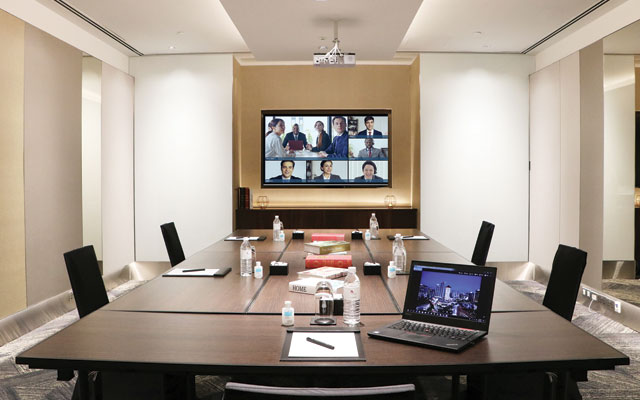
Singapore Marriott Tang Plaza Hotel's meeting room
Marriott International has launched the new Virtual Meetings by Marriott Bonvoy Events which offers event packages across its portfolio of hotels and resorts in Singapore, Malaysia, Indonesia, and Australia & New Zealand.
Packages vary according to property and region, where the new offering will allow clients to combine the meeting package and audiovisual requirements into one billable package.
Singapore Marriott Tang Plaza Hotel’s meeting room
Participants can also look forward to a series of enhanced safety and cleanliness measures for meetings and events. For instance, hotels can accommodate different seating capacities and dedicated event teams will be on hand to consult with each meeting planner to review and align on expected set-up requirements in line with social distancing practices.
Where available, hotels will recommend live/virtual hybrid meetings through live-streaming capabilities to minimise social contact.
All Marriott International associates are required to have personal protective equipment including masks, and all associates will undergo mandatory temperature checks especially when on duty.
Singapore
The virtual meeting package is available at JW Marriott Hotel Singapore South Beach; The Ritz-Carlton, Millenia Singapore; St. Regis Singapore; Singapore Marriott Tang Plaza Hotel; Sheraton Towers Singapore; Courtyard by Marriott Singapore Novena; and Four Points by Sheraton Singapore, Riverview.
Australia & New Zealand
Twenty-two properties across Marriott International’s family of brands in Australia & New Zealand including Autograph Collection, Courtyard, Element, Ritz-Carlton, W Hotels, Four Points, Sheraton and Westin will offer the package.
Offering a choice of four different packages, each Virtual Meeting includes dedicated sales support, one agreement across multiple hotels and AV specialist. Seating plans in line with government guidelines, individual catering for each attendee and elevated sanitization are provided as part of Marriott’s cleanliness commitment.
Virtual Meetings by Marriott Bonvoy Events packages start from A$1,150 (US$804) for groups of up to 10, half-day and full-day packages with catering options available.
Indonesia
A vast portfolio of hotels and brands across Indonesia will participate, and this includes St. Regis, Westin, Le Méridien, Courtyard and Four Points by Sheraton. Tailor-made half-day or full-day meeting packages starting from IDR350,000 (US$24) with coffee breaks and lunch menus have also been created to supplement and inspire effective meetings.
Malaysia
Participating hotels in Malaysia include St. Regis Kuala Lumpur; Sheraton Petaling Jaya; Le Méridien Kuala Lumpur; The Westin Kuala Lumpur; Renaissance Kuala Lumpur Hotel; Renaissance Johor Bahru Hotel; Le Méridien Kota Kinabalu’s Grand Ballroom; Aloft Langkawi Pantai Tenga; and The Westin Desaru Coast.
Japan is now home to a MICE Theme Party Showroom, set up by business event management company Event Services.
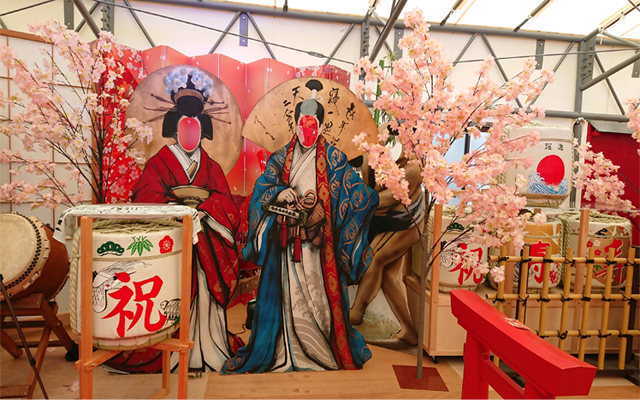
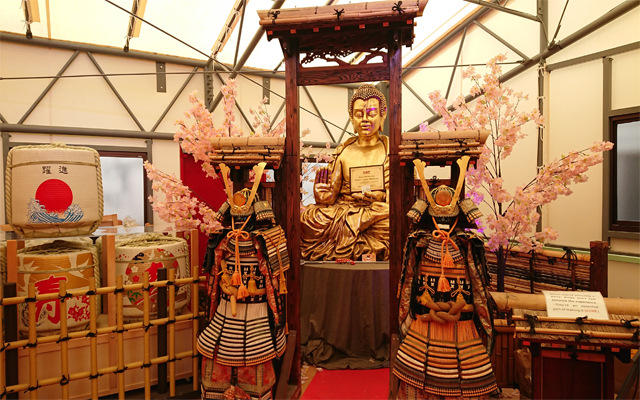
Located in the Tokyo Bay area, the facility showcases a huge variety of backdrops, displays, props, decorations and other themed paraphernalia suitable for award galas, product launches, welcome drink receptions, prize-giving ceremonies and conferences. Many items can be used both for both indoor and outdoor events.
MICE Theme Party Showroom
1 of 2
The showroom and adjacent meeting room are designed to offer a one-stop-shop for event planners, allowing them to get an instant sense of the décor before rental.
Popular items include Japan-themed painted backdrops, starting at 39,000 yen (US$643). These include iconic scenes like historic Tokyo, Mount Fuji or Katsushika Hokusai’s iconic “The Great Wave,” as well as traditional motifs such as cherry blossom or flying cranes.
Large props include five-storey pagodas, samurai armour, ninja cutouts, portable shrines, and mini nebuta floats. There are even inflatables, like sumo wrestlers, daruma dolls and lanterns, priced from 39,000 yen, that can be inflated in three minutes, thereby reducing the length of time required for event set-up.
Illuminated items have also proved attractive so far. The LED cocktail tables and benches are available in seven colours and can work for up to 12 hours, while the LED egg light can be customised with a company name or logo.
The current season can be seen as a pit stop providing hospitality players with the opportunity to rethink what loyalty means and relook at the purpose and effectiveness of their corporate loyalty programmes.
After all, business travel and physical events are not viable at the moment, and the pandemic has pushed companies everywhere to digitalise their operations, noted Ben George, senior vice president and commercial director, Asia-Pacific, Hilton.
For George, this means that loyalty for corporate travel and business events can no longer involve just points and incentives. “Future innovations in technology, from interactive Q&A platforms to (VR/AR-enabled) live streaming, will be (the) key to winning the loyalty of corporate clients and (event organisers in the future),” he reckoned.
Melissa Gan, managing director, Asia-Pacific, World Hotels, however, opined that the value of loyalty programmes in attracting and retaining corporate clients is made more evident in “unprecedented times like this”.
She added that loyalty is a “valued asset” for hospitality businesses looking to compete in the existing climate, where Covid-19 has reshaped the travel and hospitality industry.
“With customer expectations driving the programmes, they will need to evolve from just a point programme for free stays, gift and travel cards, to include an extensive retail shopping platform, aligning with partners to enable more flexibility and choice for consumers and heightened partnerships with industries not normally linked to travel,” she said.
Nevertheless, Gan acknowledges the cost of developing competitive programmes and their impact on the bottom line.
Such considerations will bear even more weight in the immediate future, as hospitality businesses struggle to recover.
Pre-pandemic moves
The need for corporate-facing loyalty programmes to be competitive and relevant is not new, as hotel companies have had to fight hard in good times to capture a larger market share in corporate travel and business events.
When Pan Pacific Hotels Group (PPHG) initiated its corporate bookers’ reward programme, Pan Pacific Connections, in 2018, it was to “compete better” in the corporate space, recalled Cinn Tan, chief sales and marketing officer.
To sweeten the lure, Pan Pacific Connections is by-invitation-only and the privileged access is granted solely to clients with existing contracts with the hospitality group. Points are earned though booking venues and guestrooms at participating properties, and used to claim free room nights and dining perks.
Invited businesses can either apply for company membership, where points are credited to the company’s account, or allow employees to take on a personal membership to gain points throughout his employment with the organisation.
Hospitality giant Accor, in line with the revamp of its consumer and corporate loyalty programmes and assimilation under one brand – Accor Live Limitless (ALL) – introduced the ALL Meeting Planner offer, which rewards business event organisers when certain criteria is fulfilled.
Depending on the agreement between employer and employee, points could go towards cutting the costs of future events or paying for sports matches and concert tickets.
Got leverage?
According to PPHG’s Tan, corporate loyalty programmes can “impact the RFP negotiation process” and act as leverage when the organisation and the individual take into account perks such as guaranteed rates and rewards.
A corporate travel manager in charge of Singapore, Malaysia and Vietnam, shared that the US-based MNC he works for is firm about choosing a hotel group that offers a corporate loyalty programme when it comes to business events, even though it is not explicitly brought up in RFP conversations.
In fact, such loyalty programmes could help companies better manage travel costs, noted another corporate travel manager in the pharmaceuticals industry, who is in charge of the company’s travel programme in the region.
Enhanced cleaning procedures deployed by event venues during the Covid-19 pandemic will likely remain a key part of operations in a post-lockdown world, as event organisers looking to resume physical meetings are expected to deliver heightened duty of care for attendees, partners and staff.
At the TTG Conversations: Setting the stage for a return in business events webinar on May 21, panellists representing the business events industry emphasised that venues hoping for a business rebound would have to provide a safe and reassuring environment for their clients and visitors.
Ian Cummings, global vice president, commercial, CWT Meetings & Events, stated that the safety and well-being of attendees – which have always been key considerations – will bear even great scrutiny going forward.
“Venues with the highest level of (health and hygiene) accreditation will be the ones that win. But (this requirement is not just limited to) venues, as airlines that invest the most in safety for passengers will get the highest level of confidence. Airports (that do not) have correct distancing capabilities and (better processing of passengers) may cause us to change the meeting destination,” Cummings said.
The way to godliness
In April, Hong Kong’s AsiaWorld-Expo (AWE) led the cleanliness charge among event venues when it deployed a high-tech disinfection installation and advanced air purification technology in preparation of business resumption.
The CLeanTech disinfection installation and advanced air purification technology can sanitise visitor’s outfits and carry-on items in 12 seconds, among other features. It is believed that AWE is the world’s first exhibition and event venue to deploy the system.
While venues elsewhere in Asia-Pacific may not yet boast such high-tech cleanliness deployments, they have expressed commitment to maintaining an active clean mode when business resumes.
According to Loy Joon How, general manager of Impact Exhibitions Management, which manages the Impact Muang Thong Thani event complex in Bangkok, “comprehensive precautionary and preventative measures” have already been in place since February to “ensure the safety and peace of mind of attendees”.
“If there is a need, we will definitely explore the deployment of technologies such as cleaning robots, and other effective cleaning solutions available,” he added.
Accor, whose property portfolio includes hotels with event spaces as well as convention centres, has put in place enhanced hygiene protocols and established the ALLSAFE Cleanliness label to reassure guests and customers.
The hotel group has also taken a step farther by providing a complimentary AXA insurance that grants staying guests access to a telemedical appointment should they feel sick.
“This will give guests another level of comfort and assurance, so that they feel safe when they are in our hotels,” said Kerry Healy, vice president sales Asia Pacific, Accor.
Here for good
Venue operators and managers are certain that these measures will remain for a long time to come.
Loy said the pandemic has brought venue cleanliness into sharp relief across the world.
“Clients will now expect higher standards of hygiene and disinfection processes, and we as a venue should rightfully comply in the interest of safety hygiene,” he said, adding that a venue’s hygiene standards have always been a key criteria for clients deciding on which venue to use.
Geoff Donaghy, CEO, ICC Sydney, agreed: “Inevitably there will be an increased scrutiny on venues’ hygiene by clients as we emerge from this pandemic. ICC Sydney is proud to have always maintained highest standards in hygiene to ensure the safety of guests and team members. These – plus any other measures deemed necessary – will be in place when the venue reopens for events.”
Signalling ICC Sydney’s readiness to reopen for safe business, the venue launched its EventSafe Operating Framework on June 11. The framework sets out protocols spanning 16 key areas of event management, including the customer journey, environmental hygiene and food service. It integrates best practice from parent group ASM Global’s VenueShield – a programme of advanced hygienic safeguards, informed by public health authorities, medical and industry experts – which is deployed in its 325 facilities worldwide.
The DMC community in Thailand has come together to formulate and implement a set of standards entitled Thailand Hygiene Plus Initiative (THPI), to get the message out that the country is safe to visit.
The standards cover six areas: offices, staff, ground teams, meals, vehicles and transportation, sports equipment and facilities. The standards include, but are not limited to, those to be certified by the Amazing Thailand Safety and Health Administration (SHA).
Thailand DMCs have come together to create a standard SOP ahead of tourism restarting
A checklist of operational requirements has been developed and an agreement for implementation reached by all DMCs who have signed up for THPI.
Members include Abercrombie & Kent Thailand, Asia Exotica, Asian Trails, Black Rice Travel – A Member of LUXPERIA Collective, Destination Asia (Thailand), EXO Travel Thailand, Go Vacation Thailand, Khiri Travel Thailand, Panorama Destination Thailand, Remote Lands, Smiling Albino, Tour East, and Travel Exclusive Asia Thailand.
Khiri Travel’s CEO Herman Hoven said that this initiative gives international tour operators “tangible proof and meaningful assurances that we are taking extensive and proactive hygiene measures” to restore confidence while travelling in Thailand.
Daniel Fraser, founder and director of Smiling Albino, said: “When Covid hit the industry, our collective focus was on the swift and safe return of travel. The implementation of a united standard for future travel, formed through the collaboration of our peers, was natural.”
He added: “Collectively changing for the better, to create a safe and healthy travel experience for each DMC’s travellers shows that we are in this together and stronger as one.”
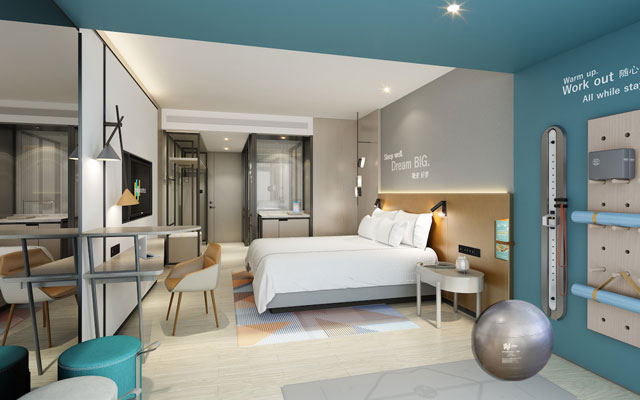
One of the hotel rooms at Even Hotels Nanjing Yangtze River pictured
Despite the challenges posed by Covid-19, InterContinental Hotels Group (IHG) is pushing ahead with its plans to launch new brands, properties and experiences in Greater China.
While recognising that it would take some time for the industry to recover from the impact of the pandemic, Jolyon Bulley, CEO-Greater China, IHG, said he was optimistic about the long-term development of tourism in the Greater China region and growth of China’s economy.
One of the hotel rooms at Even Hotels Nanjing Yangtze River pictured
As such, the region will remain one of the markets where IHG expands the quickest, shared Bulley.
Earlier in May, IHG debuted the Crowne Plaza Shenzhen World Exhibition & Convention Center (WECC). This marks the second hotel it opened in China after the mid-2019 reinvention of the Crowne Plaza brand, the first being Crowne Plaza Wuzhen in Zhejiang.
Featuring a modernised and innovative design concept that sets it apart from the older generation of properties under the brand, the hotel incorporates Crowne Plaza’s signature public space design concept Plaza Workspace to provide office spaces tailored to fit the needs of the modern corporate traveller.
Not only are business guests offered the convenience of ordering small bites by scanning a QR code and helping themselves to free-flow beverages, they can tap on free Wi-Fi and the abundance of power sockets and wireless recharging stations to stay connected.
Besides harnessing public spaces to provide convenient working environments for the business traveller, IHG recognises that the pandemic has led to increased consciousness of the importance of health and well-being among consumers. This has manifested itself, among other ways, in a desire to keep up with healthy lifestyle habits while on the road.
This makes the group’s plans to build more hotels in China under its wellness and lifestyle-focused brand, Even Hotels, a timely move.
Currently, the group has one hotel open under the brand in China – Even Hotels Nanjing Yangtze River – and is set to open Even Hotels Chongli come 4Q2020. The second Even Hotels in the country will sit within one of the competition zones for the 2022 Winter Olympics at Zhangjiakou.
Serving corporate travellers looking to care for their mental and physical well-being during business trips as well as wellness-focused leisure travellers, Even Hotels emphasises nutritious meals, exercising at one’s leisure, and adequate sleep, in order to allow travellers to be in optimum condition and be most effective on their travels.
Besides Even Hotels Chongli, 11 other Even Hotels are currently under construction in tourist spots such as Clear Water Bay, Hainan. Moving forward, IHG plans to expand its Even Hotels brand into first- and second-tier cities, including Shanghai, Tianjin, Chengdu, Chongqing, Changsha and Xi’an.
Another milestone for IHG this year was the launch of the first Regent hotel worldwide, after the group acquired the Regent Hotels and Resorts brand in mid-2018 and relaunched the brand in October 2018.
Located within the Lujiazui Financial District, the Regent Shanghai Pudong opened its doors in May. Over the next few years, the group intends to launch more Regent hotels in Hong Kong and Chengdu.
Other properties the group is set to launch this year in Greater China include Intercontinental Chongqing Raffles City, Holiday Inn Express Urumqi Station, Hualuxe Xi’an Tanghua, Holiday Inn Hangzhou Chaoshan, Holiday Inn Resort Maoshan Hot-Spring, Holiday Inn Dalian Hot Spring, and Holiday Inn Express Hangzhou Westlake East.
Bulley: Covid-19 crisis means that hotels in the mid-scale and upper mid-scale range will benefit due to the shift towards domestic travel
Bulley attributed the ability of the group to expand swiftly to its operational model, where it partners owners through management contracts and franchising. The model offers owners cost-effectiveness, the chance to tap on its established distribution network and strategy, as well as high rates of return.
Another way that IHG demonstrated its commitment towards supporting hotel owners was the launch of the Voco brand about two years ago. Under the brand, the group assists owners of independent hotels or hotels under local brands in reinventing and their properties. The group intends to bring the brand to China – specifically to Wuhan – come 2021.
With the crisis, more owners of independent hotels are considering whether to tap on the expertise and network of reputable international chains who can transform their individual properties efficiently and quickly, shared Bulley.
This could mean more owners are likely to take on Voco’s proposition of hotel reinvention in order to tap on the IHG’s expertise in operations, revenue management and technology, as well as the benefits of the group’s distribution network and loyalty programme IHG Rewards Club. While providing these benefits, Voco will seek to retain the individual flavour of the hotel.
According to Bulley, the crisis also means that hotels between the mid-scale and upper mid-scale range are set to benefit from both the shift towards domestic travel, and government initiatives to spur economic growth through consumption and enlarging the middle class.
It is therefore pertinent that tourism suppliers work towards meeting travel demands of Chinese travellers with higher disposable income. Luxury hotels in China can also leverage on this opportunity to offer personalised experiences, noted Bulley. – Translated by Angela Teo; this article was first published in TTG BTmice China.
Shanghai-headquartered events sourcing platform 1000meetings has set up shop in Singapore to expand in South-east Asia, helmed by Sam Lay, the company’s partner and executive director.
He shared: “1000meetings is definitely going to move further out from Singapore and the next possibilities in South-east Asia that are interesting for us include Indonesia and Vietnam.”
Lay: aims to develop solutions that can benefit the corporate travel community
Julien Delerue, the founder of 1000meetings, set up the company 13 years ago, and has been planning to expand beyond China for a number of years. He was looking at Hong Kong and Singapore, key areas with a high concentration of corporate head offices.
Lay, who was based in Shanghai between 2015 and 2018 to head BCD Meetings and Events in China, worked with Delerue on a number of projects before returning to Singapore to join CWT Meetings and Events as senior director, Asia-Pacific.
Leveraging on what the brand has achieved in China working with hotel, venue, agency and corporate partners, Lay said his role was to enhance the brand and its capabilities across the region and work with his team – which will be introduced by the end of July – to assess trends and conduct macro analysis to create corporate planning strategies for suppliers, corporates and agency partners.
He said: “We will definitely build on our strength in China. Julien will concentrate on business development, and together, we want to create solutions that will benefit the community.”
Lay who is a Certified Meeting Professional and is involved in PCMA’s Train the Trainer Programme, added: “The events industry post-Covid-19 will be more resilient and innovative, and technology is going to play a big part. 1000meetings wants to make sure the solutions we provide are customised, user-friendly and aligned to industry trends.”
The newly-opened Ritz-Carlton, Bangkok anchors the One Bangkok development with cosmopolitan elegance. Featuring the city's largest ballroom and a spectacular new penthouse suite, it delivers exceptional hardware and deeply authentic, soulful service for business and leisure travellers alike
Behind the imposing, Brutalist concrete that defines Zurich’s Oerlikon district lies a surprising secret. While its exterior honours the neighbourhood’s industrial roots, stepping inside Mama Shelter reveals a vibrant, neon-soaked world that is a far cry from its rigid shell
A polished urban retreat designed for business travellers, Hyatt Regency Kuala Lumpur at KL Midtown combines thoughtful design, seamless service, and exceptional facilities.