Asia/Singapore Wednesday, 8th April 2026
Page 557

IELA rolls out exhibition protocol for Covid-19

0
The guidelines will help to protect workers setting up exhibitions during the pandemic

The International Exhibition Logistics Association (IELA) has released a step-by-step practical guide and safety recommendations for the exhibition logistics industry during the current pandemic.

Entitled IELA On-Site Covid-19 Protocol, the guide recommends the measures and behaviour to adopt in an on-site work situation specific to the exhibition logistics environment, as economies restart around the world.

The guidelines will help to protect workers doing the exhibition setup during the pandemic

This protocol covers a wide spectrum of daily working functions and results from the work put in by IELA’s Standards & Customs Working Group (S&C WG).

Keeping in mind the safety of logistics teams and all those present on show sites, this document highlights various aspects to be addressed from basic hygiene matters to more complicated delivery situations, where close collaboration and interaction is unavoidable among on-site workers, but where social distancing now has to be ranked as the top priority.

By applying this protocol, IELA Members will be positioned ready, even before the actual opening of events, making sure that the exhibits and stand material arrive safely and punctually at show sites and booths. It is therefore imperative that working teams follow these guidelines to ensure the success and safety of events.

David Palomo, chairman of the IELA S&C WG, said in a statement that the guide will help the industry to face the pandemic now, “as well as be forewarned and informed of future difficult situations at all times”.

The IELA Covid-19 Protocol is available online in the IELA Member Zone and on the Organiser & Exhibitor Portals on www.iela.org.

IELA is the global industry network enhancing the professionalism of the transportation logistics and freight handling segments of the exhibition and event industry. IELA works with venue owners, organisers and national associations educating, training and sharing expertise for safe and secure operations around the world. IELA is currently represented by 172 members and 31 affiliates in 56 countries.

TMCs see greater tech reliance to improve traveller duty of care

0
Interviewed corporate travel companies use technology to keep their travellers updated and informed when on the road during the pandemic

An ever-changing state of travel guidelines and new security risks amid the pandemic and challenging economic conditions have led travel management specialists to rely even more heavily on technology to get timely messages out to corporate travellers.

Prior to the onset of the pandemic, FCM Travel Solutions integrated WorldAware Intelligence within Sam, the company’s mobile chatbot, to allow it to send relevant WorldAware travel alerts directly to travellers.

Interviewed corporate travel companies harness technology to keep their travellers updated and informed when on the road during the pandemic

With the pandemic impacting corporate travel confidence and plans, the company’s managing director, Asia, Bertrand Saillet, said this intelligence-driven approach to traveller duty of care would continue to be important and must be adapted to the new normal, which sees “an even greater emphasis on border restrictions, airline and carrier health and safety protocols, quarantine updates and social distancing measures taken at a traveller’s destination”.

FCM Travel Solutions has also created Traveller Hub, a one-stop site which carries information on border restrictions as well as updates from airports, airlines, hotels and ground transport operators on their latest protocols.

To help travellers and their employers make sense of the “influx of information coming through the media daily”, Saillet said TMCs today must help to filter out “relevant and timely content to clients and travellers”.

Jo Sully, vice president and general manager, Asia-Pacific, American Express Global Business Travel, has also acknowledged the fluid nature of travel-related information today, saying that “government and travel supplier guidelines have the potential to change country by country on a daily basis”.

This “period of potentially constant change” requires the use of technology to ensure timely contact with corporate travellers, opined Sully.

American Express Global Business Travel uses a communications arsenal that includes live webchat, in-app messaging, real-time situational updates via smartphones, location trackers through their credit card usage data, SMSes and telephone calls.

Saillet added that yet another critical step today is for organisations to evaluate their travel risk footprint.

“This includes an audit of their travellers’ most frequented destinations, and to weigh the pros and cons of (continued assignments) to those locations,” explained Saillet.

Companies should also respect a traveller’s request to sit out a travel assignment in these uncertain times. Should staff still be willing to travel, companies can enhance their risk management with a comprehensive duty of care plan, which includes pre-trip protocols prior to departure to inform employees of potential risks they may encounter.

When asked for his view of the corporate travel landscape, Saillet predicts that activity will not return to 100 per cent before summer 2021.

Moreover, with the emphasis placed on safety and hygiene, suppliers – from airlines and hotels to ground transport operators – will need to review their sanitisation measures and policies. These measures are expected to affect a travel manager’s decision when closing corporate deals and RFPs.

Regardless of the existing barriers to corporate travel, Sully believes that the world will travel again, for “there is no substitute for in-person, face-to-face experiences”.

Next TTG Conversations webinar to discuss next steps for events players

0

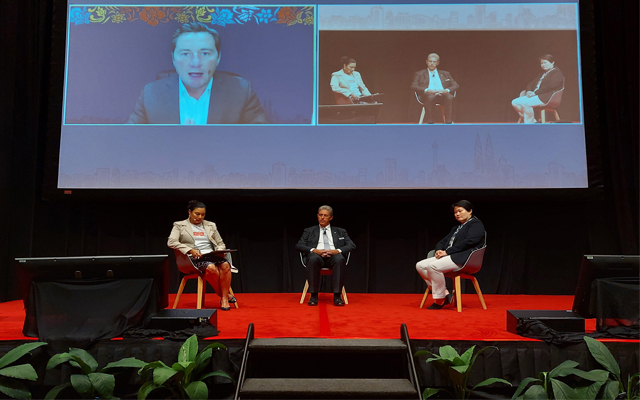
Changes to the way business events are planned and conducted, as well as the business structure of organisations in the industry as a result of the pandemic, will be the centre of focus in the third episode of the TTG Conversations webinar series.

Titled Preparing for the post-Covid-19 world, the session on July 8 from 15.00 to 16.00 (Singapore time), will feature panellists David Sand, group CEO, Uwin Iwin International; Avinash Chandarana, global learning and development director, MCI Group; and Stephan Vanden Auweele, chief hospitality group officer, Asset World Corporation.

Clockwise from top left: Uwin Iwin International’s David Sand; MCI Group’s Avinash Chandarana; Asset World Corporation’s Stephan Vanden Auweele; and Ovation Global DMC’s Hugo Slimbrouck

It will be moderated by Hugo Slimbrouck, global director of strategic partnerships, Ovation Global DMC; SITE Global past president; past chair, Joint Meeting Industry Council (JMIC).

Slimbrouck acknowledged that the business events industry “has and will (continue to) see many changes in relation to risk assessments, security protocols, GDPR, sustainability and waste prevention plans, etc”, and the impact of these developments will be discussed during the online panel.

He also hopes the session will shed light on potential new business models in a post-Covid-19 era; the future concept of incentive travel; associations’ revenue model and return on membership; changes to a DMC’s purpose; as well as value-added opportunities that the pandemic has created for agencies, DMCs and venues alike.

TTG Conversations: Preparing for the post-Covid-19 world is free to attend and registration is now open. Capacity is limited and registrations are on a first-come, first-served basis.

The first two sessions can be viewed here: https://bit.ly/387kTC8 and https://bit.ly/3g6DEZ3.

CAPA’s Australia Pacific Aviation Summit sports hybrid format

0
Adelaide Convention Centre will be the site for both the live event, as well as the streaming for delegates located elsewhere

CAPA – Centre for Aviation has turned its CAPA Australia Pacific Aviation Summit into a hybrid event that will take place from August 5-6, 2020.

Held in Adelaide, this will be the region’s first aviation event since the onset of Covid-19.

The Adelaide Convention Centre will be the site for both the event, which will be streamed to delegates located elsewhere

The hybrid summit will encompass a main live component taking place at the Adelaide Convention Centre and a new virtual component beaming in local and high-level speakers from all corners of the globe, in addition to on-site speakers. Delegates can optionally participate in person in Adelaide, or virtually.

The speaker line-up includes Virgin Australia CEO and managing director Paul Scurrah; Tourism Australia’s managing director Phillipa Harrison; and Australian Chamber – Tourism’s executive chair John Hart, all of whom will present live in Adelaide.

Meanwhile, confirmed International speakers include Scoot CEO’s Campbell Wilson, and Japan Airlines’ vice chairman Tadashi Fujita, with more to be announced shortly.

The summit aims to provide a critical platform to share insights and perspectives on the industry’s road to recovery, not only for Australia and the Pacific region but also for global aviation. Delegates will be granted networking opportunities on-site in Adelaide, as well as virtual networking opportunities in the form of interactive one-on-ones, focus groups and hosted roundtables.

CAPA’s managing director, Derek Sadubin, commented about the importance of offering a hybrid event.

He stated: “Having welcomed over 17,000 attendees to CAPA’s digital Masterclass Series over recent weeks, it’s clear that the fundamental need for reconnection and access to accurate data and the latest insights and trends is stronger than ever. We’ve successfully demonstrated our agility and commitment to our industry and aim to continue this for our Australia Pacific Aviation Summit.”

Making the virtual move

0

What are some key differences in costs when hosting an event offline versus online?
Areas of spending are different for a virtual event versus a physical one. For example, hotel blocks, travel fees, F&B costs may be replaced by other fees like event software, tech support and online marketing or advertising.

A frequent misconception about virtual events is that they don’t require a significant investment of time and money. Producing a meaningful, impactful virtual event that delivers ROI requires companies to commit budget and resources to the event technology.

This may require a great deal of customisation and scale, depending on your event size and scope. (Costs are also incurred hiring) an internal team to support the event and (conducting) various online marketing efforts that will generate sign-ups.

What are some ways these virtual events can be monetised?
In terms of what can be monetised for a virtual event, there are many creative ways to do this. From digital branding and online advertisements to sponsored speaking sessions, breakout areas and virtual exhibitor booths – our clients find great opportunities to deliver value and measurable impact to their sponsors.

Virtual environments provide many opportunities for sponsorship and promotion for participating brands. And because these events are online, sponsorship doesn’t necessarily end on the last day of the conference. Sponsored content can live much longer through syndication. Intrado Digital Media events, for example, are live and accessible for up to a year.

Have you seen clients making some sessions free and charging for others? Are they adding extra features online to make up for the lack of face-to-face meetings?
Similarly to a physical conference, offering some free content or access can entice attendees to purchase full attendance packages.

We do encourage our clients to find ways to engage attendees and help them network with each other. There are lots of ways to build fun into a webcast or virtual tradeshow, such as including interactive quizzes, contests, virtual happy hours, trivia and themed sessions. Virtual attendees also tend to appreciate chat functionality for networking, bonding and engagement throughout the event.

What are some lessons learnt by planners, or concerns they have now while planning for virtual events?
Although virtual events can be turned over fairly quickly if necessary, we often find that there’s a misconception around time to market for large-scale events.

A strong virtual event can require the same level of planning as a physical one. Another mistake that we sometimes see is a rush on content production; cutting corners there can lead to a less-engaged audience that may not see value in the event.

Finally, it is absolutely critical to ‘dry run’ the event and ensure that producers, sponsors and speakers are comfortable with the event software.

What’s the most important thing event planners must take note of when planning a virtual event?
Virtual events need a strong marketing and promotional plan. This includes ensuring that there’s enough runway for promotion to create buzz and engagement to generate word-of-mouth and drive sign-ups.

The marketing message should focus on the value of the event for attendees – the quality of content, calibre of speakers and key learnings that the event will provide.

What do you think is the biggest benefit of online events?
While it may not be a direct cost-saving, it’s important to point out that a virtual event can have a serious, positive impact on a company’s carbon footprint. So many of our clients are focused on Corporate Social Responsibility initiatives; they’re a critical priority for their business, and virtual events are propelling them forward in green efforts.

What it’s like to travel for business in the new normal

0

Prior to the Covid-19 outbreak, the aim of the one-day Shanghai event was to gather 100 corporate travel buyers and managers from all over China to address travel management matters.

While the pandemic did not force the event to be cancelled, postponed or (go) virtual, Corporate Travel Community (CTC) decided to trim the numbers by making the event, held at Fairmont Peace Hotel, by-invitation-only.

Fifty participants were registered for the event, but the fresh Covid-19 outbreak on June 11 in Beijing (caused) numbers fall to 38. Some from the capital pulled out due to China’s strict health QR code colour system, which (determines) its citizens (ability) to travel, while others were held back due to the unfolding situation.

I was given a unique mobile QR code upon my arrival at Pudong International Airport, which was to be my movement pass for my entire stay in Shanghai. I also had to provide information such as the district I was planning to do business in, and to determine which quarantine hotel I would be assigned to, as I had to be quarantined for 14 days.

My journey to Shanghai from Hong Kong International Airport started on June 3 at 08.30. The China Eastern Airlines flight I was booked on was cancelled at the last minute so I had to buy another ticket and departed eventually at 11.40 on Cathay Dragon.

I arrived at Pudong International Airport at 14.30 but only made it to the assigned quarantine hotel at 17.15, as the airport’s heath screening protocol was rigorous and included a throat sample swab for Covid-19. I could only attend my conference after further testing to check that I was virus-free.

I noticed that the immigration clearance process was entirely touchless with facial recognition and no fingerprinting. Meanwhile, my luggage was sprayed with sanitiser liquid as it was taken out of the bus.

I was told of my allocated room, which I then had to scan my QR code to gain access to. I was finally inside my room at 18.15, and a dinner box arrived 30 minutes later.

I noticed the hotel was completely sealed off with fencing, while exits were manned by the police. Quarantined guests were also informed there were many CCTV monitors and could only open their door to pick up meal boxes.

The quarantine hotel cost me a relatively modest RMB 250 (US$35) per night and another RMB50 for the food.

Although the entire process seemed troublesome, I was prepared to go through the quarantine.

After all, this was going to be the first face-to-face corporate travel event after the Covid-19 outbreak by any corporate travel organisation and hence, was of critical importance.

As a leading global organisation, CTC – powered by CAPA and under Informa Group, has a strong social responsibility to support the corporate travel industry.

Undoubtedly, Covid-19 has impacted our industry on an unprecedented scale. And now that China is allowing events to take place, CTC wanted to provide buyers with a face-to-face platform to discuss the new normal in corporate travel management.

I returned to Hong Kong on June 19, shortly after the event wrapped up on June 17. I am currently undergoing another home quarantine for 14 days. This time, I have to wear a wristband-tracking monitor that cannot be removed until July 1.


Benson Tang’s career in travel started more than 25 years ago, and has extensive knowledge of the corporate travel sector.

For over a decade he oversaw Goldman Sachs’ Asian travel programme as executive director, before being appointed regional director Asia for the Association of Corporate Travel Executives (ACTE). Tang joined the Corporate Travel Community in April 2019.

Seoul’s Hongdae gets a new Mercure this August

0
A room within the Mecure Ambassador Seoul Hongdae

Accor Ambassador Korea, in partnership with Seohan Tourism Development will be opening the Mercure Ambassador Seoul Hongdae this August.

Featuring 270 guestrooms, the hotel will feature an all-day-dining restaurant, a lobby bar, fitness centre and laundromat. A business corner and meeting facilities are available for corporate events, while the outdoor courtyard garden can be used for networking sessions in a standing-cocktail style.

A room within the Mecure Ambassador Seoul Hongdae

The property is also fully-equipped with Internet of Things (IoT), where all guestrooms can be easily controlled by guests’ own smart devices.

Mercure Ambassador Seoul Hongdae is the third Mercure-branded hotel to arrive in South Korea, joining a collection of more than 800 addresses globally across 62 countries.

AMEX GBT promotes Julie Avenel to VP global business consulting

0
Julie Avenel

American Express Global Business Travel (GBT) has appointed Julie Avenel as vice president, global business consulting.

In her new role, Avenel will lead GBT’s global consultancy division and report to chief commercial officer, Drew Crawley.

Julie Avenel

Based in France, Avenel has been with GBT for more than nine years, most recently as director, global supplier relationships for Europe, the Middle East and Africa.

Before joining AMEX GBT, her previous roles included management consultancy at The Boston Consulting Group and industry analysis with Accor.

Lily Agonoy rejoins Jebsen Holidays as MD

0

Jebsen Holidays has appointed Lily Agonoy as managing director.

In her new role, she will oversee all existing Jebsen Holidays teams – Virtuoso, Leisure, Cruises, MICE and Inbound; and will report directly to COO & CFO Alvin Miu and the MF Jebsen Board of Directors.

No stranger to the industry, Agonoy was managing director of BCD Hong Kong, and was formerly part of MF Jebsen Group before the BCD divestiture.

Agonoy first joined MF Jebsen in 2012 to lead the BCD Hong Kong Corporate travel business. Prior to that, she was with Farrington American Express Travel.

Pacto’s local commitment

0
Pacto employees are encouraged to support the company’s community work

Having grown along with Indonesia’s tourism development since the formation of Pacto in 1967, the tourism and events specialist has witnessed the impact travel and tourism has had on the environment.

What struck Raty Ning, vice president director, Pacto Convex – a division of the bigger Pacto group, in particular, was seeing waste accumulate in the ocean, rivers and landfills as the destination grew in popularity.

Pacto employees are encouraged to support the company’s community work

And Raty wanted Pacto to be part of the solution. To combat this, the group began laying out its priorities. This eventually led to the company embarking on a plastic bottle-free initiative, and setting up a conservation project this year to give back to the community.
“In the last few years, each branch office (across the Pacto group) has actively carried out activities such as cleaning up the beach and tourist destinations. This year, we want to do something bigger and more comprehensive,” explained Raty.

The year’s project will be centred on Rote Ndao, a regency in the emerging Indonesian destination of East Nusa Tenggara province.

To maximise the benefits of the sea for humans while maintaining healthy marine habitats, Pacto decided to collaborate with The Nature Conservancy (TNC), a global non-profit that takes a scientific approach to the conservation of sensitive ecosystems and threatened species.

“We are not experts in this area. It is better to work with institutions that have such expertise, such as TNC,” Raty explained.

TNC will provide training for Rote Ndao’s seaweed farmers on environmentally-friendly and sustainable methods of planting seaweed.

Following that, Pacto intends to set up a conservation kiosk. Women on the island will be trained at the kiosk to process the seaweed and make products such as soap, gelatin, lotions, syrup and candied seaweed.

Through incorporating seaweed processing innovations, it is expected that the initiative will be able to open up opportunities for the women to enhance their skill set and empower them with independence.

The women will also be given training in product processing, promotion and marketing. The kiosk will then be transformed into a cooperative.

“These initiatives are just the beginning,” commented Raty, who revealed that the ultimate goal is to help the communities be independent.

Recognising that conservation is a long-term commitment which requires heavy financial investment, Raty is also considering getting the Pacto family and the tourism industry at large involved in the project.

“Currently, we are setting aside a part of the company’s profits for this project. Eventually, we might raise funds from the industry to open more kiosks in other places, such as in Wakatobi (in Sulawesi Tenggara province),” shared Raty.

The company will start by encouraging Pacto’s staff, friends and families to join before approaching others. In fact, Pacto’s push for sustainability seems to have motivated employees to do likewise.

“I always tell my staff that when we gain our business from Indonesia, we must give back to the country, particularly to areas where visitors are drawn by natural beauty.
“A question comes to mind: how do we give back? First, we need to consider the community – the people who live there. Next, we should raise awareness of the need to preserve nature,” said Raty.

To ensure the relevance of its efforts, Pacto is tailoring its sustainability projects to the conditions of the region.

For instance, one of Pacto branches has taken to planting seedlings along the coast of North Jakarta.

Besides ensuring that Pacto branches become an integral part of the local community, these projects also provide a platform to bring locals together in meaningful ways.
Raty expressed that her priority is to achieve long-term impact – sustainabilty efforts today myst reap pay-offs down the road.

Her corporate sustainability beliefs are extended into her personal life; she takes public transportation whenever possible, carries a tumbler, and brings along a reusable bag during her grocery runs.

“Seeing what we have done to improve the lives of others is priceless. Even if we do something small, we can create a positive impact for people in the village,” she concluded.

Reviews

The Ritz-Carlton, Bangkok

The newly-opened Ritz-Carlton, Bangkok anchors the One Bangkok development with cosmopolitan elegance. Featuring the city's largest ballroom and a spectacular new penthouse suite, it delivers exceptional hardware and deeply authentic, soulful service for business and leisure travellers alike

Mama Shelter Zurich

Behind the imposing, Brutalist concrete that defines Zurich’s Oerlikon district lies a surprising secret. While its exterior honours the neighbourhood’s industrial roots, stepping inside Mama Shelter reveals a vibrant, neon-soaked world that is a far cry from its rigid shell

Hyatt Regency Kuala Lumpur at KL Midtown

A polished urban retreat designed for business travellers, Hyatt Regency Kuala Lumpur at KL Midtown combines thoughtful design, seamless service, and exceptional facilities.