Asia/Singapore Saturday, 25th April 2026
Page 561

What it’s like to travel for business in the new normal

0

Prior to the Covid-19 outbreak, the aim of the one-day Shanghai event was to gather 100 corporate travel buyers and managers from all over China to address travel management matters.

While the pandemic did not force the event to be cancelled, postponed or (go) virtual, Corporate Travel Community (CTC) decided to trim the numbers by making the event, held at Fairmont Peace Hotel, by-invitation-only.

Fifty participants were registered for the event, but the fresh Covid-19 outbreak on June 11 in Beijing (caused) numbers fall to 38. Some from the capital pulled out due to China’s strict health QR code colour system, which (determines) its citizens (ability) to travel, while others were held back due to the unfolding situation.

I was given a unique mobile QR code upon my arrival at Pudong International Airport, which was to be my movement pass for my entire stay in Shanghai. I also had to provide information such as the district I was planning to do business in, and to determine which quarantine hotel I would be assigned to, as I had to be quarantined for 14 days.

My journey to Shanghai from Hong Kong International Airport started on June 3 at 08.30. The China Eastern Airlines flight I was booked on was cancelled at the last minute so I had to buy another ticket and departed eventually at 11.40 on Cathay Dragon.

I arrived at Pudong International Airport at 14.30 but only made it to the assigned quarantine hotel at 17.15, as the airport’s heath screening protocol was rigorous and included a throat sample swab for Covid-19. I could only attend my conference after further testing to check that I was virus-free.

I noticed that the immigration clearance process was entirely touchless with facial recognition and no fingerprinting. Meanwhile, my luggage was sprayed with sanitiser liquid as it was taken out of the bus.

I was told of my allocated room, which I then had to scan my QR code to gain access to. I was finally inside my room at 18.15, and a dinner box arrived 30 minutes later.

I noticed the hotel was completely sealed off with fencing, while exits were manned by the police. Quarantined guests were also informed there were many CCTV monitors and could only open their door to pick up meal boxes.

The quarantine hotel cost me a relatively modest RMB 250 (US$35) per night and another RMB50 for the food.

Although the entire process seemed troublesome, I was prepared to go through the quarantine.

After all, this was going to be the first face-to-face corporate travel event after the Covid-19 outbreak by any corporate travel organisation and hence, was of critical importance.

As a leading global organisation, CTC – powered by CAPA and under Informa Group, has a strong social responsibility to support the corporate travel industry.

Undoubtedly, Covid-19 has impacted our industry on an unprecedented scale. And now that China is allowing events to take place, CTC wanted to provide buyers with a face-to-face platform to discuss the new normal in corporate travel management.

I returned to Hong Kong on June 19, shortly after the event wrapped up on June 17. I am currently undergoing another home quarantine for 14 days. This time, I have to wear a wristband-tracking monitor that cannot be removed until July 1.


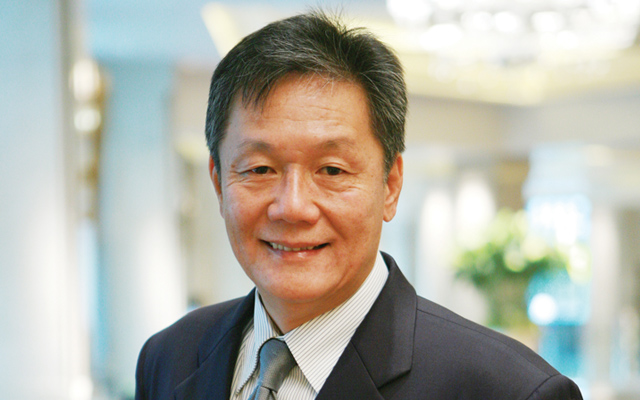
Benson Tang’s career in travel started more than 25 years ago, and has extensive knowledge of the corporate travel sector.

For over a decade he oversaw Goldman Sachs’ Asian travel programme as executive director, before being appointed regional director Asia for the Association of Corporate Travel Executives (ACTE). Tang joined the Corporate Travel Community in April 2019.
Seoul’s Hongdae gets a new Mercure this August

0
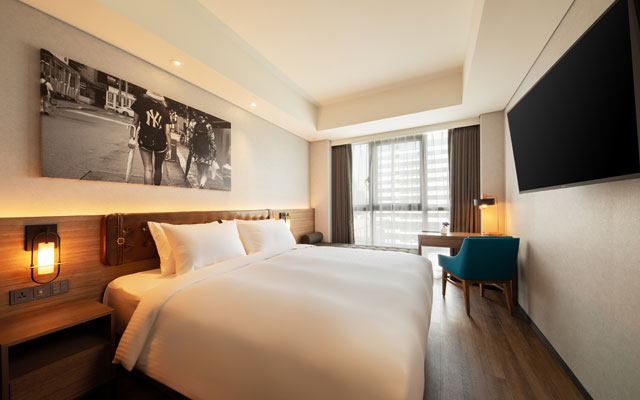
A room within the Mecure Ambassador Seoul Hongdae

Accor Ambassador Korea, in partnership with Seohan Tourism Development will be opening the Mercure Ambassador Seoul Hongdae this August.

Featuring 270 guestrooms, the hotel will feature an all-day-dining restaurant, a lobby bar, fitness centre and laundromat. A business corner and meeting facilities are available for corporate events, while the outdoor courtyard garden can be used for networking sessions in a standing-cocktail style.

A room within the Mecure Ambassador Seoul Hongdae

The property is also fully-equipped with Internet of Things (IoT), where all guestrooms can be easily controlled by guests’ own smart devices.

Mercure Ambassador Seoul Hongdae is the third Mercure-branded hotel to arrive in South Korea, joining a collection of more than 800 addresses globally across 62 countries.

AMEX GBT promotes Julie Avenel to VP global business consulting

0
Julie Avenel

American Express Global Business Travel (GBT) has appointed Julie Avenel as vice president, global business consulting.

In her new role, Avenel will lead GBT’s global consultancy division and report to chief commercial officer, Drew Crawley.

Julie Avenel

Based in France, Avenel has been with GBT for more than nine years, most recently as director, global supplier relationships for Europe, the Middle East and Africa.

Before joining AMEX GBT, her previous roles included management consultancy at The Boston Consulting Group and industry analysis with Accor.

Lily Agonoy rejoins Jebsen Holidays as MD

0

Jebsen Holidays has appointed Lily Agonoy as managing director.

In her new role, she will oversee all existing Jebsen Holidays teams – Virtuoso, Leisure, Cruises, MICE and Inbound; and will report directly to COO & CFO Alvin Miu and the MF Jebsen Board of Directors.

No stranger to the industry, Agonoy was managing director of BCD Hong Kong, and was formerly part of MF Jebsen Group before the BCD divestiture.

Agonoy first joined MF Jebsen in 2012 to lead the BCD Hong Kong Corporate travel business. Prior to that, she was with Farrington American Express Travel.

Pacto’s local commitment

0
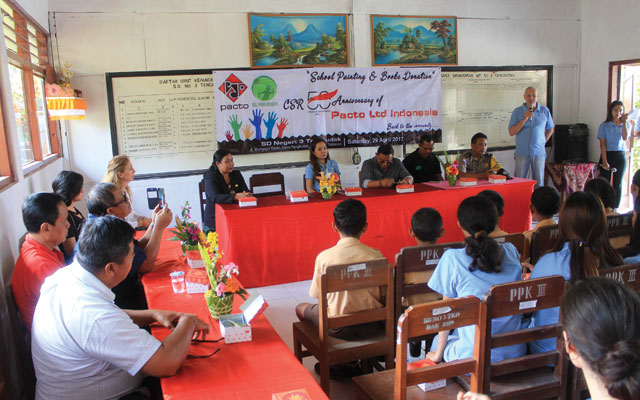
Pacto employees are encouraged to support the company’s community work

Having grown along with Indonesia’s tourism development since the formation of Pacto in 1967, the tourism and events specialist has witnessed the impact travel and tourism has had on the environment.

What struck Raty Ning, vice president director, Pacto Convex – a division of the bigger Pacto group, in particular, was seeing waste accumulate in the ocean, rivers and landfills as the destination grew in popularity.

Pacto employees are encouraged to support the company’s community work

And Raty wanted Pacto to be part of the solution. To combat this, the group began laying out its priorities. This eventually led to the company embarking on a plastic bottle-free initiative, and setting up a conservation project this year to give back to the community.
“In the last few years, each branch office (across the Pacto group) has actively carried out activities such as cleaning up the beach and tourist destinations. This year, we want to do something bigger and more comprehensive,” explained Raty.

The year’s project will be centred on Rote Ndao, a regency in the emerging Indonesian destination of East Nusa Tenggara province.

To maximise the benefits of the sea for humans while maintaining healthy marine habitats, Pacto decided to collaborate with The Nature Conservancy (TNC), a global non-profit that takes a scientific approach to the conservation of sensitive ecosystems and threatened species.

“We are not experts in this area. It is better to work with institutions that have such expertise, such as TNC,” Raty explained.

TNC will provide training for Rote Ndao’s seaweed farmers on environmentally-friendly and sustainable methods of planting seaweed.

Following that, Pacto intends to set up a conservation kiosk. Women on the island will be trained at the kiosk to process the seaweed and make products such as soap, gelatin, lotions, syrup and candied seaweed.

Through incorporating seaweed processing innovations, it is expected that the initiative will be able to open up opportunities for the women to enhance their skill set and empower them with independence.

The women will also be given training in product processing, promotion and marketing. The kiosk will then be transformed into a cooperative.

“These initiatives are just the beginning,” commented Raty, who revealed that the ultimate goal is to help the communities be independent.

Recognising that conservation is a long-term commitment which requires heavy financial investment, Raty is also considering getting the Pacto family and the tourism industry at large involved in the project.

“Currently, we are setting aside a part of the company’s profits for this project. Eventually, we might raise funds from the industry to open more kiosks in other places, such as in Wakatobi (in Sulawesi Tenggara province),” shared Raty.

The company will start by encouraging Pacto’s staff, friends and families to join before approaching others. In fact, Pacto’s push for sustainability seems to have motivated employees to do likewise.

“I always tell my staff that when we gain our business from Indonesia, we must give back to the country, particularly to areas where visitors are drawn by natural beauty.
“A question comes to mind: how do we give back? First, we need to consider the community – the people who live there. Next, we should raise awareness of the need to preserve nature,” said Raty.

To ensure the relevance of its efforts, Pacto is tailoring its sustainability projects to the conditions of the region.

For instance, one of Pacto branches has taken to planting seedlings along the coast of North Jakarta.

Besides ensuring that Pacto branches become an integral part of the local community, these projects also provide a platform to bring locals together in meaningful ways.
Raty expressed that her priority is to achieve long-term impact – sustainabilty efforts today myst reap pay-offs down the road.

Her corporate sustainability beliefs are extended into her personal life; she takes public transportation whenever possible, carries a tumbler, and brings along a reusable bag during her grocery runs.

“Seeing what we have done to improve the lives of others is priceless. Even if we do something small, we can create a positive impact for people in the village,” she concluded.

Vakkaru Maldives appoints new DOSM

0

Janice Tan has joined Vakkaru Maldives as director of sales and marketing.

The hospitality veteran has been in the industry for 20 years, having first embarked on her career at the Mandarin Oriental.

Her experience includes launching luxury resorts in the Maldives including Anantara Naladhu, during her tenure as Anantara Group’s cluster director of public relations; as well as Velaa Private Island and Accor’s Raffles Maldives Meradhoo, where she served on both occasions as director of sales and marketing.

She also spent time as regional director of sales and marketing for Como Hotels and Resorts’ Como Maalifushi and Como Cocoa Island.

She is currently based in both Singapore and the Maldives.

Destination Rotorua moves into virtual familiarisation

0
A surprise package from Rotorua was sent to clients in Sydney

Industry familiarisations of the virtual kind are expected to gain momentum after Destination Rotorua successfully hosted its first virtual destination showcase for targeted, high-value clients.

The activity was a collaboration between Destination Rotorua and The Virtual Famil (TVF), which was created by three veteran event and tourism managers based in Australia and New Zealand.

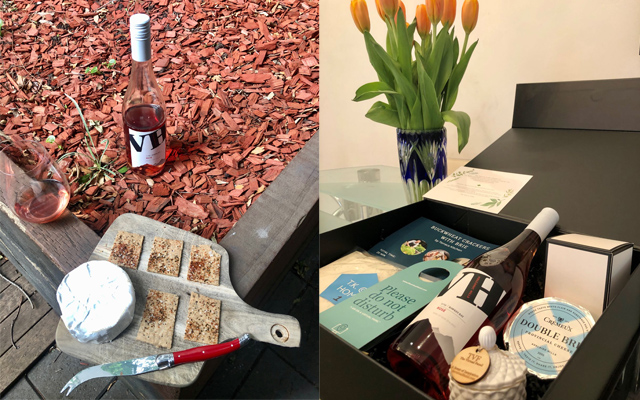
A box of surprises from Destination Rotorua was sent to luxury incentive agents based in Sydney

“We were thinking of innovative solutions…to stay in touch with our clients,” said Katie Neeley, sales coordinator for business events at Destination Rotorua. “Obviously we were doing webinars but when TVF approached us with this new idea, it was perfect timing and very different to your typical Zoom meeting or webinar that we’re all probably a bit fatigued with by now”.

Held earlier this month, the familiarisation experience was sent to a small group of luxury incentive agents in Sydney, from a list curated by TVF.

Participants received an interactive goodie box the day before their online Zoom session which included products from Polynesian Spa, a bottle of wine from Rotorua’s Volcanic Hills, and cooking ingredients.

“I suppose that served as an element of surprise (that you normally get with familiarisations) because they didn’t know exactly what these things were going to be used for until they were actually on the familiarisation,” said Neeley.

Once online, the 30-minute experience started with a Maori greeting followed by a live wine tasting, a cooking demonstration hosted by Terrace Kitchen using the ingredients in participants’ boxes, and an overview of accommodation and other product offerings.

This pilot experiment has led to enquiries for similar events in the absence of on-the-ground experiences, which have been on hold since Covid-19 lockdowns crippled most of the airline and travel industry.

Neeley shared that clients went on to cook, using the ingredients from the goodie box, and pairing their food with the complimentary wine, and finally posting their experience on social media.

“(It) was cool…to see them still thinking about the experience after the event was over,” she remarked, adding that the positive feedback has encouraged Destination Rotorua to consider hosting more virtual familiarisations.

“We’re definitely thinking about expanding this for our businesses events team. Our international trade team is looking into that as well; (we’re) just thinking about the different ways we can coordinate this,” Neeley continued, adding that tailored experiences are also being considered for the Asian market.

Meantime TVF co-founder Ganessan Suppiah told TTGmice that “solid leads” have emerged from Destination Rotorua’s virtual familiarisation, with more CVBs enquiring about organising similar experiences.

TVF, which provides a full production team to manage all live feeds for guests and presenters, is also hoping to expand to Asia.

“Asia would be a key and very important region both as participants and as destinations with so many iconic and bespoke products,” said Suppiah.

“We expect virtual familiarisations to be the new norm even after Covid-19 restrictions are lifted and with Asia, the cultural aspect with traditional cuisine would be extremely successful,” he concluded.

Photo of the day: CTC’s milestone in the new normal

0
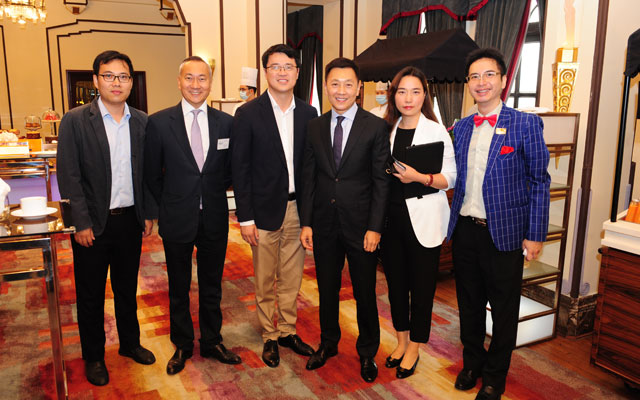
From left: SMACT's Zhang Hao; Camloy International's Nixon Chung; SMACT's Patrick Chen; Accor's Ken Wong and Sunny Cai; and CTC's Benson Tang

The Corporate Travel Community’s (CTC) by-invitation buyers’ event, held at the Fairmont Peace Hotel in Shanghai on June 17, marked the return of a face-to-face meeting for corporate travel managers.

From left: SMACT’s Zhang Hao; Camloy International’s Nixon Chung; SMACT’s Patrick Chen; Accor’s Ken Wong and Sunny Cai; and CTC’s Benson Tang

The event was attended by 38 buyers from SME and MNC companies, according to Benson Tang, executive director, CTC, who is Hong-Kong based and spent 14 days in quarantine to meet Shanghai’s entry requirements.

In his welcome address, Patrick Chen, director of marketing and promotion, Shanghai Municipal Administration of Culture and Tourism (SMACT), reinforced the health and safety measures the city has taken and that convention and exhibitions centres have reopened for business.

94% of NZ companies keen to meet in next 18 months: Tourism New Zealand

0
Auckland, New Zealand

New Zealanders are optimistic and keen to get back to the meeting room, with face-to-face events remaining more important than ever, according to new research conducted on the business events sector for Tourism New Zealand.

The survey of more than 230 New Zealand-based organisations found that overall, 94% are planning to hold a business event in the next 18 months. Of these, 29% plan to hold events before December 2020, with the rest planning events for 2021.

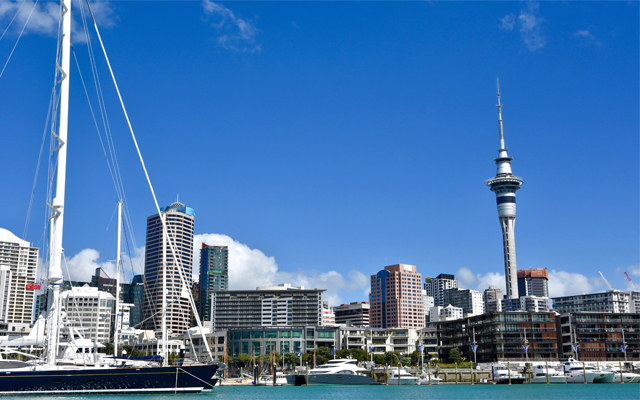
New Zealand companies are overwhelmingly ready to meet; Auckland pictured

Currently, New Zealand has no current restrictions on mass gatherings in the country, and business events can go ahead without social distancing.

The survey also found that after New Zealand’s two-month lockdown, the appetite to meet face-to-face remains, or has even grown.

Seventy-nine per cent of those surveyed consider face-to-face conferences and offsite meetings important for their organisation; while 39% said they appreciated the importance of face-to-face conferences and offsite meetings more now than pre-Covid-19.

Even so, events in the next 18 months will be smaller and less frequent compared to pre-Covid-19 activity, as businesses expect event budgets to be reduced. Associations also predict less interest from their members as they will feel the effects of closed borders on international attendance.

There are, however, other barriers to booking business events that the industry can influence.

Challenges and opportunities in booking business events
Nearly half, or 45%, of respondents said that Covid-19 pandemic affected what they look for in a destination for meetings and conferences. Many are more price-sensitive; a large number are planning events “closer to home”; there is more focus on supplier’s health & safety standards, and a greater need for teleconferencing technologies.

Regardless of the pandemic being under control in New Zealand, delegates are still wary, and health and safety remain a priority for event organisers.

In response to a push for standardised health and safety information in the events sector, Conventions and Incentives New Zealand (CINZ) has released a new Voluntary Code for event organisers to safely deliver events by following best practice expectations, which are based on Ministry of Health guidance to reduce Covid-19 related risks.

Inflexible cancellation policies were recognised as one of the key factors holding back organisations from committing to business events, with respondents signalling that more favourable cancellation policies to share risk would help.

Other assistance options likely to persuade organisations to hold business events in the next 18 months included:

  • Providing added value such as free catering or transport
  • Offering special rates for venues and activities
  • Financial assistance such as risk analysis, funding sponsorship

The rise of technology and ‘death by Zoom’
Technology is a growing factor in business event decision-making, where 82% of organisations said that it will be important for conference venues to offer technology that enables hybrid conferences. However, feedback suggested this could be an opportunity to build a larger, multi-channel, audience, rather than a drain on numbers.

Suppliers are therefore urged to address concerns over the perceived high cost and low quality of the technology options at some venues, with organisers wanting excellent, high-speed Internet connections and multi-media delivery platforms that can combine livestream, on-demand, and interactive physical attendance.

The majority (67%) of respondents said that technology is unlikely to replace the need for face-to-face conferences in the long-term. And while 86% believe face-to-face will remain vital for their organisation; only 15% believe technology will replace face-to-face meetings in the long-term.

Respondents noted: “Associations need to offer virtual components to their face-to-face meetings. But to work well, it needs to leverage off a physical event. The two go hand-in-hand. No one likes ‘death by zoom’. Humans like to meet.”

The results drew on 232 decisions-makers from New Zealannd-based organisations who held a business event (conference, meetings, incentive trip) domestically or internationally in the last three years.

Setting new course

0

TTG Asia Media, through its TTG Events business unit, been organising and executing business events for more than two decades now. How has the pandemic changed the way the company, and the events industry at large, approach business events and technology?
This pandemic has forced many companies and organisations to really look at new ways of doing things. I think this has been said in many webinars. Over the years, we have seen many evolutions in technology, but this pandemic is forcing businesses to take it seriously as an option for doing virtual meetings and events. There’s no other option – either you’re in it, or you’re out.

In some way, it has expedited and pushed everybody to start adopting technology. For those who are already working with technology, we’re looking at fine-tuning platforms that can help virtual events move and grow much faster than before.

One of TTG’s tentpole events is IT&CM China, which was originally scheduled for March 2020. How have you navigated this crisis to salvage and reposition the event?
From the early onset of the pandemic, we realised that physical events were going to be a challenge, especially those in China. This was about a month before IT&CM China was scheduled to happen, and the reality of how to approach it probably didn’t sink in for a few more weeks. We had hoped that we could still defer (the physical event) to August, but it became quite clear that we will not be able to do that as the situation evolved and we could see the severity of the whole crisis.

From there, we noticed what other industry professionals were doing, and also took from what China themselves have found success in. Webinars were one of our first forays into online events. That was our first experience with anything virtual for an event. At the same time, we were planning for a virtual exhibition that will eventually turn the August event into a virtual show.

Speaking of China, big news for Singapore is the business fast-lane with China. What are your thoughts on this announcement?
China has started to open up and resume events, but this has taken a slight backstep because of Beijing’s recent second wave (of infections). There’s some reversal in trying to proceed further, and there should be a lot of caution in learning what we can from these examples. The situation is evolving rapidly – it can be fine to go on the first day, but the next day the news comes out and things change.

Although technology is expected to become a mainstay even when physical events return, what traditional elements do you believe will still hold a place?
The business objectives for sending someone to attend an event will still remain – things like business sourcing, appointments, meetings, learning and networking. The formats of how these are going to run have already started changing, but this year, because of the physical distancing requirements at venues, the capacity of people that can attend such events is going to reduce significantly.

Face-to-face meetings will not change, but it all depends – perhaps, in the future, when there is a vaccine for Covid-19 and the world is free to travel again – the adoption of virtual hybrid (tools) will help take events to a different level.

I believe there’s a proportion of people who still want to do face-to-face meetings, but for those who are not able to, hybrid elements will give them the option to actually attend the event through virtual means. It would allow greater participation from more sellers and buyers who would be otherwise constrained by time and budget.

Industry experts are predicting that the industry will see more small, fragmented events – meaning more competition. What are your thoughts about this?
If adopting technology is easy and not too expensive, there’s a great possibility of a lot more smaller events on the sidelines taking place. Instead of waiting for big organisers like TTG or IMEX to get everybody together, some suppliers may hold their own smaller online events, like the virtual roadshows they’re doing now.

I also have an inclination that these smaller-capacity events will be just for the short- to medium-term. After a couple of years, I think people may start pushing back on guidelines as the situation evolves. The call for ROI is also going to push (smaller-capacity events) out, but it’s anyone’s guess at this point.

In the near term, how do you envision that will change the attendee mindset?
In terms of outreach and to make the event more inclusive, businesses will have to do hybrid (events). TTG’s international shows have local and foreign delegates, but our ratios will be different. For IT&CM China, we used to host 20 per cent international buyers (and the rest Chinese). But because of more (travel and venue) constraints now, the delegate-attendee mix is likely to change.

Going forward, delegates are going to be more discerning about the events they would want to travel for. We envision that there will be people who will now choose to attend virtually. So, it’s up to the event organisers to make a very strong proposition for delegates to be there physically.

What would make a strong proposition?
In order for organisers like us to be successful in the future, I think there’s a need to make sure that our platform – apart from the content – allows buyers and sellers to successfully conduct business. We’ll need to put in elements to set it apart from smaller events. So, this is a challenge, of course, to event organisers to make sure that that we’re able to attract the right delegates to our event.

For instance, IT&CM China will bring the business meeting opportunity and validation of buyers into the online space. Some other shows are less structured in organisation, but we will consolidate the high points of what have made the physical event a success and translate them online.

The main driver for exhibitors coming to our show is the business appointment element. Buyers will pay a token registration fee that is fully refundable when they complete their appointment fulfillments. There will be incentives and surprises for participating in events, either by earning points for lucky draw prizes or doing more appointments for a cash prize.


IT&CM China 2020 Virtual Event will be held on August 3-5, 2020. Interested participants can register at www.itcmchina.com/register.html.

Reviews

The Ritz-Carlton, Bangkok

The newly-opened Ritz-Carlton, Bangkok anchors the One Bangkok development with cosmopolitan elegance. Featuring the city's largest ballroom and a spectacular new penthouse suite, it delivers exceptional hardware and deeply authentic, soulful service for business and leisure travellers alike

Mama Shelter Zurich

Behind the imposing, Brutalist concrete that defines Zurich’s Oerlikon district lies a surprising secret. While its exterior honours the neighbourhood’s industrial roots, stepping inside Mama Shelter reveals a vibrant, neon-soaked world that is a far cry from its rigid shell

Hyatt Regency Kuala Lumpur at KL Midtown

A polished urban retreat designed for business travellers, Hyatt Regency Kuala Lumpur at KL Midtown combines thoughtful design, seamless service, and exceptional facilities.