Asia/Singapore Thursday, 18th June 2026
Page 563

The MICE sector in a Covid-19 world: Lockdown, Transition, New Normal

0
Most events will return as in-person events, but a high portion will be hybrid events. Digital trends will accelerate.

IATA reports that passenger numbers in 2020 will drop by 55 per cent, to 2006 levels, and may not recover to 2019 levels until 2024. STR predicts that USA hotel RevPar is unlikely to return to 2019 levels before 2023.

As the crisis is unprecedented and still evolving, the MICE recovery period remains uncertain but full recovery seems unlikely before 2024. The pace and level of the recovery will vary by region and segment. Recovery will be in stages. We can expect a long transition before the New Normal.
Digital trends will accelerate, and when events return, a high portion will be hybridised

On July 30, UNWTO reported that 40 per cent of destinations have eased travel restrictions. On the same day, WHO issued guidelines for resuming travel saying travel bans cannot be indefinite.

We are now in a Transition Phase where economic activity is resuming in a world inclusive of Covid-19. This phase will last until widespread vaccination, probably not before 2022 when the New Normal without the virus begins.

Lockdown
The relates primarily to March through May after the Covid-19 pandemic was announced spurring a global lockdown. This led to the closure of borders and most economic activity. In many countries, non-essential activities ceased for up to four months.

Past crises were confined to smaller segments of the world. Not this time.

On April 6, WHO reported that 96 per cent of all worldwide destinations had introduced travel restrictions. IATA reported a 94 per cent drop in air traffic for April 2020. Venues across the world shut down with many converted into a quarantine centre, testing centre or temporary hospital.

Transition
June marked widescale relaxations in restrictions allowing domestic market activity in many countries. In the same month, some destinations began opening up to regional markets.

The reopening is not just of countries that have suppressed Covid-19 but also those with high active cases and so with the risks of second waves of infections and re-imposition of lockdowns.

Europe leads the opening with 41 nations, 20 in the Americas, 13 in Africa, 10 in Asia-Pacific, and three in the Middle East. Of the 87 countries to ease travel restrictions, four completely lifted all travel restrictions – Albania, Maldives, Serbia and Tanzania.

Meanwhile, 115 destinations including Australia, Canada and India continue to keep their borders completely closed.

For China and US, countries with strong domestic bases are leading the recovery pack with weekly hotel occupancies of up to 55 per cent and 48 per cent respectively in late July. STR is reporting other regions at barely 20 per cent.

MICE sector recovery is led by domestic events. Protocols include contactless registration, thermal scanning, face masks, elevated hygiene and social distancing. Social distancing is easier to handle with exhibitions than conferences. With the virus under control, China, South Korea, Taiwan, Hong Kong and Germany are leading the return of large-scale events with exhibitions.

Many events have turned to virtual or hybrid formats in the short term. The importance of digitisation and flexibility of venues has escalated. Multi-location events where in-person events in different regional locations connect online to form a larger global event are growing. This is appealing in the current phase as attendees lack confidence for travel and large gatherings.

Can the MICE industry do more in transition knowing the risks of second waves of infections and re-imposition of lockdowns?

The New Normal
This once-in-a-century pandemic has challenged us to completely re-evaluate how we think, live and work. It is having a dramatic impact on geopolitics, technology and social attitudes. Technology has proven fundamental to coping with this disruption.

There is a strong relationship between the unemployment rate and tourism. Hence, at some point, consumer behaviour will be dependent on economic, not health factors. After borders are wide open and consumer confidence in safe travel has returned, economics will influence demand.

There will be significant shifts in the MICE industry in the post-Covid-19 era. Some will be structural. Some will be temporary. Some are already in place.

In-person interaction remains powerful and unlikely to be replaced by virtual events in a dominant way. Most events will return as in-person events, but a high portion will be hybrid events.

Digital trends will accelerate. Consumer exhibitions will embrace virtual event formats more readily than trade exhibitions. Many meetings will not fully return to pre-Covid-19 levels.

Venue offers will include in-person, hybrid or virtual options with enhanced technology infrastructure and flexible rooms. Virtual tours for venues will be the norm. Virtual event software will improve at a rapid pace. New accreditations and quality standards on hygiene will be normal.

Solutions for crowd monitoring, electrostatic sprayers to disinfect surfaces in function rooms and public spaces, automated self-cleaning machines for escalators, and enhanced air filtration systems for ventilation will be promoted as safety features at many venues.

Venues will need to assess both “hardware” and “software” readiness for this New Normal.

Even after a vaccine is found, it may take a year or more before worldwide vaccination and the confidence for mass travel returns. A consensus is emerging that the virus will be here for a while and the world has to figure out how to live with it.


Rod Kamleshwaran is a partner at GainingEdge, and leads the Convention & Exhibition Centre Development advisory team. His expertise is in the development and asset management of hospitality assets – convention & exhibition centres, hotels, and casino integrated resorts. A specialist in mixed-use developments, Kamleshwaran has advised government and private sector clients on projects with a completion value exceeding US$20 billion.
Time for a tune up

0
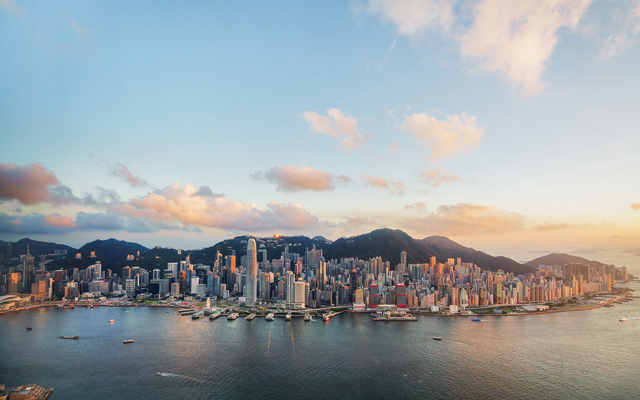
HKTB and hotels have come together to stimulate small event demand with promotional offers. Photo by Hong Kong Tourism Board

Predictions of intense post-pandemic competition across the region has prompted the Hong Kong Tourism Board (HKTB) to set aside a war chest worth an estimated HK$88 million (US$11.4 million) to promote business events in the 2020/2021 financial year, according to a HKTB spokesperson.

To ensure the destination stays top of mind, HKTB is tapping onto the local business events community’s network to bring together leaders from universities, chambers of commerce as well as professional and trade associations in the city to serve as ambassadors under the new HK MICE Champion Club.

HKTB and hotels have come together to stimulate small event demand with promotional offers. Photo by Hong Kong Tourism Board

Additionally, the tourism authority plans to persuade overseas organisations in its own international network to consider Hong Kong for future conventions.

Investment in protecting Hong Kong’s exhibitions industry is also made, with HKTB partnering the Hong Kong Exhibition & Convention Industry Association (HKECIA) to host an international conference for key global exhibition players this December.

Furthermore, it will scale up event collaboration with UFI to drive home the branding of Hong Kong as the trade fair capital of Asia. Rounding up its efforts to lure new exhibitions for 1Q2021, HKTB has plans to send business missions to the Greater Bay Area.

Thought has also been given to easing the financial burden of inbound event players when they attend tradeshows abroad to market their services. Relief measures, including as a full waiver of participation fees as well as flight and hotel subsidies, have been introduced.

But with the state of recovery different across markets, HKTB has adopted a flexible approach in planning its recovery measures. It is now tracking various source markets, monitoring their number of confirmed cases, air capacity recovery, as well as lockdown and border control measures.

A stream of support
HKTB’s MeetON@HongKong campaign that targets event organisers, planners, trade associations and corporations within the city state as well as across the globe has earned the backing of some 80 hotels.

These properties are offering complimentary meeting and dining packages to small event groups as part of the campaign. By reserving a minimum of 10 guestrooms for two or more nights back-to-back, groups stand to enjoy either a complimentary meeting or dining package.

Additionally, groups with at least 10 delegates can enjoy offers at key city attractions.
Hoteliers looking to score speedier business recovery can tap on HKTB’s Special Funding Support for Small-sized Corporate Meeting and Convention Groups for Hotels. Set to be launched when source markets are ready to travel to Hong Kong, the scheme will be open to more than 300 licensed hotels, which will benefit from financial assistance for their promotional packages.

Meanwhile, HKTB’s Bidding Fund will continue to serve as a channel of financial assistance for events facing cancellation or having its host city changed. The fund will also support local industry players looking to bid for events happening in the future.

Flights-wise, flag carrier Cathay Pacific is planning a series of perks and promotions for passengers travelling for business events, including a free flight for every 16th passenger in a party of 20 or more, and an additional 10kg luggage allowance. A check-in counter will also be set aside at Hong Kong International Airport for event groups.

Changing face of incentives
As HKTB expects future incentive programmes to involve shorter trips, with groups leaning towards activities with a corporate social responsibility (CSR) or wellness focus, it has developed several relevant activities to appeal to planners. They include cultural and eco-tours around Tai O fishing village, having dim sum in the dark, and a CSR workshop on sustainable development.

Itineraries demanding a wellness slant can choose from guided forest bathing tours, tea pairing sessions, and yoga classes set against the backdrop of Victoria Harbour.
Groups seeking a full-day programme can opt for the Around-the-Clock Party itinerary, to enjoy Hong Kong from dusk to dawn. The itinerary features a party atop a vintage, open-top tram, and bar hopping.

Concurrently, tour operators are gearing up for recovery with activities and tours tailored to meet social distancing requirements and safety measures.

For instance, 360 Holidays – the tour operator arm of Lantau Island attraction operator Ngong Ping 360 – is looking to promote nature and wellness elements in its tours. Guests will be able to take in views of the scenic Ngong Ping area aboard the Ngong Ping cable car, as well as make a stop at the heritage-rich Tai O, on the western side of Lantau Island.

Meanwhile, Lamma Rainbow Tour Services is offering a Rainbow Lamma Tour, tailored for groups of 20 or more. A highlight is the walking tour around Lamma Island, which is the birthplace of popular actor Chow Yun Fat. The tour includes a visit to a local family that will teach delegates how to make traditional Hakka herbal tea pudding; a meal at renowned Rainbow Seafood Restaurant; and a trip aboard the Rainbow Star Cruise back to Victoria Harbour. Onboard the cruise, delegates will get to enjoy the A Symphony of Lights show, set against the Hong Kong skyline.

Making it safe for customers
Other tourism suppliers in the destination are using the downtime to enhance their health and sanitation procedures to ensure customers can return with confidence.

AsiaWorld-Expo, for instance, brought in CLeanTech disinfection installations – devices that use a natural botanical disinfection solution, as well as air sanitising and purifying technology. It also ushered in Intelligent Sterilisation Robots (ISRs). Featuring ultraviolet light sterilisers, 360-degree disinfecting air spray and air filtration, the robots will be deployed throughout the venue. The ISRs were previously used to disinfect the enclosed temporary Covid-19 test centre within the Expo.

Meanwhile, transportation provider Kwoon Chung Bus Holdings is also taking the heightened concerns surrounding sanitation seriously. Recently, a sanitation product called Germagic was applied by qualified technicians at Kwoon Chung’s depots across the New Territories and Lantau Island.

Currently, the enhanced cleaning services are being carried out on vehicles across its fleet that ply the border between mainland China and Hong Kong.

Pacific World to shut HK office in November

0

Pacific World Hong Kong will begin to cease operations from September 14, and move towards a complete closure of the office by November this year.

Pacific World Hong Kong will close down come November

In a letter to its business partners, Pacific World Hong Kong explained that the decision was a result of Covid-19 disruptions to the “global tourism industry in the past few months”.

Pacific World Hong Kong also expressed its continued faith in the industry, stating: “Fundamentally, the global economy will rebound. Today’s reduced travel budgets and cancelled meetings and events are tomorrow’s pent up demand and people will continue to meet for business events again.”

The company’s global operations elsewhere will remain. In Asia, it maintains offices in China, Singapore, Thailand and India, among many others.

Singapore reselected for 110th Lions Clubs International Convention in 2028

0
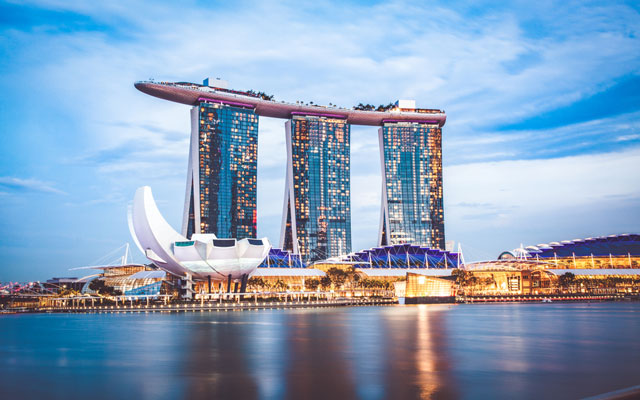
Singapore's MBS is the partner hotel for the 2028

Singapore has been reselected to host the 110th Lions Clubs International Convention in 2028.

The congress was originally slated for June 26-30 this year and would have been its first time in Singapore, but was cancelled due to the Covid-19 pandemic. The 2028 edition – which will coincide with the 70th anniversary of Lions Clubs in Singapore – is expected to attract around 20,000 foreign delegates and generate more than S$58 million (US$42 million) in tourism receipts.

Singapore’s MBS is the partner hotel for the Lions Clubs International Convention in 2028

The event will be jointly hosted by Marina Bay Sands (MBS), the Lions Clubs of Singapore and the Singapore Exhibition & Convention Bureau under the Singapore Tourism Board.

During their visit, Lions Club members will participate in the International Parade of Nations, a half-day walk around the city with a cultural theme unique to the host destination. The parade will see participants dressed in their national costumes accompanied by marching bands from local schools, and parade floats.

Lions International has a global membership of more than 1.4 million members in more than 200 countries and geographic areas, including Lions Clubs of Singapore, which has 94 Clubs and more than 2,300 members.

In 2028, attendees of the convention will be treated to a very different Singapore. The country is slated to welcome new nature and wildlife-themed attractions at Mandai precinct, an integrated tourism development at Jurong Lake District, and refreshed offerings on Sentosa island.

By then, MBS, the event’s partner hotel, is also expected to have completed a suite of new developments such as a 15,000-seat entertainment arena, a fourth hotel tower and additional MICE spaces.

Royal Caribbean hires global health chief to raise safety bar

0

Royal Caribbean Group has named former Pennsylvania secretary of health, Calvin Johnson, as global head of public health and chief medical officer.

In this newly-created role, Johnson will lead the group’s global health and wellness policy, manage its public health and clinical practice, and determine the strategic plans and operations of its global healthcare organisation.

He will also collaborate with the Healthy Sail Panel – a joint safety task force formed by Royal Caribbean and Norwegian Cruise Line – to ensure the company establishes and implements its protocols and recommendations.

Johnson, most recently principal at Altre Strategic Solutions Group, is the former chief medical officer for Corizon Health, then the largest provider of correctional health care in the US, and for Temple University Health System.

He served as secretary of health for the Commonwealth of Pennsylvania from 2003-2008 and was medical director for the New York City Department of Health from 1998-1999.

MBS unveils industry’s first hybrid event broadcast studio

0

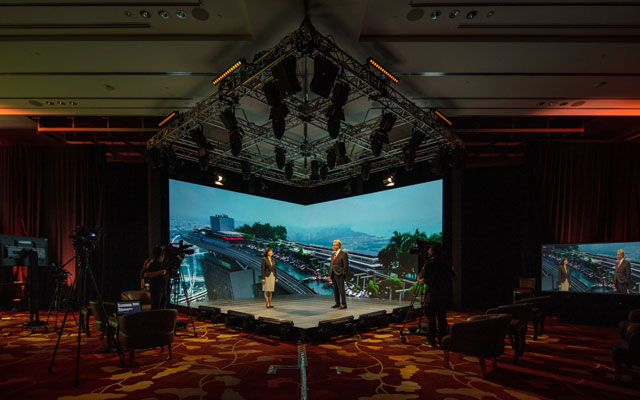
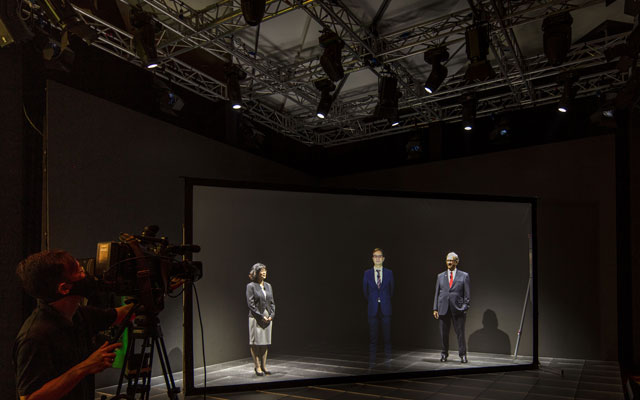
Marina Bay Sands (MBS) in Singapore has launched a state-of-the-art hybrid event broadcast studio at its Sands Expo and Convention Centre.

Designed to accommodate a live studio audience with a maximum capacity of 50 persons at any one time, the hybrid broadcast studio – which offers broadcast-quality live-streaming capabilities and hologram functionalities – will help event planners looking to produce hybrid meetings.

“Hybrid meetings will help enable the return of large-scale events in a virtual manner amid the Covid-19 situation and we want to set the stage for these shows by providing planners with a suite of useful and innovative solutions which are relevant for the times,” said Paul Town, senior vice president of resort operations, MBS.

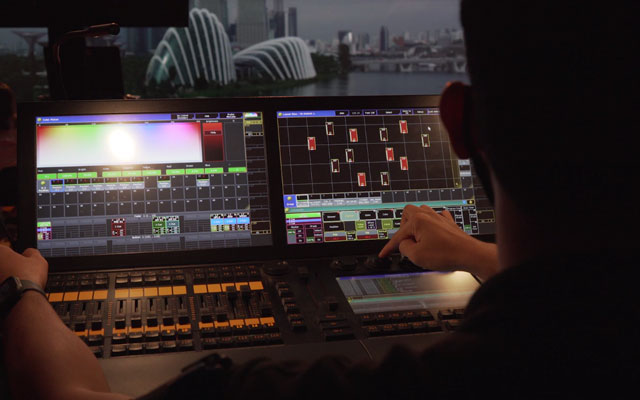
The studio’s centrepiece is a three-dimensional stage fitted with an immersive backdrop and floor that can be reconfigured. Replacing the conventional green screen backdrop are two six-metre by four-metre right-angled LED walls which can show high-resolution 360-degree visuals, while a plexiglass LED floor to display floor projections.

The three-dimensional stage is designed to provide presenters with a better perspective of their surroundings, helping them to visualise and deliver their presentations in a more immersive environment. Stage lighting systems can be customised, designed and operated to fit an event’s needs. The studio is also able to beam someone from a different part of the world ‘live’ into Singapore through a holographic presence.

MBS currently offers three virtual conferencing options – full virtual webcasting and live streaming events; hybrid events with in-person and online audiences; and hybrid events with holographic telepresence. Clients can also look forward to an enhanced suite of event tech capabilities incorporating Virtual Reality (VR), Augmented Reality (AR) and Extended Reality (XR) solutions.

Earlier in July, MBS soft-launched the hybrid broadcast studio in collaboration with PCMA (Professional Convention Management Association), where attendees of the inaugural PCMA Asia Pacific Community Conversations were afforded a preview of the studio’s capabilities. For example, the virtual kick-off session’s welcome address demonstrated to attendees how holographic telepresence could be used in a hybrid event setting by beaming in one of the presenters onto the set.

MBS has also partnered PCMA and the Singapore Tourism Board (STB) to launch PCMA’s Digital Event Strategist (DES) accreditation to a select group of international clients.

In addition, over 30 sales and MICE team members will be undergoing PCMA’s DES certification, as part of the integrated resort’s continuous focus on staff training. The course will arm the team with the requisite skills, knowledge and proficiency to help clients conceptualise, plan and co-create new hybrid meeting and event designs.

“As the event landscape continues to evolve, event planners will place greater emphasis on building digital events into their next meeting strategy. Future conversations will revolve around effective programme augmentation to drive the client’s brand value and online presence. We aim to future-proof our MICE team to better navigate this ever-evolving landscape, together with our clients and partners,” said Ong Wee Min, vice president of conventions & exhibitions, MBS.

Malaysia’s Innogen debuts digital event platform

0

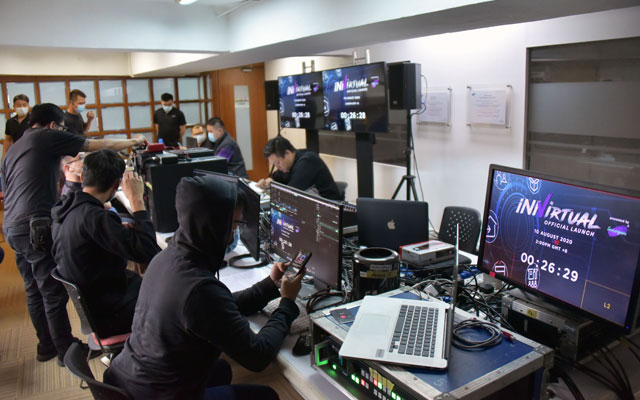
Business event specialist, Innogen, has rolled out what is said to be Malaysia’s first locally-developed digital platform that will support the current hunger for virtual exhibitions and events.

Named InnVirtual, the platform is built for exhibitions, conferences and events. It will be made available globally.

Event clients are provided with expert technical support

InnVirtual promises a customised platform for each event, with seamless implementation and a user-friendly interface; the support of professional advisors who will guide exhibitors in addressing creative and technical concerns; and maximum efficiency in the administration and upkeep of the virtual platform to ensure hassle-free, up-to-date content.

Going beyond live streaming, InnVirtual also allows in-person attendees to experience the event in real life and presents opportunities for creative collaboration. The partnership allows venues to showcase food, performances and service excellence.

Richard Wong, managing director of Innogen, said: “As much as we are impacted by the pandemic ourselves, we felt a sense of responsibility towards the whole industry that has supported the company. (We wanted) to make full use of our expertise and knowledge of more than 20 years in moving forward towards the digital age. InnVirtual is the product of that”.

“The economic and business climate demands for such change. Our stakeholders, including partners and industry players, need to embrace digital transformation now,” Wong added.

He describes InnVirtual as “the perfect platform for its time” and will provide the industry a growth opportunity during times of adversity.

“We are now in the age of experience which means that every event, no matter how small, needs to become an immersive experience. The new generation that is sophisticated and tech savvy will settle for nothing less,” he stated.

In addition to launching the new platform, Innogen teams are undergoing “aggressive” retraining to ensure that “the digital experience is as close as possible to the experience of attending a physical exhibition or any kind of events including entertainment, education, annual general meetings”.

Qatar Airways returns to Adelaide

0
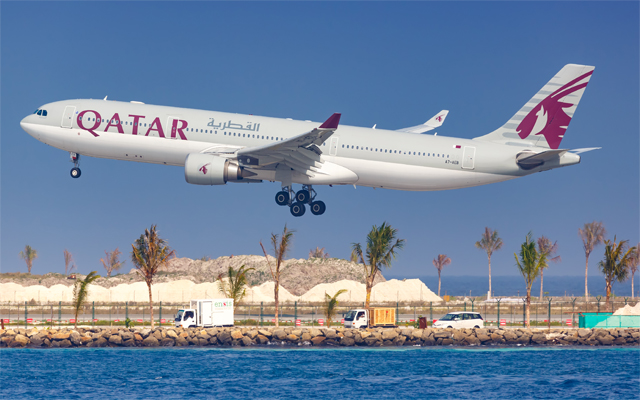
Qatar Airways becomes sole international airline to service five major Australian cities, with flights resuming to Adelaide

Qatar Airways will be resuming its services to Adelaide with twice-weekly flights, starting from August 16, 2020.

The South Australian capital will become the airline’s fifth destination in Australia to resume flights, bringing the total number of passenger flights operated by Qatar Airways per week to Australia to 23.

Qatar Airways becomes sole international airline to service five major Australian cities, with flights resuming to Adelaide

The Middle Eastern airline currently operates three weekly flights to Brisbane, four weekly flights to Perth, daily flights to Melbourne, and daily flights to Sydney.

The twice-weekly service to Adelaide will be operated by the airline’s fuel-efficient Airbus A350-900, offering 36 seats in business class and 247 seats in economy class.

The airline recently made the decision to ground its fleet of Airbus A380s, and instead operate its full fleet of Airbus A350 and Boeing 787 aircraft, as they are more environmentally and commercially sustainable.

Ready for a tough ride

0

The current crisis is often described as being a strange and challenging time for the travel, tourism and events industry. What is the most peculiar and challenging about this crisis for you, as head of Uniplan Greater China?
When we heard about the first cases of Covid-19, we didn’t really think much about it. We thought the pandemic would pass (like the others), but as the number (of infections) started rising we realised we needed to react. We needed to rethink our format, so that we will be ready when activity starts to pick up again.

Uniplan has been in Asia for over 35 years (and) a part of our business is in tradeshows and exhibitions. Those were badly impacted (by the pandemic) because they rely heavily on international travellers. There was very little we could do about that.

We also have a very big experiential events business, and our clients found that they could no longer go out and reach their audience.

Fortunately, there are so many platforms and channels in China that we can use. So, we thought, well, we need to enhance this and offer our clients solutions (to stay connected with their audience).

We digitalised a lot (since the outbreak), in terms of how our events are done and how we communicate with our clients and teams. We are fortunate to have started to digitally transform the way we work since early last year. We were moving onto a Microsoft Teams platform, and were 65 per cent there (when the pandemic happened).

How did you approach the crisis with your staff?
We went into business contingency planning very early on. We told our teams that we have to ride this out, figure out what we can do to stabilise (the company), and keep as much of the team as possible. We had to determine our action plans for if the crisis lasted for three, six or nine months, or even worse, a year.

I am very lucky to have teams in different offices who are fighters and who came up with a lot of ideas (to get us through). We made sure to also consider how our teams feel because ours is an industry that relies heavily on people.

We had to make some tough decisions in planning for everybody, but I’m glad to say that we managed to keep most of our staff. Our teams were very supportive when we had to take cost-cutting measures, which included salary reductions for a period of time.

It has been rather difficult to project how business events will rebound, given the different restrictions in many countries and the second- and third-wave infections that have emerged in some cities. How is your team helping clients to have as much stability in forward event planning as possible?
We need very close collaboration with all partners (to facilitate) changes that can happen within an hour.

We’ve seen that happen, you know. We have had fantastic build-ups in China that expected hundreds of visitors, but within 36 hours something would happen and we had to quickly transform into an online event.

We had a project that was part TV broadcast and part onsite, but suddenly we had no audience and had to switch it to fully broadcast. We often get just 36 to 48 hours of turnaround time to switch and create content that will work for filming in different locations with little rehearsal.

Experience plays a big part in our ability to deliver every time, and we really cherish the talents we have on our teams.

We can no longer run without a (digital) contingency plan, along with (all possible manners of health and safety requirements) because nobody knows what new and intense measures may be imposed (should something happen).

Clients need to be aware of all that, and this may have an impact on their budgets. However, a lot of effort typically goes into every project and nobody wants to waste all that by not being sufficiently prepared to go on with the show.

How do you think the delivery of brand experiences through events will change going forward?
The format will be different. Clients now have more than just two or three different ways to do their events and can have greater segmentation of their audience. I also expect activities to be more spread out, like a campaign rather than a single event. There will be more personalisation of experiences and these changes will be long term.

This is good for the industry, as it forces stakeholders to innovate.

How do you see Uniplan’s past successes in delivering award-winning physical events, such as those that recently attracted Eventex wins, enabling the company to innovate and ride out this crisis?
We have a very strong heritage. We are a company of 60 years and have been here in Asia for a long time. So, we have both an international mindset and a deep local footprint. Our clients also trust us.

I think these have helped us whenever we want to try new brand experiences in different formats for our clients.

Storytelling has been an intrinsic part of what we do – especially in the last three years – because technology has shifted and there is fatigue among consumers in how they want to get their messaging.

I think this will keep changing, even during this crisis. In fact, we have become busier. There was a lull (in events) for about a month and then people came back thinking about what they want to do and how to do it differently.

For clients, doing a livestream or broadcast is at the forefront of what they have to do but they want to execute that with partners they trust.

Uniplan is highly experienced in show productions, dealing with content and having access to different online digital platforms. That has helped us to navigate out of the crisis.

We were already rolling out our first fully online project by May. We had five to seven days to put together a proposal and a month to develop an entire studio, the content, and what Artificial Reality (AR) content to go into the screen, etc.

When you develop content for the screen, it is very different compared to a live environment. There are some things you can never take away from a live experience, like the feeling of your first concert, when the first beat of the drum drops and everyone goes crazy and gets goosebumps.

I think everyone craves that live feeling now, but it will take some time before we can go back to that. So, we are now looking at an in-between, a hybrid of events, and for that we need to come up with a unique hook (for the audience).

How does your business events in China now compare to pre-Covid?
Our head office is in Germany, so we have a lot of work in Europe as well as in the US. Whenever I share what we have done in China with our colleagues in Europe or on LinkedIn, I get so many responses. They would get very curious about the measures that we took, what restrictions were in place, were the aisles wider and were there distancing in the queues. And when I told them none of the sort was done, they’d be so shocked.

The China market is completely different from the rest of the world. We started coming back to physical events much earlier than everyone else. China has handled the outbreak very well right from the start, and that has enabled physical events to resume quickly.

The thing is, the people in China – and in Hong Kong too – are very careful about how they behave in public now. That has helped the events industry come back.

There was just this dip in July when there was an outbreak in Beijing, but we have since bounced back and are now better than we had expected – just not as good as the same time last year.

We do a lot of roadshows and pop-up activations across China, and we have seen a pick up in activity. Consumers are coming in, although there are some restrictions on the number of people allowed each time at a pop-up.

There have been talks about how the crisis is creating a demand for virtual event managers. Uniplan is rather advanced in its experience production, so I want to know what your thoughts are on this.
I don’t think this crisis is creating a new breed of professionals. People in our industry are very adaptive and creative. Whether they are managing a conference or a festival, they will adapt quickly to whatever comes their way.

We actually get excited when we are thrown a challenge to do something we’ve never tried before. This is an evolution of what we do, so we are just layering new skills over what we already have.

Did Uniplan send staff for training to prepare for the digital evolution?
We have training and courses, but a lot of what we learn comes from hands-on experience. We are learning as we go along, from our partners and our own observations.

Prior to Covid-19, we would send our people to fantastic exhibitions and tradeshows to see how others are doing things. Clearly, that is now restricted.

What is the one thing you think is critical for the events industry to rebound steadily?
Confidence, perseverance, faith that a rebound will happen, government support and a vaccine. That’s more than one but I do think they are all needed! (laughs)

Onyx unveils story-driven brand Saffron Collection

0
Oriental Residence Bangkok, to be reintroduced as a Saffron Collection property, is a modern-day interpretation of the historic Oriental Hotel along the Chao Phraya River

Bangkok-based Onyx Hospitality Group has launched a new hotel brand called Saffron Collection, which will offer a portfolio of “story-driven” boutique hotels and resorts.

Saffron Collection will initially be available in Hanoi, Penang, Bangkok and Aranyaprathet in Thailand, with plans for further expansion across the Asia-Pacific region.

Oriental Residence Bangkok, to be reintroduced as a Saffron Collection property, is a modern-day interpretation of the historic Oriental Hotel along the Chao Phraya River

Each Saffron Collection property will serve as “a timeless showcase of the continuous legacy of the landmarks, people or legends that made a lasting impact on the destination and neighbourhood”.

Oriental Residence Bangkok will be reintroduced as a Saffron Collection property by the end of 2020. Touted as a “modern-day interpretation” of the famed Oriental Hotel set on the banks of the Chao Phraya River, the property will feature 145 suites, a collection of function rooms and the French-inspired Cafe Claire.

As a new-build addition to the collection, The Five Residences Hanoi is slated to open in October 2020, and will feature design incorporating the five elements of nature as inspired by the Five Elements Mountains of Central Vietnam. Centrally located on Doi Can Street, the property will offer 116 rooms and suites, neo-Asian restaurant NAM and MAAI Spa.

This will be followed by the mid-2021 opening of The George in Penang, and the early 2022 opening of Indochina Hotel in Aranyaprathet, Thailand.

Located on Jalan Pinang, The George, Penang will be a new-build hotel offering 93 rooms and suites, as well as a restaurant and rooftop pool; while Indochina Hotel, Aranyaprathet will reopen as a 120-room property following an extension restoration of the historic institution.

Every Saffron Collection lobby will showcase a customised cocktail cabinet, offering a select list of mixology concoctions from the locality alongside one signature cocktail designed for each property.

“Saffron Collection is driven by our quest to create a distinctive portfolio of boutique hotels and resorts that appeal to guests who want to be immersed in the stories and legends of the places they visit,” said Douglas Martell, president and CEO, Onyx Hospitality Group.

“Each Saffron Collection property aims to create memorable experiences through locally-relevant design and sensitive integration into the past and present of a destination. For owners and investors, Saffron Collection is also our way of preserving the compelling moments in a family, a corporation or a building and area’s history, and reinterpreting them towards memorable experiences for our present and future travellers.”

Reviews

The Slate Phuket

Just 10 minutes from Phuket International Airport on the serene northern coast, this 178-key, Bill Bensley-designed resort offers delegates a quiet, tropical paradise steeped in Phuket’s tin-mining heritage

The Ritz-Carlton, Bangkok

The newly-opened Ritz-Carlton, Bangkok anchors the One Bangkok development with cosmopolitan elegance. Featuring the city's largest ballroom and a spectacular new penthouse suite, it delivers exceptional hardware and deeply authentic, soulful service for business and leisure travellers alike

Mama Shelter Zurich

Behind the imposing, Brutalist concrete that defines Zurich’s Oerlikon district lies a surprising secret. While its exterior honours the neighbourhood’s industrial roots, stepping inside Mama Shelter reveals a vibrant, neon-soaked world that is a far cry from its rigid shell
.td-gallery-slide-copywrite { float: left !important; } .td-doubleSlider-1 .td-slide-item .td-slide-galery-figure img { width: 98% !important; padding-right: 12px !important; }