Four Points by Sheraton Kuala Lumpur, Chinatown, has opened in the Malaysian capital, making it the third Four Points in the country.
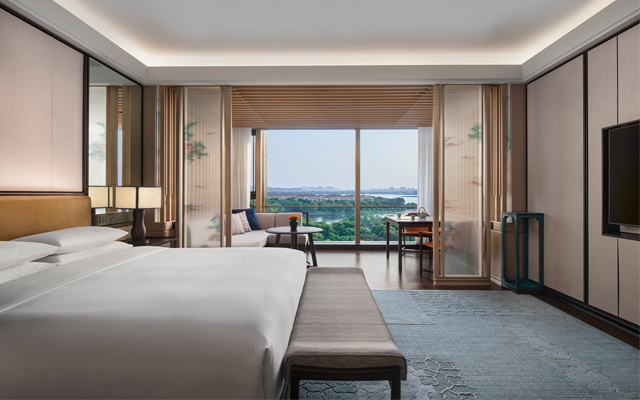
There are 318 rooms available, of which 18 are suites while 76 are inter-connecting rooms. Each room features customised wall art by Malaysian artists Loka Made that portrays the stories of the livelihood, craft and trade of the neighbourhood it stands in.
Four Points by Sheraton Kuala Lumpur, Chinatown
1 of 2
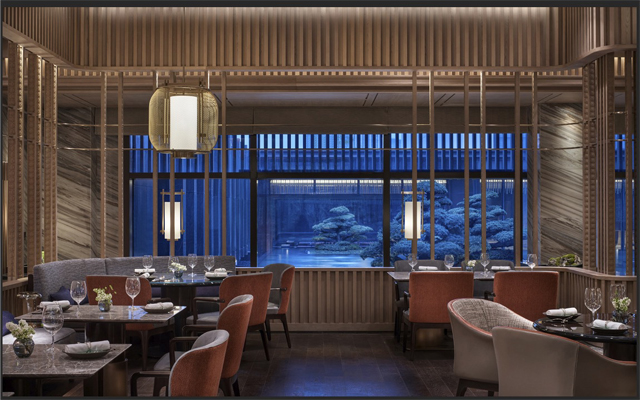
There are three F&B venues for guests to choose from – Quan’s Kitchen, the all-day restaurant with an open theatrical kitchen; Jann, the chinoiserie-styled bar; and Lady Yi’s Tea House, the lobby lounge on the seventh floor. On the seventh floor are a fitness centre and outdoor splash pool.
Four Points by Sheraton Kuala Lumpur, Chinatown, is located a short walk to the Pasar Seni MRT (Mass Rapid Transport) and LRT (Light Rail Transit) stations.
John Drummond has been promoted to general manager of InterContinental Grand Stanford Hong Kong.
He was previously the hotel’s resident manager, a post he has been in since 2010. Drummond first joined InterContinental Grand Stanford Hong Kong in 2004 as executive chef and was promoted to director of F&B in 2006.
The Scot’s hospitality experience spans 20 years across three continents – Asia, Australia and the Middle East. During this career, Drummond has been the executive chef and developed F&B concepts for hotels such as Shangri-La Taipei, Hayman Island Resort Australia, and InterContinental Bahrain.
A whisky aficionado, Drummond is also the whisky ambassador of the hotel. He is the founder of the first-ever Hong Kong Whisky Festival, which is famed as the largest whisky event in Hong Kong. The event, celebrating its fifth edition, features over 1,100 different whisky expressions from around the globe, alongside an array of over 30 masterclasses.
Tasmania is another Australian destination that is safe; Mount Wellington Lookout structure overlooking the city of Hobart, Tasmania
Misrepresentation of the bushfire crisis by international media has hurt Australian tourism
Many popular tourist destinations unaffected, visitors encouraged to stick to travel plans upon doing due diligence
Economic impact drastic in destinations across the country
Unaffected destinations such as the Blue Mountains (Three Sisters rock formation pictured) have registered a 60 per cent decrease in visitors
Australian tour operators are fighting the perception that the country is unsafe for visitors and that much of its naturally beautiful environment has been destroyed.
Tourism Australia’s office and industry commentators have been inundated with calls from all over the world, fielding questions about the extent of the damage caused by one of the worst bushfires the country has seen and its impact on tourism.
“I was interviewed by (an international broadcast network), who seemed to be under the impression that Australia was burnt to a cinder, and that we wouldn’t bounce back for 30 years,” said David Beirman, senior lecturer in tourism at University of Technology Sydney.
“I’m glad I was able to correct some of those ridiculous assumptions… but that’s the kind of negative stuff that’s coming out from some of the less informed sections of the international media.”
Australia’s tourism bodies insist many popular tourist destinations are unaffected and remain open to visitors, urging that it’s now more important than ever to stick to travel plans and support the industry, worth A$143 billion (US$98.8 billion).
“We are still gathering feedback from the industry and monitoring impacts on future bookings closely as the situation unfolds,” said Tourism Australia’s managing director Phillipa Harrison.
“As we have seen from past severe weather events and natural disasters, tourism is an extremely resilient sector. When affected communities are ready to once again welcome visitors, tourism will continue to play an important role in supporting their recovery,” she continued.
Tourism Australia says at present, Brisbane, Cairns and the Great Barrier Reef in Queensland, much of Western Australia, Tasmania and the Northern Territory are considered safe to visit. All international airports have also remained open, including those in Sydney, Melbourne and Adelaide, despite many eastern cities experiencing smokey and sometimes apocalyptically red skies.
Business tourism impact
So far, business events tourism appears largely unaffected. An anecdotal poll revealed while there have been a good number of concerned enquiries, actual cancellations have been few.
Melbourne Convention and Exhibition Centre, which turned into a transition and relief centre for more than 200 bushfire victims, reported no impact on business. So has Melbourne Convention Bureau and Business Events Sydney, noting that the summer holidays are usually quieter periods for global meetings anyway.
In fact, there’s been some show of support. “With those enquiries, we have been heartened at the genuine warmth towards Australia and concern for our welfare,” said BESydney CEO’s Lyn Lewis-Smith.
“Some – like the International Society for Magnetic Resonance in Medicine who are bringing their 28th Annual Meeting & Exhibition here in April – are leading on the front, providing advice to delegates on how they can best demonstrate their support,” she said.
Tasmania is another Australian destination that is safe; Mount Wellington Lookout structure overlooking the city of Hobart pictured
Damage control
However, there’s no denying some incredible damage has been done. More than 10 million hectares of land have been burnt, including almost half of South Australia’s Kangaroo Island where about 25,000 koalas didn’t survive. Some areas in New South Wales’ Blue Mountains are being described as a ghost town, with up to 60 per cent loss in visitors while some tourism operators in Victoria’s Gippsland are seeing a 90 per cent business decrease, despite most tourism areas being untouched by the fires.
“These fires have come at the peak of our season, particularly for the domestic market,” said Terry Robinson, CEO of Destination Gippsland, who estimates economic damage in Gippsland to be in the “tens of millions of dollars”.
“There’s no doubt the media coverage and the genuine safety warnings and emergency messages have had an impact and rightly so. (But) it probably couldn’t have come at a worse time in terms of the travel season. So we’re working hard to look at how we can restore visitation as soon as it’s safe and possible to do so,” he said.
Global considerations
The international media coverage threatens to undo years of careful investment Tourism Australia has poured into promoting Australia’s attributes overseas as it tackles the crisis running on its feet. In Britain, Tourism Australia was forced to suspend its new three-minute commercial where the advertising of summer beach holidays fronted by Kylie Minogue was criticised for poor timing against rolling news images of burnt forests, exhausted firefighters and terrified animals.
Beirman believes Australia will also experience a temporary decline in Chinese visitation during the Lunar New Year although numbers may be tempered by the many visitors who travel to see relatives studying and living in Australia.
“But a very critical question is that with the new Tourism Australia ‘Philausophy’ campaign, which had a lot of focus on our clear skies, unpolluted environment, clean and green image… Well, everything that’s been happening over the last few months has actually contradicted that image. So I guess if you’re from Shanghai and want to escape the pollution there, you’re not going to be doing it by coming to Sydney or Melbourne, at least not right at this point in time,” he opined.
International visitors who are seeking regularly updated information on top destinations detailing impacted areas, as well as visitor safety information, click here.
We have just started a brand new year, exchanging customary greetings of hope and optimism with colleagues and loved ones. Given the economic uncertainty, however, some projections on the business front may not be as rosy as last year’s.
With little doubt, organisations across Asia-Pacific will come under pressure to do more with less. That means business and finance leaders will need to look at streamlining operations and raising efficiency.
Watson believes technology will play a much bigger role this year
Technology can play a big role here – artificial intelligence (AI), machine learning (ML), and deep data analytics all have the potential to deliver greater productivity and intelligence to operations without growth in headcount.
Some of these technologies can also augment employee experience. That’s important because happy employees do a better job, benefiting business outcomes.
AI gets empathetic, and ML goes everywhere
For example, AI can automate routine and often tedious tasks. Early deployments are already showing that employees are more satisfied using AI to sort and forward emails, proofread documents, schedule meetings and build custom workflows.
The next wave of AI, which I expect to start gaining traction in 2020, is empathetic AI. Here, emotional intelligence is injected into AI, personalising interactions and making the subject of the interactions feel important, listened to or respected.
If your customers and employees feel heard and understood, your firm has an advantage. The powerful thing about empathetic AI is that it can deliver unique, customised experiences to a virtually unlimited number of individuals.
ML, in a similar vein, will take a step up. It will proliferate under the hood of technology services everywhere, especially behind everyday workflows and forms. That means business services will increasingly anticipate your needs quickly and accurately – be they related to expense reports, scheduling or other processes.
Actual ML applications that SAP Concur is developing includes having an employee’s preferred travel itinerary suggested and filled out based on previous trips, and automatically combined with the company’s preferred vendor commitments. Location of expenses can be predicted based on the cities employees visited, speeding up expense report filing and giving time back to staff for strategic or creative work.
I believe that in 2020, workplace technology will also become more adept at providing consumer app grade experiences, and more firms will use this to their employee engagement advantage. That means more workers will have access to travel, expense, healthcare and other services via mobile apps.
In such a scenario, enterprise travel booking tools can be as easily usable as consumer travel apps without a company forgoing the discounts, control and real-time visibility it has into the choices that employees are making. This is a timely development, as APAC airline and hotel prices are expected to climb about 3% in 2020, according to BCD Travel’s 2020 Industry Forecast, and companies will want to have the appropriate corporate travel systems in place to secure the best deals.
A safe employee is a happy employee
Another aspect of employee experience is traveller safety – organisations need to do more to protect their staff when they are making their business trips.
A recent study commissioned by SAP Concur found that personal safety is a top concern for APAC business travellers. Nearly two-thirds (63%) of business travellers in the region have changed their accommodation specifically because they have felt unsafe, and about half (46%) have reduced travel to a certain location due to political unrest or health hazards. Business travellers from Singapore and Malaysia are the most wary of uncertainty, with 60% curtailing travels plans, followed by Australia (53%) and India (50%).
Female travellers are particularly concerned about safety. Seventy-six per cent of the APAC women surveyed have faced gender-based negative experiences while on a business trip, and some have re-planned their accommodation or skipped certain destinations as a result.
Business travel technologies today can collate data from firms’ travel management companies, employees’ location check-ins and other sources to provide valuable insights for firms to use to support their staff and manage risks. In 2020, I expect more firms to integrate their duty of care programme with their travel and expense programmes to expedite employee location and communication during crises. It’s critical for organisations to be able to identify and communicate with staff in real-time when a crisis occurs. The right technology platforms can enable that to happen, ensuring that a company does all it can to protect employees in on the road.
Taxes are a certainty, but don’t let the state be the sole beneficiary
Another thing I expect finance leaders to do in a lean 2020 is to put technology to work in complex processes where there’s money to be retrieved.
One area often missed out by companies is value-added tax (VAT) reclaim. VAT recovery is possible for travellers visiting more than 40 countries around the world. This can work out to be a sizeable sum for some firms. The bad news is that managing the entire reclaim process is tough, as each country has its own set of constantly changing recovery rules and practices. I expect more APAC companies to deploy technologies to help them manage this process in 2020, as the hazy economic outlook puts onus on finance leaders to improve cash flow.
Still on the subject of taxation technologies, some CFOs may take 2020 to explore cloud-based tax automation, or solutions that can make real-time assessments of business travellers’ tax and immigration obligations before they travel. These tools will help businesses ramp up efficiency, and gain visibility into potential risks before they occur − good attributes to have in an uncertain environment.
All in all, I see plenty of positive technological developments to keep business and finance leaders’ spirits up in 2020. Pick the right ones and have a rewarding new year.
Andy Watson is the senior vice president and general manager for Asia Pacific Japan and Greater China at SAP Concur, where he is responsible for leading the business for SAP Concur in this region. A 30-year IT industry veteran who’s been a chief financial officer himself, Watson has also held global and regional leadership roles in SAP SuccessFactors and SAP Cloud.
Hyatt Regency Phnom Penh has appointed Herman Kemp as general manager.
Kemp started off working on cruise liners, with the Holland America Line. After which, he joined the hospitality industry, where over 12 years he rose through F&B and management roles at Le Meridien, Sofitel and Carlton hotels, all in The Hague, a city in Netherlands.
His first posting as general manager was with Aryaduta Hotels in Indonesia in 2012. Prior to his Phnom Penh move, Kemp was general manager of Park Hyatt Siem Reap for nearly four years.
Expected to open in 2020, the 250-room Hyatt Regency Phnom Penh will mark the first Hyatt Regency hotel in Cambodia.
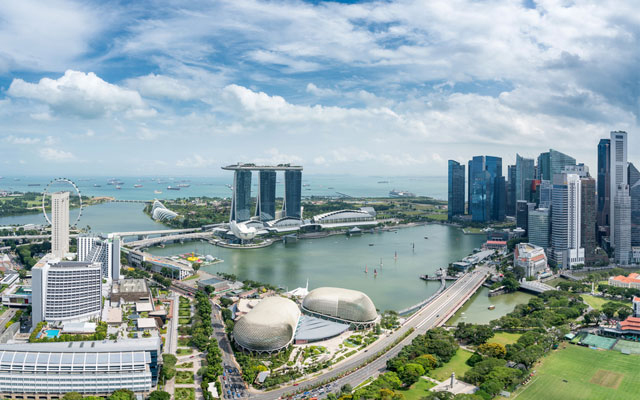
In these extraordinary times, Singapore continues to stand as a premier business events destination connecting the world to Asia. While COVID-19 has altered the events landscape, the fundamentals that have made Singapore successful – our vibrant business environment, outstanding infrastructure and future-ready workforce – remain unchanged.
Raising the bar for health and safety
As international business travel resumes, you can trust that Singapore will safeguard the well-being of visiting delegates and staff. We remain committed to upholding the highest standards of health and safety and to giving all our visitors peace of mind when they come to the Lion City. Hotels, restaurants, exhibition halls and other establishments have adopted new Safe Management Measures, such as social distancing and heightened cleaning of premises, to ensure reduced public health risk. Beyond these, the Singapore Government also launched SG Clean, a national mark of excellence for cleanliness, hygiene, and infection control.
Unique solutions by the events industry hark the dawn of a new era in business travel
Innovating for the future of business events
Singapore’s events industry is also implementing unique solutions to meet the emerging demands of a new era of business travel. Local companies are reinventing themselves – from enhancing digital offerings to developing forward-looking concepts for hybrid and virtual events.
For example, in June, homegrown event organiser Web in Travel (WiT) engaged more than 750 tourism business leaders to discuss the future of the industry in a global virtual summit. During the dinner break, WiT sent curated care packages to Singapore-based attendees and later even held a virtual dance party. With this mindset of continuous innovation, it is no wonder that Singapore was recently named the world’s most competitive economy for the second consecutive year (IMD World Competitiveness Ranking, 2020).
Singapore is where great minds converge, connect and create the future of business.
Plan your next business event at VisitSingapore.com/MICE.
Edward E Snoeks has been appointed as the general manager of Sindhorn Kempinski Hotel Bangkok and The Residences at Sindhorn Kempinski Hotel Bangkok, which is slated to open in April 2020.
Prior to his current role, Snoeks held senior executive positions with Marco Polo, IHG, and most recently, Okura Hotels, across major destinations in Asia such as Kuala Lumpur, Hong Kong and Bangkok.
He has also served as vice president hotel operations for Hong Kong Parkview Group, and also played a key role in the openings of Eclat hotels in Taipei and Beijing, as well as other projects in Hong Kong.
The world has seen images of bushfires destroying what tourists love about Australia, including on Kangaroo Island. Is the worst over yet?
Today is a bad day for Kangaroo Island. The conditions are not favourable. It’s very hot, 38°C, and for this afternoon, it’s predicted that winds will pick up.
You need three things for fires – heat, oxygen, and fuel – and today we will have all three. Fire services are working extremely hard to try and make sure the fires don’t break out. With the extent of the fires on Kangaroo Island, you don’t put them out; you have to contain them and hopefully, they’ll burn where they are, all of the fuel, and they’ll slowly go out unless we get significant rain. Today we’re on tenterhooks.
So to answer your question if the worst behind us, well, we hope so.
Which parts of the island are affected?
The west has been affected by fires. It hasn’t all burnt, but from Parndana in the middle of the island heading west, nearly all of the Flinders Chase National Park has been burnt. That’s at the extreme end of Kangaroo Island.
A lot of the north-west part of the island outside of the park also had catastrophic fires and has been burnt extensively. (But) if we are able to get through today, and the fire doesn’t break out, we are hopeful we can put the situation to rest (as there’s some rain predicted for tomorrow and Saturday).
But it very much depends on what occurs today. The east part of the island where our motel is, and areas such as Seal Bay to Penneshaw where the ferries come through, haven’t been affected by the fires at all. A lot of people don’t understand that the island is 150km long, so as I speak with you, the closest fire to me here in Kingscote could be about a hundred kilometres away.
And yet fire can spread very fast. What’s morale like? How are locals holding up?
I think the best way to describe morale is that it comes and goes.
I have a lady who works for me in the office, and she’s working right now (even though) her family farm was burnt to the ground. They didn’t lose their stock but they lost their houses, sheds, machinery, pastures, and fences. Everything was destroyed except for their cattle and sheep which they were able to move before the fire.
And here she is working today; she needs her job even more than ever. There’s a lot of stories like that on Kangaroo Island. They’ll have to rebuild.
(But) we are resilient and we will bounce back. The west end won’t return straightaway. It will need significant rain but farms will rebuild and restock. One thing we do know in Australia, although these are exceptional fires and they are unprecedented, when fires occur, the parks, forest and wildlife, they do bounce back.
You’ve just had a visit from the Prime Minister and the South Australian Premier.
Yes, and I was one of the tour operators that met with both of them yesterday. Their message was one of support and pledging that both federal and state governments will do a great deal (to provide) assistance in rebuilding Kangaroo Island. In fact, I think it’s up to about a billion dollars between them. They’ve also pledged a great deal of support and money to the tourism industry, because we will need to start a tourism recovery (programme).
You know, half the island is still open for business, but obviously right now, it’s appropriate that people are cancelling. We understand that as the wildfires are still prevalent.
But unfortunately with the international coverage, people are cancelling in February, March, April, May and June. That’s not really appropriate as half of the island is open for business. We’ll need tourists (more than ever) to return, or else we’ll have a double down. It’ll be an economic disaster (on top of) the destruction that has been done to property and wildlife.
A wild Kangaroo on Kangaroo Island South Australia
What is the current economic impact on your business?
We’ve got a cancellation folder and it’s pretty thick. It’s too early now to start adding it up, but (the cancellations are going to be worth) tens of thousands of dollars. At some stage, we will need the world, tourism industry, social media, TripAdvisors and meta sites to get the message out that you can visit Kangaroo Island because there’s still plenty to see.
I know that’s not (the right) message now, but it will be the message shortly.
International and Asian tourists are a significant part of your clientele. Are you concerned about the Lunar New Year approaching – a time that’s peak visitation period for Chinese-speaking markets – that tourism numbers will suffer?
I anticipate by that stage, the fires will have little impact on the island. We are cautiously optimistic that within a week the fires will be under control.
But the impact from the Asian market during that period (will stem) from the perception – due to the image of destruction and property loss on one-third of the island – that you can’t come to Kangaroo Island. This perception is why people are cancelling for (the months ahead).
You spoke of your cancellation file. Are other tourist businesses on Kangaroo Island reporting similar impacts?
We’re probably a little bit more resilient than some of the other businesses on the island. The smaller bed-and-breakfasts, and the smaller holiday places where people own one, two or three holiday units, it’s their only income/livelihood.
And because of the perception (that the island isn’t safe to visit or the fires are still raging), a lot of these businesses are threatened. They might not be in danger of burning down, but if all the tourists stay away, those businesses will be in peril.
You mentioned a tourism recovery plan. What is that going to look like?
First of all, we need to get a panel established. We’re at the stage where we know we’re going to do that. But too many people are either involved in (fighting) the fires, or trying to manage their business which has been impacted by the fires. I had two of my staff spend 12 hours the other day handling cancellations.
(But) the first thing we’ll do is (define) the message we want to get out to the Asian market, Europe, North America and the rest of Australia. A message that will say something like, don’t abandon us, there’s still plenty to see, it’s still a great place to visit. And then we will work with state and federal governments and agencies, national parks, and local council authorities and operators to get that message out. I know that social media is going to play a big part in that.
What about environmental and wildlife recovery? How long would that take?
I’m not an expert, but I know people who are working to enter areas that have experienced a fire, to assess the extent of the damage and the amount of wildlife that’s been impacted.
It’s (still) very early to say how long will it take, as some areas were minimally damaged. The north coast, normally a very picturesque and beautiful part of the island, has areas completely ravaged by fire. But (when driving it is possible to) come across an area completely untouched.
Can Kangaroo Island still be regarded as a wildlife paradise after losing so many animals to the fire?
There has been a terrible loss of wildlife and in some areas, devastating.
We went through this in 2007, when we had devastating fires. At that time, it was the biggest fire in our state’s history. I was chairman of the Kangaroo Island tourism board at the time, and I worked closely with all of the agencies to recover.
No doubt this fire event is worse, but the principle is the same. We will bounce back, Kangaroo Island is resilient, and so is the flora, fauna and wildlife. Kangaroo Island will always be a wildlife destination.
It sounds like the battle is far from over, and you certainly got your work cut out for you.
The battle is not over but we will win it. But we need people to hear (about what’s really going on). A lot of people who live all over the world have been sending their best wishes. And that does help.
Suppliers eyeing growth in the corporate travel business are relying on enhanced mobile products and services to address and engage travellers in areas such as duty of care and compliance, as well as enhance the traveller experience.
Travelport’s Chris Ramm, vice president Asia Pacific, air commerce, shared the travel technology company was seeing an acceleration in expectations of a travel experience that was as easy and engaging as the best retailers, products and services in the world.
Investing in mobile products will help companies in the corporate travel space capture more of the market
Ramm noted: “Our Global Digital Traveler Research 2019, which surveyed 23,000 people from 20 countries, showed that 45 per cent of travellers – up nine per cent on 2018 – get frustrated when they are unable to access their booking information round-the-clock on mobile devices.”
Moreover, Ramm revealed that Travelport’s Mobile Travel Trends 2020 report supported this mobile shift, as “87 per cent of respondents downloaded more travel apps this year than they did last year”.
Among customers that have intensified their mobile engagement are BCD Travel and easyJet, according to Ramm.
BCD Travel’s strategy is to provide anytime access to trip information and tools from any connected device. In collaboration with Travelport, it recently launched its next-gen mobile platform to leverage traveller engagement to satisfy corporate travel programme needs such as duty of care and programme compliance.
Travelport claims the native iOS and Android app TripSource is the highest-rated, most-reviewed TMC app in the Apple App Store, with over 900k app downloads, four-plus-star average app rating and over 94 per cent returning users YoY.
Ramm: travellers are increasingly downloading more apps to manage their travel
With easyJet’s growing focus on business and loyalty-related offerings, Ramm said the British budget airline was extending the mobile app’s functionality to offer holiday packages and rewards which are key strategic developments to grow the app’s loyal user base.
Mobile innovations easyJet has introduced include an augmented reality cabin-bag sizer to scan and check if carry-on luggage is within the airline’s dimensions, while Speak Now finds fights in a few seconds instead of 12 taps of the smartphone.
The mobile app is delivering nearly US$750 million in booking revenue annually and growing, and approximately 21 per cent of all easyJet bookings are now done via the easyJet app.
Users, Ramm noted, also used the app to generate and use 561,000 mobile boarding passes in the last week of November 2019, more than 271,000 passports were scanned in the same month, and more than 499,000 check-in bags were added to bookings as of end November 2019.
A polished urban retreat designed for business travellers, Hyatt Regency Kuala Lumpur at KL Midtown combines thoughtful design, seamless service, and exceptional facilities.
The five-star property excels in backing its expansive facilities with seamless service and personalised attention, setting the benchmark for luxury in Bangkok.