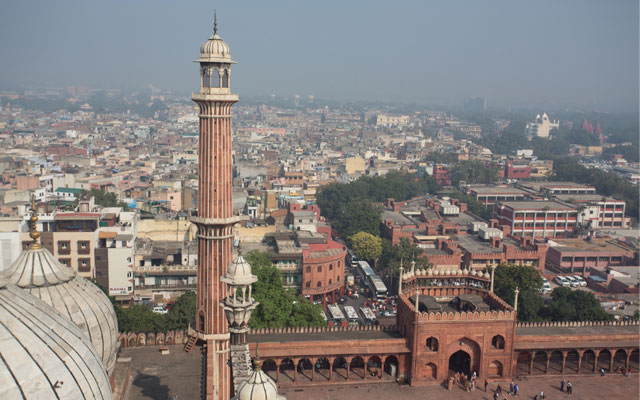
View over Old Delhi from minaret of Jama Masjid mosque
Indian prime minister Narendra Modi has ordered a 21-day nationwide lockdown which started immediately on March 25 at the stroke of midnight.
The decision will require the suspension of all road, rail and air services, as the country makes a bigger effort to contain the spread of Covid-19.
View over Old Delhi from the minaret of Jama Masjid mosque
In a special televised address on Tuesday night, the prime minister said that even those nations with the best medical facilities could not contain the virus and that the social distancing is the only option to mitigate it.
Modi acknowledged that the lockdown would mean a hefty economic loss for the country but insisted that it was his priority to “save the life of each and every Indian”.
“Hence, It is my plea to you to continue staying wherever you are right now in the country,” he said.
According to the Associated Chambers of Commerce and Industry of India, the country has lost about 1.5 million foreign tourist arrivals for the months of March and April.
“Jobs and businesses are at stake. We, the inbound tour operators, are in serious trouble,” Arun Anand, managing director of Midtown Travels, told TTG Asia.
“We need to pay salaries to our staff despite having no business. Office rental and government taxes are making our lives more difficult,” he said.
With growing numbers of global infections, Arun is bracing for zero foreign arrivals to India for another seven to eight months.
Seoul (pictured) is ready to welcome MICE visitors back once the dust settles
Seoul Convention Bureau (SCB) has rolled out a new PLUS SEOUL programme to further help the business events industry in Seoul recover once the Covid-19 situation blows over.
For one, SCB has lowered the minimum number of international participants required to apply for the programme from 500 to 200, in order to support more corporate events. As for postponed conferences that will still be held in 2020, they will also be offered 10 per cent more in pre-approved financial support.
Seoul (pictured) is ready to welcome MICE visitors back once the dust settles
Meanwhile, corporate meetings and incentives have had their minimum number lowered from 50 to 20, with one extra benefit to be added on top of the benefits already selected by the company.
Customised programmes will continue to be a core part of the PLUS SEOUL programme, but there will also be fresh set of added options such as Seoul Customized Welcome Drinks, On-Spot Photo-booth, Food Trucks, AI Robot Rental and Event App Development services. The programme also extends its welcome to companions of business events participants with one-day tours and meal cards.
SCB is also reinforcing its partnership with other cities in South Korea, although the signing of MoUs are currently on pause due to the outbreak. Four more destination partnerships were slated to be added this year, in addition to Gwangju.
As long as a group has more than 20 international participants, whether they are in Seoul for a conference, meeting, incentive or exhibition, they are eligible to apply for this programme. Requirements include a one-night stay in Seoul.
On the stakeholder end, in early February SCB set up a Seoul MICE Support Center – with professional consultations in various fields – to aid the private sector and associations face up to the Covid-19 challenge.
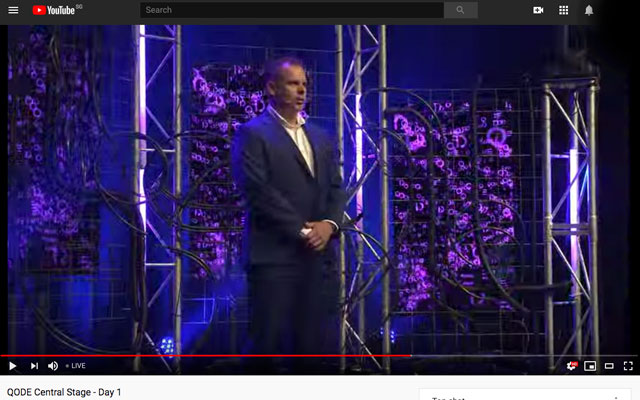
Earlier this week, organisers of QODE Brisbane, a Brisbane technology conference, partnered with YouTube to stream its conference live, as well as allow its attendees to visit exhibitor booths with the help of virtual reality, instead of cancelling the festival.
Speakers from the US and Israel were among those who took part virtually, while some local speakers included Nine CEO Hugh Marks and Queensland chief scientist professor Paul Bertsch. The event was streamed free of charge, with those who originally purchased a ticket to attend the event in person, refunded.
TAFE Queensland’s Robert Petherbridge giving a presentation
Aside from watching speakers on a YouTube channel, the event also teamed up with a Brisbane Virtual Reality company, Visitor Vision, to offer a new way for people to view the conference exhibits.
“One of the key reasons people attend conferences is to visit the exhibitor booths to gain further insight into the products and information available, and for those exhibiting, it’s a really important way to access that market,” chief QODE officer Jackie Taranto said. She added that visitors could even “jump on a call to chat with the exhibitor as they would face-to face”, aside from being able to virtually walk through exhibitor booths.
As a result of the programme being online, an exhibitor can also access information about who has visited the booth, the company they’re from and their interest level, which is often more information than they might be able to gain about a potential customer in a traditional setting.
Brisbane Lord Mayor Adrian Schrinner said it was fitting that a technology-based solution would see QODE Brisbane proceed.
“These extraordinary circumstances call for innovative solutions and what better way to ensure this important global event goes ahead than by embracing the latest technology,” Schrinner said.
Concept
With its historic, well-preserved streets where geisha once walked and artisans continue their crafts today, Kanazawa, in Ishikawa Prefecture, is well known as Little Kyoto. But it is also developing a solid reputation as a centre for contemporary art and culture, since being registered in UNESCO’s Creative Cities Network.
Coil is a wonderful example of the city’s successful blending of tradition and modernity. It sells itself as a place for visitors “seeking genuine sights, tastes and senses of Japanese tradition with a modern touch,” and it doesn’t disappoint.
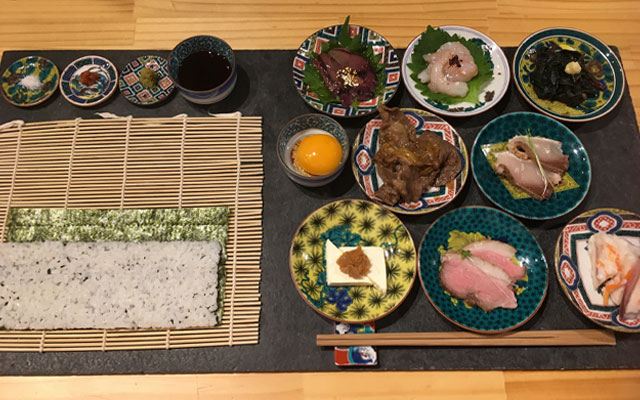
The standard set of Hosomaki sushi. Photo: Kathryn Wortley
Food
The core concept is high-quality Hosomaki sushi and side dishes that customers choose, learn about, and enjoy assembling meals their way.
Before entering the restaurant, I knew our dinner would be a unique experience. The space was like a gallery – spacious and open, with pieces of contemporary art dotted about. Even the Japanese tea bar, set up so customers could enjoy a do-it-yourself tea ceremony, was a work of art, with rows of beautiful traditional cups, hot water pots and wooden serving ladles. The creativity continued in the presentation of the soup bar, with monaka (wafer) soup varieties lined up with colourful labels.
There is a choice of Western-style tables and chairs or low tables on tatami matting. The standard set of Hosomaki sushi (thin rolls of rice and topping wrapped in nori seaweed) comes in three sizes: five, six or eight toppings. All options come with sushi rice spread out on nori and layered in a beautiful wooden box, assorted condiments, tempura, egg custard and gelato.
The eight toppings comprise salted firefly squid and squid ink, pickled sweet shrimp, Okinawan spinach seasoned with soy sauce, Noto-beef sukiyaki, pickled yellowtail, fugu fish egg and cream cheese, duck with truffle, and fermented turnip.
As Hosomaki is traditionally eaten with fillings such as tuna, cucumber or umeboshi (pickled plum), the sushi offered by Coil is a luxurious treat, even for Japanese customers.
A staff member explained how to place the toppings on the rice and use the makisu mat to roll it up before showing how to make the tea and soup. A sake tasting set is also available.
Tatami seating area. Photo: Kathryn Wortley
MICE application
Coil combines a fun culinary activity and a delicious dinner, so it’s great for groups short on time. It is also convenient to access, standing a kilometre from both Kanazawa Station and the Kanazawa Castle Park complex which houses Kenroku-en Garden. Up to 50 pax can be accommodated if all seating areas are used.
The eight-topping set is JPY 5,000 (US$47) plus tax. To cater for dietary needs, there is a vegan set, a low carb set with cauliflower rice, and an a la carte option, whereby customers choose from more than 40 kinds of fish, seafood, meat and vegetables.
Service
The staff were friendly and eager to help. They were also knowledgeable in recommending sake to accompany the dishes. The standard of food was excellent and presented beautifully, and we even received a little souvenir to take home.
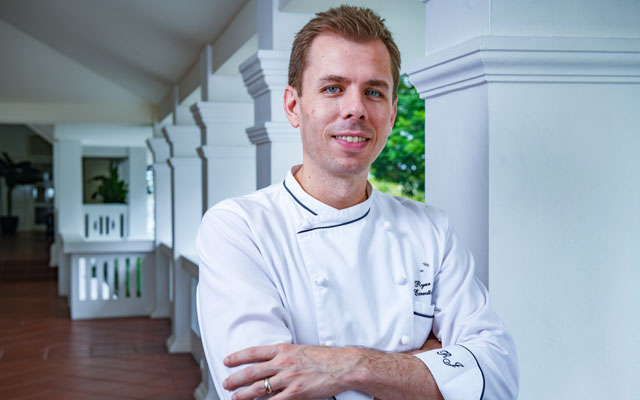
Ryan Jette has been appointed executive chef at Capella Singapore.
As executive chef at Capella Singapore, Jette will be responsible for overseeing the smooth running of Capella Singapore’s F&B offerings across its three venues.
He was most recently executive chef at Fairmont Marina Resort and Fairmont Residences.
The American has two decades worth of experience, having sharpened his knives at hotels and restaurants such as the Mandarin Oriental Hotel Group, The Carneros Inn, California, The Sentosa Resort and Spa, Singapore, Jumeirah and The French Laundry, a three-star Michelin restaurant in California.
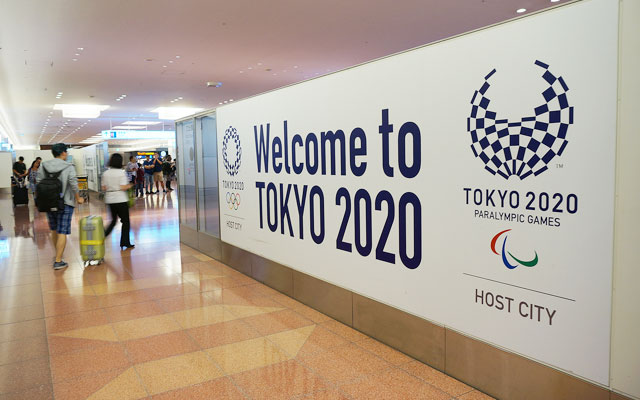
Despite setting a four-week deadline to deliberate on the fate of the Tokyo 2020 Olympic Games on Sunday, Japanese prime minister Shinzo Abe and International Olympic Committee President Thomas Bach have just announced their agreement to push the event to the summer of 2021.
The event will also get to retain its name, Tokyo 2020.
Earlier today, outbound agents told TTG Asia that they hoped for a quicker, clearer decision on the fate of the Games so as to facilitate ticket refunds, where needed, or rearrangements of travel programmes that were crafted and booked in better times.
To be held in 2021, the Games will continue to bear the Tokyo 2020 name
Tokyo 2020 was scheduled to open on July 24 this year, and run till August 9.
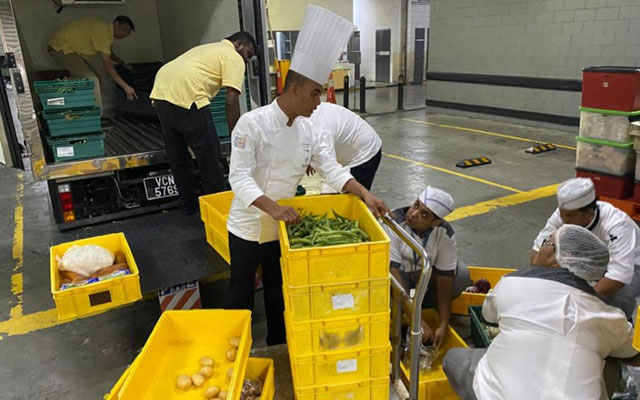
Over 340kg of fresh produce and surplus food sitting in the holds of Kuala Lumpur Convention Centre have been channelled to the Food Aid Foundation, as the government’s ongoing Movement Control Order meant little use for these supplies without event activities at the venue.
Kuala Lumpur Convention Centre has been prioritising sustainable operations and to-date has made several donations, amounting to more than 590kg of surplus food, which has helped feed over 1,200 people since partnering with Food Aid Foundation earlier this year.
Outbound agents in Singapore and Malaysia are waiting with bated breath for a clear decision on the fate of the Tokyo 2020 Olympic Games, following statements from Japan and the International Olympic Committee (IOC) on March 23 that a postponement may be inevitable.
Alicia Seah, director, public relations & communications, Dynasty Travel, told TTGmice that several corporate hospitality packages built around the Games, which were customised for clients in better times, were now lying frozen.
Corporate packages sold for the Tokyo 2020 period are put on hold
“These packages were all different, crafted according to what clients wanted to do and see at the games and around the destination. But with so much uncertainty around travel and rising fears of the pandemic, our clients are reluctant to move on with their plans and hope a firm decision would soon be made,” Seah said.
She explained that without a clear decision to cancel or postpone, refunds for opening and closing event tickets cannot be processed.
Seah opined that a postponement of the Games would be ideal to ensure a high quality event that spectators can enjoy, where the full global delegation of athletes is in participation and where all competitors are in top form.
Several media reports are now debating the implications of IOC president Thomas Bach’s revelation on March 22 that a decision on the Games would be made “within the next four weeks”.
Different IOC members have offered their own interpretations. IOC vice president Anita DeFrantz had said that it was “premature” to say that the Games would be postponed to 2021, while IOC member Dick Pound had told the media that the decision to postpone was clear.
Postponing the Games would be better for business, said Rosli Seth, managing director of Feel Japan with K, who has sold ground arrangements – hotel rooms and transport between the sports venues and hotels – for 60 people, largely sports association members in Malaysia and a smaller number of corporate clients.
He believes that clients were unlikely to cancel their bookings and would proceed as planned with the new dates.
“If rooms were cancelled now, it would be difficult to get new bookings closer to the new dates, and the rates would be high. Those who made bookings through us know this,” Rosli said.
He described his Japanese hotelier partners as being understanding and said they would be willing to carry bookings forward to the new dates.
Meanwhile, Kingdom Sports Group (KSG), an authorised ticket reseller for the Tokyo 2020 Olympic Games, has suspended the sale of all event tickets, ticket bundles, ticket packages and tours.
KSG’s website now bears a notice saying: “Given current uncertainties relating to the Games’ start date, in the interest of all our guests, we have decided to temporarily suspend sales, pending further updates from the IOC, IPC (International Paralympic Committee) and Tokyo 2020.”
As a dedicated specialist of international sports ticketing based in Sydney, KSG is the official ticketing agent for Tokyo 2020 in 36 nations, including Malaysia, Brunei, Indonesia, Singapore, the Philippines and Vietnam. – Additional reporting by S Puvaneswary
Brief
Held annually at the Kuala Lumpur Convention Centre since 2006, International Architecture, Interior Design and Building Exhibition (ARCHIDEX) has grown from 7,000m2 of exhibition space to over 30,000m2 in 2019. It involved 600 exhibitors (1,400 exhibition stands) from over 20 countries, and attracted more than 35,000 visitors.
Last year was also the year ARCHIDEX celebrated its 20th edition. In addition, the show was also the inaugural event to be held in Kuala Lumpur Convention Centre’s purpose-built and flexible 11,000m2 expansion.
Highlights
Trade visitors to the show had the opportunity to explore the latest industry trends and innovation, which included the opportunity to pilot a drone.
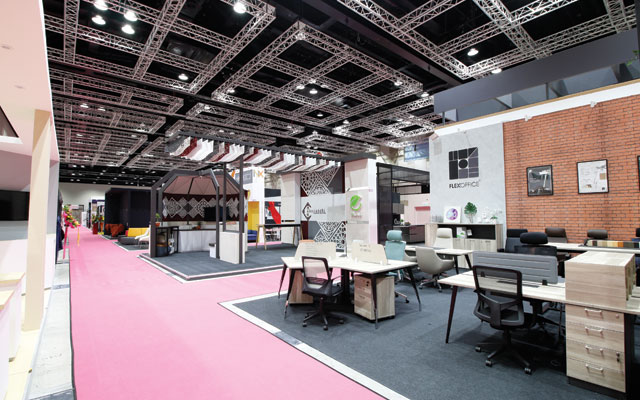
A new feature this year was the Innovation Hall at Hall 8, which also housed the Malaysian Institute of Architects Pavilion of Tomorrowland. It featured exhibits for the global futurist to explore the possibilities in architecture, and urban design for the future.
Meanwhile, Artwright, ARCHIDEX’s strategic partner, also unveiled the Office of Tomorrow in the Innovation Hall, which featured a concept that showcased state-of-the-art furniture aimed at utilising space and resources effectively to boost growth and productivity.
Challenges
It was key that the various contractors involved could meet the expansion’s completion date, as well as ensure the space was ready for the large-scale event.
Alan Pryor, general manager at Kuala Lumpur Convention Centre, recalled: “The completion date was also close to the start of the event, which threw up additional challenges. Particularly, the lack of preparation time for our team, the organiser, official contractors, freight forwarders and sub-contractors was limited, as the space was unfamiliar.”
To get around this, Pryor shared that the team worked “intensively” with various parties to ensure deadlines were met. Pre-event planning and numerous organisational meetings were also held over seven months, which resulted in a detailed plan with several contingency strategies to ensure that all parties understood their roles and responsibilities when it came to move-in and move-out. The close collaboration resulted in a seamless move-in and move-out process.
Another challenge was that both regular and new ARCHIDEX exhibitors and visitors were unfamiliar with the new space, and hence, it was important to manage visitor flow to the expansion halls.
As such, Kuala Lumpur Convention Centre worked closely with C.I.S. Network to implement ways to drive visitors into the expansion area, which included a new visitor registration location, eye-catching directional signage strategically located throughout the venue, and interactive activities in Halls 6 to 8.
Event International Architecture, Interior Design and Building Exhibition (ARCHIDEX) 2019 Organiser C.I.S. Network Venue Kuala Lumpur Convention Centre Date July 3-6, 2019 Attendance Over 35,000 visitors from 70 countries
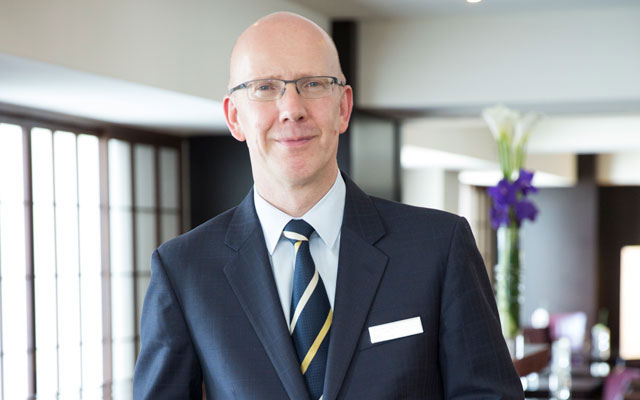
Mike Williamson has been appointed general manager for Conrad Singapore.
Williamson has more than 36 years of hospitality management experience, of which he spent 24 with Hilton.
The British national brings with him a diverse background in operations, revenue management and business development. His career has taken him to the UK, Belgium, Romania, the Netherlands, UAE (Dubai), China and most recently, Japan, where he was the general manager of Hilton Tokyo.
He has also previously held the positions of general manager in other Hilton hotels, such as Hilton Shanghai Hongqiao, Hilton London Heathrow, Hilton London Green Park, and Hilton London Paddington.
Just 10 minutes from Phuket International Airport on the serene northern coast, this 178-key, Bill Bensley-designed resort offers delegates a quiet, tropical paradise steeped in Phuket’s tin-mining heritage
The newly-opened Ritz-Carlton, Bangkok anchors the One Bangkok development with cosmopolitan elegance. Featuring the city's largest ballroom and a spectacular new penthouse suite, it delivers exceptional hardware and deeply authentic, soulful service for business and leisure travellers alike
Behind the imposing, Brutalist concrete that defines Zurich’s Oerlikon district lies a surprising secret. While its exterior honours the neighbourhood’s industrial roots, stepping inside Mama Shelter reveals a vibrant, neon-soaked world that is a far cry from its rigid shell