Asia/Singapore Tuesday, 14th April 2026
Page 634

Muslim MICE is on the rise, but are destinations, suppliers ready?

0
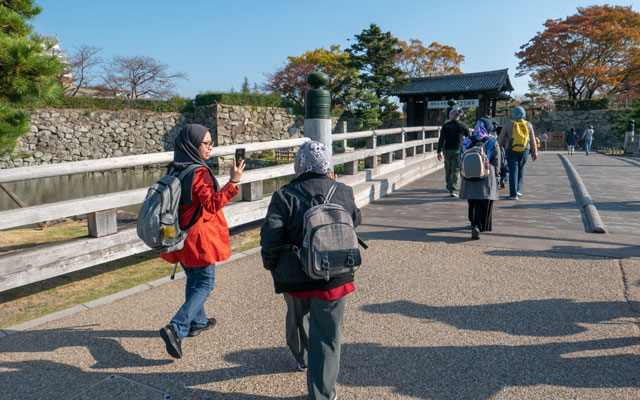
Muslim tourists on their way to visit Himeji Castle in Japan; Japan is widely perceived as a Muslim-friendly destination

Event planners from countries with a majority Muslim population are urging destinations and event suppliers to quickly broaden their understanding of Muslim travellers if they wish to benefit from the burgeoning segment.

According to the Mastercard-CrescentRating Global Muslim Travel Index 2018, South-east Asia will welcome more than 18 million Muslim visitors by 2020 – accounting for 15 per cent of total visitor arrivals in the region.
Muslim tourists on their way to visit Himeji Castle in Japan; Japan is widely perceived as a Muslim-friendly destination

Buyers at the recently-concluded IT&CMA 2019 told TTGmice that necessities for Muslim MICE groups go beyond halal-certified food.

A buyer from Dubai who has requested anonymity, said a place to pray in between meetings, and a meeting or conference programme that provisions for prayer breaks on Friday are important as well.

These needs are echoed by Willy Sihombing, CEO of Sedona Holidays Touri & Travel based in Medan, Indonesia. He added that some Indonesian Muslims even prefer staying in a Syariah hotel should there be such an option in the event destination.

“Otherwise, the minimum requirements are halal food and guestrooms with the Qibla sign (indicating the direction to pray),” Willy said.

While hotels are generally more aware of Muslim needs, convention centres (in non-Muslim destinations) have some catching up to do, opined Andre Christian, managing director of Talenta Tour, Malang, Indonesia.

When asked which destinations have done well in welcoming events with majority Muslim participants, Willy and Christian named Japan and South Korea. Willy added that both destinations have been “very serious” about attracting Muslim travellers.

“There are more and more halal-certified restaurants and you can easily find prayer rooms at public places such as the airport as well as mosques in the city,” he said.

Muslims currently make up of about 20 per cent of Japan’s total arrivals, and most tend to visit for leisure. Regardless, Susan Maria Ong, MICE director, Asia-Pacific, Japan National Tourism Organization, said Japan’s keenness on capturing the Muslim MICE segment is evident, having opened an office in Kuala Lumpur in March 2017. That office also handles the publication of a Muslim guidebook detailing restaurants and hotels in commonly visited locations in the country.

Taiwan, which has stepped up efforts to draw Muslim travellers, was recently ranked top three non-Muslim country in the world for being Muslim friendly, up from the fifth position in 2017.

Jerchin Lee, executive director, Taiwan External Trade Development Council, said: “Taiwan has done a lot to promote itself as a Muslim-friendly country; we have everything from restaurants and halal vending machines to prayer rooms in convention centres.”

Lee shared that Taiwan welcomed 60 per cent more Muslim leisure and MICE travellers in 2018 than the previous year. Recently, a 1,300-pax incentive group from an auto parts company in Indonesia visited Taiwan, and Lee said they felt “very comfortable” when travelling around the island.

“Muslims make up about one-fifth of the global population, and we are keen to capture the market, especially the outbound from Indonesia, Malaysia and the Middle East,” he noted.

Another destination that has made significant progress in this capability is Thailand, according to Christian. He found Thailand to be a convenient destination for his travellers and one where Muslim-friendly hotels can be found in the popular downtown Pratunam area.

This year, Thailand’s Ministry of Sports and Tourism hosted a series of halal-tourism training sessions with tour operators, tourism-related government and private agencies. The Institute of Asian Studies at Chulalongkorn University has also been recruited to research on specific market demands.

Senior lecturer Ismah Osman of Malaysia’s Universiti Teknologi Mara pointed to Chiang Mai as an example of how a destination can become more Muslim-friendly. The province is preening itself as a prime Muslim MICE hub, and offers 12 Muslim-owned hotels.

The Thailand Halal Tourism Association is carrying out training with a range of tourism-related organisations. Halal food advisors are also on hand to concoct more creative menus at events and conferences. – Additional reporting by Rachel AJ Lee

Growing Indian SME presence a boon for TMCs

0
Indian SMEs starting to see value in relying on TMCs for more complex services

Promising investment policies established by the Indian government have led to a significant growth in the local Small and Medium-sized Enterprises (SMEs), causing both local and international TMCs to do more to capture this market.

These policies include Startup India, which was launched in January 2016 to support entrepreneurs, build a robust startup ecosystem and transform India into a country of job creators instead of job seekers. Make In India, another initiative credited for helping to boost the formation of more SMEs in India, was birthed in 2014 to encourage companies to manufacture their products in India.

Indian SMEs are starting to see value in relying on TMCs for more complex travel services

Gaurav Luthra, chief operating officer, FCM Travel Solutions – Indian Subsidiary of Flight Centre Travel Group, noted that these policies have “resulted in some astonishing unicorn startup stories”.

Luthra said: “The Indian SME segment has maintained an average growth rate of over 10 per cent year-on-year. A few years back, large global customers kept global TMCs’ growth rate steady but with the entry of more players, the pace has slowed down. Hence, the focus has now shifted towards SME customers.”

Despite the trend, Luthra said domestic TMCs were to the first to identify the business potential of this huge market.

Recent studies have projected India’s US$40 billion business travel market to grow at a rate of 12 per cent in the financial year 2019/2020. SMEs are expected to play an important role in that rising demand, opined industry players.

To capture the market, both domestic and international TMCs have developed products with the Indian SME in mind.

MakeMyTrip, one of India’s leading online travel companies, launched MyBusiness for the growing corporate travel segment in the country in 2017. In that same year, CWT rolled out CWT For You, a state-of-the-art business travel solution designed for Indian SMEs.

Vishal Sinha, CEO of CWT India, said: “It is estimated that India has close to 50 million SMEs, contributing nearly 40 per cent of the country’s GDP. These SMEs are looking for cost-effective business travel solutions that can help them to grow their businesses.”

However, courting Indian SMEs is no easy task, major TMCs note, as they are used to being serviced by small agencies that have a knack for delivering personalised services. Indian SMEs are also price sensitive and are willing to move their business from one TMC to another just to score a marginal saving.

Luthra added that the Indian SMEs market is “highly unstructured with no clear regulations, policies and expectations defined”. Adding to the challenge of penetrating this market is the high risk attached to extending credit facility to SME customers.

On the bright side, Luthra said there is an increasing number of Indian SMEs starting to see value in relying on TMCs for more complex services, and there are also SMEs that have grown to a “reasonable size and look to TMCs for help in drawing up corporate travel policies, policing compliance, tracking of their internal travellers for security”.

Sabah sheds more light on upcoming convention centre

0
SICC believes it can attract convention and expo industry players from all over the region

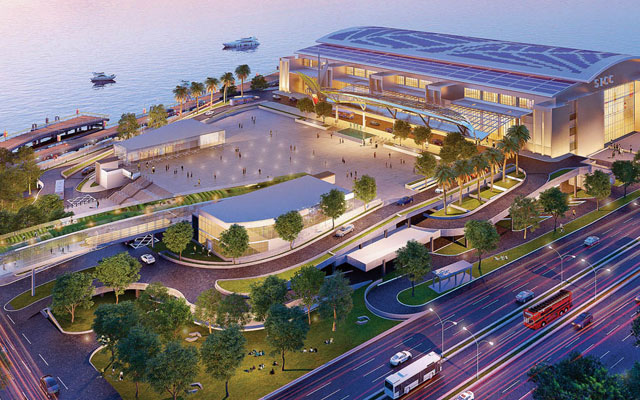
Sabah International Convention Centre (SICC) in Kota Kinabalu, the state capital of Sabah, will host its first event, a national Quran recital competition, from February 14-21, 2020.

“An estimated 5,000 people are expected to attend this event,” shared Marie Mansuet, assistant director of sales at SICC, when interviewed at IT&CM Asia last week. SICC was exhibiting at the recently-concluded tradeshow to create more awareness about the centre and the destination.

SICC believes it can attract convention and expo industry players from all over the region

At press time, there were more than 10 confirmed bookings for next year, made up of local and international corporate gatherings and association meetings.

Scheduled to open in early January 2020, SICC will be the only purpose-built convention centre in the Malaysian state. Developed by Yayasan Sabah Group, the premises will be managed by Accor.

It offers a 5,300m2 column-free convention hall, 5,300m2 exhibition hall alongside 20 meeting rooms, four VIP meeting rooms and three VVIP lounges as well as a performing arts hall with permanent two-tier seating for 1,250 people.

The convention hall can take up to 4,500 people in banquet seating or 5,400 pax in theatre-style. Both the convention and exhibition halls offer modern retractable partition systems to ensure space flexibility, and can be further divided into smaller halls.

Three five-star business class hotels are being built opposite SICC and they are expected to open from 2024 onwards, added Mansuet. Presently, there are more than 15 star-rated hotels within a five-kilometre radius of the convention centre.

Georgina Jinu, MICE manager at Sabah Tourism Board, said a dedicated convention centre will enable the state to bid for bigger MICE groups of up to 5,000 pax moving forward.

Experts lay out the multiple advantages of MICE cruises

0
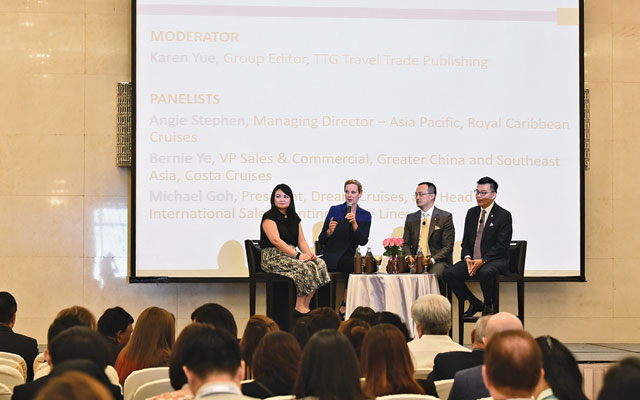
TTG Asia Media's Karen Yue; Angie Stephen, Managing Director – Asia Pacific, Royal Caribbean Cruises Bernie Ye, VP Sales & Commercial, Greater China and Southeast Asia, Costa Cruises Michael Goh, President, Dream Cruises, and Head of International Sales, Genting Cruise Lines

Cruise industry leaders featured on the first panel session, Fun and Frivolous, at the Asian MICE Cruise Conference last week, emphasised the advantages of convenience and cost savings cruises can offer corporate event planners.

Angie Stephen, managing director – Asia Pacific, Royal Caribbean Cruises, pointed to cost savings of about 30 per cent when events are held onboard a cruise ship as compared to a traditional hotel and land programme with the same extent of entertainment, as well as the convenience of being able to conduct meetings and leisure activities under one roof.

From left: TTG Asia Media’s Karen Yue; Royal Caribbean Cruises’ Angie Stephen; Costa Cruises’ Bernie Ye; and Genting Cruise Lines Michael Goh addressing a question from the audience

Citing an example, Stephen said: “We offer innovations that hotel ballrooms can never do, such as having a DJ booth hovering over the audience from where the managing director or CEO can address delegates, or having teambuilding activities such as rock climbing and surfing within a single venue.”

She added that planners could snag greater savings should they confirm their event 12 to 18 months ahead, especially before the next season’s prices are published.

Michael Goh, president, Dream Cruises and head of international sales, Genting Cruise Lines, observed that most corporate clients prefer to work with a single point of contact throughout the planning and execution process, which is something cruise companies can offer.

Another advantage planners have when taking a corporate event onboard a cruise ship, according to Bernie Ye, vice president sales & commercial for Greater China and Southeast Asia with Costa Cruises, is a captured audience since there are little opportunities for distraction when the ship is out at sea.

The three speakers also pointed out that the seamless process for planners and event attendees begins on the curbside, with technology put in place to speed up immigration clearance and boarding procedures.

That convenience extends onboard, with apps that allow planners to provide meeting agenda and itinerary to their attendees, and for attendees to access products and services – such as ordering a beverage – from wherever they are on the ship. – Additional reporting by Karen Yue

Manila picked to host the 14th AFECA meeting

0
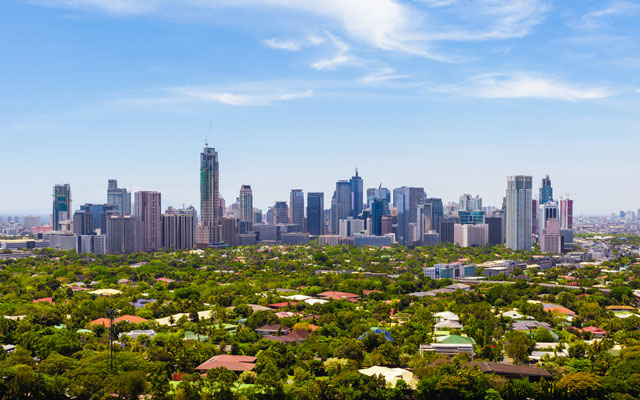
Manila (pictured) is hosting its first AFECA

The capital of the Philippines will be hosting the 14th annual general meeting of AFECA (Asian Federation of Exhibition and Convention Associations) for the first time later this year.

Held from October 9-11, the general meeting in Manila will be graced by up to 170 business events experts from 18 countries.

Manila (pictured) is hosting its first AFECA

AFECA treasurer Marisa Nallana revealed one of the highlights this year is the AFECA Asian Awards, which will have a total of seven categories including a new category for Outstanding Technology Solutions, and Service Award, in recognition of achievements in creating new and innovative technology solutions in the industry.

Moreover, the Asian MICE Youth Challenge is expected to be bigger this year than last, with more interest from students of accredited universities and colleges to come up with a novel event that showcases why their country is the best MICE destination in Asia.

Nallana added that PACEOS (Philippine Association of Convention/Exhibition Suppliers) will be holding the Philippine MICE Forum on October 10 on the sidelines of the general meetings. Topics to be discussed include country branding, the future of global MICE, and the Internet of things in relation to MICE.

AFECA will be jointly hosted by the Philippine Department of Tourism and its marketing arm – Tourism Promotions Board – and PACEOS.

FCM Travel Solutions partners Grab for ground transportation options

0
FCM chose to partner with Grab as it feels many are familiar with the brand in South-east Asia

Global travel management company FCM Travel Solutions has partnered with ride-sharing service Grab, making it easier for business travellers to book ground transportation in South-east Asia.

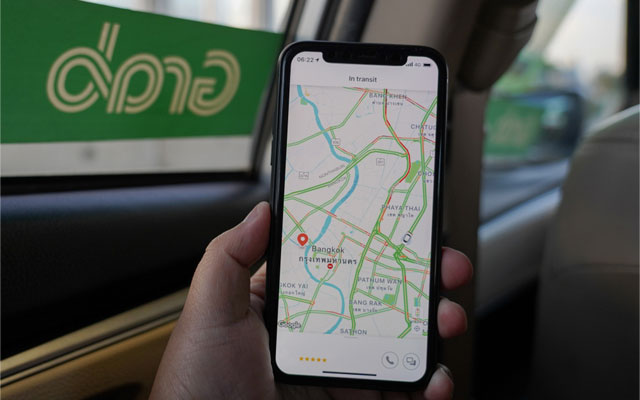
Through this collaboration, business travellers can now book Grab rides via FCM’s Smart Assistant for Mobile (SAM) app across seven South-east Asian countries including Singapore, Indonesia, Malaysia, Myanmar, Thailand, the Philippines and Vietnam.

FCM chose to partner with Grab as it feels many are familiar with the brand in South-east Asia

“When a traveller arrives at a new destination, Sam will notify them about the traffic situation from their current location to their destination and ask if they would like to ‘request a ride’”, shared Robert Ramos, FCM’s technology lead for Asia.

The hassle-free transportation option save the corporate traveller time from not having to wait in a long line at a taxi stand or hunt down a suitable ride. They can also have ease of mind, knowing that the driver will not be circling round the block, resulting in escalating costs and waste of time.

“Ground transportation is an important aspect of every business trip, and many are familiar with Grab in South-east Asia, so to be able to offer this value proposition to FCM clients through this partnership is significant for us,” added Bertrand Saillet, managing director of Asia, FCM Travel Solutions.

Grab is FCM’s first ride-hailing partner in Asia. FCM has more than 51,000 travellers from close to 1,900 national and multinational companies currently using Sam, and the app has an average of over 20,000 active users per month.

Ascott acquires S$192 million freehold property in Australia

0
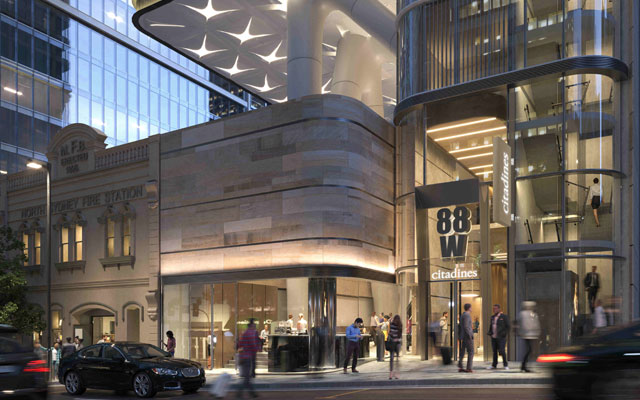
A rendering of the soon-to-open Citadines Walker North Sydney

The Ascott has acquired a S$192 million (US$139 million) freehold serviced residence in North Sydney through its global fund with Qatar Investment Authority (QIA).

To be named Citadines Walker North Sydney, the serviced residence is part of a 48-storey integrated development which also has office and retail components, and will be the tallest tower in North Sydney upon its completion in 2021.

A rendering of the soon-to-open Citadines Walker North Sydney

Ascott’s chief executive Kevin Goh said the latest acquisition is in line with the strategy of growing the company’s fund management portfolio through private equity funds, joint ventures and listed hospitality trusts.

“We believe in achieving scale in the business, and fund management is central to the active capital management strategy of Ascott as a dominant lodging real estate player,” he added.

Ascott also signed 13 other properties under franchise and management contracts across China, France, Indonesia, Kenya and Vietnam. With these newly secured properties, Ascott has achieved S$10 billion in asset value. Among them are four franchise contracts signed with Aegide Domitys which will mark Ascott’s foray into three new cities in France – Golfe-Juan, Tours and Roanne.

These 14 newly secured properties were announced on September 26 at the grand opening of La Clef Champs-Élysées Paris in France.

A different world

0

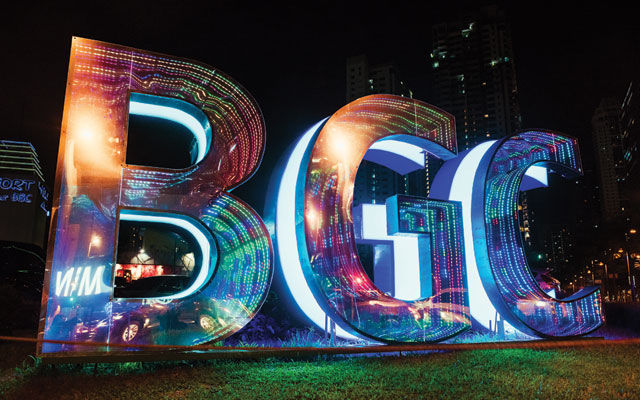
A former military operations base, Bonifacio Global City (BGC) in Taguig has been transformed into one of the most modern and best-planned business and lifestyle hubs in the Philippines.

Bonifacio Global City signage at the Fort Strip

This upmarket and self-contained community is pulling in a growing number of corporations and hotels while its safe and well-planned environs are a haven for expatriates and upwardly mobile Filipinos.

All that and BGC’s accessibility – not far from Manila’s international airport and a stone’s throw away from the Makat financial district and the metro’s main EDSA thoroughfare – have captured event planners’ attention.

As Colliers (Philippines) International reported, BGC “remains a strong business/corporate as well as MICE destination” buoyed, among other things, by outsourcing and traditional businesses in the area.

JLL Philippines, meanwhile, noted the “robust space demand” in BGC where building rentals tend to be in “the higher end of the spectrum” due to more construction of Grade A developments”.

BGC is just right for a medium-sized convention centre – the SMX Convention Center Aura, which accommodates up to 1,550 pax in a theatre-set up.

Walid Wafik, vice president and general manager, SMX Convention Center, said SMX Aura hosts events mostly from the consultancy and insurance firms and multi-level marketing industries. Meetings are most common at the venue, followed by conventions and exhibitions.

Walid expects business events in BGC to “grow in a couple of months or within the next year….as the demand for premier venues are also increasing with the fast evolving business landscape in the area”.

Where before big corporations complained of the lack of luxury venues for their meetings and conferences, this has been addressed in part by the opening in recent years of hotels designed for this burgeoning market: Shangri-La at The Fort and Grand Hyatt Manila. In addition, Dusit D2 – The Fort Hotel and Serviced Residences is opening soon with 135 keys and 129 serviced residences.

To cater to growing demand, Seda BGC hotel is expanding with a second tower, allowing its ballroom to expand to 300 seats, its room inventory to total 521 suites and serviced residences, and restaurant to seat up to 220 or six times the original.

Seda BGC has “to keep pace with the surging demand for premier accommodations and facilities in the area,” explained Seda Hotels senior group general manager, Andrea Mastellone.

Utravel and Uevents president and CEO, Jong Serrano, shared that there is a growing demand for business events in BGC, lured by the well-organised community, unique venues, culture hubs, and as a new and alternative venue.

Unique venues also include a bookstore, museums and art theatres, as well as a long list of trendy restaurants and bars. Bonifacio High Street Amphitheater is an open-air stage while BGC Arts Center is comprised of the Maybank Performing Arts Theatre with an auditorium, rehearsal halls, exhibit spaces and the sprawling Alveo Central Plaza and open-air Sun Life Amphitheater.

Another advantage BGC boasts is its green community with well-planned, wide pedestrian streets, parks and trees. It is a great destination for event delegates to hang out post-meeting, with a long list of some of the metro’s best restaurants, bars and night clubs to choose from apart from shopping malls, yoga studios and wellness clinics for the chic crowd.

Proceed with utmost care

0

Event brief
The World Parkinson Coalition (WPC) organises the WPC every three years to discuss the scientific advances and care initiatives in the fight against the disease. It brings together physicians, movement disorder specialists, neuroscientists, nurses, rehabilitation specialists and people with Parkinson’s disease, along with family members. 

Key themes of the 2019 meeting were advancing science, promoting community and inspiring hope. The previous congress in 2016 was held in Portland, Oregon, and the next one will take place in Barcelona in 2022.

Challenges
Given a number of unique challenges – primarily ensuring the wellbeing of people with Parkinson’s while travelling in Japan – planning for the Kyoto event started three years in advance, said Elizabeth Pollard, executive director of the coalition. 

Broadly, the challenges fell into three categories, she said; ensuring those with Parkinson’s could get the very most out of the event; uniting Japan’s medical experts in this field; and navigating Japan’s cultural norms. 

“Parkinson’s disease itself presents some challenges, regardless of global location,” Pollard told TTGmice. “It creates barriers for some patients due to the physical challenges of moving from one point to another. It’s also a complicated disease that can cause patients to feel depressed, anxious or fatigued, and these symptoms can also prevent participation.

“Also, in many parts of the world where medication is costly, people with Parkinson’s may struggle financially, so attending a global conference would not be possible without travel grants and financial support.”

The WPC’s unique congress model of a congress is designed to bring all the delegates in a fully-integrated meeting, not siloed, which was a new concept in Japan. 

Finally, Pollard knew that the success of the event would rest heavily on establishing relationships well in advance. Hence, the first thing she did was to plan multiple visits to Japan to build strong relationships with local experts they would be working with.

Pollard and her team quickly discovered, however, that companies and organisations in Japan had a habit of transferring staff to different departments every few years, making it difficult to ensure continuity.

Solutions
To assist people with Parkinson’s, junior clinicians and researchers, and health professionals from developing nations who wished to attend the congress, the WPC works with a number of supporters to create a travel grants fund. Grants are based on need, but also require recipients to help educate people upon return home. 

To encourage the participation of Japanese health experts, a local organising committee was set up. “This group of Parkinson’s leaders live across Japan and are highly regarded, both inside and outside Japan for their scientific and clinical knowledge,” Pollard said. “Their support helped elevate awareness and recognition of the WPC.”

To ensure that everyone was prepared for the cultural differences, the organisers kept discussions and training ongoing and speaking with as many people as possible in the run-up to the congress. 

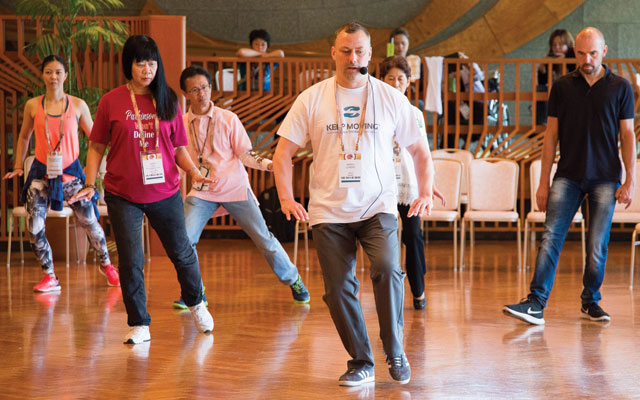
A major part was the Make the City Parkinson’s Ready campaign that has worked well at previous events. The programme trains and prepares all front of house staff who will be coming into contact with people with Parkinson’s, such as convention centre teams, security officers, hotel staff, police, and airport customs officials.

Some examples of things to be aware of when working with PwPs – People with Parkinson’s – is to make sure that there are plenty of places to rest, ensuring that water is readily available and understanding that PwP have a high rate of falls due to their uncertain gait and balance. Local police were briefed that PwP often have soft speech due to muscle weakness in their throats, can appear to be slurring their words and may appear to stumble. That behaviour can be misinterpreted as intoxication.

“While only 25 per cent of our delegates are people with Parkinson’s, ensuring they have a positive experience is important for the success of the congress,” said Pollard. “Education is the key and we take that responsibility seriously. We believe it is part of our legacy and what we leave behind in the host city and country.”

Key takeaways
Given the unique nature of the WPC, it is important to build relationships with local experts – including medical professionals, patients’ organisations and local vendors – well in advance. That helps to increase the level of service and delivers better outcomes for the delegates. 

“Our congress is unusual and unique and it requires a lot of interaction and education ahead of time,” Pollard said.

Event 5th World Parkinson Congress
Organisers The World Parkinson Coalition, Japan Parkinson’s Disease Association, and the Kyoto Visitors and Convention Bureau
Venue Kyoto International
Conference Center
Date June 4-7, 2019
Number of participants 2,777
Challenges Ensuring the wellbeing of people with Parkinson’s who were travelling for the congress; obtaining support grants; and navigating cultural norms

Howard Plaza Hotel Taipei

0

Brought to you by Howard Hotels

THE HEART OF SERVICE, THE SPIRIT OF INNOVATION

The Howard Hotels Resorts Suites with 13 properties in Taiwan is the largest national 5-star hotel chain in Taiwan and we are proud to declare this is where Taiwan’s intrinsic hospitality begins…

In Taipei, there are The Howard Plaza Hotel, Taipei, Howard Garden Suite, Howard Green Garden and Howard International House. Others include The Howard Prince Hotel in Taichung, The Howard Plaza Hotel in Kaohsiung and The Howard Plaza Hotel in Hsinchu. And, not forgetting our three fabulous resorts, Howard Beach Resort at Kenting, Howard Lake Resort at Shihmen Dam and Howard Beach Resort at The Pacific Green Bay. We are confident that at our properties, you will be able to experience great hospitality and immerse into the life of the locals that will transform your stay in Taiwan into something memorable.

A member of the WORLDHOTELS, The Howard Plaza Hotel, Taipei, the Group’s flagship 5-star Hotel, is centrally located at the city’s financial and government district. It is within walking distance to the MRT station and shopping & entertainment areas. The 101 Financial Center, Taipei World Trade Center and Taipei International Convention Center are just a 10-minute drive away, making it an ideal choice for any business meetings and events.

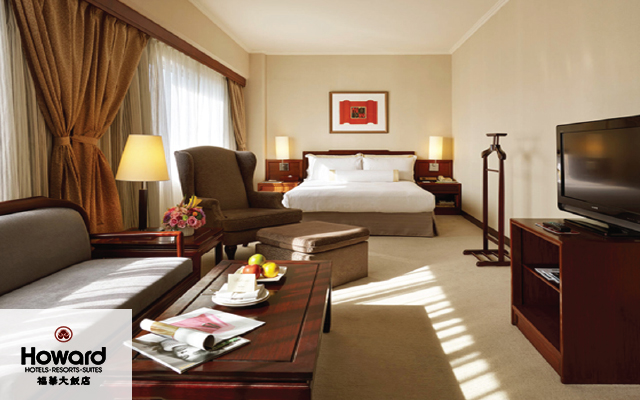
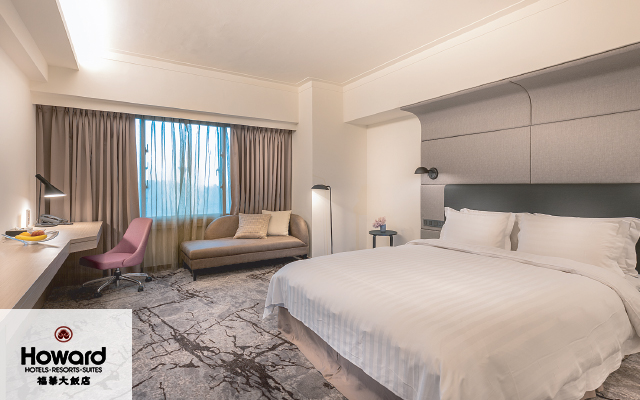
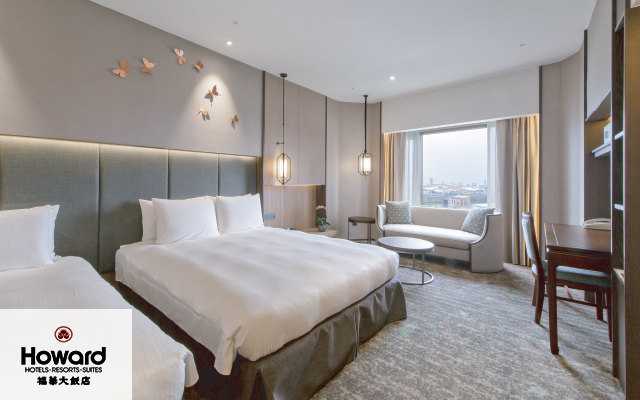
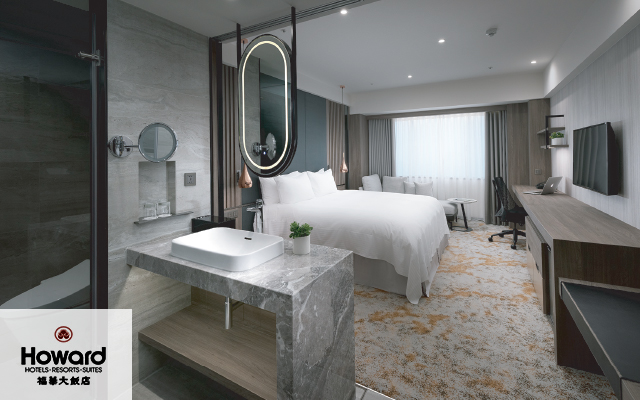
Our 606 guestrooms and Rosewood Suites are tastefully furnished with the traditional Chinese Rosewood furniture. Every room is incorporated with the latest technology with self-control air-conditioning and free broadband internet access. Guests can also enjoy TV programmes from local channels or pay movies on LCD TV. We also offer dual line telephones, voice mail, electronic safe deposit box and in-room tea/coffee making facilities.

2019TTG-MICE AD 640 X 400-01
2019TTG-MICE AD 640 X 400-02
2019TTG-MICE AD 640 X 400-03
2019TTG-MICE AD 640 X 400-04

As a business hotel, The Howard Plaza Hotel, Taipei understands what it takes to create the right environment for business. The Rosewood Club Lounge has a private meeting room that offers our Rosewood Club Business Suites guests professional and personalized business center services.

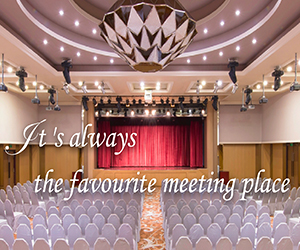
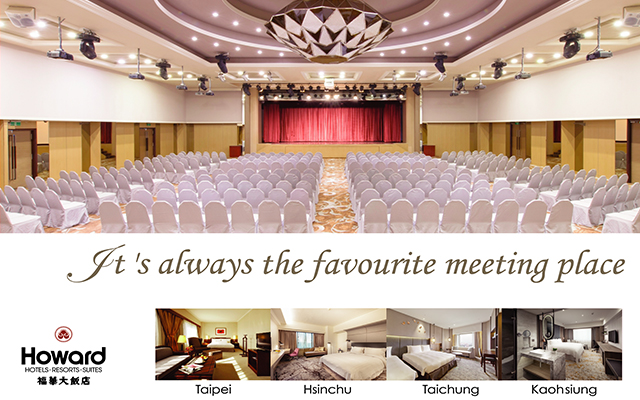
The Howard Plaza Hotel, Taipei is also an ideal event venue for both the business and corporate meeting groups. The hotel’s Howard Ballroom is able to accommodate up to 800 guests in a sit-down dining setup. In addition, there are 12 meeting rooms fully equipped with state-of-the-art audio visual equipment and supported by a team of sophisticated and experienced convention service personnel.

2019TTG-MICE AD 640 X 400

For the active vacationer, the hotel has at your doorstep the Garraud Paris Beauty Center, the Health Center that is equipped with the latest fitness equipment, an aerobic studio, the steam and dry sauna, as well as, a hair beauty salon.

Other highlights at The Howard Plaza Hotel, Taipei include the seven restaurants that offer a wide selection of cuisines ranging from American to Shanghainese, and our very own authentic Taiwanese cuisine with its unique Chinese glamour.

The Howard Plaza Hotel Group English homepage: www.howard-hotels.com.tw/en/our-hotels/

Reviews

The Ritz-Carlton, Bangkok

The newly-opened Ritz-Carlton, Bangkok anchors the One Bangkok development with cosmopolitan elegance. Featuring the city's largest ballroom and a spectacular new penthouse suite, it delivers exceptional hardware and deeply authentic, soulful service for business and leisure travellers alike

Mama Shelter Zurich

Behind the imposing, Brutalist concrete that defines Zurich’s Oerlikon district lies a surprising secret. While its exterior honours the neighbourhood’s industrial roots, stepping inside Mama Shelter reveals a vibrant, neon-soaked world that is a far cry from its rigid shell

Hyatt Regency Kuala Lumpur at KL Midtown

A polished urban retreat designed for business travellers, Hyatt Regency Kuala Lumpur at KL Midtown combines thoughtful design, seamless service, and exceptional facilities.