Sabre Corporation has partnered Singapore Airlines (SIA) for the expansion of the carrier’s NDC programme, KrisConnect.
Sabre agents can now access Singapore Airlines’ NDC content
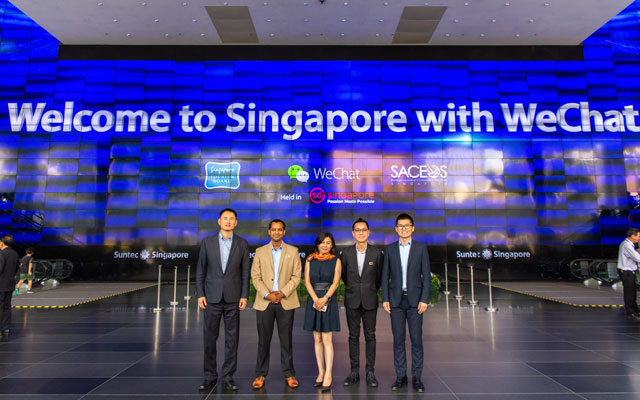
Effective November 2019, the collaboration will provide select Sabre connected agents in Singapore with the ability to access and book NDC content from the airline. As the programme continues to roll out across the region, all Sabre connected agents will have the ability to leverage KrisConnect.
SIA has been a member of Sabre’s Beyond NDC programme since 2018. The new KrisConnect programme, which will expand the airline’s digital distribution capabilities and enrich the customer experience, further establishes collaboration between both companies, said Sabre in a statement.
Under the KrisConnect programme, Sabre will provide travel agents with scalable, NDC-enabled offerings from SIA, and enable end-to-end workflows with rich, integrated content. With this launch, Sabre agencies will have access to a broader array of fares and a more tailored shopping experience via the Sabre agency point-of-sale, in addition to having access to new, KrisConnect-exclusive content categories, ancillary bundles, and third-party content.
Rakesh Narayanan, vice president, South Asia and Pacific, Sabre travel solutions airline sales, said: “With our scalable platform, we can transform the way air products are retailed, fuel product differentiation and optimise time-to-market to generate incremental revenue for the carrier.”
Vietnam’s Vietravel Airlines will begin operations next year, making it the sixth domestic airline to launch in one of the world’s fastest-growing aviation markets, according to a Reuters report.
Vietravel Airlines will join Vietnam’s overly-saturated domestic air travel market come 2020
Vietravel Airlines, owned by Vietnam’s tour operator Vietravel, will start with three to four leased planes and expects to place an order for Airbus SE or Boeing Co narrow-body jets at the Singapore Airshow in February, which will be scheduled for delivery within five years, chief executive Vu Duc Bien told Reuters in an interview.
Vietnam’s aviation market has been sustaining a double-digit growth rate annually, leading to heightened competition between Vietnam’s airlines.
Last month, Vietnam’s largest firm Vingroup JSC applied for a license to launch an airline next year, after property and leisure firm FLC Group’s Bamboo Airways launched its inaugural flight in January to become the fifth Vietnamese airline in an already-crowded market.
Vietravel Airlines is said to be finalising procedures to obtain the licenses and certificates required to launch its maiden charter flight slated for next November, according to the Reuters report.
Bien also told Reuters that Vietravel Airlines will buy either Airbus’s A321neo or Boeing’s 737 aircraft. The carrier plans to operate three to four aircraft in the first year, which will be expanded to a fleet of six in the second year, eight to 10 within five years, and subsequently, 20 to 30.
The majority of the carrier’s proposed new services will be international flights, the airline chief added, with target markets including Japan, South Korea, South-east Asia, Australia and China.
Vietravel Airlines has raised VND700 billion (US$30 million) via a bond sale, and plans to sell up to 34 per cent stake in the company to domestic investors within a year of operations for future expansion plans, the report further quoted Bien as saying. Bien also shared that several local banks have expressed interest in funding the company’s aircraft purchases.
Instead of keeping the brand legacy of Buffalo Tours Asia and Olympus Tours Americas, what’s the motivation to rebrand into Discova?
The plan for the “global DMC network”, as we called it back then, was to continue to grow across the world through acquisitions and organic startups. When that happens, it’s very difficult to maintain so many brands across the world as you acquire them. It also confuses our customers because the first thing they ask is, “Is it under the same company? Do you operate in the same way?”
So for us, it made sense to rebrand under a single brand to give us a platform to get onto the global stage. The name “Discova” is a little bit more international, and it’s an easy brand to take to new destinations. It’s easier to say we’re Discova Asia, Discova America or Discova Europe.
Managing director for Asia, Suyin Lee, says that the DMC will continue in its sustainable tourism efforts by working with local communities
What will Discova do differently compared with your DMC operations now?
Part of this brand change involves refocusing on our B2B partners. We’ve long noticed that a lot of DMCs look and feel a bit B2C, and even Buffalo Tours had a small B2C segment. But we’ve come to realise that our B2B partners is where we can add the greatest value.
What’s important to us is having the flexibility to lend our products and services – even our commercial models – to really suit our B2B customers, ensuring that our partners’ brand DNA really come through across all the destinations that we operate for them.
We’re certainly able to make it a lot easier for our partners to do business with us. Olympus and Buffalo work on two completely different systems – it’s not efficient.
We can have a single point of contact and consistency in the look and feel of how we do things (worldwide). The systems that we use, the documents we produce, the way our guides are trained, even our drivers – there needs to be some consistency in our portfolio of products and services.
It will certainly be so much easier to have a single platform across the world so whether our partners are buying for the Americas, Asia or Australia they’re using the same platform. For sure it’s going to be a combination of a system and technology that we can now invest in as a single brand.
What kind of competition are you seeing from other DMCs? Are they also taking a global approach?
Currently, there isn’t a global DMC that is consistent across the world. There are some big and strong DMCs based out of Europe and Asia, but they’re not really global – they’re very regional – so this is a great space for Discova to create something different and new.
As you bring your operations global, how will you balance that with keeping your experiences local and authentic?
Some 95 per cent of our workforce are locals. We’ve grown up in those communities, so anything that happens in the destination, how it’s evolving and the new products coming up, our people are there to share that with our partners.
Working with locals to ensure sustainable tourism is an important aspect of your business. How will Discova continue in this area?
Buffalo Tours has historically been very focused on sustainable and responsible tourism, largely because our people are from these communities, and we need to be able to ensure that they continue to benefit from tourism without being exploited.
For some of the community projects that we run, we have close to 30 social enterprises in our supply chain. We constantly look at environmental impacts like plastics and wet tissues, and over time we’ve been pushing and educating our partners to swap those products out for more sustainable alternatives.
In the same way that we’ve tackled the use of plastics, we’ve decided to educate our partners – tell them that instead of going to a certain popular destination, here is an alternative. It may not be as developed, but that is its charm, and if we continue to bring people there in a responsible way, the standards of that destination will be lifted. We do need to try to help all communities, rather than just a small community.
How have your partners responded to these efforts?
A lot of our partners are from Europe and they are phenomenal in terms of environmental consciousness and responsibility. They have really taken on board things like refill bottles – in the year before, we took out about 200,000 single-use plastics. I think it’s just about changing the mindset and I think most people in our business are really on board.
I want to roll it out at a greater scale across the world, particularly in Asia. This region is quite a mature destination and we would like to (expand) these existing initiatives (here).
Sustainability does seem to be picking up more slowly in Asia.
When we travel around Asia, it’s really disturbing how much plastic waste there is everywhere, on the roads and in villages. We work with many local communities to change that.
In Yangon, this incredible woman started to pay local villagers to collect plastics so she can (upcycle them) into reusable goods like handbags and tote bags. These people are making an impact because the villagers are earning money by collecting rubbish, while learning how to recycle plastics and tyres.
It’s our job to take travellers to these local enterprises. You’d need a DMC with people who live there and know about these enterprises, you can’t just pop them on your radar.
What about the issue of animal welfare in tourism?
Animal welfare is such a hot topic at the moment, (with elephant rides being a major concern now) from a consumer perspective.
We, the travel sector, (in part) created these problems of elephant camps, circuses and parks. Now to say that we’re just going to stop selling them and abandon all of these camps is impractical.
For example, in Thailand, there’s more than 3,000 elephants in captivity. What are you going to do, just let them go? If we stop supporting them in a responsible way, the elephants are not going to be looked after because the communities that benefit from tourism won’t have the money to look after them, and they’re going to have a massive collapse.
So it’s about how to work with these local communities, animal parks or elephant camps to really bring up the standards of welfare. A big focus for us at the moment is making sure that we follow well-informed guidelines, rather than just bowing to public pressure.
How does the company internally focus on such efforts?
We put a fair bit of investment and leadership support in it. We have a really great responsible travel working group with members from different parts of our businesses at all levels. They work on initiatives and we reward the best initiatives with incentive travel for the team, and we fund ideas where they’ve demonstrated the concept.
You’ve also been making leaps in glamourising tour guiding. Why is that needed?
We really take pride in developing our guides. In Indonesia, we launched a guide ambassador programme by inviting young men and women from marginalised communities to join us for six months. We pay for their living allowances and so forth, and they go through this guiding programme to get accredited before going on an apprenticeship with us.
We want to roll that out to Cambodia and Vietnam. Guiding is a bit of a dying trade, so we need to bring in fresh talent and nurture them by giving them a career path.
Some of our competitors don’t spend that kind of money because a lot of guides are freelancers. That’s where we create a stronger community among our guide base and we engage them in training whether they are freelancers or not. It’s important to show these communities that there is good living to be made in guiding, and it’s fun.
Rooms
Heritance Negombo runs a total of 139 rooms, including four Junior Suites and one Presidential Suite. All rooms come with a private balcony overlooking the sweeping shore of the Laccadive Sea. The interiors are stylishly decorated with modern wooden furnishings and bright colours, reminiscing the hues of a tropical dawn.
Rooms also come with an open-air sink area, and separate toilet and shower areas – a great feature that provides more privacy and convenience for sharing guests.
I stayed in the Superior Deluxe. A perk for all guests is one complimentary round from the mini-bar, which stocks two cans of local Lion Lager, a bottle of refreshing ginger ale, chocolate bars and crisps.
For guests who like waking up to a view, the Premium Room category comes with a king bed facing the balcony and a view of the magnificent shore.
MICE facilities
The property offers a range of both conventional ballrooms and unique spaces for corporate gatherings. The main banquet hall can accommodate up to 250 pax in cluster seating and is divisible into two, while the two smaller halls can seat 70 and 60 pax each, and can be combined.
Planners should note that the halls are not fitted with built-in AV systems. However, the hotel is able to provide a mobile projector of 3,000 lumens, or bring in an external supplier for a fee. The base rate for a half-day event with snacks is US$35 per pax and US$40 for a full day.
Groups seeking a venue to relax and enjoy a cold bottle against the sunset can book out the See Lounge on level two of the main hotel building. Glass windows frame the room from floor to ceiling, offering a fantastic vista of the shore and its roaring waves. The bar-style lounge can accommodate up to 40 pax and is the perfect location to wind down after a day of meetings.
Other facilities
A total of six F&B outlets can be found in Heritance Negombo. I had breakfast and dinner buffet at the all-day dining restaurant Blue Tart, which offers a wide range of Sri Lankan cuisine, particularly curried dishes and delightful desserts.
Service
We were warmly greeted by attentive staff who aided us at every turn, true to fabled Sri Lankan hospitality. Unfortunately, technical assistance fell short. My room experienced a leak and I requested for service, which did not arrive.
Verdict
Heritance Negombo is ideal for visitors who wish to relax in Negombo before heading out to the rest of Sri Lanka. Its comfortable and modern design brings a subtle resort vibe that is suitable for even serious group meetings.
(From left) Ottawa Tourism’s Michael Crockatt, The Hague and Partners’ Nienke van der Malen, and the Mayor of the City of Ottawa, Jim Watson celebrate the new MoU
Ottawa and The Hague join forces to attract top events
Senior representatives from Ottawa Tourism and The Hague Convention Bureau inked a Memorandum of Understanding on Monday that will bring the two cities’ convention offering closer together over the coming years.
In addition to the convention focused MoU, the event also celebrated and highlighted the many years of friendship between both the cities of Ottawa and The Hague and the nations of Canada and The Netherlands.
The MoU was initially discussed five years ago at the ICCA Congress in Antalya. The two organisations have since sought a variety of ways to cooperate.
Key objectives for the first year of the partnership include creation of joint sales activity; creation of research and intelligence documents focused on the security, governance and defence sectors, which will include identifying opportunities for both cities based on current leads and existing partnerships; identification of clients where both cities would be of interest followed by the creation of a joint proposal/bid highlighting synergies between the two destinations as well as legacy benefits of working together; identification of historic Hague clients that would be interested in Ottawa and vice-versa.
Expo 2020 Dubai spotlights medical topics
Expo 2020 Dubai will host a series of medical conferences and specialised events at the Dubai Exhibition Centre that are set to boost the UAE’s growing status as a global hub for innovation.
The nine events – expected to attract attendees from across the world – will take place during the six months of Expo 2020, which will run from October 20, 2020 until April 10, 2021, and will be organised by MCO, a Dubai-based medical conference and consumer events specialist.
There will be Virtual Reality (VR) and Robotics Expo pediatric, orthopaedic and surgery conferences as well as events focusing on cutting-edge technological advances such artificial intelligence (AI), 3D printing and wearable technology.
The nine contracts will see MCO lease a cumulative 90,000m2 of space.
Hilton opens a hotel at the new P&J Live, Aberdeen
Hilton Aberdeen TECA, located at The Event Complex Aberdeen at P&J Live in Scotland, has welcomed its first guests.
The RBH-managed hotel includes 200 bedrooms over four floors, including nine suites named after the region’s most famous sons and daughters, as well as a Presidential Suite with an exclusive outdoor terrace space.
Conferences and events for up to 90 guests can be accommodated across 257m2 of meeting space.
As well as being directly connected to P&J Live, the destination’s new events venue, the hotel is within easy reach of the city’s attractions and Aberdeen Airport.
The property is Aberdeen’s only Hilton Hotels & Resorts branded property.
Central Pattana (CPN) has launched two new attractions at the Central Phuket mega mall: Thailand’s largest aquarium, Aquaria Phuket, and Andasi, the world’s largest underwater restaurant and Asia’s first underwater bar.
Nattakit Tangpoonsinthana, executive vice president of marketing of CPN, said Aquaria Phuket and Andasi are “the final jigsaw pieces” that complete Central Phuket’s world-class attractions”.
Thailand’s largest aquarium, Aquaria Phuket, and Andasi (above), Asia’s first underwater bar, open at Central Phuket mega mall
With a capacity of over seven million litres, Aquaria Phuket is home to more than 51,000 aquatic animals from over 300 species. It was designed under the concept of “An Ocean of Myth and Legend”, inspired by Thailand’s mythology and culture from the mystical Himmapan Forest to the deepest ocean.
Aquaria Phuket is divided into several zones: Mystic Forest, a land filled with creatures from Thai folklore; River Giants, the world’s largest freshwater planted tank featuring arapaima, Mekong ray, Mekong giant catfish, and more; River Caves, where playful otters reside; Coastal Haven, home to a bunch of penguins; Station Aquarius, offering an interactive and educational encounter with the inhabitants; and Trick Eye Museum, the world’s first augmented reality art museum featuring the latest AR technology to produce realistic art and incredible panoramas.
Technology innovation is disrupting business operations, and as such, corporate travel is changing, as industry members debate the role and importance of business trips and the impact on corporate travel policy.
At a recent ACTE Singapore Education Forum, panellist Bhawna Gandhi, head of human resources, Danone – who is also responsible for corporate travel – commented that “people today do not want to travel for work” and jobs that require travel do not have the same pull as before.
In his view, Frédéric Dumoulin, senior regional director of sales – South-east Asia & Pacific, HRS, said business executives who were travelling the world, prior to the 2000s, were seen as successful people. “But now with the democratisation of aviation, taking a plane is not as exclusive as before. Status is now linked with the travel class, category of hotels where you can stay, etc,” he said.
Another damper on work trips is the VUCA (volatile, uncertain, complex, ambiguous) environment, with threats such as terrorism, natural disasters and geopolitics.
According to Jaime Wong, security manager, Asia Pacific International SOS, organisations are putting more focus on ensuring that they have tools and mechanisms in place to track employee travel, communicate with their employees during an escalated situation, and provide assistance to their employees wherever and whenever needed.
Gandhi believes that “well thought through travel policies” are key to hiring and retaining the best talent.
She elaborated: “The goal has changed and many of us have not realised that our policies are still supporting previous goals and we have to review holistically how our policies will deliver our employee value proposition.”
One corporate travel manger in the pharmaceutical sector agreed with Gandhi, noting that she and her colleagues travel only when “absolutely necessary”.
“Technology is helping us to get things done, and trips are also shorter,” she said.
Travel managers recognise that an employee’s preference for work trips is entirely personal. At software company, Autodesk, its diverse global traveller demographic is not against business travel even though “technology allows us to work virtually from anywhere to exchange ideas”, according to Adriana Nainggolan, travel programme manager, Asia-Pacific.
Kelvin Li, regional procurement and travel lead, Asia-Pacific, AECOM, shared that some of his colleagues prefer day trips as much as possible, “even if it means a Hong Kong-Shanghai same-day return trip of four hours total flight time, not including waiting time at airport and travel to/from airport”.
A survey of more than 1,100 business executives in several Asia-Pacific countries – conducted by CWT and recruitment specialist Ambition last year – showed 78 per cent of respondents preferred meeting in-person instead of using technology-enabled communications such as video conferencing.
Those polled said face-to-face meetings helped build stronger, more meaningful relationships, and read a person’s body language and facial expressions. It was also easier to be more persuasive.
Meanwhile, those who said they preferred virtual meetings pointed to time and costs as the main reasons.
Paul Endacott, regional managing director, Asia, Ambition, commented: “In the face of a growing global talent shortage, attracting and retaining the right people can be challenging, especially if candidates are receiving multiple offers.
“Fast-growing Asia-headquartered companies which are expanding internationally and trying to compete with established global players are acutely aware of this.
“Well-designed corporate travel policies can be a selling point and help these companies differentiate themselves to potential employees, particularly in industries which involve a lot of travel,” Endacott noted.
Concept
Acclaimed French chef Anne-Sophie Pic – who has seven Michelin stars under her belt – made her debut in Asia with the opening of La Dame de Pic at the restored Raffles Singapore earlier in July.
The 46-seater took over the space in the main hotel building that once housed the Raffles Grill. Gone are the wooden chairs and stiff white tablecloths of yesteryear, all of which have been updated with plush maroon armchairs and black-topped tables rimmed with metallic accents.
Pic follows in the footsteps of her father and grandfather, hailing from a long lineage of chefs. Her great grandmother started Maison Pic in Valence in 1889, which was succeeded by her grandfather André, who earned the restaurant its first three Michelin stars in 1934. Pic’s father Jacques later took over the business in 1956 until his death in 1992. Pic’s brother then ran the restaurant briefly before she eventually decided to continue the family business.
The third-generation chef-owner has two other La Dame de Pic restaurants, one each in Paris and London.
Food
Over the course of a languid, three-hour lunch, every canapé, amuse bouche, and dish that was placed before me was gorgeously plated, brightly coloured, and light on the palate. Cuisine-wise, Pic’s creativity is evident, for she – together with chef de cuisine Kevin Gatin, her prodigy of eight years – took the time and effort to add a local twist to contemporary French dishes.
For instance, her signature dish, Berlingot, pasta parcels found in all three of her restaurants adapted to reflect its own locale, has been given an Asian twist.
Here in Singapore, the pyramid-shaped pasta was matcha-flavoured, filled with molten French cheese fondue, and covered in a consommé derived from green zebra tomatoes and infused with chou chao (a medicinal herb that literally translates to “smelly grass” from Mandarin, known as the herb of grace in English). Apparently, Pic was strolling through one of our wet markets when she discovered the local herb!
Some of the snacks served also demonstrated Pic’s boundless creativity, and revealed how she wields her flavour combinations like a sharp-edged sword, constantly surprising my palate. Think curry inside liquid chocolate balls; a cracker topped with lemon confit and mushroom gel; and yoghurt dollops on basmati rice chips.
I also noticed that all of our main courses came graced with a consommé. Without fail, every time a consommé was poured into the dish, its delicious aroma would waft lazily to my nose, helping to whet my appetite. Pic values aroma complexities, and it is something she tries to bring forth in all of her dishes.
More Asian influences could be found also in the Wild Turbot where the dish’s apple-based broth was infused with marigold; and the pièce de résistance, the Saga Wagyu Beef – a juicy, roasted chunk of Japanese Wagyu accompanied with smoked beetroot and an osmanthus-infused mushroom broth.
Even the dessert wasn’t spared the gentle touch of an Asian herb, where the White Mille-feuille (another of Pic’s signatures) featured a ginger flower light cream, confit grapefruit and Litsea cubeba emulsion. The dessert, which upon first look emulated a wobbly square piece of tofu, was actually an intricate and complex work of art when cut into. Definitely do not judge a book by its cover, for I was astounded by the number of layers and textures that were hidden beneath its unassuming white shell.
It is also worth mentioning that I do not drink alcohol, and as such, was pleasantly surprised that La Dame de Pic offered a tea pairing. My choice for the afternoon was the Bo Hojicha Coffee Tea. It was a smooth, roasted tea with a green tea base, and was refreshing and absolutely delightful. The tea is one of two blends, the other being Chamomile Oolong, that chef Pic has created for her restaurant here.
MICE application
Set lunches, good for business travellers, start from S$128 (US$93) per person, with an extra S$58 for wine pairing.
Should time allow, consider La Dame de Pic for a private dinner party. There are three menus (Exploration, Experience and Elegance) offered during dinner, which differ by the number of courses. Menus are pegged S$198, S$218 and S$328 respectively, with an extra S$98, S$118, S$158 for wine and sake pairing. These three menus can be opted for more indulgent lunches.
The minimum spend to buy out the restaurant is S$22,500 (US$16.387). A minimum of three months is recommended but as always, it is subject to availability.
Service
It was an impeccable five-course meal – peppered with numerous canapés and palate cleansers – in an iconic hotel on a lazy afternoon.
Despite the plethora of options that we have in the Singapore dining scene, only a handful are founded by female chefs, or helmed by one, which is another solid reason why this restaurant stands out.
Richard Schestak has been appointed the new managing director at Siam Kempinski Hotel Bangkok.
Prior to his move to Bangkok, Schestak was general manager at Fairmont Marina Resort and Fairmont Marina Residences in Abu Dhabi.
The Austrian-born hotelier brings a wealth of international hotel experience gained in Europe, North America, the Middle East, Africa and Asia-Pacific with an extensive background in hotel operations – in particular F&B concepts and Michelin-star restaurants. His leadership experience embraces luxury mixed-use developments, hotels and residences with Fairmont and Raffles.
In total, Schestak spent 21 years with Fairmont Raffles Hotels in positions such as general manager of both Raffles Jakarta and Raffles Hotel Le Royal, Phnom Penh; opening director of operations at Fairmont Bab Al Bahr in Abu Dhabi; regional director of F&B – Middle East & South Africa; and director of F&B a Fairmont Dubai.
Thailand’s luxury hotel specialist Akaryn Hotel Group is ramping up its international expansion strategy with the appointment of Eugene Chew as its new vice president of development and operations.
With more than 20 years of experience in the hospitality industry across Asia and the West, Chew will be responsible for driving the company’s international expansion plans, with Aleenta being introduced to Bali next year followed by the opening of akyra in Hoi An come 2021.
He will report directly to the company’s founder and managing director, Anchalika Kijkanakorn.
Most recently, Chew worked for Wine Collection in Thailand, initially as operations manager, and later, as country director of operations, leading the group’s entire Thailand operations, covering 31 restaurants and 55 retail stores.
Prior to that, Chew helmed executive positions with global F&B companies, such as Outback Steakhouse and Compass Group in the US, before he moved back to his native Malaysia to become group general manager for Secret Recipe, where he was tasked with executing a multi-brand expansion across Malaysia, Indonesia and Singapore.
He was also previously the assistant general manager of New Great Wall, an F&B business in the US, handling its daily operations.
The newly-opened Ritz-Carlton, Bangkok anchors the One Bangkok development with cosmopolitan elegance. Featuring the city's largest ballroom and a spectacular new penthouse suite, it delivers exceptional hardware and deeply authentic, soulful service for business and leisure travellers alike
Behind the imposing, Brutalist concrete that defines Zurich’s Oerlikon district lies a surprising secret. While its exterior honours the neighbourhood’s industrial roots, stepping inside Mama Shelter reveals a vibrant, neon-soaked world that is a far cry from its rigid shell
A polished urban retreat designed for business travellers, Hyatt Regency Kuala Lumpur at KL Midtown combines thoughtful design, seamless service, and exceptional facilities.