Asia/Singapore Thursday, 25th December 2025
Page 641

Capri by Fraser China Square

0
Rooftop Pool

Rooms
My 29m2 Studio Executive came with extra furnishings such as a cooker hood, hob, a microwave, plates and cooking utensils. This was unique as very few hotels in the city state offer this in their regular rooms.

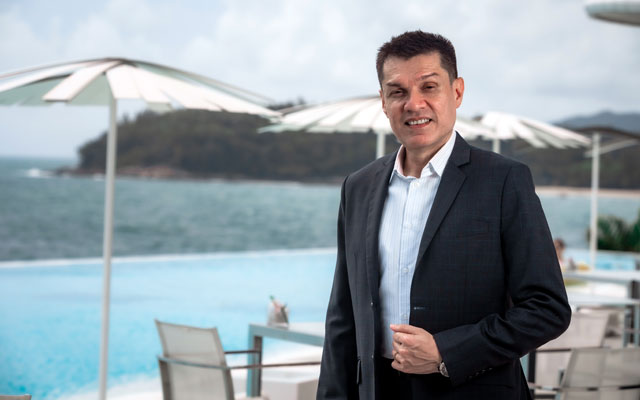
The property’s general manager, Vernon Lee, shared that business travellers who were on short-term assignments for about two weeks usually liked to book this configuration as it allowed them to do some light cooking should they miss food from home.

The bedside tables were inspired by the tiffin boxes used to store food in Singapore’s yesteryears. There were ample USB ports on both sides of the bed, but I especially liked the wireless charger positioned under the lamp at the work desk. That came in extremely handy – and was a relief – as I forgot to bring a wire to charge my iPhoneX.

I did however, find it cumbersome to climb in and out of the bathtub to access the shower, and would have preferred a shower stall instead.

In-room Wi-Fi was speedy, and there was no limit on the devices connected per room.

MICE facilities
There are two interconnecting meeting rooms, the 45m2 Pod 1 and the 78m2 Pod 2, on the second floor. When connected, the rooms are able to hold 54 people in classroom-style, or 120 people in standing cocktail.

On the same floor is also the executive lounge, named The Den. The Den’s furniture ranged from plush sofas to functional chairs resembling business class seats on an aircraft – all in lively candy shades. Guests can utilise wireless chargers and enjoy free-flow coffee and snacks such as sandwiches and biscuits. There were also several board games on offer, which could accommodate one to four players.

Other facilities
There is a rooftop pool with underwater speakers (a very nice surprise); steam rooms; a fully-equipped gym that boasts Prama, an interactive fitness platform; and the 24/7 Spin & Play launderette with an Atari Pong table.

JÙN Restaurant is the sole all-day dining onsite, serving up local dishes like salted egg chicken and Teochew-style steamed fish, alongside innovative offerings such as Chilli Crab Rillette Kueh Pie Tee and Baked Chempedak Crumble.

The restaurant is the site of the buffet breakfast service, and my stomach was very pleased with the spread. I thought that most of the dishes I tried were tasty, in particular the hokkien mee.

Service
Most were courteous and helpful when approached, except for one who was a little rough around the edges, though it’s nothing a little training won’t fix.

Verdict
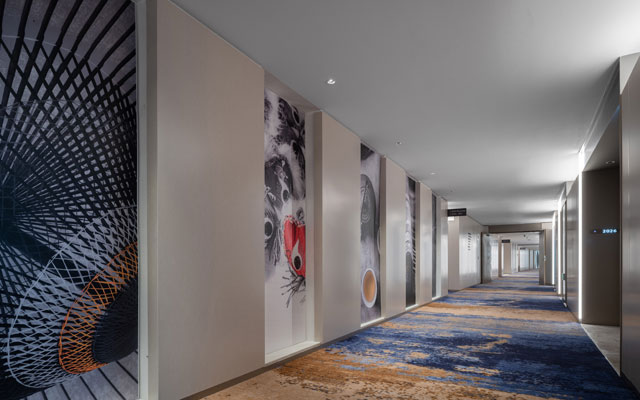
Its enviable location, smack in the middle of Telok Ayer, is perfect for business travellers who work in the CBD area. And after a day of meetings, the hotel is also a convenient base from which they can explore the city, as there are four MRT lines (green, red, purple and blue) within a 10-minute walking radius.

Number of rooms 304
Contact
Email reservations.singapore@capribyfraser.com
Website https://chinasquare.capribyfraser.com/default-en.html

Hiroshima takes events to the next level with new observatory

0

One of the newest – and most innovative – additions to Hiroshima’s skyline is the Orizuru Tower, which takes up a prime corner overlooking the Peace Memorial Park and The Atomic Bomb Dome.

Its Hiroshima Hills observatory is open to the elements, and offers views of the surrounding mountains and even as far as Mount Misen on Miyajima. The ideal venue for corporate venues is also stylishly designed in wood, with pillars reminiscent of a traditional temple and perched 13 floors above the city.

The Orizuru Tower has a cafe, souvenir shop and information counter on the ground floor, with a spiral slope to the rear of the building that leads all the way to the 13th floor. For anyone not up to the stroll, elevators will whisk you there far faster.

The 12th floor is given over to Orizuru Square, a cleverly designed open space that can be customised to a user’s needs and has interactive screens, seating areas, tables and spectacular views on three sides, including over the city’s most famous sights.

Visitors are also taught how to fold the origami paper cranes that have become a potent symbol of this city’s suffering, and to make a wish as they drop them into a glass chute on the exterior of the building where they are gradually collecting, in their thousands.

But it is the 13th floor that is the crowning glory of this venue. With a cafe and space to prepare a buffet line at the rear, the area has been cleverly designed to be flexible to a user’s needs yet remain impressive to the eye. The wooden floor slopes away to the outer edges, which are open apart from netting, allowing the wind to blow through the space; perfect on a hot summer’s evening.

Next Story Group names Patrick Imbardelli as chairman

0

Next Story Group has appointed Patrick Imbardelli as chairman of its board with immediate effect.

Imbardelli succeeds Luis Miranda who has retired from the board after more than six years in that role. Prior to this appointment, Imbardelli was a non-executive director and advisor to Next Story Group for the past three years.

With a hospitality career spanning more than 30 years, Imbardelli was formerly the chief executive Asia-Pacific of the InterContinental Hotels Group, and the chief executive and board member of Pan Pacific Hotels Group. His achievements extend from capital restructuring and investments in developing countries to integrating hotel management companies, businesses and brands.

He is also a director and advisor of IDEM Hospitality, advisory board member and advisor for Tionale Enterprises, director of The Goodnight Co, and previously a director and advisory board member of Symmons Industries in Boston.

Due data diligence

0

Personal data protection has become a hot topic in Singapore’s events industry with those in-the-know saying the matter has to be taken seriously, and policy guidelines and practices to safeguard the collection, retention, use and disposal of personal data have to be put in place under the law.

“It is not enough to play by ear,” commented Ralph Hendrich, general manager, Koelnmesse and honorary treasurer, Singapore Association of Convention Exhibition Organisers and Suppliers.

Stricter rules on Singapore’s Personal Data Protection Act (PDPA) will come into play in September 2019, and the EU’s General Data Protection Regulation (GDPR), which came into effect in May 2018, will also impact the industry.

In 2016, Hendrich took on the responsibility as Koelnmesse’s data protection officer (DPO), a role that every events company must create.

Hendrich explained that Koelnmesse mounted a “structured exercise”, lasting around three months, to educate staff and third-party suppliers, on following the strict protocol under PDPA.

To reassure companies still grappling to be PDPA compliant, Hendrich commented that the exercise will not cost businesses tens of thousands of dollars and “is definitely affordable”. He added the DPO role “cannot simply be dumped on the human resource or administration manager”.

As one of the bigger international players in the region, Koelnmesse received legal and logistics support from its German head office in this aspect.

He advised SMEs to outsource the data management and use a cloud-based solution.
“It is a business investment and part of the business model capability as data protection compliance is increasingly required in RFPs,” he said.

“It is the natural process of digitalisation as businesses move into cloud-based e-invoicing, social media presence, the integration of customer relationship management and 24-hour connectivity.”

Meanwhile, the managing director of a PCO, which organises regional events and is starting its personal data protection exercise, suggested the industry look into introducing professional insurance, like medical insurance for doctors, to protect industry members.

“We will have to be prepared to incur additional business costs if we are expected to be personal data protection compliant,” the PCO director said. “I do not know yet if insurance costs will increase, and how much additional cost the mandatory DPO role will also incur.
“There is nothing much we can do for events we have bid for, but clients need to know they have to incur more cost,” she added.

Kenny Goh, founder of event technology company MICE Neurol, said personal data protection involves technical and legal issues, and he has observed a “gap between the legal world and industry practice”.

“Lawyers may not be the best option, as there are no lawyers that specialise in MICE,” he said.

Goh suggested events organisers and owners use “data controllers” who can prove that everything has been done to be compliant.

“What is needed is a centralised system for tracking data and the data controller is accountable for the data,” Goh added. “In order to control and map the data, the data controller has to be a professional data proxy.

“And if data collection, tracking and distribution is not an event company’s core competency, then it is best the role be outsourced, because a processing platform and software has to be in place and tailor-made for different events to be in compliance.”

The challenge facing some companies, Goh noted, is that clients often want a one-stop solution and event players end up having to offer every kind of service.

The Murray, Hong Kong welcomes new GM

0

Wharf Hotels has appointed Adriano Vences as general manager of The Murray, Hong Kong, a Niccolo Hotel, who joined the property after a four-year tenure heading the first Niccolo hotel in Chengdu.

Adriano joined Wharf Hotels began in 2009, and was promoted to general manager of Niccolo Chengdu, the first hotel under the new luxury brand of the group, in 2015.

The Portuguese national has over three decades of industry experience in destinations including Singapore, India, Dubai, Mexico and Chile.

Six-party deal paves way for trade and tourism between Singapore and Busan

0

A six-party MoU has been signed to promote trade, business and tourism flows between Singapore and Busan.

The one-year partnership was signed between Changi Airport Group, Busan Metropolitan City (BMC), Korea Airports Corporation (KAC), Eastar Jet, Jeju Air and SilkAir.

Six parties come together to sign the agreement to jointly promote Busan-Singapore trade and tourism

This follows the allocation of traffic rights to South Korean airlines Eastar Jet and Jeju Air, as well as SilkAir, the regional wing of Singapore Airlines, to operate flights on the Singapore-Busan route.

SilkAir’s four-times weekly service to Busan started on May 1, 2019 while Jeju Air will commence its service to Singapore on July 4, 2019. Eastar Jet is expected to connect the cities in the coming months.

The six-party collaboration aims to strengthen air connectivity between Singapore and Busan and raise awareness of the respective airlines’ product offerings.

In the coming year, residents and travellers from both cities can expect various on-ground events such as roadshows, travel fairs and campaigns as CAG, KAC and BMC collaborate to help grow and sustain the Singapore–Busan route.

Busan had been identified by OAG – a leading provider of digital flight information, intelligence and analytics – as the top unserved market for Changi Airport, with an estimated indirect two-way traffic exceeding 75,000 passenger movements annually.

Lim Ching Kiat, managing director, air hub development of Changi Airport Group, said: “For many years, connectivity between Singapore and South Korea has been limited to Seoul with around 60 weekly services. As Changi Airport is the gateway to South-east Asia and given the increasing travel demand over the years between Singapore and Busan, we are pleased to welcome the opening of this new route which will offer greater convenience for travellers between the two cities.”

Royal Caribbean Hong Kong casts wide net in business events sector

0
Skydiving is one of the unique activities that can be done onboard Royal Caribbean Cruises' Quantum of the Seas

Royal Caribbean Cruises (RCCL) Hong Kong is intensifying its courtship of business events in hopes of growing its market share to 5-10 per cent by 2020.

According to new managing director Crystal Campbell, the company has seen considerable MICE business in the past, but its market share remains under five per cent.

Royal Caribbean Cruises’ Quantum of the Seas

She said: “So far, we are working directly with some corporations, helping and educating them on what we offer. Meanwhile, we try to build partnerships by understanding what they do on a yearly basis (when it comes to) rewarding their employees and vendors. From there, we explore how we fit into their overall plans.”

The company is not neglecting trade channels either, and is “devoting a lot more marketing efforts” targeting the MICE divisions of travel intermediaries.

The cruise line is also attempting to get more business through the Corporate Preferred Partner Program, which entitles certain corporations and their employees to discounts.

Moreover, its brand new Royal Incentive Rewards programme enables organisations to reward vendors or employees with individual vouchers. “There is no fixed departure date and clients just tell us when they want to board a cruise ship,” shared Campbell.

For now, RCCL Hong Kong believes shorter cruises are well suited to corporates. Examples include four- or five-night itineraries to Vietnam, the Philippines and Japan.

Campbell shared that business enquiries has doubled since she took over last September. Some confirmed bookings include a 3,000-pax charter for a finance company taking the Shanghai-Hong Kong-Shanghai route in late 2020, while a direct selling company has secured a departure for a group of 500.

On the opportunities in full-ship charters, she said: “Although it is not a trend in Hong Kong yet, we have received some enquiries. It’s certainly viable because some companies have their Asia-Pacific base here in the city.”

RCCL Hong Kong wants to cast a wide net, not limited to direct sales, financial and insurance companies which typically bring incentive business.

“We’d like to (reach any organisation that has) distribution and sales arms. We don’t focus solely on large companies. In fact, a big part of MICE business comes from small to medium-size companies. We service groups ranging from 25 to 2,000 guests,” she explained.

Campbell added that as RCCL continues to push boundaries, its cruises will be able to cater to different business event needs.

“The better the technology, the more we can adapt to corporate clients’ expectations.” For example, technology can enable its ships to serve as venues for product presentations and other non-incentive events. With the right technology, clients will be able to “showcase their products in digital manner or use augmented reality to (engage and) communicate with guests.”

Predicting our way to a better traveller experience

0

Sometimes, business travellers just run into bad luck. Their preferred flights have no seats available, so they have to take one with a 10-hour layover. The hotels close to the meeting location are priced out of budget. And when they get to the airport, they find their flight has been cancelled.

But what if it wasn’t just down to luck? What if travellers and travel managers could see potential obstacles before they turn into a problem – and then take corrective action?

A lot has been said about how predictive analytics can help companies save on their travel spend. But there are also many potential applications in creating a more stress-free and productive experience for business travellers. Here are three examples:

Predicting fluctuations in demand
Often, business travellers need to go somewhere at short notice, only to find that the city is booked solid. There might be a big conference or major sporting event taking place, or it could just be prime tourist season.

Their regular hotels – the ones near the branch office with good transport links and business facilities – are more expensive due to peak demand and priced well above the rate cap set by their company. This means they’ll probably spend a lot of time reading reviews and weighing alternative options in the hope of finding something that looks halfway decent and still falls within their travel policy. And because these options might be further away from where they need to be, they’ll waste time getting around too.

Predictive analytics could help travel managers anticipate changes in demand and introduce variable rate caps. Algorithms will predict price increases, and rate caps can be raised accordingly. At the same time, rate caps could be lowered during the off-season when prices go down. So if an employee’s traveling to Madrid during the UEFA Champions League final, for example, they’ll have a few extra dollars to spend to get a hotel that’s convenient.

Predicting changes in supply
The airline and hotel industries are rife with change. Mergers and acquisitions, new alliances, strikes, bankruptcies, and a myriad other factors can change the options available to travellers.

With the power of data science, companies can get better at predicting how these changes in the supplier landscape will affect their travel programs, and minimise the impact on their travellers. CWT Solutions Group is already experimenting with such algorithms.

While recently carrying out a supplier review for a client, we identified that their preferred airline was about to decrease the number of flights it operated between Paris and Hong Kong, one of the client’s top routes. We gauged how much prices on the route would increase because of the reduction in capacity, and what this would mean for the client’s travel spend.

We also analysed whether it made sense to change preferred carriers. For instance, moving to a different airline could result in a drop in traveller compliance, because many of the client’s frequent travellers had attained a high status and were loyal to the existing airline.

After conducting a thorough analysis, a decision was taken to blacklist the preferred supplier and choose an alternative. The client did inflight product review of the new airline to ensure it was up to scratch, and they negotiated frequent flyer status matching to ensure their travellers wouldn’t lose their perks as a result of the switch.

In this instance, predictive analytics helped a company take a more proactive and forward-looking approach to safeguarding their program in the face of a changing supplier landscape.

Predicting flight disruptions
Flight delays and cancellations can be a miserable experience. In fact, research by CWT found that delays are among the biggest stress triggers for business travellers. The good news is that this, too, is a problem that the data geeks are working hard to solve.

There are solutions already on the market, which use predictive analytics to identify delay patterns across flights to forecast disruptions. They factor in things like the historical on-time performance of an airline, seasonality, flight timings, flight paths and air traffic, congestion at various airports, and weather forecasts. With this information they can predict the probability of a delay occurring, as well as the length of the delay.

Savvy travellers might know how to avoid some of these problems. They might, for example, already be aware that a major sporting event is coming up in a city they plan to visit. But travel isn’t a routine occurrence for everyone, and even the most road-weary business traveller won’t know everything.

Predictive analytics holds great promise for business travel, in that might provide new answers to one of our industry’s perennial conundrums – how to create a more pleasant and productive traveller experience while saving money at the same time.


Cedric Barbesier (right) and Helene Buchfinck (left) are part of CWT Solutions Group, the consulting division of CWT, the global B2B4E travel management platform.

Barbesier is director of global digital products. He is responsible for managing CWT Solutions Group’s suite of data products, including its digital reporting catalogue, CWT Travel Consolidator, and Business Unit Scorecards.

Buchfinck is senior manager of global presales, data & analytics. She helps companies understand how they can use data and analytics to generate a greater return on investment on their business travel spend while creating a better experience for their travellers.

FCM Travel Solutions leaps ahead in NDC booking solution

0

FCM Travel Solutions’ drive to lead integration of a long-term digital NDC booking solution globally in the corporate sector has moved up a gear with technology partners Amadeus and Sabre.

Setting a new milestone, FCM and parent company Flight Centre’s travel consultants have started testing Amadeus’ NDC-X, the new graphical NDC-enabled user interface within Amadeus Selling Platform Connect. The design incorporates FCM’s feedback and creates an intuitive user experience that caters to the diverse booking needs across different markets.

Eklund: striking a balance between short-term NDC priorities and viable long-term solutions

FCM expects the first live booking of NDC airline content via the enhanced Amadeus solution to be made within the next three months.

The travel management company has also engaged in high level cross-industry workshops with Sabre since becoming a launch partner in the technology provider’s Beyond NDC initiative. These workshops addressed NDC servicing gaps such as refunds and booking changes, net fares in an NDC environment and issues around number of passengers in a PNR.

FCM has worked closely with Sabre to provide valuable insights into the development of a solution that provides a scalable platform to deliver NDC content to customers, and discussions are now underway with Sabre to commence testing the technology provider’s NDC API.

FCM held an NDC-focused event for travel bookers and procurement managers in May

In Asia, FCM organised an event in May for travel bookers and procurement managers as a platform for knowledge sharing of current topics on business travel.

A key highlight was the session entitled, NDC: The here and now, where it gave delegates an overview of airline distribution, what NDC is and the rationale behind IATA’s decision to create an NDC standard. This was followed by a panel discussion comprising of representatives from FCM, Amadeus and Singapore Airlines.

Marcus Eklund, global managing director, FCM Travel Solutions, said: “We have really moved things into a higher gear in terms of driving our NDC roadmap forward over the last couple of months, particularly since we established a dedicated global distribution team to spearhead industry collaboration between technology and GDS providers, TMCs and airlines in developing solutions to book and service NDC content.

“NDC will increasingly become a reality in 2019, but our goal has always been to balance the short-term priorities of NDC with building a long-term, workable solution with our technology partners at Amadeus and Sabre.”

Eklund likened the eventual complete adoption of NDC as “the perfect smart home where everything works and you have Alexa in every room”.

“However, the airlines are pushing us to move into a half-built house. There is still a lot of work to be done. That’s why we are piloting solutions with our technology partners to make sure that when we do move into that house, we can give our customers an even better business travel experience. The last thing we want to create for ourselves and our customers is more inefficiencies when booking flights and managing data,” explained Eklund.

EventBooking adds representation in Asia-Pacific

0

EventBooking, a cloud-based venue software company, now has representation in Asia-Pacific with the addition of Melanie Taylor to the team.

Melanie Taylor takes on role of sales director, Asia Pacific

Appointed to the newly-recreated post of Asia Pacific sales director, Taylor oversees the growth of VenueOps – EventBooking’s venue management application which debuted in 2017 – from Australia.

This appoint came as EventBooking’s president Steve Mackenzie felt that it was the “right time to have a local team member in the region, given the amount of venues already utilising VenueOps”.

Clients in Asia-Pacific currently include Canberra Theatre Centre, JI Expo and Convention Center, Te Pae Christchurch Convention Centre, Sydney Coliseum, and Live Nation Australasia, among others.

Reviews

Hyatt Regency Kuala Lumpur at KL Midtown

A polished urban retreat designed for business travellers, Hyatt Regency Kuala Lumpur at KL Midtown combines thoughtful design, seamless service, and exceptional facilities.

A versatile powerhouse

Arena @ Expo, a multipurpose concert hall at the Singapore Expo is a flexible space for high octane concerts and lifestyle events.

Amari Bangkok

The five-star property excels in backing its expansive facilities with seamless service and personalised attention, setting the benchmark for luxury in Bangkok.