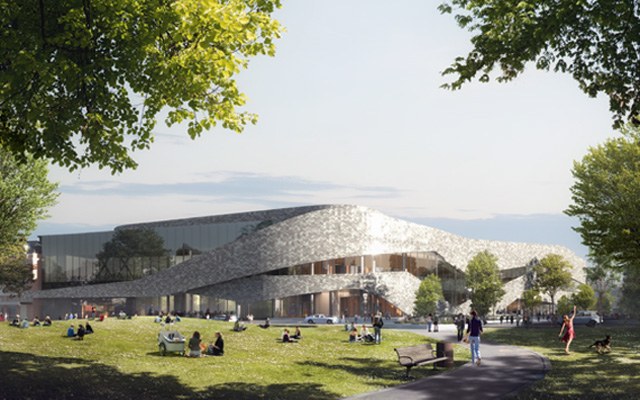
Te Pae Christchurch is gearing up for its opening in October 2020
Te Pae Christchurch Convention Centre has appointed Germany-headquartered international representation company, Worldwide Convention Specialists (WCS), to support its lead generation activities in Europe in the lead up to its opening in October 2020.
Having recently returned from IMEX Frankfurt, Te Pae Christchurch’s general manager, Ross Steele, is buoyed by the future potential for the city.
Te Pae Christchurch is gearing up for its opening in October 2020
“Our research shows more than 53 per cent of international associations are headquartered in Europe, which is why this region is a significant target market for Te Pae Christchurch.
“Winning a convention is like bidding for the Olympics, with a planning cycle that can be between two to 12 years in advance. So, we need to be in front of every potential client to showcase Christchurch as a future host city contender,” Steele said in a statement.
When it opens next year, Te Pae will have capacity for up to 2,000 delegates for a variety of events. It will feature facilities including a 1,400-seat auditorium, over 3,000m2 of exhibition space and 24 meeting rooms.
AEG Ogden, the venue management company behind Te Pae Christchurch, has had a long association with WCS’ director, Anette Palm.
“Our history shows that associations primarily book events with destinations or venues with whom they have built a mutually beneficial business relationship and when AEG Ogden is involved it gives the client extra confidence during the selection process,” Palm shared.
“With Te Pae Christchurch opening next year, it is an exciting proposition to share with our long-term client base – many of whom organise more than two or three events worldwide, and most importantly, seek venues within the Asia-Pacific region.”
WCS supports convention centres and convention bureaux throughout the world, including Kuala Lumpur, Toronto, Cape Town, Stockholm, Basel and Brussels.
“In collaboration with the country’s academic community leaders, Tourism New Zealand and ChristchurchNZ, we will be working towards raising this position in the years ahead with Te Pae Christchurch Convention Centre being a lead catalyst for this growth,” Steele concluded.
Mercer: New solution will help travel agents better their services for their customers
Last Thursday, Sabre Corporation released Sabre Content Services for Lodging, a solution that will power both agency and corporate booking tools, and promises to eliminate the need for intensive manual research.
This came about because a significant amount of travel buyers’ time is “wasted” on manual comparison and booking of properties within company policy, said Kathy Morgan, vice president – NDC, Sabre.
Mercer: New solution will help travel agents better their services for their customers
The new solution simplifies the search process for agents by listing out not just comparable properties and room rates, but also all included ancillaries – such as breakfast and Wi-Fi – as well as room type, loyalty programme availability and whether each property fits the specified company policy.
It allows for a more user-friendly interface that lays out all of these parameters and ancillaries on a single screen, almost similar to consumer-facing booking platforms. This was achieved through integrating traditional GDS content from hoteliers, alongside OTA content from Booking.com, Bedsonline, and Expedia Partner Solutions.
The system currently features more than one million property options, and travel agencies have full flexibility to choose the aggregator content they would like to access. Moreover, in a usability study, Sabre found that such product normalisation can help agents reach a booking decision 30 per cent faster.
“We looked at the pain points and needs of customers on both sides of the network – the ‘demand’ side including TMCs, leisure agencies and corporations and the ‘supply’ side including hoteliers and lodging aggregators,” said Traci Mercer, senior vice president of lodging, ground and sea for Sabre Travel Network.
“The solution that we’ve developed to this long-standing and complex challenge will revolutionise the way travel agents shop for and book hotel content, making it easier and simpler for them to provide the best experience for their travellers.”
The new application programming interface (API) capabilities powering Sabre Content Services for Lodging will soon be incorporated across all Sabre solutions, including Sabre Red 360 and GetThere. Additional API enhancements will be added to Content Services for Lodging in 2020.
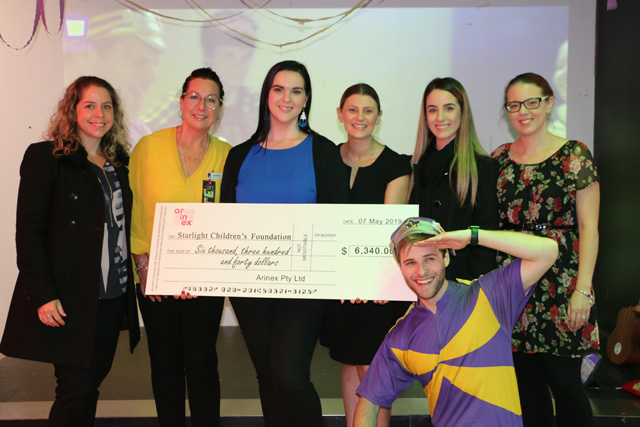
Australian event and conference management company Arinex has signed a 12-month partnership with children’s charity Starlight, which will see the former providing pro bono event management services and financial support through company-wide fundraising initiatives.
This announcement comes after Arinex presented a cheque for A$6,340 (US$4,439) to Starlight in May, which was raised following its 2018 Christmas party raffle. The raffle consisted of prizes donated by Arinex’ venue and supplier partners – such as a Qantas return airfare to Cairns and a stay at Pullman Cairns International – which were auctioned to staff across the country.
Arinex raised money for the charity during their Christmas party last year
The new corporate partnership with Starlight aligns with Arinex’s existing community and volunteer work; last year staff dedicated 1,100 hours managing the Rotary International Peace Conference and the Rotary New South Wales Police Officer of the Year Awards (an event it has managed since its inauguration in 2010).
Nicole Walker, Arinex’s chief operating officer, said: “It is exciting to formalise our partnership with Starlight Children’s Foundation, which is a charity dear to our hearts.
“Events have the wonderful potential to leave a positive impact not just on those attending but also the wider community and we look forward to demonstrating that with our planned volunteer work and fundraising. We feel glad knowing our support will go directly towards fulfilling Starlight’s mission – this new partnership gives us even more purpose in our day to day working lives.”
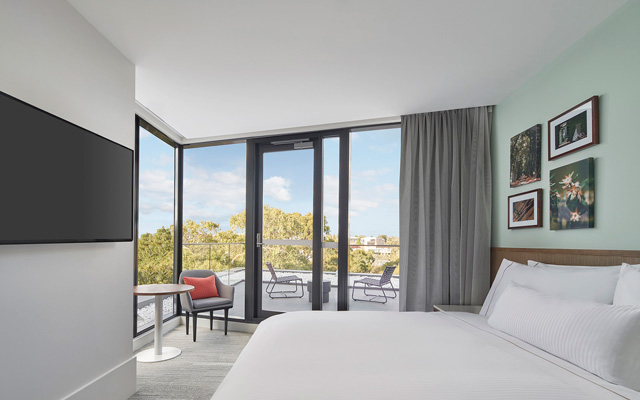
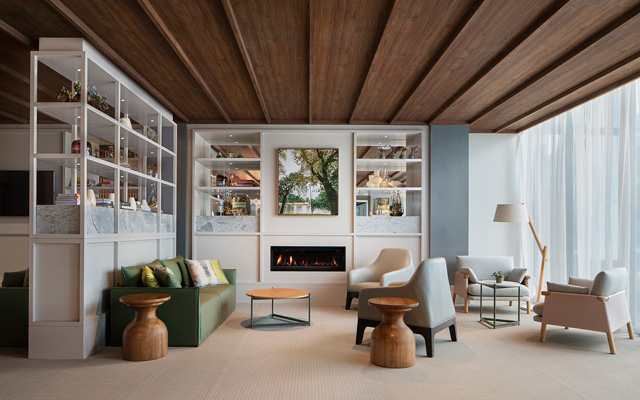
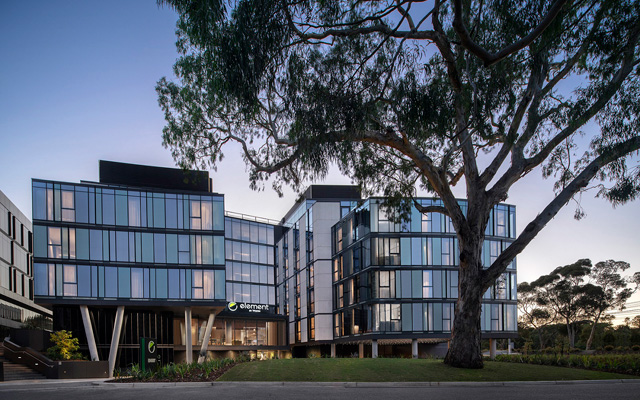
Element by Westin, part of Marriott International, has opened the Element Melbourne Richmond, marking the debut of the brand in Australia.
Element Melbourne Richmond is situated in the new Botanicca Corporate Park on the banks of the Yarra River, six kilometres from Melbourne’s city centre.
Element Melbourne Richmond
1 of 3
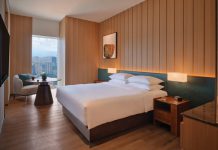
Each of the 163 guestrooms and five deluxe balcony king rooms feature spa-inspired bathrooms, the signature Heavenly® Bed, and high-speed Wi-Fi. A select number of rooms also feature kitchenettes, ideal for longer-stay guests.
Facilities on-site include an all-day dining space, 24/7 Restore grab-and-go pantry, and a fitness centre. The property also offers a complimentary Bikes-to-Borrow programme where guests may borrow bicycles. Guests may also partake in the brand’s evening Relax reception four days a week, which offers complimentary local beers and wines and small bites.
In addition, the hotel boasts four modern meeting spaces, spanning a total of 256m2. Located on level five, rooms can be configured to welcome between 12 and 250 guests, all featuring the latest technology and an abundance of natural light. An outdoor deck space is also available, and provides views of Melbourne’s skyline and CBD
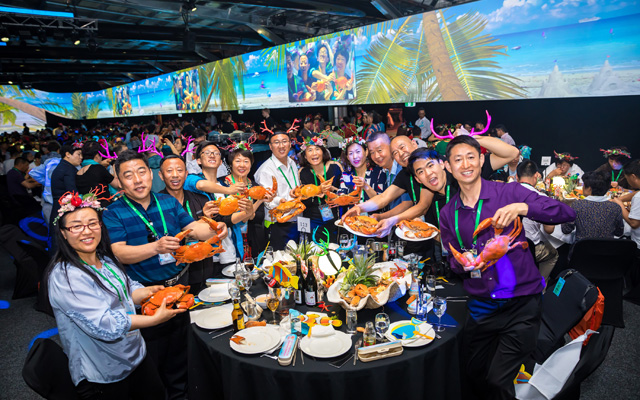
Cairns has wrapped up a five-day leadership seminar programme with over 6,000 Amway China Business Owners visiting the region for the first time.
In waves of over 900 guests at a time, top performing sellers experienced Australia’s Cairns and Great Barrier regions through various experiences including a scenic ride on the Skyrail Cableway over a 150 million-year-old rainforest, and a full-day tour on The Great Barrier Reef.
Rooms
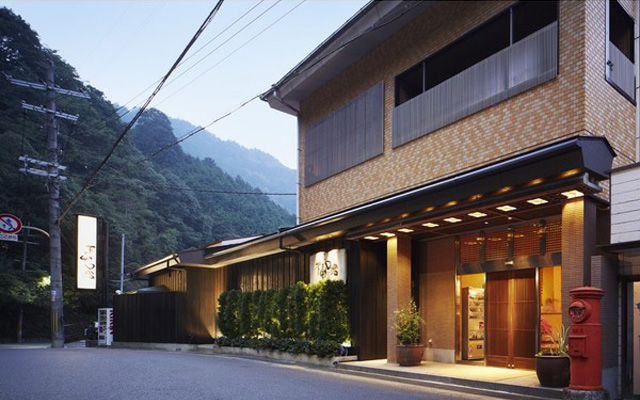
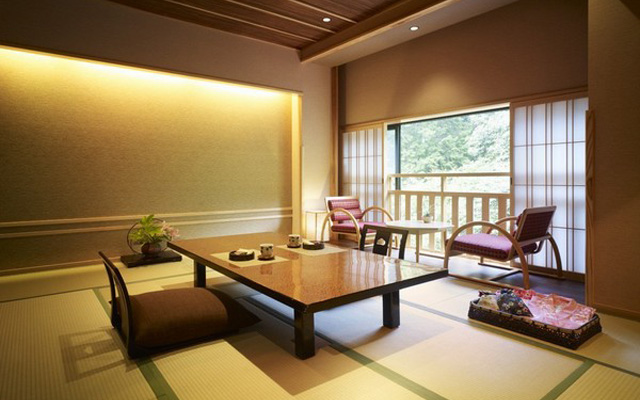
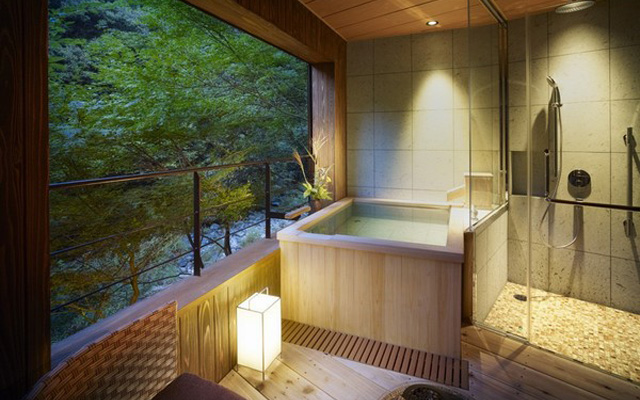
Fudoguchikan features 10 rooms, eight of which are traditional tatami mat rooms, while the rest are rotenburo rooms – rooms with a private outdoor hot spring pool attached.
All rooms are equipped with futons (traditional Japanese bedding), while the two rotenburo rooms have the option of twin beds upon request at point of booking. It was an interesting experience to sleep on a futon, but I felt it was too thin for me. I rectified the problem but placing another futon under mine, and I slept much more comfortably.
Fudoguchikan
1 of 6
As most Japanese hotels still allow smoking in rooms, I was pleasantly surprised that Fudoguchikan has banned this practice.
Note that there are no showering facilities in all rooms – only toilets – as guests are expected to shower communally. As I felt uncomfortable bathing in the buff, the hotel kindly arranged for a one-hour block for me in a private bathroom. There, I could shower without worries, and had the chance to climb into and soak in a private onsen as well. The relaxing experience came complete with the gentle trickling sounds of the mountain stream just beside the property.
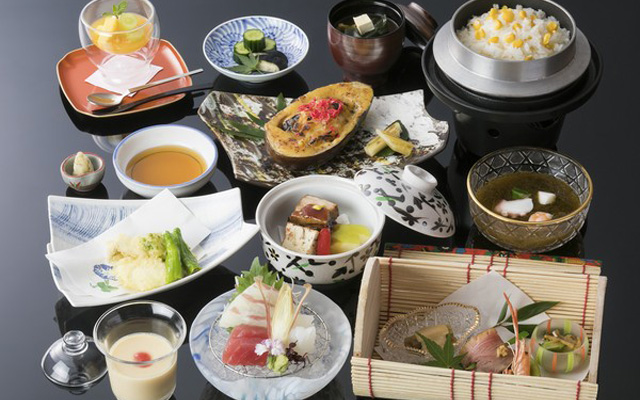
Prices per night start from 13,000 yen (US$120), and is inclusive of two meals. For every night’s stay, guests will be provided with two meals – a traditional Japanese breakfast, and a Kaiseki dinner.
MICE facilities
There are no meeting facilities, but their meal rooms – used for breakfasts and dinners – are able to hold small group meetings. While individual guests are served meals in their rooms, groups are served in banquet rooms. Western-style banquet seating arrangement with tables are also available upon request.
Other facilities
Wi-Fi service was supposedly available, but I was unable to connect with my laptop and iPhone while in my room. It was a good excuse for me to relax the evening away.
There are four public onsens, one open-air and one indoor each for males and females. The open-air baths face a swathe of greenery, and are a pleasant perch to watch the world go by during the day.
Service
The Japanese service culture as we all know, is beyond exceptional. For dinner, we were personally waited on by the general manager, who is the son of Fudoguchikan’s owner.
English is not fluently spoken in the country, but every staff member I encountered was accommodating and tried their very best to understand my charades and mangling of the Japanese language with the help of Google translate.
Verdict
This hot spring inn in the countryside is a perfect way to incentivise your staff. I recommend that one night be spent here at the tail-end of a incentive trip to Osaka Prefecture, as it is located nearer to the Kansai International Airport than Osaka city.
Tony Gardner has been reappointed as board chair of Conventions and Incentives New Zealand (CINZ) for another three years.
The CINZ board includes chief executive Sue Sullivan, Tourism New Zealand and Air New Zealand representatives, and nine CINZ members who appoint an independent chair.
Gardner has significant industry association governance experience, and brings a strong international background to the sector and the CINZ Board.
He is the managing partner of Catapult Auckland, a management consultancy company.
From 2012 to 2015, Gardner was chief executive of Orange Group, a conventions and incentives industry operator; and he served on the CINZ Board from 2013 to 2015 contributing to strategic and digital planning; before being appointed chair in May 2016.
A heavier focus on more nourishing dishes, unique meeting spaces, and a spoonful of CSR commitment, are now among several F&B trends that event planners, venues and chefs have identified as the necessary ingredients in making a dining event successful.
Quest for healthy eating
The most noticeable trend in recent years – not just for the events industry – is the significant change in the way we consume food, as more and more people are becoming concerned about health and wellness.
“Over the years we’ve seen a lot more people with dietary restrictions or dietary requirements. In a 100 pax event, it’s very easy to see 20 to 30 per cent who have dietary preferences, and another 20 to 30 per cent who have dietary restrictions.
“Being an event planner you have to take both into consideration,” said CWT Meetings & Events (M&E), director meetings & events Singapore, Petrina Goh.
Mohd Kamaruddin Adnin, corporate executive chef, MAS Awana Services, concurred: “There have been more requests for healthy food over the last three years and this includes less sugar, less salt and less use of oil in food preparation.”
MAS Awana Services provides private catering throughout Malaysia, and counts Malaysia Airlines, Bank Rakyat and KPJ Healthcare among its clients.
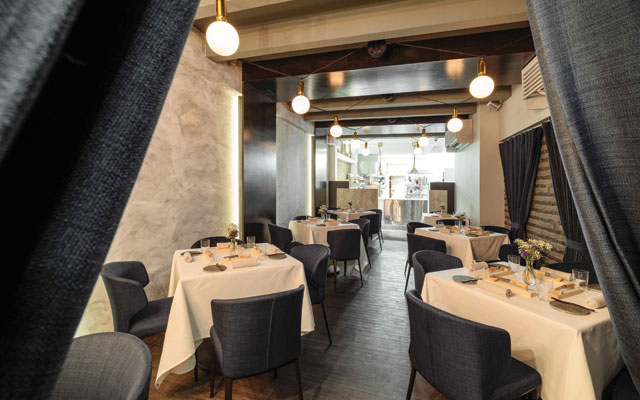
Michelin-star chef Jérémy Gillon of Restaurant JAG in Singapore – which offers private dining and a corporate event space – shared that more of his diners are asking for lighter and more plant-based menus due to the raised awareness around healthier and cleaner eating.
The Melbourne Convention and Exhibition Centre’s atrium was transformed into an attractive and interactive dining showcase for AIME delegates this year. Photo by stewiedonn
“Requests for more vegetarian and vegan menus at Restaurant JAG also come from traditional meat-eaters who still want a luxurious meal, while taking a small break from meat or seafood. This gives us a chance to show that vegan or vegetarian menus can be luxurious and substantial,” Gillon noted.
And as a chef, Gillon relishes the challenge of transforming vegetables into a hero ingredient on a plate, for instance, his creation of a button mushroom ice-cream as a starter.
All these views are backed by IACC’s 2018 Meeting Room of the Future report, where meeting planners around the globe have noted a significant increase in conference delegates expressing dietary and allergen requirements during event registration.
Food as interaction enablers
Another hot F&B trend has emerged on the back of increased importance placed on event networking opportunities. Event planners are now leaning towards more interactive and free-flowing dining arrangements.
Mike Lee, vice president of sales, Marina Bay Sands (MBS), said: “As networking plays a pivotal role in every meeting, we see a growing demand for easy grab-and-go snack items that are convenient for meeting delegates.”
As such, MBS’ MICE and banquet teams are offering pop-up cafes within function venues.
Goh shares the same observation. She said: “Increasingly, we see clients pushing away from traditional sit-down dinners or lunches, and one of the social functions will have networking taken into consideration.”
The desire for a more social dining setting appears stronger with events involving mostly millennials, noted Adam Kamal, general manager, Tour East Malaysia.
“(For such events), there are more requests for finger food or stand-up dinners which encourage delegates to mingle. This results in better networking opportunities as compared with sit-down dinners,” said Adam.
Restaurant JAG
It’s showtime with a bite
In addition, having an F&B theme or an eye-catching set-up with a sprinkle of showmanship, is becoming a hot thing to do at events.
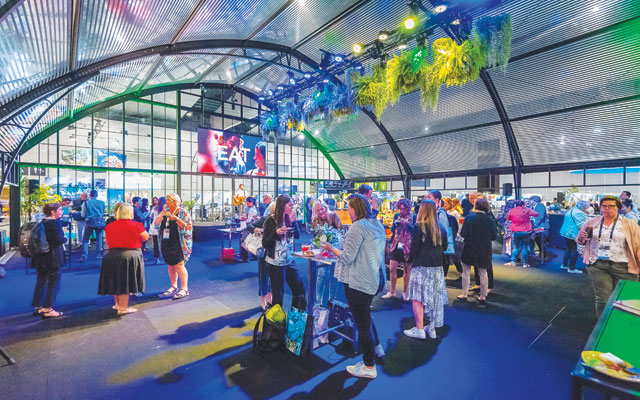
Peter Haycroft, executive chef at the Melbourne Convention and Exhibition Centre (MCEC), said: “Food experiences now need to be brought to life. Our EAT Stations are our way of bringing the outside in. When you visit the stations, suddenly you’re not in a convention centre, you’re transported to Chinatown or exploring the hidden gems of Melbourne’s laneways.”
During AIME – held at the MCEC earlier this year –, the venue executed a showcase that included an Asian hawker dumpling bar, a Bloody Mary hanging garden, and a raining charcuterie that “literally falls on your plate”.
“(It’s about) elevating food on platters to visually striking stands that people can interact with,” said Haycroft.
Stewart Manson, general manager – hotel, F&B and convention centre at Crowne Plaza Alice Springs Lasseters, has also seen more requests for food stations and live action presentations.
“(The) number of events that traditionally would have had sit down dinners have now moved to market stall layouts with some ‘theatre’ included,” Manson told TTGmice.
Live sushi preparation, barbecue stations and interactive dessert stations are most popular, he noted, especially among business events that are less formal and more focused on networking opportunities.
Setting unique scenes
The growing hunger for dining innovation has impacted the choice of F&B venues, noted planners who said the usual hotel ballrooms are falling out of favour.
Jerry Sim, director of sales, Singapore-based catering specialist Purple Sage Group, shared that event delegates who visit Singapore usually “look for something different, and would prefer incorporating local touches in their food and event set-ups”.
There is also a keenness for dining events at unique venues such as Gardens by the Bay.
According to CWT’s Goh, some 10 to 15 per cent of clients look for unique spaces outside of hotels.
“They want to transform art galleries, container tanks and farms into event venues. It allows us a lot more flexibility to deal with their F&B requirements as well, because we’re not restricted to the hotel kitchen,” she pointed out.
Goh added that places like Open Farm Community and Kranji Farm Resort are hidden gems, as it is interesting for overseas delegates to discover that such green places exist in an urban city like Singapore.
“While corporate events cannot avoid hotel ballrooms because of the need for breakout sessions and plenaries, the social function – such as off-site dinners – can be taken out of the hotel,” she said.
Meanwhile, Arokia Das Anthony, director of Luxury Tours Malaysia, has observed an increase in requests for offsite events, where at least one dining event is held outside of a hotel. The shift is good, as this allows the Malaysian culture to shine, “be it (through) the food or the architecture of the venue”, he said.
For MAS Awana Services’ Mohd, he noticed that company retreats held offsite tended to stick with packed meals.
Tracing origins
A final F&B trend to have surfaced is the increased interest in the origins of the ingredients used in what event delegates are served. If there is an element of CSR in play, it is a bonus.
“People want to know where their produce comes from,” said Haycroft. “(To that end) our 100 mile lunch menu is inspired by Melbourne. We source all major ingredients from local farms and markets within a 100-mile radius of MCEC.”
Haycroft added that customers also value opportunities to contribute to socially responsible actions undertaken by event venues. For instance, event attendees dining at MCEC contribute to the venue’s support of local food producers.
Singapore’s Restaurant JAG is responding to the sustainable dining desire by partnering small batch producers and farmers to obtain the freshest ingredients for their menus.
No stranger to sustainable food sources, MBS’s Harvest Menu has been offered to events for years. The programme uses fresh and high quality ingredients that are locally and regionally sourced.
“We also continue to push boundaries and help clients raise the bar by creating ‘Earth-friendly’ menus featuring dishes made from products that are either organic-certified, Fair Trade or Rainforest Alliance-certified, responsibly produced or locally-sourced,” Lee added.
Purple Sage Group brings the farm-to-table concept through sustainable seafood (locally-farmed barramundi) and-locally grown produce in its menus.
“This allows clients to enjoy food at its freshest and least modified state,” Sim said.
The company also takes a step farther by eliminating disposables, and uses chinaware and fully compostable dining ware to minimise trash.
Regardless of the numerous trends that may exist, CWT’s Goh said one must not overlook the taste of the food, as a delicious feast will leave the biggest impression on the attendee.
Additional reportingfrom S Puvaneswary and Adelaine Ng
Onyx Hospitality Group has appointed Joseph Karam as general manager of Amari Watergate Bangkok.
The hospitality veteran rejoins the property, where he was previously the hotel manager from 2015 to 2017.
In total, Karam holds over two decades of experience, having honed his skills at hotels and resorts across Thailand and the Middle East. Prior to rejoining Amari, Karam held a managerial role at the InterContinental Hotel & Crowne Plaza Dubai.
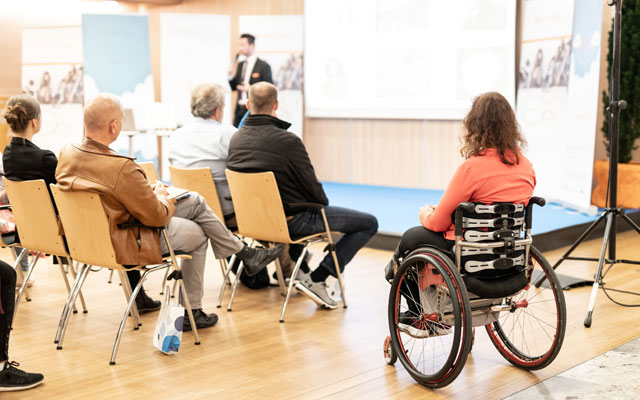
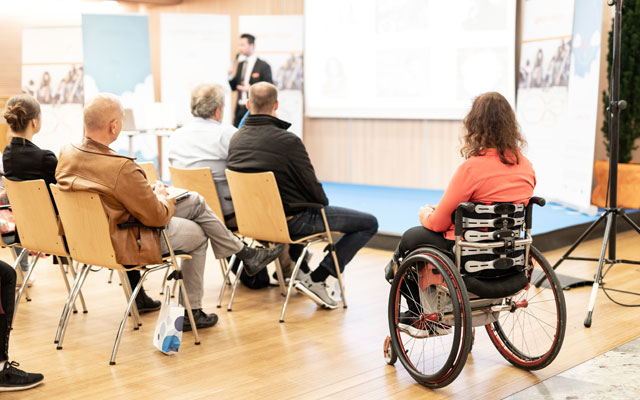
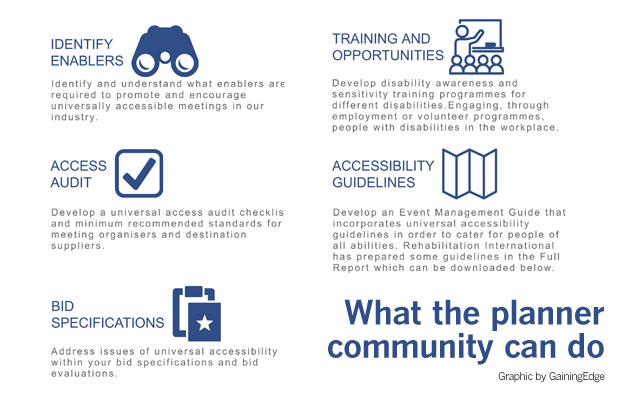
A partnership involving BestCities Global Alliance, GainingEdge and Rehabilitation International has given birth to an 89-page tome, Universal Accessibility in Meetings, which contains recommendations for convention bureaux, tourism and event suppliers and meeting planners to make business events more accessible and inclusive for all people.
The research looks at the needs of disabled and special needs people across a broad range, from physical mobility and senses (vision and hearing impairment), to cognitive/developmental (autism, Down Syndrome, dyslexia) and medical (autoimmune, allergies/diet, cancer, arthritis, etc.).
The authors emphasised the importance of understanding universal accessibility within the business events industry as the prevalence of disability is growing due to population ageing and the global increase in non-communicable conditions including NCDs (non-communicable diseases), road traffic injuries and mental health problems.
Jane Vong Holmes, senior manager Asia with GainingEdge, said: “Around the world there is a call for universal accessibility in tourism, but for the business events industry this is still fairly unexplored territory, resulting in missed opportunities (for destinations and conference planners looking to win global meetings with disabled/special needs attendees).”
Ajit Singh Sikand, president and CEO of HBC Luxury MICE Consulting, noted that physically-challenged persons “have been excluded” from most business events although they “want to be as independent as other delegates – to be able to move around freely (in hotels, convention centres and airports), with signs and infrastructure that allow them to do so”.
He opined that little was being done by hotels, convention centres and destinations, especially for the visually-impaired.
Most of the time destinations are not ready, lamented Rahul Bharadwaj, director technology & operations, of Malaysia-based PCO Anderes Fourdy.
For instance, the PCO handled the Rare Disease Asia Conference in 2016 in Kuala Lumpur, where out of the 500 attendees – comprising companies working on rare disease medical solutions, doctors and the patients – were some 100 wheelchair users.
Rahul shared: “For us, the challenge was to find and get hotels and venues ready for delegates with special needs – such as the setting up of ramps for wheelchair users to get onto stage, have the hotel remove some furniture to allow guests to move around more easily, and modify the seats on vans.”
He added that the company had made bids for a few similar association meetings from Europe, one of them with blind participants but lost it to France because there were no hotels in Malaysia that had braille signs for its facilities and on room doors. Moreover, no hotel or convention centre in Malaysia allowed guide dogs indoors.
Believing that Malaysia was still not ready, Rahul’s company has stopped bidding for such meetings.
He opined that the tourism boards or event venues should resolve universal accessibility issues at business events, as they have the resources to do so.
Ajit suggested that the “community, government and cities” take the lead in starting the conversation on universal accessibility, and that governments enact laws that ensure transport modes are made easily accessible for physically-challenged travellers.
Holmes agrees, saying that destinations with strong universal accessibility often have supportive legislation in place.
“The stronger the legislation, the more numbers of accessible venues. The US, UK, Canada and Australia are some good examples. Although there are some venues that comply (because of the laws), there are others that go beyond their legal obligations, such as the Edinburgh International Conference Centre,” Holmes said.
The Edinburgh International Conference Centre works with the Scottish Association of Sign Language Interpreters to provide interpreters during conferences when required, and partners with The National Autistic Society to train its staff and cater to guests with autism spectrum conditions and sensory disabilities.
For attendees with autism spectrum conditions (ASC), sensory or additional needs, attending an event can be a daunting experience. The venue allocates quiet areas which can be used by delegates during the event, as well as seats outside the rooms if these guests need a break. Public address announcements can be preceded with a soft tune so that sound-sensitive guests are alerted that an announcement is upcoming. Slides are placed on monitor screens for a longer time – about seven to 12 seconds longer than usual – for delegates to read and absorb the information.
In Singapore, multiple stakeholders such as the Building & Construction Authority, Land Transport Authority, Disabled People’s Association Singapore as well as building owners, attractions and places of interests are taking steps to make the island nation more accessible for all. There is even a S$40 million (US$29.3 million) Accessibility Fund available up to FY2021 which will provide for accessibility features for the visually and hearing-impaired. Owners of private buildings, especially those constructed almost 30 years ago, can apply for the fund to upgrade their properties. Seventy per cent of commercial and industrial buildings in Singapore are expected to be barrier-free by 2030.
One recommendation by the Universal Accessibility in Meetings study was that future venues should be designed with universal accessibility in mind, while existing venues can be made more accessible for persons with disabilities (PWDs) by adding facilities such as accessible rest rooms, hotel rooms with doors wide enough for a wheelchair, and a ramp on the podium.
Venus Ilagan, Rehabilitation International’s secretary-general, said: “If people with disabilities have to pay more to attend events or to get a hotel that has the right facilities, then that is not good. It should be one standard for all.”
Ilagan further suggested that destinations look into the concept of universal design and go through the process of creating products from scratch, so that they do not have to make changes later.
She elaborated: “It would only be one per cent additional cost at the start when integrated at the planning stage of building, but if they have to have a post-build audit to analyse where the gaps are, the cost could be 35 to 40 per cent more to retrofit. Universal design should be looked at from the beginning, and not be an afterthought.”
The newly-opened Ritz-Carlton, Bangkok anchors the One Bangkok development with cosmopolitan elegance. Featuring the city's largest ballroom and a spectacular new penthouse suite, it delivers exceptional hardware and deeply authentic, soulful service for business and leisure travellers alike
Behind the imposing, Brutalist concrete that defines Zurich’s Oerlikon district lies a surprising secret. While its exterior honours the neighbourhood’s industrial roots, stepping inside Mama Shelter reveals a vibrant, neon-soaked world that is a far cry from its rigid shell
A polished urban retreat designed for business travellers, Hyatt Regency Kuala Lumpur at KL Midtown combines thoughtful design, seamless service, and exceptional facilities.