
Asia/Singapore Sunday, 19th April 2026
Page 663

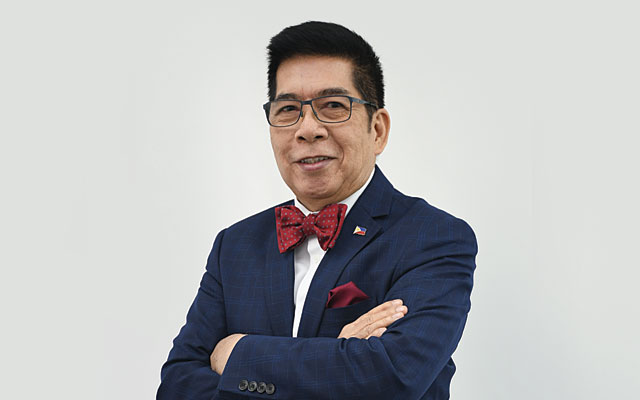
Octavio B Peralta: The association man

0

You hold many titles: secretary-general for Association of Development Financing Institutions in Asia and the Pacific (ADFIAP); founder, president and CEO of the Philippine Council of Associations and Association Executives (PCAAE); and pro-tem head of secretariat, Asia-Pacific Federation of Association Organizers (APFAO). How did you enter the world of associations?
I’m a mechanical engineer by education and training. I worked for two years as a quality control engineer and then production engineer at the now-defunct Delta Motor Corp., which was the assembler of Toyota cars, Daikin air-conditioners and Sharp refrigerators.

Attracted by a development mission, better pay, and an opportunity to travel around the country, I moved to the Development Bank of the Philippines (DBP) and worked there for 15 years in various capacities, starting as a technical (engineering) analyst and moving on to loan officer. I was then put in charge of training for loan officers, a role that exposed me to the sphere of education – design and delivery of training courses – which became handy when I eventually entered the world of associations.

I also worked for almost a year as a training officer of a learning institution in Washington, D.C. run by retired World Bank officers. One of them connected me to Orlando Pena, then secretary general of ADFIAP, an international membership organisation for development banks. In March 1991, he recruited me as his deputy and I succeeded him in 2005, a position I still hold today.

That’s 28 years with ADFIAP, half of it as its head. How was it learning the ropes of association management which was then – and still is – quite a novel concept in the Philippines?
I found early in ADFIAP that working in an association is not at all a walk in the park. I tried in vain to get knowledge resources here on association management so I can self-learn. Having found none, I joined as a member of the American Society of Association Executives (ASAE) whose headquarters is in Washington, D.C. and every time I had the opportunity to travel to D.C. as part of my work in ADFIAP, I bought books on association management.

Up till today, I am still an active member of ASAE and currently a member of its advisory task force for the Association Leadership Forum Asia-Pacific.

How did PCAAE come about? Guide us through its gestation.
Against this backdrop and with my experience on having to learn association management the hard way, I have always toyed with the idea of someday sharing my experience in association management and helping associations here in the Philippines by forming an “association of associations”.

Fate has it that as part of my work in ADFIAP, I get invited to attend fully-hosted business events which I found very relevant to my work as an association executive.

In these events, I met many contacts, and two of them were the Philippine International Convention Center (PICC) general manager, Rene Padilla, and the late Stanie Soriano of the Tourism Promotions Board (TPB). Although I met them on separate occasions and at different times, I proposed that they support my idea of putting together associations and association executives in the country. Luck has also been on my side when both expressed interest in supporting the idea and were also thinking along the same line.

After two years, in 2013, the three organisations – ADFIAP, PICC and TPB – finally moved the idea forward, with the understanding the ADFIAP will be the secretariat, PICC will provide its facility, and TPB will give institutional backing and financial support.

From my end, I have convinced my colleagues in ADFIAP to help me do the paperwork and shell out seed money from their own pockets for the registration fee with the Securities and Exchange Commission (SEC) of a non-profit association modelled out of the ASAE.

Interestingly, after at least 40 suggested names, the SEC finally accepted the name of the association as, the Philippine Council for the Advancement of Association Executives. We finally registered as such on October 23, 2013.

It’s the first association of associations in the Philippines. Where is it now?
On November 19 to 20, 2013, ADFIAP, PICC and TPB held the first Association Executives Summit at PICC. It was attended by over 200 participants from the association community here in the Philippines. On the second day, I facilitated a town hall meeting and announced the existence of the PCAAE. Those attending the Summit agreed to be constituted as the founding members of PCAAE.

On January 30 a year later, PCAAE held its first general council of members meeting (GCMM) and started its programmes in earnest. At the second GCMM, having found out that most associations in the country are entirely run by volunteers (board and management) and the ASAE model of having a volunteer board and paid professional management staff are less than expected, PCAAE changed its name to the Philippine Council of Associations and Association Executives (still having the same acronym, PCAAE) to serve the interests of both the associations and the professionals that work in associations.

You didn’t stop with PCAAE. You also brought the concept to Asia.
At first, my initial thought, because of my experience in ADFIAP and my contacts with ASAE, was to form an Asia-Pacific federation of association of associations. Because of its pan Asia-Pacific nature, it turned out to be more challenging than I expected so I settled for organising first a national association in PCAAE.

At about this time, ASAE is also making inroads in Asia and planning to organise its Great Ideas Conference, which is held successfully in the US. Because of my long-standing membership in ASAE and having met its global development officer, Greta Kotler, who was tasked to organise the event in Hong Kong, I was invited to be a member of the ASAE advisory task force to provide content idea for the conference.

There I met, among others, fellow task force members, John Peacock, CEO of Associations Forum (AF) in Australia, Glynn Cho who was at that time organising the Korean Society of Association Executives (KSAE), and Noor Ahmad Hamid, regional director for Asia-Pacific of the International Congress and Convention Association (ICCA).

Having known that there are already national associations of associations in Australia and Korea, I conceptualised the setting up of an Asia-Pacific federation.

On March 24, 2015 in Hong Kong, at the sidelines of the Great Ideas Conference, members of the ASAE task force plus other invitees favourably endorsed the forming of the Asia-Pacific Federation of Association Organizations (APFAO) with the signing of the Hong Kong Charter with four APFAO founding members, namely, AF, KSAE, PCAAE and Australasian Society of Association Executives.

That’s a big leap.
I always believed that as an association executive, you need to be global in mind, heart and skill-sets. By going international, you meet many of your peers, learn more things, get and create great ideas, and be innovative in your offerings. One cannot stay local for long. There are many opportunities beyond your local boundaries.

PCAAE’s engagement with APFAO was relatively straightforward since I have already built credibility and rapport with association peers over the years. In the association world, relationship is a valued asset and brings many benefits for the long-term.

And you did it within a short period.
It may seem relatively easy and in a short span of time, but behind this journey are like-minded people and supporting partners ready to help out.

I’m also blessed with colleagues in ADFIAP who are dedicated, passionate and selfless to help out a noble mission of advancing the association management profession and making associations well-governed and sustainable.

I share this with many people and institutions close to me, have met, and worked with. There’s my supportive family which at first I had difficulty explaining my job to as an association man.

Then there’s ADFIAP which provided me the hands-on experience of managing an association, and the ASAE which gave me the toolkit to do it well.

And there’s the PCAAE which I founded as a way of giving back to a profession I dearly love.

Your colleagues said you are always prompt, replies emails and phone calls within the day, well-attired for the occasion and have a good memory even for difficult names like Indonesian ones which helps in dealing with people.
I grew up with my grandmother who nurtured me with the discipline of a leader. I am blessed, too, to have good faculties that put me in the top of my class from grade school to high school. My collegiate record was remarkable, too.

I also have a knack for seeing opportunities presented before me before others could see them, if at all.

With these attributes, I have developed a management style which I refer to as an acronym, CEO. C for consensus-builder; E for engaging with people; O for open to ideas from others.

I am a leader that tolerate failures and even encourages them because for me, failures present opportunities to succeed in the end. In the office, I maintain an open-door policy so everyone is welcome to see me in my workplace at any time. I also prefer to be called on with my first name, Bobby.

What’s the setup between ADFIAP and PCAAE? To what extent is the support of ADFIAP as the PCAAE secretariat?
I’m a volunteer leader of the PCAAE but we now have a paid professional staff to run its day-to-day operations. I am supported by a 15-person Board representing different non-profit member-associations and two from the private sector to get a balanced perspective of running PCAAE.

We walk the talk with our advocacy, a volunteer Board and a professional management team, working together but with clearly defined roles which delineated functions for the interest of our members.

The Board provides strategic direction, oversight, policymaking and fundraising campaigns. The management team operates the secretariat on a daily basis.

I believe that associations need to be run like a business enterprise, with a Board and management team working in tandem and with clearly delineated tasks as above-mentioned. While associations are not-for-profit organisations, they are certainly not-for-loss organisations either. Enough financial reserves are needed to sustain an association.

What’s next now that APFAO is operational?
APFAO is evolving. From an informal network when it started in 2015, AFPAO is now slowly moving to formalise its organisation and structure by having its constitution and office bearers. This was decided by the general assembly of members who met in Singapore on October 29, 2018 at the sidelines of ASAE’s Association Leadership Forum held there.

There is also more collaboration among APFAO members in terms of programming and information exchanges. APFAO and ASAE, which supported the founding of APFAO, are in constant touch to determine how best to maximise their relationship going forward.

What are the broader issues impacting Asian associations and association executives?
AFPAO’s vision is to be the hub of excellence in association leadership.The biggest challenge is the fact that the “children” (being the member national associations of associations) had come first before the “mother” (being APFAO).

While national members have their hands full in their own respective countries, will they still have the time and energy to do more and beyond their borders?

I believe, however, that there is scope for cooperation and collaboration among national associations in terms of knowledge exchanges for the betterment of their respective members.

PCAAE’s vision is for a Philippines where associations and other member-serving organisations are professionally governed and managed. The biggest challenge is how to engage and involve associations in PCAAE where most are volunteer-governed and managed. We find there is not much compulsion for these associations to learn more about association management and governance which are sciences in themselves and which PCAAE advocates for.

Most of these associations believe that their organisations can be sustainable despite their short-term view and ad-hocism. We think that the solution to this challenge is for the Professional Regulation Commission, the government agency tasked with registering professionals, to make the association executive or manager to be recognised as a full-fledged and licensed profession like real estate brokers, for example, and a career like engineers, nurses, etc.

The impact I wish to see for my contribution to the association community is continuing knowledge through collaboration. Perhaps, in more concrete terms is as much as possible a harmonised global professional training standard and curriculum so association executives in one country can work in another with little contextual aspects to add such as legal and cultural dimensions.

The association man

0

You hold many titles: secretary-general for Association of Development Financing Institutions in Asia and the Pacific (ADFIAP); founder, president and CEO of the Philippine Council of Associations and Association Executives (PCAAE); and pro-tem head of secretariat, Asia-Pacific Federation of Association Organizers (APFAO). How did you enter the world of associations?
I’m a mechanical engineer by education and training. I worked for two years as a quality control engineer and then production engineer at the now-defunct Delta Motor Corp., which was the assembler of Toyota cars, Daikin air-conditioners and Sharp refrigerators.

Attracted by a development mission, better pay, and an opportunity to travel around the country, I moved to the Development Bank of the Philippines (DBP) and worked there for 15 years in various capacities, starting as a technical (engineering) analyst and moving on to loan officer. I was then put in charge of training for loan officers, a role that exposed me to the sphere of education – design and delivery of training courses – which became handy when I eventually entered the world of associations.

I also worked for almost a year as a training officer of a learning institution in Washington, D.C. run by retired World Bank officers. One of them connected me to Orlando Pena, then secretary general of ADFIAP, an international membership organisation for development banks. In March 1991, he recruited me as his deputy and I succeeded him in 2005, a position I still hold today.

That’s 28 years with ADFIAP, half of it as its head. How was it learning the ropes of association management which was then – and still is – quite a novel concept in the Philippines?
I found early in ADFIAP that working in an association is not at all a walk in the park. I tried in vain to get knowledge resources here on association management so I can self-learn. Having found none, I joined as a member of the American Society of Association Executives (ASAE) whose headquarters is in Washington, D.C. and every time I had the opportunity to travel to D.C. as part of my work in ADFIAP, I bought books on association management.

Up till today, I am still an active member of ASAE and currently a member of its advisory task force for the Association Leadership Forum Asia-Pacific.

How did PCAAE come about? Guide us through its gestation.
Against this backdrop and with my experience on having to learn association management the hard way, I have always toyed with the idea of someday sharing my experience in association management and helping associations here in the Philippines by forming an “association of associations”.

Fate has it that as part of my work in ADFIAP, I get invited to attend fully-hosted business events which I found very relevant to my work as an association executive.

In these events, I met many contacts, and two of them were the Philippine International Convention Center (PICC) general manager, Rene Padilla, and the late Stanie Soriano of the Tourism Promotions Board (TPB). Although I met them on separate occasions and at different times, I proposed that they support my idea of putting together associations and association executives in the country. Luck has also been on my side when both expressed interest in supporting the idea and were also thinking along the same line.

After two years, in 2013, the three organisations – ADFIAP, PICC and TPB – finally moved the idea forward, with the understanding the ADFIAP will be the secretariat, PICC will provide its facility, and TPB will give institutional backing and financial support.

From my end, I have convinced my colleagues in ADFIAP to help me do the paperwork and shell out seed money from their own pockets for the registration fee with the Securities and Exchange Commission (SEC) of a non-profit association modelled out of the ASAE.

Interestingly, after at least 40 suggested names, the SEC finally accepted the name of the association as, the Philippine Council for the Advancement of Association Executives. We finally registered as such on October 23, 2013.

It’s the first association of associations in the Philippines. Where is it now?
On November 19 to 20, 2013, ADFIAP, PICC and TPB held the first Association Executives Summit at PICC. It was attended by over 200 participants from the association community here in the Philippines. On the second day, I facilitated a town hall meeting and announced the existence of the PCAAE. Those attending the Summit agreed to be constituted as the founding members of PCAAE.

On January 30 a year later, PCAAE held its first general council of members meeting (GCMM) and started its programmes in earnest. At the second GCMM, having found out that most associations in the country are entirely run by volunteers (board and management) and the ASAE model of having a volunteer board and paid professional management staff are less than expected, PCAAE changed its name to the Philippine Council of Associations and Association Executives (still having the same acronym, PCAAE) to serve the interests of both the associations and the professionals that work in associations.

You didn’t stop with PCAAE. You also brought the concept to Asia.
At first, my initial thought, because of my experience in ADFIAP and my contacts with ASAE, was to form an Asia-Pacific federation of association of associations. Because of its pan Asia-Pacific nature, it turned out to be more challenging than I expected so I settled for organising first a national association in PCAAE.

At about this time, ASAE is also making inroads in Asia and planning to organise its Great Ideas Conference, which is held successfully in the US. Because of my long-standing membership in ASAE and having met its global development officer, Greta Kotler, who was tasked to organise the event in Hong Kong, I was invited to be a member of the ASAE advisory task force to provide content idea for the conference.

There I met, among others, fellow task force members, John Peacock, CEO of Associations Forum (AF) in Australia, Glynn Cho who was at that time organising the Korean Society of Association Executives (KSAE), and Noor Ahmad Hamid, regional director for Asia-Pacific of the International Congress and Convention Association (ICCA).

Having known that there are already national associations of associations in Australia and Korea, I conceptualised the setting up of an Asia-Pacific federation.

On March 24, 2015 in Hong Kong, at the sidelines of the Great Ideas Conference, members of the ASAE task force plus other invitees favourably endorsed the forming of the Asia-Pacific Federation of Association Organizations (APFAO) with the signing of the Hong Kong Charter with four APFAO founding members, namely, AF, KSAE, PCAAE and Australasian Society of Association Executives.

That’s a big leap.
I always believed that as an association executive, you need to be global in mind, heart and skill-sets. By going international, you meet many of your peers, learn more things, get and create great ideas, and be innovative in your offerings. One cannot stay local for long. There are many opportunities beyond your local boundaries.

PCAAE’s engagement with APFAO was relatively straightforward since I have already built credibility and rapport with association peers over the years. In the association world, relationship is a valued asset and brings many benefits for the long-term.

And you did it within a short period.
It may seem relatively easy and in a short span of time, but behind this journey are like-minded people and supporting partners ready to help out.

I’m also blessed with colleagues in ADFIAP who are dedicated, passionate and selfless to help out a noble mission of advancing the association management profession and making associations well-governed and sustainable.

I share this with many people and institutions close to me, have met, and worked with. There’s my supportive family which at first I had difficulty explaining my job to as an association man.

Then there’s ADFIAP which provided me the hands-on experience of managing an association, and the ASAE which gave me the toolkit to do it well.

And there’s the PCAAE which I founded as a way of giving back to a profession I dearly love.

Your colleagues said you are always prompt, replies emails and phone calls within the day, well-attired for the occasion and have a good memory even for difficult names like Indonesian ones which helps in dealing with people.
I grew up with my grandmother who nurtured me with the discipline of a leader. I am blessed, too, to have good faculties that put me in the top of my class from grade school to high school. My collegiate record was remarkable, too.

I also have a knack for seeing opportunities presented before me before others could see them, if at all.

With these attributes, I have developed a management style which I refer to as an acronym, CEO. C for consensus-builder; E for engaging with people; O for open to ideas from others.

I am a leader that tolerate failures and even encourages them because for me, failures present opportunities to succeed in the end. In the office, I maintain an open-door policy so everyone is welcome to see me in my workplace at any time. I also prefer to be called on with my first name, Bobby.

What’s the setup between ADFIAP and PCAAE? To what extent is the support of ADFIAP as the PCAAE secretariat?
I’m a volunteer leader of the PCAAE but we now have a paid professional staff to run its day-to-day operations. I am supported by a 15-person Board representing different non-profit member-associations and two from the private sector to get a balanced perspective of running PCAAE.

We walk the talk with our advocacy, a volunteer Board and a professional management team, working together but with clearly defined roles which delineated functions for the interest of our members.

The Board provides strategic direction, oversight, policymaking and fundraising campaigns. The management team operates the secretariat on a daily basis.

I believe that associations need to be run like a business enterprise, with a Board and management team working in tandem and with clearly delineated tasks as above-mentioned. While associations are not-for-profit organisations, they are certainly not-for-loss organisations either. Enough financial reserves are needed to sustain an association.

What’s next now that APFAO is operational?
APFAO is evolving. From an informal network when it started in 2015, AFPAO is now slowly moving to formalise its organisation and structure by having its constitution and office bearers. This was decided by the general assembly of members who met in Singapore on October 29, 2018 at the sidelines of ASAE’s Association Leadership Forum held there.

There is also more collaboration among APFAO members in terms of programming and information exchanges. APFAO and ASAE, which supported the founding of APFAO, are in constant touch to determine how best to maximise their relationship going forward.

What are the broader issues impacting Asian associations and association executives?
AFPAO’s vision is to be the hub of excellence in association leadership.The biggest challenge is the fact that the “children” (being the member national associations of associations) had come first before the “mother” (being APFAO).

While national members have their hands full in their own respective countries, will they still have the time and energy to do more and beyond their borders?

I believe, however, that there is scope for cooperation and collaboration among national associations in terms of knowledge exchanges for the betterment of their respective members.

PCAAE’s vision is for a Philippines where associations and other member-serving organisations are professionally governed and managed. The biggest challenge is how to engage and involve associations in PCAAE where most are volunteer-governed and managed. We find there is not much compulsion for these associations to learn more about association management and governance which are sciences in themselves and which PCAAE advocates for.

Most of these associations believe that their organisations can be sustainable despite their short-term view and ad-hocism. We think that the solution to this challenge is for the Professional Regulation Commission, the government agency tasked with registering professionals, to make the association executive or manager to be recognised as a full-fledged and licensed profession like real estate brokers, for example, and a career like engineers, nurses, etc.

The impact I wish to see for my contribution to the association community is continuing knowledge through collaboration. Perhaps, in more concrete terms is as much as possible a harmonised global professional training standard and curriculum so association executives in one country can work in another with little contextual aspects to add such as legal and cultural dimensions.

A culture of care

0

Brought to you by Tourism New Zealand

New Zealand is home to some of the most stunning landscapes in the world. Combined with its welcoming hospitality and new venue infrastructure, it is becoming an increasingly attractive destination for international business events. As such, it is taking steps to ensure its event programmes have maximum impact – but not on the environment.

Leading organisations including Tourism New Zealand and the Department of Conservation have joined together to create the Tiaki Promise. Tiaki means to care for people and place in Te Reo Māori. Visiting delegates are encouraged to follow its guiding principles. These include: Caring for land, sea and nature; travelling safely, and respecting culture.

Tourism New Zealand’s Global Manager Business Events, Anna Fennessy, says: “In New Zealand, we feel a duty of care to protect the country we love. We know our international delegates will love it, too, and encourage them to be guardians of our country as they travel here.”

This special connection to the land has ensured New Zealand is a hub of knowledge in primary industry and earth sciences. New Zealand’s clean, green ethos drives sustainable production and innovation across its world-leading agriculture, aquaculture and forestry industries. A pride in understanding the land, harnessing its energy, and caring for its natural resources results in expertise ranging from renewable energy sources to environmental research.

These skill sets provide an added boost for conference content, with New Zealand able to deliver speakers, knowledge, and research in these sectors.

On an operational level, New Zealand’s business events providers are leading by example in efforts to improve sustainability.

The New Zealand International Convention Centre (NZICC) in Auckland will operate as a carbon neutral venue when it opens in 2020. An internal carbon levy on all emissions will be used to both offset the NZICC’s carbon footprint and invest in further emission-reducing projects. The NZICC will be part of the wider, carbon-neutral SkyCity entertainment precinct, which includes three hotels, restaurants, the Skytower, and the soon-to-be-opened Weta Workshop, and All Blacks Experience.

Convention centre Te Pae Christchurch, also opening in 2020, is being built to New Zealand Green Building Council (NZGBC) Green 5-Star Rating.

Meanwhile, flagship airline Air New Zealand is committed to targets including carbon neutral growth from 2020, and a reduction of 50% in net emissions by 2050 compared to 2005 levels.

Incentive activities not only make the most of New Zealand’s stunning scenery, but increasingly allow visiting delegates to ‘give back’ to nature. Nomad Safaris, a 4WD experience through Queenstown’s breathtaking Southern Lakes region, runs CSR activities where delegates cull the wilding pines that can negatively impact native plants and animals.

Camp Glenorchy, in the heart of the South Island’s soaring mountains, is New Zealand’s first Net Zero Energy accommodations.

Rotorua Canopy Tours runs a pest-trapping programme in the beautiful native forest it operates in which has helped restore native bird and lizard populations.

For more information on holding a business event that feels good and does good, visit businessevents.newzealand.com

AIPC, ICCA and UFI launch Global Alliance effort

0
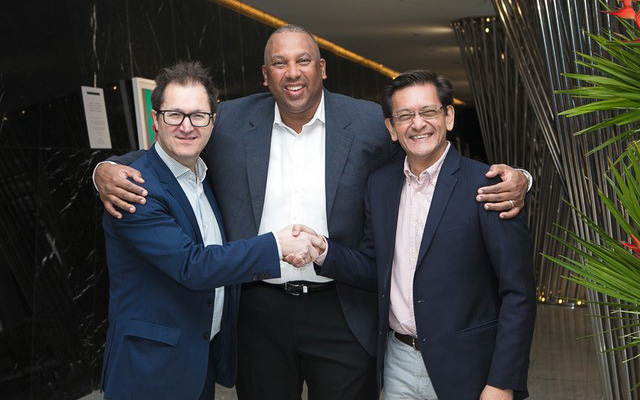
PHOTO CAPTION From left: ICCA's James Rees; UFI's Craig Newman; and AIPC's Aloysius Arlando

Three global associations serving the international meetings Industry – AIPC (The International Association of Convention Centres), ICCA (The International Congress and Convention Association), and UFI (The Global Association of the Exhibition Industry) – have launched a Global Alliance.

All three associations will be collaborating more closely in the future, and generate more comprehensive and better aligned benefits for their respective members.

From left: ICCA’s James Rees; UFI’s Craig Newman; and AIPC’s Aloysius Arlando

The alliance has agreed to begin a programme of exploring exchange and reciprocity in four areas: educational content, research, standards and advocacy.

The three partners will begin by engaging in a series of educational exchanges incorporating each other’s knowledge content into their respective conferences, and align approaches taken to areas of common practice such as research and advocacy activities, immediately. At the same time they are initiating a regular exchange between their respective leaderships to align interests on issues like standards, terminology and best practices.

“We are all organisations with a global membership and perspective and already complement each other’s activities in various ways”, said Aloysius Arlando, AIPC’s president. “However, as the business models of exhibitions, congresses, conferences, and other types of business meetings evolve, the overlap of global associations servicing the industry is growing even further.”

“This carries the risk of competition replacing collaboration as the driving force for industry associations. With our Global Alliance, the three of us choose value for our members, choose collaboration over competition,” added Craig Newman, UFI’s president.

In addition to the immediate practical outcomes, the partners believe the Alliance also offers potential to enhance the credibility of the industry as a whole by providing a vehicle for development of greater consistency within a mutually agreed industry framework.

CWT: Business travellers from various countries want varying hotel experiences

0
XX

According to research commissioned by RoomIt by CWT, the hotel distribution division of travel management platform CWT, business travellers want different hotel experiences based on their country of origin.

The results revealed that globally, having access to Wi-Fi (84%), room rate (81%), distance from business site (81%) and breakfast (79%) are the most important influences. A few of the key differences between countries were also revealed, such as business travellers from the UK and Germany are the most swayed by having access to a health club (44%), while loyalty programmes are the most important to those from Mexico and Germany (46%).

Several other notable takeaways from the results – business travellers from Germany are most likely to be persuaded by photos (56%), compared to other countries while travellers from France are the least likely to experiment with new hotel brands (26%).

Travellers from Mexico are less likely to use their company’s booking tools (24%), compared with those from Canada (35%). German travellers rely most on having someone else book their travel (41%) or going offline to speak with a travel agent (40%) compared to US travellers (27% and 22%, respectively).

Overall, business travellers are more likely to stay at upper midscale to upper upscale properties, but there are key regional differences. Travellers from India and Australia are more likely to stay in luxury properties (35% and 25%), while Mexico, the US and Italy travellers are more likely to stay in upper midscale properties (35%, 32% and 27%).

Globally, when asked what attributes best describe the ideal hotel accommodation, results show that the hotel and service are stronger drivers than amenities, image or location. Quality (44%), trustworthiness (38%), convenience (40%), quietness (30%), affordability (28%) and coziness (28%) resonate the strongest. Regionally, quality is most important to India (63%), the US (44%), Canada (40%), and the UK (39%). France prefers coziness and quiet the most (49% and 39%), while Mexico ranks trustworthiness the highest (54%).

The RoomIt by CWT survey was conducted through a web-based survey of 660 business travellers between November 28 and December 14, 2018. Survey data was collected from more than 660 business travellers from the US, Canada, UK, India, France, Italy, Germany, Australia, and Mexico.

Bali, Sentosa and India next in line for Raffles’s APAC expansion

0
Private Pool Villa

Hot on the heels of recent openings in Maldives and Shenzhen, Singapore’s Sentosa island, Bali and India will be among the next destinations to welcome Accor’s luxury hospitality brand Raffles.

Set to open next to Sofitel Sentosa Resort & Spa in 2022, the Raffles Sentosa Resort & Spa will be the brand’s second property in Singapore. The resort will feature 61 keys, ranging from the 260m2 one-bedroom villa to the 450m2 four-bedroom villa, each sporting its own private pool and garden terrace area. Other facilities on the 100,000m2 resort site include a bar, restaurants, fitness centre, three function rooms, the Raffles Spa, as well as butler service.

The hotel will be the outcome of a partnership with property investment and development company Royal Group and global design studio Yabu Pushelberg.

When asked about the room rate at Raffles Sentosa, Michael Issenberg, Accor’s chairman and CEO Asia-Pacific, said it was too premature to disclose, but added that introductory rates for a suite at the soon-to-open Raffles Hotel Singapore will start from US$875.

Similar to the Sentosa property, Raffles Bali will boast 32 private pool villas across 23ha of land in the Jimbaran area. The resort, set to open in 2020, will also feature a Writers Bar, spa, and restaurant.

Raffles Udaipur will also open next year, marking the brand’s first foray into India. The 101-suite property will occupy its own private island in the middle of Udai Sagar Lake in Rajasthan, and will also feature the 1,100m2 Raffles Spa, rooftop restaurant, swimming pool, and the Raffles Long Bar and Writers Bar.

After which, the second Raffles property in India will open in 2022 in Jaipur, part of a larger complex that currently houses the Fairmont Jaipur. The hotel will have 50 suites with private pools.

Raffles currently boasts a collection of 14 properties worldwide, with Accor aiming to reach 20 by 2025. There are currently another eight to 10 Raffles properties in the pipeline, of which 50 per cent will be located in Asia-Pacific.

Flagships for Europe, the US and Middle East are also in the pipeline, including the Raffles London (2020) in the former War Office, Raffles Boston Back Bay Hotel & Residences (2021), and Raffles Palm360 Resort Hotel & Residences (2021), respectively.

Four Seasons Hotel Bangkok announces team ahead of opening

0
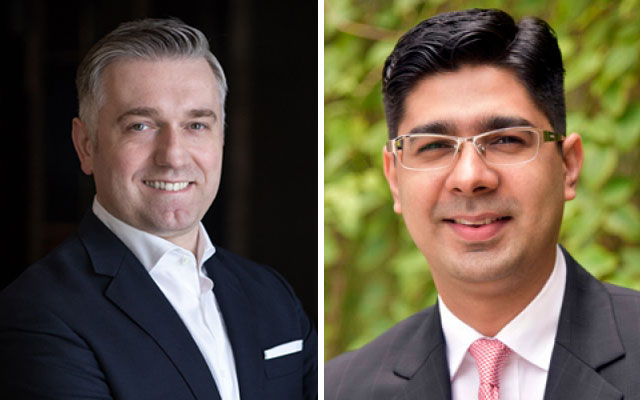
From left: Lubosh Barta and Jasjit Singh Assi

Lubosh Barta and Jasjit Singh Assi will be Four Seasons Hotel Bangkok’s general manager and hotel manager respectively, when the property opens later this year.

Barta began his Four Seasons career 15 years ago at the company’s former location in Bangkok, where he was director of F&B.

From left: Lubosh Barta and Jasjit Singh Assi

A native of the Czech Republic, his career also includes positions in Europe, Australia and the Middle East.

Assisting Barta will be Jasjit Singh Assi, the hotel manager who will be responsible for day-to-day operations.

After joining Four Seasons in his native country of India, Assi rose through the F&B divisions in Chiang Mai and Sydney before returning to Mumbai in his first assignment as hotel manager.

From left: Vishal Sanadhya; Andrea Accordi

On the culinary side, Vishal Sanadhya has been appointed director of F&B, while Andrea Accordi returns to Thailand as executive chef.

Sanadhya began his Four Seasons career in 2006, and has assumed positions and assignments across Asia such as the Maldives. Meanwhile, Accordi retuns to Thailand after leading the culinary team at Four Seasons Hotel Hong Kong to a eight Michelin Stars across three restaurants.

Kempinski Hotels dangle new rewards for planners

0
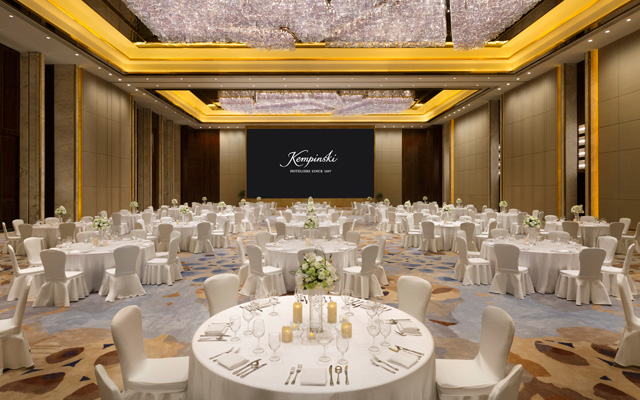
Kempinski Hotel Fuzhou Ballroom

Kempinski Hotels has launched an enhanced offer for events planners for 2019-2020, built on the success of the previous Inspiring Events campaign.

The amplified offer includes increased commission levels, and up to two complimentary rooms during events, should a second event be confirmed within 90 days of the first booking. In addition, bookers will be able to enjoy an upgrade to the Kempinski Discovery Platinum tier with a minimum spend of €15,000 (US$17,056) per event, or the Kempinski Discovery Black tier with a minimum spend of €30,000 per event.

Kempinski Hotel Fuzhou Ballroom

These exclusive rewards are on top of existing benefits, such as an on-site event butler; a locally-themed culinary experience for events, one complimentary room for every 30 paid rooms (up to a maximum of four complimentary rooms per group); and a credit on the master bill for any event contracted 60 days prior to the starting date.

Detailed terms and conditions for the Inspiring Meetings & Events offer are listed in the MICE section of an individual hotel’s website.

Beyond Asia: Switzerland; Germany; and Calgary, Canada

0
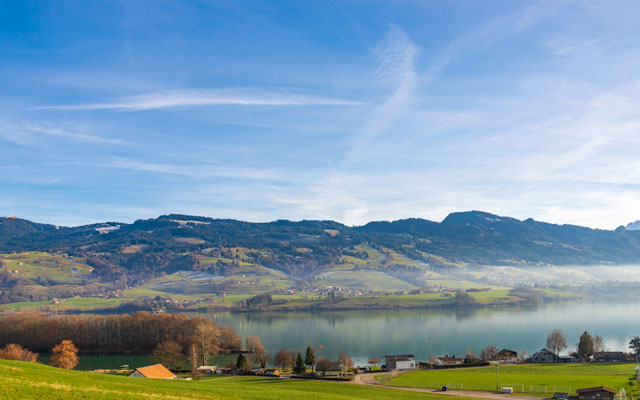
Lake of Gruyère
Lake of Gruyère

Hyatt takes Alila to Europe
Europe will get its first Alila branded resort in La Gruyère, Switzerland, come 2023.

Overlooking a lake, Alila La Gruyère will offer 85 rooms, 27 residences, a golf course and a wellness retreat. It will be located in Pont-la-Ville in the district of La Gruyère, which belongs to the Canton of Fribourg in western Switzerland.

Hyatt, which recently added the brand to its luxury portfolio after acquiring Two Roads Hospitality, announced that an affiliate company has signed a management agreement with Resort 4 SA, owned by Ben Golf Investissements SA, to bring the brand to Europe.

Crystal Interactive expands into Germany
Event tech specialist Crystal Interactive has opened its first office outside the UK, in Düsseldorf, Germany.

Crystal Interactive provide smart badges that can connect delegates at events by touching their devices. Their details are then shared to an app with the delegates name, email and other information.

The company added Smart Wearables to its portfolio last year, which already includes Event App, Audience Response App and Event Registration platform.

Since acquiring IML Interactive in 2017, Crystal Interactive said in a statement that the new office in Germany will allow it to extend the services and support it offers to German and other European-based clients.

Calgary to host 2023 World Petroleum Congress
The World Petroleum Council of Canada and Meetings and Conventions Calgary (MCC) have announced that Calgary will be the host city for the 24th World Petroleum Congress come 2023.

The vote came after months of lobbying member countries: Calgary was competing against Baku, Azerbaijan; Astana, Kazakhstan; Dubai, UAE; and Buenos Aires, Argentina.

Hosting the World Petroleum Congress will benefit Calgary with an estimated CA$65 million (US$49.4 million) economic injection. Over 80 countries will be represented at the event, bringing an estimated 5,000 delegates to the city. The congress will be hosted by both the BMO Centre and Calgary TELUS Convention Centre, and will utilise an estimated 25 hotels.

Wine and dine in private at Txoko

0
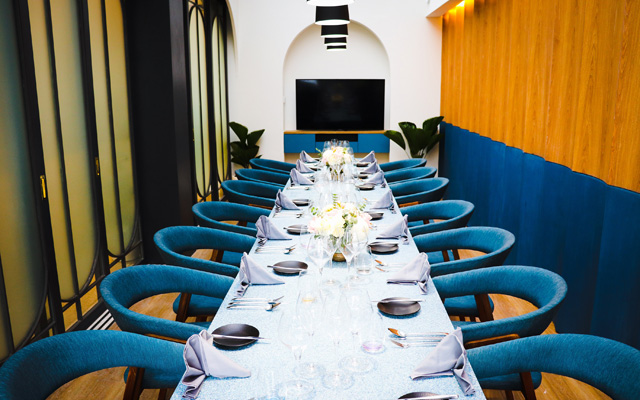
Private Room good for 18 pax

Txoko is the newest Spanish restaurant to join Jakarta’s Senopati area, a bustling restaurant hub in the south of the Indonesian city.

The restaurant is owned by Spanish chef Oskar Urzelai – formerly the executive sous chef at Gran Melia Jakarta – and serves up Basque cuisine, tapas and pintxos.

Private Room good for 18 pax

Urzelai’s signature dishes includes the Garlic Prawns Pre-A-Porter, Grilled Octopus with Boletus Cream, Spanish Omelette Lasao, and Lamb Shank with Sweet Potato. Guests can also choose from the 50 handpicked wines from countries such as Spain, France, Australia, Chile and Argentina to pair with their choice of tapas and mains.

Set menus for groups range from IDR225,000++ (US$16++) to IDR445,000++, and includes tapas, main course, dessert and non-alcoholic beverages.

The two-storey restaurant also has a private room on the upper floor that can seat 20 people, and is equipped with a TV for business presentations. The entire second floor can also be closed for private events, and can accommodate 50 to 60 people. The ground floor on the other hand, is a dining area for 40 guests, and is where the open kitchen and bar is located.

A restaurant buyout is possible, with a minimum of one week’s notice, or event planners may choose to just book out the upstairs area alone. Meeting packages and menus can be customised accordingly, and are available upon request.

The restaurant welcomes business events ranging from product launches to theme dinners. With opening hours starting from 08.00 on weekdays, a breakfast meeting can even be conducted as well.

Reviews

The Ritz-Carlton, Bangkok

The newly-opened Ritz-Carlton, Bangkok anchors the One Bangkok development with cosmopolitan elegance. Featuring the city's largest ballroom and a spectacular new penthouse suite, it delivers exceptional hardware and deeply authentic, soulful service for business and leisure travellers alike

Mama Shelter Zurich

Behind the imposing, Brutalist concrete that defines Zurich’s Oerlikon district lies a surprising secret. While its exterior honours the neighbourhood’s industrial roots, stepping inside Mama Shelter reveals a vibrant, neon-soaked world that is a far cry from its rigid shell

Hyatt Regency Kuala Lumpur at KL Midtown

A polished urban retreat designed for business travellers, Hyatt Regency Kuala Lumpur at KL Midtown combines thoughtful design, seamless service, and exceptional facilities.