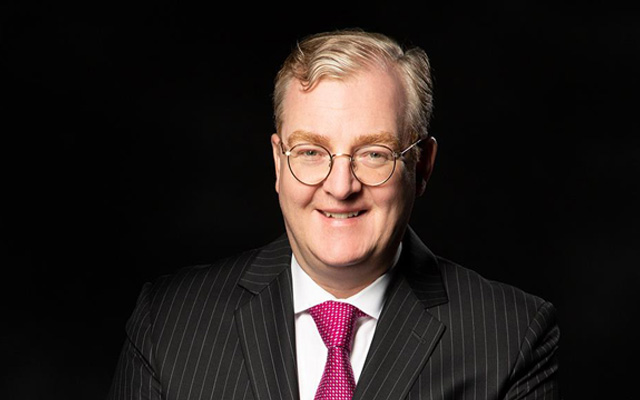
Following its earlier announcement that current CEO Markus Semer and CFO Colin Lubbe are stepping down from their roles, the Kempinski Group has found a new CEO in Martin Smura, who will take the helm beginning July 1.
The 50-year-old Smura brings a vast amount of management experience and expertise from top international hotel companies on five continents, and was most recently executive chairman of the board of the Dorint Hotel Group.
Smura also spent 15 years with the InterContinental Hotels Group (IHG) in various capacities such as director operations in East and Western Europe. He also held his first general management post while with IHG, and was the group’s youngest regional GM at 30.
Could you give us a quick introduction to the role the Hong Kong Association of the Pharmaceutical Industry (HKAPI) plays in Hong Kong’s public healthcare system?
Founded in 1968, HKAPI is one of the earliest associations in the world formed by R&D-based pharmaceutical companies. We work closely with different government bureaux, professional associations, academics and patient groups, consistently providing expert views across the entire spectrum of healthcare matters, including healthcare system reform, research and development as well as patient empowerment.
Though that mission has evolved over the years, it still follows the industry’s fundamental pharmaceutical philosophy that medicine is for all people.
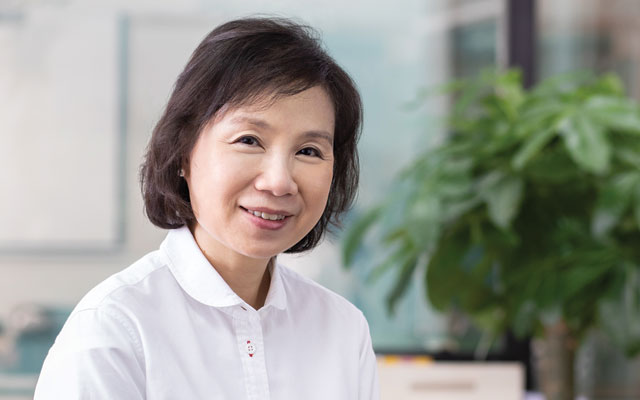
Sabrina Chan
HKAPI also provides constructive advice on the healthcare system, supporting the implementation of regulatory requirements while maintaining supplies of critical drugs and vaccines to safeguard the public.
For instance, we reviewed the Drug Office’s e-submission system before its official launch two years ago. HKAPI implemented a pilot test on it and then gave comments to bridge (user) gap and to minimise bugs. We also offered training for members.
What are the various functions of HKAPI?
I lead the executive office and the day-to-day running of the associations’ interest in accordance with the strategic plans and budget. I also work with an eight-member Board of Directors, who are our sponsors and elected by full-time members once every two years in AGMs.
There are several task forces set up for strategic initiatives and system betterment, namely Preventive and Primary Healthcare; Patients, Enlistment & Risk-sharing; Open Access; R&D/Eco-system; Regulatory Affairs; Ethics and Compliance as well as Macau.
I work with staff, sponsors and taskforces to develop policies and planning for the implementation of strategic directions, and support the effective implementation of strategic plans.
Together, we review and evaluate present and future opportunities, threats and risks in the external environment as well as current and future strengths, weakness and risks relating to the industry.
How big is the association today?
There are 39 full members, 28 associate members and two members under Academics and NGOs – the Chinese University of Hong Kong and Hong Kong Cancer Fund.
Multinational companies engaged in the research and/or development of pharmaceuticals remain our core members, including the world’s top 20 companies. Our member companies provide over 70 per cent of the prescription medicines in Hong Kong. Annual subscription fee for
Has this membership changed?
When I first (joined HKAPI in 2004), there were 53 members. That number slipped over time due to mergers and acquisition (M&A) among member companies. This is a dynamic phenomenon but it doesn’t impact our membership revenue since annual subscription fee is based on members’ sales turnover.
The pharmaceutical industry faces high risks because of the costly and lengthy R&D process for new drugs, which comes with a high chance of failure. According to a 2016 study by the Pharmaceutical Research and Manufacturers of America, the discovery of a new drug through to getting the US Food and Drug Administration’s (FDA) approval takes 10 to 15 years and costs US$2.6 billion. Less than 12 per cent of these candidate medicines make it into a Phase One clinical trial approved by the FDA.
On the other hand, our associate member categories have become more diversified, attracting law firms, device companies, communications, researchers, PR firms and even local big companies. We hope they provide better services for our members, and understand us more through HKAPI (and the) platform (we provide) for training and exchange of best practices and experience.
Since HKAPI also focuses on intellectual property such as patents, members like Baker & McKenzie has helped us a lot on law-related discussions.
How competitive is Hong Kong’s pharmaceutical industry?
Last year we did a survey on Hong Kong’s clinical trial attractiveness and identified other countries like Singapore and South Korea that have already exceeded us, so we have to catch up. For example South Korea has a dedicated department – the Ministry of Food and Drug Safety – which takes a one-stop-shop approach to attract clinical trials. But this is not happening in Hong Kong yet. We have to apply for approval from ethics committees, negotiate with investigators and apply for procedures – all of which takes a longer time.
We have submitted proposals to the government to have a faster setup of clinical trials in Hong Kong.
Does HKAPI have a major annual conference that brings international pharmaceutical professionals together?
We seldom do but our members may work with different associations to hold theirs. We may also support related conferences.
For instance, the Pharmaceutical Society of Hong Kong will host the 2020 Federation of Asian Pharmaceutical Associations Congress, drawing 2,200 delegates. HKAPI will definitely support it and details of our involvement are usually announced at a later stage.
Hong Kong has risen higher in status as a medical hub in Asia due to her high compliance with the code of practice. HKAPI has laid down standards for all medical conferences held in Hong Kong. We produce and distribute unbiased promotional leaflets and advertisements to prevent patients from being affected by inaccurate, outdated or missing information (regarding medicine). Also, we specify that medical conferences cannot take place in resorts where gaming opportunities are present.
HKAPI has a close working relationship with Meetings and Exhibition Hong Kong (MEHK). How does this partnership work?
MEHK has long been a super-connector for and a long-term supporter of HKAPI. We work across many facets and maintain a long-term partnership in elevating Hong Kong’s profile in the world’s pharmaceutical industry.
As MEHK extends its business network through HKAPI to bring even more pharmaceutical events to the city, HKAPI takes on the role of city ambassador.
And when HKAPI hosts its local events, MEHK conducts study missions to international association meetings and functions as a bridge to connect us with international association partners and event organisers for global exposure. MEHK’s efforts include securing speaker line-ups and opportunities for us to join industry networking events.
When MEHK organises study missions for association executives, I am often invited to speak about my experiences in running associations in Hong Kong and in Asia-Pacific.
As well, MEHK always helps to advise medical event organisers on compliance with our Code of Practice.
Is HKAPI affiliated with regional associations?
We are a member of the International Federation of Pharmaceutical Manufacturers and Associations (IFPMA) since 1970 as well as a member of the steering committee of the Asia Partnership Conference of Pharmaceutical Associations (APAC) since its establishment in 2011.
Do these affiliations help HKAPI in connecting members with global peers or be involved in global activities?
I am myself a member of the working group and mentor of the three-day APEC Business Ethics for SME Forum since 2012. It’s tough from the outset as it was a small group of trainers and therefore required high involvement from members. My role varied every year, working with members and mentors and taking on speaking, training and facilitating responsibilities.
This year, the APEC Business Ethics for SME Forum was held in Japan and the theme was Promoting a Code of Ethics – Identifying the Relevant Stakeholders. I was a speaker at the opening and closing Japanese sessions and was also involved with mentor assignment and tables. I would say this was the most sustainable meeting I have (been part of), and I am so happy to see our group growing stronger with more members.
For years, we worked hard on promoting the Code of Practice and were rewarded by more Asian countries joining us. The Philippines issued an Administrative Order for the code in 2014. Recently, China Pharmaceutical Innovation and Research Development Association joined IFPMA and I flew to the capital and assisted it by reviewing its first draft of the code with other members.
What’s the biggest challenge in the work that you do for HKAPI?
It’s how to align different members’ demands and thinking (with our goals and activities). We have adopted various methods to obtain members’ thoughts, such having our CEO to meet with the general managers of member companies to seek their views. Prior to that, we conducted member surveys.
We adopt an evidence-based discussion approach and we carry out a lot of surveys and research. As such, coordination and support from members is vital.
When developing systems, I need to balance societal benefits with compliance clauses. I am fortunate to have the support of the Board of Directors. Our members treat me well too.
No matter how different the Board’s view is during discussion, we must unanimously align with the outcome.
I am also very proud of our high ethical standards and compliance to the Code of Practice. For years we have worked very hard on this for the industry because if one member were to breach the code, it would be a loss for the whole industry.
HKAPI marked its 50th anniversary in 2018. What’s your vision for the next 50 years?
We hope to help Hong Kong citizens expediently use innovative and effective healthcare solutions, and to continue to foster professional development to fuel industry growth.
Undoubtedly, our ongoing responsibility is to leverage the experience we gain from different places and multinational companies, and share best practices with our members to improve our medical system.
This is our dedication and explains why many position papers have been submitted over the last decade. One cannot imagine why a small office of six people would drive so many qualitative research and surveys. Some of these surveys are not one-off, rather they are questionnaires sent out regularly to monitor the effectiveness of a particular system.
Tell me more about HKAPI’s efforts on professional development.
HKAPI is a platform equipped with different forms of training for members because of good submission practice and good review practice. High ethical standard is our cornerstone.
We conduct systematic educational programmes such as a 22-week course for nominated medical representatives from member companies. We also conduct regulatory training programmes such as the one implemented with the University of Hong Kong (HKU). HKU students are welcome to participate for free to gain professional knowledge outside of their syllabus. As well, our ongoing Code of Practice workshop takes place at least once a year, drawing about 120 participants. All these are in addition to our patients’ workshops and trainer training sessions.
On the academic front, we support HKU and Macau University each year by staging a seminar to exchange intelligence on healthcare systems or special topics involving the two cities. Our seminar this year focused on public-private partnership in the healthcare system.
And finally, we have the Patient Empowerment Forum which is organised annually with the Hospital Authority and Hong Kong Alliance for Patient Organizations. It is now in its fifth year, and the 2018 edition covered topics like diabetes, medical device, digital device, medicine and home care. The event promotes exchange among stakeholders, academic members and even governments.
A champion for ethical standards
Prior to joining the pharmaceutical industry, Sabrina Chan was with the External Affairs Department of i-CABLE Communications, tackling government relations, regulatory issues, corporate affairs, and the promotion of the company’s core products and services.
She co-founded the Telecommunications Research Project under the Centre of Asia Studies (University of Hong Kong, HKU), and was a journalist for various print and electronic media outlets.
Chan studied communications in Hong Kong when she began her tertiary education. She holds a graduate degree in International Studies from the University of Sheffield (UK), as well as law degrees from the Chinese University of Hong Kong (CUHK) and University of Tsinghua (China).
She is a member of the High Level Steering Committee on Antimicrobial Resistance and of the Business Facilitation Advisory Committee in Hong Kong.
Other career achievements include:
A close partnership with universities in the roles of Chair of Advisory Board of the HKU Bachelor of Pharmacy Programme, and as Adjunct Assistant Professor of CUHK School of Pharmacy
A long-time member of the Working Committee to develop strategies for promulgating Codes of Practice across APEC economies
A mentor with APEC and IFPMA programmes, where she shared best practices through training workshops and panel discussions at various forums attended by delegates from APEC member economies and biopharmaceutical sector experts
This article was first published in TTGassociations January 2019, a sister publication of TTGmice
Organisers of the 71st meeting of the Convention on International Trade in Endangered Species (CITES) of Wild Fauna and Flora Standing Committee have decided to shift the conference to Geneva, Switzerland, in the wake of the Easter Sunday bombings.
Originally planned for May 23 to June 3, CITES was postponed to September. But in a June 12 statement, CITES’ secretary-general Ivonne Higuero announced the decision to shift the conference to Geneva, and it will now run from August 16 to 28.
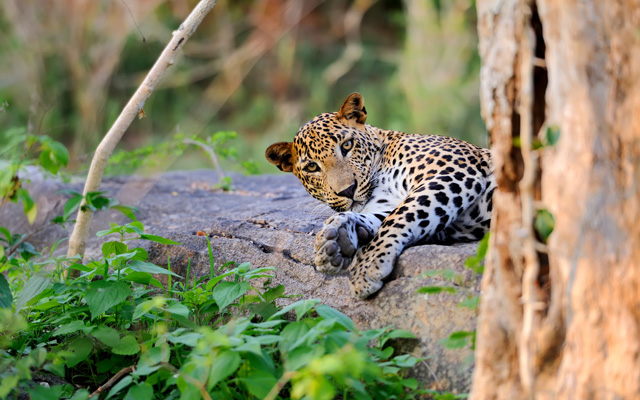
The UN wildlife conference is now headed for Geneva; leopard in the wild on the island of Sri Lanka
“This conclusion was reached after a consultation process with the CITES Standing Committee where they expressed security concerns; after careful consideration of the report of the mission of the United Nations Department of Safety and Security to Sri Lanka to assess the security situation on the ground; and after discussions with the Sri Lankan Government,” Higuero explained.
Sunil Dissanayake, director and CEO of Bandaranaike National Memorial Foundation – Sri Lanka’s biggest convention centre where the conference was to take place – confirmed the conference’s move to Geneva.
Dissanayake added that two weeks ago the UN Security Auditor was in Colombo on an inspection tour, visiting the venue as well as hotels, and said he was going to recommend that the summit could still take place in Sri Lanka.
“We offered new dates in September and the entire venue was booked for the event. But the UN committee has decided to shift the venue,” he said.
The wildlife conference was supposed to bring in 2,000 participants, and was viewed by stakeholders as a huge boost to its business events sector until the April 21 bombing shattered hopes.
Officials at Sri Lanka’s state-run Convention Bureau further shared there has been a pickup of 20-30 per cent occupancy in Colombo hotels this week which, when compared to almost zero occupancy in the days and weeks after the blast, was progress.
Shiromal Cooray, chairperson of Jetwing Hotels, said the cancellation of CITES was a blow to the industry just as travel advisories were being relaxed. Australia, India, China, the UK and Germany are among countries that have relaxed travel advisories.
Cooray said arrivals to the country are improving and that bookings, though slow, are trickling in for July and beyond. She believes the situation will further improve from December, but has braced herself for a 20 per cent dip in business compared to the same time last year.
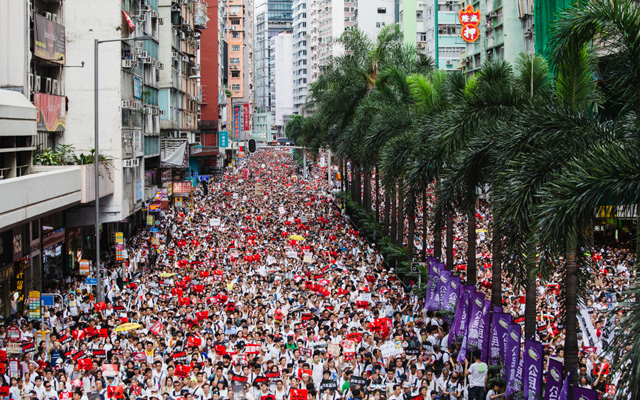
Hong Kong protesters demonstrate against extradition bill
The Hong Kong Dragon Boat Carnival, scheduled for June 14-16 at Central Harbourfront, appears to be the only event casualty from the disruptive protests held around the Central Government Complex in Admiralty and Wanchai areas.
The protests across several days were held in opposition of a controversial extradition law, with June 16’s drawing more than two million Hongkongers to the streets.
Hong Kong protesters demonstrate against extradition bill
Doris Lam, general manager of Momentous Asia Travel & Events Co, told TTGmice that she did not receive any event cancellation or postponement, and a conference on June 16 carried on as planned.
“Fortunately the conference took place in a hotel away from Wanchai (and) the gala dinner was held at a restaurant nearby. It turned out to be a smooth and good day for us (despite the protest that day),” remarked Lam.
MIMS (Hong Kong) was also not affected, shared head of CME and congress division, Sigourney Liu.
“We had no events last week, only a medical conference that is scheduled at the Hong Kong Convention and Exhibition Centre (HKCEC) next week,” Liu said.
But she noted with concern that “travellers’ confidence is shaken” now.
“Therefore, we have taken extra effort to have a contingency plan in case roads are blocked around affected areas. For instance, we will ask delegates to remain in their hotel and (have the presentations beamed to them through) live videos,” Liu said.
Cancellation of the event is “hard” at this late stage, she said, as guests have been invited and delegates have paid for hotel accommodation.
“We have had queries from delegates asking if it is risky to come, but I reassured them that Hong Kong is still a safe city. Our delegates are well-educated and trained doctors who are used to crises (so they are less panicky),” she added.
A Hong Kong Tourism Board (HKTB) spokesperson maintains that the destination is still business as usual and tourist activities are not affected.
However, the spokesperson noted that “Admiralty is the major transportation hub and home to various hotels, shopping malls and attractions, so the large-scale demonstration in the area may cause inconvenience to visitors”.
She added: “HKTB will continue to closely monitor the development and keep trade partners and visitors informed of the latest information.”
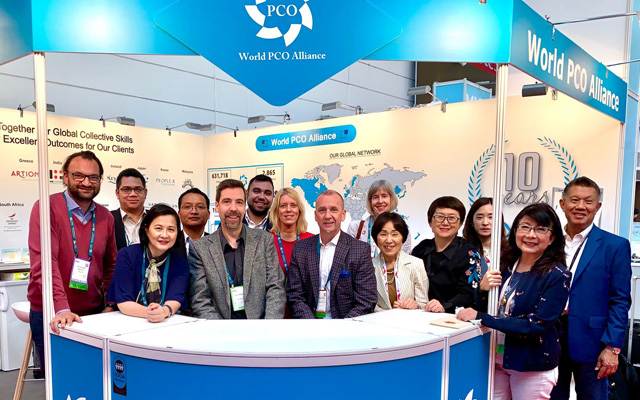
Officers for a new term were elected at the recent World PCO Alliance annual general meeting during IMEX Frankfurt in Germany.
World PCO Alliance members at IMEX Frankfurt
Irish member Noel Mitchell of Keynote PCO is the Alliance’s new president, taking over from Gregg Talley of Talley Management Group; Nancy Tan of Singapore-based Ace:Daytons Direct is now vice president; and André Vietor of Spain’s Bco Congresos will serve as treasurer. These officers will serve two-year terms.
Founded in 2009, the World PCO Alliance provides leadership in meeting management through the delivery of streamlined and effective meetings around the globe. The organisation is comprised of 21 leading PCOs in the meetings industry from around the world.
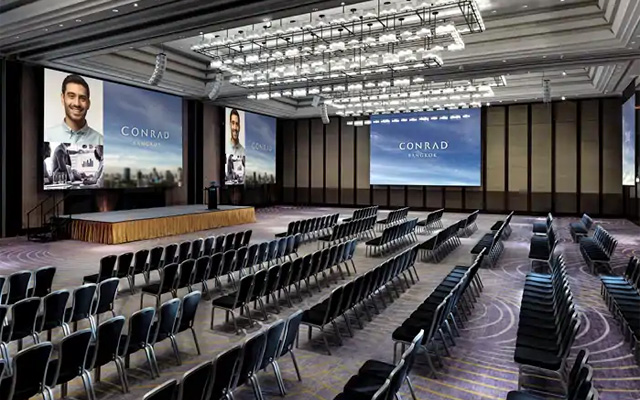
Luxury hotel Conrad Bangkok has emerged from a major renovation that has given it new bragging rights in the Thai capital’s business events scene.
The hotel’s grand ballroom now houses what is said to be Bangkok’s first integrated modular LED wall. With panels measuring 35 metres in width and sitting on a 270-degree track, the LED wall is fully adaptable to planners’ requirements.
The Conrad Ballroom and its modular LED panels
As well, the space is equipped with professional stage lighting and individual table lighting – again, said to be the country’s newest standards in hotel meeting facilities.
Elsewhere, the hotel’s main entrance, lobby and guestrooms have also been upgraded. The lobby now sports a new design and offers seats with convenient power points, a feature modern, tech savvy travellers will appreciate.
Guestrooms are equipped with in-room lighting and temperature controls for more precise energy management, which is in line with the hotel’s 2030 sustainability goals.
General Manager Herman J Ehrlich, said the hotel is redefining the standards for business hotels in the city through its new infrastructure.
He believes that the hotel’s events hardware is complemented by “an unusual resort vibe offered through our extensive recreational facilities such as full-sized tennis courts, 36-metre long swimming pool, oversized Jacuzzi, dedicated and secure children playground, relaxation garden, eleven spa treatment rooms, and 600-metre fitness club with Yoga and Muay Thai studio”.
When asked for his outlook on business expectations, Ehrlich said Thailand’s presidency of ASEAN this year would attract a string of related meetings to Bangkok, securing a path of steady growth across a variety of business events.
He also credited Thailand Convention and Exhibition Bureau for its efforts in promoting the country for business gatherings and the presence of hotels with quality venues as reasons for Thailand’s continued success in attracting business events.
Thailand-based Minor Hotels will debut its Avani and Oaks brands in Yangon, with the development of two hotels as part of a management agreement with Kajima Yankin, a wholly-capitalised subsidiary of Kajima Overseas Asia.
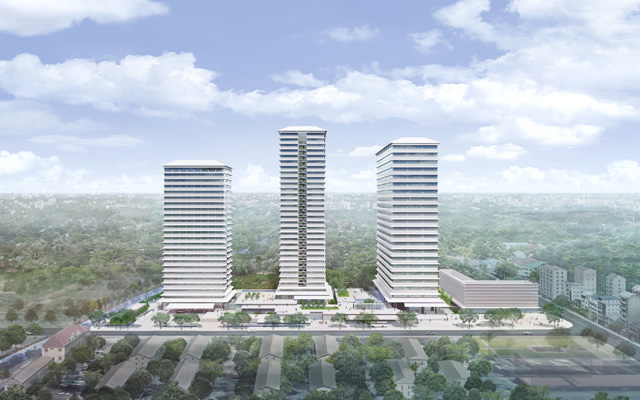
Construction work has begun onsite and vertical construction is scheduled to commence in 2021. The 250-room Avani Yangon Hotel and 221-key Oaks Yangon are both set to open in 2024 and will be part of a mixed-use development, complete with office and retail space located in central Yangon.
A rendering of the upcoming mixed-use development
Avani Yangon Hotel and Oaks Yangon will be located less than nine kilometres from Yangon International Airport and occupies two buildings joined by an underground retail centre landscaped above with an urban park. Known for its shopping and pagodas, Yankin Township sits just east of Inya Lake with the popular historic old Yangon town a few kilometres away.
Avani Yangon will feature 250 guest rooms with standard rooms measuring 39m2. Facilities include an all-day dining option plus a rooftop restaurant and bar, executive lounge, ballroom and meeting facilities. As with other Avani properties, the Yangon one would feature an Avani Pantry, AvaniSpa and a fitness centre.
Oaks Yangon will feature 221 rooms with a minimum size of 56m2, along with amenities and facilities for longer stays, including all-day dining, a kids’ club, swimming pool and fitness facilities.
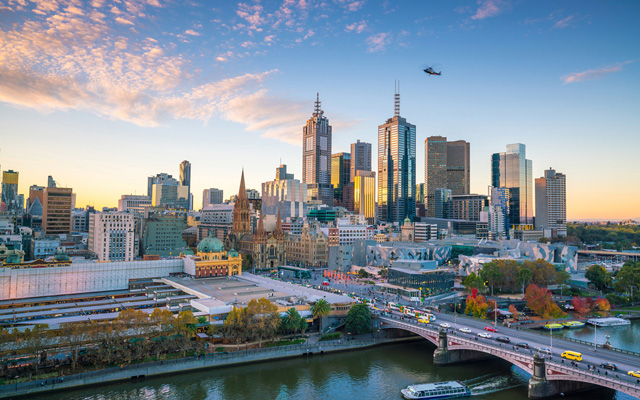
Melbourne is the capital and most populous city of the Australian state of Victoria
Business events are delivering more money and more visitors to Victoria, Australia, with the Melbourne Convention Bureau (MCB) reporting that it netted more than A$500 million (US$343 million) in business events secured for the state in FY18/19 (July 1, 2018 to May 30, 2019).
This has cemented the business events sector as the highest yielding sector in Victoria’s visitor economy.
Melbourne (pictured) is the capital and most populous city of the Australian state of Victoria
In addition to monetary contribution, around 6,000 jobs are expected to be created for the state based on the events secured.
Significant wins include the 2023 Rotary International Conference which is expected to attract 20,000 Rotary members from over 200 countries and regions worldwide and injecting over A$110 million into the Victorian economy.
Other notable conferences include The International Convention of Jehovah’s Witnesses, November 2019; International Congress of Genetics, July 2023; 20th International Union of Basic and Clinical Pharmacology World Congress of Basic and Clinical Pharmacology, 2026; and the World Congress of Philosophy, July 2023.
“Business events are the cornerstone of our visitor economy, and the highest yielding sector of our tourism industry… Business events keep our hotels full, our venues buzzing and our economy strong. No one does business events quite like Victoria, and MCB’s outstanding efforts are to be commended,” said Martin Pakula, the state’s minster for tourism, sport and major events, in a statement.
Mövenpick Resort & Spa Jimbaran Bali has unveiled a new Tropical Vibes Meeting Package.
Prices start at US$145 nett per person for a minimum booking of eight rooms, and a maximum booking of 15 rooms. Also included in the package is a meeting package for a maximum of 30 person, classic room accommodation for all delegates, and daily breakfast at the Anarasa Restaurant.
Akasa Ballroom
Customised F&B packages covering themed coffee breaks, inspiring lunches and lavish dinner buffets can also be added on, and start from US$40++ per person. As well, meeting options for Half Day or Full Day packages are also available starting from just US$30++ per person including all essentials.
The resort offers 297 rooms and suites, and all of its meeting facilities are located on a designated floor with direct VIP access in and out of the resort.
Function spaces include the 420m2 pillarless Akasa Ballroom that can host up to 300 guests. This venue can be further divided into three breakout rooms, and it is supported by three other Baga Rooms approximately 50m2 in size. For smaller corporate gatherings, a smart boardroom can accommodate up to 14 delegates.
Every venue is supported by complimentary Wi-Fi access, superior audio and visual equipment, screens and flip charts.
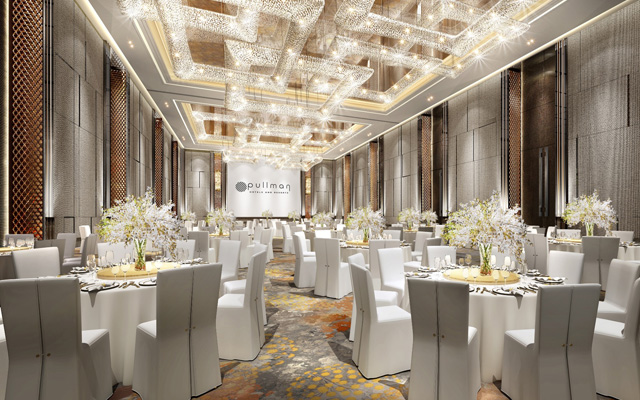
Accor has opened its 36th Pullman-branded hotel in China, in the heart of the Qingpu Industrial Zone in Shanghai.
Pullman Shanghai Qingpu Excellence offers 292 guestrooms including 16 suites, seven family rooms and one presidential suite. There are four dining establishments on-site, ranging from the Q – Seafood & Grill to the Azur Chinese restaurant.
Pullman Shanghai Qingpu Excellence
1 of 4
Pullman has also launched a new Meet & Play meeting concept, combining memorable events through work and play in an energised setting imbued with cultural elements and fun interactions. Through the concept, Pullman hotels provide engaging breaks, icebreakers, and team activities that stimulate performance and enhance wellbeing.
The property itself offers more than 1,600m2 of banquet space, with the largest ballroom in Qingpu supported by seven function rooms. The 800m2 Grand Ballroom is pillarless, and boasts a eight-metre high ceiling, and technology including an 80-inch LED screen and advanced audio-visual equipment. An outdoor terrace that is connected to the grand ballroom can facilitate activities such as evening cocktails, small parties, and even yoga or tai chi sessions.
Other facilities include Fit Lounge with its heated indoor swimming pool, a business centre and an executive lounge. In addition, the second floor’s communal space of the hotel will also showcase Pullman Artist Playground series of exhibitions in partnership with local artists, photographers, sculptors, painters and designers, to offer guests art experiences.
The hotel is 40 minutes by car to Shanghai Hongqiao Airport and 60 minutes to the city’s CBD.
The newly-opened Ritz-Carlton, Bangkok anchors the One Bangkok development with cosmopolitan elegance. Featuring the city's largest ballroom and a spectacular new penthouse suite, it delivers exceptional hardware and deeply authentic, soulful service for business and leisure travellers alike
Behind the imposing, Brutalist concrete that defines Zurich’s Oerlikon district lies a surprising secret. While its exterior honours the neighbourhood’s industrial roots, stepping inside Mama Shelter reveals a vibrant, neon-soaked world that is a far cry from its rigid shell
A polished urban retreat designed for business travellers, Hyatt Regency Kuala Lumpur at KL Midtown combines thoughtful design, seamless service, and exceptional facilities.