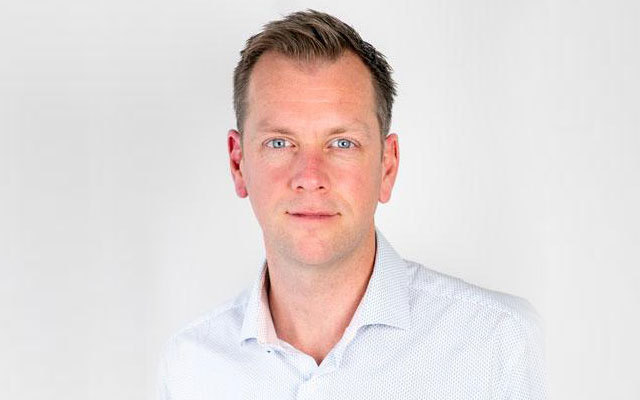
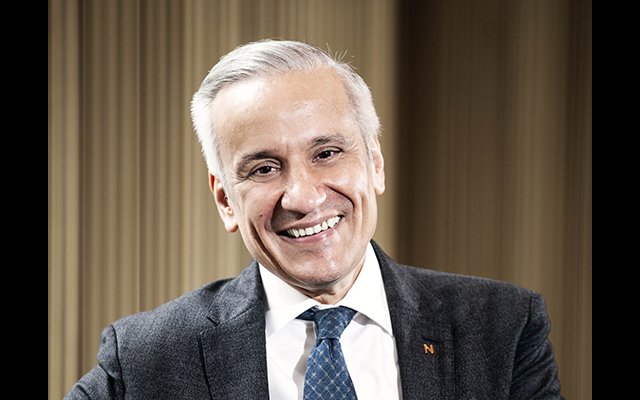
Wharf Hotels has appointed Adriano Vences as general manager of The Murray, Hong Kong, a Niccolo Hotel, who joined the property after a four-year tenure heading the first Niccolo hotel in Chengdu.
Adriano joined Wharf Hotels began in 2009, and was promoted to general manager of Niccolo Chengdu, the first hotel under the new luxury brand of the group, in 2015.
The Portuguese national has over three decades of industry experience in destinations including Singapore, India, Dubai, Mexico and Chile.
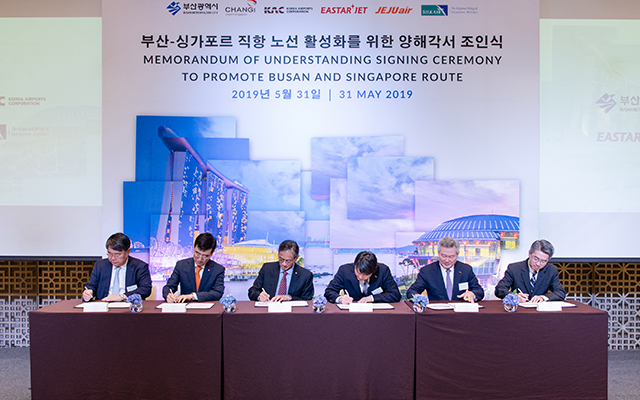
A six-party MoU has been signed to promote trade, business and tourism flows between Singapore and Busan.
The one-year partnership was signed between Changi Airport Group, Busan Metropolitan City (BMC), Korea Airports Corporation (KAC), Eastar Jet, Jeju Air and SilkAir.
Six parties come together to sign the agreement to jointly promote Busan-Singapore trade and tourism
This follows the allocation of traffic rights to South Korean airlines Eastar Jet and Jeju Air, as well as SilkAir, the regional wing of Singapore Airlines, to operate flights on the Singapore-Busan route.
SilkAir’s four-times weekly service to Busan started on May 1, 2019 while Jeju Air will commence its service to Singapore on July 4, 2019. Eastar Jet is expected to connect the cities in the coming months.
The six-party collaboration aims to strengthen air connectivity between Singapore and Busan and raise awareness of the respective airlines’ product offerings.
In the coming year, residents and travellers from both cities can expect various on-ground events such as roadshows, travel fairs and campaigns as CAG, KAC and BMC collaborate to help grow and sustain the Singapore–Busan route.
Busan had been identified by OAG – a leading provider of digital flight information, intelligence and analytics – as the top unserved market for Changi Airport, with an estimated indirect two-way traffic exceeding 75,000 passenger movements annually.
Lim Ching Kiat, managing director, air hub development of Changi Airport Group, said: “For many years, connectivity between Singapore and South Korea has been limited to Seoul with around 60 weekly services. As Changi Airport is the gateway to South-east Asia and given the increasing travel demand over the years between Singapore and Busan, we are pleased to welcome the opening of this new route which will offer greater convenience for travellers between the two cities.”
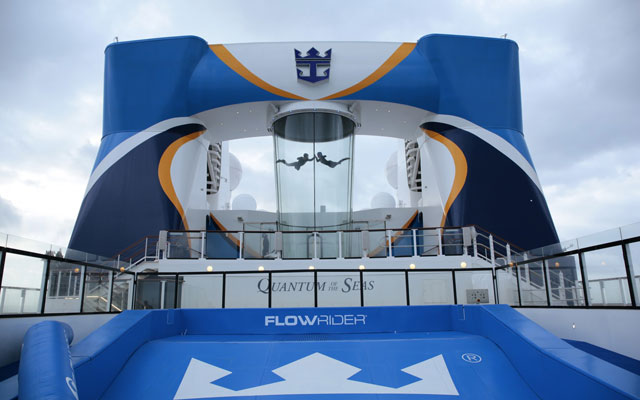
Skydiving is one of the unique activities that can be done onboard Royal Caribbean Cruises' Quantum of the Seas
Royal Caribbean Cruises (RCCL) Hong Kong is intensifying its courtship of business events in hopes of growing its market share to 5-10 per cent by 2020.
According to new managing director Crystal Campbell, the company has seen considerable MICE business in the past, but its market share remains under five per cent.
Royal Caribbean Cruises’ Quantum of the Seas
She said: “So far, we are working directly with some corporations, helping and educating them on what we offer. Meanwhile, we try to build partnerships by understanding what they do on a yearly basis (when it comes to) rewarding their employees and vendors. From there, we explore how we fit into their overall plans.”
The company is not neglecting trade channels either, and is “devoting a lot more marketing efforts” targeting the MICE divisions of travel intermediaries.
The cruise line is also attempting to get more business through the Corporate Preferred Partner Program, which entitles certain corporations and their employees to discounts.
Moreover, its brand new Royal Incentive Rewards programme enables organisations to reward vendors or employees with individual vouchers. “There is no fixed departure date and clients just tell us when they want to board a cruise ship,” shared Campbell.
For now, RCCL Hong Kong believes shorter cruises are well suited to corporates. Examples include four- or five-night itineraries to Vietnam, the Philippines and Japan.
Campbell shared that business enquiries has doubled since she took over last September. Some confirmed bookings include a 3,000-pax charter for a finance company taking the Shanghai-Hong Kong-Shanghai route in late 2020, while a direct selling company has secured a departure for a group of 500.
On the opportunities in full-ship charters, she said: “Although it is not a trend in Hong Kong yet, we have received some enquiries. It’s certainly viable because some companies have their Asia-Pacific base here in the city.”
RCCL Hong Kong wants to cast a wide net, not limited to direct sales, financial and insurance companies which typically bring incentive business.
“We’d like to (reach any organisation that has) distribution and sales arms. We don’t focus solely on large companies. In fact, a big part of MICE business comes from small to medium-size companies. We service groups ranging from 25 to 2,000 guests,” she explained.
Campbell added that as RCCL continues to push boundaries, its cruises will be able to cater to different business event needs.
“The better the technology, the more we can adapt to corporate clients’ expectations.” For example, technology can enable its ships to serve as venues for product presentations and other non-incentive events. With the right technology, clients will be able to “showcase their products in digital manner or use augmented reality to (engage and) communicate with guests.”
Sometimes, business travellers just run into bad luck. Their preferred flights have no seats available, so they have to take one with a 10-hour layover. The hotels close to the meeting location are priced out of budget. And when they get to the airport, they find their flight has been cancelled.
But what if it wasn’t just down to luck? What if travellers and travel managers could see potential obstacles before they turn into a problem – and then take corrective action?
A lot has been said about how predictive analytics can help companies save on their travel spend. But there are also many potential applications in creating a more stress-free and productive experience for business travellers. Here are three examples:
Predicting fluctuations in demand
Often, business travellers need to go somewhere at short notice, only to find that the city is booked solid. There might be a big conference or major sporting event taking place, or it could just be prime tourist season.
Their regular hotels – the ones near the branch office with good transport links and business facilities – are more expensive due to peak demand and priced well above the rate cap set by their company. This means they’ll probably spend a lot of time reading reviews and weighing alternative options in the hope of finding something that looks halfway decent and still falls within their travel policy. And because these options might be further away from where they need to be, they’ll waste time getting around too.
Predictive analytics could help travel managers anticipate changes in demand and introduce variable rate caps. Algorithms will predict price increases, and rate caps can be raised accordingly. At the same time, rate caps could be lowered during the off-season when prices go down. So if an employee’s traveling to Madrid during the UEFA Champions League final, for example, they’ll have a few extra dollars to spend to get a hotel that’s convenient.
Predicting changes in supply
The airline and hotel industries are rife with change. Mergers and acquisitions, new alliances, strikes, bankruptcies, and a myriad other factors can change the options available to travellers.
With the power of data science, companies can get better at predicting how these changes in the supplier landscape will affect their travel programs, and minimise the impact on their travellers. CWT Solutions Group is already experimenting with such algorithms.
While recently carrying out a supplier review for a client, we identified that their preferred airline was about to decrease the number of flights it operated between Paris and Hong Kong, one of the client’s top routes. We gauged how much prices on the route would increase because of the reduction in capacity, and what this would mean for the client’s travel spend.
We also analysed whether it made sense to change preferred carriers. For instance, moving to a different airline could result in a drop in traveller compliance, because many of the client’s frequent travellers had attained a high status and were loyal to the existing airline.
After conducting a thorough analysis, a decision was taken to blacklist the preferred supplier and choose an alternative. The client did inflight product review of the new airline to ensure it was up to scratch, and they negotiated frequent flyer status matching to ensure their travellers wouldn’t lose their perks as a result of the switch.
In this instance, predictive analytics helped a company take a more proactive and forward-looking approach to safeguarding their program in the face of a changing supplier landscape.
Predicting flight disruptions
Flight delays and cancellations can be a miserable experience. In fact, research by CWT found that delays are among the biggest stress triggers for business travellers. The good news is that this, too, is a problem that the data geeks are working hard to solve.
There are solutions already on the market, which use predictive analytics to identify delay patterns across flights to forecast disruptions. They factor in things like the historical on-time performance of an airline, seasonality, flight timings, flight paths and air traffic, congestion at various airports, and weather forecasts. With this information they can predict the probability of a delay occurring, as well as the length of the delay.
Savvy travellers might know how to avoid some of these problems. They might, for example, already be aware that a major sporting event is coming up in a city they plan to visit. But travel isn’t a routine occurrence for everyone, and even the most road-weary business traveller won’t know everything.
Predictive analytics holds great promise for business travel, in that might provide new answers to one of our industry’s perennial conundrums – how to create a more pleasant and productive traveller experience while saving money at the same time.
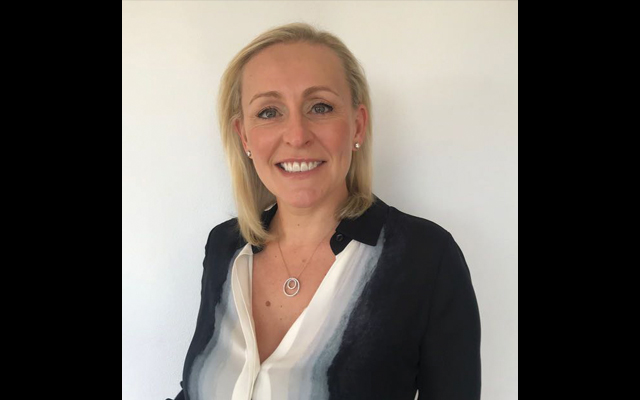
Cedric Barbesier (right) and Helene Buchfinck (left) are part of CWT Solutions Group, the consulting division of CWT, the global B2B4E travel management platform.
Barbesier is director of global digital products. He is responsible for managing CWT Solutions Group’s suite of data products, including its digital reporting catalogue, CWT Travel Consolidator, and Business Unit Scorecards.
Buchfinck is senior manager of global presales, data & analytics. She helps companies understand how they can use data and analytics to generate a greater return on investment on their business travel spend while creating a better experience for their travellers.
FCM Travel Solutions’ drive to lead integration of a long-term digital NDC booking solution globally in the corporate sector has moved up a gear with technology partners Amadeus and Sabre.
Setting a new milestone, FCM and parent company Flight Centre’s travel consultants have started testing Amadeus’ NDC-X, the new graphical NDC-enabled user interface within Amadeus Selling Platform Connect. The design incorporates FCM’s feedback and creates an intuitive user experience that caters to the diverse booking needs across different markets.
Eklund: striking a balance between short-term NDC priorities and viable long-term solutions
FCM expects the first live booking of NDC airline content via the enhanced Amadeus solution to be made within the next three months.
The travel management company has also engaged in high level cross-industry workshops with Sabre since becoming a launch partner in the technology provider’s Beyond NDC initiative. These workshops addressed NDC servicing gaps such as refunds and booking changes, net fares in an NDC environment and issues around number of passengers in a PNR.
FCM has worked closely with Sabre to provide valuable insights into the development of a solution that provides a scalable platform to deliver NDC content to customers, and discussions are now underway with Sabre to commence testing the technology provider’s NDC API.
FCM held an NDC-focused event for travel bookers and procurement managers in May
In Asia, FCM organised an event in May for travel bookers and procurement managers as a platform for knowledge sharing of current topics on business travel.
A key highlight was the session entitled, NDC: The here and now, where it gave delegates an overview of airline distribution, what NDC is and the rationale behind IATA’s decision to create an NDC standard. This was followed by a panel discussion comprising of representatives from FCM, Amadeus and Singapore Airlines.
Marcus Eklund, global managing director, FCM Travel Solutions, said: “We have really moved things into a higher gear in terms of driving our NDC roadmap forward over the last couple of months, particularly since we established a dedicated global distribution team to spearhead industry collaboration between technology and GDS providers, TMCs and airlines in developing solutions to book and service NDC content.
“NDC will increasingly become a reality in 2019, but our goal has always been to balance the short-term priorities of NDC with building a long-term, workable solution with our technology partners at Amadeus and Sabre.”
Eklund likened the eventual complete adoption of NDC as “the perfect smart home where everything works and you have Alexa in every room”.
“However, the airlines are pushing us to move into a half-built house. There is still a lot of work to be done. That’s why we are piloting solutions with our technology partners to make sure that when we do move into that house, we can give our customers an even better business travel experience. The last thing we want to create for ourselves and our customers is more inefficiencies when booking flights and managing data,” explained Eklund.
EventBooking, a cloud-based venue software company, now has representation in Asia-Pacific with the addition of Melanie Taylor to the team.
Melanie Taylor takes on role of sales director, Asia Pacific
Appointed to the newly-recreated post of Asia Pacific sales director, Taylor oversees the growth of VenueOps – EventBooking’s venue management application which debuted in 2017 – from Australia.
This appoint came as EventBooking’s president Steve Mackenzie felt that it was the “right time to have a local team member in the region, given the amount of venues already utilising VenueOps”.
Clients in Asia-Pacific currently include Canberra Theatre Centre, JI Expo and Convention Center, Te Pae Christchurch Convention Centre, Sydney Coliseum, and Live Nation Australasia, among others.
Prague hits record number of conferences in 2018
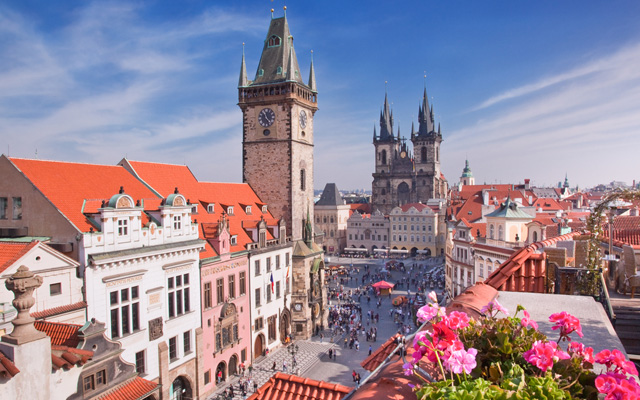
Prague hosted a record number of conferences and congresses in 2018. Last year, the city’s accommodation establishments welcomed more than 4,500 events, more than a third of all events held in the Czech Republic, and almost 540,000 delegates (up 1.4 per cent) from around the world. The number of delegates had remained around 540,000 since 2013, while the average number of participants per meeting had been on a decline. According to Prague Convention Bureau, this was due to a running trend of organisers preferring to hold more events for a smaller number of participants.
St Petersburg’s Expoforum launches global PCO service
Expoforum International is bringing its PCO services to international associations looking to host events in St Petersburg.
Already well known in domestic markets, with 55 years of event delivery, Expoforum International is now planning to make the most of worldwide connections fostered by the Expoforum venue. The news follows the recent announcement that Expoforum as a venue has become a preferred supplier to INCON, giving Expoforum access to its partner’s client base and opportunities. INCON partners organise more than 10,000 projects annually for three million delegates across 170 destinations.
In addition to logistical support, Expoforum International will specialise in the wider needs of associations. Services will include identification of local hosts and ambassadors, development of relationships with local industries and academics, assistance in the sourcing of government subvention and visa support. Ultimately, Expoforum International will be able to support bids from start to finish, ensuring that local ambassadors and organisers maximise everything the venue and city have to offer incoming events.
Miami Beach Convention Center gets greener
The Miami Beach Convention Center has just broken ground on a new 2.3ha park, which will be the product of a conversion of one of the facility’s surface parking lots. The new park, which is scheduled to be completed this October, will have 500 new trees, open lawn spaces, shady areas and public art pieces, as well as a public restroom facility, walkways and lighting.
The move is the latest part of the ongoing expansion and redesign of the Miami Beach Convention Center. Once finished, the revamped venue’s campus will have a total of 4.9ha of new green spaces. In all, the campus will be expanded by 245 per cent in size, allowing for better absorption of rainwater during storms.
The Miami Beach Convention Center had previously embarked on a US$620 million-dollar renovation and expansion project, which included a new 5,574m2 grand ballroom, 46,451m2 of exhibition space and 84 breakout rooms.
How would you describe Asia Pacific Initiative on Reproduction’s (ASPIRE) accomplishments so far since its establishment?
ASPIRE was officially formed in 2008 although it was in 2001 when a group of us came together to meet for common objectives. We held our first congress in 2006, and that sparked our serious intentions to start a formal society.
Wong-Peng Cheang
We are merely 10 years old now. I must say that things have gone really well for ASPIRE. Initially we thought we wouldn’t be able to sustain a yearly meeting, so we ran the congress every two years. The first congress was in China (Changsha, Hunan); 2008 in Singapore; 2010 in Bangkok; 2012 in Osaka; 2014 in Brisbane; 2016 in Jakarta. After that, we turned the congress into an annual event. Last year the congress was held in Kuala Lumpur and this year, just this April, was in Taipei.
That’s a reflection of how we’ve gathered momentum. ASPIRE is more active now, more people know about us and are getting engaged in our activities, and our level of activity has gone up.
What motivated the establishment of ASPIRE?
A few of us opinion leaders from different countries in Asia felt that the region needed such a society. We have been learning from other specialists in the US where there is the American Society of Reproductive Medicine (ASRM), and in Europe where there is the European Society of Human Reproduction and Embryology (ESHRE). They are way ahead of us and are very successful in what they do. We felt that Asia-Pacific lacked such a society, so the few of us decided that we should get something going.
Does ASPIRE have an affiliation with ASRM and ESHRE?
No, but we have a fairly good collaboration with them. Every alternate year one of them will host a session at our congress, and the following year we will do the same at theirs. This is good for all congress attendees, as they get a global perspective on issues.
Many of our members are also members of these societies. I am a member of both.
Since ASPIRE members are also members of ASRM and ESHRE, do you see your association having to work harder to demonstrate its value?
Oh yes! ASRM and ESHRE are our benchmark. ASRM meetings attract 7,000 to 8,000 people each time, while ESHRE meetings attract 10,000. In terms of population, Asia-Pacific has a larger population than Europe, so hopefully ASPIRE will one day draw a much larger audience.
However, I don’t think we want ASPIRE congresses to be as big, just 2,000 to 3,000 people will be ideal. Our congress this year drew 1,500, so 3,000 is achievable.
This must be an critical time for ASPIRE, as the population is shrinking in several Asian economies. What opportunities does this situation present to your work?
We have a huge population here and correspondingly have many doctors. Fertility is a problem in Asia-Pacific, so there is high demand for the specialisation and services we offer. In fact, the demand for fertility services is just on the rise. And because of that, the number of doctors that specialise in this field will also increase.
What we are providing – the continuing medical training – becomes critical and so relevant.
What are the challenges then?
Attracting and engaging members. We are now trying to build up our membership. In doing so, people will always ask: what is in it for us; why should we join you and pay for it?
ASPIRE needs to have something to attract them. One obvious benefit of joining ASPIRE is the heavily discounted congress registration fees, which is S$100 (US$75) less than what a non-member pays. Our membership fee used to be S$90, so attending one congress already offsets that amount paid.
Earlier this year, we ran a membership drive and reduced the membership fee to only S$10. The whole idea is to get professionals to join us and participate in our activities.
In between our congress we also run two masterclasses per year. These are smaller, for about 100 people, and focus on a niche topic. For example, a masterclass on repeated miscarriages or male infertility. Masterclasses are meant to attract professionals with a narrow interest.
Our masterclasses rotate across the region and give cities that cannot host our major congress a chance to contribute. Vietnam, for example, lacks a convention facility for 1,500 people although it is building one, so it hosts some masterclasses.
Soon, we will start a journal that publishes research articles by our members or professionals in our field.
We also help members with industry attachments.
With membership fees so low, where does ASPIRE get its operating funds?
The ASPIRE Congress is our one major source. That’s where we get money from sponsorships and sale of exhibition booths. We are fairly lucky because there are many pharmaceutical and equipment companies that supply clinics and want to have a presence at our congress.
Of course, we are quite prudent with our expenditure, which ensures a surplus is generated at the end of our congress. We don’t make a lot of money though, just enough to run the organisation and our activities.
Disruption is a hot word today. What would be the biggest disruptor for ASPIRE or the professionals you represent?
The Internet has been a great disruptor for us. Back then, congresses offered an early bird discount six months ahead and people would write in to apply. So, six months before the congress organisers would know what the turnout was going to be like.
Now, nobody registers six months ahead. They register and pay online at the very last minute. When we did our recent congress in Taipei, we were still nervous two months before the event because we didn’t know how many people would be coming.
The other impact of the Internet is making more information readily available online.
Studies and research papers can now be uploaded by the authors and accessed by all. At ASPIRE, we upload all lectures from our past congresses, making them available to members who had missed the events.
The journal we are planning to do will be electronic. Information dissemination today is so easy because of the Internet.
Naturally, the concern now is with everything available on the Internet, will people still bother to attend our events?
They will. Firstly, it is always better to see things live – to see and hear from the expert. You can also approach him later with your questions. Secondly, the event is a chance for you to catch up with your friends from around the world, whom you may see only once a year.
That opportunity for interaction is so important because attendees can tap each other’s brains.
The Internet cannot replace these two things, so congresses will continue but there will be fewer mega ones. People now favour smaller, focused congresses. They’d rather meet short but intensively. Those meetings of 10,000 people with 10 simultaneous conference sessions will see tougher times because people realise that they can only be in one room at one time, and will therefore miss out on other sessions.
With information distribution now so easily, how does this impact your live events?
Organisers must now produce a very strong scientific programme. At ASPIRE we have an excellent scientific committee, and we select high quality content that is appealing to our Asia-Pacific members.
We think we know what our members like. Our members in this region are very keen on clinical topics that will benefit their practice.
In Europe, there is a slight leaning towards basic scientific stuff. These are good but are more suited for researchers.
We design content that matters, and we know we are on the right track because our attendance has been rising 10 to 20 per cent every edition.
You said the social aspect of congresses is important. Is there a need to provide more or longer social sessions?
There must be a balance. Longer, more frequent coffee breaks will make our exhibitors very happy because they will get more exposure time with our attendees. But we lose out on academic time.
In the past, medical congresses stretched across five days. People today are pressured for time. Most congresses are now three days.
So what’s the ideal ratio of social to academic time?
I don’t know whether we’ve found the perfect model, but for ASPIRE’s congresses our coffee breaks are twice a day, 30 minutes each. On Day 1 our lunch break runs for 1.5 hours, and we serve lunch in the exhibition area so participants can look around and interact with suppliers. Day 2, lunch is down to one hour.
What are your members wanting out of ASPIRE now, and have their needs changed?
Our members still want the same, that is to keep abreast of developments. How do we do that? First, we read journals. Second, we go online to look things up. If one is not so studious, then one attends a congress where for three days experts will talk about issues that matter.
Have ASPIRE’s events been useful in meeting that need?
Oh yes. We positioned our annual congress in April for a reason. ASRM’s congress is in October while ESHRE’s is in early July. So every few months there will be one major congress in our field, and we like to say that the ASPIRE congress is one of the big three. (Laughs) Well, that’s the status we hope to attain for our congress.
In 2013, international medical meetings, particularly those with US and European attendees and corporate participation, were made to be more transparent on their payments and transfers of value made to physicians. Did this impact ASPIRE events?
That affected sponsored attendance for doctors. In South Korea, doctors are not allowed to accept sponsorships to attend congresses unless they are presenting a paper. In Singapore, doctors working in public hospitals are only allowed to accept one event sponsorship a year and it must be assigned to them by their chief or head of the medical board.
Resorts are out for medical events in general. No Bali, for instance. We can choose to hold an event in Bali, but we will not get sponsors.
ASPIRE congresses are only held in major convention cities.
Tell me about your Taipei congress.
The 8th Congress of ASPIRE was held at the Taipei International Convention Centre. It was in a good part of the city, with many hotels nearby so delegates can walk to the venue and back.
Airport clearance was smooth, transport to the city was swift, hotels and convention centre were of good quality, food was plentiful in our vicinity – all in all a great destination, a great experience.
We had an excellent PCO in GIS. We had a faculty dinner in the National Palace Museum, which started with a one-hour tour of the exhibits and then dinner in a restaurant. Homegrown entertainment was featured.
I know, too, that many of the delegates explored Taipei’s night markets.
It sounds like the fun part of the destination matters a lot to you and your attendees.
Of course! When people travel overseas for a meeting, they hope to also have one or two days of leisure. If they don’t have the luxury of time for an extension, then they would hope to have something fun during the social evenings.
We had a big group of Pakistani participants. Pakistanis need an exit visa to travel, and that process takes time. So naturally, when they left Pakistan for our congress, they hoped to also extend a couple of days for fun.
What future congresses are you working on now?
Hong Kong in 2019 and Manila in 2020. For our 2021 edition, we now considering destinations. We try to go around the region before returning to a country the congress was held in before. Osaka hosted in 2012, so we might head back to Japan in 2021 or 2022.
Where in Japan, if you do go back?
Maybe Tokyo.
What do you look for in a destination for ASPIRE’s congresses?
First, the ease of access – the direct flights and the ease of visa applications. Second, how expensive the city is. Third, the range and quality of convention facilities. Fourth, whether or not we can generate a surplus from the congress. Fifth, the type of tourist attractions in the city. And finally, whether ASPIRE’s been there before.
As mentioned before, the congress is ASPIRE’s main source of income so we must make sure it will attract enough attendees and generate a surplus.
Would priority be given to destinations with a convention bureau that dishes out financial support?
Ultimately we must get a surplus (from our congress takings), no matter how it comes about. It could be from sponsorships and exhibition sales, from savings by using a cheap venue, or from support provided by the convention bureau or city government.
Financial grants are very useful, but should the convention bureau or city government not do that, in kind support is appreciated too. For example, destination promotion efforts in the lead up to our congress. When we held our congress in Taipei this year, the Hong Kong convention bureau came to support our event and talk to delegates about 2019’s edition.
I’d like them to also be gracious hosts, for example by having a destination helpdesk at our event. Or perhaps, provision of complimentary bus or train tickets for delegates to use and explore the city for a day. These aren’t expensive but they are very useful and they put the city is a great light.
Has any convention city done that for ASPIRE congresses?
No. I got that at a Geneva congress. I was given a three-day ticket for public buses and trains.
Would destinations with a large community of fertility and reproduction technology specialists get priority?
Yes, but sometimes this is uncertain. In China and India we should have thousands of fertility experts, but how many of them would actually turn up at our congress?
ASPIRE also hopes to educate the public. What has been done in this direction?
We have four target audiences: the doctors, the embryologist or the scientists, the fertility nurses, and finally the public.
So far, we have been targeting the doctors and the scientists. For our congress in Hong Kong next year, we will be introducing some content for nurses.
Patient-facing programmes are slowly coming on. We are forming a community to look at cross-border healthcare services, to understand what is needed by such patients.
All our work is being done by volunteering professionals, so we have to take one step at a time. That said, ASPIRE is making great progress.
A shining star
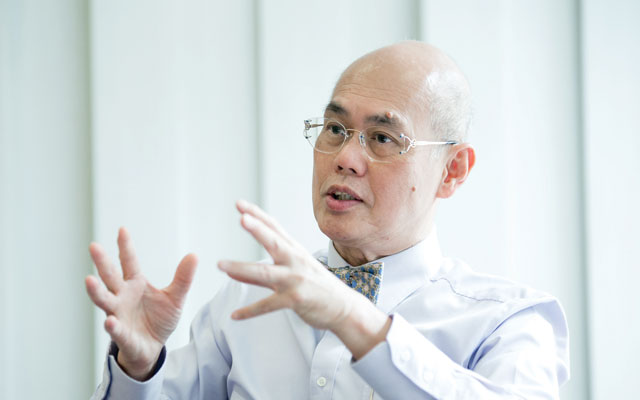
Professor Wong Peng Cheang is regarded as a pioneer in the fields of infertility and assisted reproduction. He was part of the team that helped to bring about Singapore’s first in-vitro fertilisation baby in 1983.
He conducted successful research on Gamete Intrafallopian Transfer (GIFT), and his work on the same at Singapore’s National University Hospital (NUH) led the Obstetrics and Gynaecology Department to produce the first pregnancy in Asia via GIFT.
Some of his other accomplishments include infertility research with the World Health Organisation (WHO) Task Force on the Diagnosis and Treatment of Infertility; establishment of the Centre for Reproductive Education & Specialist Training in NUH in 2010; and attainment of honorary membership to the International Federation of Fertility Societies in 2013.
He has co-published several papers.
He was the first president of ASPIRE.
He holds appointments: professor, Department of Obstetrics & Gynaecology, the National University of Singapore, Yong Loo Lin School of Medicine; and senior consultant, Department of Reproductive Endocrinology & Infertility, National University Health System.
This article was first published in TTGassociation July 2018, a sister publication of TTGmice
Bali Nusa Dua Convention Center Technology Prowess: The Bali Nusa Dua Convention Center BNDCC offers Wi-Fi infrastructure that can accommodate up to 10 Gbps. Throughout BNDCC 1, BNDCC 2 and the Bali Nusa Dua Hotel, 485 access point are available which can be set to WDS (Wireless Distribution System), support LAN over Wi-Fi, with LAN ports available in all function rooms with UTP Cat 6, or fibre optic that can support 100/1,000 connection.
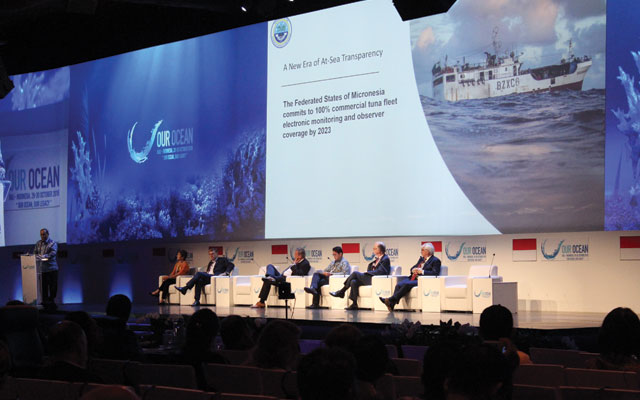
Bali Nusa Dua Convention Center hosted Our Ocean Conference 2018
Fiber optic is also available in all function rooms, separated from the Wi-Fi and LAN network. This network can also be integrated to the networks of other properties within the Indonesia Tourism Development Corporation (ITDC) compound. As an example, such network integration was done during the 2018 Annual Meetings of the International Monetary Fund and the World Bank Group.
Digital signage monitors are also available in all function rooms, and support text format, picture and video.
Jakarta Convention Center Technology prowess: Jakarta Convention Center (JCC) is equipped with everything required for small meetings and large conventions. From small music chambers to multiple stage music concert festivals, or a small showcase to large international tradeshows, the centre offers sophisticated stage lighting, complicated rigging structures, powerful sound systems, extra-large LED screens with multimedia, high-speed internet and real time live streaming.
For example, JCC held an event for Bank Indonesia’s annual report event, which made use of a 2.5mm thick x 26m wide x 5m high LED screen and electronic accessories to project extensive graphical content, and was broadcast via live streaming to the bank’s Youtube channel.
The convention centre also hosted the annual report for the Indonesia Supreme Court and used a 2.5mm thick x 40m wide x 5m high LED screen and several other smaller LED screens (123m2) which enabled live streaming to the court’s Youtube channel.
Indonesia Convention Exhibition Technology prowess: Indonesia Convention Exhibition (ICE) in Tangerang, Banten features audiovisual facilities, fast Internet connection, CCTV security, and a sophisticated booking system.
Its LCD screens are equipped with audio features, alongside quick broadband Internet to support all types of events. CCTV cameras have also been installed throughout the building.
The venue also implemented Ungerboeck Software International’s all-inclusive event management software system for venues and facilities that integrates CRM, sales, finances, and bookings. – Mimi Hudoyo
Philippine International Convention Center Technology prowess: An IT support team is on hand at Philippine International Convention Center (PICC) in Pasay City to address the IT requirements of clients such as wired and wireless internet connectivity, virtual private network (VPN), web casting, video streaming and video conferencing anywhere within the convention centre.
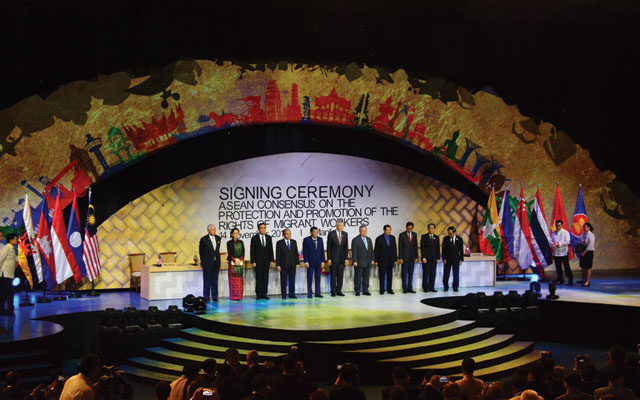
ASEAN leaders commit to safeguard the rights of migrant workers during a signing held at the Philippine International Convention Center
Meeting rooms feature simultaneous interpretations system, from a minimum of two to a maximum of seven languages. PICC also features ramps, porchlifts and elevators for physically challenged delegates.
With respect to security, the convention centre has installed more than 200 CCTV cameras throughout, while the entrance is equipped with baggage X-ray machines and metal detectors.
The convention center is also a Wi-Fi zone. All function and meeting rooms have dedicated wired and wireless local area network control by unified tread management for Internet bandwidth speed allocation.
SMX Convention Center Manila Technology prowess: SMX Convention Center Manila has Wi-Fi, LAN, audiovisual equipment, and telephone connectivity. Its two lobby areas offer complimentary Wi-Fi and LED television monitors for event announcements.
The five pillarless second-floor function rooms are also outfitted with colourful LED lights for a touch of drama and LED television portals at each entrance.
The escalators within the facility, as well as the lights in all rooms, are operated by motion detector sensors that allow them to turn on and off automatically depending on the actual foot usage, thereby reducing energy consumption. All restrooms also have automatic sensors for the faucets and toilet flushers to reduce water wastage.
Additionally, safety and security are assured through CCTV security cameras with face recognition technology that scans and identifies faces 24/7, alongside an automated fire alarm system.
Marriott Grand Ballroom
Technology prowess: Marriott Grand Ballroom (MGB) in Pasay City features SkyFold technology that subdivides the venue in a mere five minutes by simply pushing a button that lowers the vertical folding partitions from the ceiling.
It also has a floating ceiling of pillow lights than can be raised, lowered and changed into 360 colours for dramatic lighting effects.
MGB also provides six skyboxes for aerial views overlooking events; high steel platform structures that make decorating easier and more creative; a 26m-long catwalk for staging professional sound, light and technology display; and nine utility boxes that provide exhibition suppliers with data, Internet, water and drainage. – Rosa Ocampo
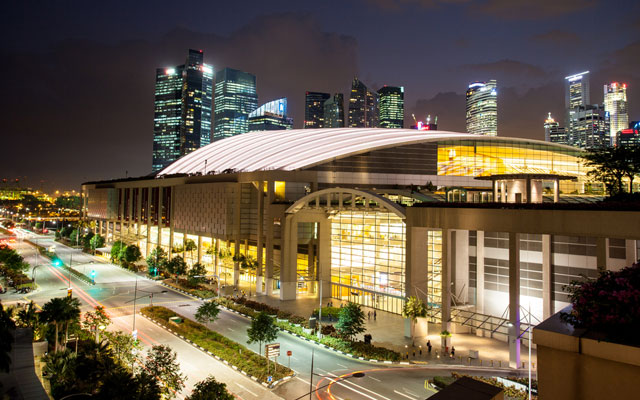
Marina Bay Sands Expo & Convention Centre Technology prowess: The Marina Bay Sands Expo & Convention Centre is equipped with an inventory of industry-leading audio-visual technology.
Marina Bay Sands Convention Centre
Almost 100 projectors can supply from 6,200 lumens for small meetings to 26,000 lumens for larger events. In 2018, the venue upgraded its video projection equipment to new-to-market Panasonic Laser 21k lumens projectors, which produce brighter and more vivid picture quality. As part of its basic meeting package, all clients are now guaranteed higher quality image projection during their events with the new 5.5k Panasonic laser projectors.
In terms of lighting equipment, the venue is served by the VL4000 spot & wash – boasting an immense output of 35,000 lumens for spot lighting and 43,000 lumens for wash lighting – as well as JB lightings A12, which are known for their different dimming curves and camera modes to ensure flicker-free performances even during live feeds.
Last year, the convention centre also added 150 new lighting fixtures that can be used for a range of indoor and outdoor events.
Smaller venue spaces are also well-equipped to support more intimate venue requirements. This includes the recently added L Acoustic ARCS Focus and SB18m speakers, which are optimised to deliver the best sound quality for smaller spaces.
As more events incorporate social media and mobile applications, the venue has upgraded its Wi-Fi infrastructure and bandwidth to feature not only vast and high speed, but also the ability to be fractionalised and customised to suit individual event needs. The MICE spaces also feature a 1GB fiber optic backbone.
Singapore Expo Convention & Exhibition Centre
Technology prowess: SingEx, the operator of Singapore EXPO Convention & Exhibition Centre, is embarking on a business transformation that includes a host of upgraded technological capabilities.
As free Wi-Fi is a basic for events, the service has now been enhanced and the user experience differentiated for each of SingEx’s stakeholders, such as organisers and visitors. The improved Wi-Fi service can now also generate insights through capturing various data like visitor footfall, dwell times and traffic flow.
SingEx has also rolled out Interchange 1.0, the pilot version of a community engagement database comprising industry leads, customers, partners, providers and challenges.
On the horizon: Launching in July are the Exhibitor Service Centre, an e-commerce portal allowing clients to select event offerings such as Wi-Fi, customised F&B, and utensils; as well as technology enhancements to upcoming F&B offerings, including point-of-sale system and a central kitchen management system.
SingEx also continues to look into bolstering its data governance and reporting, as well as establishing partnerships to leverage stronger data analytics. – Pamela Chow
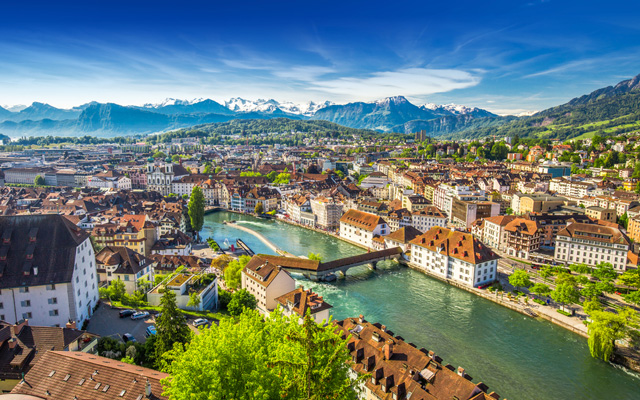
Jeunesse Global’s Chinese top performers visited Lucerne, where they shopped and attended a gala dinner
The 12,500 top performers from Jeunesse Global’s operations in China who descended on Switzerland across three weeks in May have not only captured media attention, but also the eyes of other Asian companies deciding on their next incentive destination.
Ivan Breiter, Switzerland Tourism’s director South East Asia, told TTGmice: “To host the biggest incentive trip of the world was a great honour for us. It shows that we can organise everything in Switzerland and that it will work out perfectly to the satisfaction of the client – like a Swiss watch.”
Jeunesse Global’s Chinese top performers visited Lucerne, where they shopped and attended a gala dinner
The operator of the massive incentive movement was G2 Travel, a specialist of group travel.
According to Al Mulenga, director of G2 Travel, Hong Kong office, the business came through its Taiwan office. G2 has previously handled Jeunesse’s incentive to Germany for 4,000 people in 2016.
“This year’s programme to Switzerland is its largest incentive event,” said Mulenga.
“It is massive not only in size, but in costs as well since Switzerland is quite an expensive destination. It meant that Jeunesse Global was able to motivate its people really hard to meet good targets in order to qualify for this trip,” he added.
To manage the massive movement, G2 split the group up in three, with each arriving on May 9, May 16 and May 23 and staying for five days. A total of 35 hotels were used in Zurich and Basel, along with 45 restaurants, and 100 Swiss-registered coaches – as required by the local authorities. Gala dinners were hosted in Lucerne Messe and Zurich Arena.
Careful transfer arrangements were made so as not to inconvenience the locals; photos by G2 Travel
Mulenga revealed that the shopping expenditure for the group was in excess of Chf 4 million (US$4,00,500), most of it made in Lucerne.
“We took careful steps to ensure we did not inconvenience the locals,” Mulenga said, adding that the G2 team worked closely with the Swiss tourism authority and the local police to manage the traffic.
“For example, we used a mix of large coaches and hop-on/hop-off trams to move people around, with the latter used to transport participants within the city,” he said.
The group also called at Liechtenstein, where similar precise ground arrangements were made.
Besides highlighting Switzerland’s ability to handle massive incentive programmes, the Jeunesse event is also expected to kindle incentive buyers’ interest in the destination.
“Generally, Europe is popular with Asians, especially among those who enjoy shopping and experiencing a variety of destinations. But Switzerland is convenient. Most Asian incentives run for five nights on average, so a group in Europe can only do and see so much without having to change many hotels. In Switzerland, however, one can see and do a lot with just five nights,” Mulenga said.
Breiter agrees, saying: “We often have to adjust the number of guests upwards during the (reward) promotion period – a sign that Switzerland is en vogue.”
Switzerland Tourism has seen a growing number of overnights generated from South-east Asian incentive trips year after year, most of them being high-end programmes. According to Breiter, the destination hosted more than 100 incentive trips from the region last year and is likely to exceed that count by end-2019.
Thailand and Indonesia are the biggest incentive producers for Switzerland, while Singapore, Malaysia and the Philippines are source markets that shine, he noted.
“We expect to generate future business from Vietnam, Cambodia and Myanmar – all of which show a strong interest for Switzerland,” he added.
The newly-opened Ritz-Carlton, Bangkok anchors the One Bangkok development with cosmopolitan elegance. Featuring the city's largest ballroom and a spectacular new penthouse suite, it delivers exceptional hardware and deeply authentic, soulful service for business and leisure travellers alike
Behind the imposing, Brutalist concrete that defines Zurich’s Oerlikon district lies a surprising secret. While its exterior honours the neighbourhood’s industrial roots, stepping inside Mama Shelter reveals a vibrant, neon-soaked world that is a far cry from its rigid shell
A polished urban retreat designed for business travellers, Hyatt Regency Kuala Lumpur at KL Midtown combines thoughtful design, seamless service, and exceptional facilities.




 Cedric Barbesier (right) and Helene Buchfinck (left) are part of CWT Solutions Group, the consulting division of CWT, the global B2B4E travel management platform.