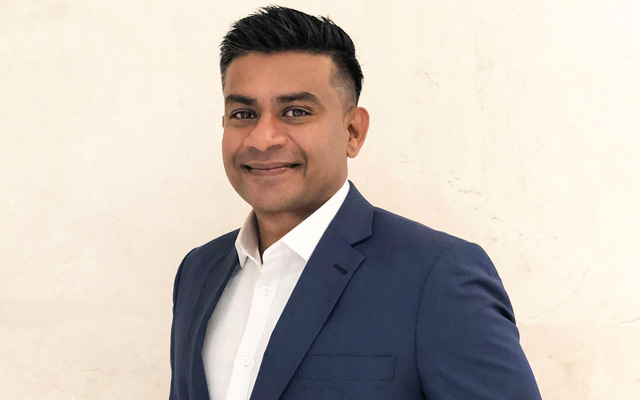
AirAsia has appointed telecommunications executive Ricardo Isla as the new CEO of AirAsia Philippines.
He takes over from Dexter Comendador, who will continue working with AirAsia Philippines as COO. Comendador was appointed as CEO on January 10, 2017.
Isla joins AirAsia after more than a decade of international product development, sales and distribution experience with Philippines’ telecommunications giant PLDT Global Corporation. In addition to his most recent role as regional head of operations for the UK and Europe, Isla has held general manager positions in its international retail business, as well as in the US, Italy and Singapore.
Set in the heart of Singapore, The Westin Singapore provides exceptional meeting facilities for you to host your next meeting or social gathering. Its state-of-the-art function facilities encompass 1,350m2 of 10 versatile meeting rooms, including two ballrooms. The entire space is fitted with advanced technology and high-speed Internet access for more productive off-site sessions.
Whether you are planning for an annual company appreciation party, dinner & dance, board meeting, or a creative product launch, the Event Specialists at The Westin Singapore will be with you every step of the way to ensure every detail is taken care of.
Stylish and elegant, the 600m2 pillar-less Grand Ballroom accommodates more than 300 guests in banquet style and up to 600 guests in theatre style. The Boardroom, located on level 35, offers inspiring views of the South China Sea with its floor-to-ceiling window – an ideal venue for strategic meetings and business discussions.
Get more with these limited-time offers when you organise your next event at The Westin Singapore:
Great Celebration Calls for Greater Rewards
Book your next cocktail party at The Westin Singapore and enjoy exclusive offers including a special price from S$65++ per person, Marriott Bonvoy™ points, and more.
Promotion is valid till 31 December 2019 and subject to availability. Minimum attendance required. Terms and conditions apply.
Double Points
Marriott BonvoyTM members enjoy Double Points and exclusive discounts*.
Gold : 10% off Platinum : 15% off Titanium : 20% off
Promotion is only applicable for events taking place by 31 December 2019, and not in conjunction with other promotions. Terms and conditions apply.
Triple Perks
Plan your group events* and enjoy three of the following rewards of your choice as a Marriott BonvoyTM member.
5% off master-billed rooms
1 in 10 delegates goes free
3x points
One complimentary room night or room upgrade with every 25 paid room nights
Book your meeting or event by 15 September 2019 for arrivals by 30 September 2019 to enjoy the rewards. Terms and conditions apply.
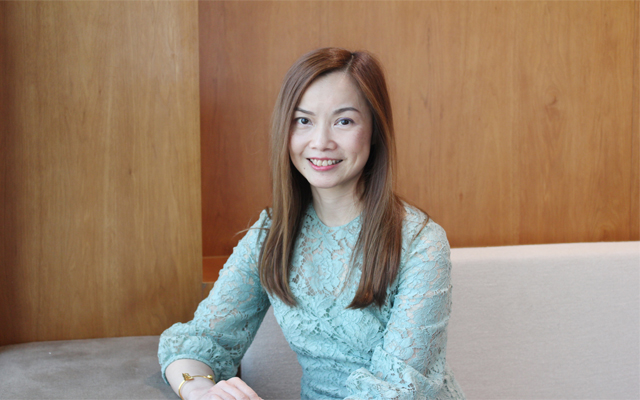
Cathay Pacific Airways has appointed Lavinia Lau as director commercial, taking over from director commercial & cargo Ronald Lam who is now CEO of HK Express, a wholly-owned subsidiary of Cathay Pacific.
In her new role, Lau is responsible for the passenger functions of revenue management and sales and distribution, together with planning for both the passenger and freighter fleet and network.
Previously, Lau was general manager planning, where she was tasked with formulating and executing the fleet, network and scheduling strategy for both Cathay Pacific and Cathay Dragon for the last four years.
Lau first started her career as a Swire Group management trainee and joined Cathay Pacific in 1999. Over the years she has held various managerial positions on the commercial side of the airline, including e-business, alliance, loyalty and revenue management.
In 2010, she was appointed vice president Canada and managed the airline’s business and operations out of both Vancouver and Toronto. From August 2012, she was general manager sales, Pearl River Delta & Hong Kong, overseeing the airline’s passenger sales in the airline’s home market.
Best Western Hotels & Resorts has appointed Venushe Wickramarathne as regional director of commercial – Asia.
Based in Best Western’s regional head office in Bangkok, Wickramarathne will oversee the sales and marketing activities for the group’s entire collection of hotels and resorts in South-east Asia and Japan, encompassing all 16 of the company’s brands.
The hospitality professional has obtained his work experience through a series of roles in Europe and Asia, rising from night manager at an AccorHotels property in Zurich to deputy head of sales – events & banqueting for the Cinnamon Grand hotel in Colombo, Sri Lanka.
In 2017, he joined Centara Hotels & Resorts, initially as area director of sales & marketing for Colombo, before moving to Thailand in January 2018 to become the company’s area director of sales & marketing for Krabi.
The board of directors of Philippine Airlines (PAL) yesterday confirmed the appointment of Gilbert Santa Maria as president and COO, replacing the widely respected Jaime Bautista who retired on June 30 after a 26-year career with the flag carrier.
This follows the earlier short-lived appointment in June of Vivienne Tan, daughter of the airline’s owner Lucio Tan, as the officer-in-charge. The younger Tan is currently the airline’s executive vice president and chief administrative officer.
Gilbert Santa Maria
A handpicked nominee of PAL chairman and CEO Lucio Tan, the 53-year old Santa Maria has no prior aviation industry experience but has three decades of executive management and leadership experience gained across multiple industries in companies around the world.
According to a press release issued by PAL, Maria was a contributor in the Philippines’ business process outsourcing (BPO) industry for the last 15 years. Until early 2018 he was COO of Washington, DC-based BPO company Ibex Global. Before IBEX, he was COO and CFO of IQ BackOffice, a California-based Finance & Accounting outsourcer that was an investee company of LiveIt Investments, Ayala Corporation’s BPO holding company.
He supported the governance of LiveIt’s investee companies as a member of the boards of IQ BackOffice; Integreon, a London-based KPO; and Stream, a Massachusetts-based global Call Center company. Before this, he led corporate development for Stream, having joined its leadership after its 2009 merger with Arizona-based eTelecare Global Solutions, where he led corporate development and eTelecare’s 11,000-employee Philippine Operations through the integration of the two companies. He joined the startup eTelecare in 2004.
Prior to joining the BPO industry, Santa Maria led a Singapore-based Internet 1.0 startup called Similan.com. He was executive director of Argosy Partners, which was organised by Filipino business leaders in the wake of the Asian financial crisis in 1998 to be the Philippine affiliate of global private equity funds. He was also one of the youngest general managers of Pepsi Cola Products Philippines’ Manila operations.
Santa Maria was also a management consultant at Booz Allen & Hamilton in New York where he led various strategy and operations consulting engagements for global clients. The Mindanao native started his career as a management trainee in production and engineering at Unilever in Manila.
Indonesia’s National Development Planning Agency (BAPPENAS) will, for the first time, play an active role in developing the country’s business events sector into one of the key economic contributors in the next five years.
Recognising that this responsibility is not solely of the Ministry of Tourism, BAPPENAS will lead efforts by other government agencies such as Trade, Industry and Investment as well as other stakeholders.
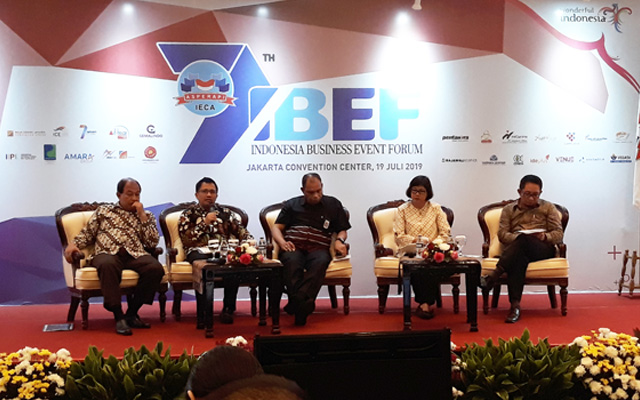
The country’s stakeholders came together earlier this month at the Indonesia Business Forum to see how they can work together to better the MICE industry
According to Leonardo Teguh Sambodo, director of industry for tourism and creative economy at BAPPENAS, a five-year development plans is being drawn out.
For this to happen, the government has asked local business events players to contribute valid data.
Alexander Reyaan, director of Natural and Man-made Tourism Development, Ministry of Tourism, said: “What we need is data on the size of the M, I, C and E components and their contributions to the national economy, so that we know where the development needs to focus on. We need the total number and spend of travellers, as well as breakdown of types and details of visitors who come for business events.”
Hosea Andreas Runkat, chairman of Indonesia Exhibition Companies Association, said events such as his organisation’s Indonesia Business Events Forum can help to collect such critical information from participating members.
Teguh noted that based on the 2018 Global Economic Significance of Business Events, Events Industry Council, Oxford Economics, Indonesia’s business events have a minute direct impact on spending and GDP – under one per cent. Business events’ impact on jobs was also merely one per cent.
Teguh said: “The average spend (by events) was US$296, lower than Singapore and Thailand, although Indonesia welcomes a higher number of participants. This is because the majority of business events here is still domestic ones. We need to push more for the international events.”
The data differed from the estimate offered by the Ministry of Tourism, which suggested that per delegate spend was US$1,900.
To improve Indonesia’s business events industry performance, Teguh said the sector will be part of the national branding, alongside other trade and industrial sectors.
Emphasising the important contributions of business events, he said: “Hosting the IMF-World Bank Annual Meeting in Bali last year not only brought us high direct impact from visitors’ spend, but also development of facilities and infrastructure (in the destination). In other words, business events improve the city, its access and services.”
He added: “With Indonesia hosting MotoGP (2021-2023), the government will go all out to develop infrastructure and facilities. This is something the business events sector can take advantage of later on.”
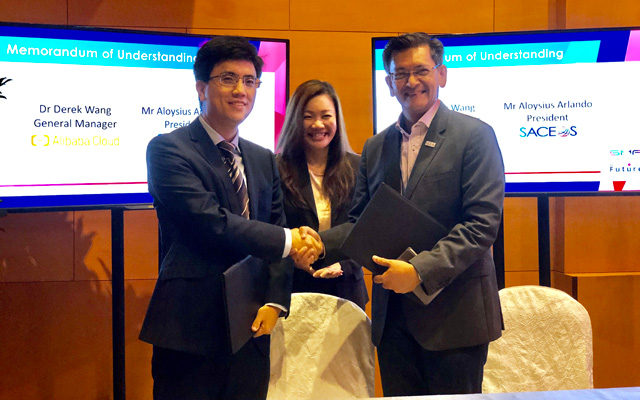
From left: Alibaba Cloud's Derek Wang; STB's Melissa Ow; and SACEOS' Aloysius Arlando
The Singapore Association of Convention & Exhibition Organisers & Suppliers (SACEOS) is walking the technology talk with their latest slate of partnerships that aim to raise the digital quotient of the MICE trade.
At the sidelines of the Singapore MICE Forum 2019 last Thursday, SACEOS inked two MOUs – the first with data intelligence arm Alibaba Cloud, and the second with local trade technology association SGTech. A third agreement is in the works with Chinese technology conglomerate Tencent.
From left: Alibaba Cloud’s Derek Wang; STB’s Melissa Ow; and SACEOS’ Aloysius Arlando
Under the agreement with Alibaba Cloud, both SACEOS and Alibaba will work together to offer training in the fields of artificial intelligence (AI), big data and cloud technology. The two parties will also explore hosting training workshops for SACEOS members to improve technology competencies that can transform their businesses.
On the leisure traveller front, Alibaba Cloud will connect Singapore hospitality industries with the Alibaba ecosystem, and with it millions of potential Chinese customers to drive arrivals and spending. This will benefit hotels and resorts, restaurants and retail companies as they can build and launch mini programmes into Alibaba’s ecosystem. This is in addition to the three-year MoU signed with the Singapore Tourism Board signed in April.
Derek Wang, general manager, Singapore, Alibaba Cloud, shared: “We understand the opportunities technologies can create for the MICE industry. Our partnership with SACEOS is an extension of our partnership with hospitality and tourism sectors of Singapore as a whole.
“We will work closely with SACEOS and its members to demonstrate real world examples on how technology innovations can not only improve the industry’s digital transformation, but also (its) bottom lines.”
Additionally, SACEOS has joined forces with SGTech in a mutually beneficial partnership that will see the two associations organising trade forums to increase cross-industry exchange.
SGTech comprises more than 800 members spanning innovative start-ups, small- and medium-sized enterprises, and multinational corporations that have adopted technological solutions.
SACEOS’ president Aloysius Arlando told TTGmice: “With SGTech having the who’s whos in the IT industry, we are looking at how our members can benefit from each other’s programmes. SGTech has a whole spectrum of solutions and capabilities – and we are the best industry to apply these.
“This will serve as a basis for us to look at how events can be a truly engaging platform that can help to continue conversations beyond events. We will have to look at how physical and digital platforms interplay.”
The knock-on effects of securing incentive trips of this nature will be felt for years to come
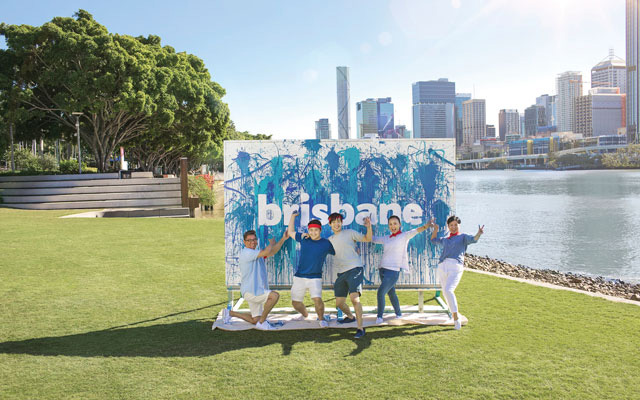
Two Chinese businesses will be rewarding 4,000 high-performing staff with a trip to Brisbane, Australia, this year.
Liaoning Yiyontang Bio-technology will bring 1,500 staff to Brisbane in August, while Guangzhou Jiadai Biotechnology will bring 2,500 staff in October.
The knock-on effects of securing incentive trips of this nature will be felt for years to come
While in Brisbane, the groups will explore attractions such as the Lone Pine Koala Sanctuary and Sirromet Winery. Guangzhou Jiadai Biotechnology’s itinerary will also include a conference component at the Brisbane Convention & Exhibition Centre.
The groups were secured by the city’s economic development board Brisbane Marketing, in partnership with Tourism Australia, and Tourism and Events Queensland.
Brisbane’s deputy mayor Krista Adams said the two businesses represent the largest incentive-based business events to ever come to Brisbane and will generate over A$10 million (US$6.9 million) for the local economy.
“Securing these groups demonstrates the collaboration between all levels of government and industry to raise Brisbane’s profile as a destination for employee reward trips.
“These wins come shortly after Brisbane was announced as the destination for Flight Centre’s Global Gathering in 2020 – another major coup and a sign that Brisbane’s star is rising in the competitive business events space,” Adams said in a statement.
Tourism Industry development minister Kate Jones concluded: “Hosting these business travellers begins a domino effect of businesses turning their attention towards Queensland and solidifying the state as the best destination in Australia for inventive travel.”
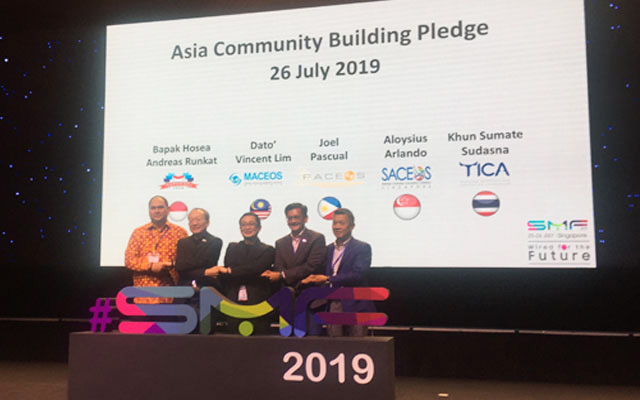
Five South-east Asian MICE associations signed a pledge at the Singapore MICE Forum (SMF) 2019 to develop a sustainable ecosystem for the industry.
Photo credit: Caroline Boey
The associations are: Indonesia’s IECA (Indonesian Exhibition Companies Association); Malaysia’s MACEOS (Malaysian Association of Convention and Exhibition Organisers and Suppliers); the Philippines’ PACEOS (Philippine Association of Convention/Exhibition Organizers and Suppliers); Singapore’s SACEOS (Singapore Association of Convention and Exhibition Organisers and Suppliers); and Thailand’s TICA (Thailand Incentive and Convention Association).
This signing is part of the action plan of the Asia-Pacific Community Building Manifesto spearheaded by SACEOS. The manifesto, developed in consultation with 60 industry leaders following SMF 2018, contains tangible outcomes from successful businesses and models outside the events industry for the associations, destinations and academia to “refocus on a higher purpose”, “corporatise high-achieving destinations in one team” and “become the Netflix of education”.
How Crowne Plaza’s new lobbies are envisioned to look like
Crowne Plaza Hotels & Resorts has announced plans to open six flagship hotels around the world by early 2020, two of which will be in China.
These new properties will be a reinvention of the upscale hotel brand, and will mark “the global rollout of new hallmark design innovations and the brand’s latest standards across public spaces, guest rooms, F&B, technology, service and more”, said Crowne Plaza in a statement.
How Crowne Plaza’s new lobbies are envisioned to look like
Each flagship property will feature new designs for public spaces and guestrooms to meet the continued guest demand for flexible spaces. The lobby design and guestrooms will include distinct areas embedded with technology, while some properties will also feature on-demand meeting spaces in the lobby areas as well.
China will see the launch of two flagship properties, Crowne Plaza Shenzhen WECC and Crowne Plaza Wuzhen, by the end of this year.
Crowne Plaza Shenzhen WECC will be located near the Shenzhen Bao’an International Airport and next to Shenzhen World Exhibition & Convention Centre, the largest of its kind in the world. This hotel will also be the first Crowne Plaza in Greater China to tout a modernised guestroom design and flexible spaces. The property will feature 1,400m2 of meeting space with five meetings rooms, including a grand ballroom that seats up to 500 guests.
In Zhejiang, Crowne Plaza Wuzhen will offer 216m2 of flexible event space in three meeting rooms, and another 500m2 banque2 room that seats up to 260 guests. The new flagship hotel will be located near Hangzhou International Airport and close to the World Internet Conference Center. It will feature a full-service restaurant, Cai Feng Lou, and Tong Café for all-day dining.
Outside of China, the US has opened the 495-room Crowne Plaza Atlanta Perimeter at Ravinia in Atlanta, with three more properties due to open in Europe – the Crowne Plaza Paris Republique in France; Crowne Plaza Hamburg in Germany; and the Crowne Plaza London in the UK.
At of March 2019, there are 427 Crowne Plaza properties around the world.
Just 10 minutes from Phuket International Airport on the serene northern coast, this 178-key, Bill Bensley-designed resort offers delegates a quiet, tropical paradise steeped in Phuket’s tin-mining heritage
The newly-opened Ritz-Carlton, Bangkok anchors the One Bangkok development with cosmopolitan elegance. Featuring the city's largest ballroom and a spectacular new penthouse suite, it delivers exceptional hardware and deeply authentic, soulful service for business and leisure travellers alike
Behind the imposing, Brutalist concrete that defines Zurich’s Oerlikon district lies a surprising secret. While its exterior honours the neighbourhood’s industrial roots, stepping inside Mama Shelter reveals a vibrant, neon-soaked world that is a far cry from its rigid shell