Asia/Singapore Sunday, 26th April 2026
Page 674

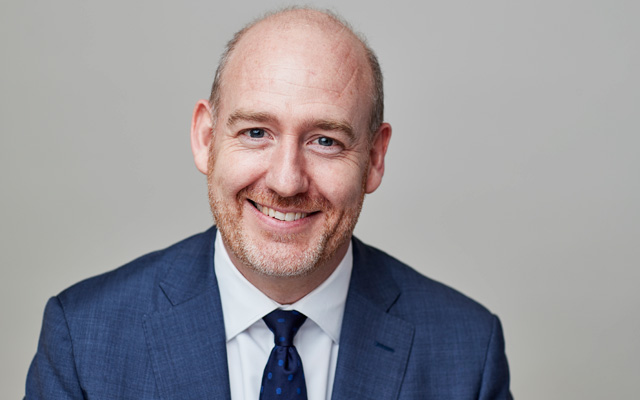
Evelyn Salire: The virtuous effect

0
Evelyn Salire

You were a foreign service graduate, cum laude. Why did you take a different career path?
I graduated from college at 20 years old. I really wanted to take the Foreign Service Officers exams immediately after, but the rule then was that the candidate must be at least 21 years old. I had to wait another year.

Evelyn Salire

Meanwhile, I was offered a job immediately after graduation. I took the job as international officer at the Kabataang Barangay, a Philippine semi non-government organisation geared towards promoting youth leadership and grooming future leaders. I really enjoyed the job and the responsibilities that went with it.

Before I knew it, I was already three years into the job and I didn’t miss the opportunity to work in the foreign service corps anymore. Since then all my professional life has been dedicated to working for not-for-profit organisations, particularly trade or business organisations. I find that working with this kind of volunteer organisations is more enriching because what we do can help and affect the lives of many people, if not a whole sector.

You have a long, illustrious career (eight years with the Philippine Chamber of Commerce and Industry and 23 years so far with the Philippine Retailers Association [PRA]) yet you chose to complete a course with the Philippine Council of Associations and Association Executives (PCAAE) to become a Certified Professional Association Executive (CPAE). Was that necessary?
Association management is not yet a recognised profession in the Philippines. Very few volunteer trade organisations have full-time professional staff. Often, the association secretariat is seen as performing only secretarial functions – not a management and leadership role which I have in my present job.

One of my long-time advocacies is to help professionalise the association management function and turn it into a fulfilling career. I am very fortunate that my board recognises my role in the association, and their trust encourages me to accomplish more. But I’m afraid many other association executives like me are still struggling for that recognition.
The CPAE is the badge that will help elevate association management into a professional career and I wanted to be an example of that to the rest of the association community.

You’re PCAAE’s first Association Executive of the Year for your transformational leadership. How did you transform PRA from what it was 23 years ago?
I did not do it single-handedly. The fact that my board had given me the trust and confidence to do what I do best – i.e. manage the association – was a critical impetus that helped me accomplish more for my association.

I am honoured that what I have accomplished at PRA can be deemed as “transformational”. But I think the transformational part would be my succeeding to win my board’s trust and confidence in my capabilities that they let me expand my horizons in terms of serving our members and coming up with various programmes to help our members grow and by extension, promote our industry.

A person cannot improve himself if he has only himself to benchmark on. While retail is generally a domestic trade, I wanted to help our members benchmark against the more advanced countries in retail, so we initiated an International Study Tour to Tokyo, Japan through the help of our counterpart, the Japan Retail Association.

Japan’s retail industry is more advanced in many ways, especially in technology. But at the same time, it still has a dominant traditional trade, e.g. mom and pop stores – very much like ours. It was interesting to study and observe both sides of the retail trade in Japan.

At the same time, we know that retail-specific programmes are not readily accessible, especially to retailers in the provinces. For this we launched our Regional Retail Excellence Roadshow seminars. SME retailers in the provinces will not come to Manila to attend training programmes. So, if David cannot go to the mountain, let the mountain go to David.

In cooperation with the Department of Trade and Industry in the regions as well as the Department of Tourism, we conducted seminars on store operations, loss prevention and customer experience all over the country. We were able to help over 2,000 SME retailers. This project also won for the PRA the PCAAE Industry Development Award in 2015.

PRA is also self-sustaining. How did you do it?
I think an overriding issue that must be pointed out is that without funds, no organisation can survive and thrive. Membership fees cannot sustain a trade organisation’s projects and operations. More often than not, payment of dues  cannot be assured at 100 per cent. We need to have other sources of income to sustain the organisation.

We have made practically all our programmes self-sustaining through sponsorships and we have been able to raise sponsorships for our annual National Retailers Conference and Expo (NRCE) – our bread and butter – which helped sustain our operations and various programmes and advocacies.

Future-proofing Retail was the theme of NRCE 2017. What does it mean?
This came about because of the various challenges facing brick-and-mortar stores which are our members; challenges such as (the growing reach of) Amazon and the onslaught of online retailing. We needed to help them find ways to cope and compete.

The NRCE programme covered topics that addressed these concerns. It is our mission to help our members in any way we can, either through educational and informative programmes or by connecting them with other organisations and businesses that can help them.

What are the other challenges and opportunities facing PRA members?
Before the year 2000, the Philippine retail industry was closed to foreign investors. In fact, we fought attempts to open up the industry to foreigners for five years, from 1995 to 2000. (At the end) then-president Joseph Estrada signed into law the Retail Trade Liberalization Act (RA 8762).

During those five years, my board was at the forefront of the battle, from congressional hearings to marching the streets to make our voices heard.

Although the battle was lost, we did not lose the war altogether. Through the PRA’s efforts, we were able to at least ensure that small- and medium-sized retailers have a level playing field. Hence, the law included safeguards as well as higher investment requirements from foreign retailers, especially if they are coming in at 100 per cent ownership.

Fast forward to today, there are hundreds of foreign brands in the Philippines, mostly on franchising or joint venture arrangements. In recent years, big foreign brands like H&M have opened in the Philippines at 100 per cent ownership. IKEA is scheduled to open in three years time. These developments are good for the customers but challenging for local retailers who now have to compete for shoppers as well as retail locations.

E-commerce or online retailing is another growing challenge for brick-and-mortar stores. While it is not e-commerce per se that is the challenge, it is the global marketplace that is threatening. Amazon and Alibaba – with their huge inventory and efficient supply chain and payment systems – hang like a sword of Damocles over the heads of mainstream retailers. So what to do? Philippine retailers have to innovate and adopt to the new technologies that will make them competitive vis-à-vis large foreign marketplaces.

Salire joins the Executive Directors meeting of the Federation of Asia Pacific Retailers Association

On the part of PRA, we will come up with new programmes that will help them along this line; be the bridge to connect them to suppliers and technologies that can help them meet the challenges head on and succeed.

Can PRA member events be part of the solution?
As their trade organisation, members look up to us for news, updates on the latest trends and developments in retailing around the world. Through our annual convention, we are able to bring in knowledgeable speakers and experts who can share their expertise and experiences in addressing these concerns. Rather than look for these information on their own, they know that PRA will be at the forefront of getting these information.

Through our regional connection in the Federation of Asia Pacific Retailers Associations (FAPRA), composed of 18 member economies in Asia-Pacific, we are able to organise study tours and missions that can help them learn and experience retailing in other countries.
Through our Retail Excellence Seminars, we help train their people in various aspects of retailing. Through our Job Fairs we are able to help them source their manpower requirements.

I came up with PRA’s motto: our only business is helping your business grow. With our programme and advocacies, we are able to do that.

What are the other things PRA is doing to advance itself and members?
My advocacy is to help professionalizs the secretariat and to champion association management into a career.

To actualise this, I encourage all my staff to take the CPAE programme. This year, three more staff are graduating as a CPAE.

At the same time, we are proud to report that since its inception in the PCAAE last year, the Board Member of the Year honor has been won twice in a row by PRA – vice chairman Alegria Limjoco in 2016 and chairman Lorenzo Formoso in 2017.

All in all, we are proud that we are one of the very few trade organisations in the Philippines to be led and managed by recognised association leaders and certified professional staff. This will reflect well with our members and the retail community here and abroad.

How else is PRA planning to go global apart from its international study tours and international business missions?  
We are also on the lookout for new markets to introduce to our members as potential areas for expansion abroad. Hence this year, we did a Retail Business Mission to Yangon, Myanmar where our counterpart, the Myanmar Retailers Association, briefed our delegates on the Myanmar retail sector and toured us around various malls and retail locations.
We have been invited to do a Retail Business Mission to Sri Lanka in 2018.

We are proud of our network in the Federation of Asia Pacific Retailers Associations (FAPRA) because they are the ones who paved the way for these international programmes.

Again, we wanted to spread our wings globally and the Federation of International Retail Association Executives (FIRAE) is composed of the recognised retail associations in the US and Europe. It was a natural next step and with our membership in the FIRAE, PRA has come full circle in terms of expansion.

PRA won the bid to host the Asia Pacific Retailers Convention and Exhibition (APRCE) in 2015. What lessons did you learn from that?
It took the Philippines 22 years to bring APRCE back to Manila. This biennial event is won through competitive bidding. The last time the Philippines hosted it was in 1993 – at the height of full-day blackouts in the Philippines. Yet the PRA (I wasn’t in the PRA yet, having joined in 1994) was able to stage a highly successful APRCE in Manila, which eventually won the Department of Tourism’s Kalakbay Award for Event of the Year. Naturally, it was a tough act to follow.

The bid to host APRCE is like bidding for the Olympics. We had to convince FAPRA members that the Philippines was the best bet to host it from various angles – the prospects of the retail sector, tourism, ease and accessibility of flights, hotels, and programmes, etc.
It took PRA two years to prepare for the 2015 edition, and the FAPRA Heads of Delegations representing the other 17 members visited the host country the year before to check on our preparations.

Organising our annual conferences gave us enough experience to deliver a regional event. The only difference was the number of attendees and the many nationalities and cultures we had to cater to. The scope was bigger, hence more challenging.

That we had the support of our Department of Tourism and the Tourism Promotions Board greatly helped in facilitating our coordination with the various government agencies concerned, from airport arrangements to security and visa coordination.

Another challenge for PRA then was how to take APRCE 2015 a notch higher than APRCE 1993. The answer was in the welcome and gala dinners where we had more leeway to do extraordinary things. We left no stone unturned to stage a grand production number that wowed the delegates and made them see why “It’s More Fun in the Philippines” (the destination’s marketing slogan).

One of the biggest challenges we had was bringing more than 2,000 foreign delegates in more than 40 buses from the SMX Convention Center to another venue, the Marriot Grand Ballroom, which was about eight kilometres away. Adding to the stress was the heavy rush hour traffic in Manila. To do this, we sought the help of our Philippine National Police that deployed escorts for all the buses to safely and speedily bring them to the venue and back to their respective hotels.

Any upcoming international conferences that PRA is bidding for and hosting?
This year we are focusing on our annual NRCE. While it is a local event, we are planning to invite more foreign speakers as well as invite international attendees, particularly from our regional counterparts. This is where our regional and global connections come into play.

This article was first published in TTGassociations April 2018, a sister publication of TTGmice

Cambodia’s Le Relais de Chhlong welcomes new MD

0

Hannah Loughlin has been appointed managing director of the Le Relais de Chhlong, Cambodia’s oldest colonial hotel in Cambodia built in 1916 in Kratie Province.

Formerly the general manager of Trails of Indochina, Loughlin has over 20 years of experience in luxury hotels, having worked with companies such as the Savoy London, Relais & Chateau and InterContinental Hotels Group.

Jakarta’s post-election riots hit events at Ring One hotels

0
Protestors outside the Elections Supervisory Agency (Bawaslu) office in Jakarta on May 22

The post-election riots that took place in Central Jakarta last week has brought about business events cancellations in some Ring One hotels, but business seems usual in other parts of the Indonesian capital.

The protests broke out in Jalan Thamrin, near the office of the Election Supervisory Body, before spreading to the neighbouring Tanah Abang, Petamburan, Wahid Hasyim and Sabang.

Protestors outside the Elections Supervisory Agency (Bawaslu) office in Jakarta on May 22

Elsa Amalo, marketing communication manager for Millennium Hotel Sirih Jakarta – located in the Tanah Abang area – revealed that there were three event cancellations on May 22.

“It was mostly because guests were not sure which routes were open and if it was safe to get to the hotel,” she said.

Likewise, Pirantie Basa, director of sales Harris Vertu Yello Harmoni – which is located nearby the Presidential Palace and a few blocks away from the riot’s ground zero – said that her clients started calling for cancellations on May 22, a day after the first riots erupted.

“On May 21, all meeting and business events were as per normal. Cancellations started happening on May 22, with a total of seven cancelled. There was only one that ran,” Pirantie shared.

Pirantie added that some events have been tentatively postponed to June, but final decisions would only be made after the situation is back to normal.

In the meantime, hotels away from the riot locations, such as the Senayan area, have indicated that there was little impact.

Felicia Setiawan, director of marketing communications of Fairmont Jakarta, reported that most events were still on schedule, and participants kept coming, even though numbers were less than expected.

She shared that one small event organised by an international company with 30 participants was however, placed on hold.

“The event was cancelled due to heightened travel advisory by several countries, such as the UK, US, Canada, Singapore, and Malaysia,” she elaborated.

Indira Puliraja marketing communications manager of The Sultan Hotel & Residence claimed that the impact on their business was low as the riot erupted took place during the Ramadan, a traditionally low season for the hotel.

Although the riots are contained in an area in Central Jakarta, Krishnadi, chairman of the Association of Indonesian Hotels and Restaurants Jakarta Chapter acknowledged that the disruption could impact occupancy of hotels in the city, as well as tourism.

He said: “It depends on how long the protests continue for, how the government reacts, the efforts of the security forces in securing Jakarta, and the apprehension of the riot masterminds.”

But Krishnadi is confident that Jakarta will recover quickly given that the city has experienced worse previously.

“I think nowadays people realise (riots) can happen anywhere. People do not want to be intimidated, and most visitors to Jakarta are business travellers. So they will need to travel back to the city as soon as the situation is back to normal,” he concluded.

PCMA rolls out data intelligence service for MICE industry

0
BEAM leverages a portfolio of sources to provide a comprehensive view of the MICE industry

PCMA, in partnership with Dallas-headquartered intelligence and marketing company Infogroup, released BEAM (Business Events Analytics/Metrics) at IMEX Frankfurt last week, a new product that provides market intelligence and data analytics for the business events industry.

BEAM will provide a comprehensive view of the business events industry by leveraging a portfolio of data sources to better understand individuals, organisations and face-to-face events. The data will help predict behaviours of business events participants to help professionals deliver a more strategic, engaging and relevant experience.

BEAM leverages a portfolio of sources to provide a comprehensive view of the MICE industry

The product will serve multidimensional purposes and levels of interest including managing big data by organising large, unstructured amounts of data that reveal patterns and trends, especially relating to human behaviour and interactions; events insights from all industries that participate in business events, including technology, hospitality, venues and destinations; and industry insights that can be tailored to each BEAM participant’s needs.

BEAM will also provide a data-hygiene process, allowing participants to ensure their CRM data is not outdated, erroneous or redundant.

“We wanted to create a unique product unlike any other in the marketplace to unleash the extraordinary power of data to advance research, identify industry trends and create predictive analytics that will guide business event professionals to make informed and strategic business decisions,” said Sherrif Karamat, president and CEO of PCMA.

“This customised analytics engine is unique as it draws information from multiple data sources to provide the business events industry with exclusive insights and capabilities to explore data,” added Robert Haas, PCMA’s chief administrative officer, who is spearheading BEAM.

Destinations International, a Washington, DC-based international resource for destination marketing professionals, will be PCMA’s marketing partner for BEAM.

Access to BEAM intelligence is granted on a 12-month rolling license. The PCMA product is in pre-sales mode and will launch later this year.

Infogroup will independently manage the data and analytics process to ensure the service meets data security and privacy standards. BEAM participants will only have access to their own proprietary data, and PCMA will not have access to any data portfolio other than its own. Any data intelligence or analytics generated by BEAM will not identify individual information.

CWT M&E, Kaplan partner to create career opportunities

0

CWT M&E and Kaplan Higher Education Academy (KHEA) – part of private education institution Kaplan in Singapore – have signed an agreement to enhance employment opportunities for students in the hospitality & MICE industries.

As part of this partnership, CWT M&E will create a job-shadowing programme for around 50 KHEA students over the course of three years. Students pursuing a Diploma in Hospitality Services & Events Operations at KHEA will be eligible to join the programme alongside their regular classes.

From left: Kaplan Singapore’s Christopher Harris; Kaplan Higher Education Academy’s May Soh; CWT Meetings & Events’ Sam Lay and Xinling Yap

Over a month, participating students will support CWT M&E’s daily operations including venue sourcing, onsite support, budget entries, and supplier management. CWT M&E will also provide training opportunities for students to gain hands-on exposure to the MICE industry.

Students who meet the CWT M&E recruitment criteria upon graduation will be given the opportunity to apply for jobs with the company.

Sam Lay, senior director for Asia Pacific at CWT M&E, pointed out a “huge demand for skilled meetings and events professionals” in Singapore and said the partnership will help to “contribute to the industry’s talent pipeline”, especially since his team in Singapore is “managing nearly twice as many meetings, events and incentive trips compared to just five years ago”.

May Soh, vice president of sales and market development, KHEA, added that this partnership will help to provide students with “the opportunity to gain hands-on, real world experience related to their field of study”, which will be a “valuable stepping stone to a career in the hospitality & MICE sectors”.

New Mövenpick resort flexes wellness power with BDMS partnership

0

Globally, wellness has emerged as one of the most popular ways to spruce up hospitality offerings, but the new Mövenpick BDMS Wellness Resort Bangkok wants to go a step further – by tapping world-class physicians and latest molecular science in its lifestyle and wellness destination resort proposition.

An urban retreat tucked among greenery in Bangkok’s Ploenchit area, the new 293-key destination spa resort is clearly leveraging its connection, with owner Bangkok Dusit Medical Services (BDMS), Thailand’s largest private hospital group that bought the former Swissôtel Nai Lert Park Bangkok in 2016.

Movenpick BDMS Bangkok’s lobby bar

Speaking to TTG Asia ahead of the property’s soft opening on June 1, Mövenpick BDMS Wellness Resort Bangkok general manager, Bruno Huber, said that the resort’s access to doctors and medical experts, and its correspondingly body of knowledge and services in the field, are what distinguish it from other wellness properties in Thailand.

Mövenpick BDMS Wellness Resort Bangkok is conceived as a destination spa resort promoting long and healthy living, not unlike wellness resort titans such as Canyon Ranch in the US, Huber emphasised.

“We are not a hospital but a spa. It’s a hotel for healthy people, and we’re into prevention (of illnesses) and not fixing (them),” he stressed. “We have all the science behind it, as well as all the medical equipment.”

Next door, the BDMS Wellness Clinic – a purpose-designed wellness and illness prevention centre – offers a wide array of wellness treatments and illness prevention therapies, spanning health screening to chromosome/DNA testing to fertility programmes.

Movenpick BDMS Bangkok’s swimming pool

Furthermore, “explosive growth” in wellness tourism worldwide in the last decade makes it an opportune time to launch the Mövenpick wellness property in Bangkok, said Huber, especially as the Thai capital is already an established medical tourism hub in region and the Tourism Authority of Thailand is keen to develop the country’s wellness travel sector to the next level.

While retaining the structure of the former Swissôtel Nai Lert Park Hotel in which Mövenpick BDMS Wellness Resort Bangkok now resides, the rest of the low-rise modernist architecture has been given a major overhaul, featuring an airy lobby with plenty of natural light, tiered corridors and lush greenery surrounding the premises in its latest incarnation.

Guestrooms start from an expansive 42m2, with each room offering wellness amenities like mood lighting, yoga mats and bouncing balls, and there are plans to roll out vitamin C showers in the future.

Suites make up a significant ratio of the accommodation at 92 keys, of which 15 units feature Mövenpick’s “first in Asia” YouBed, a Swiss invention that allows adjustment of softness and hardness, according to Huber.

Established nutritionist Gabriela Kurz has been roped in as consultant to develop healthy, GMO-free menus for F&B offerings, as well as coffee breaks for corporate events.

Meanwhile, the resort has its eyes set on attracting health-conscious travellers seeking sanctuary-type accommodation in Bangkok, MICE market, corporates and embassies in the area, and long-stayers from the BDMS Wellness Clinic next door.

“We are also a convention hotel attached to such (wellness) facilities,” Huber pointed out.

The property boasts 2,000m2 of event spaces, including the Chamchuri Ballroom that can host up to 800 delegates, three meeting rooms that can be divisible into smaller rooms, and a host of function spaces across the property from private dining room in the all-day-dining Tamarind restaurant to outdoor receptions by the pool.

The hotel’s partnership with BDMS Wellness Clinic also gives it ready connections and access into the medical and pharmaceutical fields for MICE leads, although Huber stresses that the property is keen to court business events from all industries.

In the pipeline is a 780m2 spa, which will offer traditional Thai medicine using brand-new technology as well as non-invasive beauty treatments, and the signature restaurant – both of which are scheduled to launch with the resort’s grand opening this year-end.

AMEX GBT report reveals top five cities in Asia-Pacific for M&E

0

Singapore, Sydney, Kuala Lumpur, Bangkok and Hong Kong have emerged as the top five cities within Asia-Pacific, according to the Asia Pacific Destination Report 2019 published by American Express Meetings & Events, a division of American Express Global Business Travel (GBT).

The American Express Meetings & Events survey also revealed the key drivers behind this as relating to minimal travel times within Asia-Pacific countries, cultural variety, cost, and the emergence of attractive second-tier meeting cities.

Singapore (pictured) is the top meeting destination in Asia-Pacific

The report surveyed 200 Meetings & Events professionals across the region, focusing on the top five meetings and events cities, as ranked by Cvent’s annual destinations list.

According to the research, 47% of meeting planners are seeing a strong interest in operating meetings within the region, while 63% said this interest was increasing.

“We anticipate that Asia-Pacific would continue to rise in popularity globally as a meetings and events destination, but to see such a level of interest across a spectrum of cities is encouraging for the longer-term success of the region,” said Jamie Roseburgh, market leader, Singapore, India and ASEAN, American Express Meetings & Events.

“Our research shows respondents enjoyed the relatively short travel times and the different cultural experiences that come within a wide variety of nearby destinations. As meeting planners face increased pressure to provide unique experiences, they can look to Asia-Pacific as an appealing destination,” added Roseburgh.

Despite Asia-Pacific’s rising popularity, the region is not without challenges. Potential language barriers across countries, as well as rising costs, have been identified as possible obstacles when deciding on a destination.

The 2019 Global Meetings Forecast from American Express Meetings & Events further revealed that costs are rising faster than budgets, with hotel rates within Asia Pacific expected to rise by an average of 1.1%, while overall meeting spend across the region is expected to rise by only 0.9%.

Roseburgh said: “Well-established global cities such as Sydney, Hong Kong and Singapore are typically considered expensive for executing large-scale meetings or events. As planners are under increasing pressure to maximise every dollar spent, this may fuel greater interest in countries such as Vietnam and Thailand where new experiences can often be delivered at a lower price point.

To reduce risks, such as safety hazards or dealing with disreputable operators, it’s common for meeting organisers to stick to cities and suppliers with which they’re familiar. While it’s likely that increased business and leisure travel to new cities will increase familiarity and possible Meetings and Events interest, meetings organisers should also conduct suitable due diligence in new, interesting, and cost-effective locations, to increase their options for future events.”

A full copy of the Asia Pacific Destinations Report 2019 can be downloaded here.

Sydney set to welcome new A$100 million theatre

0

The Australian city of Sydney will add the Sydney Coliseum Theatre to its events portfolio, once the state-of-the-art theatre venue opens in 2020.

Constructed to the tune of A$100 million (US$72.8 million), the purpose-built venue will be located within the West HQ precinct in the city centre, and will be able to accommodate audiences of between 300 to 2,000.

A rendering of how Sydney Coliseum Theatre’s lobby will look like

The auditorium will have retractable seating, and be able to accommodate up to 2,000 delegates in theatre mode. Unique break-out spaces for delegates include a rehearsal room for 150, VIP room, 18 dressing rooms, banquet areas within foyers and outdoor cocktail spaces.

Aside from conferences, the multifunctional space will be able to seat up to 550 guests for a banquet event, awards night or gala dinner. It can also hold 750 pax for a cocktail party.

Not only a theatre, the Sydney Coliseum Theatre also features a Rehearsal Space and Outdoor Courtyard which presents more possibilities for events.

The full-sized rehearsal space is also ideal for VIP private functions. The outdoor courtyard – complete with Terrazzo flooring – can be used for pre-show VIP soirees, corporate cocktail gatherings, post conference debrief sessions, opening night private events and after-show parties.

Let’s meet in the gardens

0

Pattaya’s latest attraction is beckoning meeting planners, enticing them with an opportunity to meet differently – outdoors and among pretty blooms.

Flowerland Pattaya, opened in December 2018, is located in Map Prachan Lake in the eastern part of the Thai resort town. Spanning 16.2 hectares, it is said to be the largest garden in Pattaya.

The attraction displays a wide range of flora from tropical locations as well as cold countries. Highlights include the viewpoint zone which has an iconic bridge where visitors could take photos, an aquarium and four domes housing plants from temperate lands. There is also a large fountain that dances to lights and sounds, creating spectacular 3D shows.

Flowerland Pattaya welcomes venue hires, and allows its outdoor areas to be transformed into platforms on which to create corporate events and activities, such as conferences, meetings and teambuilding programmes.

The cost of hiring venues at Flowerland Pattaya start from 5,000 baht (US$156) for the small meeting rooms, up to 85,000 baht for both indoor and outdoor spaces, excluding F&B cost. Should F&B be required, the garden will also be able to make suitable arrangements.

Spruced-up event space reopens at Banyan Tree Phuket

0

Banyan Tree Phuket has reopened The Lagoon Deck – a new indoor venue built over an open-air space – for event bookings, following renovations.

Featuring 454m2 of space with floor-to-ceiling windows, the pillarless space offers oversized glass windows overlooking the resort’s main lagoon and gardens, allowing maximum daylight into the space. At night, it transforms into a dreamy venue bathed in moonlight. The Lagoon Deck’s interior design keeps with the contemporary Thai architecture and design of the 25-year-old resort.

The property’s largest event space is able to hold celebrations for up to 500 guests, sit-down dinners for up to 300 guests, or corporate meetings for up to 220 guests.

The venue rental of The Lagoon Deck is 65,000 baht (US$2,033), while a minimum of 105,000 baht F&B charge for full venue hire applies.

Reviews

The Ritz-Carlton, Bangkok

The newly-opened Ritz-Carlton, Bangkok anchors the One Bangkok development with cosmopolitan elegance. Featuring the city's largest ballroom and a spectacular new penthouse suite, it delivers exceptional hardware and deeply authentic, soulful service for business and leisure travellers alike

Mama Shelter Zurich

Behind the imposing, Brutalist concrete that defines Zurich’s Oerlikon district lies a surprising secret. While its exterior honours the neighbourhood’s industrial roots, stepping inside Mama Shelter reveals a vibrant, neon-soaked world that is a far cry from its rigid shell

Hyatt Regency Kuala Lumpur at KL Midtown

A polished urban retreat designed for business travellers, Hyatt Regency Kuala Lumpur at KL Midtown combines thoughtful design, seamless service, and exceptional facilities.