The Singapore business event market has gained importance among Busan suppliers following SilkAir’s May 1 commencement of four-times-weekly direct flights between the city-state and the coastal Korean city.
Prior to this, travellers from Singapore had to fly to Seoul for onward air connection to Busan, or journey on by bus or rapid train service.
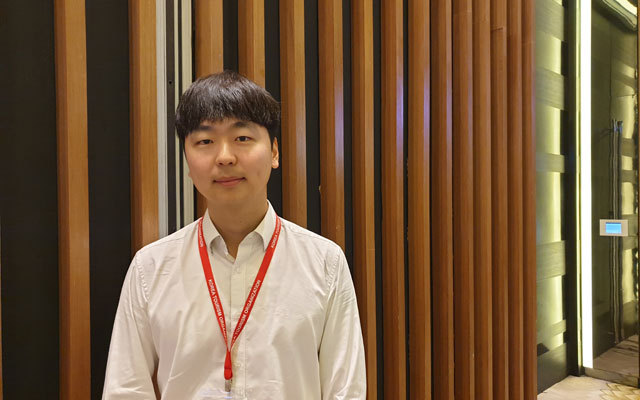
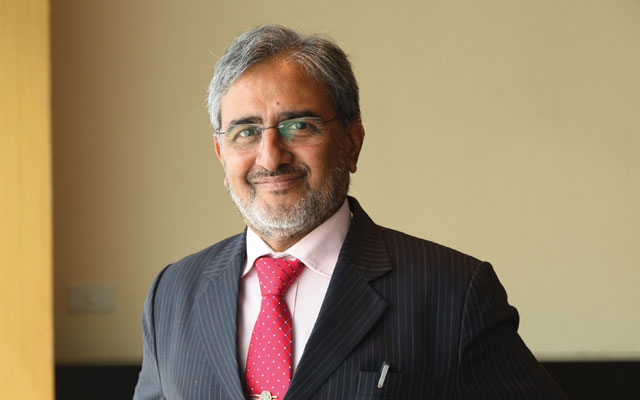
Sehoon Choi: new direct flight will result in a stronger growth rate in Singaporean outbound travellers to Busan
According to Sehoon Choi, junior manager with Busan Tourism Organization’s Convention Bureau, Singapore was never a key source market due to accessibility limitation. Instead, Taiwan, Malaysia and Thailand were top Asian producers due to ease of access from these countries.
“There were 39,173 visitors from Singapore to Busan in 2018, which is about 16.8 per cent of total Singapore arrivals to South Korea,” said Choi.
“That was a 53 per cent increase over 2017 numbers. But with the new direct access provided by SilkAir, we expect a much stronger growth rate this year,” he said.
Choi referenced Malaysia as a case in point. “After a direct flight was launched (by AirAsia X) between Malaysia and Busan in 2013, arrivals rose steadily. Malaysia is now one of our main markets for incentive programmes and corporate meetings,” he said.
He added that most events coming out of Singapore would be incentive programmes and corporate meetings due to the strong presence of MNCs in the city-state. However, Busan Tourism Organization is also keen to attract international conventions related to Busan’s seven strategic industries such as marine, intelligent services and finance.
The Lion City’s appeal as a MICE source market would improve further with Jeju Air’s new direct Singapore-Busan service come July, noted Choi.
Also anticipating healthy demand from Singapore on the wings of SilkAir is Jin Hee Kim, sales manager, Crown Harbour Hotel Busan.
“We rarely get corporate groups from Singapore, with most of our corporate business coming from Thailand. But we believe the new SilkAir access will change things,” remarked Kim.
James Kang, managing director with MEPS International, a Seoul-based DMC and PCO, said the SilkAir service would allow his agency to promote Busan as an entry point for a wider business event programme in South Korea, but noted that higher-end groups would still prefer to fly with main flag carriers.
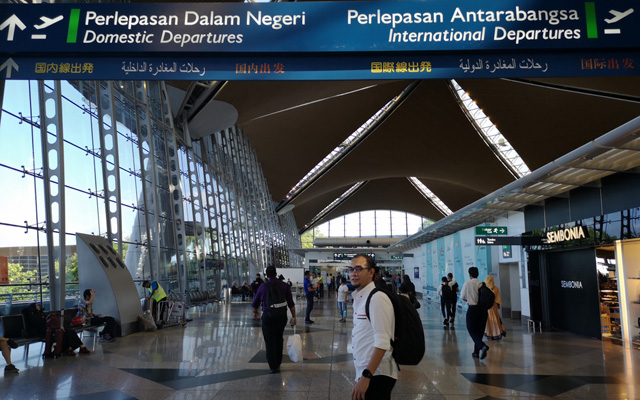
Both domestic and international flights will have to pay the levy; Kuala Lumpur International Airport pictured
Malaysia’s Air Passenger Departure Levy, scheduled to come into force in July or after, will not benefit the inbound business events sector, as DMCs fear that it will make it more difficult to compete with regional destinations for business.
Arokia Das Anthony, director, Luxury Tours Malaysia, groused: “Why do we need to tax business and leisure travellers who have come to Malaysia and are spending money here? This will not incentivise them to choose Malaysia. We are already at a disadvantage to Thailand and Singapore as both are regional hubs with better flight connectivity. This departure levy will add on to (the disadvantage).”
Both domestic and international flights will have to pay the levy; Kuala Lumpur International Airport pictured
“Most of my company’s inbound business events are from China and India, both price sensitive markets,” he added.
Similarly, Adam Kamal, general manager, Tour East Malaysia, lamented: “An additional US$10 can affect the decision of business event organisers when choosing a destination.”
Kamal said in addition to the departure levy, there is also a tourism tax that Malaysia has enforced. Previously, the travel industry believed that once the levy is implemented, the tourism tax will be abolished.
“However, that is not the case. Now there will be an additional charge involved, and that will be the deal breaker,” he pointed out.
To entice incentive groups to still choose Malaysia once the new tax is in place, Uzaidi Udanis, general manager of Eyes Holidays, said his company would have to “add more value in the form of activities”.
He compared the situation to Singapore, indicating that the city state was “expensive”, but incentive organisers were willing to travel there as there are many activities to do throughout the day.
When asked if the tax would impact outbound Malaysian incentives, Uzaidi said the effect would be non-existent as companies would still have to motivate their sales teams and dealers with incentive trips, regardless of the costs.
The Air Passenger Departure Levy to be imposed on departing passengers to overseas destinations, are on the basis of a two-tier rate structure. It starts at RM20 (US$4.80) per departing passenger to ASEAN member countries, and will cost RM40 per departing passenger to all other international destinations. This fee is in addition to the RM73 passenger service charge already imposed at airports.
The country’s Transport minister, Anthony Loke, has also defended the departure levy, saying that the money was needed to raise revenue, as the government could collect a few hundred million ringgit from this sector annually.
Thai Airways and the Thailand Convention and Exhibition Bureau (TCEB) have inked an MoU to increase business events bound for the Kingdom. The partnership will also help THAI grow its MICE revenue through traffic heading to Thailand and elsewhere on routes operated by the national flag carrier.
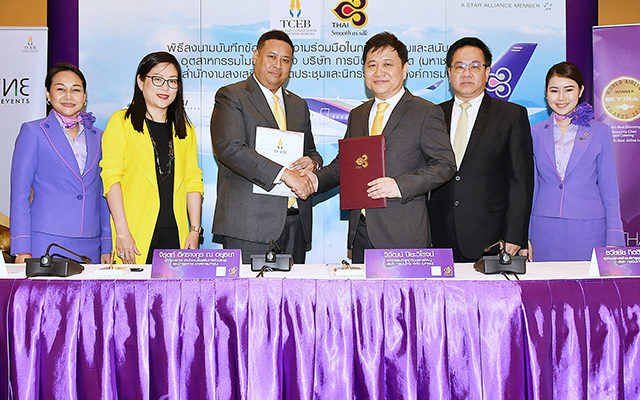
The MoU was signed by Wiwat Piyawiroj (fourth from left), executive vice president, commercial of THAI, and Chiruit Isarangkun Na Ayuthaya (third from left), president of TCEB.
This MoU follows a joint MICE campaign launched in January this year.
London: Major international medical congress chooses UK city
The European Association for the Study of the Liver (EASL) has announced that it will return to ExCeL London – an exhibitions and international convention centre in Canning Town – in 2020.
The five-day event is expected to bring together over 10,000 hepatologists, doctors and medical professionals, to share recent data, present studies and findings, and discuss the latest topics on liver disease.
London has welcomed a number of prestigious medical events over the past few years. In 2018, the city played host to Diabetes UK, the European Association on Antennas and Propagation; the European Association for Endoscopic Surgery Annual Congress; and the British Geriatrics Society Autumn Meeting.
Tulum: Mexico’s MICE sector receives boost with new infrastructure
Mexican hotel company Posadas has announced plans to open a convention centre in the new resort destination of Tulum in Quintana Roo.
The new venue, which will span over 3,065m2, represents the company’s biggest investment in the meetings market to date. It will be part of a new tourism development named Tulkal, and will include multiple resorts, such as a 515-room Fiesta Americana all-inclusive property, and a 340-room Live Aqua Beach Resort.
Overall the destination will have 1,300 oceanfront rooms spread across all of its properties in its final phase.
Fujairah: Upcoming ITMC Summit to be held in the UAE
The ITMC (Independent Travel Management Company) Summit, hosted by WIN Global Travel Network, will take place from June 9-12 2019 at the InterContinental Fujairah Resort in the UAE.
Open to independent Travel Management Companies (TMCs) from across the globe, the theme for this year’s event will be Rewired.
The Rewired theme will look at changing technology in the business travel sector and how the distinction between online and offline concepts has been blurred across many markets. A key focus will be how service models can be enhanced through artificial intelligence and additions such as chatbots which are designed to create efficiency and simplify travel arrangements, allowing TMCs more time to perform complex tasks and better personalise the traveller experience.
During the conference, attendees will have access to industry-leading professionals and a variety of workshop sessions. Confirmed speakers include Rockport Data and Analytics’ Jon Gray; Synthesis Group Australia’s William Pegg; and Changing Times’ Richard Savva.
Journey Hub Hotel Phuket, a property owned by Boutique Corporation, has been renamed Oakwood Hotel Journeyhub Phuket, as of April 1, 2019, following the announcement of a strategic partnership between the two companies.
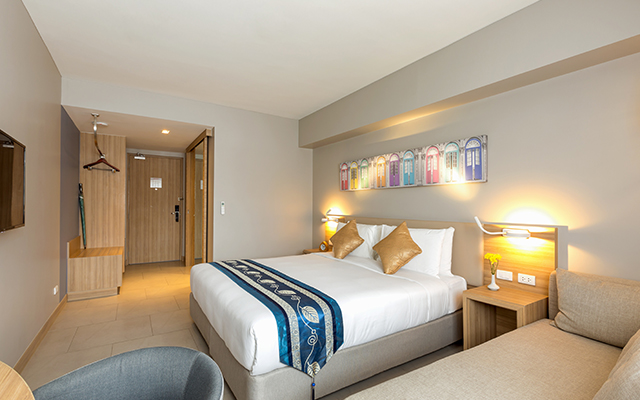
Deluxe King Room
Oakwood Hotel Journeyhub Phuket marks Oakwood’s first entry into a resort location. The hotel located in Patong, Thailand, features 171 rooms and suites across several categories ranging from the lead-in deluxe room to the two-bedroom suite.
Other facilities and services include a fitness centre, rooftop infinity pool, Crossways Bar & Restaurant, and complimentary shuttle service to the nearby Jungceylon Shopping Centre, Bangla Road, and Patong Beach.
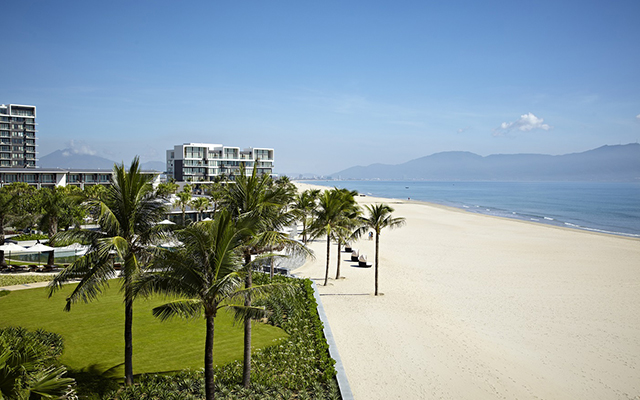
Hyatt Regency Danang Resort & Spa is offering event planners a year-end promotion to book meetings or events from now until November 30, 2019, for stays from September 1, 2019, to December 22, 2019.
During this promotion period, new meeting or event bookings with at least 25 rooms per night will receive special offers on meeting packages, complimentary guestrooms, free room upgrades, Double World of Hyatt points up to a maximum of 100,000 points, among others.
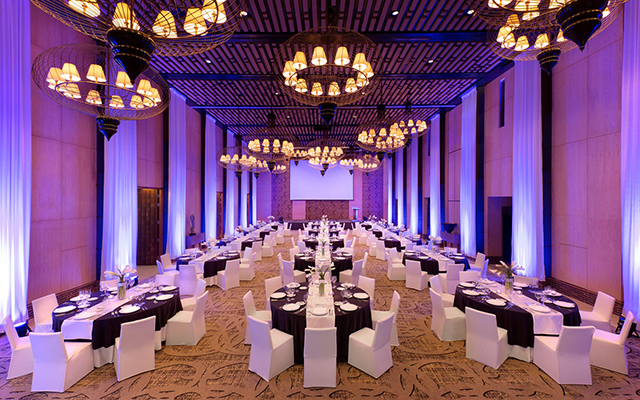
Hyatt Regency Danang Resort and Spa – Ballroom
Moreover, group bookings of a minimum of 50 rooms will benefit from additional perks such as complimentary spa treatment, hotel limo airport transfer, signature pre-dinner drink and outdoor catering fee.
The beachfront resort features 900m2 of event and meeting facilities, ranging from the Regency Ballroom which can hold up to 250 guests to the Beach House Garden that can host 700 pax.
Book through danang.regency@hyatt.com or call (84) 236 398 1234.
Avani Hotels & Resorts has made several senior appointments for its upcoming properties: FCC Angkor – Managed by Avani, opening in2Q2019; Avani Central Busan Hotel, opening mid-2019; and Avani Sukhumvit Bangkok, also scheduled to open mid-2019.
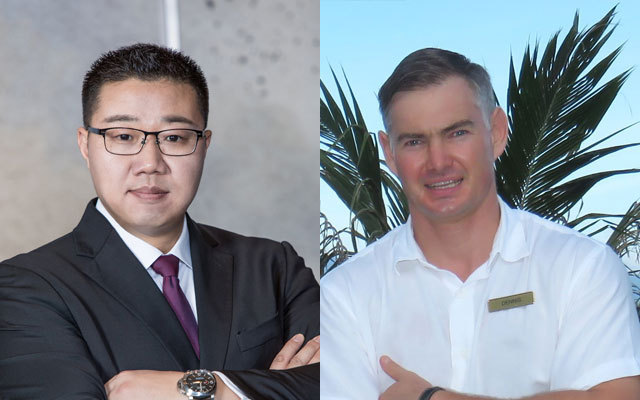
From left: Tyson Bae and Dennis Gordienko
Dennis Gordienko has been appointed general manager of FCC Angkor – Managed by Avani.
Gordienko joins Avani from Vistana Penang Bukit Jambul, Malaysia, where he held his first general manager role. The Ukrainian began his career in hospitality in 2008 as a restaurant manager for Copthorne Tara Hotel in London, before moving to his homeland to work with InterContinental Kyiv Hotel as deputy manager, and Riviera Boutique Hotel Kyiv and Fairmont Grand Hotel Kyiv as front office manager. In 2013, Gordienko joined Holiday Villa Bahrain where he led the pre-opening team as operations manager, before joining Onyx Hospitality Group as executive assistant manager leading the pre-opening of Amari Dhaka in Bangladesh. In 2015, he joined Anantara Hotels as cluster resident manager at Anantara Maldives.
In South Korea, Tyson Bae will helm Avani Central Busan Hotel, as well as the upcoming Avani Busan Resort opening in 2020, as cluster general manager.
Tyson brings with him two decades of hospitality experience, having started his career in Seoul before venturing to the US, Singapore, and China. He was also the chairman of rooms operations for the Shanghai Business Council, Marriott International; as well as board member of the Asia-Pacific Rooms Advisory Board for Marriott’s headquarters. In 2012, Tyson led the pre-opening of the Marriott Hotel Pudong East, Shanghai, as the director of rooms operations. He was then promoted to his first general manager role at Shanghai Marriott Hotel Hongqiao in 2014.
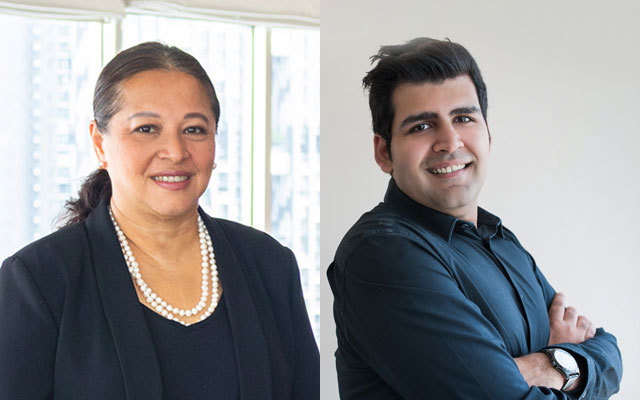
From left: Naowarat Arunkong and Ravi Ganglani
In Bangkok, Naowarat Arunkong has been appointed appointed cluster general manager of Avani Sukhumvit Bangkok, also overseeing Avani Khon Kaen Hotel & Convention Center.
Naowarat joined Minor Hotels in 1999 and worked at Bangkok Marriott until 2007, where she led the rooms division. She subsequently transferred to Hua Hin Marriott Resort & Spa and took on the roles of director of operations and hotel manager, which led to her promotion to her first general manager role at Hua Hin Marriott Resort & Spa in January 2011. Later that year, she moved to Anantara Hua Hin Resort in the same capacity. Naowarat then transferred to Bangkok in May 2013 to take the role of general manager at Anantara Sathorn Bangkok Hotel and Oaks Bangkok Sathorn. In 2016, she was appointed to the role of cluster general manager, overseeing Anantara Sathorn Bangkok Hotel, Oaks Bangkok Sathorn and Avani Khon Kaen Hotel & Convention Centre.
Ravi Ganglani has also joined Avani Sukhumvit Bangkok as director of sales and marketing. While this is his debut in the role, Ganglani is a familiar face at Minor Hotels, having started with the company in 2012 as cluster director of sales – MICE in Thailand, before being promoted to area director of sales – MICE across South-east Asia.
Tell me more about the work of the AIDS Society of India (ASI).
ASI is a national association of medical doctors and researchers who are engaged in HIV care and support. We have more than 650 members, 10 per cent of whom are researchers. We organise the annual National Conference of AIDS Society of India that is attended by 500 to 600 people – our members, as well as stakeholders such as government agents and representatives from pharmaceutical companies and donor agencies.
We also invest in continuing education. HIV is a vibrant field – many new treatments and medicine are coming up. We need to keep our members abreast of what’s happening globally.
Ishwar Gilada
The most important aspect of our work is advocacy. A lot of the available HIV medicines are too pricey for most patients from Asia and Africa, and some parts of Europe even.
Along with Indian pharmaceutical companies, we lobbied to (legally) violate patents. Our role as clinicians is for patients, not for patents. Indian generic pharmaceutical companies have been wonderful in this regard, as they have fought legal battles (to violate patents) that have been supported by the World Intellectual Property Organization, which also agrees that patients’ rights are more important than patents.
(Without patent restrictions) a three-in-one HIV combo medicine that costs US$10,492 per patient per year internationally is priced at only US$69 in India. Now, 92 per cent of the world’s HIV patients are taking India-made medicine. If India – and ASI – fought none of this battle, Africa’s HIV-positive community would have been finished.
How can patent violation be legal?
It is done through legal recourse in two ways: Compulsory License and Voluntary License.
Compulsory License is issued by governments under the General Agreement on Tariffs and Trade Doha 2001 declaration when the innovator company is unable/unwilling to offer life-saving medicines at affordable costs. In this case, the copy maker pays five per cent of the trade cost to the innovator.
Voluntary License is issued by the innovator company to one or more generic manufacturer, free of charge, to prevent litigations, compulsory licensing, etc to protect their own markets in the innovator and patent-respecting countries.
Indian pharmaceutical companies have been able to make excellent copies of HIV medicine (using either Compulsory License or Voluntary License) that are sold in India, Asia or Africa.
The same is happening with medicine for Hepatitis C, a viral infection that is commonly spread among drug users. Medicine costs around US$1,000 per tablet, and patients need to take it across 84 days. That’s US$84,000 for a course of treatment. But innovator company Gilead issued Voluntary License to 11 Indian pharmaceutical companies to manufacture and sell these anti-HCV (Hepatitis C) medicines at just US$1,000, greatly expanding the medicine’s accessibility to patients. Isn’t it a great achievement?
ASI may be a small organisation, but we make huge changes in the world.
Now that ASI has succeeded in bringing down the cost of HIV medication, what’s next on your agenda for advocacy?
HIV patients face a three-way cost: medication, investigation and medical care. Investigation kits are made abroad. We are now asking Indian pharmaceutical companies to also produce test kits and machines, so that investigation costs will go down. Plus, being able to conduct tests in India cuts down on investigation time.
We are pushing for greater HIV care acumen, so that patients can also be treated by high quality caregivers.
Another important task is to make vaccines more affordable. There are some (HIV-related) infections and diseases that are vaccine-preventable, such as Hepatitis B. One Hepatitis B vaccine costs less that US$1 in India. In other countries, it can cost as much as US$100. By getting the production license of these vaccines as well, for production in India, we can help make them more affordable to patients in developing countries.
So your society isn’t just looking after the wellbeing of HIV/AIDs patients in India.
As medical people, we need to fight for anyone who cannot have easy access to medication and help. But you could say what we do is also for selfish reasons (laughs). If patients survive, we will survive. If everyone’s dead from HIV/AIDs, what use is there of us?
What other countries are benefitting from your advocacy work?
Most of Asia and Eastern Europe, as well as South America. North America and Western Europe can well afford the pricier medication.
Considering the work ASI does beyond India, is it affiliated with any global association?
There is an International AIDS Society (IAS). ASI was initially formed as an offshoot of that, with the aim of being affiliated at a later stage. We’re still unable to be affiliated, which limits our power.
What’s stopping ASI from being affiliated with IAS?
ASI restricts our membership to only doctors and researchers but IAS opens its membership to also social workers, sex workers, HIV-positive people – everybody. There’s no right or wrong membership structure. ASI has a more restricted membership because our focus is on education in HIV management and prevention.
To be affiliated with IAS would possibly require us to expand our membership, something we are not yet ready to do. But we are looking at other ways to work with IAS.
(Editor’s update: Following the interview in late-September 2018, Gilada was elected to the IAS Governing Council for Asia and the Pacific Islands in October 2018, a seat he will hold for four years.)
You mentioned that ASI alone has limited power. Is your society then working with other organisations to expand its ability to effect changes?
Yes. One example is our work with APACC (Asia Pacific AIDS & Co-infections Conference) which held its third edition in Hong Kong (June 2018). Wherever opportunities for collaboration emerges in Asia, we are interested. Asia makes up 60 per cent of the world’s population, but the region is not significantly united (in terms of HIV work). As such, Asia’s role in HIV specialisation isn’t sufficiently regarded. We need to do more to make our voices heard on the global stage.
I think Asian HIV specialists can build a more prominent presence in the global space if related associations here could come together to bring more global HIV/AIDs conferences to this region.
I agree, and Asia is more than ready to play host. Having attended so many conferences around the world, I can tell you that Asian destinations make the best host. I’ve attended international conferences in the West where I paid US$1,000 in registration fees and was not given even a bottle of water. Attendees had to buy a drink and pay for every single thing. There was no welcome reception, no lunch, no dinner functions. In contrast, at any conference hosted in Asia, attendees can expect three coffee breaks a day at least!
Such hospitality is important because who wants the trouble of stepping away from the sessions just to hunt down a cup of coffee or a quick bite?
Let’s talk more about the National Conference of AIDS Society of India. Does it rotate across India?
They are mostly held in the South, such as Bangalore and Hyderabad. Editions held in the North saw weaker attendance. Two-thirds of India’s HIV cases are in the South, so naturally there is a larger population of doctors and researchers based there. Pharmaceutical companies also have more intensive marketing in the South. It makes better sense to keep our conferences in the South.
Is attendance growing?
Not much because HIV cases aren’t rising in India due to improved access to quality treatment, as well as greater knowledge among the people about the virus and its prevention.
Does ASI conduct public seminars?
Earlier, yes, in a big way. Over the past eight years or so, education campaigns have gone down (in frequency) because the government’s focus has shifted to providing treatment.
But ASI has been telling the government that doing so would push HIV rates up again. Education on HIV awareness and prevention must continue, especially among the younger generation.
What are the professional challenges faced by HIV/AIDS specialists, and how is ASI helping to address these?
One of the challenges is fear. First, the fear of being infected in the course of our work. While that fear is natural, it is also wrong. I’ve been practicing for the last three decades and I’m not infected. With sufficient knowledge of how infection occurs, one can take steps to avoid it – so education plays a part.
Second, the fear of losing patients. There was a time, in the 1990s to 2000, when many of our patients died. Back in those dark days, only two per cent of patients in India could afford medicine. The deep emotional impact of that caused doctors to get burnt out very quickly and slip into depression.
But once ASI was able to push for patent violation and have medicine made cheaply in India, access to medicine improved vastly, and things got a lot better for patients, doctors and caregivers.
The second major challenge is the sustainability of this profession. If one day HIV is completely controlled, medical experts in this field will have nothing left to do. So, we’ve been asking the government to move away from vertical (academic) programmes on HIV and related infections and diseases, and instead combine them to create a specialised field in anti-viral that covers Hepatitis A, B and C, or HIV and tuberculosis. HIV and tuberculosis are two separate verticals but commonly occurring together because of reduced immunity.
By combining related verticals, future medical specialists will become infectious disease specialists and not just an HIV specialist.
My daughter, for example, has taken this route herself. As an infectious disease specialist, she is able to tackle many different infections not limited to HIV.
How soon will this change be reflected in university courses?
The actual change in academic courses will take a longer time because curriculum is determined by many regulators like the Medical Council of India, the government, state government and college’s own academic authorities. This change could take years, or decades even.
That is why ASI’s education services are important. We can develop programmes to train HIV specialists and broaden their scope of knowledge now. We give participants certificates and points for completing courses with us.
ASI must have a direct line of communication with the government in order to achieve many of its goals. How is this achieved?
Whenever we have a conference, we include an interactive session with the government. We invite government officials, as well as representatives from international HIV/AIDs organisations, for open discussions. In reciprocation, ASI is called into government-led consultation sessions. Increasingly we are seeing more of our expert members being involved in government processes. We even have a WhatsApp group chat comprising government officials and ASI members!
A younger Gilada, wearing a garland of condoms, addressed sex workers in Mumbai’s infamous red-light district Kamathipura on the use of protection
A personality in India’s war against HIV/AIDS
Ishwar Gilada was the first person to raise the alarm against AIDS in India (1985). He started India’s first AIDS Clinic (1986) at the government-run JJ Hospital, Mumbai. Today, he is a globally acclaimed HIV expert, credited with bringing India onto the AIDS control map of the world. He is presently the president of the AIDS Society of India, secretary general of the Peoples Health Organisation India, and elected member of the IAS Governing Council for Asia and the Pacific Islands.
He has a sub-specialisation in Skin and STDs.
He has initiated, supervised and evaluated 38 AIDS projects in seven Indian states; worked as a consultant for the American Foundation for AIDS Research, World Vision International, USAID; and evaluated Zambia’s National STD/AIDS Control programme.
He has addressed over 3,700 meetings and training programmes in India and high HIV burdened African nations.
His work has earned him 70 awards to-date. Notable awards include The Junior Chamber International, USA’s Outstanding Young Person of the World (1995) and the Annemarie Madison International Award (1999) which came along with a recognition for being “the Indian Machine gun against AIDS”.
This article was first published in TTGassociation April 2019, a sister publication of TTGmice
Event brief
Organiser SingEx Exhibitions and international partner Deutsche Messe decided against replicating the world-renowned Hannover Messe as an Asian edition. Instead, they chose to focus on specific applications and opportunities for Asia-Pacific businesses to start, scale and sustain their industrial transformation journey.
The event covered sectors such as aerospace, automotive, biomedical sciences, chemicals, consumer goods manufacturing, electronics, marine and offshore, oil and gas, and precision engineering.
The aim was to create a strategic platform that could evolve with these industries, shaped by current leaders and experts, yet encouraging newcomers as well. Companies could exchange best practices and forge new partnerships to tap on the region’s growth.
Challenges
Starting a new tradeshow isn’t easy, let alone running it well to satisfy partners, exhibitors and attendees. From stimulating awareness and interest among companies to participate, the organising team then had to market the event, and draw buyers and visitors to the exhibition and simultaneous conference.
“We recognised the strategic importance of the event in spearheading economic progress and also synergies that can be drawn through community collaboration,” said James Boey, executive director, SingEx Exhibitions.
“However, companies would also have to recognise that transforming an organisation requires a mindset shift among leaders and staff alike. It is Workforce 4.0 who are crucial to the success of Industry 4.0.”
Another challenge was to maximise exposure for exhibitors while enabling buyers and visitors to cover the two halls (20,000m2) efficiently. A further consideration was to live up to the event’s name by using innovative technologies and creating multi-faceted, seamless touch points for attendees.
Solution
SingEx set about engaging governments and the business community. For a solid foundation, it first tapped Singapore government agencies to form the steering committee. An international advisory committee was also formed, comprising leading MNCs from the European Union and Japan with strong presence in Singapore, and trade associations.
The show featured five country pavilions. Many advisory committee members became partners with prominent stands.
While transformational roadmaps are important, in reality, players are of different sizes and at varying stages of adoption.
“We developed a unique ‘Learning Journey’ to help attendees navigate the event and maximise their return on engagement and learning,” Boey explained.
Beginners, early adopters and trailblazers were channelled to well-laid-out exhibition sections and sessions, which included two learning labs, two ‘sandboxes’ and a novel interchange booth – a SingEx knowledge-exchange platform to facilitate offline to online engagement among exhibitors and attendees. On the sidelines were a plenary hall and two ‘theatres’.
Some 2,400 visitors registered for 110 guided tours over three days.
“ITAP 2018 was well-represented by professionals from a wide spectrum of industrial sectors who shared their valuable knowledge and skills with over 15,000 global attendees,” noted Boey.
Founding partner Siemens’ big islands, for instance, stood out in the industrial automation and digital factory sections. Siemens had a separate registration desk in the foyer for invited visitors and conducted special tours of its pavilions.
For sustenance, Rasel Catering offered international F&B with local elements, such as curry puffs, laksa and chicken rice. It also introduced new technology – the ‘IBOX’, an innovative way to reduce queues and waiting time. People could use a tablet or download the app to order food in advance and collect at scheduled times.
Six food kiosks also drew a steady stream of people throughout the day, as did the casual dining area with complimentary refreshments for VIPs, speakers, conference delegates and media.
Key takeaways
ITAP 2018 was one year in the making. With strong public and private sector support, and creative planning and design, it drew a good turnout. It showed the business of Industry 4.0, not just gadgets or slick presentations.
Post-exhibition, several exhibitors hosted technical visits to demonstrate various advanced manufacturing facilities and innovation centres.
Event: Industrial Transformation Asia-Pacific Organiser: SingEx Exhibitions, with international partner Deutsche Messe Venue: Singapore EXPO Halls 1 and 2 Date: October 16-18, 2018 Number of participants: 15,000 from 55 countries
Onyx Hospitality Group has appointed Paul Halford as general manager of the soon-to-open OZO Phuket at Kata Beach.
Halford joins Onyx with close to 20 years of hospitality industry experience at hotels and resorts in Australia, Vanuatu, Fiji and Thailand, including a 10-year tenure across multiple Radisson Hotel Group locations. Most recently, he was general manager of Park Plaza Bangkok Soi 18.
In his current role, Halford will lead the pre-opening and positioning of the brand-new Ozo in Phuket, scheduled to open in June 2019; the family-oriented resort will feature 255 rooms and suites.
The newly-opened Ritz-Carlton, Bangkok anchors the One Bangkok development with cosmopolitan elegance. Featuring the city's largest ballroom and a spectacular new penthouse suite, it delivers exceptional hardware and deeply authentic, soulful service for business and leisure travellers alike
Behind the imposing, Brutalist concrete that defines Zurich’s Oerlikon district lies a surprising secret. While its exterior honours the neighbourhood’s industrial roots, stepping inside Mama Shelter reveals a vibrant, neon-soaked world that is a far cry from its rigid shell
A polished urban retreat designed for business travellers, Hyatt Regency Kuala Lumpur at KL Midtown combines thoughtful design, seamless service, and exceptional facilities.