The Philippine Tourism Promotions Board (TPB) has mapped out new initiatives to convince big congress and convention players to return to the country.
Rolling out over the next two years, these initiatives include the creation of the Philippine MICE Customary Advisory Council (CAC) to help destinations become MICE-ready, prepare strategic plans and programmes, professionalise the industry, create recognition and certificate programmes, disseminate promotional and information materials, intelligence and latest trends and industry best practices.
The CAC is part of the business events campaign to encourage corporations, associations and event organisers to bring their business events to the country, as part of the renewed efforts to put the Philippines back on Asia’s business events map.
TPB’s new COO, Marie Venus Tan, told TTGmice on the sidelines of the Kain Na (Let’s Eat) culinary tourism launch in Davao last Friday: “I will probably put more people into the MICE Department. I need to build the product before I can market it so that has to go hand in hand.”
Tan added that TPB will help with bidding for “big ticket events” including conferences by WTTC (World Travel and Tourism Council), UNWTO (World Tourism Organization), and UNESCO Creative City, alongside music festivals and film screenings. This will be done in cooperation with associations, government institutions, regional and international nonprofits.
Another way to strength the business events sector was to “advertise to all markets in cross-hubs of the world”, to capitalise on world events and focus on interest-driven strategies.
In the 1980s, the Philippines played host to big conventions and congresses, and was the first in Asia to have a convention centre, the Philippine International Convention Center.
“Now we’re being left behind because of technology, and our neighbours are building convention centres for up to 20,000 pax. We might not have their hardware yet but we know how to serve – it’s what we will leverage on,” she said.
Destinations in Asia should improve their accessibility for physically-challenged participants of business events, urged speakers at last week’s BE@Penang 2018 conference.
Ajit Singh Sikand, president and CEO of HBC Luxury MICE Consulting, noted that physically-challenged persons “have been excluded” from most business events although they “want to be as independent as other delegates – to be able to move around freely (in hotels, convention centres and airports), with signs and infrastructure that allow them to do so”.
To achieve universal access, hospitality companies, event venues and tourism promotion boards have to take the lead in taking that first step
He opined that presently there was little being done by hotel companies, convention centres and destinations, especially for the visually-impaired. As for wheelchair users, some measures have been taken by suppliers to cater to them.
Another speaker, Calum Di Lieto, editor of C&IT UK, quoted latest findings from a State of the Industry Report, saying that one of the top five qualities meeting planners look for when determining a destination was accessibility.
Di Lieto explained that accessibility in this case meant the readiness of the destination to meet the needs of physically-challenged participants.
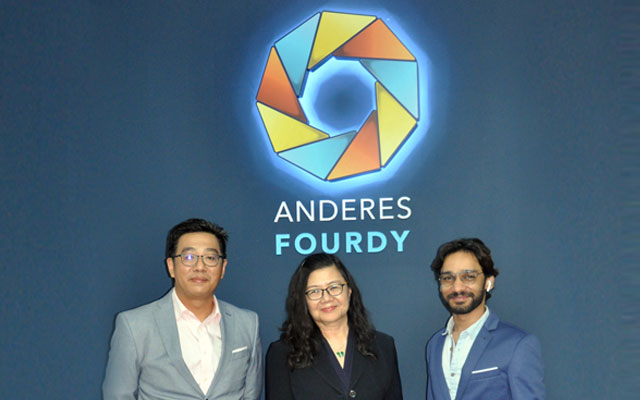
Most of the time, destinations are not ready, according to Rahul Bharadwaj, director technology & operations, of Malaysia-based PCO Anderes Fourdy.
For instance, the PCO handled the Rare Disease Asia Conference in 2016 in Kuala Lumpur, where out of the 500 attendees – comprising companies working on rare disease medical solutions, doctors and the patients – were some 100 wheelchair users.
The annual conference has always been held in Singapore where the association is based, and it was the first time it was held outside of the city state.
Rahul shared: “Malaysia was picked as it was accessible by bus. For us, the challenge was to find and get hotels and venues ready for these delegates with special needs – such as the setting up of ramps for wheelchair users to get up onto stage, have the hotel remove some furniture to allow guests to move around more easily, and modify the seats on vans.”
He added that the company had also made a bid for a few association meetings from Europe with blind participants, but lost it to France because there were no hotels in Malaysia that had braille signs for its facilities and on room doors. Moreover, no hotel or convention centre in Malaysia allowed guide dogs indoors.
Because of this, Rahul said his company has stopped bidding for them as Malaysia was still not ready, despite the meetings occurring annually.
Rahul said the tourism board bureaus or venues should be the one to resolve such issues, as they have the resources to do so.
Ajit suggested that the “community, government, and cities” take the lead in starting the conversation.
“They also need to (enact laws) so that planes, airports and trains are made easily accessible for physically-challenged travellers,” Ajit added.
To do this, industry leaders agree that proper education is required.
Nichapa Yoswee, senior vice president business of Thailand Convention & Exhibition Bureau, said awareness of this need is rising every year, which is a good sign.
She acknowledged that “it is impossible for venue owners to change all at once” and said that it was just as important that “everyone is talking about it” and “know how to move forward”.
This conversation came on the heels of the unveiling of the Universal Accessibility in Meetings report, produced by BestCities Global Alliance, GainingEdge and Rehabilitation International and launched at ICCA Congress 2018 in Dubai in November.
Incentive travel is all about rewarding top commercial achievers with an experience so impressive and memorable that they are motivated to do even better in the following year and beyond.
But what happens when the world that incentive travel planners and suppliers exist in gets so competitive that the programme that gets chosen eventually for top achievers is the one that is the cheapest?
A losing battle
Unfortunately, this is the reality today, said incentive specialists who lamented that some bid are won solely on pricing, rather than unique experiences and quality offerings that will leave lasting memories for participants.
Reasons for the intensive price war are many.
Transparency of pricing listed on the Internet may be a contributor, so too is increased competition for business in destinations where there are plenty of suppliers (hotels, ground handlers or DMCs).
As well, new entrants trying to gain a foothold in the market are more than willing to offer their services at cost or even below.
Victor Mogilev, group director of sales with Diethelm Travel Group, warned that the stiff competition based on price will hurt many parties in the long run.
Mogilev said: “Cutting rates also means cutting profit margins, so this can easily impact the quality of services as suppliers start offering less added value, or transport operators opt for lower quality vehicles.
“In the worst case scenario, companies could go bankrupt, which in turn will affect jobs. Should this happen, clients end up paying for services not rendered.”
Destinations can also be on the losing end.
Arokia Das Anthony, director, Luxury Tours Malaysia, said: “If clients didn’t get a good experience (because the programme was selected based on price and not quality), they would not return to the destination and they might also (convince) other decision makers that the destination lacks the capability and professionalism to organise an incentive event.”
Sam Lay
Sam Lay, senior director, CWT Meetings & Events Asia Pacific, warned that destinations might end up being labelled “cheap” in a price war, which goes against the messaging that convention bureaus and tourism boards are trying to convey.
“I don’t think any destination will want to portray itself as being low-cost, rather than one where organisers see value in bringing their incentives to,” said Lay.
Are there markets that are the bigger culprit in fuelling this incentive travel price war?
Panorama Destination Thailand country manager, Nicola Scaramuzzino, thinks there are.
Scaramuzzino explained that Asian clients were more price sensitive than those from longhaul markets such as the US and Europe, due to relatively weaker Asian currencies.
Furthermore, as top achievers from the longhaul markets had to travel farther to get to Asia, organisers are more determined to ensure a “wow” experience that is not restricted by price.
Arokia has also observed a tendency among Asian clients to shop around for good deals.
While Lay agrees that “cost must be competitive”, he stressed that CWT Meetings & Events Asia Pacific is against the practice of undercutting.
To avoid a price war and the resulting detriment of the event experience, Lay said the incentive specialist must gain the client’s understanding.
He explained: “It is important to educate the client on why we proposed something with that price, and that a lower (budget) would mean having to give up on certain things.
“Client engagement is critical for them to see how we are ensuring the quality of their event, meeting their objectives and delivering a great attendee experience. They must trust…that we are the right partners for them.”
When faced with a client decision based on the lowest price, Padraic Gilligan, chief marketing officer for the Society for Incentive Travel Excellence (SITE), suggested using humour to remedy the situation.
Gilligan, who is also a managing partner at SoolNua, a Dublin-based specialist agency offering strategy, marketing and training services to destinations, hotels and venues in the business events sector, said: “This is an opportunity to elevate the conversation beyond price to value. I’d ask whether the client would take the cheapest price if they were going for an open heart surgery.
“A successful incentive programme is clearly not a matter of life and death, but it is often mission-critical for the client or the incentive house contracting on the client’s behalf. As a once-off, live event, you get one chance to get it right.”
Gilligan acknowledged that this was not a surefire remedy, but moving the conversation to quality “did work more times than not”.
Concept
The 70-minute theatrical performance recounts through songs, dances, narrative and special effects the history of Melaka, from its birth to its evolvement into a modern city, with personal tales of its people thrown in.
There are seven scenes, each lasting around 10 minutes, with its own storyline. There are about 200 performers in total, many of whom are local talents.
1 of 5
Special effects are created through video projection mapping and multi-stage hydraulic sets, so that the performers and their props can be seen on different levels at the same time. Water is played up as Melaka is a coastal city, yet incredibly, at the end of the show, the stage is dry!
Towards the end of the show, the platform where the audience sits on also slowly rotates 360-degrees to showcase different scenes in different eras.
MICE Application
The theatre is huge and can fit up to 2,000 people.
For very large, private groups, organisers can also choose to book out the theatre for a private showing outside of the regular show times. Prices start from RM250,000 (US$59,931), and vary depending on the organiser’s requirements.
Organisers can also work with Yong Tai, the show producer, to produce customised souvenirs for delegates to take home. Photo opportunities with performers can also be arranged after the show. As well, welcome drinks and corporate banners can be placed strategically to greet delegates as they enter the theatre.
There is a function hall which can be used as a dining venue for up to 250 people in round-table format. There is plenty of parking spaces for buses and vans.
From Mondays to Saturdays, there are two show times at 17.30 and 20.30. On Sundays, show times are at 14.30 and 17.30.
It is highly recommended that this performance be included as part of a planner’s itinerary in Melaka because it provides visitors with a short history of the city, its people and its multicultural society. As a Malaysian who lived in Melaka for a short period of time, I truly felt a deeper sense of belonging to the city after watching the show.
Service
The service was great. I went for the 20.30 show and it started on time. After the show, I was impressed by the friendliness of the performers who mingled with the crowd outside and allowed themselves to be photographed.
The city of London has a new event space
Events @ No 6 will officially open its doors in London next month.
The new-build, state-of-the-art venue will also be home to The Royal College of Pathologists. It comprises a union of bright meeting rooms alongside airy, relaxed open spaces suitable for events like corporate meetings, product launches and academic conferences. Room capacity ranges up to 210 theatre-style and all rooms include the latest audiovisual equipment.
Flexible breakout areas will allow delegates a chance to refresh and refuel in naturally lit, open spaces overlooking the city.
The top floor offers organisers with an open-air terrace and another flexible event space. Ideal for drinks receptions in the summer, the terrace can accommodate up to 60 guests while the indoor space is perfect for an evening of fine dining, board meetings or teambuilding sessions. Both are topped off with views over the iconic London skyline.
Events @ No 6 is located just a short walk from Aldgate and Aldgate East tube stations, in the centre of London.
Québec City to host international conference on insects
Come 2020, Québec City and Université Laval will host the 3rd International Insects to Feed the World Conference (IFW), a major international conference in 2020 on using insects as food for both humans and animals.
Held from June 3 to 6, the congress is expected to bring together 500 experts from around the world.
The first two editions were held in the Netherlands in 2014 and China in 2018.
Prague to host 14th UIA Associations Round Table
The Prague Convention Bureau has announced that the Czech capital city will play host to the Union of International Associations’ (UIA) Round Table on November 12 and 13, 2020, at the Vienna House Diplomat Prague.
The UIA Round Tables are organised annually and are the core of UIA’s education project, providing an opportunity for members to learn through networking and through practice, to meet other international associations and share experience and knowledge to help run the organisations better.
The event will welcome approximately 150 participants from all around the globe, of which 70 to 80 per cent are association representatives.
TTGmice will be taking a long-awaited break from December 13 after a very fruitful year. We’ll be back on January 8, 2019, and we look forward to continue to bring you the most breaking news in the business events scene.
The entire TTG Asia Media team wishes all readers a Merry Christmas and Happy New Year!
Alila Villas Koh Russey, the brand’s first resort in Cambodia, occupies its own private island in the Koh Rong archipelago.
The 50-pavilion, 13-villa boutique resort has a strong Khmer influence, and has been endorsed by EarthCheck, an Australia-based organisation that has benchmarked and certified Alila Villa Koh Russey’s areas of operational and environmental sustainability, as well as carbon dioxide emissions.
1 of 7
Most of the island’s natural foliage has been preserved, and other sustainable features include villa systems that automatically adjust lighting and temperature when occupants enter or leave, a fishing exclusion zone which is set at 200-metres around the resort to preserve the marine environment, and a special nursery which aims to protect more than 20 species of trees indigenous to the island.
There are two restaurants on-site: Horizon, which serves up à la carte breakfast and dinners with an emphasis on French and French fusion fare; and the Beach Shack, offering Khmer cuisine, seafood and light dishes.
Meanwhile, recreational facilities include the beachfront Spa Alila, an infinity pool overlooking the ocean, and a fitness centre with private yoga room – where complimentary yoga and Tai Chi classes are held daily.
As well, hotel-arranged excursions include guided access to hidden temples, highland trekking in the Bokor National Park, exploring the Kep’s Crab Market and Kampot’s pepper plantation and taking in the laid-back riverfront scene.
The journey from tarmac to resort takes just a 20-minute private car transfer and speedboat ride from Sihanoukville Airport.
Harry Sommer. Photo credit: www.cruiseindustrynews.com
Harry Sommer has been named Norwegian Cruise Line Holdings’ (NCLH) president, international – a new role created to reinforce plans to expand global sourcing and distribution. He will continue to report to NCLH’s president and CEO Frank Del Rio.
Sommer is now responsible for sales, marketing, public relations and office operations for NCLH brands – Norwegian Cruise Line, Oceania Cruises and Regent Seven Seas Cruises – in all markets outside the US and Canada.
Harry Sommer. Photo credit: www.cruiseindustrynews.com
A 25-year cruise industry veteran, Sommer joined NCLH in 2000 and rejoined in 2008, serving in various executive capacities, including most recently as executive vice president of international business development, which he assumed in June 2015.
During this time, he championed the growth of the company’s international division, increasing NCLH’s presence worldwide, opening 13 offices globally, including most recently Auckland and Tel Aviv.
Additional leadership promotions to the NCLH’s international division include Isis Ruiz, who has been appointed senior vice president, international marketing & public relations.
She will oversee the marketing, public relations, creative services and advertising strategy across all three brands in our international markets.
Based in the company’s Southampton, UK offices, Sally-Anne Beasley has been named vice president, passenger services, and will head the service-focused areas of operations, including reservations, support services, guest relations, help desk and legal support, and air and land operations and planning.
Moreover, as vice president, commercial and business planning international, Todd Hamilton, will be responsible for commercial planning, business analysis, and business operations for the entire international organisation.
Ruiz, Beasley and Hamilton will all report directly to Sommer.
Ivan Liu has been appointed as general manager of Sheraton Langfang Chaobai River Hotel.
Prior to his latest appointment, Liu was director of human resources at Sofitel Wanda Beijing, where he rose up the ranks to become director of operation – executive assistant manager in 2016.
Liu brings over 17 years of experience to the table, having worked with other China hotels such as Beijing Marriott West and Peninsula Palace Beijing.
Kamal Munasinghe is now the general manager of Alila Bangsar Kuala Lumpur.
The hospitality veteran has over two decades of hospitality expertise managing independent and international hotels across various locations including Switzerland, Sri Lanka, Malaysia and Vietnam.
The Swiss national first began his career in F&B in Switzerland where he worked his way up to be the director of restaurants at the Zurich Marriott Hotel. After eight years, he joined Movenpick Restaurants as the general manager before re-joining Zurich Marriott in the rooms division where he served for another three years, after which he started his own hospitality management company Worldone Management.
Munasinghe then returned to Sri Lanka, his home country, where he joined Mount Lavinia Hotel Group before his next move to The Kingsbury Colombo Hotel as general manager.
His career then continued in Vietnam with a 3.5-year stint as the director of
operations with the Renaissance Riverside Hotel Saigon, following which he moved to the Renaissance Kuala Lumpur as the resident manager in 2016.
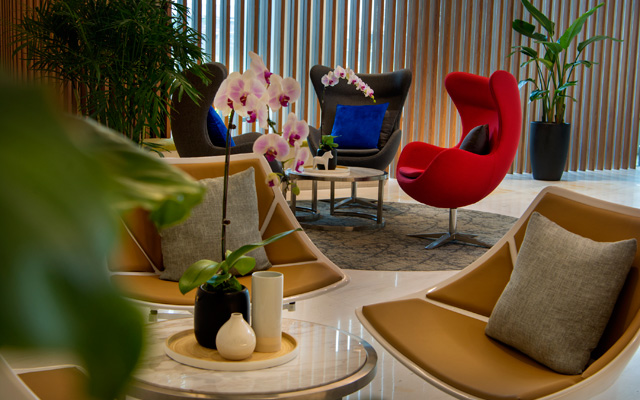
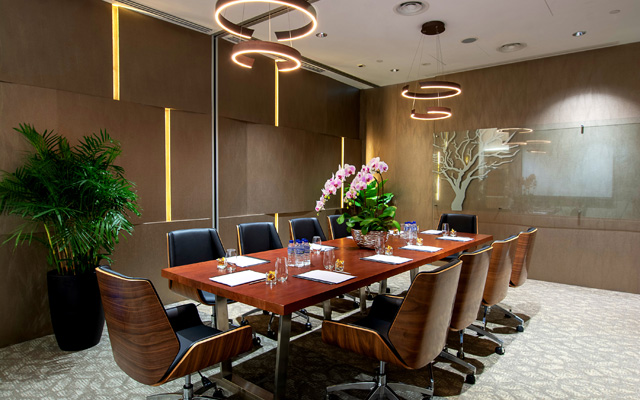
A polished urban retreat designed for business travellers, Hyatt Regency Kuala Lumpur at KL Midtown combines thoughtful design, seamless service, and exceptional facilities.
The five-star property excels in backing its expansive facilities with seamless service and personalised attention, setting the benchmark for luxury in Bangkok.