Abu Dhabi: Jumeirah Group reveals latest MICE offerings
Luxury hotel company Jumeirah Group has unveiled a MICE offer across its three properties in Abu Dhabi – Jumeirah at Etihad Towers, Jumeirah At Saadiyat Island Resort, and Jumeirah Al Wathba Desert Resort & Spa.
Jumeirah at Etihad Towers, where one of Abu Dhabi’s largest conference centre is located, offers special room rates from AED400 (US$109), inclusive of breakfast, for bookings between 10 and 200 rooms.
The hotel features a ballroom which can host up to 1,400 guests in a conference setting or 1,000 guests for banquet dinner, and 13 meeting rooms. Jumeirah at Etihad Towers is also offering a meeting package for AED180 which includes two coffee breaks, lunch with soft drinks, and access to an LCD projector and screen.
Summer MICE offers at Jumeirah at Saadiyat Island Resort are priced from AED200 with two coffee breaks and lunch. Its banquet facilities have a separate private entrance and pre-function area while the landscaped gardens provide an ideal location for product launches and cocktail parties.
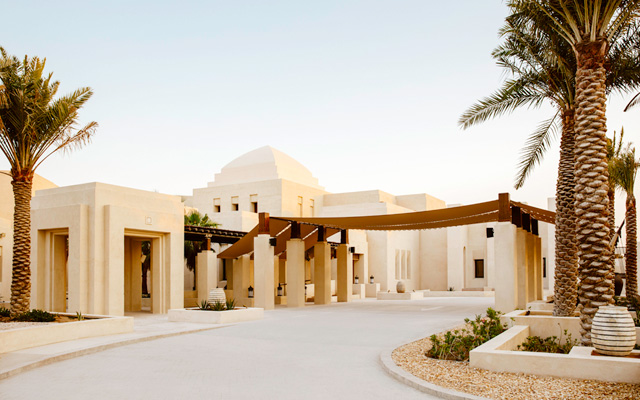
Opened in January this year, the Jumeirah Al Wathba Desert Resort & Spa, set among Abu Dhabi’s dunes, welcomes intimate events to its 100-pax ballroom; thematic events to Al Mabeet, a Bedouin-style dining experience with live entertainment, set apart from the main hotel; and larger gatherings to the resort’s foregrounds.
Ivory Coast: West African nation seeks support from African Development Bank
The Ivory Coast is intent on securing major investment to see the country become Africa’s fifth biggest tourism destination by 2025.
Minister of Tourism Siandou Fofana last month sent a strategy document to the African Development Bank, seeking its support to implement a US$5.8 billion plan.
The strategy will rest on nine new flagship projects, one of which will be the Abidjan Business City that may be a future convention destination in the country. Currently, there is no centre able to accommodate 5,000 people and above. Other projects include a leisure park and plans to develop the aviation sector and increase airport passenger flow to three million.
The minister has also expressed his hope to welcome around five million tourists by 2025, and make the tourism sector the fourth economic pillar of the country, and the fifth biggest tourism power on the continent.
Russia: St Petersburg’s Expoforum announces association congress wins
St Petersburg’s Expoforum has underlined its continuing focus on international markets by announcing a list of association congress wins across numerous sectors such as health, life sciences, energy and education.
The World Psychiatry Association’s Congress 2020 and the 20th LNG International Conference and Exhibition 2022 were signed on in April.
Other upcoming congresses and events include: Congress of the Federation of European Companion Animal Veterinary Association 2019 (3,500 pax); 23rd UNWTO General Assembly 2019 (1,000 pax); World Energy Congress 2022 (4,000 pax); Euroskills (Worldskills) 2022 (2,000 pax and 15,000 participants); International Congress of Mathematicians 2022 (5,000 pax).
Australia’s Queensland State has unveiled a new indigenous interactive culture experience entitled Spirits of the Red Sand.
During the interactive production, guests move from set to set as they journey back in time to 1880s Queensland and experience the trials and challenges as the British and Aboriginal ways of life collide. Told by Jarrah, the only surviving member of three Aboriginal brothers, the show is set within a real 19th-century Australian town complete with Church, Pub and Indigenous village.
Spirits of the Red Sand
1 of 4
The theatre and dinner experience can be found in Beenleigh, a town located between Brisbane and The Gold Coast. Round-trip transfers from select hotels from both Brisbane and The Gold Coast.
Tickets cost A$120 (US$85) for adults. Dinner is a chargrilled Australian barbecue with dessert and a licensed bar.
The space can cater for groups of up to 1,000 for theatre and dinner – held at the same site. There is no minimum F&B charge or capacity for venue buyouts, and the same ticket price applies.
Spirits of the Red Sand is the only South East Queensland tourism experience to be endorsed by Tourism Australia’s Discover Aboriginal Experiences Program.
Beloved as South Korea’s resort town, Jeju Island has built its business events foundations on strong domestic demand; and while the destination receives a sizeable share of international leisure travellers, more operators on the island have recently begun to actively court foreign incentive and teambuilding groups.
This push comes after the opening of integrated resort Jeju Shinhwa World in February 2018.
East coast of Jeju Island
The project has brought, and will continue to bring, a host of large-scale accommodation options such as Jeju Shinhwa World Landing Resort with 615 keys; Jeju Shinhwa World Marriott Resort currently with 486 rooms (572 when fully opened this year); and 342 serviced suites at Somerset Jeju Shinhwa World. Also launched within the resort is Jeju’s largest convention venue – the Landing Convention Centre.
A medley of upcoming hotel openings this year and next is expected to give Jeju an additional boost. These include the 533-room Shinhwa Hotel & Resort, Jeju Shinhwa World Four Seasons Resort & Spa with 240 keys, as well as Grand Hyatt Jeju with 1,600 rooms and around 1,200m2 of meeting space.
“Jeju has been one of Asia’s top incentive destinations, and Jeju Shinhwa World is a new attraction that has helped us gain more interest. In December 2019, we are looking forward to the opening of the Grand Hyatt Jeju, which will focus on attracting groups with its casino and MICE facilities,” said Kim Jin-Bae, secretary general of Jeju Convention & Visitors Bureau (CVB).
Kim explained that Jeju CVB has begun its push into markets around Asia – such as China and Japan – through targeted support schemes. For example, Chinese incentive groups of more than 100 pax staying on the island for at least one night can enjoy a subsidy of 10,000 won (US$8.80) per attendee.
The strategy differs for other Asian markets, which enjoy support not just for incentive tours, but also for hosting international conventions and meetings. Under this programme, other Asian incentive groups of more than 30 overseas participants staying at least one night are also eligible to receive a 10,000 won subsidy per attendee.
To step up outreach in Asia, Jeju CVB participated in IT&CM China in March with a standalone pavilion and a delegation of travel agencies and activity operators.
Encouraged by Jeju CVB’s efforts, operators in Jeju have also expanded their sights, and have focused on the potential of corporate groups from around Asia.
Kang Hyejin, senior staff of travel agency Moong Chee, shared: “Our company has been around for 29 years, but we’ve only catered to domestic groups. Now, we are beginning to expand and bring in groups from around Asia. We are starting with China first by attending trade shows like IT&CM China and learning Mandarin.”
As Moong Chee has seen increasing demand for activities that feature Jeju’s culture and local lifestyle – such as trekking, traditional medicine preparation and farming – it introduced the Batdam Festival in 2015 to showcase Jeju’s rich farmlands and harvests, said Kang.
Similarly, luxury yacht operator Grande Bleu Yacht Tour has changed one of its routes to feature a lesser-known natural attraction, the Jusangjeolli Cliffs, after receiving more incentive groups for its private cruises.
“We have hosted many large corporations, companies and universities from different industries, both Korean and international. About 88 per cent of our incentives business comes from Korean companies, but we would like to grow our international market, which is why we have started exhibiting at foreign trade shows like IT&CM China,” explained Jessica Her, general manager of Grande Bleu Yacht Tour.
To reach its top international source markets, which include Malaysia and Singapore, Grande Bleu Yacht Tour plans to participate in more tradeshows in the region.
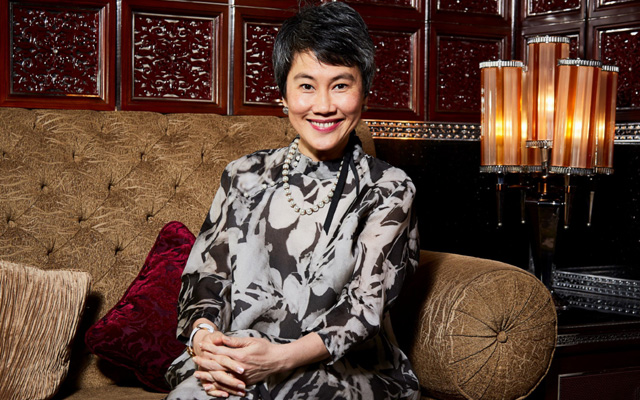
The Landmark Mandarin Oriental, Hong Kong has appointed Jill Goh as general manager.
A seasoned hotelier, Goh has been with Mandarin Oriental Hotel Group since 1993, serving previously as resident manager both at Mandarin Oriental, Singapore and Mandarin Oriental Hyde Park, London until 2013, when she was appointed corporate operations manager – Asia, based in Hong Kong. From 2015, she then held the role of general manager at Mandarin Oriental’s Macau property.
The Malaysian native also has extensive experience in operations and management and has played a key role in numerous Mandarin Oriental renovation projects.
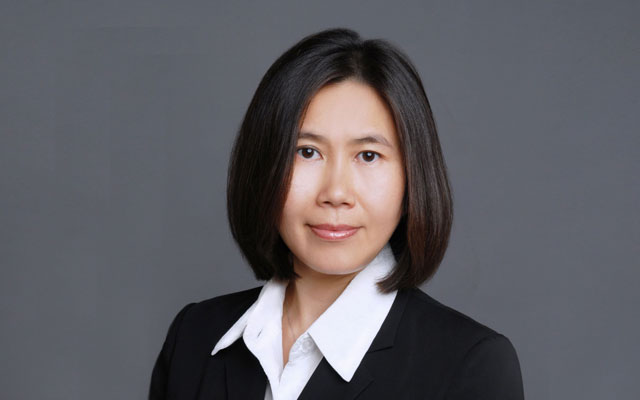
InterContinental Hotels Group (IHG) has named Nathalia Wilson director of development, South-east Asia & Korea.
Joining the development team based in the Singapore corporate office with 20 years of hotel investment and asset management experience, Wilson will focus on further expanding IHG’s presence in the region.
Prior to joining IHG, Wilson was at Savills, where she established and led the Asia Pacific Hotel Advisory Business. Over six years, she played a pivotal role in growing the team based in Singapore, Vietnam, Australia, Japan and China. At Savills, she further honed her skills in asset management, hotel investment, due diligence, hotel advisory, feasibility studies and strategic planning.
Wilson also worked in the regional offices of Hyatt in Hong Kong, Tokyo, Dubai; and Goldman Sachs Realty Japan in their Tokyo headquarters.
She is fluent in Bahasa Indonesia and conversational Japanese.
Malaysia hosted the Worldchefs Congress & Expo 2018 in July. How is that beneficial for the Professional Culinaire Association (PCA) and its members?
The event is proof of PCA’s recognition by Worldchefs (The World Association of Chefs’ Societies), which is important as we are a young association. It is also recognition by chefs in Malaysia that we are the national professional body in Malaysia.
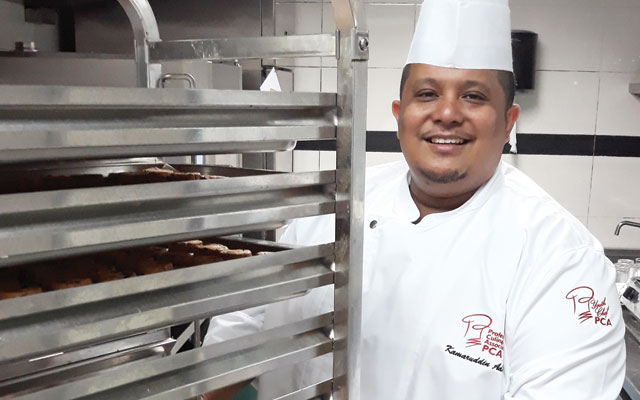
Mohd Kamaruddin Adnin
The four-day event provided plenty of opportunities for our members to network with foreign chefs from more than 100 countries. That is important because it opens doors for us to invite overseas chefs to give talks on the latest cooking techniques as well as cooking demonstrations at PCA’s future events, and for our members to showcase our expertise and Malaysian recipes at overseas events. There are more opportunities for us to learn from one another.
Since the congress, PCA has been approached by both corporate and government agencies that wish to work with us. One such government agency is Invest Selangor. It has invited us to exhibit, give a career talk on the profession and judge in a competition on cake decoration and fruit carving at the Selangor International Business Summit 2018 in September. It is a great opportunity for our members to network with South-east Asian importers and exporters of F&B, manufacturers, distributors and traders who will be present.
Has the congress helped to grow PCA membership too?
Most definitely. Prior to the event, we had about 100 members. As we drew closer to the congress, membership started to rise. Now we have 250 members and growing.
By hosting the congress, we have successfully demonstrated to Malaysian chefs that PCA is an active association and we organise and participate in activities that give members foreign exposure. We also conduct educational programmes for our members and do charity projects that involve cooking for the homeless, orphans or victims of natural disasters.
Young chefs who are 25 years and below now make up 30 per cent of our membership. Many of them are still in colleges taking culinary courses. They have not yet entered the working world. They join the association with the intention to gain more knowledge which could further their career development and for networking opportunities with celebrity chefs. Here, we also create opportunities for them to serve the community through charitable events.
Sometimes major association meetings led to positive influences in government policies facing the profession or related industry issues. Has the congress achieved any advances in this manner?
No, but it has opened doors for us. The deputy tourism, arts and culture minister, Muhammad Bakhtiar Wan Chik, who gave an opening speech and launched the congress, told our members to give proposals to the ministry on how we can work together.
There are a few things we’d like to do, to further expose foreigners to Malaysian food which is not as well-known as say, Japanese or Thai cuisine.
We would like to do cooking demonstrations on Malaysian food in foreign countries where Tourism Malaysia, Malaysia External Trade Development Corporation or other government agencies are exhibiting at major events.
Food wastage is a growing concern around the world and for Worldchefs. Was this addressed at the Worldchefs Congress & Expo 2018?
First, you need to understand the difference between food waste and food loss. Food waste refers to food that is fit for consumption but is discarded. This is very different from food loss, which is food that is spoilt before it reaches the retail stage. At the congress, the issue of food waste was tackled head-on and delegates made a commitment to reduce food wastage.
A delegate, Christopher Ekman, who is also chef at ReTaste, a not-for-profit restaurant in Stockholm, gave an on-site demonstration using produce given by local supermarkets that were nearing their expiry dates. This included pasta made from stale bread. The key message was that less than premium products were still valuable and, with a little imagination, you can produce delicious meals with them.
How is food wastage being dealt by PCA?
We work closely with Food Aid Foundation, a non-profit government organisation that rescues surplus food from the supply chain and distributes it to those in need. We run projects together where Food Aid Foundation gives us the ingredients and our volunteer members cook and distribute dishes to the needy.
We also run educational talks for our members, including young chefs, on what they can do to reduce food wastage. We advocate cooking based on requirement, and not cooking in excess.
So what’s next for PCA now that the congress is done and dusted?
We will be concentrating on activities within Malaysia. A strong bond was forged among committee members in the lead up to the congress. We hope to enhance this.
Now that we have more members, we will be organising more activities that will foster teambuilding and create greater rapport within the association. We hope to have regular healthy activities for our members such as camping or hiking. We never had such activities in the past.
What challenges is PCA facing in operations and growth?
Our biggest challenge is finding corporate partners in the food industry to support our events. Fortunately, the recent congress had created awareness about our association and made it easier for us to approach potential partners.
Another challenge is finding volunteer members to join committees. No one in the association gets paid for their time and energy. Sacrifices have to be made, so most people don’t stay long in committees. Personally, I’m fortunate that my wife is also in the F&B industry and she has joined me at meetings. She understands what I do and why sometimes my weekends are spent away from the family.
How do you overcome the challenge of finding volunteers?
We just have to constantly try to rope them in. When I interview them, I paint a real picture and tell them they must be willing to sacrifice time, energy and money. If they volunteer, they will have three special projects to achieve within a term of two years. If they are unsuccessful, they will be replaced. For me, deadlines and results are the most important.
Let’s talk about you. How long have you been involved in PCA and how have you been driving its objectives?
I have been with the association for five years. Prior to that, I was the chairman of competitions. PCA strongly advocates the development of young chefs, and networking between chefs and food suppliers.
One frequent question from young chefs who are taking a diploma in culinary studies is, what position they can start with upon entering the work force. I tell them they have to start at the bottom as a commis chef. This is the first rung of the ladder to becoming a great chef. It is an opportunity to learn all there is to know about the trade and cooking under the supervision of a chef de partie and rotating through different sections such as sauce, vegetables, fish and butchery.
Many young chefs after their education do not know how to start their career and we help them through this process through our activities.
Would you describe yourself as a strict leader?
I am open to reason and I like to get opinions from others and brainstorm ideas. I am also very straight forward and transparent especially when it involves money and benefits. I like to observe and guide the committee where I can. I won’t be in the association for the next 20 years.
Your term as president ends in May 2019. What is next for you?
I hope to continue serving the association and sharing my knowledge, even though I may not be re-elected. I believe I have knowledge and ideas to share with young chefs who want to grow in this industry.
Do you believe in succession planning?
Definitely. I believe in developing young chefs who will take over the association and also be leaders in their job. I like to share my skills and knowledge with others. At PCA, we encourage members to take part in activities, share knowledge and ideas, and to take on leadership roles. To become a leader, you need passion, to focus on what you do, and to make decisions based on consensus.
How would you like to see PCA grow further?
I want to make it business oriented so that we don’t have to look for funds all the time. I want it to be profitable, so that we can afford a paid secretariat to reduce the burden on volunteers. That will also help the association grow membership further and increase the number of programmes we run while reducing the workload on the committees.
Have you taken steps in this direction?
A committee is now doing the paperwork which will be presented to all members at the next annual general meeting in May 2019. I also have to present this proposal to our advisory board for their opinion.
Delegates of WorldChefs Congress & Expo 2018 at KLCC Park
A delicious calling
At 42 years old, Mohd Kamaruddin Adnin is a young president for the Professional Culinaire Association (PCA).
He is no stranger to culinary industry events. He was a member of PCA’s bid team, working closely with the Malaysia Convention & Exhibition Bureau to successfully bid for the Worldchefs Congress & Expo 2018.
He was also the manager of Malaysia’s national team at the Food&HotelAsia 2018 in Singapore.
Besides his work with PCA, he is executive chef and central production unit manager at MAS Awana Services. In his capacity, he takes charge of food catering for Malaysia Airlines premier lounge and airline catering for flights out of Sabah and Sarawak.
He has also contributed recipes to local cookbooks.
Since young, Mohd Kamaruddin knew he wanted to become a chef. He started his career as a kitchen helper in Hilton Petaling Jaya in 1995.
As a young bachelor, he loved to travel and worked onboard Royal Viking Sun and Seabourn cruise lines for three years.
He has also served as a chef in overseas hotels and resorts.
In 2008, he returned to his home country Malaysia and joined Sheraton Imperial Kuala Lumpur as chef de cuisine. Four years later, he was promoted to executive sous chef of the hotel.
This article was first published in TTGassociation October 2018, a sister publication of TTGmice
Izumisano City, one of the 33 cities in Osaka Prefecture, has announced several upcoming developments in Rinku Town, located a 10-minute drive from Kansai International Airport, the main gateway for air travel into Japan’s Kansai region.
The city started its business events efforts around six years ago, when the then mayor pushed for more integrated resorts (IRs) and hotels to be built in Izumisano as he believed in the area’s potential, shared Ryota Nakahira, planning general manager for Izumisano City.
SP Setia envisions what SICC could possible look like
And while the city lost the IR bid to nearby Yumeshima – a reclaimed area in Osaka Bay – Izumisano fought on to capture more international business visitors that pass through Kansai International Airport.
One of the most prominent MICE developments will be the Setia Izumisano City Center (SICC), a two-hectare mixed-use development scheduled to open in 2024. SICC will house serviced apartments, a four-star hotel, a 1,600-pax convention centre, offices, a conservatory with fountains and waterfalls, gardens, and F&B and retail shops.
The developer is S P Setia, a Malaysian real estate specialist that is also behind Setia SPICE Convention Centre in Penang and Setia City Convention Centre in Selangor.
On the area’s selling points, S P Setia’s executive vice president, Koe Peng Kang, told TTGmice: “Izumisano offers a genuine way to experience the Japanese way of life without the hordes of tourists. We will be working together with Izumisano city council to promote the place together, and will be targeting (event organisers from) Hong Kong, Bangkok, Vietnam, Thailand and Singapore.”
In addition to the SICC, other upcoming attractions in Izumisano include the Kanku Ice Arena, a ice rink with meeting and incentive uses (December 2019); as well as an expansion of Rinku Premium Outlets by 2020 that will add another 60 shops to its existing 210 shops.
As well, new hotels on the cards include the Hen na Hotel Kansai Airport with 98 keys (November 2019); the Oriental Suites Kansai Airport with 258 guestrooms (winter 2019); and the Hotel WBF Grande Kansai Airport with 700 guestrooms and a rooftop bar (2020). With these new developments, Rinku Town will boast 2,834 rooms, up from the current 1,778 rooms.
“I feel that the city council has put in effort and has the foresight and determination to make Rinku Town successful. We do not regard hotels here as competition. Instead, they are a complement (to what we are building). There are many things to be seen here, we just have to polish and generate the story,” concluded Koe.
Corporate meetings and incentive events held in Seoul will now enjoy greater customised branding and experience support should they qualify for the city convention bureau’s revamped PLUS SEOUL support programme.
For groups of 50 to 199 participants, the improved PLUS SEOUL programme offers cakes and cookies branded with the event owner’s corporate brand while larger groups of 200 to 499 participants can receive customised teambuilding activities and entertainment.
A customised performance for Manulife Insurance Indonesia
Event branding on buses and photo mosaic walls are granted to groups of 500 to 999 participants, and event videos and on-site Korean cosmetic booths are offered to events with more than 1,000 participants.
These features are in addition to the existing financial, promotional and operational support offered through PLUS SEOUL.
The enhanced features of PLUS SEOUL have already been taken up by recent corporate groups calling at the South Korean capital city.
Manulife Insurance Indonesia, for example, received a customised performance that was designed to tell its corporate story as well as branded commemorative cookies for all 269 participating employees in return for using a Seoul MICE Alliance unique venue.
Meanwhile, Allianz Life Indonesia’s 2,000-pax incentive and meeting programme utilised corporate branding on buses, K-pop performances and access to Dongdaemun Design Plaza.
A Seoul Tourism Organization official said in a statement that there has been a “strong increase in the number corporate groups visiting Seoul from the Asia-Pacific (region) as a result of our PLUS SEOUL campaign and related ongoing efforts to promote our city as an attractive incentive travel destination”.
Continued growth is expected for 2H2019, added the official.
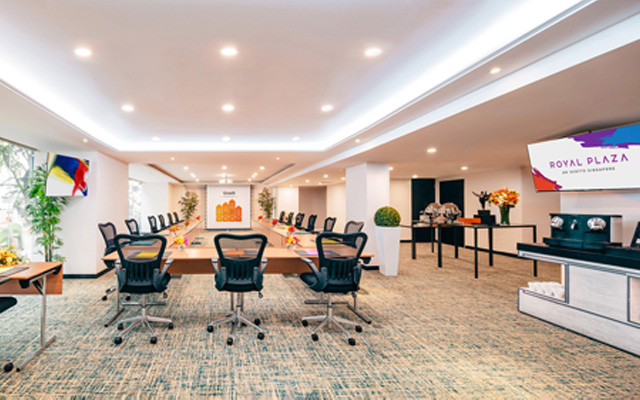
Royal Plaza on Scotts recently launched Stars on Scotts, an online corporate loyalty programme that rewards members (also referred to as Stars) with Star Points for stays, meetings and events held at Royal Plaza on Scotts and 8 on Claymore Serviced Residences.
Stars can accumulate their Star Points and enjoy an extensive list of Star Rewards which includes up to 40 lifestyle brands such as Zalora, Marché Mövenpick, and Grab. They will also be able to benefit from room upgrades and late checkouts, both subject to availability.
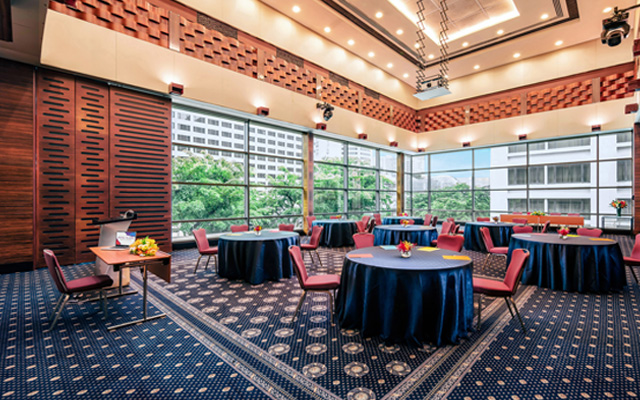
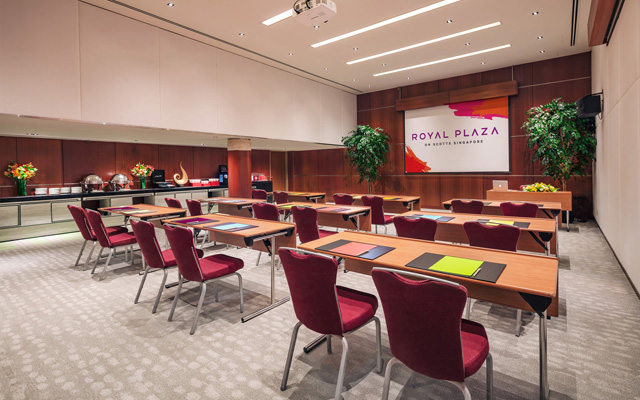
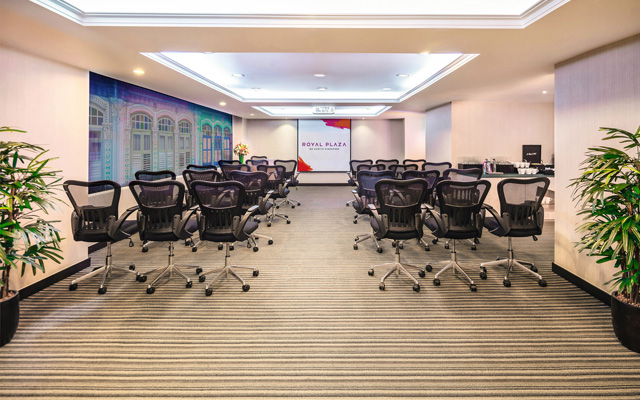
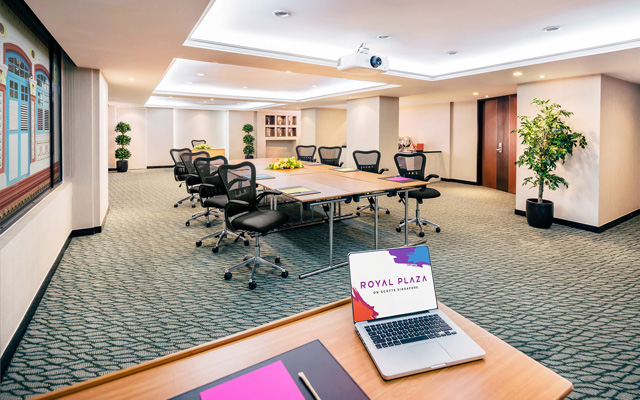
Royal Plaza on Scotts' meeting rooms
1 of 5
Meanwhile, Megastars will have access to the Royal Club Lounge at Royal Plaza on Scotts; get to enjoy birthday treats and discounts; 15 per cent off total food bill at Carousel; and 15 per cent off at all free-standing Aldo stores.
Throughout the year, the Stars membership team will organise members-only events for Stars, where they can look forward to themed events. There will also be Star Points giveaways through a spin-the-wheel or a gift box lucky draw.
This launch comes just after the hotel’s extensive makeover, which includes the sprucing up of its nine meeting venues. The coffee break menu has also been revamped to include local bites such as pan-fried carrot cake with sambal, and deep-fried chilli crab buns.
In addition, the property’s 511 rooms have been rejuvenated, where more USB ports have been added. Guests can now avail unlimited mobile data with free usage of pocket Wi-Fi devices that connect up to five devices. The hotel’s popular buffet restaurant, Carousel, has been refreshed, with a Churrasco (Brazilian barbecue) and Asian hotplate with local delights being some of the new features.
RoomIt by CWT, the global hotel distribution division of CWT, has appointed Shannon Hyland as senior vice president of global supply.
In his new role, Hyland will provide overall leadership and execution of the supplier strategy and effectiveness, and market management.
Prior to joining RoomIt, Hyland was the CEO and executive vice president of Radius Travel for the past 11 years. Before that, he had stints as CFO at both Groople and The Mark Travel Corporation.
Just 10 minutes from Phuket International Airport on the serene northern coast, this 178-key, Bill Bensley-designed resort offers delegates a quiet, tropical paradise steeped in Phuket’s tin-mining heritage
The newly-opened Ritz-Carlton, Bangkok anchors the One Bangkok development with cosmopolitan elegance. Featuring the city's largest ballroom and a spectacular new penthouse suite, it delivers exceptional hardware and deeply authentic, soulful service for business and leisure travellers alike
Behind the imposing, Brutalist concrete that defines Zurich’s Oerlikon district lies a surprising secret. While its exterior honours the neighbourhood’s industrial roots, stepping inside Mama Shelter reveals a vibrant, neon-soaked world that is a far cry from its rigid shell