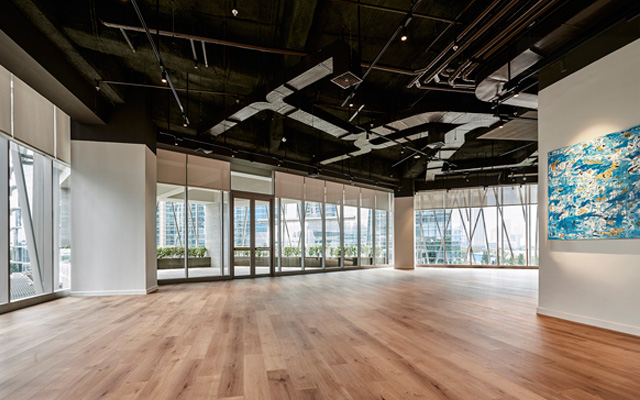
Meetings and Exhibitions Hong Kong, a division of the Hong Kong Tourism Board (HKTB), has launched the Old Town Central (OTC) MICE Guide in an effort to direct business event planners’ attention to venues and activities in the century-old district.
Old Town Central has a variety of appealing activities that planners can weave into their event programmes
The Guide, which contains recommendations by top planners from four strategic markets across the region, offers four product and information categories: teambuilding ideas, dining venues, event venues, and the ‘Choose your own adventure’ themed suggestions to get planners started.
It is available in print and digital versions, with the latter accessible at www.mehongkong.com/otc.
“This goes beyond product development and takes a holistic experiential approach to create an all-in-one MICE solution, tailored for meeting and incentive groups, to create an engaging and authentic Hong Kong experience in Old Town Central,” said Kenneth Wong, general manager of HKTB’s MICE and Cruise Division, in a press statement.
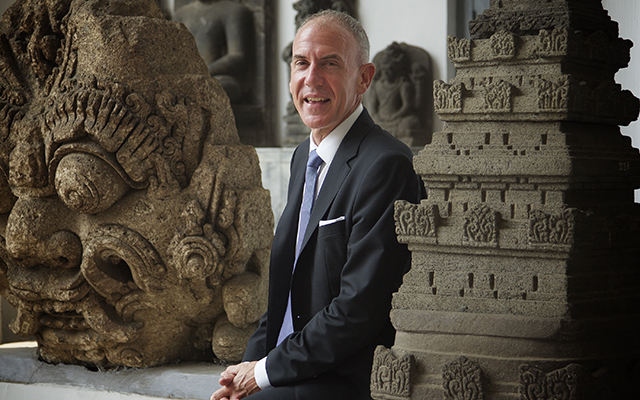
Corporate groups can indulge in traditional performances and venues in Yogyakarta
Yogyakarta may not have large convention facilities to boast of like her more popular sister MICE cities, but her heritage and culture have proven to be formidable lures for corporate event planners in search of memorable destination experiences.
Corporate groups can indulge in traditional performances and venues in Yogyakarta
I Gusti Putu Yaktianuraga (Bagus), managing director of Werkudara Nirwana Sakti, a major event and travel management company in Yogyakarta, told TTGmice: “People may only know of Borobudur and Prambanan, but there are actually 52 temples in and around Yogyakarta and Central Java. These are our strong assets. Heritage and culture are our competitive edge in courting business events. Therefore, all our events feature local content built on Javanese cultural values and wisdom.”
Three of Yogyakarta’s most popular heritage sites are business event-friendly. Prambanan, Borobudur and Ratu Boko Palace have a combined collection of 19 event venues, ranging from a 60-seat indoor space to a sprawling outdoor area for up to 10,000 people at a standing cocktail reception.
Some of these venues have been utilised for public events. The Prambanan Temple Gardens, for example, hosts the annual Prambanan Jazz Festival which has featured international music greats like Shakatak, Shane Filan and Diana Krall.
Roswita, head of events division, Taman Wisata Candi Borobudur, Prambanan and Ratu Boko Management, noted that there are even more spaces around the temples which are suitable for small and medium-sized gatherings.
As well, there has been a recent rise in efforts to promote the smaller and less-known temples in the destination for corporate activities.
For instance, corporate teambuilding groups could start the day with breakfast at Candi Sambisari, a Hindu temple in Kalasan, followed by a bicycle trail along small villages to Candi Plaosan in Bugisan near Prambanan. Stops at a tofu or tempeh cracker factory could offer CSR opportunities.
Another option which would suit a corporate incentive programme is a visit to Candi Banyunibo followed by a sunset dinner at the nearby Ratu Boko Palace.
The only downside to using smaller temples is space limitations.
To resolve this, Werkudara Nirwana Sakti ropes in the local community for support. Around Candi Plaosan and Candi Banyunibo, for example, are open spaces belonging to the local community.
“We’d hire the space, set up tables, lighting and stage, and use the temple as backdrop. We’d involve the locals by having them to prepare drinks such as coconut juice (from coconut harvested from their trees) and home-cooked favourites such as soto (soup) and pecel (salad),” said Bagus.
Events planned at Candi Banyunibo could utilise an area for traditional archery managed by the locals.
Such community involvement helps sustain the livelihood of the locals. For example, renovation and promotion of Sojiwan Temple have transformed the area into a tourism village over the last couple of years.
Warjono, board member of the tourism village, said: “When the government started renovating Sojiwan Temple in 2004, we formed a tourism awareness group to identify our potential. We now have andong horse carts and gerobak ox carts to provide visitors with traditional transport, bicycles for rent, and local delicacies produced in home industries.”
UNESCO assistance in 2015, followed by support from the local government and universities, encouraged the local batik industry to thrive. Local designs depicting reliefs from Sojiwan Temple are a hit now.
Today, the village is capable of hosting a corporate dining event for up to 200 delegates at its Pendopo Hall, with entertainment provided by locals who play the gamelan and meals cooked to strict standards by local families.
Beyond temples, Yogyakarta dangles a plethora of other heritage sites that make interesting additions to corporate programmes.
The labyrinth of small lanes inside Kotagede, the capital of Mataram Sultanate in the 16th century, is perfect for Amazing Race-type teambuilding games which give participants a valuable history lesson.
There are also a number of traditional houses with joglo halls that are open for lunch and dinner.
Shinta Noor Kumala, coordinator of the Kotagede Heritage Trail, said: “When house owners realise that their homes are admired by foreigners for their traditional architecture and heritage value, they would want to keep and preserve their houses. This is one way we help to conserve Kotagede and our home, and empower our people.”
Yogyakarta’s unique venue options extend to museums such as Sonobudoyo and Affandi Museum, traditional markets such as Pasar Ngasem, and more.
Yurry Apreto, director of GM Production Indonesia, said meetings in Yogyakarta need not be saturated with cultural activities in order to offer a sense of place. It could be as simple as sitting on the floor to meet in lesehan-style.
To further develop the destination for business events, industry players hope the regional government will continue to develop new products, improve facilities and infrastructure, and step up promotions.
Yurry said: “We are facing competition from (other Indonesian cities like) Belitung and Mandalika, and need to keep attracting new and returning business events.”
Dane Clouston has joined Grand Hyatt Melbourne in Australia as its newest executive chef.
He moved to Grand Hyatt Melbourne after serving six years at Park Hyatt Melbourne as executive chef.
Clouston’s culinary career began when he left his home town of New Plymouth, New Zealand, to study cooking in Adelaide. He then moved to Melbourne, where he met Melbourne chef Teage Ezard, (restaurants EZARD and Gingerboy) and in 2000, began working in the EZARD kitchen.
In 2004, the Kiwi went on to Hong Kong to open Opia with restauranteur Yenn Wong at the JIA Hotel. Later in 2008, Clouston moved to The Puli Hotel & Spa Shanghai as the opening executive chef. After four years in that post, he returned to Australia to join the Hyatt group.
Located at Ocean Park Hong Kong and just minutes from the city, Marriott’s first-ever city resort hotel has opened with 471 keys.
Hong Kong Ocean Park Marriott Hotel is split into three towers – The Pier Wing, Marina Wing and Club Wing. All guestrooms, spread across three categories, are located in The Pier Wing and Marina Wing. The Club Wing houses the executive M Club, which is scheduled to open early next year.
Event planners can avail Hong Kong island’s largest pillar-less ballroom – at 1,200m2 – and five other meeting spaces.
There are four restaurants on-site: The Pier Lounge and Bar for modern dining and cocktails; Marina Kitchen, an all-day dining and international buffet featuring live cooking stations; Canton Bistro for Cantonese specialties; and the Prohibition Grill House & Cocktail Bar for an American steakhouse concept.
Recreational amenities on-site include a large lagoon pool, gym, and Harnn Heritage Spa.
Hotel guests are also entitled to exclusive Ocean Park benefits, such as special opening and seasonal offers.
A staggering eighty two per cent of more than 200 respondents from around the world, mostly women, who participated in the Women in the exhibitions industry research, conducted by UFI, the Global Association of the Exhibition Industry, and its media partner m+a, claimed to be happy with their jobs in the exhibition industry.
Results of the Women in the exhibitions industry research was unveiled at the 85th UFI Global Congress in St. Petersburg
Results of the study, which aims to provide insights into the perception of women’s and men’s skills in the workplace, the potential for advancement for women within the industry and details of the different female career drivers, was released at the 85th UFI Global Congress in St. Petersburg, Russia this week.
Good communication skills, empathy and strong organisational skills are among the many soft skills held by women and valued by the exhibitions industry
The study found that women were identified as having soft skills such as good communication skills and empathy. Women were also judged as having strong organisational skills, with the capacity to multi-task. Despite these soft skills, women lagged behind men when it came to networking.
Meanwhile, all respondents, both women and men, assigned self-confidence, technical know-how and power-related skills to men.
A darker discovery of the study was that more than half of the female respondents did not feel treated equally in terms of salary and career opportunities, and more than one third felt that they were held back from having more responsibility.
Most of the respondents felt that the industry would benefit from more female leaders and 61 per cent already see active support for women, although only 49 per cent think that quotas are the way to go.
Women, contrarily to men, often have to choose between their career and private life, which is also seen as one of the major negative career factors, with career breaks taken due to maternity leave (78 per cent) and institutional discrimination (68 per cent).
Gwen Kaufmann of Deutscher Fachverlag (Germany) who led the project, said in a press statement: “Women clearly make up the majority of the workforce in the trade fair industry, but they only represent a minority of the leadership. Both men and women agree that women can deliver diversity with a more creative approach when it comes to solving problems, helping the industry to prosper.”
Sonia Thomas, UFI’s COO, added: “Men and women have different skills, and are complementary, so the optimum is a mix of both sexes. We all must consider how to increase female representation at the senior level by making the path to the top a little easier for women.”
UFI will continue to work on the topic following the initial release of the research results. The full result can be downloaded at www.ufi.org/research.
The MICE Dialogue on Data Protection, organised by the Singapore Association of Convention & Exhibition Organisers & Suppliers (SACEOS) last Thursday, has raised awareness that event companies must put in place policy guidelines and practices to safeguard the collection, retention, use and disposal of personal data.
The MICE Dialogue on Data Protection was moderated by MCI Group Asia Pacific’s Zarina Othman (far left) and featured speakers Vicki Heng Law Corporation & Barrister of Middle Temple’s Kelvin David Tan and Info- Communications Media Development Authority’s Valeriane Toon (far right)
Apart from stricter Singapore rules on Personal Data Protection Act (PDPA) kicking in by September next year, the issue of the EU’s General Data Protection Regulation, which came into effect in May, will also impact the industry, according to speakers.
Kelvin David Tan, director, advocate and solicitor with Vicki Heng Law Corporation and Barrister of Middle Temple, said companies have to appoint a data protection officer (DPO), conduct data audits and have solutions in place to quickly rectify a data breach.
Tan advised: “Red flags will be raised if these are not in place. For companies to be compliant, as far as they are aware, they must have data consent properly spelled out, avoid excessive data collection and be careful when using third-party vendors like those providing IT services.”
Ralph Hendrich, SACEOS honorary treasurer and general manager of Koelnmesse, said the industry must take “the asking of consent every time” seriously to build trust, that the data collected is protected and the data must be deleted after the event.
On the criteria of the DPO, Tan said it did not have to be a full-time appointment, but the officer must be knowledgeable about data and data flow. “Depending on the industry, it could be the marketing head in the F&B industry or the legal officer in an IT company,” he noted.
The difference between PDPA and GDPR was addressed and attendees learnt Singapore is focusing on data protection and the EU on privacy.
Hendrich noted: “GDPR is about residency and can apply to a Singaporean living in Germany, making data portability – like who is getting it and who can use it – for EU residents complex.”
Nine influential Australians have joined Business Events Sydney as its global ambassadors, part of the BESydney Global Ambassador Program Patron.
New influential individuals in the BESydney Global Ambassador Program Patron; pictured from left are member of parliament Adam John Marshall, Australia NZ Chamber of Commerce in Japan’s Melanie Brock, Bureau of Health Information’s Carol Pollock; The Institute of Electrical and Electronics Engineers (USA)’s Jim Prendergast, Carnival Australia’s Ann Sherry, and BESydney’s Lyn Lewis-Smith
Latest entrants include Melanie Brock, chair emeritus, Australia NZ Chamber of Commerce in Japan (Tokyo); Joseph Carrozzi, managing partner, Sydney, PwC Australia; Carol Pollock, chair, Bureau of Health Information; Jim Prendergast, past executive director chief operating officer, IEEE (New York); Ann Sherry, executive chairman, Carnival Australia; Gabrielle Trainor, board, Infrastructure Australia, and board of trustees Western Sydney University; Peter Osborne, managing director Asia, Blackmores International (Singapore/ Taipei); Andrew Macintosh, chairman, Acorus and AustCham Hong Kong and Macau (Hong Kong); and Chris Boshuizen, operating partner, Data Collective VC (San Francisco).
The programme now features 100 ambassadors across the New South Wales economy.
Emphasising the important role the ambassadors play in the advancement of Sydney’s economy, Bruce Baird, BESydney’s board chair said the programme has “helped secure over A$320 million (US$230 million) worth of global events that will be coming to Sydney from now up until 2026”.
He credited the achievement to the “power of networks” and the “voluntary work of BESydney’s ambassadors”.
Associations gunning for regional or global growth have been urged to adopt a tighter and more focused growth strategy, especially in a fragmented region like Asia, said experts at the ASAE’s Association Leadership Forum held in Singapore last week.
For instance, experts advised identifying target markets and taking on a localised strategy for each country.
Dom LaVigne, former director of government & public affairs – Asia Pacific/Middle East, Methanol Institute, noted that “one size does not fit all” in Asia-Pacific markets, which have “disparate” political, media and business practices; as well as political sensitivities and territories.
For example, in China, the city or municipal officials often hold more decision-making power than the larger government, and associations must consider which are the right parties and partners to approach.
The European Society for Radiotherapy & Oncology has binned its “one size fits all principle” and “standalone model” in its pursuit of global expansion, shared Sven Bossu, its director of innovation.
Instead, the association has turned to strengthening partnerships with key associations in Singapore, and turned up conversations with regulatory boards and healthcare professionals in this region.
Weintraub: seeing good progress with a local market approach
Likewise, the Building Industry Consulting Service International (BICSI) has concentrated on growing certain markets, the latest being Dubai, and is approaching each market with a unique model that caters to local needs, shared Paul Weintraub, vice president of global development and support, BICSI.
BICSI has seen good progress with this approach. Since its 2015 inauguration, the BICSI Middle East & Africa (MEA) Conference & Exhibition has tripled in size and the BICSI MEA ACE Summit has recently concluded its second successful edition.
“We’re now looking at where the next market is going to be and what products are going to be successful there. We’re reaching out to markets independently because the same model will not work everywhere,” remarked Weintraub.
He advised fellow associations to know “what the target market is demanding from you” and to tailor their products and services accordingly.
A focused approach is also crucial in establishing partnerships. Nikki Walker, vice president, global association management & consulting, MCI Group, stressed the need to select the right partners to work with.
Rather than signing on a long-term partnership, she urged related associations to co-organise specific events and symposiums, and to be open to working with third-party businesses that can help fill the gaps that associations cannot due to limited resources.
“You don’t have to be a catch-all. It’s about being selective and strategic about pursuing a certain geographical area or segment in your industry,” said Walker.
Associations gunning for regional or global growth have been urged to adopt a tighter and more focused growth strategy, especially in a fragmented region like Asia, said experts at the ASAE’s Association Leadership Forum held in Singapore last week.
For instance, experts advised identifying target markets and taking on a localised strategy for each country.
Dom LaVigne, former director of government & public affairs – Asia Pacific/Middle East, Methanol Institute, noted that “one size does not fit all” in Asia-Pacific markets, which have “disparate” political, media and business practices; as well as political sensitivities and territories.
For example, in China, the city or municipal officials often hold more decision-making power than the larger government, and associations must consider which are the right parties and partners to approach.
The European Society for Radiotherapy & Oncology has binned its “one size fits all principle” and “standalone model” in its pursuit of global expansion, shared Sven Bossu, its director of innovation.
Instead, the association has turned to strengthening partnerships with key associations in Singapore, and turned up conversations with regulatory boards and healthcare professionals in this region.
Weintraub: seeing good progress with a local market approach
Likewise, the Building Industry Consulting Service International (BICSI) has concentrated on growing certain markets, the latest being Dubai, and is approaching each market with a unique model that caters to local needs, shared Paul Weintraub, vice president of global development and support, BICSI.
BICSI has seen good progress with this approach. Since its 2015 inauguration, the BICSI Middle East & Africa (MEA) Conference & Exhibition has tripled in size and the BICSI MEA ACE Summit has recently concluded its second successful edition.
“We’re now looking at where the next market is going to be and what products are going to be successful there. We’re reaching out to markets independently because the same model will not work everywhere,” remarked Weintraub.
He advised fellow associations to know “what the target market is demanding from you” and to tailor their products and services accordingly.
A focused approach is also crucial in establishing partnerships. Nikki Walker, vice president, global association management & consulting, MCI Group, stressed the need to select the right partners to work with.
Rather than signing on a long-term partnership, she urged related associations to co-organise specific events and symposiums, and to be open to working with third-party businesses that can help fill the gaps that associations cannot due to limited resources.
“You don’t have to be a catch-all. It’s about being selective and strategic about pursuing a certain geographical area or segment in your industry,” said Walker.
Singapore industry entrepreneur and pioneer Kenny Goh has made a comeback with the establishment of MICE Neurol, an event technology company that promises to offer solutions based on five verticals, namely registration, data privacy protection, mobile app, engagement – incorporating gamification, live Q&A and feedback – and hardware rental control.
Goh: solutions will support uberisation and gamification concepts
According to Goh, the young company already has a number of government events in the bag.
Concepts such as “uberisation” and “gamification” will feature prominently in MICE Neurol’s solutions.
“Events are all about interaction and our surveys show that gamification is the ice-breaker on steroids and collecting redemptions for being on time, for example, is more fun and interesting for delegates,” he said.
As for the “uberisation” of events, Goh explained that it is the “peer-to-peer” delivery of a bespoke experience. For that to happen a platform is needed and he insists it costs next to nothing, unlike what organisers think.
Goh commented: “Three years ago it would cost about S$10,000 to S$12,000 to create an event app and it would take around two months to work. Now it can be done in six hours and our first client paid S$500 to get a taste.”
What is needed is experience, and a “fully integrated event technology company”, he pointed out.
And with the EU General Data Protection Regulation kicking in a few months back, and Singapore’s Personal Data Protection Act, the events industry must get up to speed on what the law states and how data mapping and data proxies work.
Goh said “data transfer agreements” will be part of the event landscape. He also insists the entire event organising and managing process must be integrated and there cannot be many vendors.
“I see the professional organiser who is only an intermediary dying off,” he suggested.
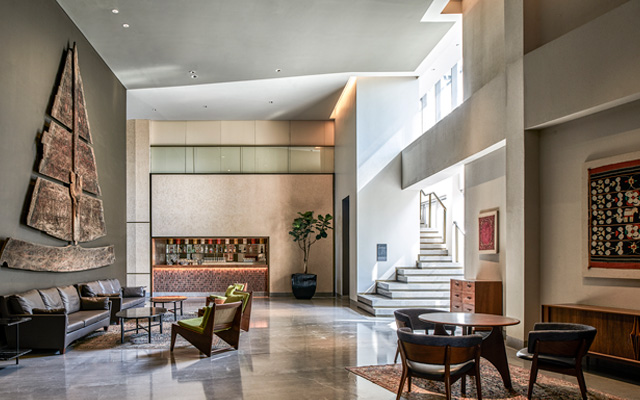
A polished urban retreat designed for business travellers, Hyatt Regency Kuala Lumpur at KL Midtown combines thoughtful design, seamless service, and exceptional facilities.
The five-star property excels in backing its expansive facilities with seamless service and personalised attention, setting the benchmark for luxury in Bangkok.