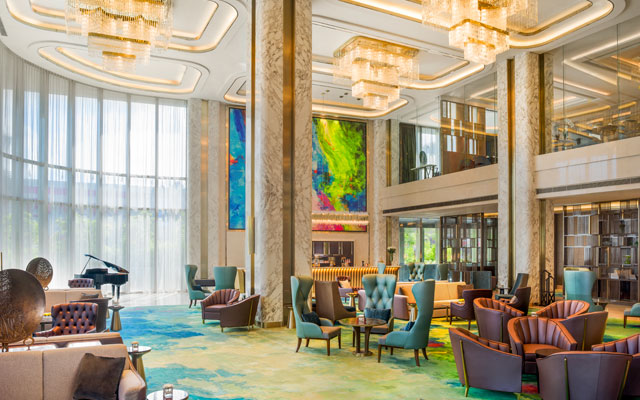
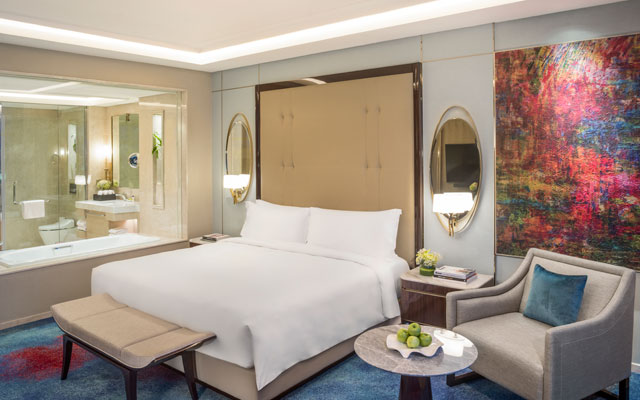
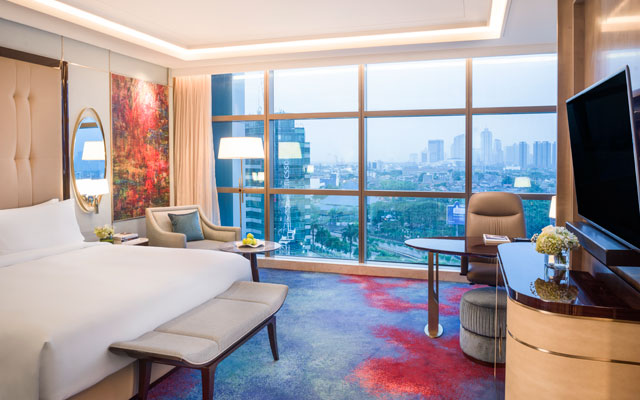
The 311-room InterContinental Jakarta Pondok Indah has opened in the heart of South Jakarta, as part of a high-end commercial complex that includes a shopping mall, office tower and golf course.
InterContinental Jakarta Pondok Indah
1 of 8
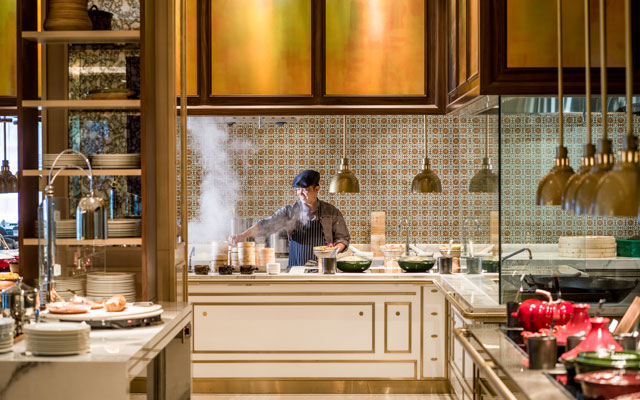
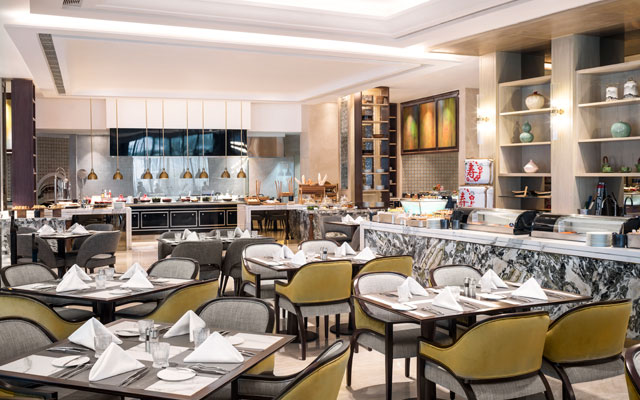
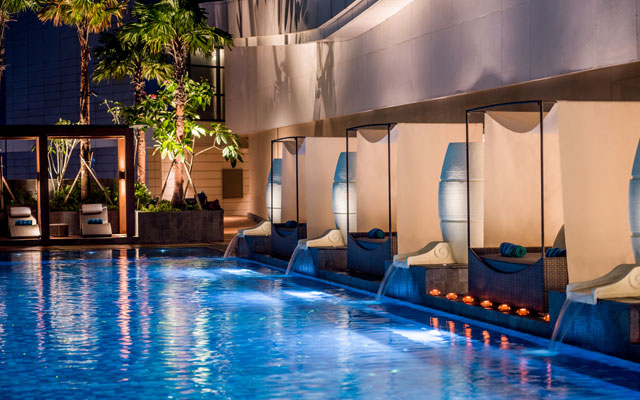
F&B options span the all-day dining Sugar & Spice, as well as two other watering holes – The Lounge and The Aqua Lounge – plus recreational facilities such as the Fitness & Movement Studio, Inaria Spa and a swimming pool.
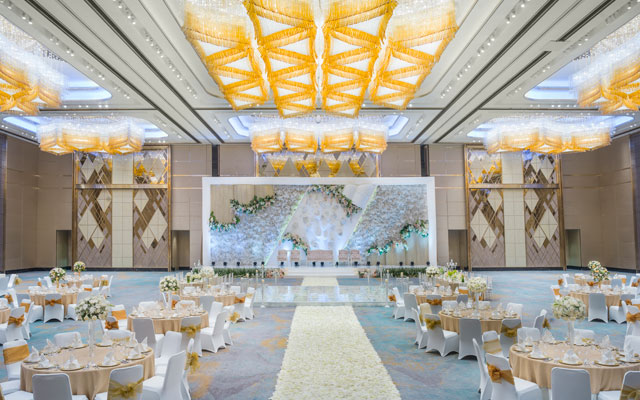
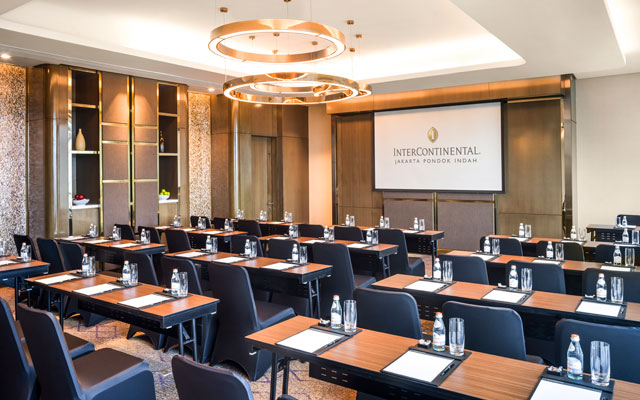
Events and function spaces are in abundance at the InterContinental Jakarta Pondok Indah, ranging from the Grand Ballroom that can hold up to 1,100 pax banquet-style to The Studios, Jakarta’s first club-inspired meeting space that can hold 120 pax and comes complete with show kitchens. Smaller meeting rooms for up to 20 pax are available as well.
Guy Heywood has been appointed COO of Six Senses Hotels Resorts Spas, joining the company from his previous role as COO for Alila Hotels and Resorts, a position he held for the past eight years.
With over 30 years of experience within the international hotel and tourism industry, the dual British and Australian citizen started his journey in Australia as the restaurant and lounge manager at InterContinental Sydney. He then moved on to The Regent Sydney, followed by Four Seasons Hotel Tokyo at Marunouchi and Four Seasons Hotel Singapore in a similar capacity.
In 1997, Heywood joined Aman Resorts as general manager of Amankila in Bali, and rose through the ranks to become the area manager for Amanresorts Indonesia, based at Amanusa. He then moved to Jackson Hole, Wyoming to act as country manager of Amanresorts Americas and Caribbean, based at Amangani.
Following that, he moved back to Australia to take up the group general manager role of Voyages Hotels and Resorts in Cairns.
The MICE industry has traditionally been measured mainly on the basis of its contributions to the tourism sector, and evaluated almost exclusively in measurable economic benefits.
But there are so many other powerful and meaningful benefits that go beyond dollars and cents to transcend into social impact and even legacies.
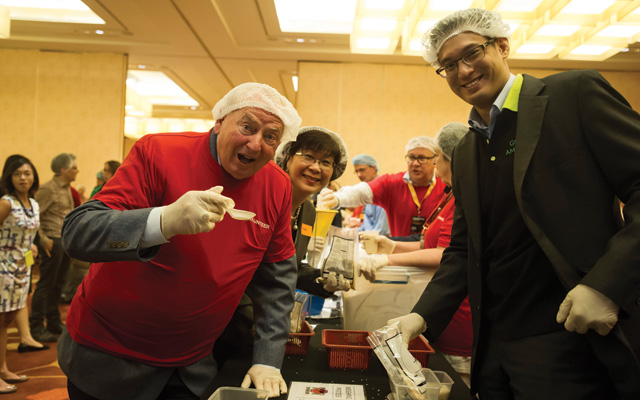
Food packing activity at the 2016 Flight Centre Global Gathering – it was the largest CSR event that Flight Centre has ever conducted as part of their annual event
One way is through CSR activation. Increasingly, we find event organisers turning to us to incorporate CSR activities into their programmes in order to deepen engagement with their delegates.
They also look towards us for advice as sustainability is deeply ingrained in our operations.
The Forever Living Global Rally in 2015 and Flight Centre Global Gathering in 2016 were two of the largest events held at Marina Bay Sands where large-scale CSR initiatives were incorporated as part of their programmes for the first time.
US-based multi-level marketing company Forever Living held a five-hour charity packing activity where volunteers, including 70 Marina Bay Sands employees and Forever Living executive staff, packed over 285,000 meals for the underprivileged. Aside from leading this initiative by connecting the organisers with charity partner Rise Against Hunger (previously known as Stop Hunger Now), my colleagues and I also participated as volunteers.
A similar experience was introduced with Australian travel company Flight Centre – we teamed up with the organisers, Rise Against Hunger and the Singapore Tourism Board to organise a food-packing activity with 250 travel agents and 25 Marina Bay Sands staff volunteers. Over 30,000 nutritious meals were packed within a span of 30 minutes, which was later distributed by Food Bank Singapore to the elderly and those with low incomes.
Kerry-Anne Walker, team lead of Flight Centre Global Gathering, had this to say: “Thanks for making the CSR segment a reality and such a success… we have had brilliant feedback and it now looks like it will be a permanent fixture on the agenda for Flight Centre Global Gathering moving forward.”
From left: Forever Living’s Rex Maughan, and MBS’ Ailynn Seah and Kevin Teng at the charity packing activity
Food, too, has always been a great conversation starter and forms an essential part of the delegate experience. It can also serve as a medium for event organisers to tell stories that align with their corporate values, especially in the area of sustainability.
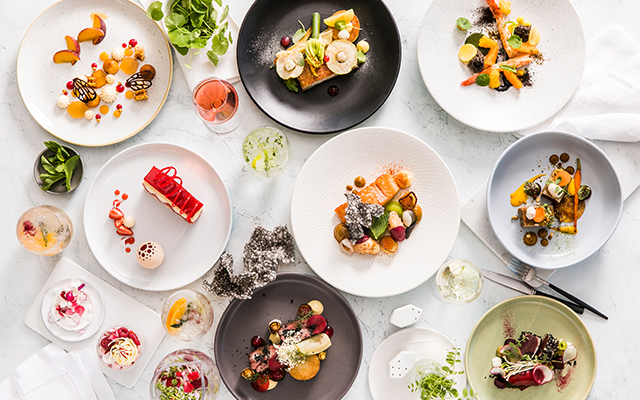
We recently hosted two reputable green events – the Schneider Electric Innovation Summit; as well as the 7th Responsible Business Forum on Sustainable Development, organised by Global Initiatives in collaboration with the United Nations Environment Programme. For both events, we worked together with our clients to raise the bar for their corporate sustainability goals by creating ‘earth-friendly’ menus using with organically certified, responsibly produced or locally sourced ingredients.
It is always heartening to work with like-minded clients that share the same vision of creating a positive impact to the communities and the environment.
For me, this creates meaning and puts meaningfulness back into meetings.
That’s the power of M!
Ailynn Seah is the vice president of sales – MIC and association at Marina Bay Sands. She has over 20 years of experience in hospitality sales and marketing, and leads the sales team in securing and executing major international meetings and conferences for Marina Bay Sands. Seah is also certified under the Certified Meeting Professional and Healthcare Meeting Compliance Certificate programmes.
ICC Sydney is Australia’s first fully-integrated harbourside convention, exhibition and entertainment venue and has already established itself as one of the world’s most sought-after venues.
Critical to ICC Sydney’s success has been its people and since its opening, the venue’s 1,700+ person team has hosted a diverse calendar of 1,500+ events and welcomed more than two million visitors. It has also achieved phenomenal delegate and client satisfaction ratings of 99% and 97% respectively in 2018.
As a result of the performance of its people and its focus on innovation as an organisation, ICC Sydney has garnered strong industry praise and acknowledgement across all facets of the business.
Feeding performance with culinary excellence
Underpinning ICC Sydney’s achievements has been its commitment to forging new ways of delivering for clients. This includes its award-winning Feeding Your Performance (FYP) culinary philosophy which sees the ICC Sydney team source the best, peak-of-season produce from local farmers to fuel the bodies and minds of delegates.
Originally focused on delivering ‘smart menus’, FYP has evolved to celebrate and support local farmers and showcase the very best regional produce on the global stage while also providing financial security, employment and growth opportunities for regional communities.
The program has been embedded throughout ICC Sydney’s operations and in 2018, FYP was heralded as a ‘blueprint for innovation’ by the prestigious University of Technology Sydney.
Cultivating a lasting legacy
ICC Sydney is also forging connections for its clients and community via a unique multi-streamed Legacy Program. This Australian-first initiative connects the world’s visiting minds, industry leaders and delegates with the region’s talented and local networks through five diverse streams – Innovators & Entrepreneurs, Generation Next, First Australians, Sustainable Events and Creative Industries.
Each stream provides clients with an opportunity to engage with locals in a number of ways – from direct exposure to Sydney’s network of entrepreneurs and startups and fostering the next generation of thought leaders via student engagement, to working with local Aboriginal businesses, engaging new talent for event performances and much more.
Image: Bangarra Dance Theatre performs at International Bar Association 2017
Formalising a commitment to Australia’s First Nations
Building on the venue’s work to drive greater engagement with, and acknowledgement of, Australia’s First Nations people, ICC Sydney became the first convention centre in Australia to launch a Reconciliation Action Plan (RAP) last year.
Setting a precedent for the industry, this initiative bolsters ICC Sydney’s ongoing commitment to recognise and celebrate the cultures, practices and traditions of Australia’s First Nations within the venue and the events it hosts.
Underpinned by technology
At ICC Sydney, event success is also fostered via the team’s dedication to continuously elevating experiences for clients through customised technology solutions. Today, the venue is more equipped than ever thanks to recent investments in additional industry-leading audio visual, production and ICT equipment.
As a result, clients have access to the most up-to-date technology in the industry, upgraded in-house digital facilities including a Digital Media Suite (DMS) and full in-house audio visual (AV) and production service. This is all supported by a team who know exactly how to bring the power of equipment to life and deliver the ‘wow’ factor.
Book your experience today
To experience ICC Sydney and the best of Sydney, book your next event today.
Email address: sales@iccsydney.com | Contact number: +61 2 9215 7100
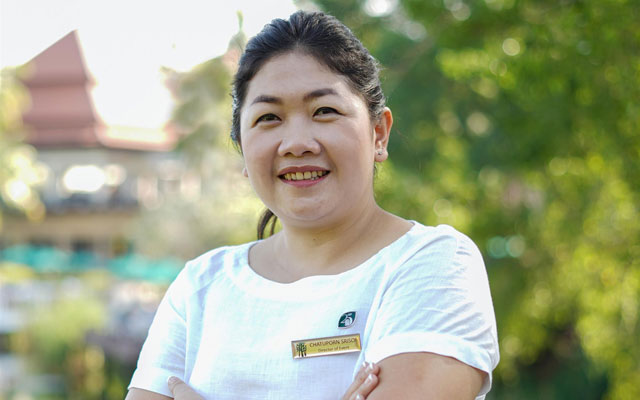
Chatuporn Srisoi has joined Banyan Tree Phuket as director of events.
She has a decade’s worth of experience in sales and reservations, and has extensive knowledge of the Phuket market, having previously worked at Splash Beach Resort.
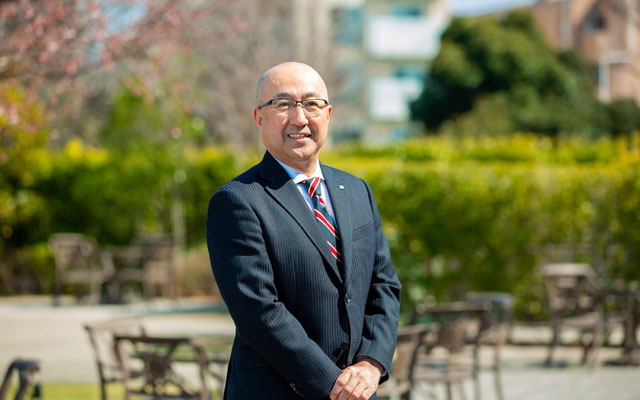
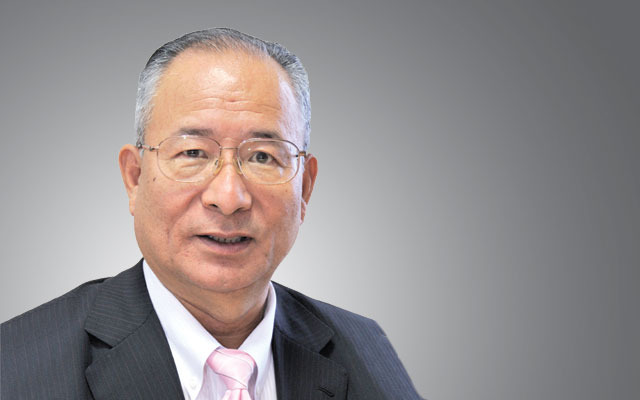
Fujita Kanko has promoted senior managing executive officer Yoshihiro Ise to the new role of president, succeeding Akira Segawa.
During his 36-year tenure with Fujita Kanko, Ise has held a broad range of positions at both corporate offices and hotels.
Yoshihiro Ise
He has managed several key properties as general manager, led multiple corporate initiatives, and developed new properties and brands.
This year, the 64-year-old Fujita Kanko will be announcing its medium-term management plan beginning 2020, where Ise has been tasked with revitalising and strengthening the company’s management and business practices.
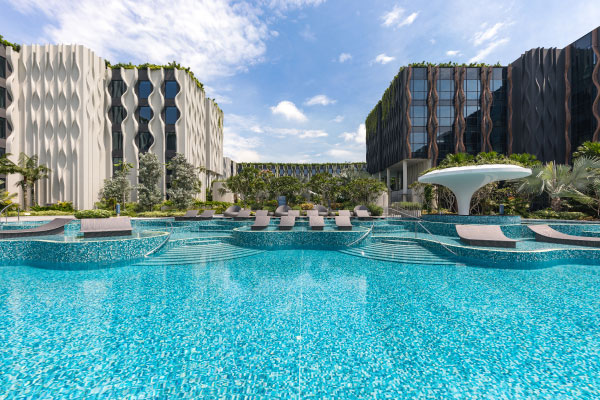
A refreshing experience beckons at Singapore’s resort destination for vacations, events, and staycations. This new Village Hotel at Sentosa offers a welcome getaway from the city’s bustle.
Village Hotel at Sentosa opens its doors to families, as well as leisure and meeting groups, a unique island experience.
Located at the heart of Sentosa, the new hotels are well connected to the attractions on the island as well as within close proximity to the key locations on Singapore mainland.
2 minutes’ walk from Imbiah Monorail Station
10 minutes from Singapore’s Cable Car Sky Network
15 minutes from Singapore’s Central Business District, major shopping areas and attractions including Gardens by the Bay and Trick Eye Museum
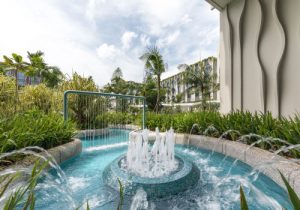
Village Hotels at Sentosa offers the perfect experience for leisure and business groups. The 606-room hotel perfectly captures all Sentosa’s Sun, sand and sea in its modern architecture and the décor in sun-washed hues of nature by the sea. A unique recreation experience also awaits within the hotel. The pool deck located on the 3rd level of the hotel offers 4 themed pool experiences. From the Children’s Play Pool with its water slides and water features to the Adventure Pool, drift away through the Amazonian jungle along the Lazy River Pool to the breath-taking Pamukkale Pool with its picturesque sea view. The hotel also delights guests with activities and entertainment for all ages – Aqua Zumba classes, balloon sculpting and sand castle building at Palawan Beach. You are literally transported into a world of endless fun at the hotel.
Not forgetting the thematic gardens, and outdoor spaces for rest, recreation or even intimate events. Mix business with pleasure when you book a space with us. After your event, retreat to the Pool Bar at the Pamukkale Pool – perfect for drinks and networking.
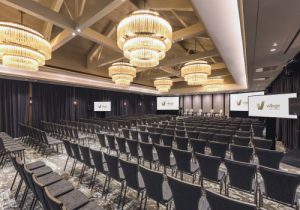
Holding large-scale celebrations and meetings for up to 360 people are possible too at The Commune within Village Hotel at Sentosa. The Commune is a welcoming space with large windows that overlook the Heritage Courtyard. Its flexible and spacious area makes it ideal for big conferences and events.
Cosy and more intimate events are not forgotten as they can be held at the Revelry Hall in Events Centre which is ideal for celebrations and social events.
Exclusively catering to adults, The Outpost Hotel has 193 guest rooms with contemporary industrial aesthetics and clean crisp lines inspired by black-and-white design. Offering personalised services and amenities, the hotel is built for adults and couples seeking exclusivity. Room amenities include toiletries kit by Australian beauty brand APPELLES Apothecary & Lab, pillow mist kit for turn down service, and customized complimentary mini bars from a selection of wine, liquor, chocolates, and gluten-free snacks. The Outpost Hotel soft opens from 1 April 2019.
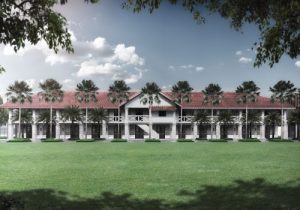
Housed in a designated conserved building, the 40 luxurious guest rooms and suites of The Barracks Hotel are decorated with old-world sophistication and elegance will suit your most prestigious guests. On the ground floor, rooms offer direct access to the private pool and jacuzzi. The Barracks Hotel will open in Q3 of 2019.
At our new hotels in Sentosa, there will always be something for everyone.
Take your guests out of the city and transport them to Sentosa’s new getaway – where you can find meeting venues and event spaces filled with sunshine & sea breeze. Start planning your one-of-a-kind event with us. Email sales.sentosa@fareast.com.sg
Let’s talk about the biggest event to impact Japan’s tourism business this year and next: the 2019 Rugby World Cup and the 2020 Summer Olympics. What do they mean for business events?
It is still too early at this stage to identify the opportunities or problems that will come out of sporting events because so much of the potential work is still in the proposal stages or is open for bidding. We will not get a clearer picture of how the 2019 Rugby World Cup will affect our business until probably next spring.
Ken Myohda
The 2020 Summer Olympics will focus more on Tokyo. How will it affect events coming into the city?
Tokyo Big Sight will be shut down and reserved for use as the main press centre and broadcasting centre during the Games. It is a boon for us, as we are the official contractors for Tokyo Big Sight, and are assisting in the fitting out of the facility for the Games. That’s a very important contract.
For the (events) industry in general, this presents difficulties because organisers have had to reschedule events and move them to other locations, which has a knock-on effect on suppliers, hotels and everyone else.
But we must remember that this is not something that has cropped up in the last couple of weeks. Organisers have had a couple of years to change dates and make alternative plans. It is likely that some companies will be affected, but they are resilient. I’m confident they will recover.
Japan’s business events sector is growing. Is that a result of these global sporting events?
There are a number of reasons, and it isn’t just because of the sporting events.
We have seen a tourism boom, and new hotels are popping up all over the country. The Japanese tourism authorities, specifically those responsible for growing business events, are far more proactive about overseas marketing. Business event buyers around the world now see Japan as a very appealing place to be.
When I first started out in the industry, Japan was quite closed off and it was hard for people on the outside to come here. That has changed dramatically.
Do you fear a post-Games downturn once the global spotlight shifts elsewhere?
Not at all. The higher profile Japan is getting as a result of these sporting events is never a bad thing. We are extremely optimistic about the next five or six years, not just what is coming in the next two years.
What types of industries are most promising for Japan’s business events sector now?
One big growth area is defence and security, as the Japanese government is investing heavily in its own defence, which has led to a rise in related events. The medical sector continues to be strong, and professional congress organisers are coming directly to us to set up events. Also, we are seeing events linked to cryptocurrency, blockchain technology, fintech and the same.
The rise in cryptocurrency events is interesting. Is it because Japan is perceived as a leader in technology?
Cryptocurrency events are taking place all over the world now, but because Japan is a relatively under-developed market in this field, overseas organisers see opportunities in Japan. They want to come here and conduct an event. We have done a lot of such events in the last two years.
What sort of business events might be big next?
It’s always hard to predict, but we are expecting more in the e-sports space. As a general rule, as soon as a new industry emerges, someone launches a tradeshow very quickly. Just look at the drone industry; there are shows everywhere now and they have only been around for five years or so. E-sports is already here, but it’s something that we want to target as a company because it’s a growing sector and has – we believe – the potential to win us a lot of work.
Sakura International has been in business events for 40 years. How do you stay competitive?
We have competitors in Japan, but I don’t think anyone else is quite as focused as we are on the international market. Our model is very much based on having offices in Osaka and Tokyo, while covering the entire country. Another key difference is that we have international staff, all of whom speak at least two languages. This allows us to provide comprehensive service to our international clients.
How do you keep clients coming back to you and Japan?
That’s the difficult part. There are many destinations for events but if we do a good job, the client will return.
The one thing we always hear from anyone who comes to Japan is that it’s not a cheap destination for events. There’s no getting around that fact but anyone who does an event here always gets more delegates than anticipated. More delegates means more income, which means the organisers are happy.
What does the future hold for Sakura International?
Our first target is an IPO in 2020, which will give us the financial platform to grow the business quickly and effectively. We want to invest in more people and set up in more overseas cities to expand our overseas network.
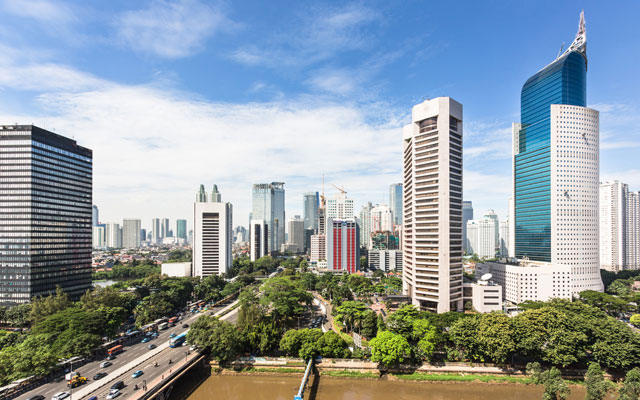
To bring more business events to Jakarta (pictured), stakeholders feel that more collaboration with the government is needed
The lack of public-private collaboration is the biggest challenge in attracting more business events to the Indonesian capital, identified the Jakarta provincial government and tourism industry stakeholders in a joint discussion last week.
“Everyone is doing their own things. The private sector has its own business target, associations work for their own interests, while the government focuses on the programme,” lamented Hosea Andreas Runkat, chairman of Indonesian Exhibition Companies Association.
To bring more business events to Jakarta (pictured), stakeholders feel that more collaboration with the government is needed
Stressing the importance of working together, Andreas – who is also director of convention services at Jakarta Convention Center – said that the Jakarta provincial government needs to bring everyone together and position the capital city as “one team, one identity and one destination”.
For example, during bidding, both the organiser and the association require the government’s participation to present Jakarta as an attractive destination, as well as provide assurance that the event will have the full support of the government.
“Things like this are (sorely) needed by the industry,” Andreas pointed out.
Arya Seta Wiriadipoera, managing director at Napindo Media Ashatama, a PEO, agreed: “The government should maximise the presence of the industry to develop Jakarta as a destination.”
He suggested: “For example, the government can collaborate with us to stage a cultural event at the exhibition’s opening ceremony.”
Andy Wismarsyah, president director of Amara Pameran Indonesia, another PEO, is strongly in support of collaboration between the industry and government, as both sectors should come together to better promote the city.
Speaking from experience, Andy revealed that both him and his team often received questions about Jakarta as a destination, but without the necessary information they were unable to update clients on new tourism products, or if there are interesting attractions nearby that participants can visit after an event.
“We just want the government to help us build up the image of Jakarta in the eyes of the international community,” added Andy.
Salman Dianda Anwar, chairman of Jakarta Tourism Forum, said: “There is currently a lack of collaboration between the government and industry, which is the bedrock of obstacles of Jakarta’s success. We urge industry stakeholders and the government to work together more closely to secure business in the coming years.”
The discussions were organised by the Jakarta Tourism Forum, and issues and recommendations will be brought to a coordination meeting with the Jakarta governor.
“The government is currently formulating what can be done to help the industry. One of them is by collaborating with industry to create events. We are also working to help the bidding process carried out by the organisers,” shared Harry Wibowo, head of destination & marketing division at Jakarta Tourism and Culture Office.
Iqbal Allan Abdullah, chairperson of Indonesia Conference and Convention Association, advised: “Before drawing up a plan, the government needs to think about what it wants to achieve, and not just what they want to do or create (momentarily).
“This is more important, because if you already know what the target and the goals you want to achieve, you can determine the steps to reach it.”
Taiwan is wooing Asian corporate travellers this year with a new campaign that highlights the country’s traditional sites and quaint towns, as showcased at the Taiwan pavilion at the recent IT&CM China.
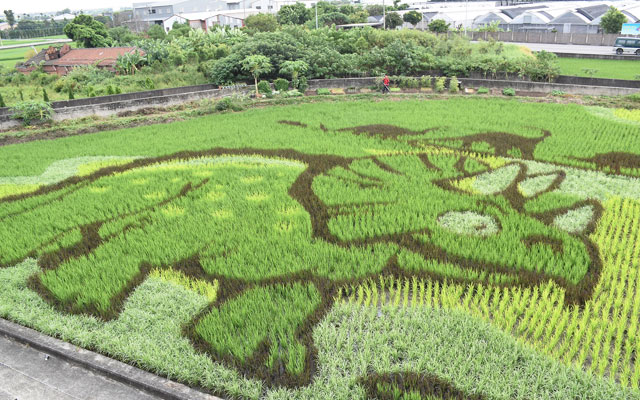
To open up these old and romantic locales, the campaign has shortlisted 30 rural towns to be featured.
Yuanli Township in Miaoli is famous for their grass weaving culture
These include Miaoli’s Yuanli Township, which is home to grass-woven arts and crafts; Tainan’s Yanshui District for its Beehive Fireworks Festival; Jiaoxi Township in Yilan for its hot spring hotels; and Hualien’s Fenglin, recognised by the Cittaslow slow food movement as Taiwan’s first “slow city”.
Nina Lin, deputy executive director of Meet Taiwan, told TTGmice that as local experiences like these permeate the leisure space, they are also gaining popularity among corporate travellers.
“We hope that business travellers coming to Taiwan can extend their stay and explore our country in this way. Some of our exhibitions provide curated one-day itineraries to delegates so that they can have a taste of such activities. We hope that this campaign will help visitors experience more of Taiwan’s cultures and local offerings,” said Lin.
Taiwan has also remained a strong destination for incentive travel, particularly from China and South-east Asia. Lin shared that the number of groups from South-east Asia had “increased tenfold” since the launch of the New Southbound Policy.
“Today, incentive groups demand for programmes that have an element of creativity and can accommodate large groups,” she observed.
However, Lin noted that the China and South-east Asia markets have different needs.
“The Chinese have certain expectations about Taiwan, and may want to visit famous landscapes like Alishan. Meanwhile, South-east Asians would prefer something that’s fresh and unique, and are more open to trying innovative things like using technology in their teambuilding activities.”
Just 10 minutes from Phuket International Airport on the serene northern coast, this 178-key, Bill Bensley-designed resort offers delegates a quiet, tropical paradise steeped in Phuket’s tin-mining heritage
The newly-opened Ritz-Carlton, Bangkok anchors the One Bangkok development with cosmopolitan elegance. Featuring the city's largest ballroom and a spectacular new penthouse suite, it delivers exceptional hardware and deeply authentic, soulful service for business and leisure travellers alike
Behind the imposing, Brutalist concrete that defines Zurich’s Oerlikon district lies a surprising secret. While its exterior honours the neighbourhood’s industrial roots, stepping inside Mama Shelter reveals a vibrant, neon-soaked world that is a far cry from its rigid shell